
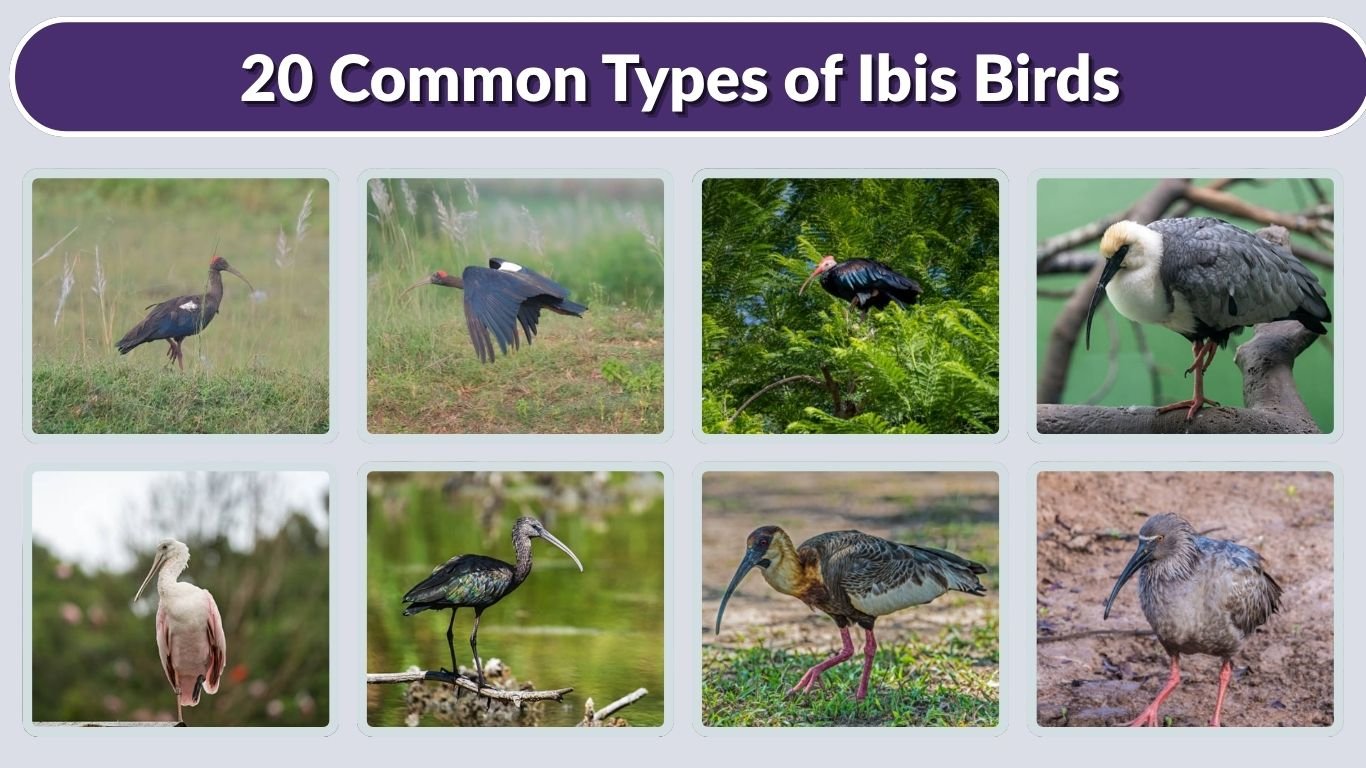
Ibises are long-legged wading birds known for their curved bills and graceful appearance. They are commonly found in wetlands, grasslands, and even urban environments across the world. While many ibis species share similar body shapes, they differ in color, habitat, behavior, and feeding style, making identification both interesting and challenging.
This guide covers 21 common types of ibis birds, helping you recognize each species through key features such as size, plumage, distribution, and behavior.
1. Glossy Ibis
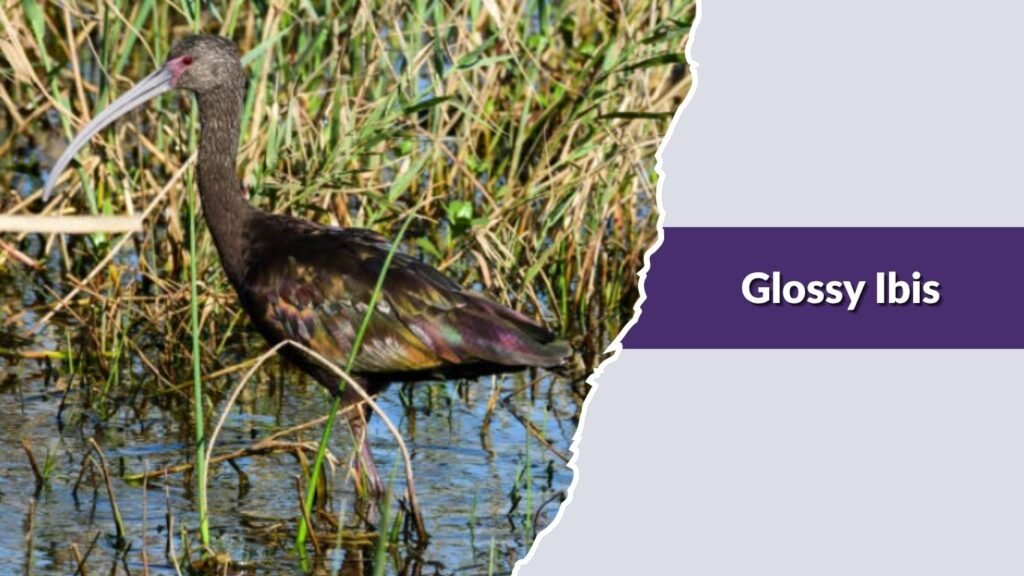
The Glossy Ibis is a widespread and easily recognizable ibis species, known for its dark, iridescent plumage that shines with green and purple tones in sunlight. It is commonly found in wetlands and is one of the most widely distributed ibises in the world.
Identification
- Medium-sized ibis with slender, curved bill
- Dark brown body with glossy green and purple sheen
- Long legs and neck
- Face bordered with thin pale lines during breeding
- Wings appear darker with metallic reflections
Habitat and Distribution
Glossy Ibises are found across Europe, Africa, Asia, Australia, and the Americas. They prefer wetlands such as marshes, swamps, rice fields, and shallow lakes. Their wide distribution makes them one of the most adaptable ibis species.
Behavior
This species is social and often seen in flocks, especially during feeding and migration. It feeds by probing its long bill into mud or shallow water. Glossy Ibises are also known to nest in colonies, often alongside other wading birds.
Diet
Their diet mainly consists of insects, worms, crustaceans, and small aquatic animals. They rely on touch rather than sight, using their curved bill to locate prey hidden in mud or water.
2. White Ibis
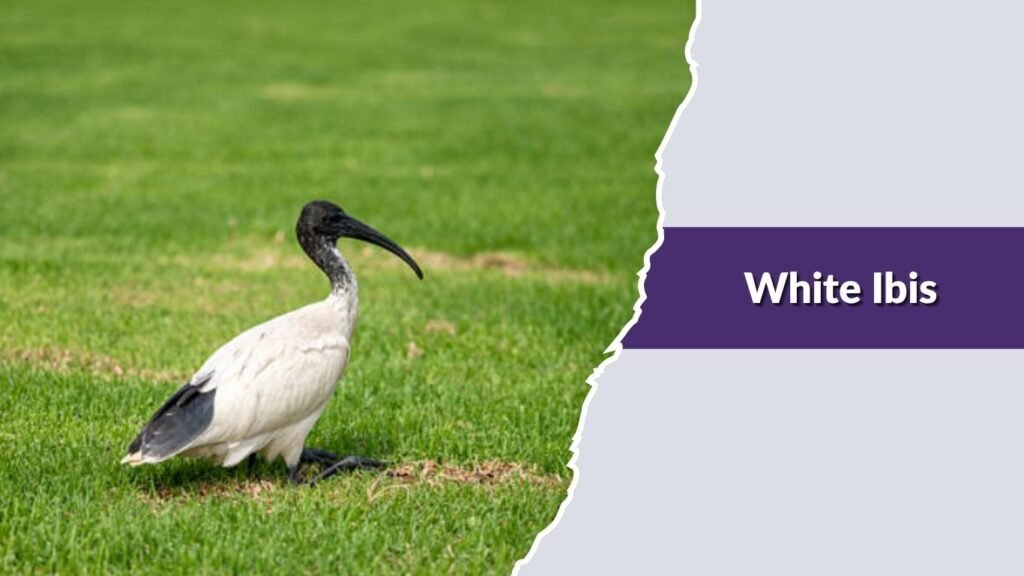
The White Ibis is a striking and easily recognizable bird, known for its bright white body contrasted with a vibrant red bill and legs. It is commonly found in wetlands and coastal regions, especially across the southeastern United States, Central America, and parts of South America. This species is highly adaptable and can also be seen in urban parks and residential areas where water sources are available.
Identification
- Medium-sized ibis with pure white plumage
- Long, downward-curving bright red bill
- Red legs and face
- Black wingtips visible during flight
- Juveniles have brownish upperparts and lighter underparts
Habitat and Distribution
White Ibises prefer shallow wetlands such as marshes, swamps, mangroves, and estuaries. They are especially common in coastal regions but can also be found inland near lakes, ponds, and flooded fields. In urban environments, they often gather in parks, golf courses, and even parking lots if food is available. Their range extends from the southeastern United States through Central America and into northern South America.
Behavior
This species is highly social and is often seen in large flocks. White Ibises are active feeders, frequently walking in groups and probing the ground with their bills in a synchronized manner. They are also known to be opportunistic, sometimes scavenging in human-populated areas. During breeding season, they nest in colonies, often in trees over water, which provides protection from predators.
Diet
White Ibises mainly feed on crustaceans such as crayfish, crabs, and shrimp, which give their skin and bill a reddish coloration due to carotenoids. They also eat insects, small fish, and amphibians. Using their long curved bill, they probe mud and shallow water to locate prey by touch rather than sight.
3. Scarlet Ibis
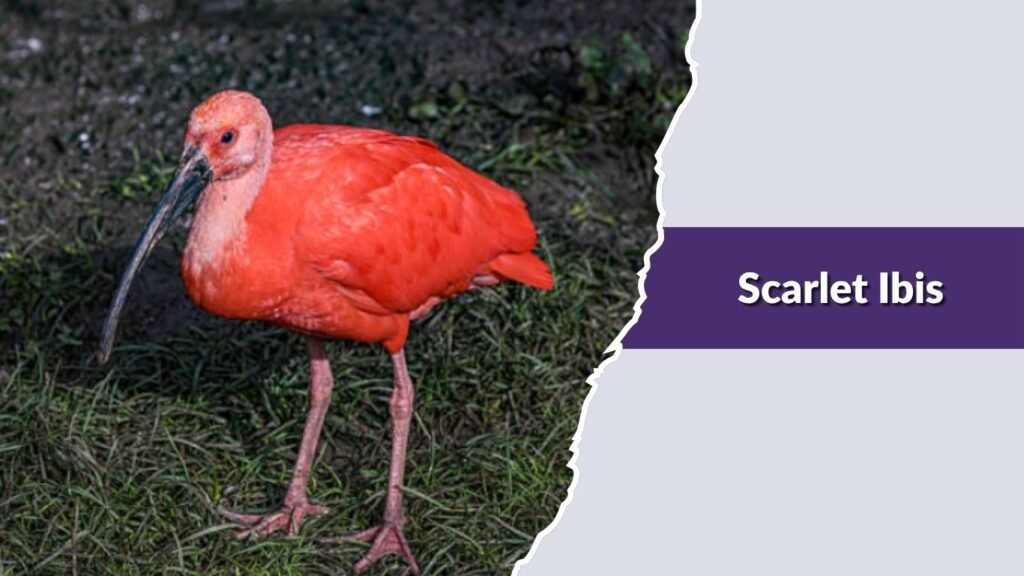
The Scarlet Ibis is one of the most visually stunning ibis species, famous for its brilliant red coloration. Native to northern South America and parts of the Caribbean, this bird is often associated with tropical wetlands and mangrove habitats. Its vivid color makes it stand out among other wading birds.
Identification
- Medium-sized ibis with bright scarlet-red plumage
- Long, slender, downward-curved bill
- Red legs and face matching body color
- Black wingtips visible in flight
- Smooth, sleek feathers with intense coloration in adults
Habitat and Distribution
Scarlet Ibises are found in tropical regions of northern South America, including countries like Venezuela, Colombia, Brazil, and Trinidad and Tobago. They prefer coastal wetlands, mangroves, mudflats, and estuaries where food is abundant. These environments provide both feeding grounds and safe nesting sites.
Behavior
Scarlet Ibises are social birds that often live and move in large flocks. They are most active during early morning and late afternoon when they forage for food. During breeding season, they nest in colonies, usually in mangrove trees. Their bright coloration also plays a role in attracting mates.
Diet
Their diet mainly consists of crustaceans such as crabs and shrimp, which are rich in pigments that give the birds their red color. They also consume insects, small fish, and other aquatic invertebrates. Like other ibises, they use their curved bill to probe mud and shallow water to find prey.
4. Black-headed Ibis
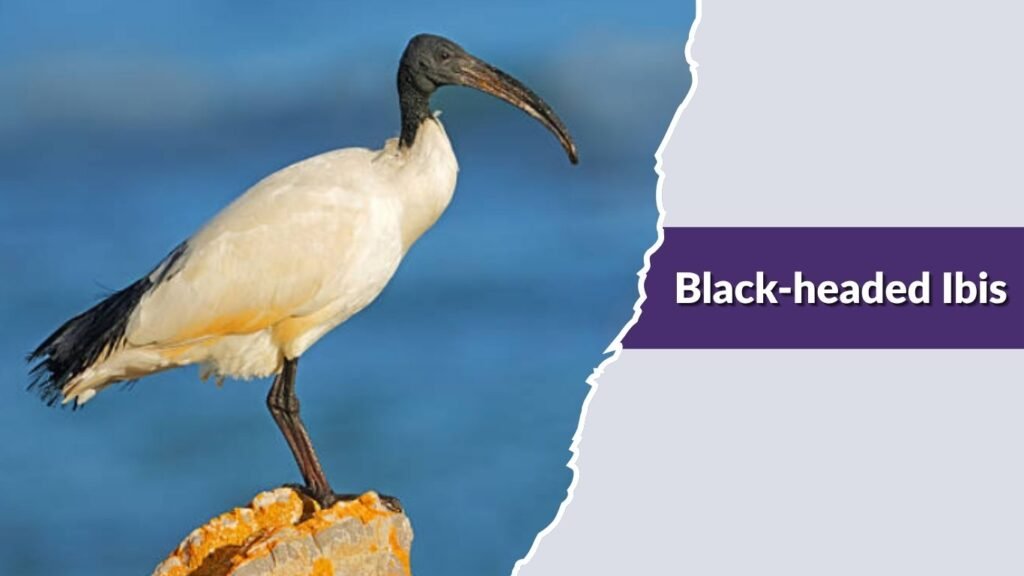
The Black-headed Ibis is a distinctive species recognized by its contrasting white body and bare black head. It is commonly found across South and Southeast Asia, often seen in wetlands and agricultural areas. Its unique appearance makes it easier to identify compared to many other ibis species.
Identification
- Medium to large ibis with white body
- Bare black head and neck without feathers
- Long, curved black bill
- Black legs
- Strong contrast between white plumage and dark head
Habitat and Distribution
Black-headed Ibises are widely distributed across India, Sri Lanka, Bangladesh, and Southeast Asia. They inhabit wetlands such as marshes, lakes, rivers, and rice fields. They are also frequently seen in agricultural landscapes where water is present, showing good adaptability to human-altered environments.
Behavior
This species is often seen feeding in small groups, slowly walking through shallow water while probing for food. It may also gather in larger flocks during roosting or breeding. Black-headed Ibises usually nest in colonies, often with other waterbirds, in trees near water bodies.
Diet
Their diet mainly consists of fish, frogs, insects, and crustaceans. They use their long curved bill to probe mud and water, relying on touch to detect prey. Their feeding style is calm and methodical.
5. Red-naped Ibis
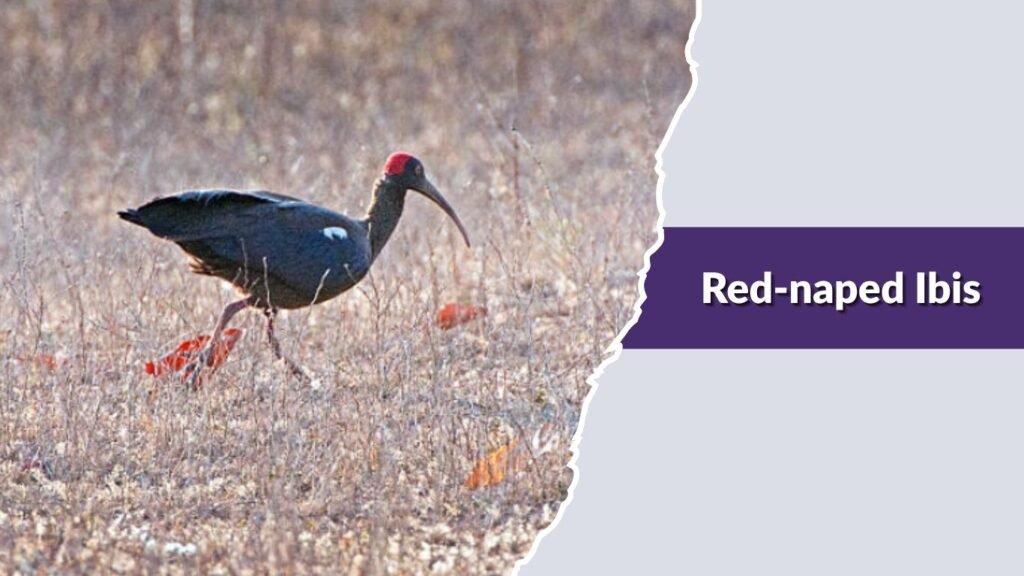
The Red-naped Ibis is a striking ibis species known for the red patch on the back of its head. It is commonly found in the Indian subcontinent and is often seen in open landscapes as well as wetlands. Its bold appearance and loud calls make it quite noticeable.
Identification
- Medium-sized dark ibis with glossy black body
- Distinct red patch on the nape (back of the head)
- Long, curved black bill
- Black legs
- Slight iridescent sheen on wings in sunlight
Habitat and Distribution
Red-naped Ibises are found mainly in India, Pakistan, Nepal, and Bangladesh. They prefer open fields, grasslands, riverbanks, and wetlands. Unlike many ibis species, they are often seen away from water, especially in dry areas where they search for food.
Behavior
This species is often seen alone or in pairs rather than large flocks. It walks slowly while foraging and is known for its loud, distinctive calls. Red-naped Ibises are also territorial and may defend feeding areas from other birds.
Diet
Their diet includes insects, small reptiles, frogs, and occasionally small mammals. They forage on land as well as in shallow water, using their bill to probe soil and mud for hidden prey.
6. Australian White Ibis
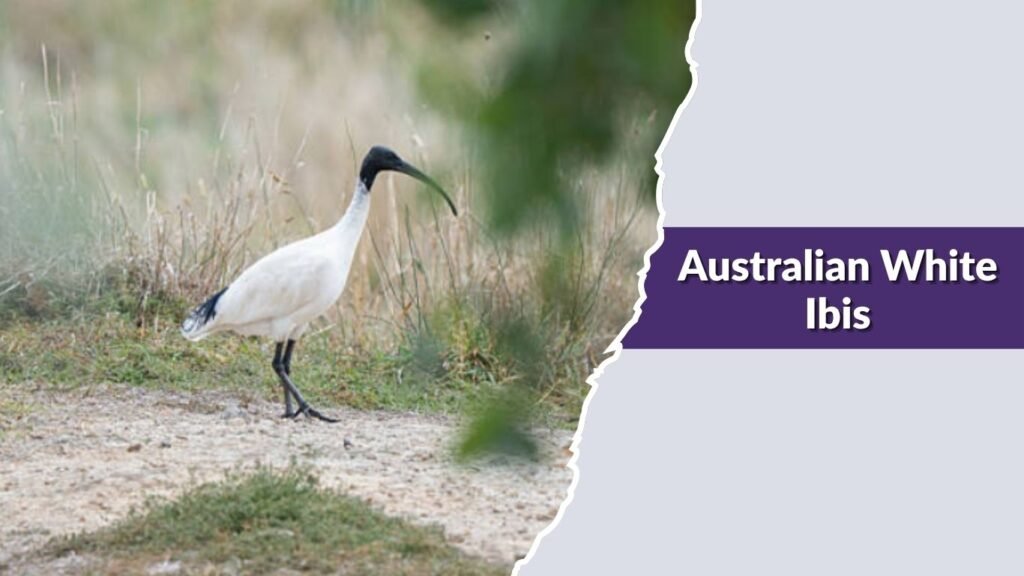
The Australian White Ibis is a well-known ibis species, often seen in both natural wetlands and urban environments. It is sometimes called the “bin chicken” due to its habit of scavenging in cities. Despite this, it plays an important ecological role in controlling waste and pests.
Identification
- Large white ibis with long curved bill
- Bare black head and neck
- Long black legs
- Slight yellowish tinge on body during breeding
- Black tail feathers visible in flight
Habitat and Distribution
This species is native to Australia and is found across wetlands, grasslands, and increasingly urban areas. It thrives in marshes, lagoons, and floodplains but has adapted well to city life, often frequenting parks, landfills, and streets.
Behavior
Australian White Ibises are highly adaptable and social birds. They often gather in groups and are known for their opportunistic feeding habits. In cities, they scavenge for food scraps, while in natural habitats they forage in wetlands. They nest in colonies, usually near water.
Diet
Their diet includes insects, crustaceans, small fish, frogs, and human food waste in urban areas. They use their long curved bill to probe soil and shallow water, making them effective feeders in various environments.
7. Sacred Ibis
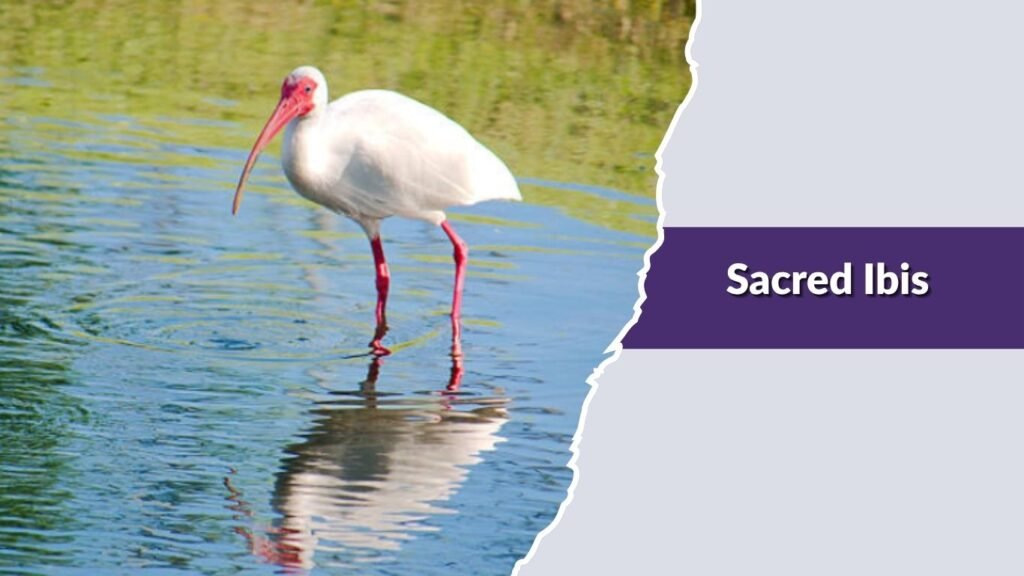
The Sacred Ibis is a historically significant bird, especially in ancient Egypt, where it was considered a symbol of wisdom and associated with the god Thoth. Today, it is found in parts of Africa and has been introduced to other regions.
Identification
- Medium to large ibis with white body
- Bare black head and neck
- Long, curved black bill
- Black legs and tail feathers
- Strong contrast between white body and black head
Habitat and Distribution
Sacred Ibises are native to sub-Saharan Africa and are commonly found in wetlands such as marshes, lakes, and riverbanks. They have also been introduced to parts of Europe and the Middle East, where they inhabit similar environments.
Behavior
This species is social and often seen in flocks. It feeds by walking slowly and probing the ground or water. Sacred Ibises are also known to scavenge and may feed at garbage sites. They nest in large colonies, often with other waterbirds.
Diet
Their diet mainly consists of insects, small fish, amphibians, and crustaceans. They are also opportunistic feeders and may consume carrion or human waste when available, making them highly adaptable.
8. Hadada Ibis
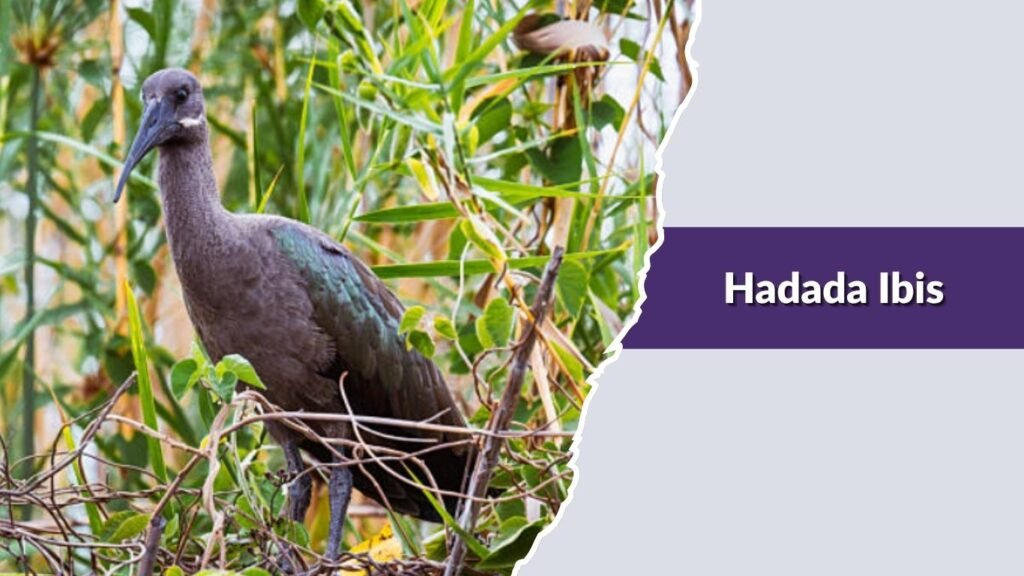
The Hadada Ibis is a loud and easily recognizable ibis species native to Africa. It is best known for its distinctive “haa-haa-haa-de-dah” call, which is often heard early in the morning and during flight. Its adaptability has allowed it to thrive in both natural and urban environments.
Identification
- Medium to large ibis with gray-brown body
- Iridescent green and purple sheen on wings
- Long, curved black bill
- Dark legs
- Prominent loud call, especially during flight
Habitat and Distribution
Hadada Ibises are widely distributed across sub-Saharan Africa. They are commonly found in wetlands, grasslands, savannas, and increasingly in urban gardens, parks, and golf courses. Their ability to adapt to human environments has expanded their range in recent years.
Behavior
This species is often seen in pairs or small groups. It feeds by probing soil and grass for prey, often in lawns and open areas. Hadada Ibises are known for their loud vocalizations, which are used for communication, especially during flight and territorial displays.
Diet
Their diet mainly consists of earthworms, insects, and small invertebrates. They use their long bill to probe soft soil, making them especially common in areas with moist ground after rain.
9. Green Ibis
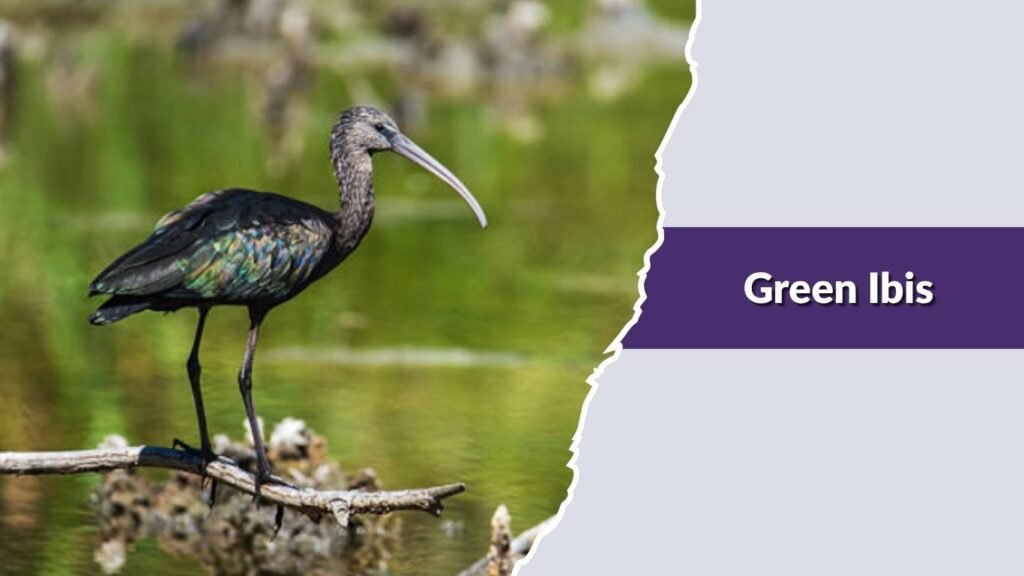
The Green Ibis is a smaller and more secretive ibis species, known for its dark, glossy plumage and preference for dense forest habitats. It is less commonly seen compared to other ibises due to its shy nature.
Identification
- Small to medium-sized ibis with dark greenish-black plumage
- Glossy sheen visible in sunlight
- Shorter neck compared to other ibises
- Long, curved dark bill
- Relatively compact body shape
Habitat and Distribution
Green Ibises are found in Central and South America, particularly in tropical forests, mangroves, and river edges. They prefer dense vegetation and shaded environments, often staying hidden near water sources.
Behavior
This species is generally solitary and quiet. It is most active during early morning and late evening. Green Ibises tend to move slowly and cautiously while feeding, often staying concealed within vegetation to avoid predators.
Diet
Their diet includes insects, small fish, frogs, and crustaceans. They forage in shallow water or damp forest floors, using their bill to probe for hidden prey.
10. Bare-faced Ibis
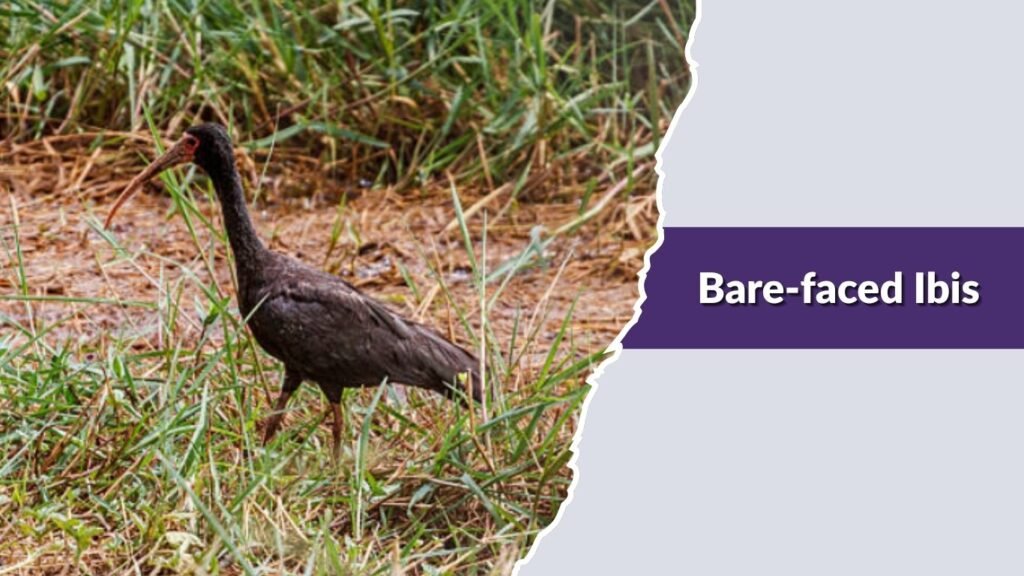
The Bare-faced Ibis is a distinctive South American species, easily recognized by the exposed skin on its face and its contrasting plumage. It is commonly seen in open wetlands and grasslands, often foraging in groups.
Identification
- Medium-sized ibis with dark body
- Bare, reddish facial skin without feathers
- Long, curved bill
- Dark legs
- Slight iridescent sheen on wings
Habitat and Distribution
Bare-faced Ibises are found across parts of South America, especially in countries like Brazil, Bolivia, Paraguay, and Argentina. They prefer wetlands, marshes, savannas, and open grasslands, often near water sources.
Behavior
This species is social and usually seen in flocks. It feeds by walking slowly and probing the ground or shallow water. It may also follow livestock to catch disturbed insects. They often roost and nest in groups near wetlands.
Diet
Their diet mainly includes insects, worms, small reptiles, and amphibians. They use their curved bill to probe soil and mud, relying on touch to detect prey.
11. Puna Ibis
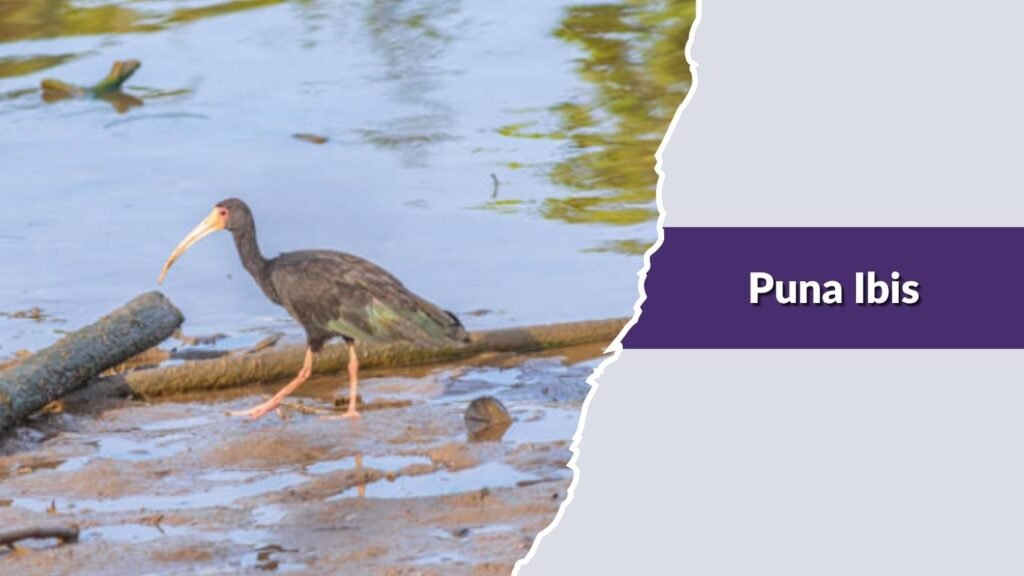
The Puna Ibis is a high-altitude species adapted to life in the Andes Mountains. It is commonly found near lakes and wetlands in mountainous regions, where conditions are cooler and more challenging than lowland habitats.
Identification
- Medium-sized ibis with dark plumage
- Slight green or bronze sheen in sunlight
- Long, curved bill
- Dark legs
- Compact body adapted to cooler climates
Habitat and Distribution
Puna Ibises are found in the Andes of South America, including Peru, Bolivia, Chile, and Argentina. They inhabit high-altitude wetlands, lakes, and marshes, often at elevations above 3,000 meters.
Behavior
This species is often seen in small groups, foraging near water or in damp soil. It moves slowly while feeding and is well adapted to thin air and cooler temperatures. It may also gather in larger groups during certain seasons.
Diet
Their diet consists mainly of insects, larvae, small invertebrates, and aquatic organisms. They probe soft soil and shallow water with their bill to locate hidden prey.
12. Buff-necked Ibis
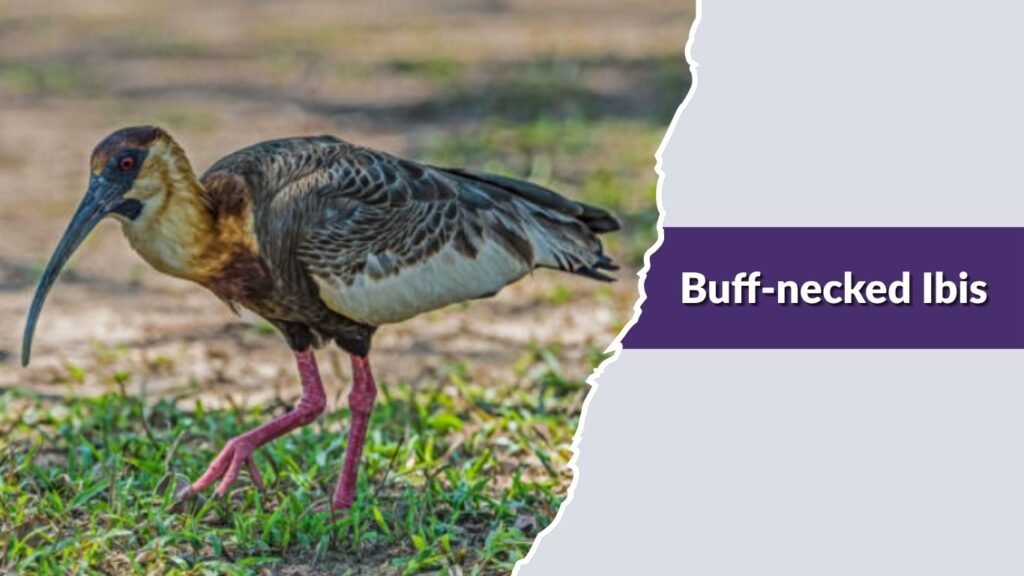
The Buff-necked Ibis is a unique and colorful ibis species found in parts of Central and South America. It stands out from many other ibises due to its varied plumage and preference for more open, grassy habitats rather than strictly wetland areas.
Identification
- Medium-sized ibis with buff-colored neck
- Dark body with greenish or bronze sheen
- Long, curved dark bill
- Dark legs
- Noticeable contrast between neck and body
Habitat and Distribution
Buff-necked Ibises are found in countries such as Costa Rica, Panama, Colombia, Venezuela, Brazil, and Argentina. They prefer savannas, grasslands, and open wetlands, often near rivers or marshes but also in drier areas compared to other ibis species.
Behavior
This species is usually seen in pairs or small groups. It often forages on land, walking slowly while probing the ground. Unlike many ibises, it spends more time away from water and is adapted to open landscapes.
Diet
Their diet mainly includes insects, worms, small reptiles, and amphibians. They use their long bill to probe soil and grass for hidden prey, relying on touch to locate food.
13. Plumbeous Ibis
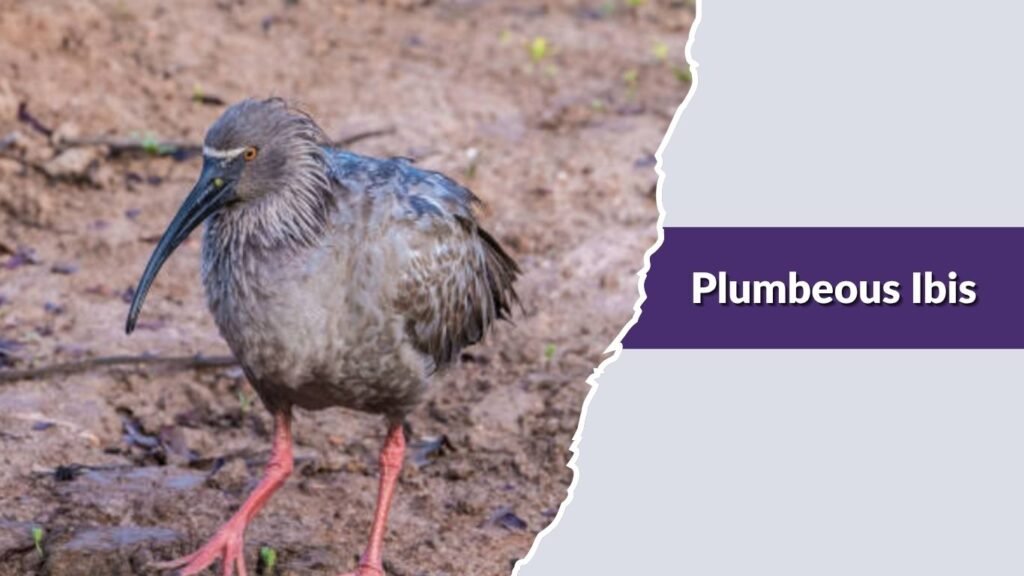
The Plumbeous Ibis is a large and elegant ibis species known for its uniform gray coloration and long legs. It is commonly found in South America and is often seen in wetlands and open savannas.
Identification
- Large ibis with uniform gray (plumbeous) plumage
- Long, curved bill
- Long reddish or pinkish legs
- Slender neck and tall posture
- Overall smooth and plain appearance
Habitat and Distribution
Plumbeous Ibises are found in South America, including Brazil, Bolivia, Paraguay, and Argentina. They inhabit wetlands, marshes, riverbanks, and flooded grasslands, often in open landscapes with shallow water.
Behavior
This species is usually seen alone or in pairs, though small groups may form. It walks slowly while feeding, probing mud and shallow water. It is generally quiet and less social compared to some other ibis species.
Diet
Their diet mainly consists of insects, small fish, amphibians, and crustaceans. They forage in shallow water or soft soil, using their bill to detect and capture prey.
14. Andean Ibis
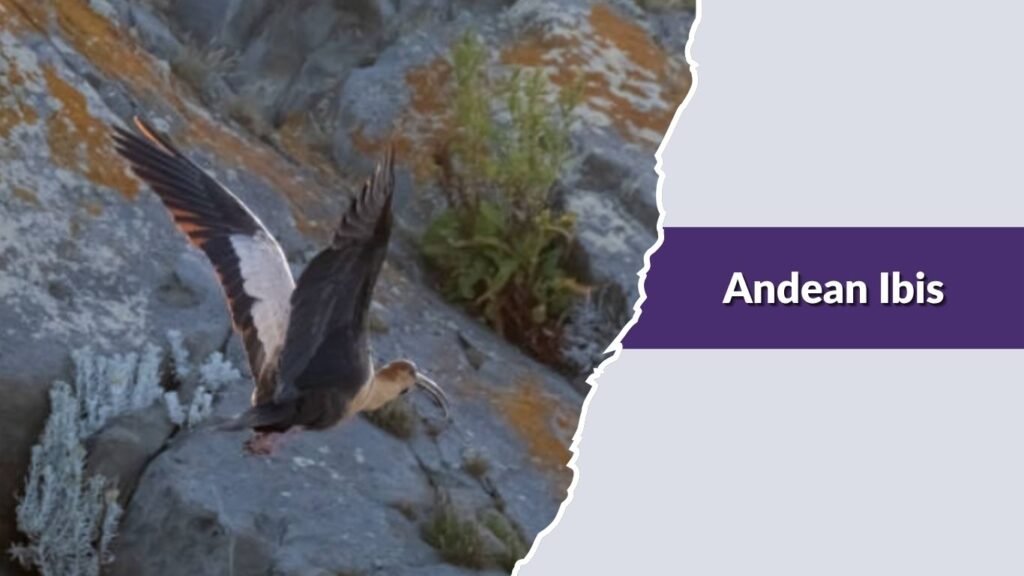
The Andean Ibis is a high-altitude species native to the Andes Mountains. It is well adapted to cold, rugged environments and is often seen near mountain streams and wetlands. Its dark plumage and preference for elevated habitats make it quite distinct from many lowland ibis species.
Identification
- Medium-sized ibis with dark brown to black plumage
- Slight iridescent sheen in sunlight
- Long, curved dark bill
- Dark legs
- Compact body suited for mountainous regions
Habitat and Distribution
Andean Ibises are found in the Andes of South America, particularly in Colombia, Ecuador, Peru, and Bolivia. They inhabit high-altitude wetlands, grasslands, and riverbanks, often at elevations above 2,500 meters.
Behavior
This species is usually seen in pairs or small groups. It forages quietly along river edges or damp ground, moving slowly while probing for food. It is less social compared to many other ibis species and prefers remote habitats.
Diet
Their diet mainly includes insects, larvae, small amphibians, and aquatic invertebrates. They use their curved bill to probe soil and shallow water, relying on touch to find prey.
15. Black-faced Ibis
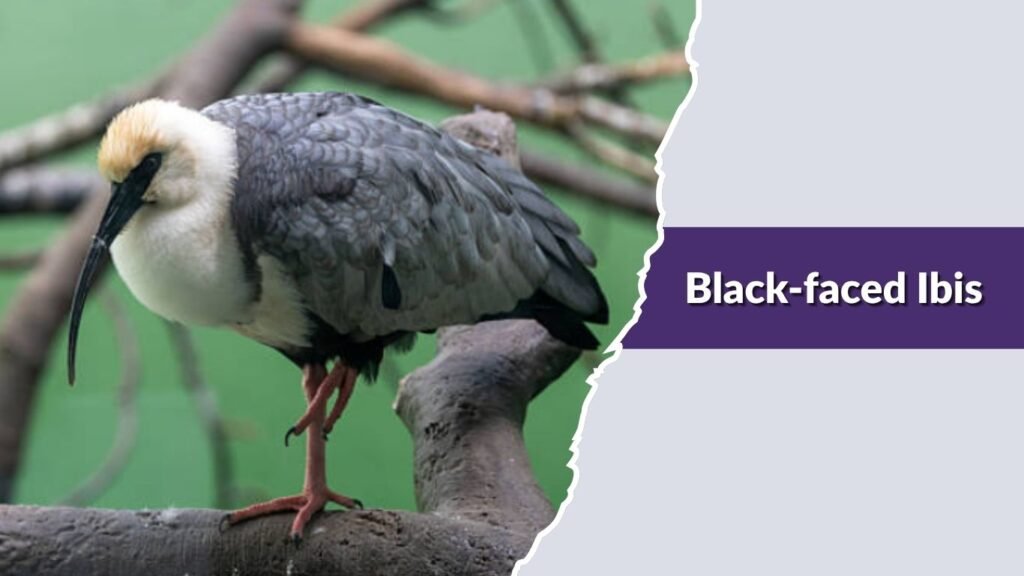
The Black-faced Ibis is a distinctive species found in southern parts of South America. It is easily recognized by its white body and contrasting dark face, giving it a bold and clear appearance in open landscapes.
Identification
- Medium-sized ibis with white body
- Bare black face and head
- Long, curved dark bill
- Dark legs
- Clean contrast between white plumage and black facial skin
Habitat and Distribution
Black-faced Ibises are found in countries like Chile and Argentina. They prefer open habitats such as grasslands, wetlands, agricultural fields, and river valleys. They are often seen in areas with shallow water or moist soil.
Behavior
This species is social and may be seen in small to moderate-sized groups. It forages by walking and probing the ground, often in open fields. It is also known to perch on fences or low structures, which is somewhat unusual for ibises.
Diet
Their diet consists mainly of insects, worms, small reptiles, and amphibians. They forage both on land and in shallow water, using their bill to locate prey hidden beneath the surface.
16. Giant Ibis
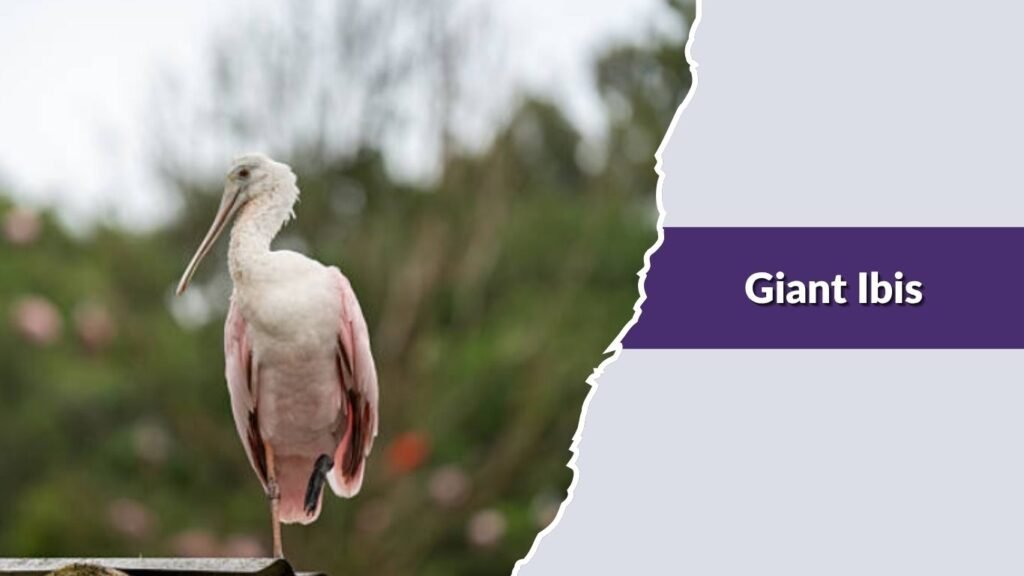
The Giant Ibis is the largest ibis species in the world and is considered critically endangered. It is rarely seen and is mostly confined to limited areas in Southeast Asia. Its impressive size and rarity make it one of the most remarkable ibis species.
Identification
- Very large ibis with dark brown plumage
- Long, thick, curved bill
- Bare grayish head and upper neck
- Long dark legs
- Heavier and bulkier than other ibis species
Habitat and Distribution
Giant Ibises are mainly found in Cambodia and parts of Laos. They prefer remote wetlands, marshes, and forest pools, especially in undisturbed lowland areas. Habitat loss has greatly reduced their population.
Behavior
This species is generally solitary or seen in pairs. It forages slowly and carefully in shallow water or muddy areas. Due to its rarity, much of its behavior is not well documented, but it is known to be quiet and cautious.
Diet
Their diet includes small fish, amphibians, crustaceans, and insects. They probe mud and shallow water with their bill to locate prey.
17. Northern Bald Ibis
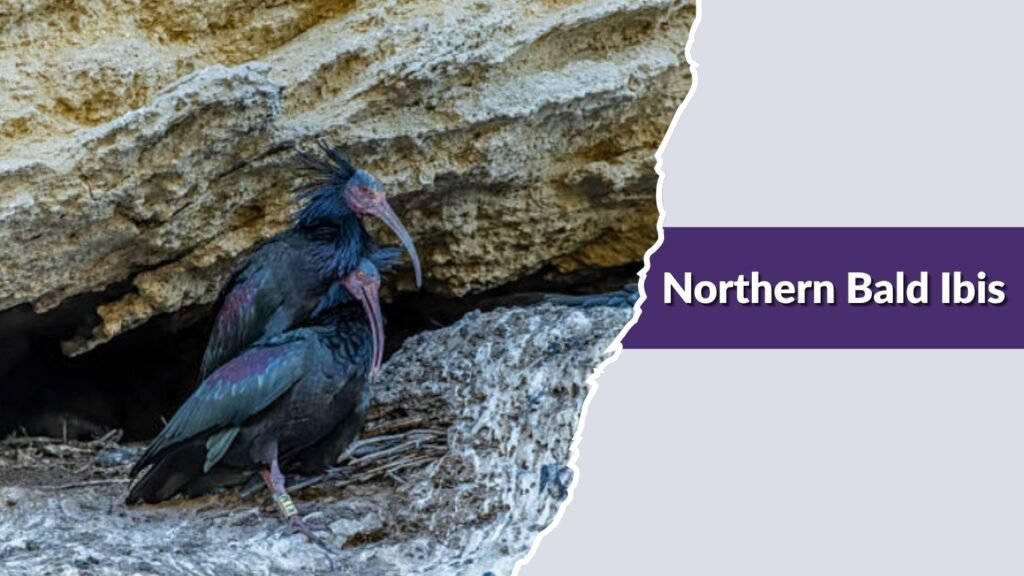
The Northern Bald Ibis is a unique and endangered species known for its bare head and glossy black plumage. It has a long history of cultural significance and was once widespread across parts of Europe, the Middle East, and North Africa.
Identification
- Medium-sized ibis with glossy black plumage
- Bare red head without feathers
- Long, curved bill
- Long legs
- Shaggy crest of feathers on the back of the head
Habitat and Distribution
Northern Bald Ibises are now found in small populations in Morocco and parts of the Middle East. They inhabit rocky cliffs, semi-arid areas, and open landscapes, often nesting on cliff ledges.
Behavior
This species is social and often seen in small groups. It forages on open ground rather than in water, probing soil for food. It is also known for strong pair bonds and colonial nesting behavior.
Diet
Their diet mainly consists of insects, small reptiles, and other invertebrates. They forage on land, using their curved bill to probe soil and capture prey hidden beneath the surface.
18. Southern Bald Ibis
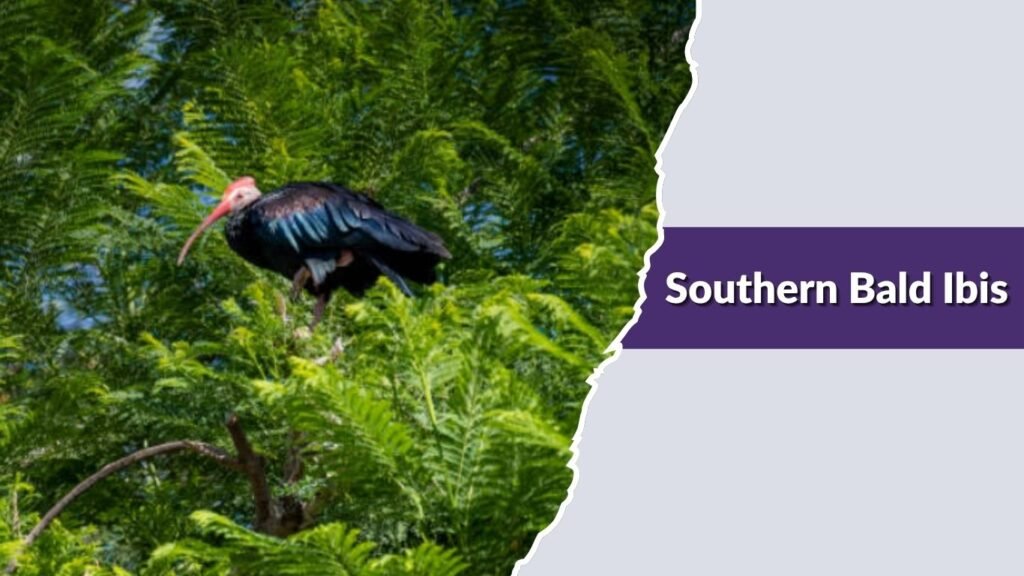
The Southern Bald Ibis, also known as the Southern Bald Ibis or Waldrapp in some regions, is a striking species native to southern Africa. It is easily recognized by its bare head and glossy dark feathers, and it is commonly seen in grasslands rather than wetlands.
Identification
- Medium-sized ibis with glossy black plumage
- Bare red face and head
- Long, curved dark bill
- Long dark legs
- Slight metallic sheen on wings
Habitat and Distribution
Southern Bald Ibises are found mainly in South Africa, Lesotho, and nearby regions. They prefer highland grasslands, open plains, and agricultural areas. Unlike many ibises, they are rarely associated with water bodies.
Behavior
This species is social and often seen in groups while feeding. It forages on land, walking slowly and probing soil. They nest in colonies on cliffs or steep slopes, which helps protect them from predators.
Diet
Their diet mainly includes insects, worms, and small invertebrates. They rely on probing soft soil with their bill to locate prey, especially in grasslands.
19. Wattled Ibis
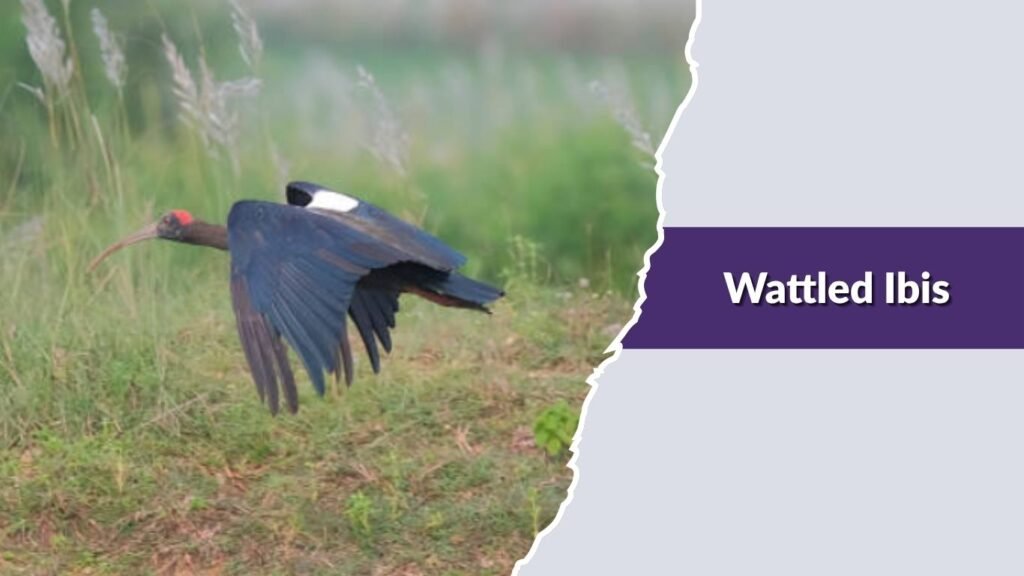
The Wattled Ibis is a unique African species known for the fleshy wattles on its face. It is commonly found in highland regions and is well adapted to cooler climates and open landscapes.
Identification
- Medium-sized dark ibis with glossy plumage
- Distinct fleshy wattles on the face
- Long, curved bill
- Dark legs
- Slight iridescent sheen on wings
Habitat and Distribution
Wattled Ibises are mainly found in Ethiopia and Eritrea, particularly in highland regions. They inhabit grasslands, rocky slopes, and open fields, often at high elevations.
Behavior
This species is usually seen in pairs or small groups. It forages on land rather than in water, probing soil for food. It is generally quiet but may produce calls during flight or social interactions.
Diet
Their diet mainly consists of insects, worms, and other small invertebrates. They use their curved bill to probe soil and grass, relying on touch to detect prey.
20. Sharp-tailed Ibis
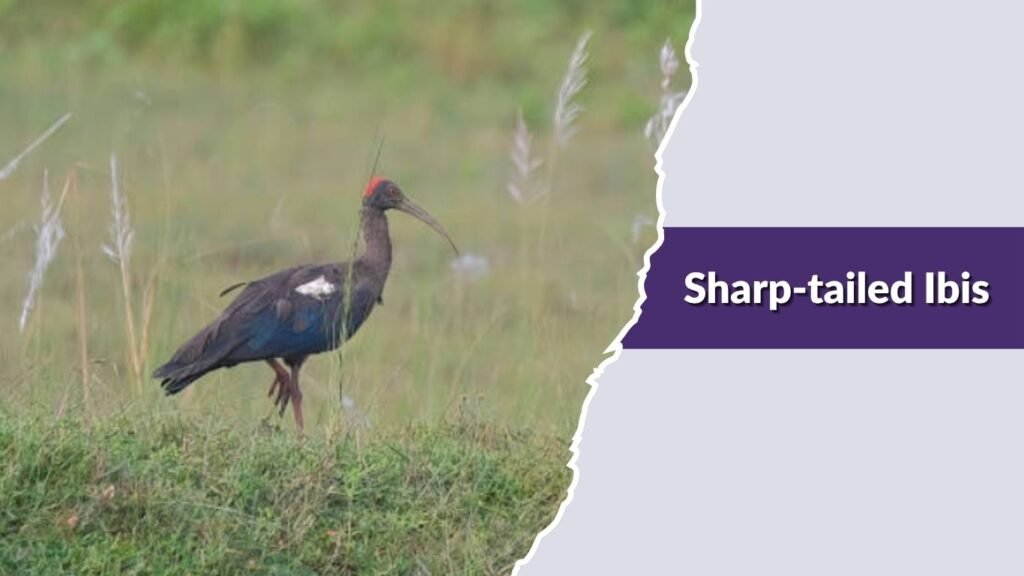
The Sharp-tailed Ibis is a distinctive South American species known for its unique tail shape and preference for grassy habitats. Unlike many other ibises, it is more often seen in open savannas and grasslands rather than strictly wetland environments.
Identification
- Medium-sized ibis with dark brown plumage
- Noticeable pointed or “sharp” tail
- Long, curved bill
- Dark legs
- Slight iridescent sheen on wings
Habitat and Distribution
Sharp-tailed Ibises are found in parts of South America, including Brazil, Bolivia, Paraguay, and Argentina. They prefer savannas, grasslands, and open fields, often near water but not always dependent on wetlands.
Behavior
This species is usually seen in pairs or small groups. It forages mostly on land, walking slowly while probing the ground. It is less social than some other ibis species and tends to stay in open habitats.
Diet
Their diet mainly consists of insects, worms, and small invertebrates. They use their long curved bill to probe soil and grass, relying on touch to find hidden prey.
