
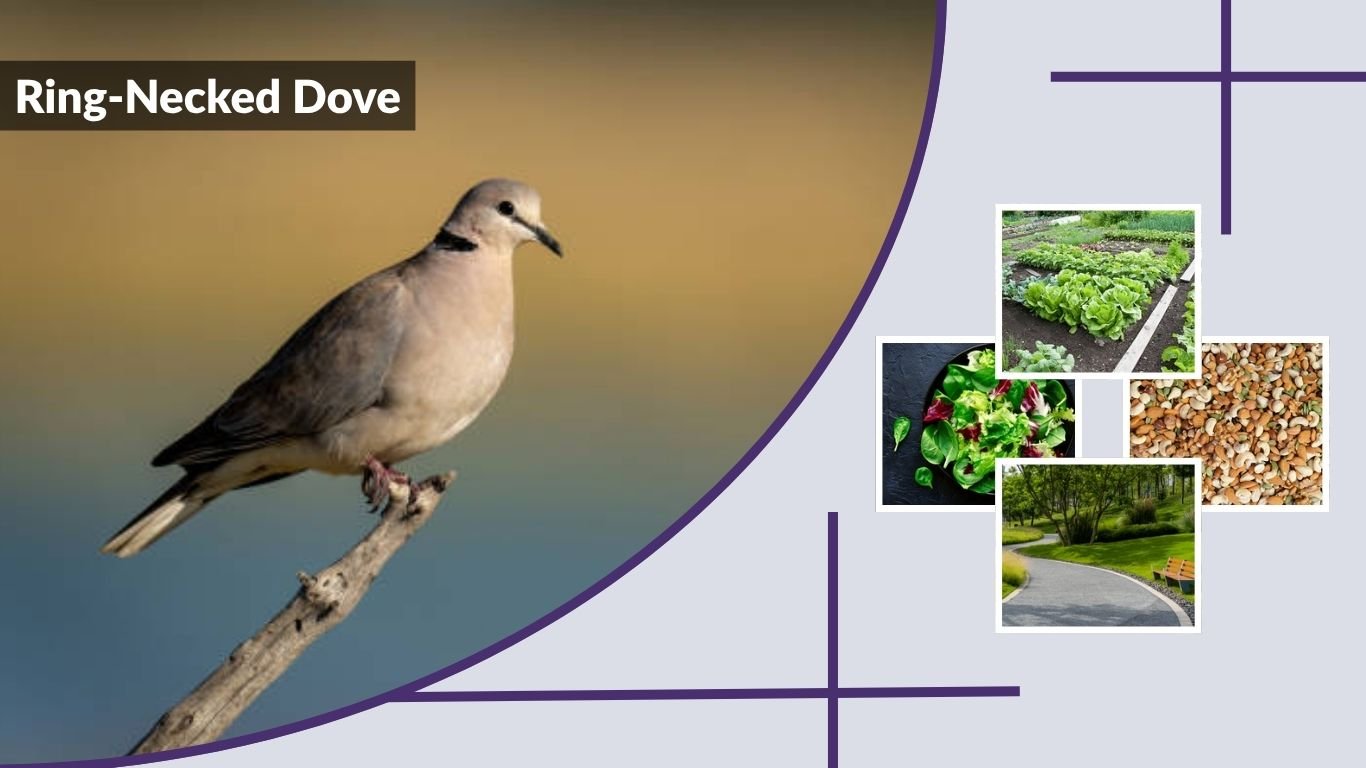
The ring-necked dove is a gentle bird recognized for the thin black ring marking around its neck and its calm cooing sounds. Popular as both a pet and ornamental bird, this dove has been domesticated for centuries and is now found in homes, aviaries, and urban environments worldwide. Many people confuse it with the Eurasian collared dove because both species share similar neck markings and body shapes. Learning about the ring-necked dove’s appearance, sounds, lifespan, diet, and behavior helps bird lovers identify and care for this peaceful species more effectively.
What Is a Ring-Necked Dove?
The ring-necked dove is a domesticated dove species commonly kept as a companion bird. Its scientific name is Streptopelia risoria. The species is closely related to African collared doves and has become popular worldwide because of its friendly temperament and soft vocalizations.
Most ring-necked doves have cream, gray, or light brown feathers with a thin dark ring around the back of the neck. This unique marking gives the bird its common name. These doves are often seen in aviaries, homes, pet stores, and ceremonial releases because of their peaceful appearance.
Physical Appearance
Several features make the ring-necked dove easy to recognize compared to other dove species.
- Thin black or dark gray neck ring
- Slim body with long pointed tail
- Soft cream, white, or gray plumage
- Dark eyes with smooth facial features
- Rounded wings and delicate posture
Adult ring-necked doves are medium-sized birds that generally measure around 10 to 12 inches long.
Male vs Female Ring-Necked Dove
Male and female ring-necked doves look very similar, making visual identification difficult. However, males are often slightly larger and more vocal during breeding periods.
Males frequently perform courtship displays that include bowing, tail spreading, and repetitive cooing sounds. Females usually appear quieter and may spend more time near nesting areas once breeding begins.
Ring-Necked Dove Range and Habitat
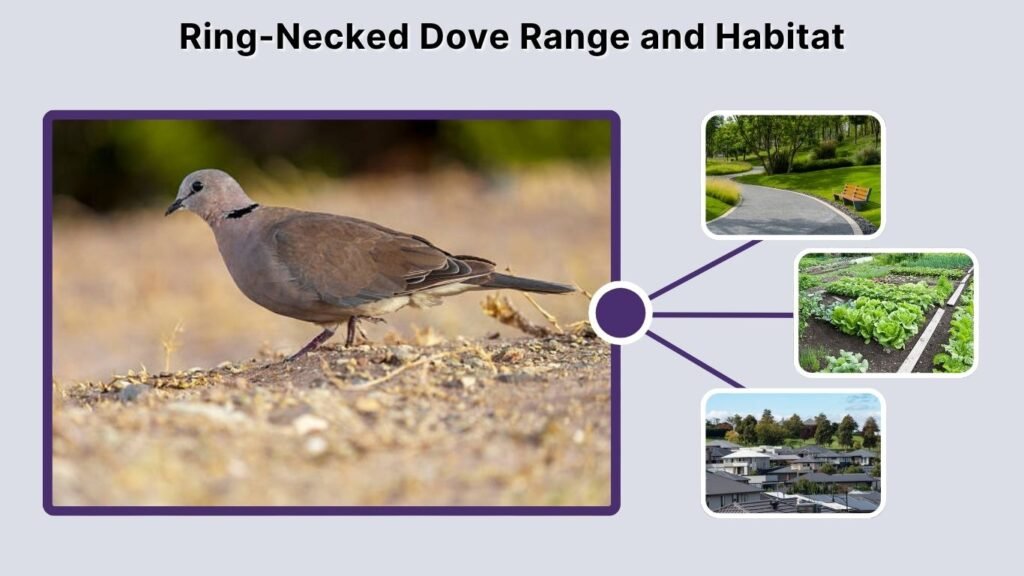
Ring-necked doves originally descended from African and Asian collared dove species. Because humans domesticated them centuries ago, they now exist in many countries around the world. Most populations live in captivity, although escaped birds occasionally survive outdoors in warm climates.
These doves adapt well to human environments because they tolerate close contact with people and thrive in protected spaces. In the United States, small feral populations may appear near urban centers where released or escaped pet birds establish temporary colonies.
Where Ring-Necked Doves Live
Ring-necked doves prefer warm regions with access to food, water, and safe nesting locations. Captive birds are commonly housed in indoor cages, outdoor aviaries, and bird sanctuaries.
Common places where ring-necked doves are found include:
- Residential homes and aviaries
- Urban parks and gardens
- Pet stores and bird breeders
- Warm suburban environments
- Rescue and rehabilitation centers
Unlike many wild dove species, ring-necked doves depend heavily on human care and protection.
Do Ring-Necked Doves Migrate?
Ring-necked doves are generally nonmigratory birds. Domestic populations remain in the same area year-round because they rely on stable food sources and shelter.
Escaped birds may move locally while searching for safety and food, but they rarely complete long seasonal migrations like many wild bird species. Cold weather can be especially difficult for abandoned domestic doves because they are not fully adapted to harsh outdoor conditions.
Ring-Necked Dove Sounds and Calls
Ring-necked doves are known for their calm and repetitive cooing sounds. Their vocalizations are softer and more soothing than those of larger pigeons or wild collared doves. Many bird owners enjoy these sounds because they create a peaceful atmosphere indoors and outdoors.
These birds communicate regularly throughout the day, especially during early morning and evening hours. Males usually vocalize more often during courtship and territorial behavior.
What Does a Ring-Necked Dove Sound Like?
The typical ring-necked dove call is a slow rhythmic coo repeated several times in sequence. Many people describe the sound as relaxing and gentle rather than loud or harsh.
Their calls are commonly used for communication between mates and for attracting attention during breeding season. Because the sounds are repetitive, owners quickly learn to recognize individual vocal patterns among their birds.
Why Ring-Necked Doves Call
Ring-necked doves rely on vocal communication for social interaction and bonding. Calls help strengthen pair relationships and maintain contact between birds living together.
Common reasons ring-necked doves vocalize include:
- Attracting a mate during breeding
- Communicating with nearby birds
- Defending territory around nests
- Responding to environmental movement
- Expressing comfort and social behavior
Although they vocalize regularly, ring-necked doves are generally considered quiet pets compared to parrots and many other domesticated birds.
Ring-Necked Dove vs Eurasian Collared Dove
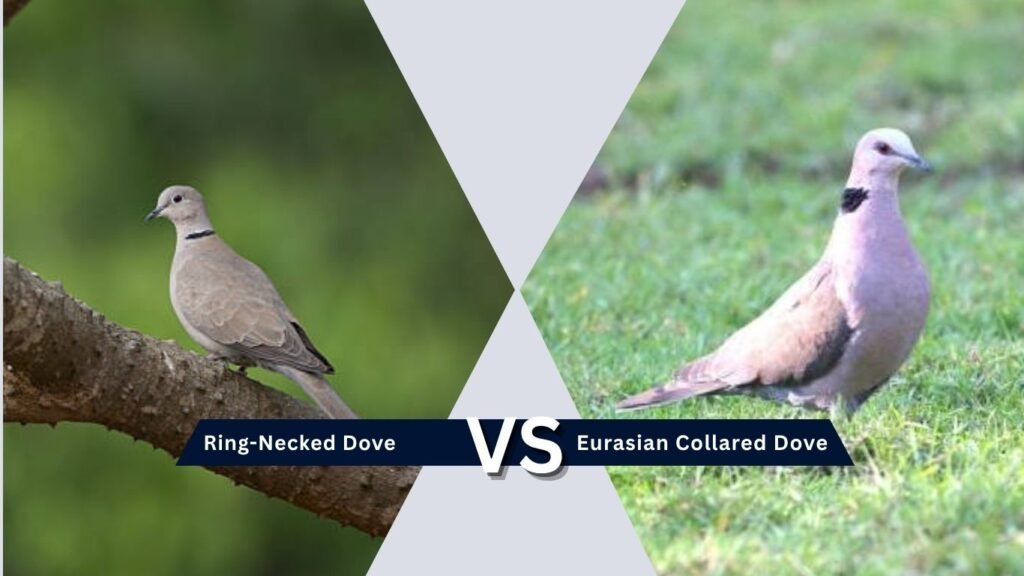
Ring-necked doves are frequently confused with Eurasian collared doves because both species have similar neck markings and body shapes. However, important differences separate these birds.
The Eurasian collared dove is a wild species commonly found across Europe and North America, while the ring-necked dove is mainly domesticated. Eurasian collared doves are usually larger, stronger flyers, and darker in coloration.
Key Appearance Differences
Birdwatchers can identify these species by observing their body size, feather coloration, and behavior.
- Eurasian collared doves are larger and bulkier
- Ring-necked doves appear softer and lighter in color
- Wild collared doves have broader neck markings
- Ring-necked doves are more common in captivity
- Eurasian collared doves behave more cautiously outdoors
Although both species share similar ancestry, domestication has made ring-necked doves calmer and more dependent on human care.
Ring-Necked Doves as Pets
Ring-necked doves are among the most popular pet dove species because of their calm personalities and simple care needs. These birds are gentle, social, and generally comfortable around humans when handled regularly. Their peaceful behavior makes them suitable for beginners and experienced bird owners alike.
Unlike louder companion birds, ring-necked doves produce soft vocalizations and usually adapt well to indoor living. They also form strong pair bonds and often enjoy interacting with their owners through daily routines and feeding activities.
Are Ring-Necked Doves Good Pets?
Many bird enthusiasts prefer ring-necked doves because they are easy to manage and less demanding than parrots or exotic birds.
Benefits of keeping ring-necked doves include:
- Quiet and soothing vocalizations
- Gentle temperament around people
- Simple feeding and cleaning requirements
- Strong social bonding behavior
- Adaptability to indoor aviaries and cages
These qualities make the species especially attractive for apartment living and smaller households.
Ring-Necked Dove Cage Setup
A healthy cage environment is important for both physical activity and emotional well-being. Ring-necked doves need enough space to stretch their wings and move comfortably between perches.
Cages should include clean bedding, food dishes, water containers, and secure resting areas. Many owners also provide shallow dishes for bathing because doves enjoy keeping their feathers clean.
What Do Ring-Necked Doves Eat?
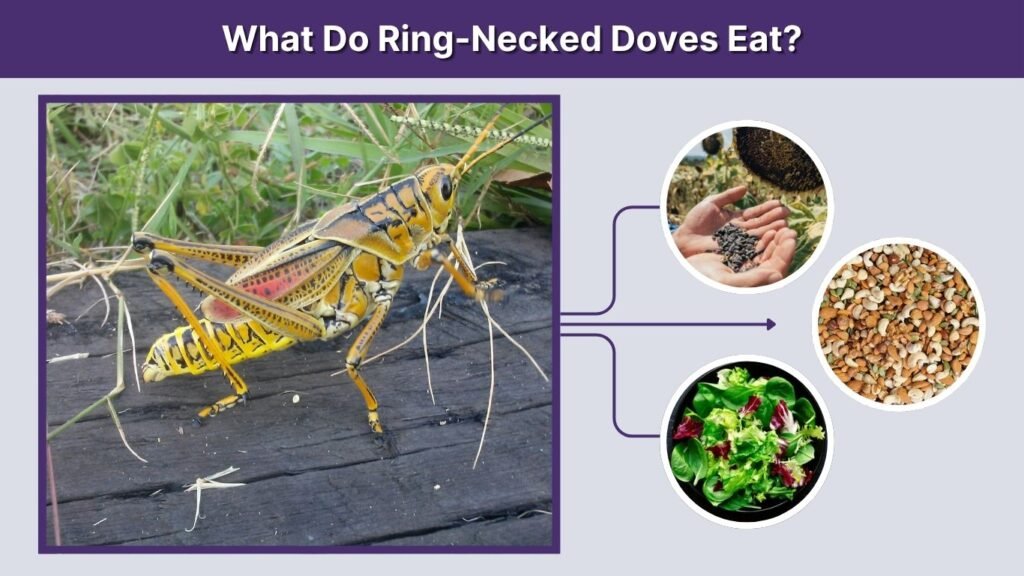
Ring-necked doves thrive on a balanced diet consisting mainly of seeds, grains, and fresh plant materials. Proper nutrition supports feather health, reproduction, and long-term lifespan.
In captivity, these birds depend entirely on their owners for consistent feeding and clean drinking water. Commercial dove and pigeon seed mixes are commonly used because they contain the nutrients needed for healthy growth.
Natural and Domestic Diet
Ring-necked doves consume a variety of foods in both domestic and outdoor environments.
Common foods include:
- Millet and cracked corn
- Small sunflower seeds
- Dove and pigeon seed mixes
- Fresh leafy greens
- Clean water and mineral supplements
Occasional treats such as chopped vegetables or small fruits can also provide dietary variety.
Can Ring-Necked Doves Eat Sunflower Seeds?
Yes, ring-necked doves can safely eat sunflower seeds in moderation. Smaller sunflower chips are easier for them to consume than large whole seeds. However, sunflower seeds contain high fat levels, so they should be offered as part of a balanced diet rather than the main food source.
Fresh water should always remain available because doves drink frequently throughout the day.
Ring-Necked Dove Lifespan and Care
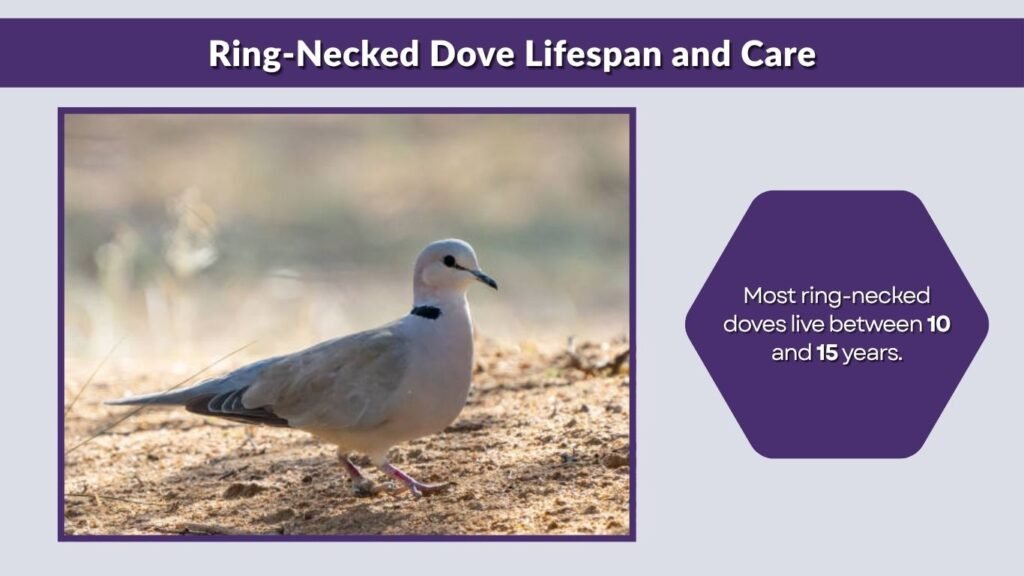
Ring-necked doves can live for many years when properly cared for in safe environments. Their lifespan depends on diet, housing quality, veterinary care, and protection from stress or predators.
Indoor pet doves often live significantly longer than abandoned or escaped birds because they avoid harsh weather and natural dangers. Consistent care routines also improve their physical health and emotional comfort.
How Long Do Ring-Necked Doves Live?
Most ring-necked doves live between 10 and 15 years in captivity, although some individuals survive even longer with excellent care.
Factors that influence lifespan include:
- Balanced nutrition and hydration
- Safe and clean living conditions
- Reduced exposure to stress
- Proper temperature control
- Regular observation for illness
Healthy doves remain active, alert, and socially responsive throughout much of their lives.
Ring-Necked Dove Meaning and Symbolism
Ring-necked doves are widely associated with peace, devotion, and emotional harmony. Their gentle appearance and calm behavior contribute to their symbolic role in many cultures and spiritual traditions.
These birds are commonly used during weddings, ceremonies, and artistic representations because they symbolize loyalty and long-lasting relationships. Their soft cooing sounds also create associations with comfort and tranquility.
Ring-Necked Dove Spiritual Meaning
Many people interpret ring-necked doves as symbols of hope and emotional balance. Sightings may represent reassurance, companionship, or peaceful transitions during difficult times.
Common symbolic meanings include:
- Love and lifelong partnership
- Peace and emotional healing
- Loyalty and trust
- Spiritual comfort and guidance
- Calmness during stressful situations
Because of these meanings, ring-necked doves continue appearing in literature, decorative art, and ceremonial traditions worldwide.
FAQs
Are ring-necked doves intelligent?
Ring-necked doves are moderately intelligent birds with strong social awareness and memory. They can recognize routines, respond to familiar people, and learn simple behaviors through repetition. While they are not as trainable as parrots, they adapt well to human interaction and captive environments.
Can ring-necked doves live alone?
Ring-necked doves can live alone if they receive regular attention from their owners. However, they are naturally social birds and usually thrive with companionship. Many owners keep them in pairs because bonded doves often display calmer behavior and stronger emotional well-being.
Do ring-necked doves recognize people?
Yes, ring-necked doves can recognize familiar people over time. Pet doves often become comfortable with their owners’ voices, routines, and presence. Birds raised with gentle handling may even approach trusted individuals for food, attention, or social interaction.
How often do ring-necked doves lay eggs?
Healthy female ring-necked doves may lay eggs several times each year, especially in warm indoor environments with stable conditions. Most clutches contain two eggs. Breeding frequency depends on nutrition, daylight exposure, and whether the birds are housed with a mate.
Are ring-necked doves noisy pets?
Ring-necked doves are generally considered quiet pets compared to parrots and many other companion birds. Their vocalizations consist mainly of soft repetitive cooing sounds. Although they may call regularly during morning and evening hours, their noise level is usually calm and manageable indoors.
