
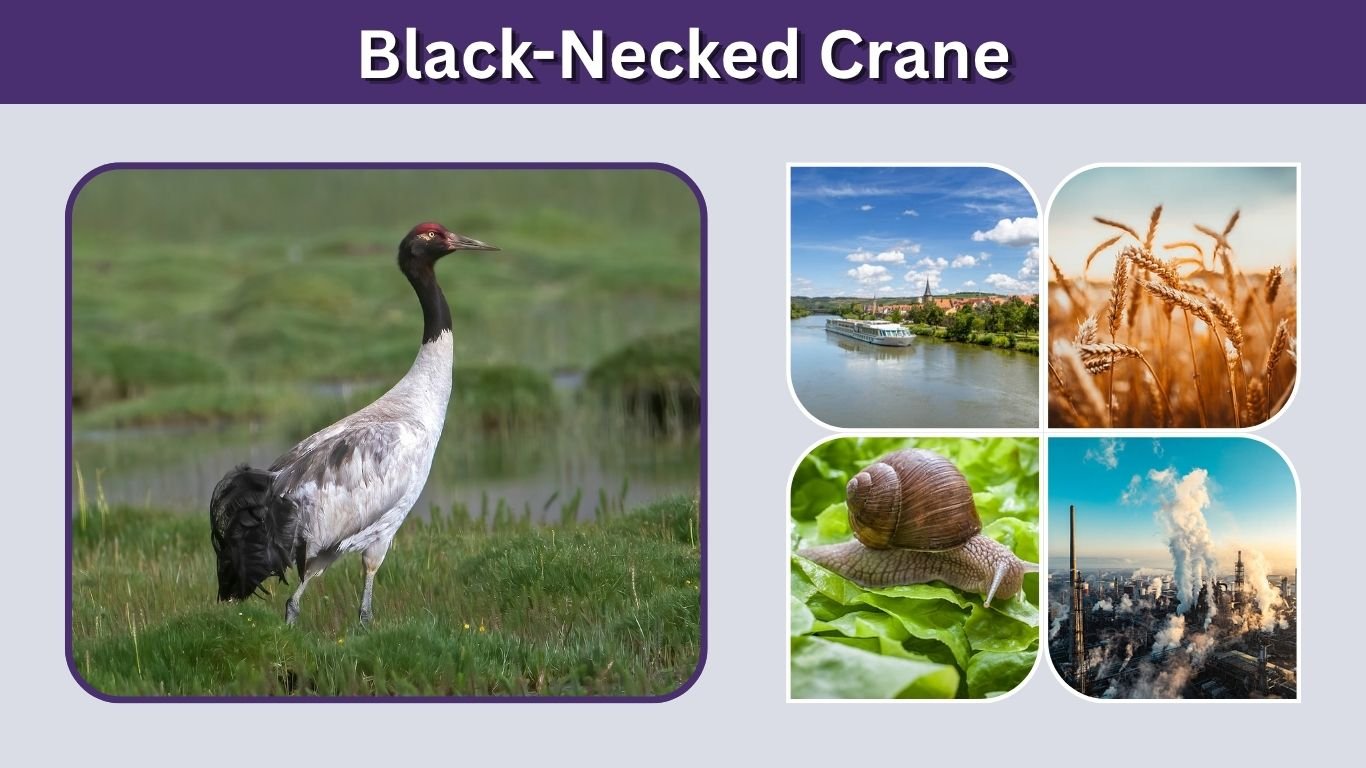
The Black-necked crane is a rare high-altitude bird recognized by its black head and neck, pale gray body, red crown, and long dark legs. It breeds primarily across the Tibetan Plateau and migrates to lower valleys in China, Bhutan, and parts of India during winter. Closely connected with Himalayan wetlands and Buddhist culture, the species is celebrated for its graceful dances, strong pair bonds, and spiritual importance. Although its population has increased, habitat changes, power lines, pollution, and human disturbance remain serious concerns.
What Is a Black-Necked Crane?
The Black-necked crane is a large member of the crane family, Gruidae. Its scientific name is Grus nigricollis. It is the only crane species whose breeding and wintering range is concentrated almost entirely within the high-altitude environments of the Tibetan Plateau and surrounding Himalayan regions.
The species was scientifically described in the nineteenth century and is sometimes called the Tibetan crane. Its ability to survive in cold, oxygen-poor landscapes makes it one of the world’s most specialized crane species.
Black-Necked Crane Identification
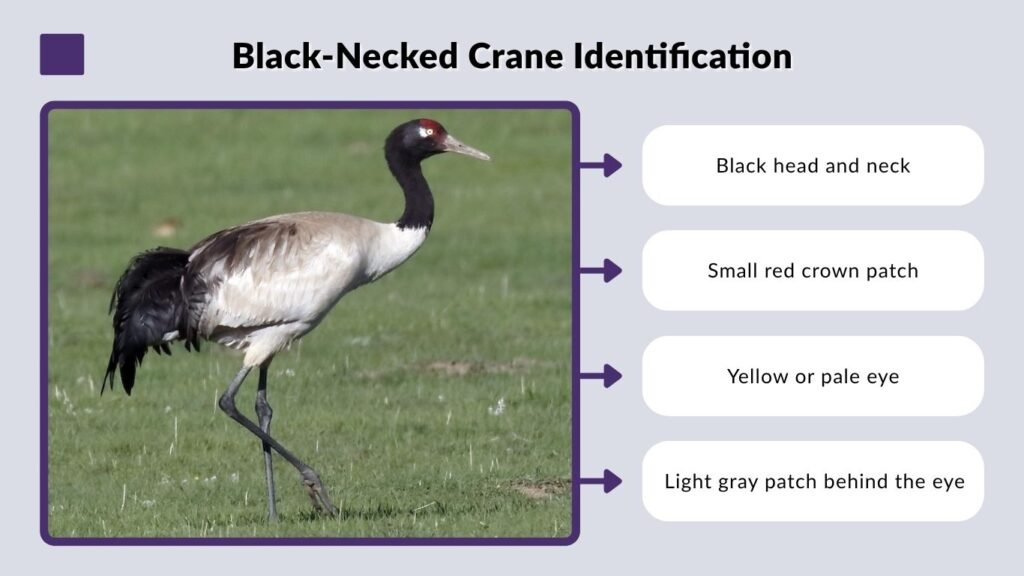
Adult Black-necked cranes have a striking black-and-gray appearance. Their name comes from the black plumage covering the head, throat, and most of the neck.
Key Identification Features
- Black head and neck
- Small red crown patch
- Yellow or pale eye
- Light gray patch behind the eye
- Ash-gray body plumage
- Black wing feathers and tail
- Long black legs
- Straight neck and trailing legs in flight
The body may appear mostly pale gray when the wings are folded. During flight or dancing, the darker flight feathers become much more noticeable.
Juveniles have less contrasting plumage. Their heads are usually cinnamon-brown, while their necks and bodies appear grayish or mottled. The black neck and red crown become more distinct as they mature.
Male vs Female Black-Necked Crane
Males and females look extremely similar. Both have black necks, red crowns, gray bodies, and dark legs.
Males are generally somewhat larger and may produce a different pattern of notes during coordinated pair calls. However, accurately determining sex from appearance alone is difficult without measurements, behavioral observations, or genetic testing.
Black-Necked Crane Size
The Black-necked crane is a large but relatively lightly built crane. An adult stands approximately 115 centimeters, or almost four feet tall, and commonly weighs around 5.35 kilograms.
| Measurement | Typical figure |
| Height | About 115 cm |
| Weight | Approximately 5.35 kg |
| Wingspan | Around 1.8–2.0 m |
| Usual clutch | Two eggs |
| Global population estimate | About 16,500 |
Its broad wings allow it to travel across mountain ranges and high plateaus, despite thin air and demanding weather conditions.
Where Do Black-Necked Cranes Live?
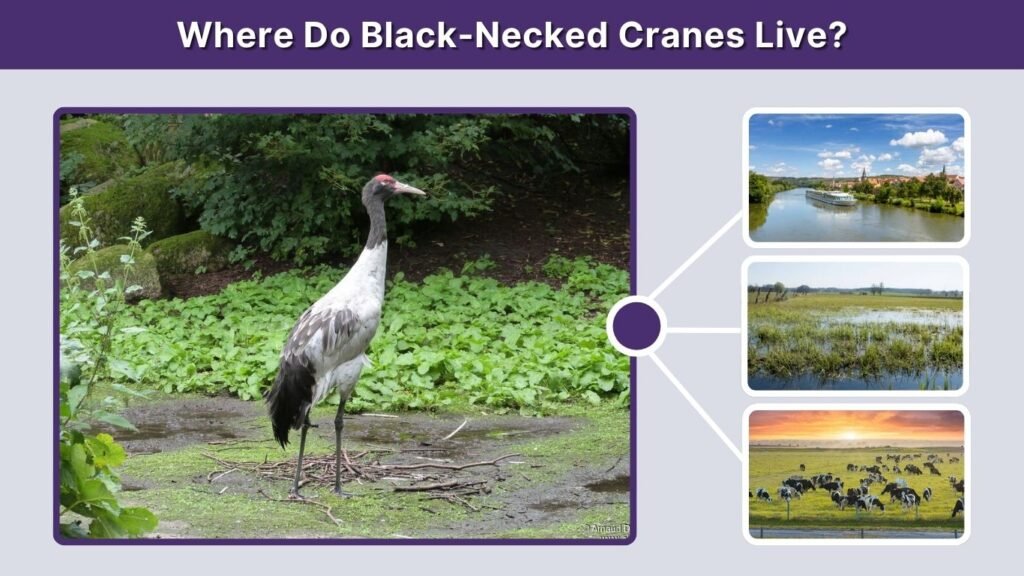
Black-necked cranes occur mainly in China, Bhutan, and northern India. Their breeding range includes high-altitude areas of the Tibetan Plateau, central China, and parts of the Himalayan region.
During winter, the birds descend to lower valleys and wetlands in southern China, Bhutan, and northeastern India. Different populations follow separate seasonal routes depending on their breeding locations.
Black-Necked Crane Habitat
These cranes depend on high-altitude wetlands surrounded by open grasslands and agricultural areas.
Common habitats include:
- Alpine marshes
- High-altitude lakes
- River valleys
- Wet meadows
- Shallow bogs
- Pastures and grasslands
- Barley and wheat fields
- Harvested agricultural land
- Slow-moving river margins
Breeding pairs usually select quiet wetlands with shallow water, nesting vegetation, and nearby feeding areas. During winter, cranes often forage in cultivated fields during the day and return to protected marshes or shallow water to roost at night.
The species has several physical and behavioral adaptations for cold environments. Dense plumage provides insulation, long legs allow it to move through water and snow, and seasonal migration helps it avoid the most severe winter conditions.
Black-Necked Crane Migration
Most Black-necked cranes are seasonal migrants, although the distance traveled varies among populations.
Birds breeding on the Tibetan Plateau generally move toward lower and warmer valleys in late autumn. In Bhutan, cranes typically arrive between October and November and remain until February or March. They then return northward to their breeding grounds.
In flight, cranes hold their necks straight forward and extend their legs behind the body. They may fly in lines or V-shaped formations, using rising air currents to conserve energy when crossing mountainous landscapes.
Black-Necked Cranes in Bhutan
Bhutan is one of the most important wintering countries for the species. Major wintering sites include Phobjikha Valley, Bumdeling, and parts of Bumthang and eastern Bhutan.
The Royal Society for Protection of Nature reports that roughly 600 Black-necked cranes winter in several Bhutanese valleys. Phobjikha supports the country’s largest wintering gathering, while Bumdeling is another major site.
Phobjikha Valley
Phobjikha is a broad glacial valley containing high-altitude wetlands, grasslands, farms, and surrounding forests. Cranes feed in the valley during the day and use its wetlands as safe nighttime roosts.
The Black-necked Crane Education Centre at Gangtey–Phobjikha provides information about crane biology, local wildlife, wetland conservation, and community culture. Its facilities have included educational exhibits, crane documentaries, an observation area, and spotting equipment.
Black-Necked Crane Festival
Bhutan’s annual Black-Necked Crane Festival is held at Gangtey Monastery in Phobjikha Valley. It usually takes place on November 11 to celebrate the birds’ arrival and raise awareness about their conservation.
The festival includes crane-themed dances, costumes, songs, cultural performances, environmental activities, and traditional archery. It also connects wildlife conservation with community involvement and responsible tourism.
Black-Necked Cranes in India
India supports both breeding and wintering Black-necked cranes.
The high-altitude wetlands of Changthang in Ladakh provide important breeding grounds. The cranes nest near lakes, bogs, and marshes in the cold desert landscape. Government conservation documents identify Black-necked cranes as important high-altitude birds of Ladakh.
In Arunachal Pradesh, cranes winter in the Zemithang Valley along the Nyamjang Chu River in Tawang district. This area is considered one of the species’ few known wintering sites in India.
What Do Black-Necked Cranes Eat?
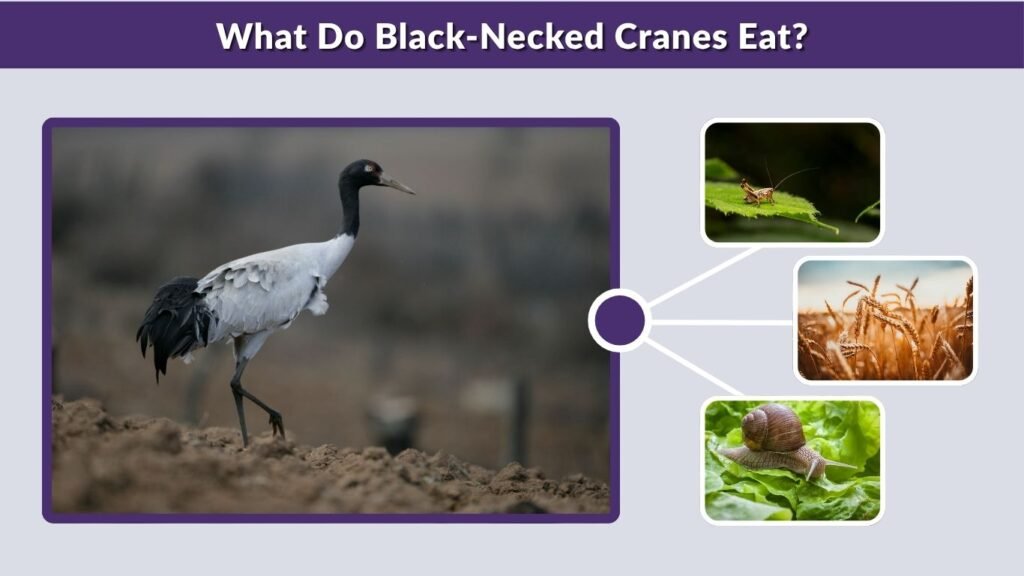
Black-necked cranes are omnivores. They consume plant material as well as small animals, changing their diet according to the habitat and season.
Black-Necked Crane Diet
Common foods include:
- Plant roots and tubers
- Seeds and grains
- Barley and wheat
- Waste grain from harvested fields
- Insects and insect larvae
- Snails and shrimp
- Fish and frogs
- Lizards
- Small rodents such as voles
The cranes forage by walking slowly across wetlands and fields. They use their long bills to probe soil, turn over plant material, dig up roots, and capture small animals.
Black-Necked Crane Behavior
Black-necked cranes are commonly observed in pairs, family groups, or larger winter flocks. Breeding pairs defend territories, while nonbreeding birds may gather together in productive feeding areas.
Call and Communication
Their call is a loud, far-carrying trumpet. A sharp single note may warn of danger, while family members use softer contact calls to remain together.
Bonded pairs perform coordinated unison calls. During this display, the cranes stretch their necks upward and call in a carefully timed pattern. These calls strengthen the pair bond and help advertise ownership of a breeding territory.
Why Do Black-Necked Cranes Dance?
Their dances involve bowing, running, jumping, spreading the wings, and tossing pieces of vegetation into the air.
Dancing may help cranes:
- Attract a partner
- Strengthen an established bond
- Communicate excitement
- Reduce social tension
- Practice coordination
- Defend a territory
Young birds also dance, showing that the behavior is not limited to courtship.
Breeding and Life Cycle
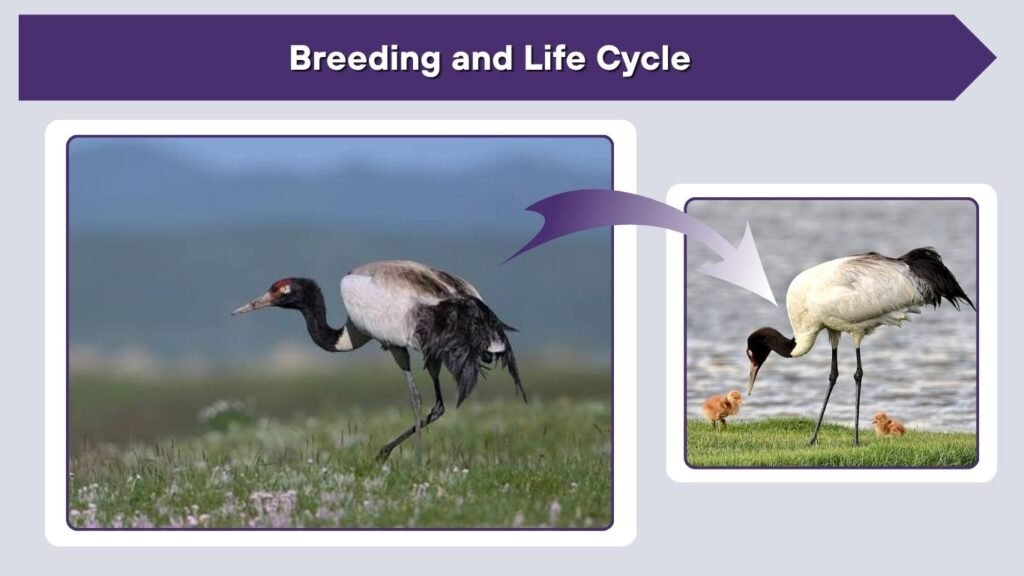
Black-necked cranes breed during spring and summer in high-altitude wetlands. A bonded pair constructs a nest from reeds, grasses, sedges, and other vegetation.
Eggs and Chicks
The female normally lays two eggs. Both parents participate in incubation and territorial defense.
After hatching, the chicks can walk and follow their parents relatively quickly. The adults lead them to feeding areas, protect them from predators, and teach them important movements and migration routes.
Young cranes remain with their parents during their first winter. Their plumage gradually changes from cinnamon and gray to the bold adult pattern.
Is the Black-Necked Crane Endangered?
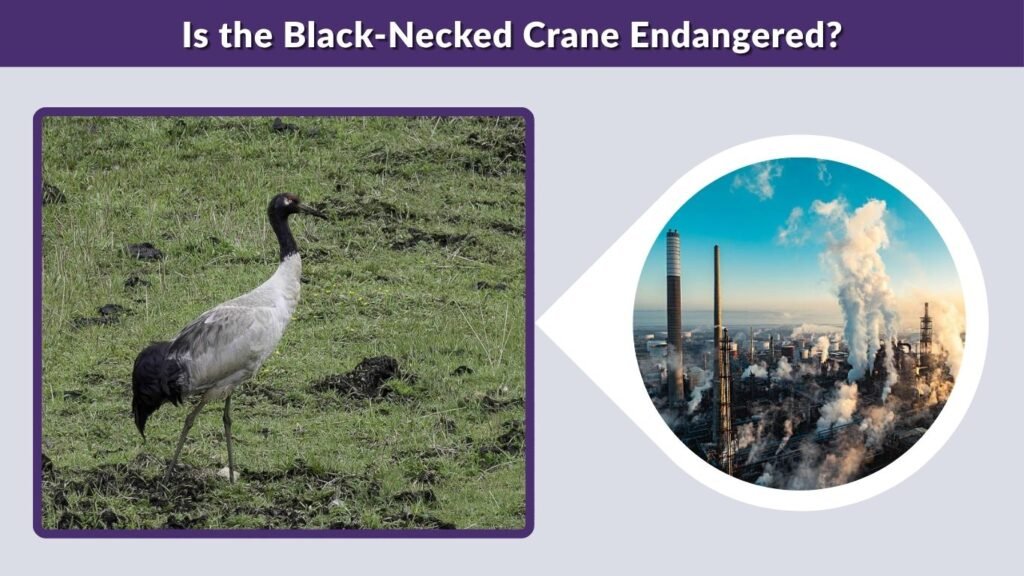
The Black-necked crane is not currently classified globally as Endangered. Its present IUCN category is Near Threatened, with an estimated population of around 16,500 and an increasing overall trend. It is also listed under CITES Appendix I because international trade requires strict protection.
However, the species remains vulnerable to local habitat damage because it depends on a relatively limited network of high-altitude wetlands and wintering valleys.
Major Threats
Important threats include:
- Wetland drainage and degradation
- Agricultural expansion
- Road and building development
- Power-line collisions
- Disturbance near nesting and roosting areas
- Pollution and pesticide exposure
- Changes in river flow
- Climate-related changes to alpine wetlands
- Free-ranging dogs and other predators
Conservation efforts include protecting wetlands, monitoring crane numbers, marking dangerous power lines, working with farmers, restoring roosting sites, and supporting community-based tourism.
Black-Necked Cranes and Buddhism
Black-necked cranes are deeply respected in many Himalayan Buddhist communities. In Bhutan, their arrival is traditionally associated with good fortune, healthy farmland, and a successful harvest.
Local respect has helped protect important wintering areas. The cranes’ graceful appearance, coordinated dances, and seasonal return also make them symbols of peace, longevity, harmony, and environmental health.
Interesting Black-Necked Crane Facts
- It is the only crane adapted primarily to the Tibetan Plateau.
- Adults have black necks, gray bodies, and red crowns.
- They breed in some of the world’s highest wetlands.
- Phobjikha is Bhutan’s largest wintering site.
- Both adults help care for their chicks.
- Their diet includes plants, insects, frogs, fish, and rodents.
- Pairs strengthen their bonds through dancing and unison calls.
- The species breeds in Ladakh and winters in Arunachal Pradesh.
- Bhutan celebrates the cranes with an annual festival.
- The current global population is estimated at approximately 16,500.
FAQs
Do Black-necked cranes mate for life?
Black-necked cranes form strong, long-term monogamous pair bonds. Pairs dance, call, nest, and raise chicks together. A crane may eventually select another partner when its original mate dies.
Can Black-necked cranes fly over the Himalayas?
Yes. They are strong high-altitude flyers adapted to mountainous regions. Their broad wings help them use air currents while moving between breeding wetlands and lower wintering valleys.
When can you see Black-necked cranes in Bhutan?
They are generally present from late October or November until February or March. Phobjikha Valley is the best-known viewing area, although cranes also winter in Bumdeling and other Bhutanese valleys.
Why are Black-necked cranes important?
They have major ecological, cultural, and spiritual importance. Their presence indicates functioning wetlands, while protecting their habitat also benefits other wildlife, farming communities, water resources, and local tourism.
How can Black-necked cranes be protected?
Protection requires conserving wetlands and roosting sites, reducing disturbance, marking dangerous electrical lines, limiting pollution, supporting crane-friendly agriculture, controlling free-ranging dogs, and involving local communities in habitat management.
