
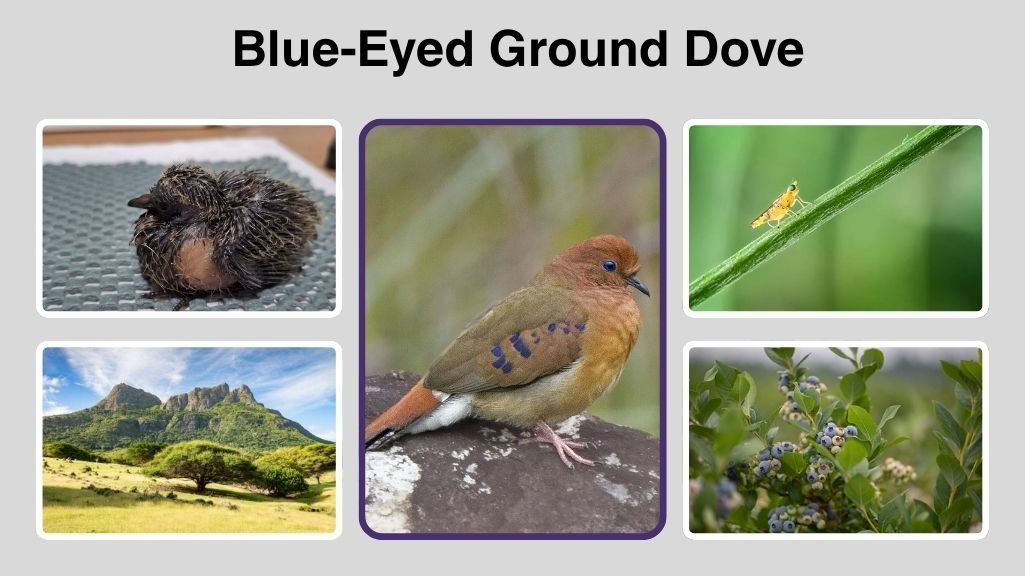
The Blue-eyed ground dove is one of the rarest and most mysterious birds in the world. Famous for its striking blue eye ring and secretive behavior, this tiny dove remained unseen for decades before researchers rediscovered it in Brazil. Its rarity has made it a major focus for bird conservation programs.
Birdwatchers and wildlife experts are fascinated by the blue-eyed ground dove because of its limited population, unique habitat, and remarkable survival story. Today, the species symbolizes hope for endangered bird conservation efforts worldwide.
What Is the Blue-Eyed Ground Dove?
The blue-eyed ground dove is a small ground-dwelling bird species found mainly in Brazil’s tropical grassland ecosystems. Unlike tree-dwelling pigeons and doves, this species spends most of its time walking and feeding on the ground. Its shy nature and limited distribution make sightings extremely rare in the wild.
Scientists consider the species critically endangered because only a very small population remains in natural habitats. Conservation organizations are now working to protect its environment and increase its survival chances.
Blue-Eyed Ground Dove Scientific Classification
The bird belongs to the pigeon and dove family known as Columbidae.
- Scientific name: Columbina cyanopis
- Family: Columbidae
- Bird type: Ground dove
- Native region: Brazil
- Conservation status: Critically endangered
Physical Characteristics of the Blue-Eyed Ground Dove
The blue-eyed ground dove may look simple from a distance, but its appearance is unique among tropical birds.
- Bright blue ring around the eyes
- Soft brown-gray body feathers
- Pale underparts
- Small rounded head
- Short dark beak
- Compact body structure
Size of the Blue-Eyed Ground Dove
The blue-eyed ground dove is a very small bird compared to many pigeon species. Adults usually measure around 15 to 17 centimeters in length and weigh only a few ounces. Its lightweight body helps it move quickly through tall grasses and dry vegetation.
Although small, the bird is highly adapted to surviving in open grassland habitats where camouflage and fast movement are important for avoiding predators.
Blue-Eyed Ground Dove Habitat
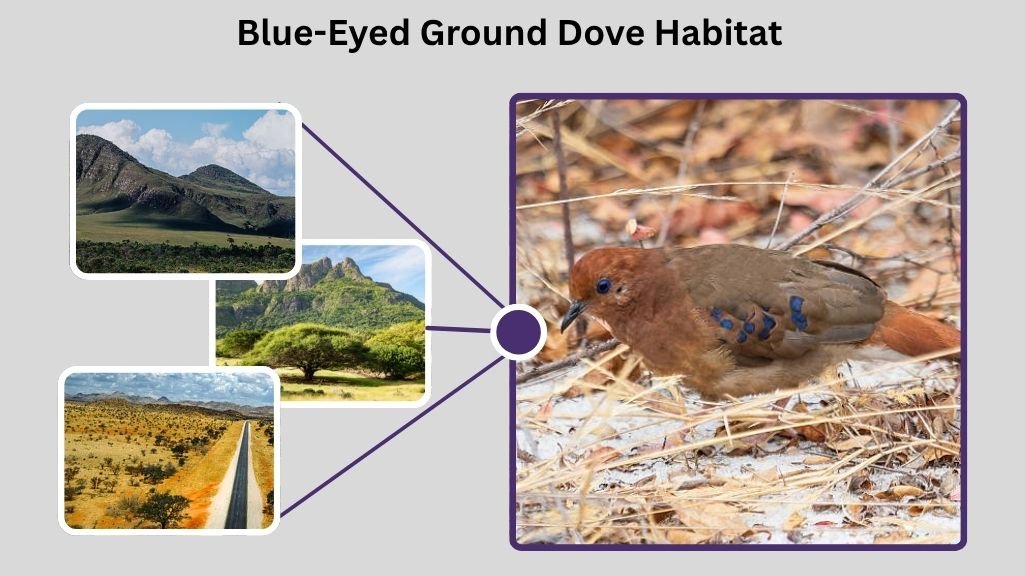
The natural habitat of the blue-eyed ground dove is limited to specific regions of Brazil. The species survives mainly in the Cerrado biome, a tropical savanna ecosystem filled with grasslands, shrubs, and scattered trees. This environment provides the bird with food, nesting cover, and protection from predators.
Because the habitat range is extremely small, environmental destruction can quickly threaten the remaining population. Agricultural expansion and land clearing have reduced many of the natural grasslands where these birds once lived freely.
Where Is the Blue-Eyed Ground Dove Found?
The species is mainly associated with dry grassland and savanna ecosystems.
- Central Brazil
- Cerrado grasslands
- Tropical savannas
- Open shrublands
- Dry seasonal habitats
Why the Habitat Is Important
Healthy grassland ecosystems are essential for the survival of the blue-eyed ground dove. These areas provide seeds, insects, and nesting protection that support the bird’s entire life cycle.
The dense grasses also help the bird hide from predators because it spends most of its time on the ground. Without protected habitat zones, the remaining population would face an even greater risk of extinction.
Blue-Eyed Ground Dove Appearance and Behavior
The blue-eyed ground dove is admired for its delicate appearance and calm behavior. Unlike brightly colored tropical parrots, this bird depends more on subtle camouflage than vivid body colors. Its most recognizable feature is the brilliant blue ring surrounding its eyes, which gives the species its famous name.
Researchers describe the bird as quiet and highly secretive. It usually avoids open exposure and prefers moving carefully through tall grasses. This behavior made the species difficult to study for many years and contributed to its mysterious reputation among birdwatchers.
Why Does the Blue-Eyed Ground Dove Have Blue Eyes?
The bright blue coloration around the bird’s eyes is one of its most unusual traits. Scientists believe this feature may help with communication and mate recognition during breeding periods. The vivid eye ring also helps researchers identify the species quickly in the field.
The rest of the bird’s body remains relatively plain in color, which provides camouflage in dry grassland habitats. This balance between visibility and protection may help the species survive in predator-rich environments.
Blue-Eyed Ground Dove Behavior
Several interesting behaviors have been observed in the wild.
- Ground feeding habits
- Quiet movement through grasses
- Pair bonding during breeding
- Short-distance flight
- Secretive nesting behavior
Blue Ground Dove Call
The call of the blue-eyed ground dove is soft and low compared to many other dove species. Its vocal sounds are usually gentle repeating notes used for communication between mates or nearby birds.
Because the species is so rare, recordings of its calls are limited. Researchers continue studying its vocal behavior to better understand communication and breeding patterns in the wild.
Blue-Eyed Ground Dove Diet and Feeding Habits
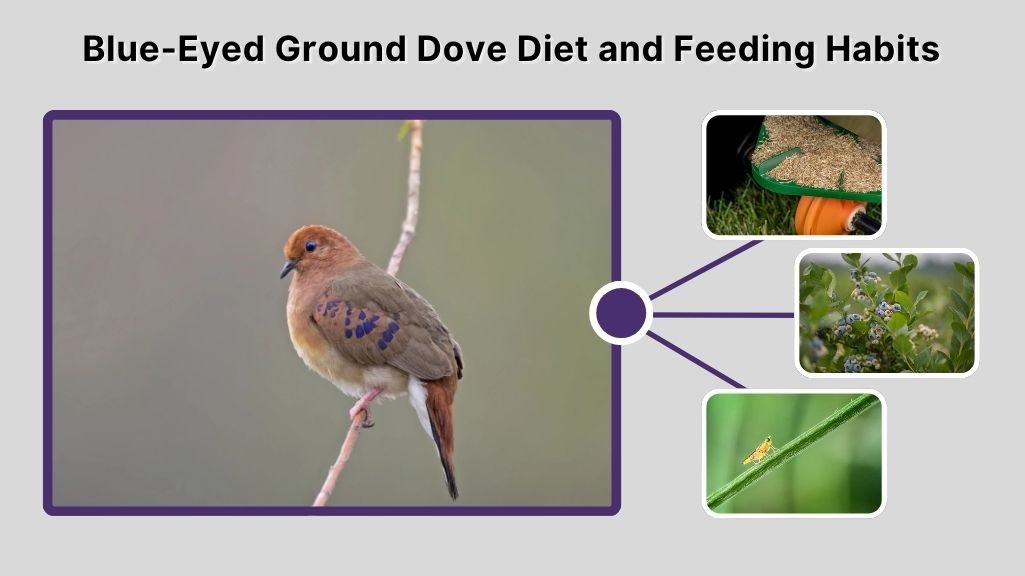
The blue-eyed ground dove survives mainly by feeding on small seeds and natural vegetation found in grassland ecosystems. Since the species spends most of its life on the ground, it searches for food among dry grasses, fallen plants, and open soil areas. Its feeding behavior is quiet and cautious, helping it avoid predators while foraging.
Researchers believe the bird plays an important role in maintaining the balance of its habitat by helping spread seeds throughout the environment. Seasonal food availability can also influence movement and breeding activity.
What Does the Blue-Eyed Ground Dove Eat?
The species has a simple but varied diet that supports survival in tropical savanna habitats.
- Grass seeds
- Small fruits
- Tiny insects
- Native plant seeds
- Fallen vegetation
- Organic plant material
Feeding Adaptations
The blue-eyed ground dove has several natural adaptations that help it survive in dry grassland ecosystems. Its small body allows it to move easily through dense grasses while searching for food. The bird’s short beak is also well suited for picking up tiny seeds from the ground surface.
Its cautious feeding style reduces exposure to predators such as snakes and birds of prey. By staying close to vegetation cover, the species improves its chances of survival in open habitats.
Blue-Eyed Ground Dove Population and Conservation
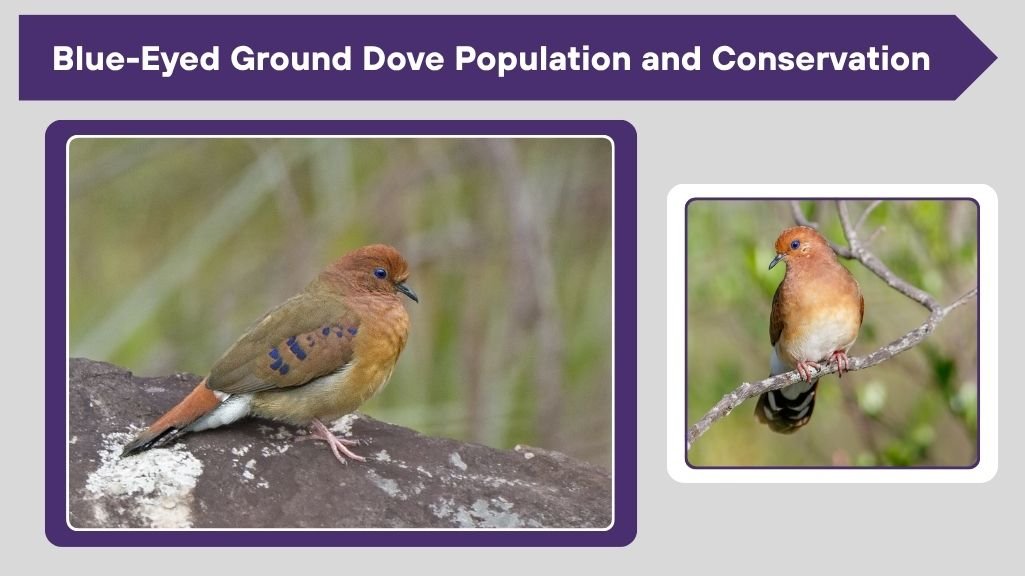
The blue-eyed ground dove is considered one of the rarest birds in the world. For many years, scientists believed the species might already be extinct because there were no confirmed sightings for decades. However, researchers later rediscovered a small surviving population in Brazil, bringing new hope for conservation efforts.
Today, wildlife organizations continue monitoring the remaining birds and protecting their habitat. Conservation programs focus heavily on preserving grasslands and reducing threats caused by human activity.
How Many Blue-Eyed Ground Doves Are Left?
Only a very small population of blue-eyed ground doves remains in the wild. Scientists estimate that the number of mature birds is extremely low, which is why the species is classified as critically endangered.
Because the population is so limited, even small environmental changes can have a major impact on survival rates. Conservation teams regularly track breeding activity and habitat conditions to protect the remaining birds.
How Were Blue-Eyed Ground Doves Found Again?
The rediscovery of the blue-eyed ground dove became one of the most exciting moments in modern bird conservation. After disappearing from scientific records for decades, researchers finally located surviving birds in Brazil’s Cerrado region.
The discovery attracted global attention from bird conservation organizations and wildlife experts. It also encouraged stronger habitat protection programs aimed at preventing the species from becoming extinct.
Protected Reserves and Conservation Efforts
Several conservation actions are now helping protect the species.
- Habitat preservation projects
- Protected reserve creation
- Population monitoring
- Conservation breeding programs
- Research partnerships
- Grassland restoration efforts
Threats to the Blue-Eyed Ground Dove
The species continues facing many dangers in the wild.
- Habitat destruction
- Agricultural expansion
- Grassland fires
- Natural predators
- Climate change
- Human disturbance
Blue-Eyed Ground Dove Breeding and Life Cycle
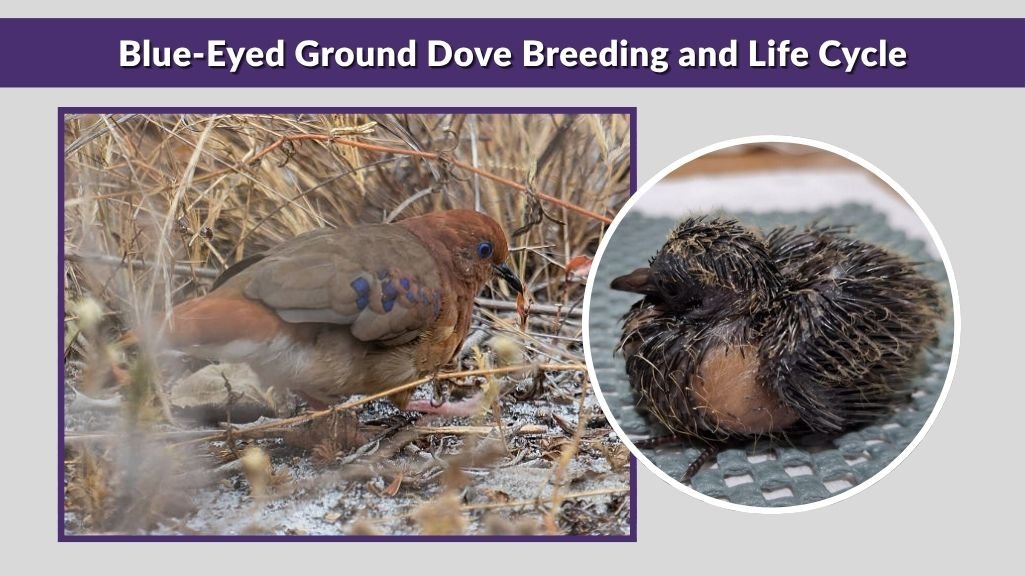
The breeding habits of the blue-eyed ground dove are still not fully understood because the species is so rare. Researchers continue observing wild birds to learn more about nesting behavior, chick development, and reproductive success.
Like many dove species, the blue-eyed ground dove appears to form pairs during breeding seasons. Both parents likely participate in protecting the nest and feeding the young chicks after hatching.
Blue Ground Dove Breeding Behavior
Several breeding behaviors have been observed by researchers.
- Pair bonding between adults
- Ground or low-level nesting
- Shared chick care
- Quiet courtship displays
- Protective nesting behavior
Blue-Eyed Ground Dove Chick
Blue-eyed ground dove chicks hatch with soft down feathers and depend completely on their parents for food and warmth. The young birds remain hidden within grasses or protected nesting areas during early development stages.
As they grow, the chicks gradually develop stronger feathers and improved movement abilities. Their survival depends heavily on habitat safety and parental protection.
Blue-Eyed Ground Dove Chicks Hatched in Conservation Programs
Conservation breeding programs have achieved important successes in recent years. Wildlife experts carefully monitor captive breeding projects to increase population numbers and improve the long-term survival of the species.
Successful chick hatching provides hope that the blue-eyed ground dove may recover if habitat protection and conservation efforts continue expanding.
Interesting Facts About the Blue-Eyed Ground Dove
The blue-eyed ground dove is one of the most unusual and rare birds found in South America. Its rediscovery surprised bird researchers and inspired new conservation programs around the world.
Amazing Blue-Eyed Ground Dove Facts
- One of the rarest birds on Earth
- Rediscovered after decades without sightings
- Known for its bright blue eye ring
- Lives mainly in Brazil’s Cerrado biome
- Spends most of its time on the ground
- Protected by international conservation groups
FAQs
Why is the blue-eyed ground dove so rare?
The blue-eyed ground dove is rare mainly because of habitat destruction and its naturally limited distribution. Large areas of grassland in Brazil have been converted into farmland, reducing safe nesting and feeding areas for the species.
Where does the blue-eyed ground dove live?
The species mainly lives in Brazil’s Cerrado region, a tropical savanna ecosystem filled with grasslands and shrubs. It prefers dry open habitats with dense ground vegetation for feeding and nesting.
Is the blue-eyed ground dove endangered?
Yes, the blue-eyed ground dove is critically endangered. Only a very small population remains in the wild, making conservation programs extremely important for the species’ survival.
What does the blue-eyed ground dove eat?
The bird mainly feeds on seeds, small fruits, and tiny insects found in grassland ecosystems. It searches for food while moving carefully across the ground.
How was the blue-eyed ground dove rediscovered?
Researchers rediscovered the species in Brazil after decades without confirmed sightings. The discovery became a major conservation success and renewed efforts to protect the remaining population and habitat.