
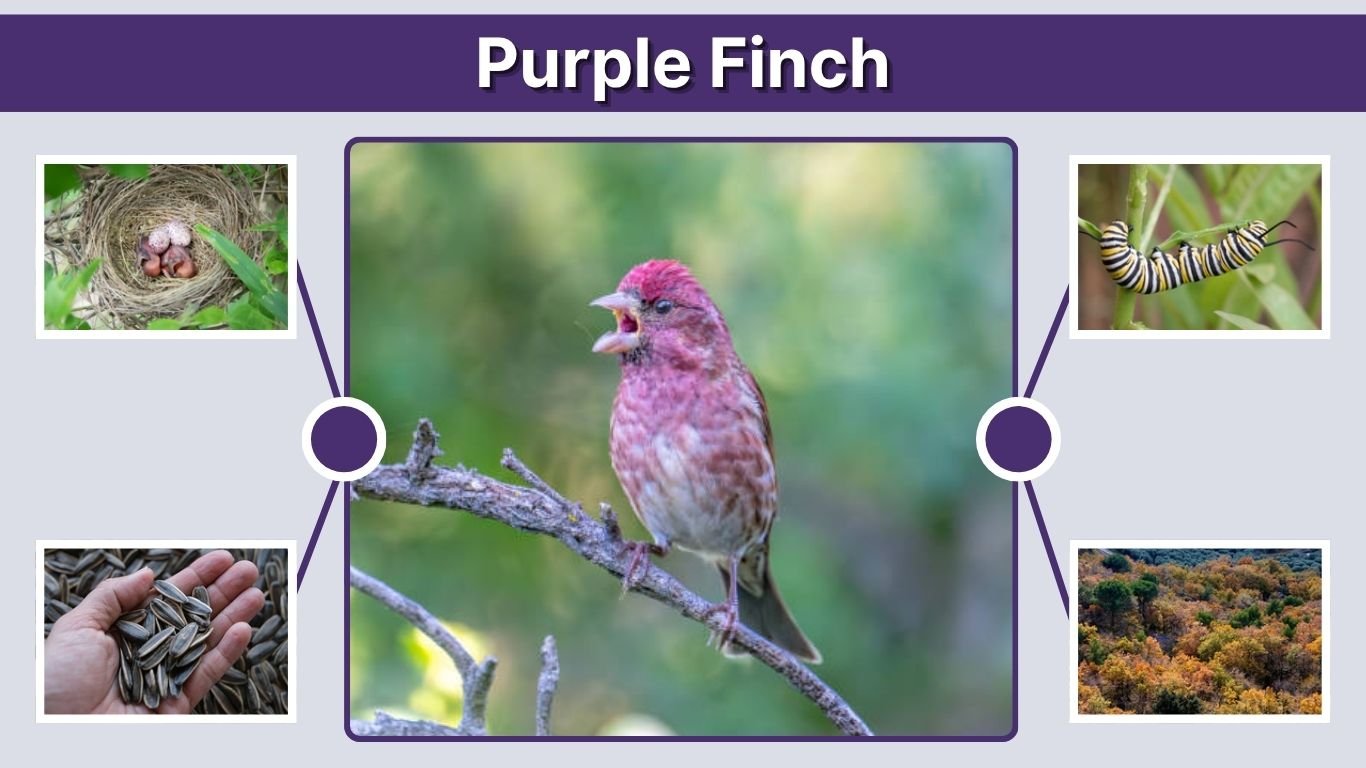
The Purple Finch is a small, vibrant songbird native to North America, admired for its striking raspberry-red plumage in males and subtle brown streaking in females. Popular among birdwatchers and backyard enthusiasts, these finches are often confused with House Finches due to their similar size and shape. This guide explores their physical features, behaviors, vocalizations, habitat, diet, and nesting habits, providing a comprehensive overview to help enthusiasts identify and observe Purple Finches effectively in the wild or near feeders.
Purple Finch Physical Characteristics
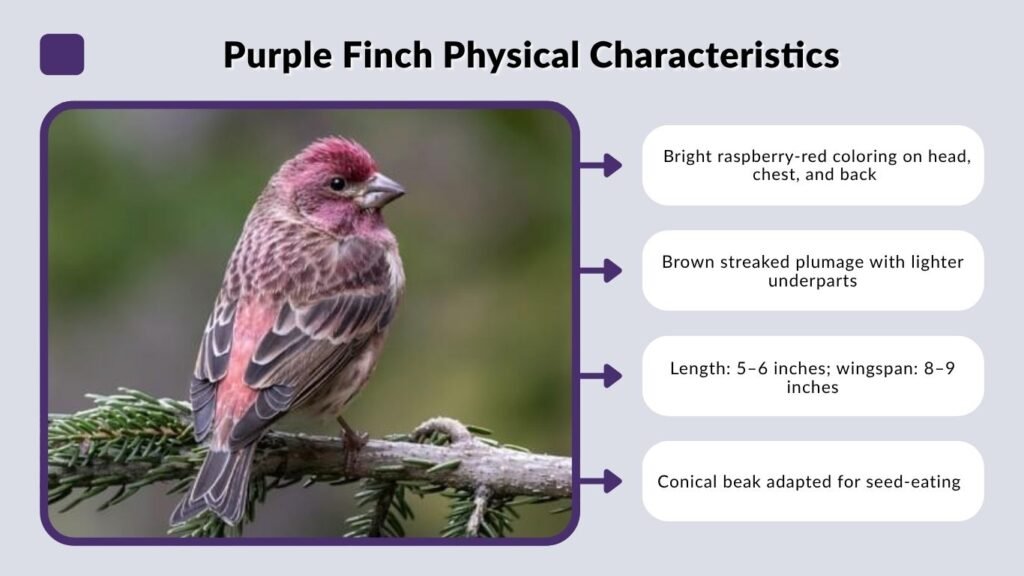
Understanding the Purple Finch’s appearance is crucial for identification. Males display vibrant red hues, while females are more subdued, often mistaken for other finch species. Juveniles also have distinct markings that differentiate them from adults.
Male Purple Finch Features
- Bright raspberry-red coloring on head, chest, and back
- Brown wings and tail provide contrast
- Length: 5–6 inches; wingspan: 8–9 inches
- Conical beak adapted for seed-eating
Female Purple Finch Features
- Brown streaked plumage with lighter underparts
- Slight reddish wash on chest, usually less intense than males
- Smaller, more delicate appearance than males
- Often confused with female House Finch
Juvenile Purple Finch Identification
- Duller coloration than adults, mostly brown and streaked
- Eye ring more prominent for identification
- Some red hints appear as they mature
Purple Finch vs Similar Species
- House Finch: Males have less extensive red, more brown streaking; females are similar but Purple Finches have a sharper facial pattern
- Rose-breasted Grosbeak: Larger beak, more robust body, distinct black-and-white patterns
Purple Finch Behavior and Vocalizations
Overview: Purple Finches are active and social, especially outside the breeding season. Their vocalizations include melodic warbles and sharp chip calls, which play a role in territory defense, mate attraction, and communication within flocks.
Songs and Calls
- Male Purple Finches sing a pleasant, warbling song during breeding season
- Short, sharp “chip” calls used to communicate within flocks
- Vocal patterns help differentiate from House Finch and other similar birds
Social and Feeding Behavior
- Often found in small flocks in winter
- Feed in trees, shrubs, and at backyard feeders
- Interact with other finches but maintain hierarchy within flocks
Purple Finch Habitat and Range
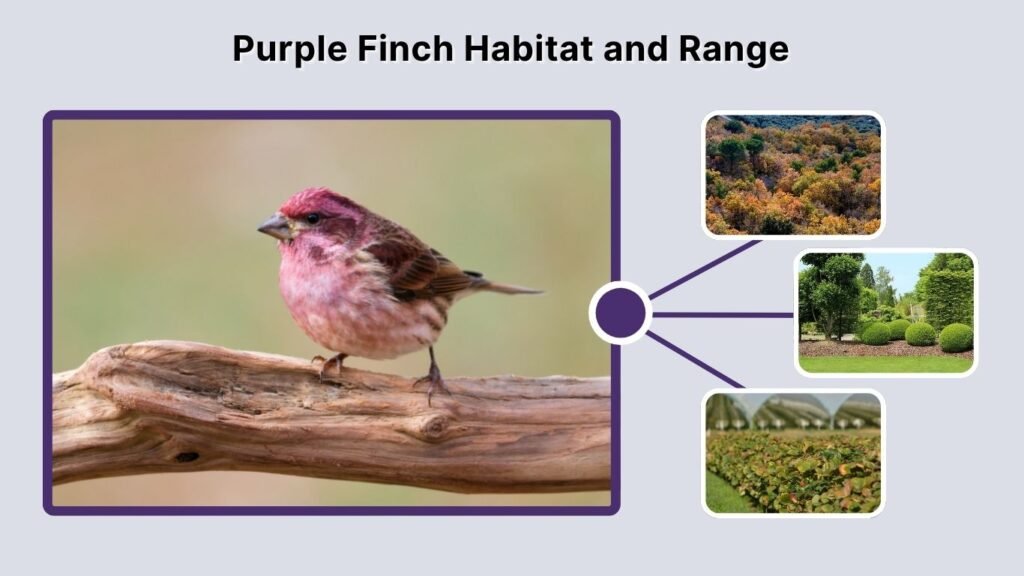
Overview: Purple Finches inhabit a wide range across North America, preferring coniferous or mixed forests. They migrate seasonally, moving south in winter and returning north to breed. Habitat choices affect their feeding, nesting, and overall survival.
Breeding Range
- Northern United States and southern Canada
- Prefer coniferous or mixed forests with dense canopy
- Forest edges and wooded suburbs are common breeding areas
Winter Range and Migration
- Southern U.S., some parts of Mexico, and occasional eastern states
- Migration influenced by food availability
- Flocks often visit backyard feeders during colder months
Preferred Habitat
- Coniferous and mixed woodlands
- Edge habitats with shrubs and berry-producing plants
- Gardens and feeders supplement natural food sources
Purple Finch Diet and Feeding Habits
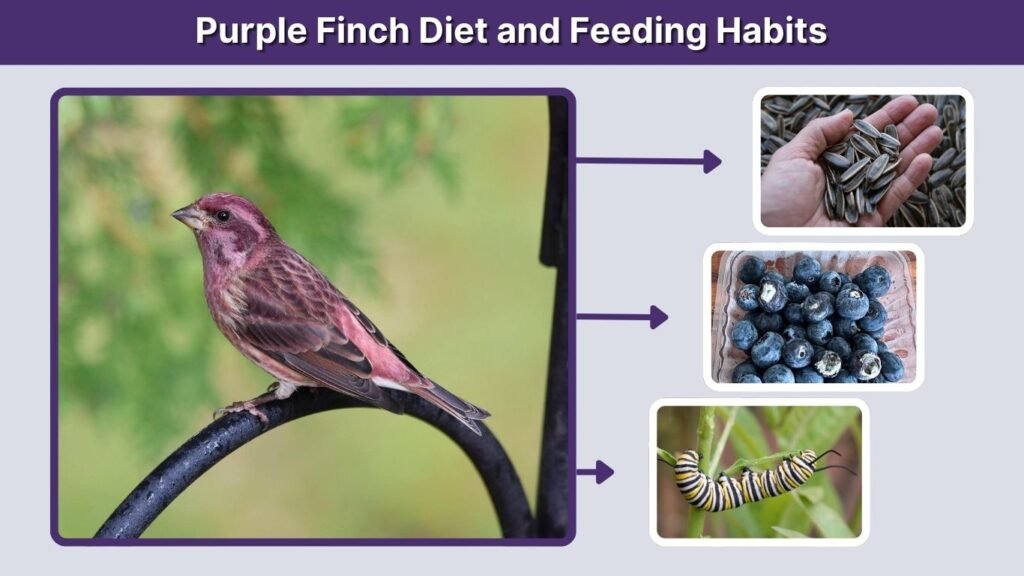
Purple Finches are primarily seed-eaters but include insects in their diet, especially when feeding chicks. Seasonal changes influence their food sources, and they adapt readily to backyard feeders.
Seeds and Plant Material
- Sunflower seeds, tree buds, and berries are staples
- Forage in trees and shrubs, often in small groups
- Use conical beak to crack hard seeds efficiently
Insects and Protein Sources
- Caterpillars, aphids, and small insects are fed to chicks
- Provide essential protein during breeding season
- Foraging behavior shifts based on season and food availability
Purple Finch Breeding and Nesting
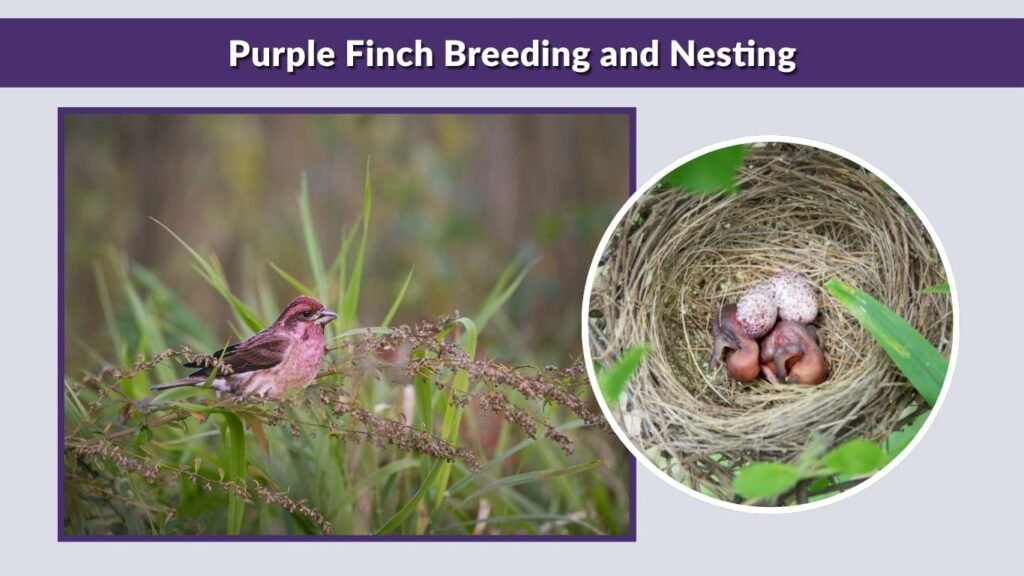
Purple Finches breed in forested areas, constructing cup-shaped nests in trees or shrubs. Both males and females play roles in nesting and caring for chicks. Understanding nesting habits helps birdwatchers locate and observe these birds.
Nest Sites and Construction
- Nests typically placed 3–10 feet above ground
- Built using twigs, grasses, moss, and rootlets
- Cup-shaped, well-camouflaged among branches
Eggs and Incubation
- Clutch size: 3–5 eggs
- Eggs are bluish or greenish with reddish-brown speckles
- Female incubates for 11–14 days while male provides food
Fledgling Care
- Both parents feed chicks with insects for protein
- Young leave the nest at about 12–14 days
- Juveniles gain adult coloration over several weeks
Purple Finch Identification Tips
Overview: Proper identification is important for distinguishing Purple Finches from similar species like House Finches, Rose-breasted Grosbeaks, and other small songbirds.
Color and Marking Patterns
- Male’s raspberry-red head and chest is the most noticeable feature
- Females are brown-streaked with subtle reddish wash
- Juveniles are streaked brown, making them harder to identify
Size and Shape Comparisons
- Purple Finch is slightly smaller and slimmer than House Finch
- Tail is notched, beak conical, wings rounded
- Rose-breasted Grosbeak has larger body and wider beak
Observation Tips
- Best time: early morning or late afternoon when active
- Look for feeding flocks in trees or visiting feeders
- Seasonal behavior (breeding vs winter) affects visibility
Purple Finch Conservation Status
Purple Finch populations have declined in some areas due to habitat loss and competition with House Finches. Conservation measures focus on habitat protection and encouraging bird-friendly environments.
Population Concerns
- Declining numbers in eastern U.S. due to invasive House Finches
- Loss of coniferous forest habitat affects breeding
- Climate change may alter migration and food availability
Conservation Measures
- Protecting forest habitats
- Planting native berry-producing shrubs
- Educating the public on bird-friendly feeder practices
Purple Finch in Culture and Local Areas
Purple Finches hold cultural significance in some regions and are celebrated in birdwatching communities. They also inspire local business names and attractions.
State Bird Significance
- Official state bird of New Hampshire
- Symbol of natural beauty and local wildlife awareness
Local Recognition
- Cafes and restaurants named after Purple Finches (e.g., Bedford, NH)
- Attracts birdwatchers and eco-tourists to certain areas
FAQs
How do I identify a Purple Finch?
Look for raspberry-red males, brown-streaked females, and small notched tails. Compare to House Finches and Rose-breasted Grosbeaks for size, color, and facial patterns.
What is the difference between a Purple Finch and a House Finch?
Purple Finch males are darker red with a more solid head color, while House Finch males have orange-red wash limited to forehead and chest. Females are similar, but Purple Finches have sharper facial markings and less streaking.
Do Purple Finches migrate?
Yes, northern populations migrate south for winter. They often visit feeders in southern U.S. and can occasionally reach Mexico. Southern populations may remain resident year-round.
What do Purple Finches eat?
Seeds, berries, buds, and small insects are main food sources. Males feed primarily on seeds, while females and chicks get more insects for protein during breeding season.
How can I attract Purple Finches to my backyard?
- Offer sunflower seeds and nyjer seeds in feeders
- Plant native berry-producing shrubs
- Provide water sources like birdbaths and maintain tree cover
