
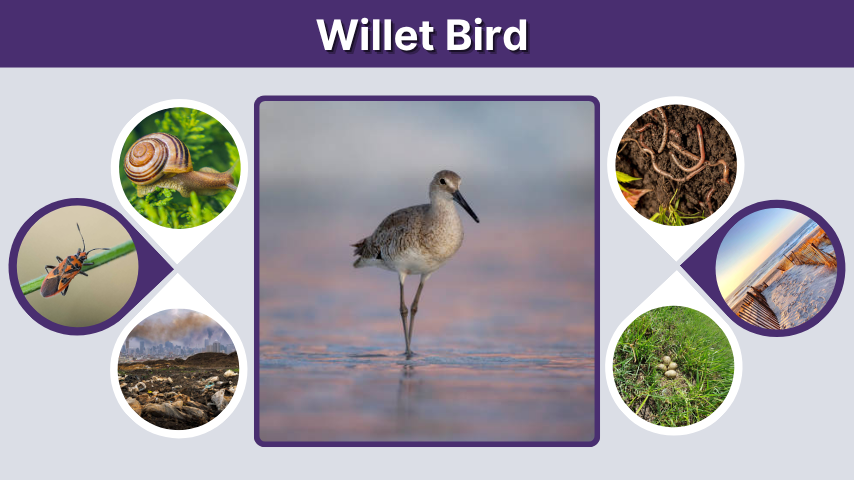
The Willet is a striking shorebird recognized for its long legs, straight bill, and bold black-and-white wing patterns visible in flight. Found across North American coasts and inland wetlands, this bird is a favorite among birdwatchers for its loud calls and elegant flight. Willets migrate long distances between breeding and wintering grounds, showcasing remarkable endurance. This guide explores their physical characteristics, identification tips, sounds, range, and migration to provide a detailed introduction to this fascinating shorebird.
Willet Overview
The Willet is a large, long-legged shorebird in the family Scolopacidae. Known for its distinctive wing pattern and high-pitched calls, it occupies coastal and inland habitats across North America. This section introduces the species, its scientific classification, and key physical traits that help in early identification and understanding of its ecological role.
What is a Willet?
- Definition: A medium-to-large shorebird with long legs and a straight, pointed bill.
- Scientific name: Tringa semipalmata
- Key characteristics: Bold black-and-white wing flashes, grayish-brown plumage, strong legs.
Naming and Classification
- Family: Scolopacidae
- Two subspecies: Eastern Willet (Tringa semipalmata semipalmata) and Western Willet (Tringa semipalmata inornata)
- Origin of the name “Willet”: Onomatopoeic, derived from its loud “pill-will-willet” call.
Willet Physical Characteristics and Size
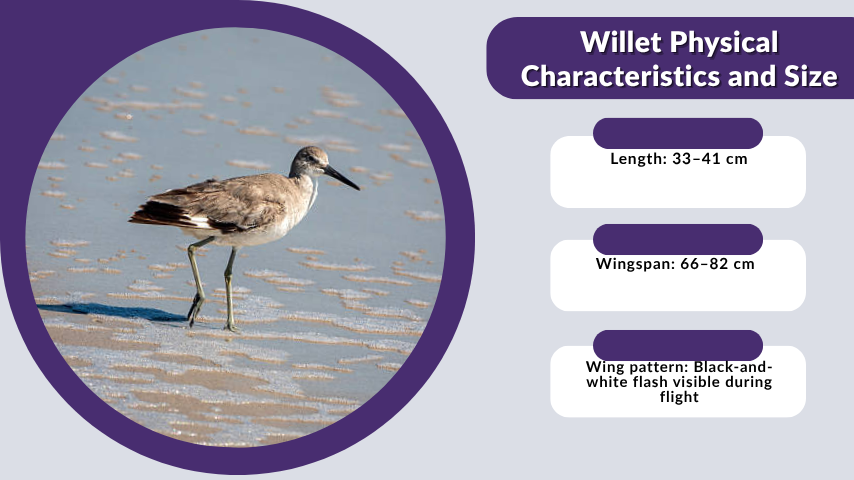
Willets are easily recognized by their long legs, straight bills, and distinctive plumage. Adults differ from juveniles and breeding plumage birds by subtle changes in feather coloration. Observing these traits is essential for identification, especially when distinguishing Willets from similar shorebirds during migration.
Size and Appearance
- Length: 33–41 cm
- Wingspan: 66–82 cm
- Plumage: Gray-brown in winter, streaked in breeding season
- Wing pattern: Black-and-white flash visible during flight
Juvenile Traits
- Lighter plumage with less distinct streaking
- Shorter bill and paler legs compared to adults
- Often forage in smaller groups with cautious behavior
Willet Identification and Similar Species
Willets can be confused with other shorebirds such as Greater Yellowlegs, Lesser Yellowlegs, and Marbled Godwits. Key identification markers include wing flash, bill shape, and behavior. Observing these characteristics helps birdwatchers correctly identify Willets in coastal and inland habitats.
Similar Species
- Willet vs Greater Yellowlegs: Willets have shorter, straighter bills and less streaked plumage
- Willet vs Lesser Yellowlegs: Willets are larger, with more robust legs and distinctive wing flashes
- Willet vs Marbled Godwit: Marbled Godwits have longer, slightly upturned bills and more marbled plumage
- Willet vs Hudsonian Godwit: Godwits are generally larger with heavier bills
Key Field Marks
- Black-and-white wing flash in flight
- Straight bill for probing mudflats
- Grayish-brown body, paler underparts
- Long legs adapted for wading in shallow water
Willet Sounds and Vocalizations
Willets are known for their loud, piercing calls, which are used during migration, foraging, and breeding. Their characteristic “pill-will-willet” alarm call is especially notable and helps researchers and birdwatchers detect the species even at a distance. Understanding Willet vocalizations is important for field identification and behavioral studies.
Call Types
- Typical call: Piercing, loud “pill-will-willet”
- Breeding season song: Rapid series of sharp notes
- Flight calls: High-pitched repeated notes to maintain flock cohesion
Willet Range and Distribution
Willets breed across North American grasslands and wetlands, winter along coastal regions, and migrate long distances. Their range covers both Atlantic and Pacific coasts, with important stopover sites along migration routes. Knowledge of range and seasonal movements helps birdwatchers predict sightings and conservationists monitor populations.
Breeding Range
- Northern U.S. and Canada
- Inland grasslands and marshes
Wintering Range and Migration
- Coastal Mexico, Central America, and South America
- Atlantic and Pacific coasts of the U.S.
- Key stopovers: Florida, California, Gulf Coast
- Migration periods: Spring and fall
Willet Habitat Preferences
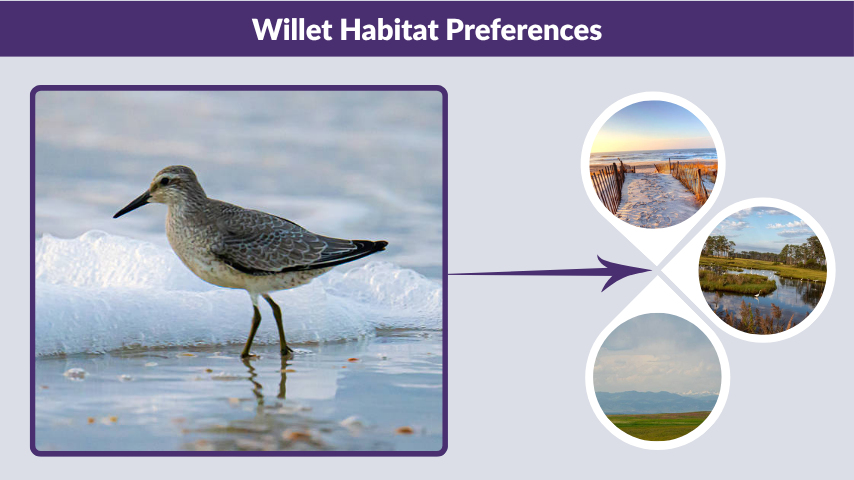
Willets occupy a variety of coastal and inland habitats that provide food, nesting sites, and protection during migration. Their habitat preferences shift seasonally, with breeding in grasslands or marshes and wintering along coastal mudflats, estuaries, and beaches. Understanding these habitats helps birdwatchers locate Willets and aids in conservation efforts.
Coastal Habitats
- Salt marshes and estuaries with abundant invertebrates
- Sandy beaches and mudflats for feeding
- Shallow bays and tidal flats during winter
Inland and Breeding Habitats
- Grasslands and prairie wetlands for breeding
- Freshwater marshes for nesting and foraging
- Sites with open visibility to avoid predators
Willet Diet and Feeding Behavior
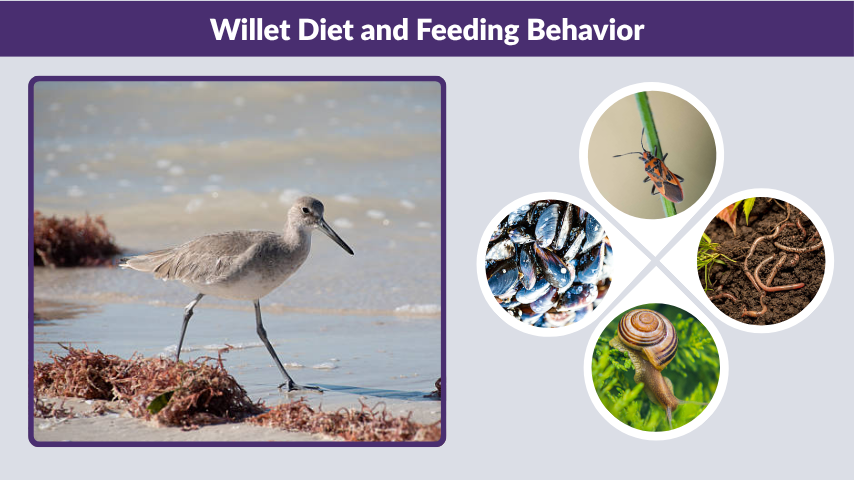
Willets are opportunistic feeders, primarily consuming invertebrates in coastal and wetland habitats. Their feeding techniques include probing mud, picking from shallow water, and group foraging. Seasonal changes influence diet, as availability of prey varies along migration routes and wintering areas.
Typical Diet
- Insects, worms, mollusks, and crustaceans
- Aquatic larvae and small invertebrates
- Occasional seeds or plant material during migration
Foraging Techniques
- Probing mud and sand with long straight bills
- Picking prey from shallow waters or mudflats
- Feeding in flocks during low tide to reduce predation risk
Willet Behavior and Lifestyle
Willets display complex social and migratory behavior. They form flocks during migration, use wing flashing for communication, and exhibit territorial behavior during the breeding season. Understanding their behavior provides insight into ecological roles and makes field observation more engaging for birdwatchers.
Flocking and Migration
- Migratory flocks often include dozens to hundreds of birds
- Coordinated flight conserves energy during long migrations
- Interaction with other shorebirds at feeding and resting sites
Flight and Courtship
- Wing flashes create distinctive black-and-white patterns visible in flight
- Males perform aerial displays and calls during breeding season
- Territorial behavior includes alarm calls and display flights
Reproduction and Breeding
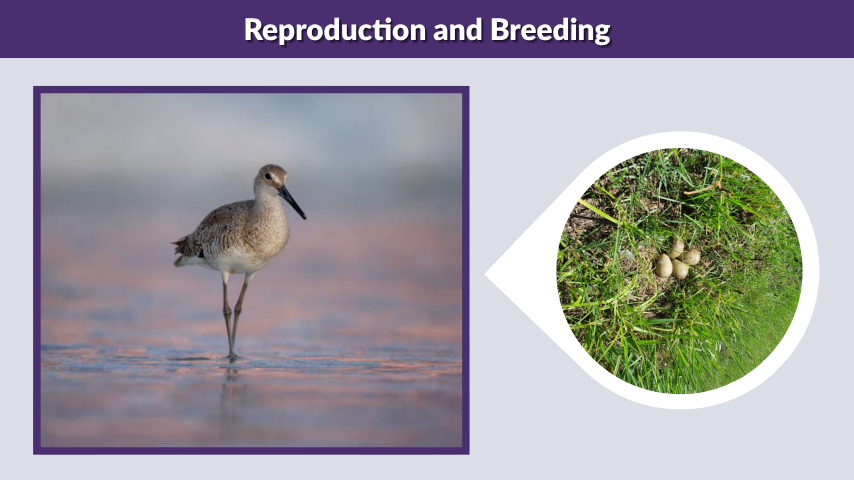
Willets breed in northern grasslands, marshes, and inland wetlands. Nests are ground-based, often well-camouflaged among grasses. Both parents share incubation duties, and chicks are precocial, leaving the nest shortly after hatching but staying under parental care until fledging.
Nesting Habits
- Ground nests lined with grasses and plant material
- Breeding season: late spring to early summer
- Eggs: usually 3–4, camouflaged to blend with surroundings
Parental Care
- Both male and female incubate eggs
- Chicks feed on invertebrates nearby under adult supervision
- Parents protect chicks from predators using alarm calls and distraction displays
Conservation and Population
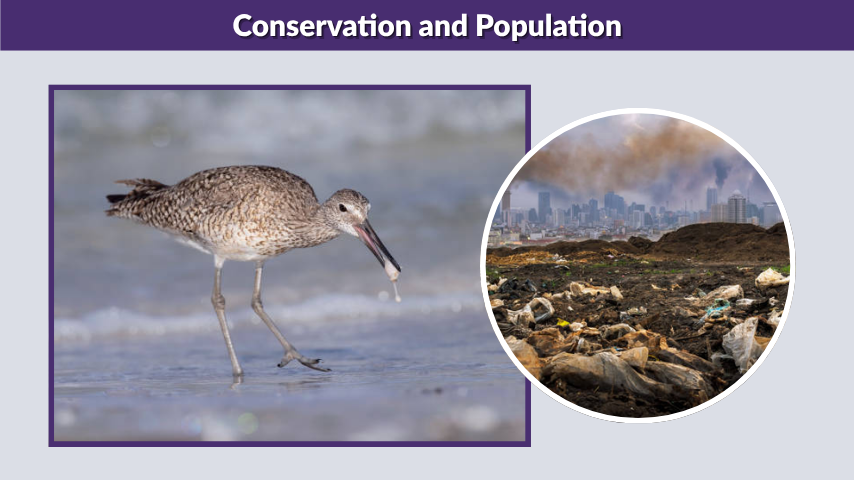
Willets face threats from habitat loss, coastal development, human disturbance, and climate change. Conservation programs aim to protect wetland and coastal habitats, monitor populations, and maintain critical migratory stopovers to ensure the species remains stable.
Population Status
- Regional populations stable but declining in heavily developed areas
- Threats include pollution, habitat degradation, and human activity
Conservation Efforts
- Wetland and estuary preservation initiatives
- Monitoring programs through eBird and Audubon projects
- Local habitat restoration at wintering and stopover sites
Observation and Birdwatching Tips
Birdwatchers can maximize Willet sightings by understanding habitats, migration timing, and vocalizations. Observing during low tide and early morning increases chances, and photographing wing flashes highlights their striking patterns.
Best Observation Times
- Spring and fall migration periods
- Low tide at mudflats, estuaries, and coastal beaches
- Wintering months along Gulf and Pacific coasts
Photography Tips
- Capture the black-and-white wing flash in flight
- Use calls to locate birds within flocks
- Early morning light enhances plumage detail in photos
Fun Facts and Miscellaneous
Willets are notable for their striking wing pattern, loud vocalizations, and interesting social behaviors. Fun facts make them memorable to birdwatchers and enhance appreciation for their ecological and cultural significance.
Interesting Facts
- Wing flashes: bold black-and-white pattern visible in flight
- Alarm call: loud, piercing “pill-will-willet”
- Large wintering flocks can number hundreds of individuals
- Named for their characteristic call
- Both subspecies share similar behaviors but occupy slightly different ranges
FAQs
How can I identify a Willet in the field?
Look for a medium-to-large shorebird with long legs, a straight bill, gray-brown plumage, and a bold black-and-white wing flash in flight. Breeding adults appear darker, while juveniles are paler.
Where do Willets breed and winter?
Breeding occurs in northern grasslands and marshes in Canada and northern U.S., while wintering takes place along coastal mudflats, estuaries, and beaches in the Gulf Coast, California, and Central America.
What does a Willet eat?
Their diet consists mainly of insects, worms, crustaceans, and mollusks. Willets probe mud and shallow water, occasionally supplementing with seeds during migration.
Are Willets endangered?
Currently, Willets are not considered endangered. However, habitat loss, human disturbance, and coastal development pose threats in some areas. Conservation efforts help maintain stable populations.
What are the best places to observe Willets?
Key observation sites include Florida coasts, California beaches, Gulf Coast estuaries, and northern breeding wetlands. Visit during low tide or migration periods for the best viewing opportunities.