
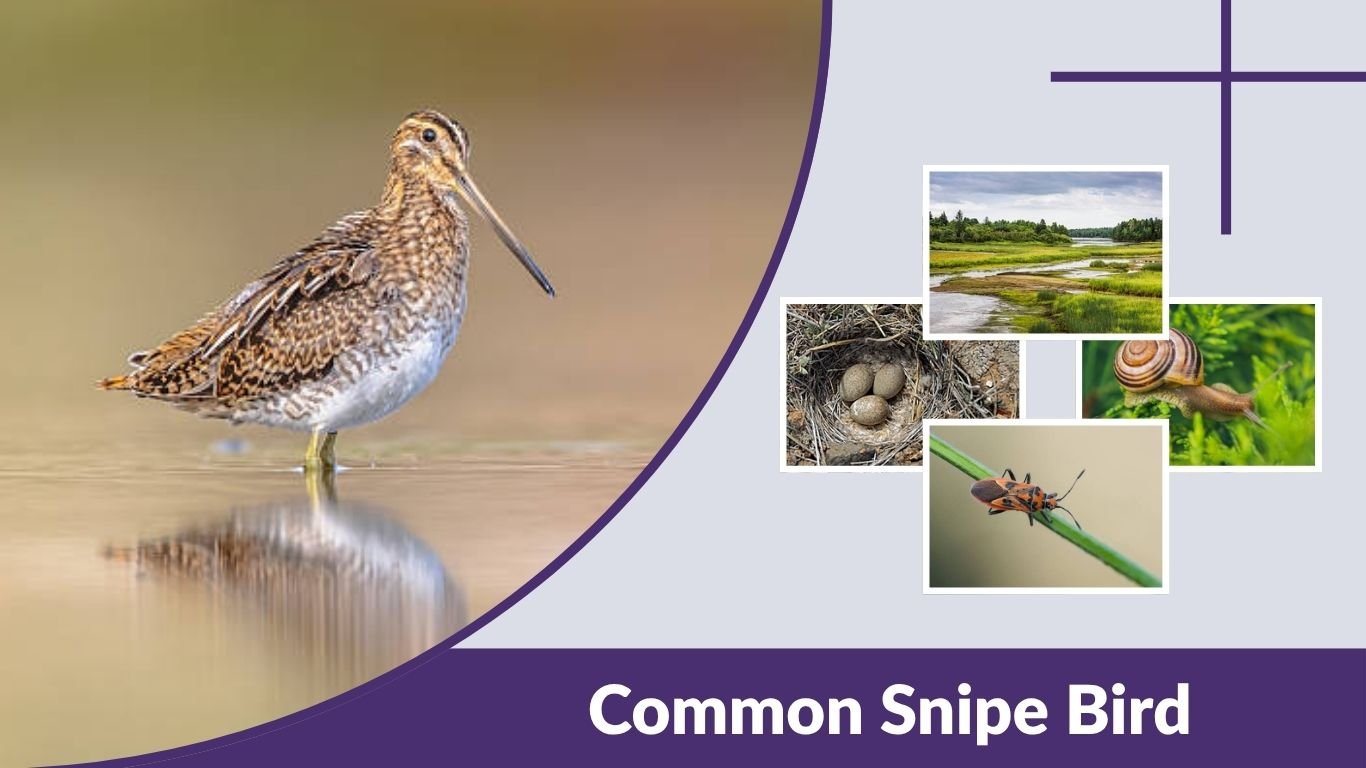
The Common Snipe (Gallinago gallinago) is a medium-sized migratory shorebird known for its long, straight bill, cryptic brown plumage, and unique courtship displays. Found in wetlands, marshes, and flooded grasslands across North America and Europe, it uses its camouflaged appearance and crepuscular habits to avoid predators. Famous for its drumming flight and winnowing sounds during mating season, the Common Snipe is a favorite for birdwatchers, hunters, and naturalists. This guide explores its physical traits, habitat, diet, behavior, and vocalizations.
Common Snipe Overview
The Common Snipe is a small-to-medium shorebird in the family Scolopacidae. It is well-adapted to wetlands and moist grasslands, with cryptic plumage and a long, sensitive bill for probing soil. Known for its crepuscular activity and aerial courtship displays, this species plays an important role in wetland ecosystems. This section provides a foundational introduction to the species’ characteristics and ecological significance.
What is a Common Snipe?
- Medium-sized migratory shorebird
- Scientific name: Gallinago gallinago
- Distinctive features: long straight bill, cryptic plumage, and high-set eyes
Key Traits
- Camouflaged brown streaked plumage for hiding in grass and mud
- Long, slender bill for probing soil for invertebrates
- Adapted for wetland and grassland habitats
Common Snipe Physical Characteristics and Size
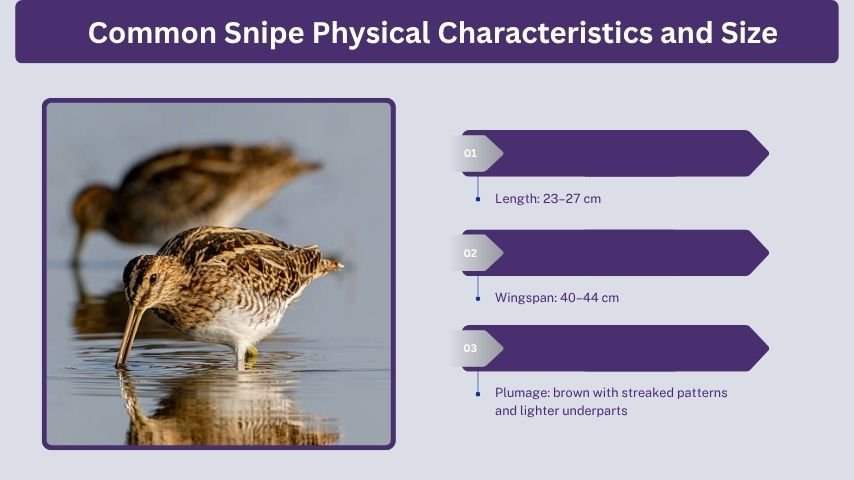
Common Snipes are compact birds with long bills and legs, well-suited to probing wet soil for food. Adults and juveniles show subtle differences in plumage, and males may have slightly different size or bill proportions. Observing size, shape, and plumage is essential for accurate identification, particularly in flight or during foraging.
Size and Appearance
- Length: 23–27 cm
- Wingspan: 40–44 cm
- Plumage: brown with streaked patterns and lighter underparts
- Bill: long, straight, and flexible for probing mud
Juvenile Traits
- Paler plumage than adults
- Slightly shorter bills
- Behavior: often feed in small groups for safety
Common Snipe Identification and Similar Species
Common Snipes are often confused with Wilson’s Snipe, Jack Snipe, and Pin-tailed Snipe. Key distinguishing features include bill length, wing patterns, flight style, and drumming displays. Birdwatchers benefit from observing multiple traits at once to correctly identify this species in wetlands and grasslands.
Similar Species
- Common Snipe vs Wilson’s Snipe
- Common Snipe vs Jack Snipe
- Pin-tailed Snipe vs Common Snipe
- Great Snipe vs Common Snipe
Key Field Marks
- Cryptic brown streaked plumage blending with wetlands
- Long straight bill
- Flight pattern: zigzagging and rapid wingbeats
- Drumming and winnowing sounds during courtship
Common Snipe Sounds and Courtship Displays
The Common Snipe is known for its distinctive drumming and winnowing vocalizations, particularly during the breeding season. Males perform aerial displays that combine flight and sound to attract mates. Recognizing these vocalizations is crucial for birdwatchers and researchers to locate and study this elusive species.
Call Types
- Singing-ground drumming: produced by vibrating tail feathers during flight
- Flight call: high-pitched trills and buzzing sounds
- Alarm call: sharp, rapid note used when disturbed
Common Snipe Range and Distribution
Common Snipes breed across northern and temperate regions, winter in southern zones, and migrate over considerable distances. They are found in wetlands, marshes, and meadows in Europe, North America, and Asia. Understanding their range is essential for identifying potential observation sites and conservation monitoring.
Breeding Range
- Northern Europe and Asia
- Northeastern North America
Wintering Range and Migration
- Southern Europe, Africa, southern U.S., Central America
- Migration routes often follow rivers, coastal areas, and wetland corridors
- Key locations: Iceland, Virginia, and other wetland preserves
Common Snipe Habitat Preferences
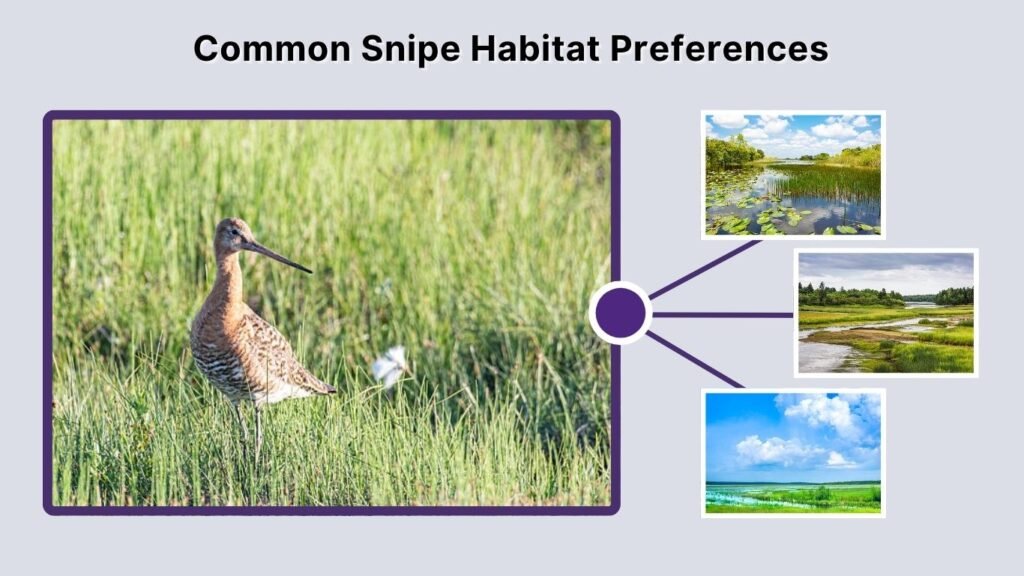
Common Snipes prefer wetlands, marshes, and moist grasslands where soft soil is available for probing. Seasonal migrations bring them to wintering grounds with similar habitats. Understanding their preferred environments helps birdwatchers locate them and supports conservation efforts to protect these sensitive ecosystems.
Typical Habitats
- Wetlands, bogs, and marshy areas
- Moist grasslands and river edges
- Floodplains and shallow ponds during migration
Habitat Adaptations
- Camouflaged plumage blends with grass and mud
- Nocturnal or crepuscular activity reduces predation risk
- Nesting in dense cover for protection
Common Snipe Diet and Feeding Behavior
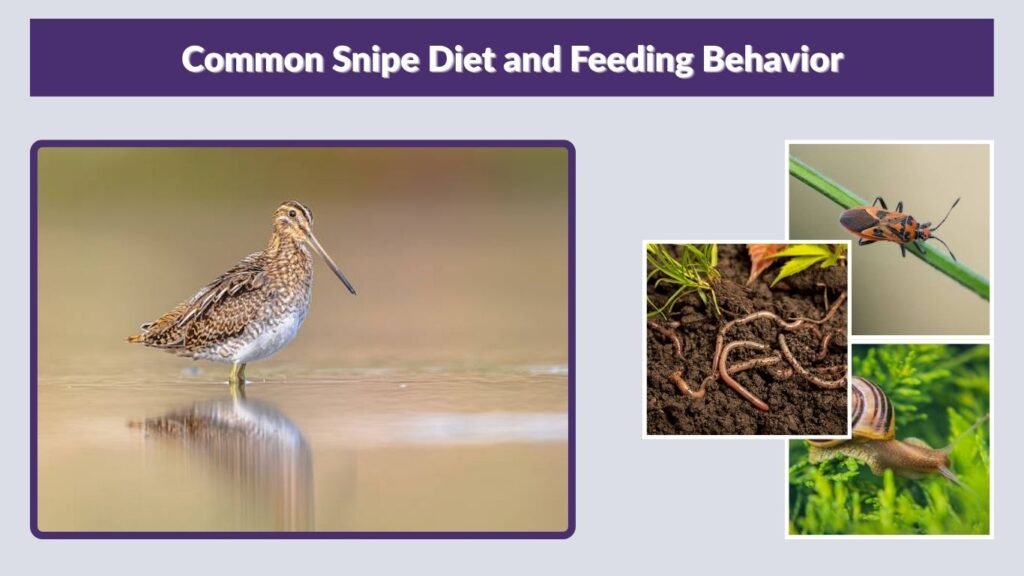
Common Snipes primarily feed on invertebrates in mud and leaf litter. Their long, sensitive bill allows them to detect and extract prey from soil. Feeding occurs mostly at dawn and dusk, and diet composition may change seasonally based on prey availability.
Typical Diet
- Earthworms, insect larvae, and beetles
- Small crustaceans and mollusks
- Occasionally seeds or plant material
Foraging Techniques
- Probing soil and mud with bill
- Feeding at edges of wetlands and grasslands
- Solitary or small group foraging to reduce competition
Common Snipe Reproduction and Nesting
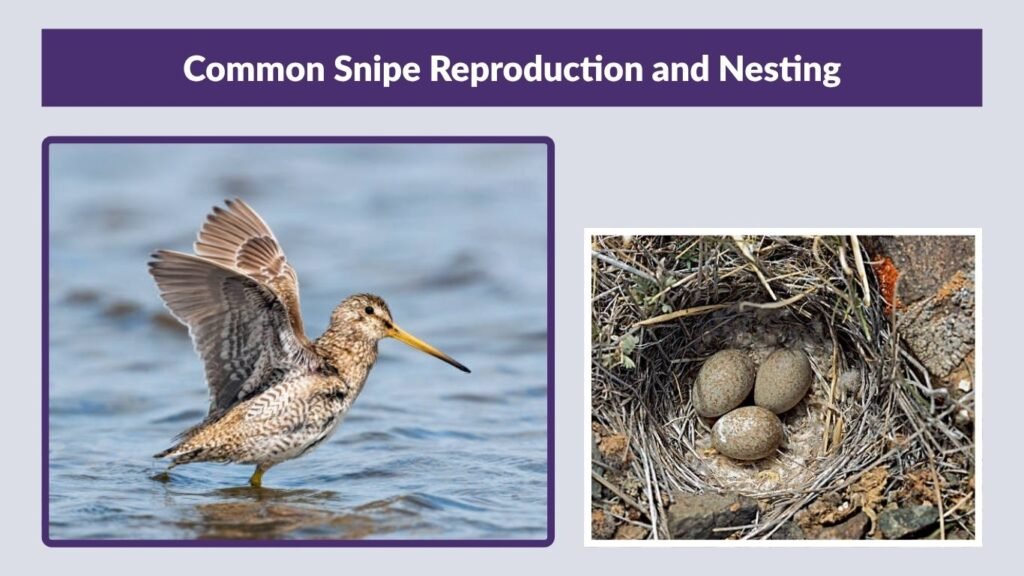
American Snipes use ground nests hidden in tall grass or marsh vegetation. Males perform aerial drumming displays during courtship. Clutch size, incubation, and chick development are key aspects of reproductive behavior that ensure offspring survival.
Nesting Habits
- Shallow scrape lined with grass and leaves
- Nest placement: concealed in dense vegetation
- Clutch size: typically 3–4 eggs
Courtship and Mating
- Male drumming and winnowing displays in flight
- Courtship flights often performed at dusk
- Territories established by males to attract females
Common Snipe Behavior and Lifestyle
Common Snipes are primarily crepuscular, feeding and performing courtship displays during dawn and dusk. They rely on camouflage for predator avoidance and exhibit both solitary and social behaviors depending on season and habitat.
Daily Activity
- Active at dawn and dusk (crepuscular)
- Rest and hide under vegetation during the day
- Solitary or small flock behavior outside breeding season
Flight Patterns
- Rapid, zig-zagging flight to evade predators
- Courtship flight: spiraling ascent with drumming sound
- Migratory flight: direct and low over wetlands
Common Snipe Lifespan and Predators
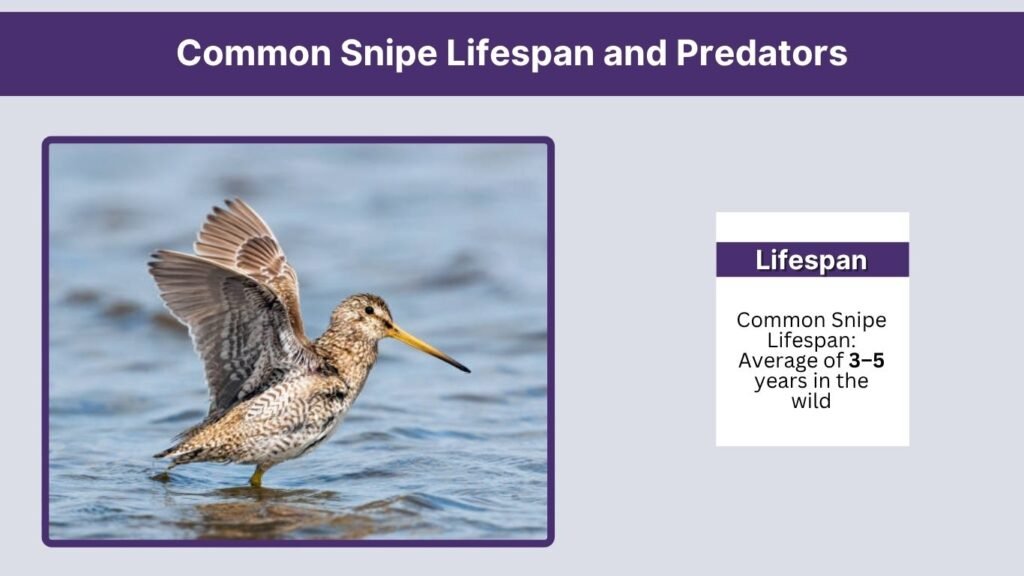
The lifespan of a Common Snipe is moderate, influenced by predation, habitat quality, and hunting pressure. Predators include raptors, mammals, and humans. Understanding these threats helps inform conservation strategies.
Lifespan
- Average: 3–5 years in the wild
- Some individuals may live up to 8 years under favorable conditions
Predators
- Raptors: hawks, owls
- Mammals: foxes, raccoons
- Humans: hunting in regulated seasons
Observation and Birdwatching Tips
Birdwatchers can increase their chances of spotting Common Snipes by visiting wetlands and grasslands during dawn or dusk. Listening for drumming or winnowing calls and observing zig-zag flight patterns can help locate these elusive birds.
Best Observation Times
- Early morning or late evening (crepuscular activity)
- Migration periods in spring and fall
- Wintering areas in southern wetlands
Photography Tips
- Use telephoto lenses to capture flight and drumming behavior
- Focus on habitat camouflage to document plumage
- Avoid disturbing nests or roosting areas
Fun Facts and Miscellaneous
Common Snipes exhibit unique behaviors and fascinating adaptations. They are a favorite for birdwatchers due to their drumming flight, camouflage, and unusual foraging techniques.
Interesting Facts
- Drumming or winnowing flight is unique to males
- Camouflaged plumage protects from predators
- Nocturnal feeding reduces competition with other shorebirds
- Juveniles resemble adults but are paler
- Migratory patterns allow use of both northern and southern wetlands
FAQs
How can I identify a Common Snipe?
Look for a small-to-medium shorebird with a long, straight bill, cryptic brown streaked plumage, and zig-zag flight. Listen for drumming or winnowing calls, especially during dusk or dawn.
Where do Common Snipes live?
Breeding occurs in northern wetlands, bogs, and grasslands of Europe, North America, and Asia. Wintering areas include southern wetlands and marshes, with migration along rivers, coasts, and inland wetlands.
What does a Common Snipe eat?
They feed on earthworms, insect larvae, beetles, crustaceans, and mollusks, probing soft soil or mud in wetlands and grasslands.
Are Common Snipes endangered?
No, they are not considered endangered, but habitat loss, drainage of wetlands, and hunting in some regions can threaten local populations. Conservation of wetlands is key.
What is unique about Common Snipe behavior?
Males perform aerial drumming or winnowing displays during courtship, creating a distinctive sound. They are highly camouflaged, primarily active at dawn and dusk, and exhibit zig-zag evasive flight to avoid predators.