
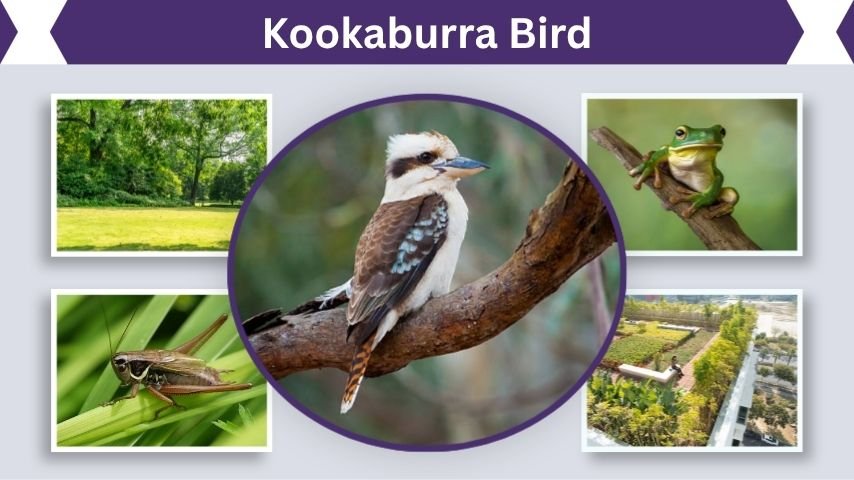
The kookaburra is one of Australia’s most famous birds, known for its loud laughing call and bold personality. These birds belong to the kingfisher family and are skilled hunters that live in forests, parks, and suburban gardens. Many people recognize their unique sounds before they ever see them.
Kookaburras are interesting birds with strong beaks, sharp eyesight, and social family groups. In this guide, you will learn about kookaburra identification, habitat, diet, behavior, and the reason behind their famous laugh.
What Is a Kookaburra?
Kookaburras are large birds in the kingfisher family that are native to Australia and nearby regions. They are famous for their laughing sounds, strong hunting skills, and ability to adapt to many environments. The laughing kookaburra is the most recognized species, but there are several other types with different colors and habitats.
Scientific Classification
Kookaburras belong to the genus Dacelo and are part of the kingfisher family called Alcedinidae. Unlike small kingfishers that mainly catch fish, kookaburras often hunt insects, reptiles, and small mammals on land.
There are four main species of kookaburras:
- Laughing Kookaburra
- Blue-winged Kookaburra
- Spangled Kookaburra
- Rufous-bellied Kookaburra
Why Kookaburras Are Famous
Kookaburras are most famous for their loud call that sounds like human laughter. Their calls are often heard early in the morning and near sunset. Families use these sounds to communicate and protect territory from other birds.
These birds also appear in Australian songs, wildlife programs, and tourism advertisements because they represent the country’s natural wildlife.
Types of Kookaburras
The laughing kookaburra is the largest and most common species. It has brown wings, a white chest, and a dark eye stripe. Blue-winged kookaburras have bright blue feathers on their wings and tail, while the other species are mainly found in remote tropical regions.
Kookaburra Identification Guide
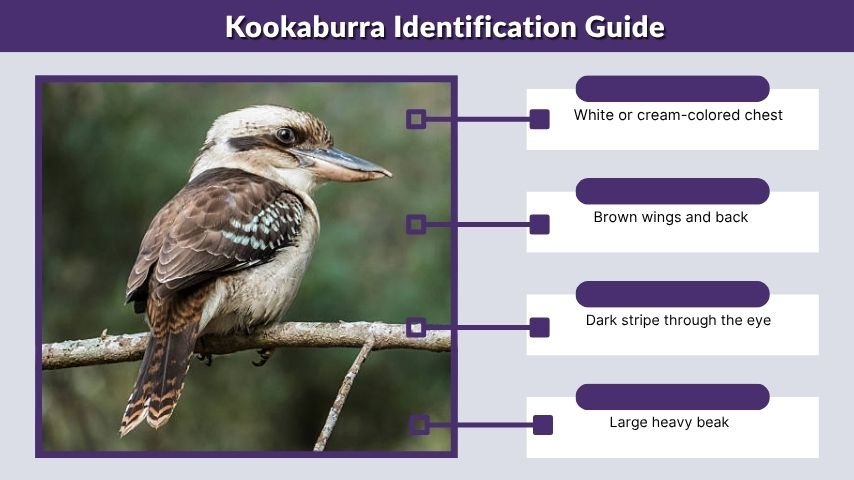
Kookaburras are easy to recognize because of their large heads, thick beaks, and loud calls. They are bigger than many other kingfishers and often sit quietly on branches while searching for prey below. Their strong body structure helps them hunt efficiently on land.
Size and Wingspan
Adult kookaburras are medium-to-large birds with a sturdy build. Most species measure between 15 and 18 inches long. Their wingspan can reach over 25 inches, giving them strong but steady flight.
Although they can fly well, kookaburras usually spend long periods perched on branches or fences while watching for food.
Color and Markings
Kookaburras have natural camouflage colors that help them blend into trees and woodlands.
Key identification features include:
- White or cream-colored chest
- Brown wings and back
- Dark stripe through the eye
- Large heavy beak
- Blue wing patches in some species
These markings help birdwatchers quickly identify them in the wild.
Male vs Female Kookaburra
Male and female kookaburras look very similar, which can make identification difficult. In some species, females may have darker markings or slightly larger bodies. Their behavior is usually more helpful for identification than appearance alone.
Where Do Kookaburras Live?
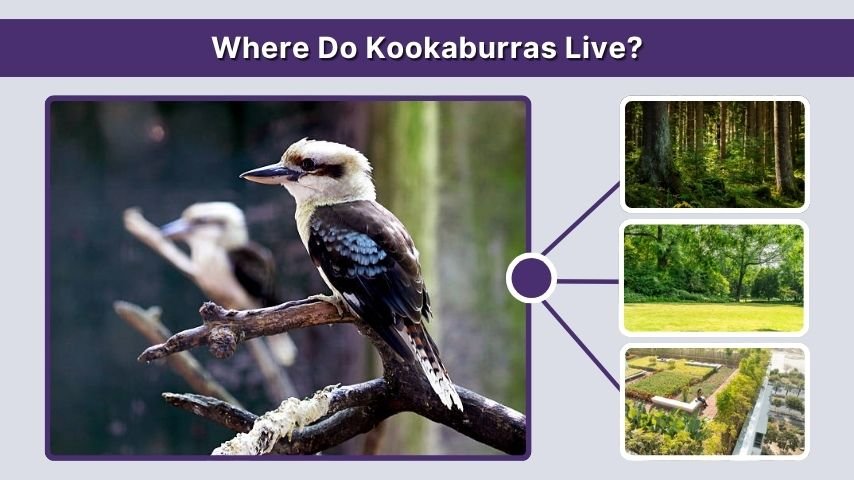
Kookaburras are native to Australia and nearby islands. They prefer places with trees, open hunting areas, and safe nesting sites. Some species thrive in tropical forests, while others adapt well to parks, farms, and suburban neighborhoods.
Native Range
Most kookaburra species are found in:
- Australia
- Tasmania
- New Guinea
- Tropical woodland regions
The laughing kookaburra has also been introduced to some areas outside its natural range.
Preferred Habitats
Kookaburras live in many environments as long as food and nesting spots are available. Common habitats include eucalyptus forests, open woodlands, river edges, and urban gardens.
These birds often become comfortable around humans and may visit picnic areas or backyard trees searching for food.
Nesting Locations
Kookaburras usually nest in tree hollows formed naturally over time. They may also use holes in termite mounds because these spaces provide protection from predators and weather.
Family groups often return to the same nesting territory each year if conditions remain suitable.
Kookaburra Diet and Hunting Behavior
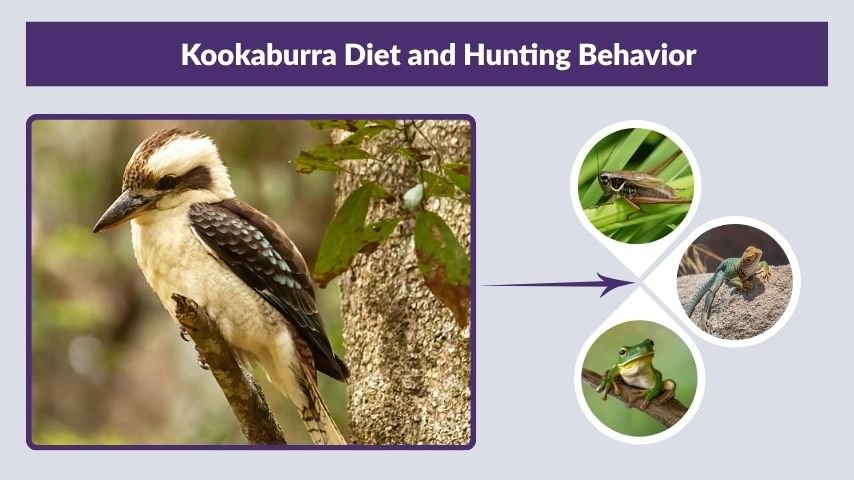
Kookaburras are carnivorous birds with strong hunting instincts. They spend much of the day watching for movement before quickly diving toward prey. Their powerful beaks help them catch and kill a variety of animals found on the ground.
What Do Kookaburras Eat?
Common foods in a kookaburra’s diet include:
- Insects
- Lizards
- Frogs
- Small snakes
- Mice
- Small birds
They sometimes steal food from outdoor tables or campsites if people feed them regularly.
Hunting Techniques
Kookaburras are patient hunters. They usually sit still on a branch and carefully watch the ground below. Once prey appears, they swoop down quickly and grab it with their beak.
After catching prey, they often smash it against a branch or rock before swallowing it whole. This behavior helps break bones and soften tough food.
Kookaburra Behavior and Social Life
Kookaburras are highly social birds that often live in family groups. They communicate through loud calls and work together to defend territory and raise young birds. Their intelligence and strong family bonds make them one of the most interesting birds in Australia’s wildlife.
Why Do Kookaburras Laugh?
The famous “laughing” sound is actually a territorial call. Kookaburras use these loud vocalizations to warn other birds to stay away from their area. Family members often call together in groups, creating the familiar chorus many people hear at sunrise and sunset.
Their calls can travel long distances through forests and open woodlands. The sound may seem funny to humans, but it plays an important role in communication and survival.
Family Groups and Territory
Kookaburras usually live in small family groups instead of alone. Older offspring sometimes stay with their parents for several years and help care for younger chicks.
Important social behaviors include:
- Defending nesting territory
- Sharing food with family members
- Warning others about predators
- Helping raise baby birds
- Calling together at dawn and dusk
This teamwork increases the survival rate of young birds and helps protect nesting areas from rivals.
Daily Activity Patterns
Kookaburras are active during the daytime. They begin calling early in the morning before hunting for food. Most of the day is spent perched quietly while searching for prey on the ground below.
During hot afternoons, they may rest in shaded trees. Near sunset, families often gather again and repeat their loud territorial calls before nightfall.
Kookaburra Life Cycle
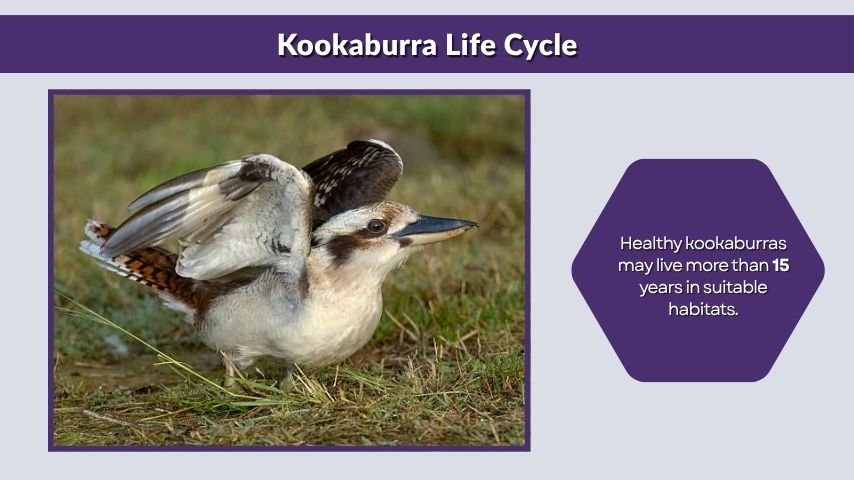
The life cycle of a kookaburra includes courtship, nesting, chick development, and adulthood. These birds form strong family bonds, and both parents help raise the young. Their nesting habits are closely connected to tree hollows and safe woodland habitats.
Mating Season
Kookaburras usually breed during the warmer months when food is easier to find. Males attract females through calling displays and food-sharing behavior.
Once paired, the birds prepare a nesting site together and begin defending the surrounding territory from other kookaburras.
Eggs and Incubation
Female kookaburras normally lay two to four eggs in a tree hollow or termite mound. Both parents help incubate the eggs and protect the nest from danger.
The incubation period generally lasts around three to four weeks. During this time, the adult birds remain highly protective of the nesting area.
Baby Kookaburras
Young kookaburras hatch without feathers and depend completely on their parents for food and warmth. Family members often assist with feeding duties.
As the chicks grow, they develop feathers, strengthen their wings, and practice short flights near the nest. Juvenile birds may remain with the family group even after becoming independent hunters.
Lifespan
Kookaburras can live for many years in the wild if they avoid predators and habitat loss. Some birds survive even longer in protected environments.
Average lifespan factors include:
- Availability of food
- Safe nesting areas
- Weather conditions
- Predators and disease
- Human-related dangers
Healthy kookaburras may live more than 15 years in suitable habitats.
Are Kookaburras Dangerous?
Kookaburras are generally not dangerous to humans, but they are powerful birds with strong beaks and bold behavior. They can become aggressive if people approach nests too closely or attempt to feed them by hand.
Can Kookaburras Hurt Humans?
Although attacks are uncommon, kookaburras can peck or grab food quickly with their sharp beaks. People sometimes experience minor injuries when feeding them improperly.
These birds are naturally wild animals and should always be observed from a respectful distance.
Are Kookaburras Friendly?
Kookaburras often appear calm around humans because they adapt well to parks and suburban environments. Some birds become comfortable enough to visit outdoor tables or backyard fences regularly.
However, feeding wild kookaburras too often may change their natural behavior and reduce hunting activity.
Can You Keep a Kookaburra as a Pet?
In many places, kookaburras are protected wildlife and cannot legally be kept as pets without permits. They require large spaces, natural diets, and proper environmental care that most homes cannot provide.
Wild kookaburras are healthiest when living freely in their natural habitat.
Interesting Kookaburra Facts
Kookaburras are full of unusual traits that make them stand out among birds. Their vocal calls, hunting abilities, and family behavior have fascinated birdwatchers for generations.
Amazing Facts About Kookaburras
Interesting kookaburra facts include:
- They are the world’s largest kingfishers
- Their laugh is used to mark territory
- They can catch small snakes
- Families often stay together for years
- They hunt mainly from tree branches
Kookaburras in Australian Culture
Kookaburras appear in children’s songs, tourism advertisements, coins, and wildlife documentaries. Their famous laugh is strongly connected to the image of the Australian wilderness.
Because of their popularity, kookaburras are considered one of Australia’s best-known native birds.
FAQs
What does a kookaburra sound like?
A kookaburra makes a loud call that sounds similar to human laughter. These calls are usually heard at sunrise and sunset. The sound helps family groups communicate and warn other birds to stay away from their territory.
Where do kookaburras live?
Kookaburras mainly live in Australia, Tasmania, and parts of New Guinea. They prefer forests, woodlands, parks, and suburban gardens with trees. Many species adapt well to areas near humans if food and nesting spots are available.
What do kookaburras eat?
Kookaburras are carnivorous birds that eat insects, lizards, frogs, mice, and small snakes. They hunt by sitting quietly on branches before swooping down to catch prey with their strong beaks.
Do kookaburras really laugh?
Yes, the famous kookaburra laugh is real. However, it is actually a territorial call rather than laughter. Groups of kookaburras often call together to communicate with family members and defend their territory.
Are kookaburras dangerous to humans?
Kookaburras are generally not dangerous, but they can peck or grab food quickly with their sharp beaks. Problems usually happen when people try to hand-feed them or get too close to nesting areas.
