
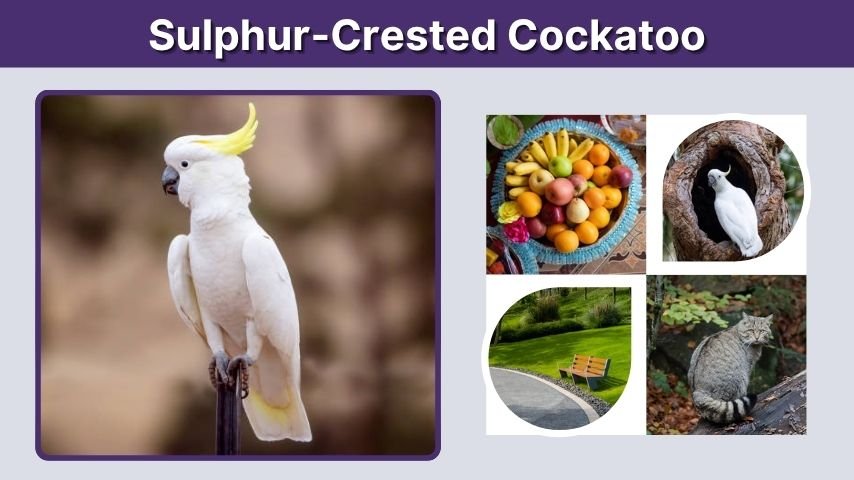
The sulphur-crested cockatoo is a large white parrot known for its bright yellow crest, loud calls, and playful personality. Native to Australia and nearby regions, these intelligent birds are popular in the wild and as pets. Their ability to mimic sounds and form strong social bonds makes them one of the world’s most recognizable parrots.
Sulphur-crested cockatoos are active, curious, and highly vocal birds that need attention and mental stimulation. This guide covers their appearance, habitat, diet, behavior, lifespan, and pet care needs.
What Is a Sulphur-Crested Cockatoo?
The sulphur-crested cockatoo is a member of the parrot family and is famous for its striking white feathers and yellow crest. These birds are highly intelligent and social, often living in noisy flocks. They are commonly seen in Australian forests, parks, and urban areas where they adapt well to human activity.
Scientific Classification
The scientific name of the sulphur-crested cockatoo is Cacatua galerita. It belongs to the cockatoo family known as Cacatuidae, a group famous for strong beaks and expressive crests.
There are several recognized subspecies, including:
- Greater sulphur-crested cockatoo
- Lesser sulphur-crested cockatoo
- Medium sulphur-crested cockatoo
Why Sulphur-Crested Cockatoos Are Famous
These birds are popular because of their intelligence, loud vocalizations, and entertaining personalities. Many people recognize them from wildlife videos and Australian city parks.
They are also known for:
- Mimicking human speech
- Solving simple problems
- Forming strong bonds with owners
- Performing playful behaviors
Types and Subspecies
The greater sulphur-crested cockatoo is the largest and most common type. Lesser sulphur-crested cockatoos are smaller with lighter crest colors. Medium subspecies show characteristics between the larger and smaller forms.
Different subspecies may vary slightly in size, crest shape, and geographic range.
Sulphur-Crested Cockatoo Identification
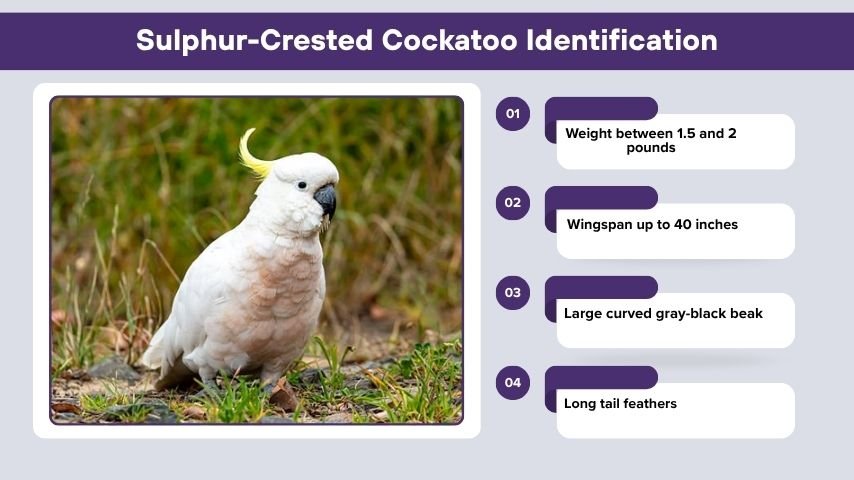
Sulphur-crested cockatoos are easy to recognize because of their large white bodies and yellow crests. Their strong curved beaks and expressive eyes give them a bold appearance. When excited or alarmed, they raise their crest feathers high above their heads.
Size and Weight
Adult sulphur-crested cockatoos are large parrots with strong bodies and broad wings. Most birds measure between 17 and 22 inches long.
Average physical features include:
- Weight between 1.5 and 2 pounds
- Wingspan up to 40 inches
- Large curved gray-black beak
- Long tail feathers
Feather Colors and Crest
The bird’s body is mainly white, but the underside of the wings and tail may show a pale yellow tint. The bright sulphur-yellow crest is the most noticeable feature and is raised during excitement or communication.
Key identification features include:
- White feathers
- Yellow crest
- Dark gray beak
- Black feet
- Pale blue eye ring
Male vs Female Sulphur-Crested Cockatoo
Male and female sulphur-crested cockatoos look very similar, making identification difficult. Adult females often have slightly reddish-brown eyes, while males usually have darker brown or black eyes.
Females may also appear slightly smaller, though personality and behavior are often more useful for identification than size alone.
Where Do Sulphur-Crested Cockatoos Live?
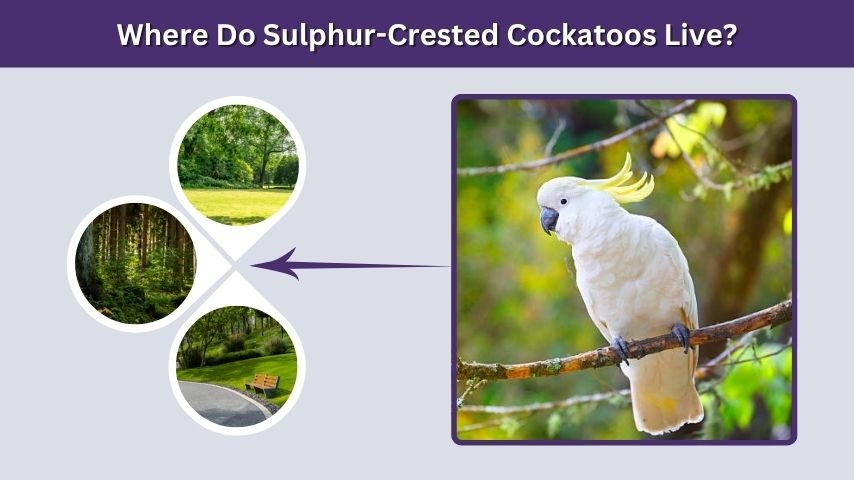
Sulphur-crested cockatoos are native to Australia, New Guinea, and nearby islands. They thrive in areas with tall trees, open feeding grounds, and reliable water sources. These adaptable parrots are commonly seen in both natural forests and crowded city parks.
Native Range
These parrots naturally occur in:
- Australia
- Tasmania
- New Guinea
- Coastal islands nearby
They are especially common in eastern and northern Australia.
Preferred Habitats
Sulphur-crested cockatoos live in a variety of environments including forests, woodlands, grasslands, and urban parks. They prefer locations with large trees suitable for nesting and resting.
Many flocks travel between feeding and nesting areas during the day, creating loud calls that are easy to hear from long distances.
Sulphur-Crested Cockatoos in Cities
Cockatoos adapt very well to urban environments and are frequently seen in cities like Sydney. They often gather in parks, rooftops, sports fields, and residential neighborhoods.
Some birds become highly comfortable around humans and may search for food near picnic areas or garbage bins.
Sulphur-Crested Cockatoo Diet
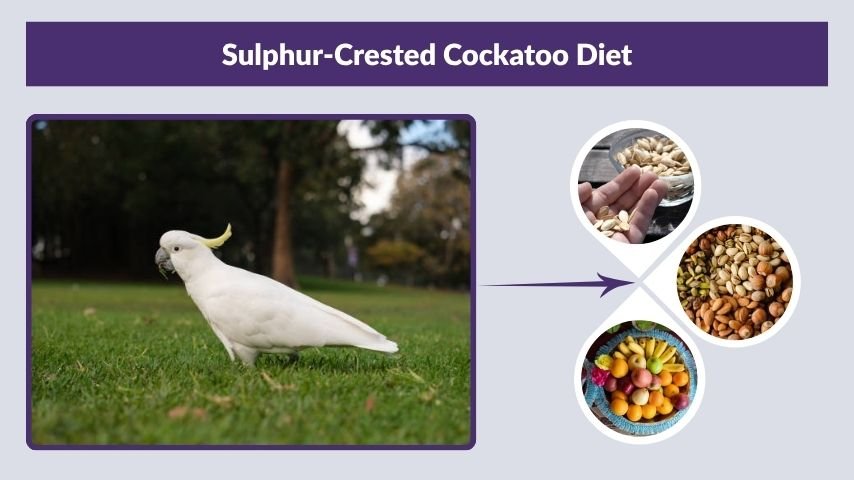
Sulphur-crested cockatoos are omnivorous birds with strong beaks designed for cracking seeds and nuts. In the wild, they spend much of the day searching for food on the ground or in trees. Their diet changes depending on seasonal food availability.
What Do Sulphur-Crested Cockatoos Eat?
Common foods include:
- Seeds
- Nuts
- Fruits
- Roots
- Flowers
- Insects
They may also eat crops and garden plants in farming areas.
Feeding Behavior
Cockatoos often feed in groups and use their strong beaks to break open hard food. They are intelligent foragers and sometimes use their feet to hold food while eating.
These parrots can quickly learn where humans leave food, which helps explain their success in urban environments.
Sulphur-Crested Cockatoo Behavior and Personality
Sulphur-crested cockatoos are highly social parrots known for their intelligence and energetic behavior. They communicate through loud calls, body movements, and playful actions. These birds need constant mental stimulation and social interaction, which is why they form strong bonds with family members or owners.
Why Are Sulphur-Crested Cockatoos So Loud?
Cockatoos naturally use loud calls to communicate across long distances. In the wild, flock members call to stay connected and warn others about danger.
Their loud behavior may increase because of:
- Excitement
- Loneliness
- Attention-seeking
- Territory defense
- Morning and evening activity
Pet cockatoos may scream more often if they become bored or ignored.
Can Sulphur-Crested Cockatoos Talk?
Sulphur-crested cockatoos are capable of learning words, phrases, and household sounds. While they may not speak as clearly as some parrots, they can imitate voices, alarms, and laughter very well.
Their intelligence allows them to remember routines and recognize familiar people. Many owners teach simple commands and tricks through repetition and rewards.
Social and Emotional Behavior
These parrots are extremely emotional birds that enjoy companionship. Wild cockatoos live in flocks, while pet birds often become deeply attached to their owners.
Without enough attention, some birds may develop stress-related behaviors such as screaming or feather plucking. Daily interaction and enrichment are important for maintaining healthy behavior.
Dancing and Playful Behavior
Sulphur-crested cockatoos are playful and curious animals. They enjoy climbing, chewing objects, and interacting with toys.
Common playful behaviors include:
- Head bobbing
- Crest raising
- Wing spreading
- Hanging upside down
- Dancing to sounds
Their entertaining personalities are one reason they are popular in bird videos and social media clips.
Sulphur-Crested Cockatoo Life Cycle
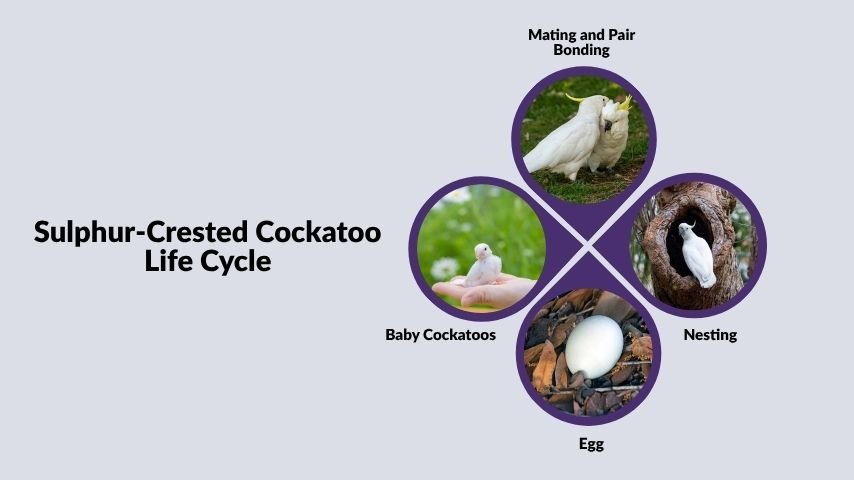
The life cycle of a sulphur-crested cockatoo includes courtship, nesting, chick development, and adulthood. These parrots usually form long-term pair bonds and work together to raise their young. Nesting often takes place in tree hollows high above the ground.
Mating and Pair Bonding
Sulphur-crested cockatoos often mate for life and stay together for many years. Courtship behaviors include calling, crest displays, and mutual grooming.
Paired birds cooperate in protecting territory and preparing nesting sites before breeding season begins.
Eggs and Nesting
Female cockatoos typically lay one to three eggs inside tree hollows lined with wood dust. Both parents help incubate the eggs and care for the chicks after hatching.
The incubation period usually lasts around one month. During this time, the adult birds guard the nest carefully from predators.
Baby Cockatoos
Baby sulphur-crested cockatoos hatch without feathers and rely completely on their parents for warmth and food. The chicks grow quickly and develop feathers over several weeks.
Young birds remain in the nest until they are strong enough to fly and feed independently. Some juveniles continue living with family groups even after leaving the nest.
Lifespan and Life Expectancy
Sulphur-crested cockatoos are among the longest-living parrots in the world. With proper care, they can survive for many decades.
Factors affecting lifespan include:
- Diet quality
- Veterinary care
- Exercise
- Mental stimulation
- Safe living conditions
Many captive cockatoos live between 40 and 70 years, while some individuals may live even longer.
Sulphur-Crested Cockatoo as Pets
Sulphur-crested cockatoos are affectionate but demanding pets. Their intelligence and emotional needs require experienced owners who can provide daily attention, exercise, and enrichment. These birds are not ideal for people seeking quiet or low-maintenance pets.
Are Sulphur-Crested Cockatoos Good Pets?
Cockatoos can become loving companions because they enjoy interacting with humans. However, they are loud, messy, and highly active birds that require long-term commitment.
Potential owners should understand:
- They need daily social interaction
- They may scream loudly
- They can damage furniture by chewing
- They live for many decades
Cage and Housing Requirements
Pet sulphur-crested cockatoos need large living spaces that allow climbing and wing movement.
Important housing needs include:
- Spacious cage
- Strong perches
- Safe chew toys
- Daily exercise area
- Access to fresh water
A cramped or boring environment can lead to stress and unhealthy behavior.
Sulphur-Crested Cockatoo Care
Good care includes proper nutrition, mental stimulation, and regular health checks. Owners should provide fresh fruits, vegetables, seeds, and pellets in balanced amounts.
Cockatoos also benefit from social playtime and opportunities to explore outside the cage under supervision.
Common Pet Behavior Problems
Some sulphur-crested cockatoos develop behavioral issues when they feel lonely or understimulated. Common problems include excessive screaming, biting, and feather plucking.
Consistent training, enrichment, and social interaction help reduce these behaviors and improve the bird’s emotional health.
Sulphur-Crested Cockatoo Price and Availability
Sulphur-crested cockatoos are expensive parrots because of their intelligence, long lifespan, and care requirements. Prices vary depending on the bird’s age, subspecies, breeder reputation, and location. Potential owners should also consider long-term expenses such as food, veterinary care, cages, and toys before purchasing one.
How Much Does a Sulphur-Crested Cockatoo Cost?
The price of a sulphur-crested cockatoo can range from hundreds to several thousand dollars depending on availability and breeding quality.
Price factors include:
- Bird age
- Subspecies type
- Breeder reputation
- Training level
- Location and demand
Greater sulphur-crested cockatoos are often more expensive because of their larger size.
Finding Responsible Breeders
Buying from ethical breeders helps ensure the bird is healthy and properly socialized. Responsible breeders provide clean environments, health records, and proper care instructions.
Healthy cockatoos usually show:
- Bright eyes
- Clean feathers
- Active behavior
- Strong appetite
- Alert posture
Avoid purchasing birds from unsafe or illegal wildlife sellers.
Adoption vs Buying
Some people choose to adopt rescued cockatoos instead of buying young birds from breeders. Adoption can provide homes for parrots that need experienced care and social interaction.
Rescued cockatoos may already know basic commands and human interaction, though some birds require additional patience and rehabilitation.
Predators, Threats, and Conservation
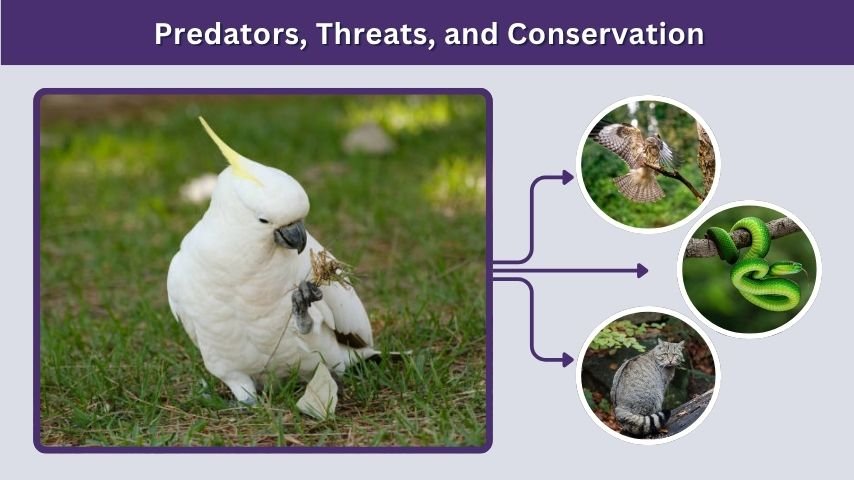
Sulphur-crested cockatoos face threats from predators, habitat destruction, and illegal trapping. While many populations remain stable, environmental changes can affect nesting areas and food availability. Conservation programs help protect wild cockatoos and preserve their natural habitats.
Natural Predators
Young cockatoos and eggs are vulnerable to several predators in the wild.
Common predators include:
- Birds of prey
- Snakes
- Monitor lizards
- Wild cats
- Large mammals
Adult cockatoos usually rely on flock warnings and flight to escape danger.
Human-Related Threats
Human activity creates serious challenges for cockatoo populations. Forest clearing removes nesting trees, while illegal trapping threatens some local populations.
Urban dangers include collisions with vehicles, electrical wires, and pollution. Feeding wild birds unhealthy food may also affect their health and natural behavior.
Conservation Status
Most sulphur-crested cockatoo populations are currently stable, though some subspecies face regional decline because of habitat loss and wildlife trade.
Conservation efforts include:
- Habitat protection
- Wildlife rescue programs
- Breeding management
- Anti-poaching laws
- Public awareness campaigns
Protecting old-growth trees is especially important because cockatoos depend on tree hollows for nesting.
Interesting Sulphur-Crested Cockatoo Facts
Sulphur-crested cockatoos are among the most intelligent parrots in the world. Their strong memory, problem-solving skills, and playful personalities make them fascinating birds both in the wild and captivity.
Fun Facts About Sulphur-Crested Cockatoos
Interesting facts include:
- They can recognize human faces
- Their crest shows emotions
- They may
FAQs
How long do sulphur-crested cockatoos live?
Sulphur-crested cockatoos are long-lived parrots that can survive for several decades. In captivity, many birds live between 40 and 70 years with proper care, healthy food, and regular veterinary attention.
Can sulphur-crested cockatoos talk?
Yes, sulphur-crested cockatoos can learn to mimic words, phrases, and household sounds. Their speech ability varies by individual bird, but many become skilled at copying voices and noises through repetition and training.
Are sulphur-crested cockatoos endangered?
Most sulphur-crested cockatoo populations are currently stable, although some local subspecies face threats from habitat destruction and illegal wildlife trade. Conservation programs help protect nesting habitats and wild populations.
What do sulphur-crested cockatoos eat?
Sulphur-crested cockatoos eat seeds, nuts, fruits, roots, flowers, and insects in the wild. Pet birds should receive a balanced diet that includes pellets, fresh vegetables, fruits, and limited seeds.
Are sulphur-crested cockatoos good pets?
They can be excellent pets for experienced bird owners because they are intelligent, affectionate, and playful. However, they require daily attention, large living spaces, mental stimulation, and long-term commitment because of their loud behavior and long lifespan.
