
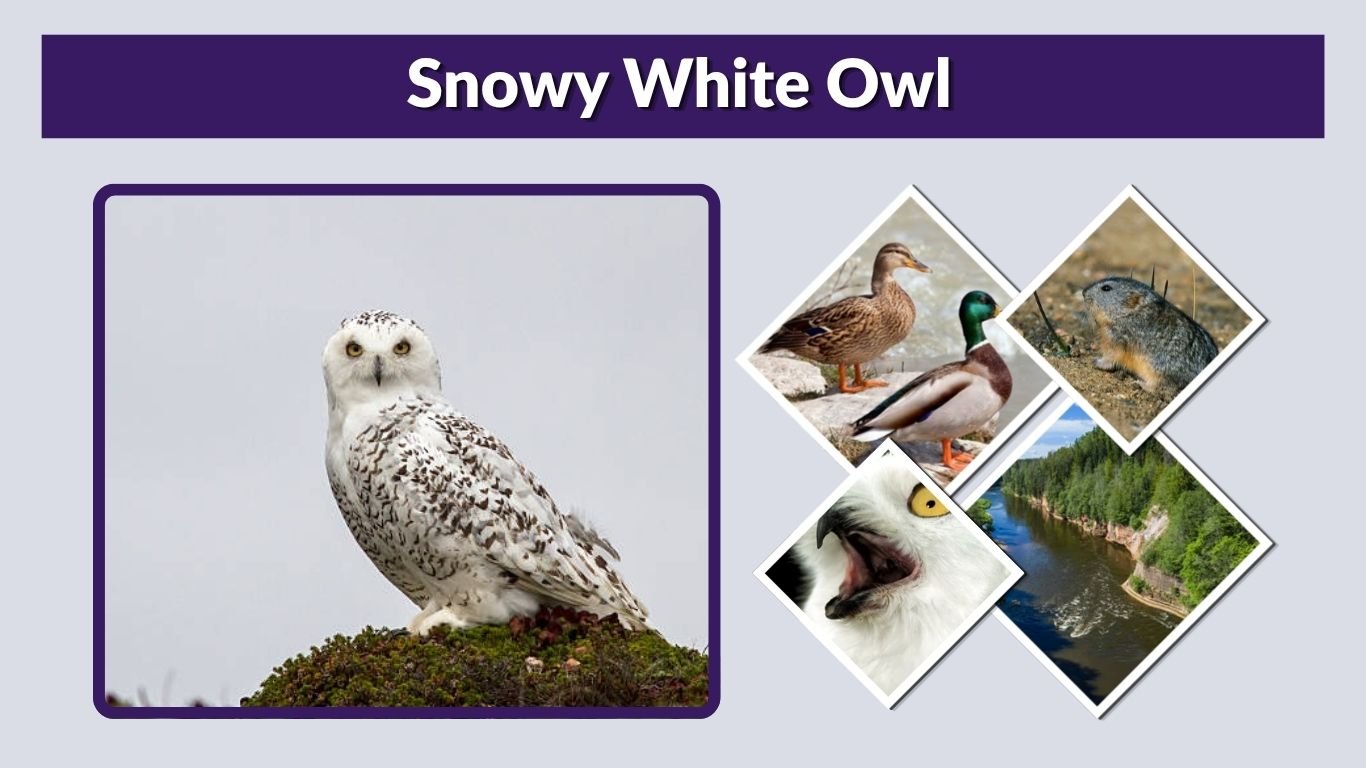
The snowy white owl, better known simply as the snowy owl, is one of the most recognizable birds of the Arctic. Its scientific name is Bubo scandiacus. Adults have brilliant yellow eyes, rounded heads, powerful talons, and thick white plumage that protects them from extreme cold. However, not every snowy owl is completely white. Females and young birds usually have many dark bars or spots, while older males may become almost pure white. Snowy owls live in open landscapes, hunt during both day and night, and travel widely when food conditions change.
What Is a Snowy White Owl?
“Snowy white owl” is a descriptive name commonly used for the snowy owl. It does not refer to a separate owl species. Snowy owls belong to the family Strigidae, which contains the typical or true owls.
Unlike woodland owls that hide among trees, snowy owls are adapted to open, treeless environments. They often sit directly on the ground, a low mound, fence post, hay bale, building, or utility pole while watching for prey.
Their thick feathers cover almost the entire body, including the legs and toes. This extensive feathering provides insulation and helps explain why the snowy owl is the heaviest owl species regularly found in North America.
Are Snowy Owls Always White?
Snowy owls are predominantly white, but their exact coloration depends on sex, age, and individual variation. Many people picture a pure-white bird, yet that appearance is most typical of an older adult male.
Adult Male Snowy Owl
An adult male usually has mostly white plumage with relatively few dark markings. Young males may have brown or black bars when they first mature, but these markings often become less noticeable as the bird ages.
Some old males appear almost entirely white from a distance. Their yellow eyes and small dark bill stand out strongly against the pale feathers.
Female Snowy Owl
Females are typically much more heavily marked. They have dark brown or black bars across the back, wings, breast, and belly. Their white background remains visible, but the overall appearance may be black-and-white rather than pure white.
The darker pattern may help camouflage a female while she sits on a ground nest surrounded by rocks, vegetation, and patches of snow.
Juvenile Snowy Owl
Young snowy owls generally have the most extensive dark barring. Some juveniles appear predominantly brown and white. As they mature and replace their feathers, their plumage usually becomes lighter.
Therefore, a brown-and-white or black-and-white snowy owl is not necessarily a different species. It may simply be a female or immature bird.
Why Are Snowy Owls White?
Snowy owls have white feathers primarily because the coloration provides camouflage in their Arctic environment. Snow and pale tundra backgrounds make a white bird more difficult for prey and potential threats to detect.
Their feathers also provide exceptional insulation. Snowy owls have dense body plumage, heavily feathered legs, and feathers covering their toes. These adaptations conserve heat when temperatures fall far below freezing.
The white coloration remains throughout the year. Snowy owls do not turn brown during summer and white during winter. However, feather wear, lighting, age, and the amount of dark barring can change how white an individual appears.
Snowy White Owl Size
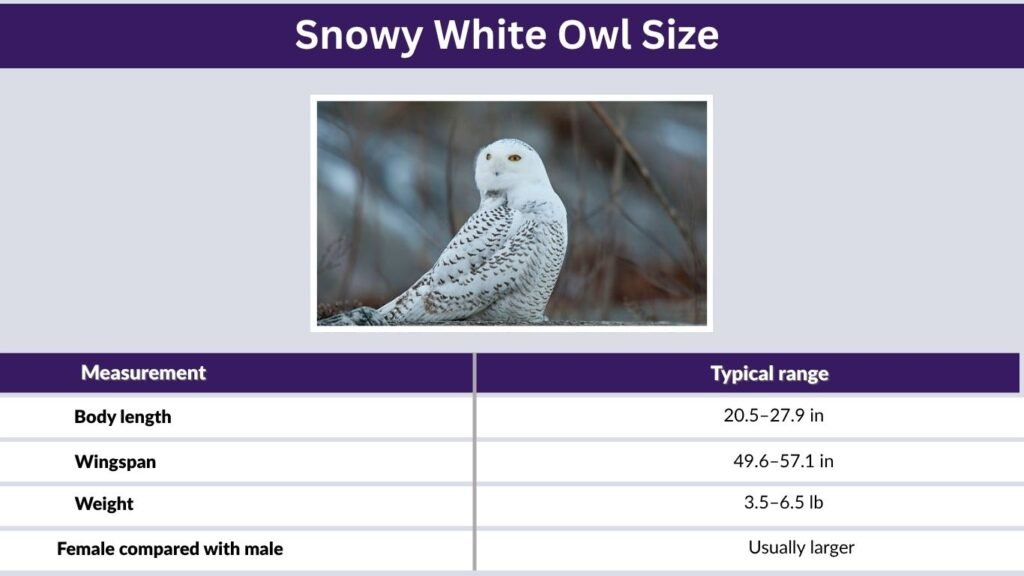
The snowy owl is a large and powerful species. Adults generally measure about 20.5–27.9 inches, or 52–71 centimeters, in body length. Their wingspan is approximately 49.6–57.1 inches, or 126–145 centimeters.
Adults may weigh around 3.5–6.5 pounds, with females usually larger and heavier than males.
| Measurement | Typical range |
|---|---|
| Body length | 20.5–27.9 in |
| Wingspan | 49.6–57.1 in |
| Weight | 3.5–6.5 lb |
| Female compared with male | Usually larger |
Snowy owls often appear even larger because of their dense feathers. Beneath the plumage, the body is more compact than its rounded silhouette suggests.
They have broad wings suited to powerful, controlled flight over open terrain. Their feet are large, heavily feathered, and equipped with curved talons for capturing mammals and birds.
Where Do Snowy White Owls Live?
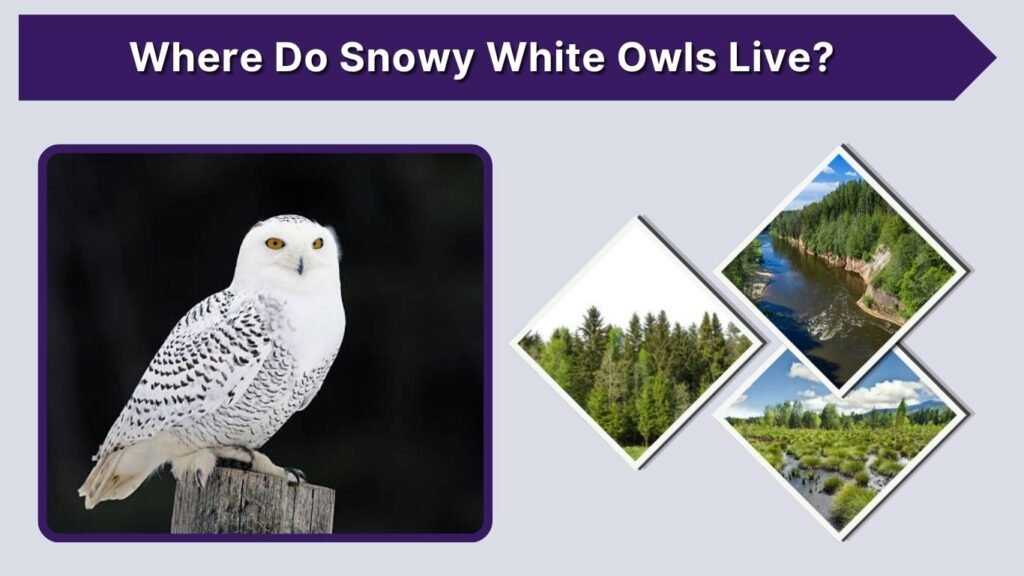
Snowy owls breed in Arctic regions of North America, Europe, and Asia. Their summer habitat lies mainly on open tundra above the northern tree line.
Their breeding range includes areas of:
- Northern Alaska
- Arctic Canada
- Greenland
- Scandinavia
- Northern Russia
- Siberia
The tundra provides low vegetation, broad visibility, and abundant small mammals during favorable years.
Snowy owls do not depend on forests. They prefer wide-open landscapes where they can see prey moving across the ground. During winter, suitable habitats may include prairies, farmland, marshes, beaches, dunes, airports, and coastal areas.
Snowy Owl Migration and Winter Sightings
Snowy owls are nomadic rather than following one simple migration route. Some remain in the Arctic throughout winter, while others move south into southern Canada, the northern United States, Europe, or Asia.
Occasionally, unusually large numbers travel south during an event called an irruption. These movements are often influenced by prey abundance and the number of young owls produced during the previous breeding season.
A successful lemming year may allow snowy owls to raise larger broods. Many young birds may then disperse over great distances, creating increased sightings farther south.
Snowy owls seen in southern regions commonly choose landscapes resembling tundra. Agricultural fields, beaches, flat rooftops, and airport grasslands provide the open views they prefer.
What Do Snowy White Owls Eat?
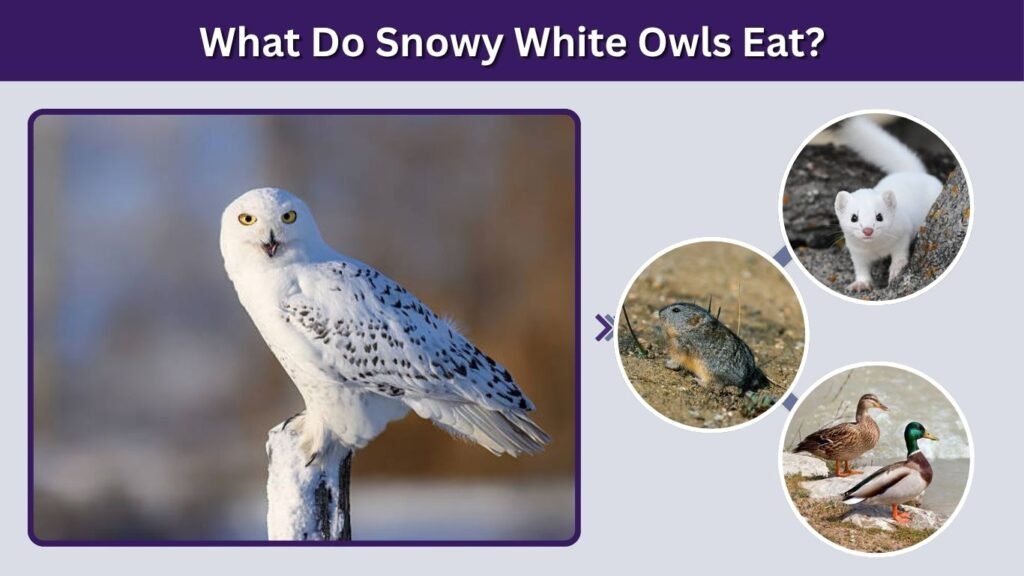
Snowy owls are carnivorous birds that mainly eat mammals and birds. In the Arctic, lemmings are among their most important prey.
Their diet may include:
- Lemmings
- Voles
- Mice
- Ground squirrels
- Rabbits and hares
- Ducks
- Geese
- Shorebirds
- Small songbirds
- Fish and carrion occasionally
When lemmings are abundant, they may dominate the owl’s diet. When rodents are scarce, snowy owls become more opportunistic and capture a much wider range of animals.
A snowy owl often hunts by sitting on the ground or an elevated perch and carefully watching the surrounding area. Once it detects an animal, it flies low and attacks with its feet extended.
Small prey may be swallowed whole. Later, the owl regurgitates a pellet containing indigestible bones, teeth, fur, and feathers.
Are Snowy Owls Nocturnal?
Snowy owls can hunt during the day, at dusk, at night, or whenever prey is active. They are therefore not strictly nocturnal.
This flexible schedule is essential in the Arctic. During summer, the sun may remain above the horizon for nearly 24 hours, leaving little or no true darkness. Snowy owls must be able to hunt in continuous daylight while feeding themselves and their chicks.
Their bright yellow eyes function well in daylight, while their sensitive vision and hearing also allow them to hunt in dim conditions.
Snowy White Owl Call and Sounds
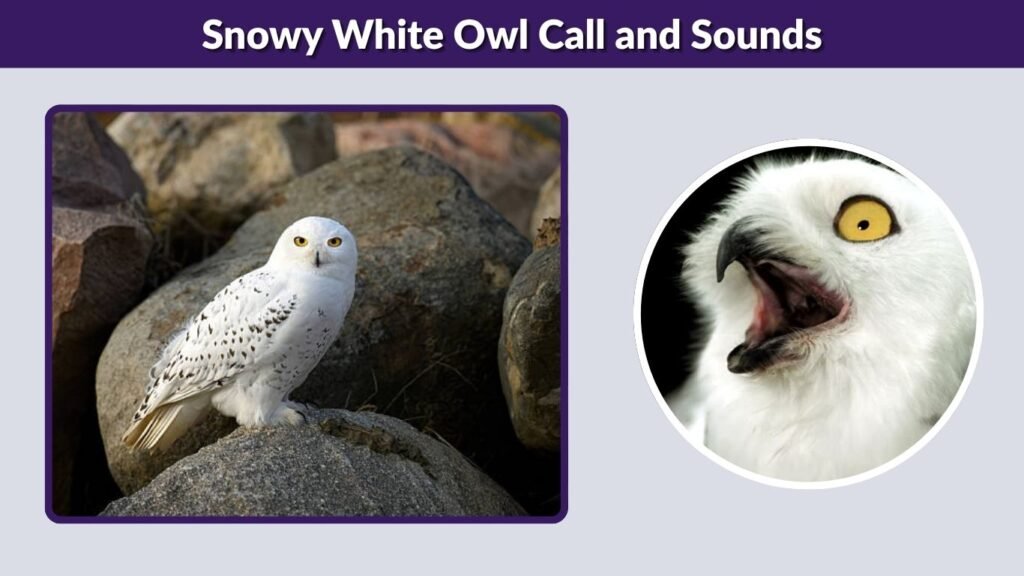
The snowy owl is often quiet, especially outside the breeding season. However, it can produce several powerful sounds.
The male’s territorial call is usually a deep, low hoot that may be repeated. During courtship, a male may call while displaying to a female or defending a nesting area.
Other snowy owl sounds include:
- Hooting
- Barking
- Whistling
- Hissing
- Screeching
- Bill snapping
Females may give rougher calls around a nest, particularly when an animal or person approaches too closely. Chicks make begging sounds when requesting food.
Snowy Owl Flight
A snowy owl in flight displays broad, rounded wings and a relatively short tail. It uses steady wingbeats mixed with gliding while traveling across tundra, fields, and coastal areas.
Like other owls, it has specialized feathers that reduce flight noise. Quiet flight helps the bird approach mammals and birds without being detected.
Snowy owls may fly low across the ground during a hunting attack, but they are also capable of long journeys. Some individuals travel hundreds or thousands of miles while moving between seasonal areas.
Nesting and Baby Snowy Owls
Snowy owls nest directly on the ground. A female selects a slightly elevated, dry site with a broad view of the surrounding tundra. She scrapes a shallow depression rather than constructing a nest from branches.
Clutch size varies considerably with food availability. A female may lay only a few eggs during a poor prey year, but nests can contain six or more eggs when lemmings are abundant.
The eggs are laid at intervals rather than all at once. As a result, the chicks hatch on different days and can differ noticeably in size.
The female incubates and guards the eggs while the male supplies food. After hatching, both parents help protect and feed the young. Snowy owl parents may aggressively defend the nesting area against foxes, birds, and other intruders.
Baby snowy owls are covered with soft white down when very young. As they grow, their juvenile feathers become dark and heavily barred.
Snowy Owl Predators and Threats
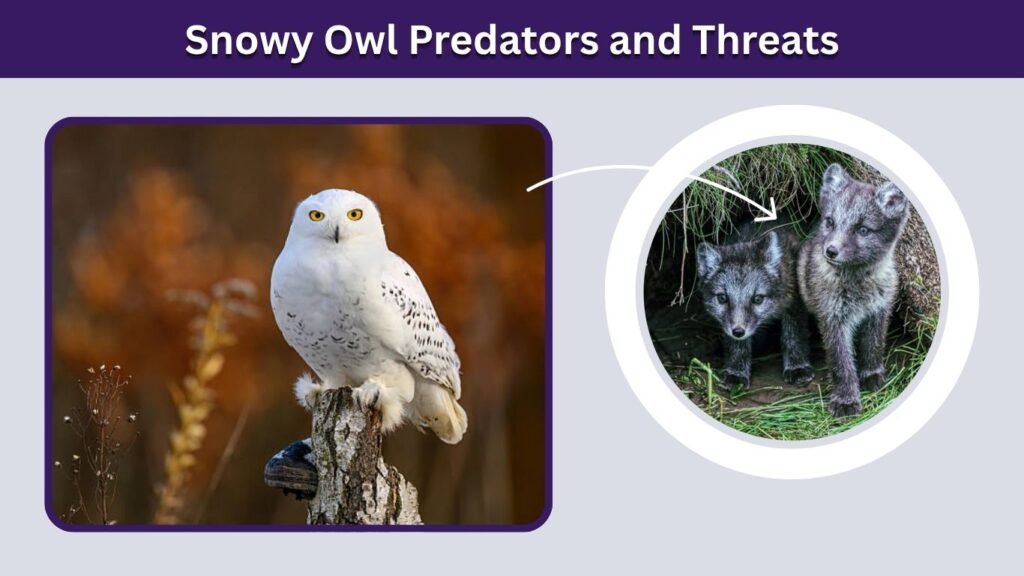
Adult snowy owls are formidable predators with relatively few natural enemies. Arctic foxes and other mammals may steal eggs or kill chicks. Large birds can also threaten unguarded nests.
Human-related hazards include:
- Vehicle collisions
- Aircraft strikes
- Power-line injuries
- Entanglement in fences
- Habitat disturbance
- Poisoning through contaminated prey
- Stress caused by crowds of observers
A resting snowy owl should be watched from a respectful distance. Approaching repeatedly may force it to fly and waste energy needed for hunting and surviving cold weather.
Interesting Snowy White Owl Facts
- The snowy owl’s scientific name is Bubo scandiacus.
- Older males can become nearly pure white.
- Females are usually larger and more heavily barred than males.
- Snowy owls remain white throughout the year.
- Their legs and toes are covered with insulating feathers.
- They often hunt in full daylight.
- Lemmings are a major food source in Arctic breeding areas.
- They nest on the ground rather than in trees.
- Snowy owls prefer open landscapes with few or no trees.
- They are the heaviest owls regularly found in North America.
- Their movements may change dramatically from one year to another.
- A snowy owl can capture birds as well as mammals.
FAQs
Is a white owl always a snowy owl?
No. Barn owls and some unusually pale individuals of other species may look white, especially in poor light. A snowy owl is large and rounded, with yellow eyes, a dark bill, feathered feet, and white plumage that may contain dark bars.
Are male snowy owls completely white?
Some older adult males become almost completely white, but younger males usually retain dark spots or bars. Plumage varies among individuals, so not every male snowy owl is pure white.
Do snowy owls stay white all year?
Yes. Snowy owls do not change from brown summer plumage to white winter plumage. They remain predominantly white throughout the year, although females and juveniles retain permanent dark markings.
What do snowy white owls eat?
They mainly eat lemmings, voles, mice, rabbits, and other small mammals. They also capture ducks, geese, shorebirds, and smaller birds. Fish and carrion may occasionally be eaten.
Where does the snowy white owl live?
Snowy owls breed on Arctic tundra across North America, Europe, and Asia. During winter, some move south into open farmland, prairies, marshes, beaches, dunes, and coastal areas.
