
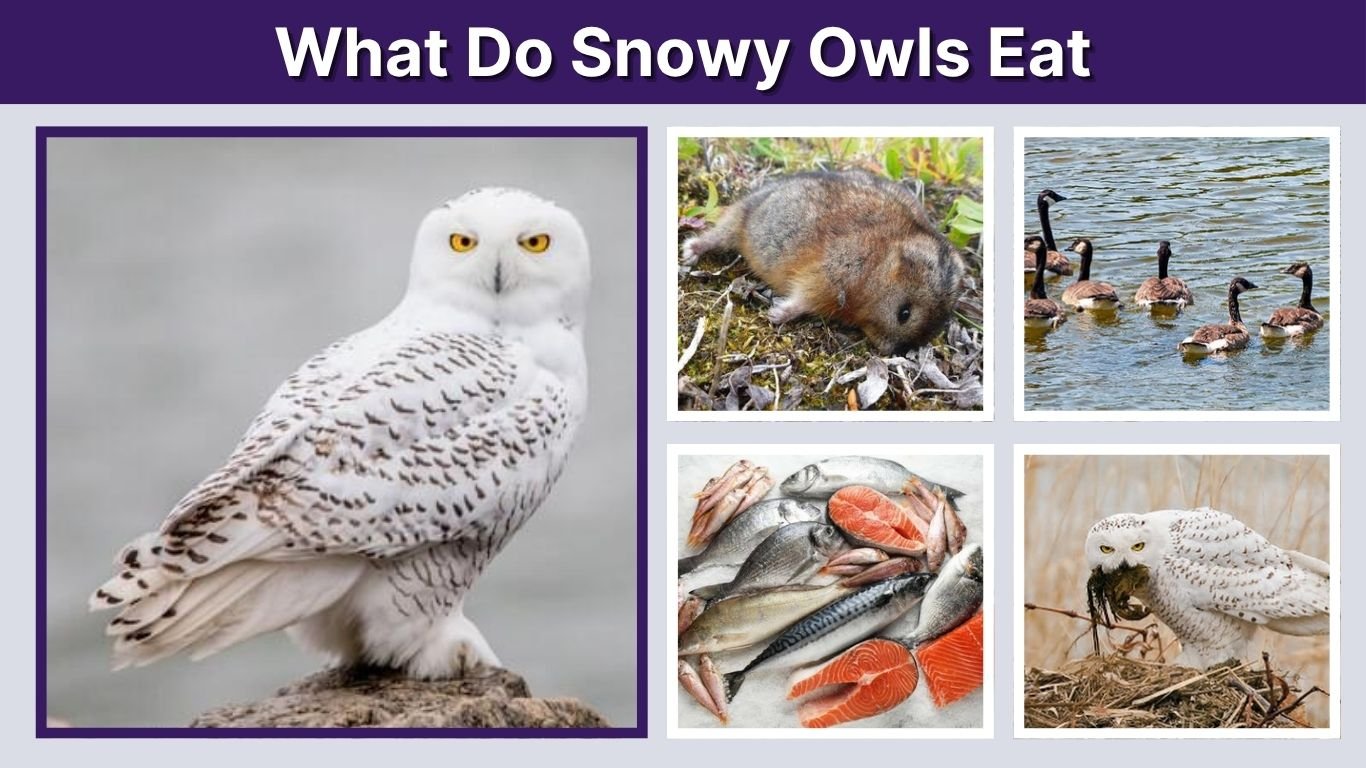
Snowy owls are powerful Arctic carnivores that eat lemmings, voles, mice, rabbits, hares, ground squirrels and many kinds of birds. Lemmings are their most important prey during the breeding season, but snowy owls are flexible hunters that change their diet according to habitat and food availability. In coastal or wintering areas, they may capture ducks, shorebirds, seabirds and occasional fish. Snowy owls do not eat plants, fruit or grass because their bodies are adapted to digesting animal prey.
What Do Snowy Owls Eat Most Often?
Snowy owls primarily eat small mammals, especially rodents. Their scientific name is Bubo scandiacus, and they are among the largest owls in North America.
On the Arctic tundra, lemmings often form the majority of their diet. A worldwide review of snowy owl feeding studies found that lemmings represented more than 71.8% of the diet in 10 of 15 breeding-season studies. In several locations, they accounted for more than 90% of prey.
However, snowy owls are not dependent on only one food. Their diet may include:
- Lemmings
- Voles
- Mice
- Rats
- Ground squirrels
- Rabbits
- Hares
- Weasels
- Ptarmigan
- Ducks
- Geese
- Shorebirds
- Seabirds
- Small songbirds
- Fish
- Carrion
The exact menu changes with the season and the owl’s location. Audubon notes that snowy owls may feed almost entirely on lemmings when those rodents are abundant, but they also take rabbits, hares, voles, ground squirrels and numerous birds.
Snowy Owl Diet at a Glance
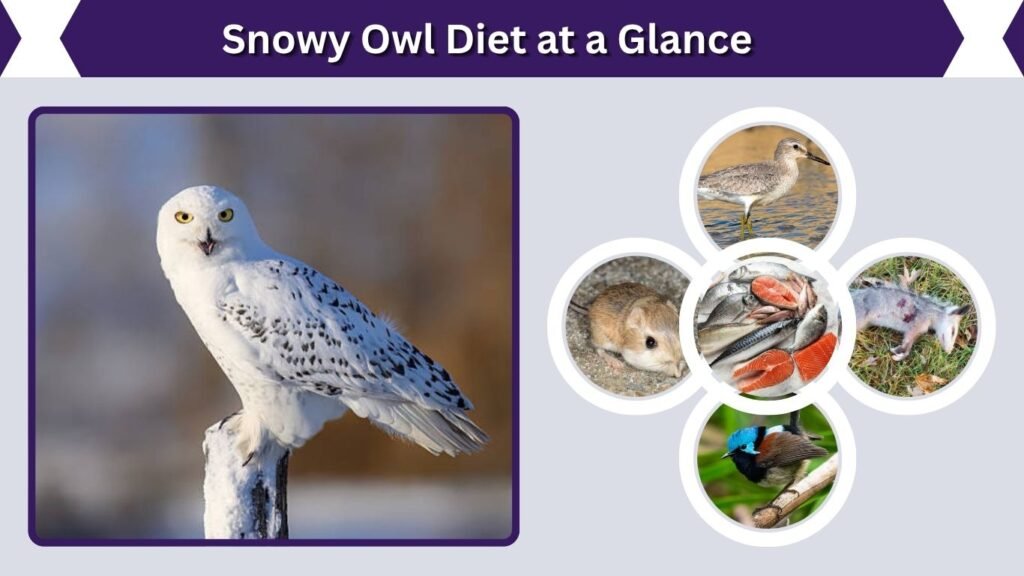
| Food group | Common examples | Importance |
|---|---|---|
| Small rodents | Lemmings, voles and mice | Primary diet |
| Larger mammals | Rabbits, hares and ground squirrels | Occasional but valuable |
| Waterbirds | Ducks, geese and grebes | Important near coasts |
| Other birds | Ptarmigan, shorebirds and songbirds | Seasonal prey |
| Aquatic food | Fish | Opportunistic |
| Dead animals | Carrion | Occasionally eaten |
| Plants | Grass, fruit and shrubs | Not part of the diet |
Do Snowy Owls Eat Lemmings?
Yes. Lemmings are the snowy owl’s best-known and often most important prey. These small Arctic rodents live on the tundra and can experience dramatic changes in population from one year to another.
When lemmings are plentiful, snowy owls may concentrate heavily on them. The abundance of lemmings also affects owl reproduction. A pair may raise more chicks during an excellent rodent year because the adults can bring food to the nest more frequently. Cornell reports that snowy owls can raise double or triple their usual number of young during major lemming population increases.
When lemming numbers are low, snowy owls may move to another location, breed less successfully or fail to nest altogether. Researchers have observed that their breeding decisions are closely connected to the availability of these rodents.
How Many Lemmings Does a Snowy Owl Eat?
The number varies with the owl’s size, age, activity and access to other prey. An adult may consume several lemmings in a day when hunting conditions are favorable.
A breeding pair must capture far more food because it must feed growing chicks. In a highly productive season, a snowy owl family may consume hundreds or even thousands of lemmings before the young become independent.
What Do Snowy Owls Eat in the Tundra?
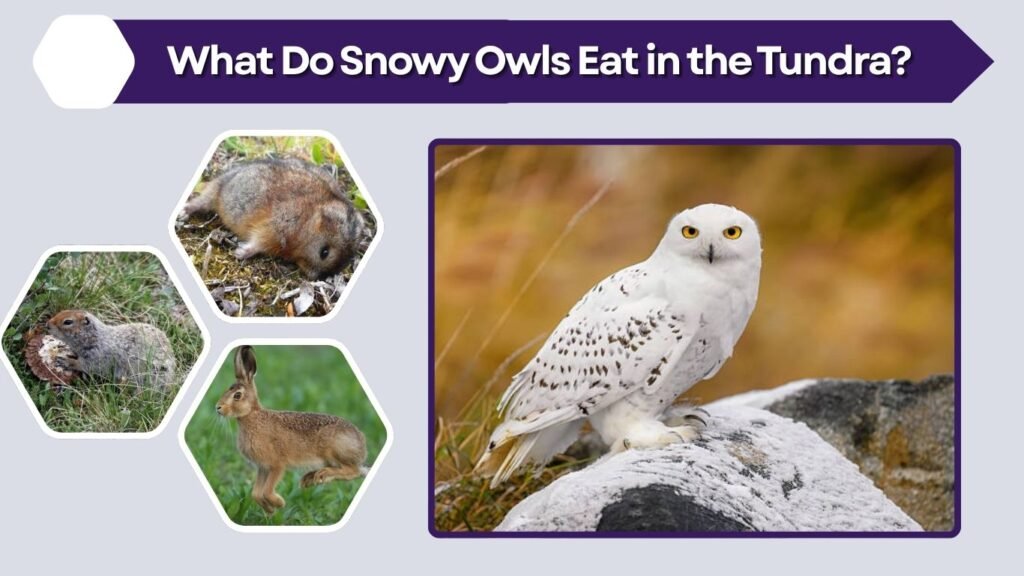
Snowy owls eat whatever suitable animals are available in their Arctic habitat. Their tundra diet is dominated by small mammals, but it can be surprisingly diverse.
Common tundra prey includes:
- Brown and collared lemmings
- Voles
- Arctic ground squirrels
- Young hares
- Ptarmigan
- Sandpipers
- Plovers
- Ducks
- Geese and goslings
The open tundra allows snowy owls to scan large areas from a low hill, rock or mound. They can hunt throughout the day during the Arctic summer because daylight may continue for 24 hours.
Snowy owls are therefore not strictly nocturnal. They are capable of feeding during daylight, twilight or darkness, depending on prey activity.
What Do Snowy Owls Eat in Winter?
During winter, some snowy owls remain in the Arctic, while others travel south into Canada, the United States, Europe or Asia. In these wintering areas, lemmings may be unavailable, so the owls switch to local animals.
Their winter diet may include:
- Field mice
- Voles
- Rats
- Rabbits
- Ducks
- Gulls
- Pigeons
- Shorebirds
- Small waterfowl
Coastal snowy owls may hunt heavily around beaches, marshes, lakes and harbors. Birds can become especially important in these habitats. Open farmland, airports and grasslands may provide mice, rats and rabbits.
This flexibility helps snowy owls survive far from their Arctic breeding grounds. They are both specialized lemming hunters and adaptable general predators.
Do Snowy Owls Eat Rabbits and Arctic Hares?
Snowy owls can eat rabbits and hares, although these animals are larger than their normal rodent prey. A strong adult may capture a young or relatively small hare when the opportunity arises.
Adult Arctic hares are large and powerful, so they are not easy prey. Snowy owls are more likely to take young hares than healthy full-grown adults. Rabbits may be more important during winter when owls move into farmland and grasslands.
Larger prey provides more food than a lemming and may be eaten over multiple meals. An owl may remain near a carcass and return until most of the edible tissue has been consumed.
Do Snowy Owls Eat Birds?
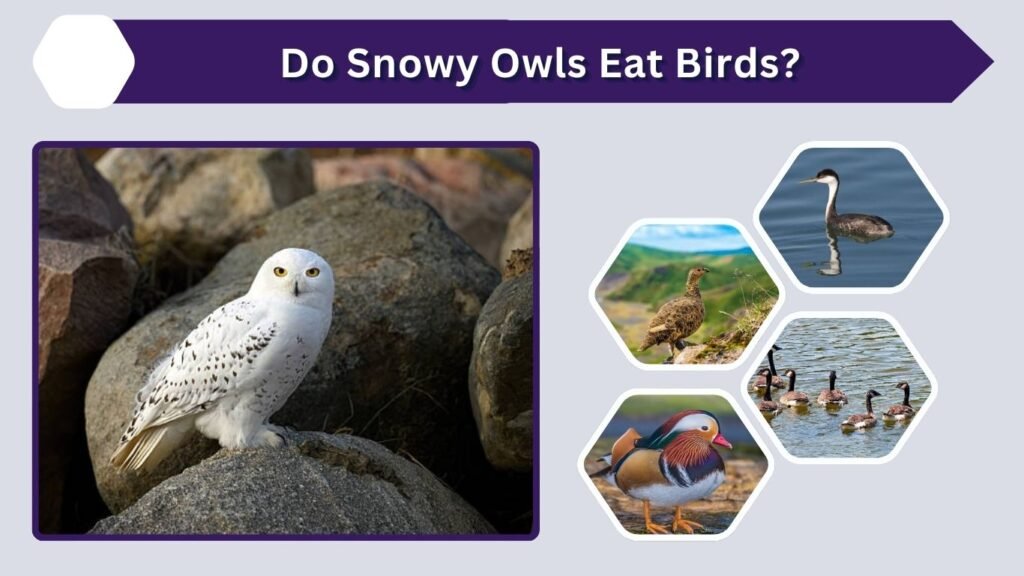
Yes. Snowy owls commonly eat birds, particularly when rodents are scarce or when they live near coasts and wetlands.
Bird prey can include:
- Ptarmigan
- Ducks
- Geese
- Grebes
- Shorebirds
- Seabirds
- Gulls
- Pigeons
- Small songbirds
Snowy owls may wait near water, fields or bird gathering areas before launching a fast attack. They can capture birds on the ground, on the water or in flight.
Coastal wintering owls may depend heavily on ducks and other waterbirds. Audubon describes birds as an important part of their diet in coastal environments.
Do Snowy Owls Eat Fish?
Snowy owls occasionally eat fish, but fish are not usually their primary food. An owl may capture a fish near shallow water, take one from the surface or scavenge a dead fish.
Fish consumption is more likely in coastal areas or around lakes where aquatic prey is easily accessible. Snowy owls have also been documented eating carrion when fresh prey is difficult to find.
Their feet are strong enough to seize slippery prey, but they are not specialized fish hunters like ospreys or fish owls.
Do Snowy Owls Eat Plants?
No. Snowy owls are carnivores and do not normally eat grass, berries, fruit, leaves or Arctic shrubs.
Their hooked bills, sharp talons and digestive systems are designed for capturing and processing meat. They obtain nutrients and moisture from their prey rather than from plant food.
A snowy owl seen pecking near vegetation may be handling prey, swallowing small pieces of material accidentally or investigating its surroundings. Plants are not a meaningful part of its natural diet.
How Do Snowy Owls Hunt?
Snowy owls commonly use a sit-and-wait hunting technique. An owl chooses a location with a wide view and watches for movement.
Possible perches include:
- Tundra mounds
- Rocks
- Fence posts
- Hay bales
- Utility poles
- Buildings
- Sand dunes
- The ground itself
Once prey is detected, the owl flies low and strikes with its feet. Its strong toes and curved talons grip and kill the animal.
Snowy owls rely heavily on vision, but their hearing also helps them locate hidden rodents. Their broad wings allow controlled flight over open terrain, while specialized feather edges reduce flight noise.
They may also walk or run short distances on the ground when following prey.
How Do Snowy Owls Eat Their Food?
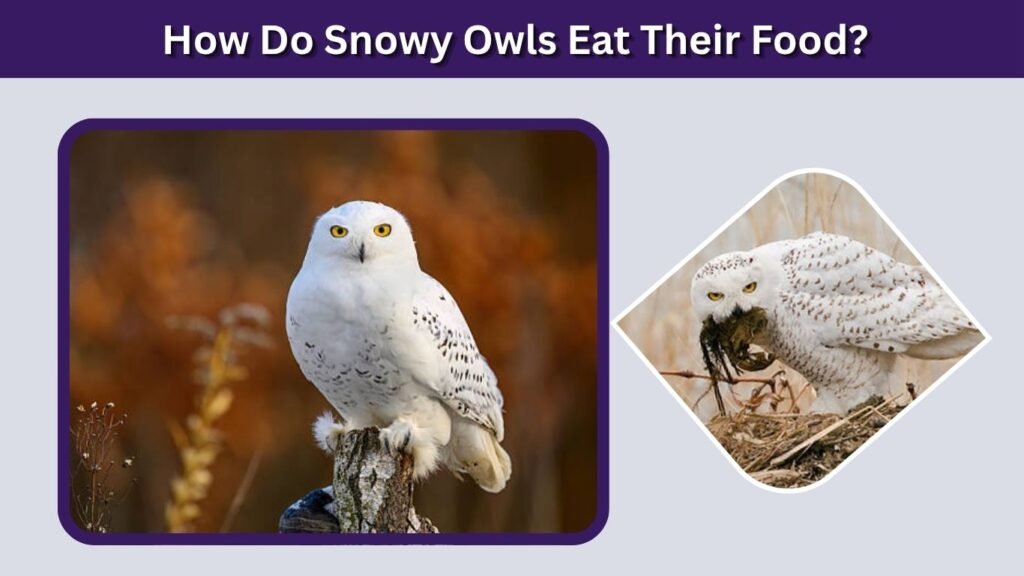
A snowy owl usually kills prey with its talons and then tears it with its hooked bill. Small animals such as lemmings and mice may be swallowed whole.
Larger prey is pulled apart into manageable pieces. The owl may eat the head first and continue with the muscles and organs.
Snowy owls cannot digest every part of an animal. Fur, feathers, bones, teeth and claws are compressed inside the stomach into a compact pellet. The owl later regurgitates the pellet through its mouth.
Scientists collect and examine owl pellets to identify prey remains. This is one of the most useful ways to study the diet of wild snowy owls.
How Often Do Snowy Owls Eat?
A snowy owl may hunt and eat several times in one day, but feeding frequency depends on prey size and availability.
An owl that captures several small lemmings may need to hunt repeatedly. One that catches a rabbit or large bird may obtain enough food for a longer period.
Adults raising chicks hunt much more frequently because the nest requires a constant food supply. The male often delivers prey while the female incubates eggs and guards young chicks. Later, both parents may help feed the growing family.
Snowy owls sometimes store extra prey near the nest. This food cache can support the female and chicks when poor weather temporarily limits hunting.
Do Snowy Owls Eat Arctic Foxes?
No. Snowy owls do not normally eat Arctic foxes. An adult Arctic fox is too large and dangerous to be regular prey.
Snowy owls and Arctic foxes may instead compete for lemmings and other small mammals. An owl may attack a fox that approaches its nest, but this is defensive behavior rather than hunting.
It is theoretically possible for a snowy owl to attack a very small fox pup, but this would be unusual and is not considered part of the species’ normal diet.
Do Snowy Owls Eat Caribou or Wolves?
Snowy owls do not hunt caribou, adult wolves or other large mammals. Such animals are far beyond the owl’s ability to overpower.
An owl might feed from the remains of a large animal as carrion, but that is different from killing it. Its normal prey consists of small and medium-sized animals that can be controlled with its talons.
Snowy owls also do not typically hunt dogs or adult cats. However, small pets should never be allowed to approach or disturb a wild owl.
What Animals Eat Snowy Owls?
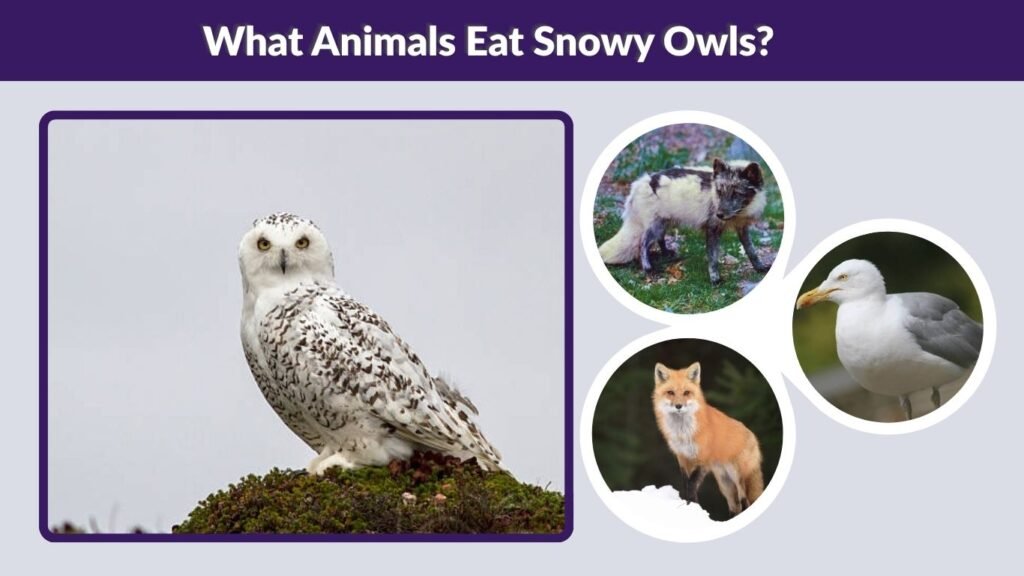
Healthy adult snowy owls have relatively few predators because they are large, strong and well armed. Their eggs and chicks face greater danger.
Potential predators include:
- Arctic foxes
- Red foxes
- Wolves
- Jaegers and skuas
- Gulls
- Ravens
- Golden eagles
- Other large owls
Arctic foxes may raid ground nests and eat eggs or chicks. Large birds may also take an unattended chick.
Golden eagles can potentially kill snowy owls, especially young or weakened individuals. Great horned owls may threaten snowy owls when their ranges overlap during winter, although encounters are not common.
Polar bears are not regular snowy owl predators. One might opportunistically eat eggs, chicks or an injured bird, but snowy owls do not form a normal part of a polar bear’s diet.
Snowy Owl Food Chain
Snowy owls occupy a high position in the Arctic food chain.
A simplified example is:
Tundra plants → lemmings → snowy owls
Lemmings eat grasses, sedges and other vegetation. Snowy owls then prey on the lemmings. Larger predators or scavengers may occasionally consume an owl, its eggs or its chicks.
This relationship shows why changes in rodent populations can affect snowy owl numbers. When lemmings become abundant, owls have more food and may produce more young. When lemmings decline, breeding success can fall and the owls may travel elsewhere.
Should People Feed Snowy Owls?
People should not offer live mice or other food to wild snowy owls. Baiting encourages birds to approach roads, vehicles and people, increasing the risk of collisions and habituation.
It can also interfere with natural hunting behavior and create crowds that disturb resting birds. Audubon specifically advises against feeding or baiting owls, noting that snowy owls found south of the Arctic are not necessarily starving.
The best way to observe a snowy owl is from a considerable distance using binoculars or a spotting scope.
Interesting Snowy Owl Diet Facts
- Lemmings dominate the breeding diet. In many Arctic studies, they make up most of the prey consumed.
- Their diet changes by location. Coastal owls may eat more ducks and shorebirds than inland birds.
- They hunt during daylight. Continuous Arctic summer light makes daytime hunting essential.
- They swallow small prey whole. Bones and fur are later expelled as pellets.
- They store extra food. Prey may be cached near a nest during productive hunting periods.
- They can capture relatively large prey. Rabbits, hares and waterbirds supplement their rodent diet.
- They never need to drink frequently. Much of their water comes from the animals they eat.
- They are opportunistic. Fish and carrion may be eaten when easier prey is unavailable.
FAQs
What is a snowy owl’s favorite food?
Lemmings are the snowy owl’s most important and characteristic food, especially during the Arctic breeding season. However, the owl does not have one fixed menu. It also eats voles, mice, rabbits, hares and birds according to availability.
Do snowy owls eat mice?
Yes. Mice are common prey, particularly when snowy owls travel south during winter. They also capture rats and voles in agricultural fields, grasslands, dunes and other open habitats.
Do snowy owls eat ducks?
Yes. Ducks can be important prey in coastal regions, wetlands and wintering areas. Snowy owls may attack ducks resting on water, sitting on shorelines or flying low over open areas.
What eats snowy owls in the tundra?
Arctic foxes are important predators of snowy owl eggs and chicks. Wolves, skuas, gulls, ravens and large raptors may also pose a threat. Healthy adult snowy owls have fewer natural predators.
How many times does a snowy owl eat per day?
There is no fixed number. An owl may eat several small rodents in a day or feed less often after capturing a larger rabbit or bird. Breeding adults must hunt frequently to supply their chicks with enough food.
