
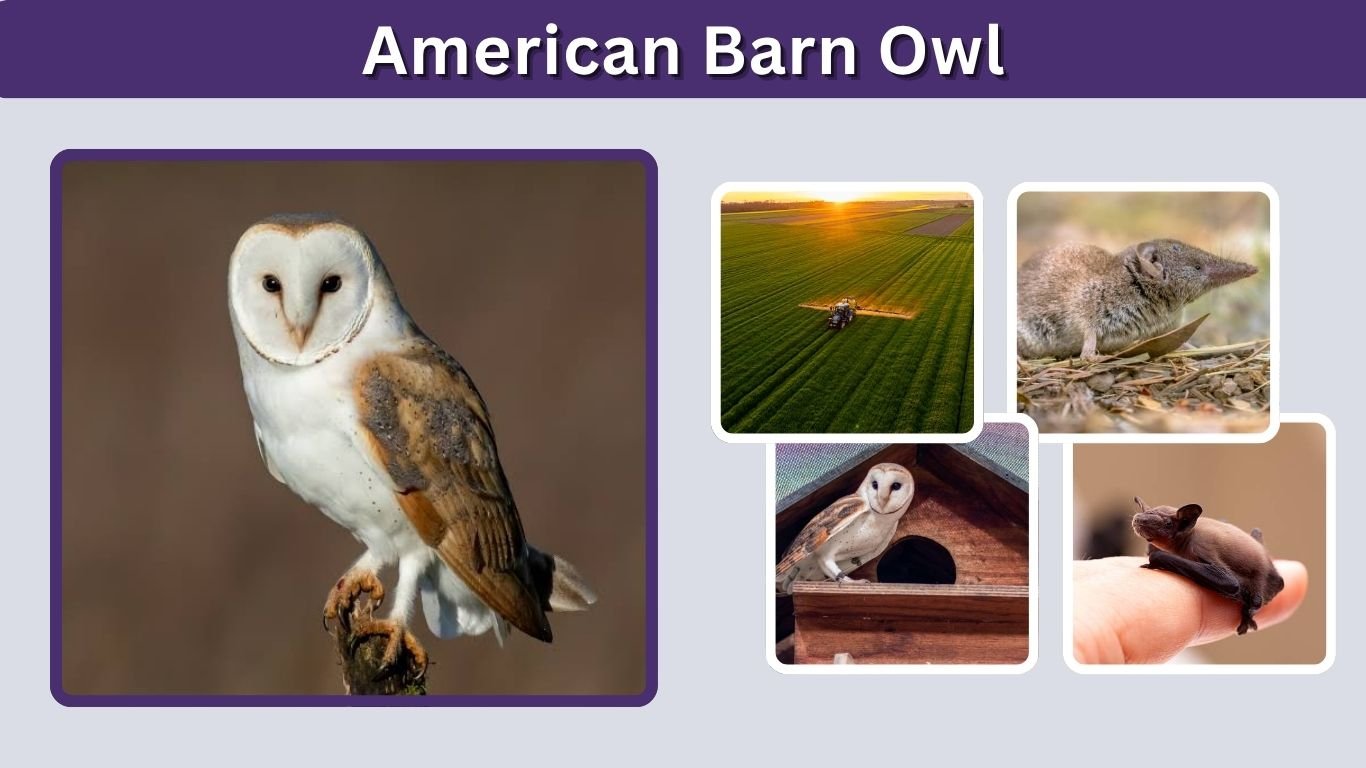
The American Barn Owl is a pale, nocturnal bird of prey recognized by its heart-shaped face, dark eyes, long legs, and ghostlike flight. It lives throughout much of the Americas, hunting rodents over farms, grasslands, marshes, deserts, and other open areas. Unlike many familiar owls, it does not produce a traditional hooting call. Instead, its strange screams, hisses, and clicking noises often reveal its presence after dark.
American Barn Owl Quick Facts
The American Barn Owl belongs to the barn-owl family, Tytonidae. It was formerly grouped with barn owls from Europe, Africa, Asia, and Australia, but ornithologists divided the worldwide barn owl complex into three species in 2024.
| Feature | Information |
| Common name | American Barn Owl |
| Scientific name | Tyto furcata |
| Family | Tytonidae |
| Length | 12.6–15.8 inches (32–40 cm) |
| Wingspan | 39.4–49.2 inches (100–125 cm) |
| Weight | 14.1–24.7 ounces (400–700 g) |
| Primary food | Mice, rats, voles, shrews and other small mammals |
| Main habitat | Grasslands, farms, marshes, deserts and open woodland |
| Activity | Mainly nocturnal |
| Typical call | Harsh scream rather than a hoot |
Measurements and biological details can vary between individuals and geographic populations. Females are generally larger and heavier than males.
American Barn Owl Identification
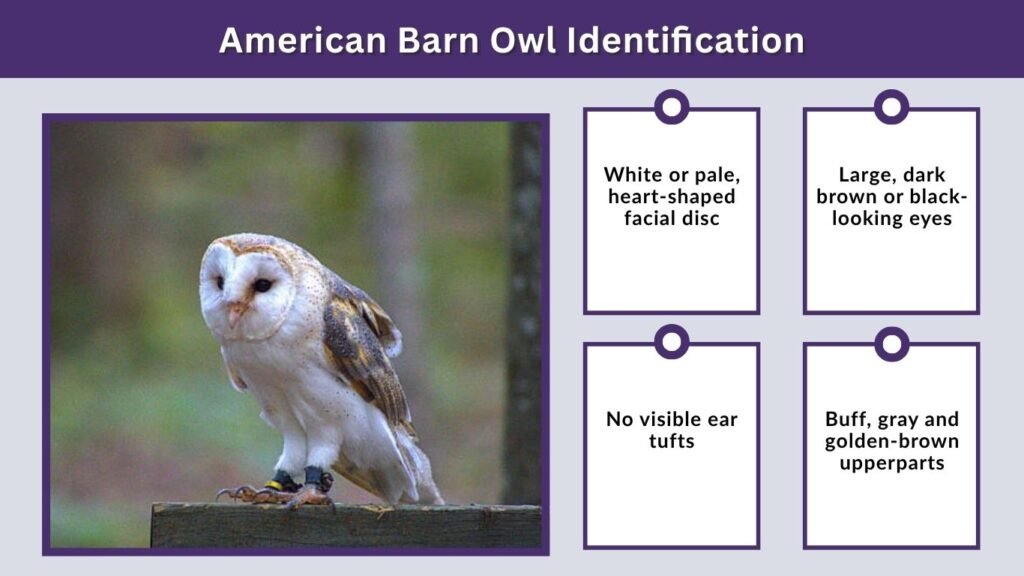
An American Barn Owl can be separated from most other North American owls by its pale plumage, smooth head and unusual facial shape. Its appearance is especially striking when it flies through headlights or over an open field at night.
Key Identification Features
- White or pale, heart-shaped facial disc
- Large, dark brown or black-looking eyes
- No visible ear tufts
- Buff, gray and golden-brown upperparts
- Pale white or tan underparts, sometimes with dark spots
- Long legs with powerful talons
- Long, rounded wings and a relatively short tail
- Slow, buoyant and mothlike flight
The bird may appear almost completely white when viewed from below at night. Its rounded head lacks the pointed feather tufts seen on Great Horned Owls and some screech-owls.
American Barn Owl Size
The American Barn Owl is a medium-sized owl, approximately comparable to a crow in overall body size. Adults measure about 12.6 to 15.8 inches long and have a wingspan that can exceed four feet. Females usually have a larger body and may show more spotting on their undersides than males.
Silent Flight Adaptations
Specialized wing feathers soften the sound created as air moves over the wings. Combined with slow wingbeats, this allows the owl to approach rodents without producing much detectable noise. Its quiet flight also helps the bird hear faint movements made by prey beneath grass or vegetation.
What Does an American Barn Owl Sound Like?
The American Barn Owl does not normally make the rhythmic hooting sound associated with many woodland owls. Its most recognizable call is a long, rough scream lasting approximately two seconds. Males commonly give this call repeatedly while flying, whereas females use it less frequently.
Other American Barn Owl noises include:
- Loud hissing when the nest is threatened
- Soft, wavering purring calls during courtship
- Guttural grunts and wheezing sounds
- Bill snapping when disturbed
- Wing clapping during male display flights
- Rapid clicking or food-begging sounds from young owls
A loud scream heard over farmland at night may sound alarming, but it is a normal form of communication rather than evidence that the owl is attacking something.
American Barn Owl Habitat and Range
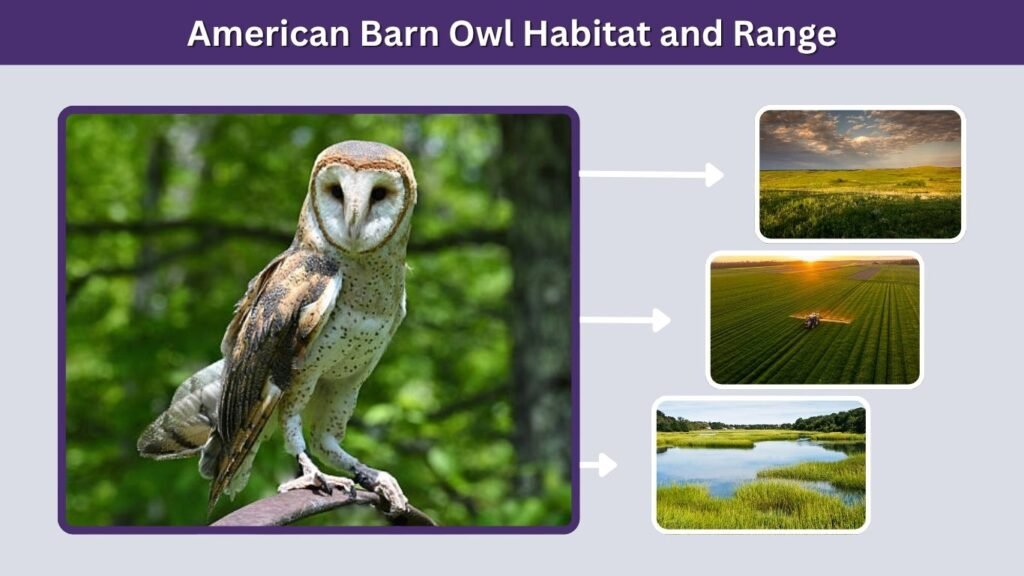
American Barn Owls need open hunting areas combined with protected places for nesting and daytime roosting. They occur in natural environments as well as landscapes modified by people.
Preferred Habitat
Common American Barn Owl habitats include grasslands, agricultural fields, ranches, marshes, deserts, brushy areas, open woodland, coastal cliffs and suburban edges. They may also live within towns when suitable hunting fields and quiet nesting cavities remain nearby.
During the day, the owls remain hidden in tree cavities, barns, silos, caves, abandoned buildings or dense vegetation. At dusk and during the night, they emerge to fly low over nearby open ground.
American Barn Owl Range
The species occurs from southern Canada through the United States, Mexico, Central America and much of South America. It is also found on several Caribbean islands and in the Galápagos. Northern populations are more limited because severe winter weather, deep snow and reduced rodent availability can make survival difficult.
Most American Barn Owls remain within the same general region throughout the year. However, young birds may disperse after leaving their parents, and individuals may move when food becomes scarce or winter conditions become severe.
American Barn Owl Diet
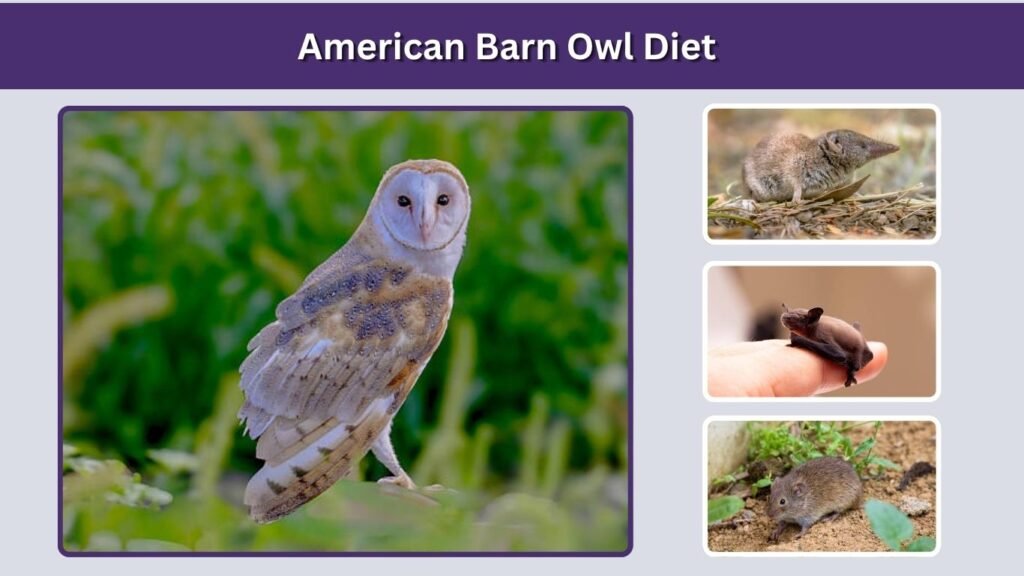
Small mammals make up most of the American Barn Owl’s diet. Its preferred prey varies according to the rodents and other animals available within its local habitat.
What Do American Barn Owls Eat?
Their diet commonly includes:
- Voles
- Mice
- Small rats
- Shrews
- Lemmings
- Pocket gophers
- Young rabbits
- Small bats
They occasionally capture small birds, reptiles, amphibians, insects or fish, but these animals generally represent a much smaller part of the diet.
How They Hunt
American Barn Owls normally hunt after sunset by flying slowly and repeatedly over open ground. Their heart-shaped facial disc directs sounds toward the ears, enabling them to locate prey from tiny movements in grass. Their hearing is precise enough for them to catch rodents in extremely dark conditions.
The owl usually grabs its prey with its talons and swallows small animals whole. Bones, teeth, fur and other indigestible materials are later compressed and coughed up as pellets. Researchers can examine these pellets to determine what the owl has eaten.
American Barn Owl Nesting and Reproduction
American Barn Owls do not build elaborate stick nests. Instead, they depend on sheltered cavities and enclosed structures that protect the eggs and young from weather and predators.
Nesting Locations
Nests may be placed in:
- Hollow trees
- Caves and cliff crevices
- Barn lofts and silos
- Church steeples
- Abandoned houses
- Spaces beneath bridges
- Riverbank burrows
- Purpose-built nest boxes
The female may form a shallow nesting cup from shredded owl pellets and other debris. Successful sites are often reused in later years.
Eggs and Young
A typical clutch contains several dull-white eggs, although clutch size can vary greatly according to food availability. The female incubates the eggs for approximately 29 to 34 days while the male delivers food. Because eggs are laid several days apart, the young often hatch at different times and may differ noticeably in size.
Young owls remain dependent on their parents after beginning to fly. In areas with abundant rodents, a pair may produce more than one brood during a year.
American Barn Owl Nest Box Basics
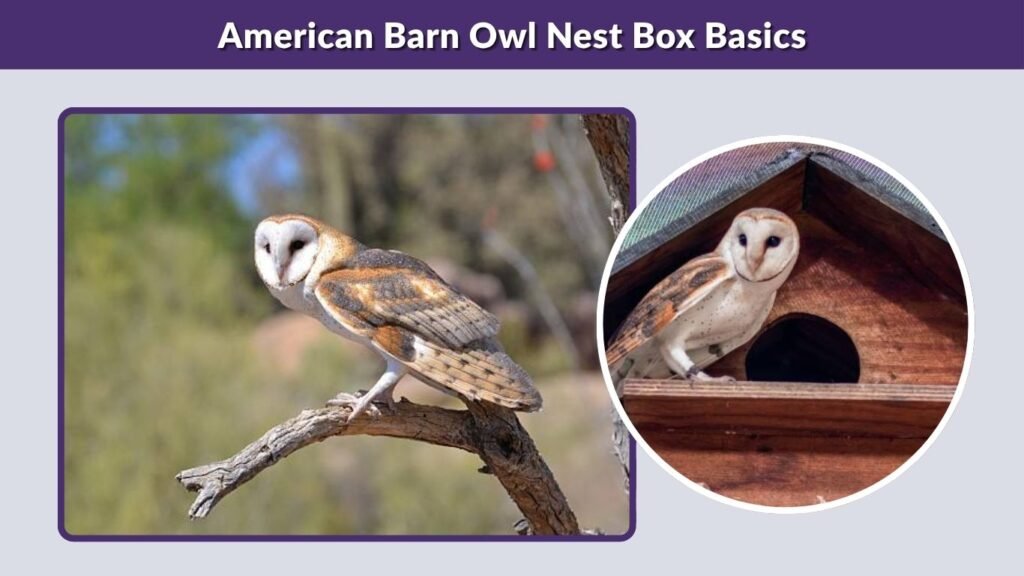
A properly designed nest box can provide a breeding site where old barns and natural cavities are scarce. Cornell’s NestWatch recommends mounting barn owl boxes approximately 8 to 25 feet above the ground in open habitats or suitable agricultural structures. A predator guard can help protect the eggs and chicks.
Boxes should be installed before the breeding period and placed away from busy doors, machinery and frequently disturbed spaces. Nesting birds are particularly sensitive to disturbance during the early breeding stages. Rodenticides should also be avoided because owls can be poisoned after eating contaminated rodents.
American Barn Owl vs. European Barn Owl
The American and European forms were once widely treated as populations of the same species. Following the 2024 taxonomic change, the American Barn Owl is classified as Tyto furcata, while the barn owl found in Europe, Africa and western Asia is generally called the Western Barn Owl, Tyto alba.
Both have heart-shaped faces, pale underparts and similar nocturnal hunting behavior. Differences occur in genetics, vocalizations, proportions and regional plumage patterns. Geographic location is usually the simplest way for a casual observer to distinguish them: wild barn owls in the Americas belong to the American Barn Owl group.
FAQs
Do American Barn Owls Shoot?
American Barn Owls rarely produce the familiar hooting calls associated with Great Horned or Barred Owls. Their characteristic vocalization is a harsh, drawn-out scream. They also hiss, purr, grunt, snap their bills and clap their wings during certain defensive or courtship displays.
Where do North American Barn Owls live?
They live mainly in open or semi-open landscapes such as farms, grasslands, marshes, deserts and ranches. Their North American range extends from limited areas of southern Canada through most of the United States and Mexico, depending on climate and suitable habitat.
Are American Barn Owls dangerous to humans?
American Barn Owls generally avoid people and are not considered dangerous under normal circumstances. However, a nesting owl may hiss, snap its bill or defend itself when cornered. People should keep their distance from nests and never attempt to handle a wild owl.
Why is the American Barn Owl helpful to farmers?
Its diet consists mainly of mice, rats, voles and other small mammals that may damage crops or stored animal feed. By hunting these rodents naturally, barn owls can provide useful pest control without the environmental risks associated with rodent poisons.
Can American Barn Owls live in cities?
They can live around towns and suburban areas when open hunting grounds and secure nesting places remain available. Vacant buildings, towers and nest boxes may provide shelter, while nearby fields, road margins and undeveloped areas can support the rodents they need for food.
