
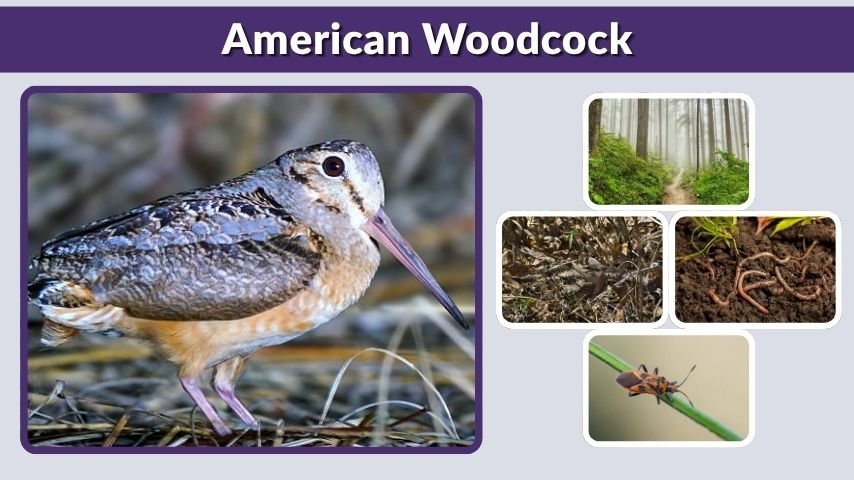
The American Woodcock is a fascinating North American shorebird known for its distinctive long bill, camouflaged plumage, and unique courtship displays. Found across northeastern and southern United States, this bird thrives in moist woodlands, young forests, and fields. Noted for its “sky dance” flight during mating season, the American Woodcock is both a favorite for birdwatchers and a traditional upland game bird. This guide explores its physical traits, habitat, diet, reproduction, and behavior, providing a detailed look at one of North America’s most intriguing birds.
American Woodcock Overview
The American Woodcock (Scolopax minor) is a medium-sized shorebird with a long, slender bill, large eyes positioned high on the head, and cryptic plumage that blends seamlessly with forest floors. Known for nocturnal feeding and elaborate courtship flights, it is distributed across eastern North America and migrates to southern wintering areas. This section provides a foundational understanding of the species’ biology and ecological role.
What is an American Woodcock?
- Medium-sized migratory shorebird
- Scientific name: Scolopax minor
- Notable features: long straight bill, large eyes, camouflaged plumage
Key Traits
- High eye placement for detecting predators while feeding
- Cryptic coloration for blending into leaf litter
- Adapted for probing soil and mud for invertebrates
American Woodcock Physical Characteristics and Size
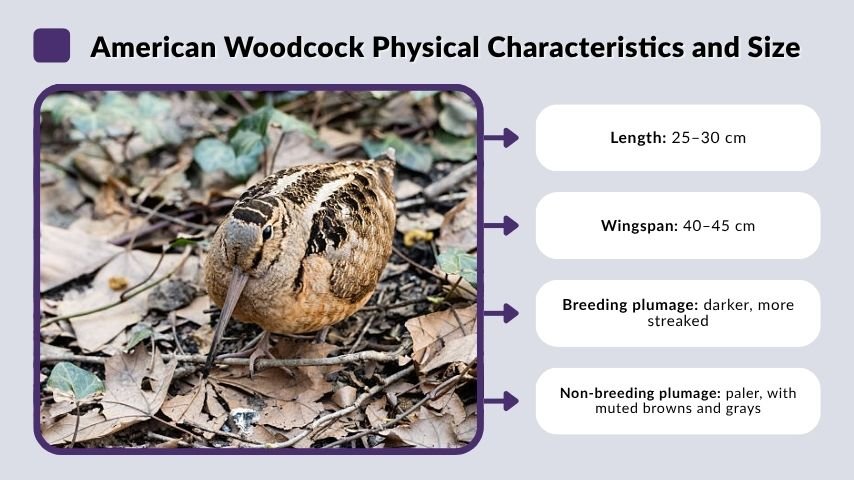
American Woodcocks are compact birds with relatively long bills and legs, which aid in probing soil for prey. Adults differ from juveniles in plumage intensity and breeding season markings. Accurate identification requires observing size, bill shape, and coloration, as well as differences between males and females.
Size and Appearance
- Length: 25–30 cm
- Wingspan: 40–45 cm
- Breeding plumage: darker, more streaked
- Non-breeding plumage: paler, with muted browns and grays
Male vs Female Differences
- Males slightly smaller and more slender
- Courtship displays primarily performed by males
- Females have slightly rounder body and paler plumage
American Woodcock Identification and Similar Species
Woodcocks can be mistaken for other shorebirds or upland species. Identification relies on observing cryptic plumage, unique flight patterns, bill shape, and nocturnal activity. This section highlights key distinctions to differentiate American Woodcock from similar species in the field.
Similar Species
- Willet vs Woodcock: Willets are larger, with long legs and contrasting wing patterns
- Snipe vs Woodcock: Snipes have narrower wings and more upright posture
- Marbled Godwit vs Woodcock: Godwits have longer, slightly upturned bills and open coastal habitats
Key Field Marks
- Stocky, rounded body with short tail
- Long straight bill for probing mud
- Large eyes near top of head
- Camouflaged plumage blending with leaf litter
American Woodcock Sounds and Courtship Displays
The American Woodcock is famous for its mating “sky dance,” a display combining vocalizations and aerial maneuvers. These calls are high-pitched, melodic, and audible during dusk or dawn, helping birds communicate territorial claims and attract mates. Vocalizations are an essential part of field identification.
Call Types
- Singing-ground display: repeated melodic notes
- Flight calls: high-pitched trills during courtship flights
- Alarm call: sharp, high-pitched note used to warn of predators
American Woodcock Range and Distribution
American Woodcocks breed in northern and eastern North America and migrate southward to winter in the southeastern United States. They occupy a mix of woodlands, wetlands, and young forests, with migratory routes concentrated along eastern and central North America. Knowledge of their range is essential for observation and conservation efforts.
Breeding Range
- Northeastern U.S. and Canada
- Moist woodlands and young forest habitats
Wintering Range and Migration
- Southern U.S., including Florida, Gulf Coast, and coastal plains
- Migration occurs in spring and fall along eastern and central North America
- Key observation areas during migration include open fields and woodland edges
American Woodcock Habitat Preferences
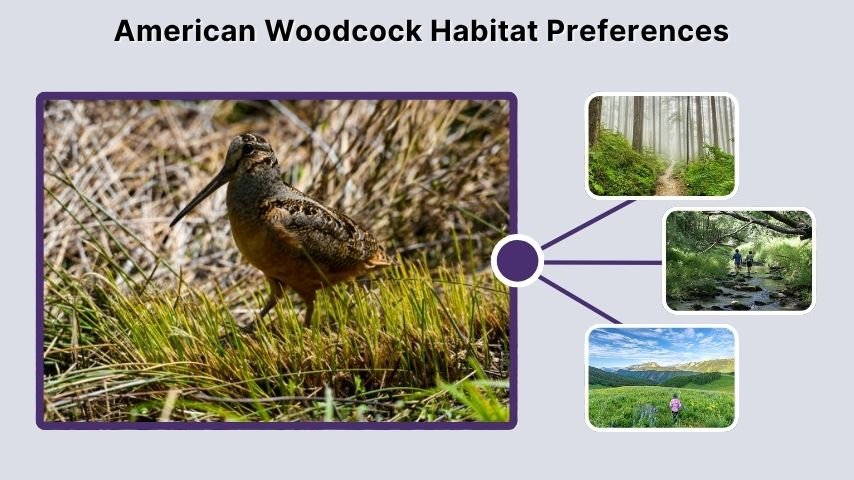
American Woodcocks thrive in moist woodlands, young forests, and open fields with soft soil for feeding. Seasonal habitat changes occur as birds move from breeding areas in northern forests to wintering grounds in the southern United States. Understanding habitat preferences is essential for birdwatchers and conservationists to locate and protect this species.
Typical Habitats
- Moist woodlands with dense leaf litter
- Young forests and brushy areas
- Open fields and meadows for feeding
- Wetlands and marsh edges for additional food sources
Habitat Adaptations
- Camouflaged plumage blends with forest floor
- Use of leaf litter for nesting concealment
- Nocturnal activity reduces predation risk
American Woodcock Diet and Feeding Behavior
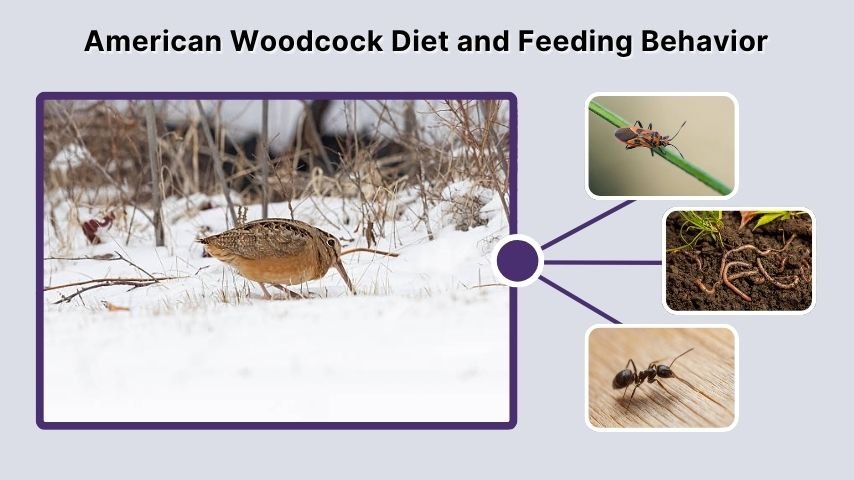
American Woodcocks feed primarily on soil invertebrates, using their long, sensitive bills to probe mud and leaf litter. Their diet shifts seasonally, and foraging behavior is influenced by habitat, soil moisture, and prey availability.
Typical Diet
- Earthworms and insect larvae
- Beetles, ants, and other small invertebrates
- Occasional seeds or plant material
Foraging Techniques
- Probing soil with long, flexible bill
- Feeding during dawn and dusk (crepuscular)
- Foraging in solitary or small groups
American Woodcock Reproduction and Nesting
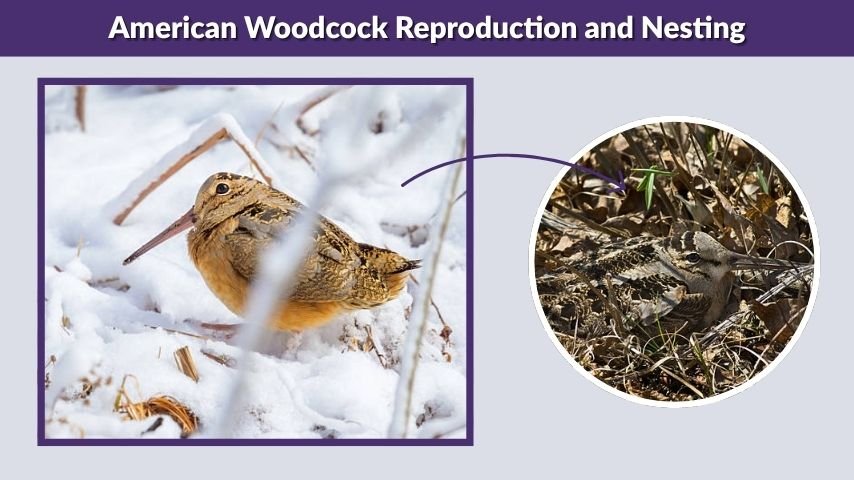
Woodcocks perform a unique aerial courtship display known as the “sky dance” to attract mates. Nests are ground-based, well-camouflaged, and carefully hidden among leaf litter. Both males and females exhibit behaviors that ensure eggs and chicks remain protected.
Nesting Habits
- Nest location: leaf litter on forest floor
- Nest construction: shallow scrape lined with leaves
- Clutch size: typically 3–4 eggs
Parental Care
- Female incubates eggs for approximately 20–22 days
- Chicks are precocial, leaving the nest shortly after hatching
- Parents provide supervision and protection during early development
American Woodcock Behavior and Lifestyle
American Woodcocks are mostly crepuscular and nocturnal, with peak activity at dawn and dusk. Their behavior includes camouflage, alertness to predators, and unique courtship displays. They spend most of the day hidden under brush and leaf litter, emerging mainly for feeding and mating displays.
Daily Activity
- Active primarily at dawn and dusk
- Concealed during daylight hours to avoid predators
- Solitary or small group behavior outside breeding season
Flight Patterns
- Short, rapid flights when startled
- Courtship flight: spiraling ascent with vocalizations
- Migratory flight: low and direct during seasonal movements
American Woodcock Lifespan and Predators
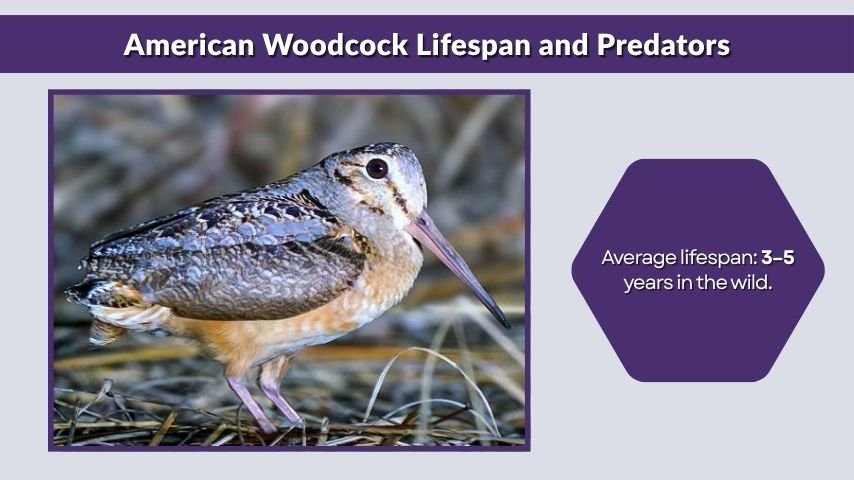
American Woodcocks have a relatively short lifespan for birds of their size, with natural predation and human activity influencing survival rates. Understanding their lifespan and threats helps in conservation planning.
Lifespan
- Average lifespan: 3–5 years in the wild
- Some individuals may live up to 8–10 years under favorable conditions
Predators
- Raptors (hawks, owls)
- Mammalian predators (foxes, raccoons)
- Humans through hunting in designated seasons
American Woodcock Hunting and Human Interaction
Woodcock hunting is a traditional North American activity, regulated by season and bag limits. Birdwatchers also interact with the species by observing their courtship displays. Understanding ethical hunting and observation practices ensures sustainable populations.
Hunting Practices
- Fall hunting season in North America
- Use of dogs to flush birds in fields and woodlands
- Regulations enforce bag limits and seasonal restrictions
Observation Tips
- Watch courtship displays during spring evenings
- Use binoculars to observe feeding in open fields
- Maintain a respectful distance to avoid disturbing nesting sites
Fun Facts and Miscellaneous
American Woodcocks are known for unique behaviors, striking camouflage, and fascinating ecological adaptations. This section highlights memorable trivia and interesting facts about the species.
Interesting Facts
- Famous “sky dance” courtship display
- Camouflaged plumage blends perfectly with forest floor
- Nocturnal feeding reduces competition and predation
- Baby woodcocks (chicks) are precocial and leave the nest quickly
- They are one of the few North American shorebirds to breed in forested habitats
FAQs
How can I identify an American Woodcock?
Look for a medium-sized shorebird with a long straight bill, large eyes set high on the head, and cryptic brown plumage. During flight, watch for short, rapid wingbeats and erratic zig-zag movement.
Where do American Woodcocks live?
Breeding occurs in moist northern forests and young woodlands across northeastern U.S. and Canada. In winter, they move to southern U.S. coastal plains, fields, and wetlands.
What does an American Woodcock eat?
Primarily earthworms, insects, beetle larvae, and small invertebrates. They probe the soil and leaf litter at dawn and dusk using their sensitive bills.
Are American Woodcocks endangered?
No, they are not endangered, but habitat loss and human disturbance pose threats. Conservation efforts focus on preserving forested wetlands and regulating hunting.
What is unique about American Woodcock behavior?
Their “sky dance” courtship display is remarkable, combining spiraling flight and melodic calls. They are crepuscular and use camouflage and nocturnal feeding to avoid predators.
