
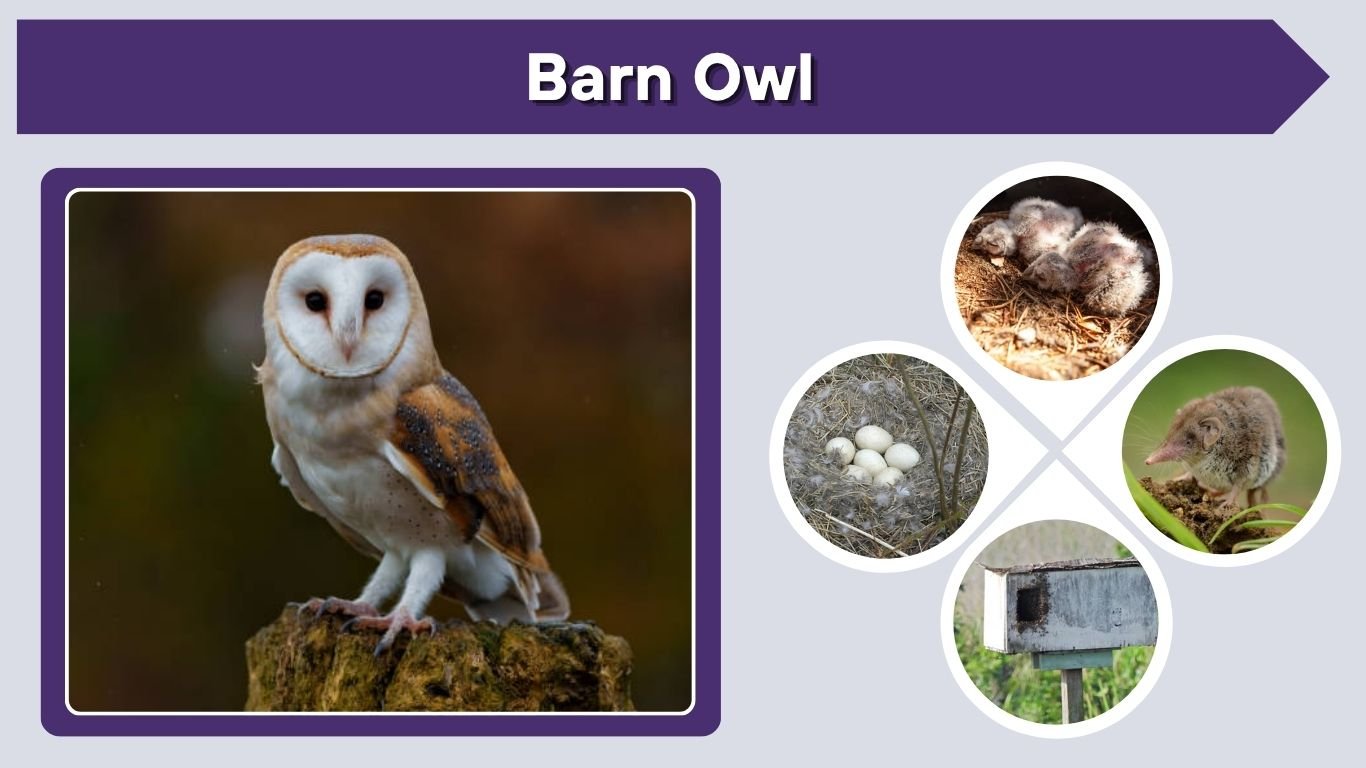
Barn owls are famous for their heart-shaped faces, silent flight, and ghostly pale feathers, but their nesting life is just as interesting. A barn owl nest may be inside a barn, tree cavity, old building, cliff hole, or nest box. The female lays white eggs, incubates them, and raises fluffy baby barn owls with food brought by the male. This guide explains barn owl nests, eggs, chicks, fledging, and nesting behavior in simple detail.
Barn Owl Nest: Where Do Barn Owls Nest?
Barn owls do not build neat stick nests like many other birds. Instead, they usually choose hidden cavities or sheltered spaces where eggs and chicks are protected from weather and predators. Common nest sites include barns, church towers, tree hollows, haylofts, abandoned buildings, cliffs, caves, and purpose-built nest boxes. Cornell lists nest sites such as tree cavities, caves, cliff ledges, and buildings, including barns and silos.
| Nest Site | Why Barn Owls Use It |
| Barns and farm buildings | Shelter, height, and nearby hunting fields |
| Tree cavities | Natural protection for eggs and chicks |
| Nest boxes | Safe artificial nesting space |
| Old buildings | Quiet corners and ledges |
| Cliffs or caves | Hidden, dry nesting places |
| Silos and towers | High, protected sites |
Barn owls often choose places near open hunting habitat. Grasslands, farmland, marsh edges, meadows, and rough fields are useful because they support mice, voles, shrews, and other small prey.
What Does a Barn Owl Nest Look Like?
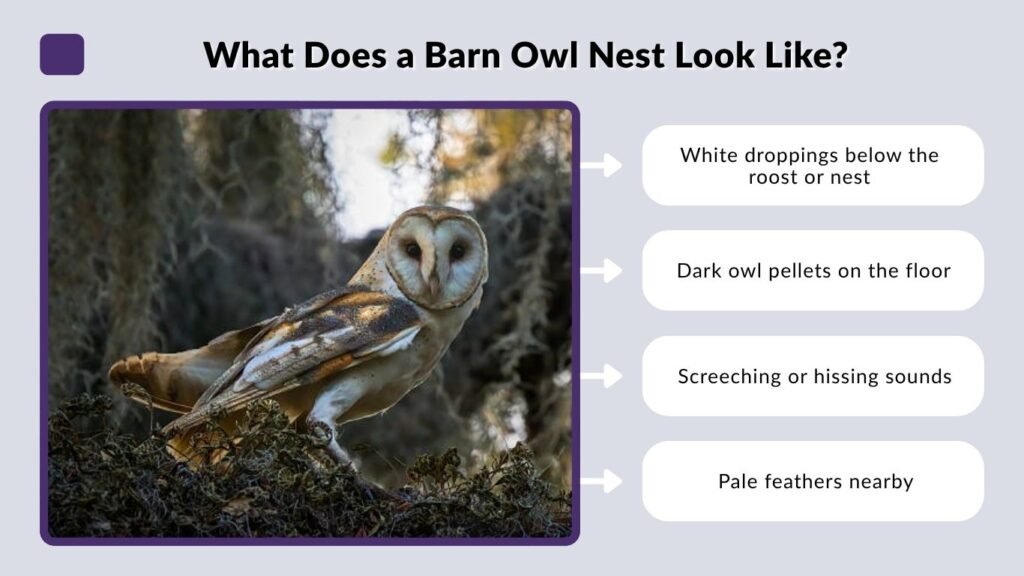
A barn owl nest often looks messy compared with songbird nests. It may contain pellets, droppings, feathers, old prey remains, dust, and broken bits of regurgitated material. The owl does not carefully weave a nest cup. Instead, eggs are laid directly on the nesting surface or on a layer of old pellets and debris.
Signs of a Barn Owl Nest
You may notice these signs near a barn owl nest:
- White droppings below the roost or nest
- Dark owl pellets on the floor
- Screeching or hissing sounds
- Pale feathers nearby
- A strong smell around active nest sites
- Adult owls entering or leaving at dusk
- Fluffy white chicks in a nest box or cavity
Pellets are one of the clearest signs. Barn owls swallow small prey and later cough up pellets containing bones, fur, and other undigested parts.
Barn Owl Nesting Season
Barn owl nesting season depends on climate, food supply, and region. In many areas, nesting begins in late winter or spring, but barn owls can breed at different times if prey is abundant. Barn Owl Trust explains that barn owls begin incubation as soon as the first egg is laid, and eggs are laid over about 8–21 days.
This means barn owl chicks do not all hatch at the same time. The oldest chick may be much larger than the youngest chick in the same nest. This uneven hatching is called asynchronous hatching.
Why Food Supply Matters
Barn owls depend heavily on small mammals. If prey is plentiful, a pair may raise more chicks successfully. If prey is scarce, fewer eggs may hatch, chicks may grow slowly, or the youngest chicks may not survive. In very good prey years, barn owls may even raise more than one brood.
Barn Owl Eggs
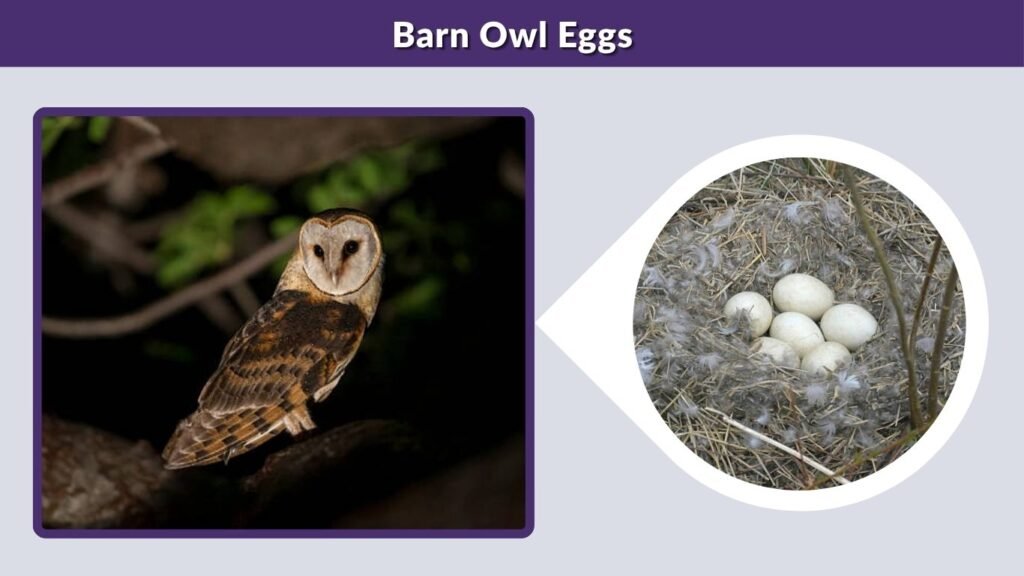
Barn owl eggs are usually dull white and may become dirty from the nest surface. Cornell gives a clutch size range of 2–18 eggs, with incubation lasting about 29–34 days. The Owl Research Institute gives a common clutch range of 4–7 eggs, with eggs laid asynchronously every 2–3 days.
| Egg Feature | Barn Owl Details |
| Color | Dull white |
| Shape | Oval to elongated |
| Common clutch | Often 4–7 eggs |
| Wider reported range | 2–18 eggs |
| Laying gap | Often every 2–3 days |
| Incubation | About 29–34 days |
| Hatching style | Eggs hatch at different times |
Because incubation starts with the first egg, the first chick may hatch days or even weeks before the last chick. This creates a clear size difference among baby barn owls in the same nest.
Who Incubates Barn Owl Eggs?
The female barn owl does most or all of the incubation. Cornell’s Bird Cams FAQ explains that only the female sits on the eggs, using a brood patch to keep them warm. During this time, the male brings food to the female.
The female leaves the nest only briefly while incubating. Her main job is to keep the eggs warm and protected. The male’s hunting success is very important because he feeds the female before the chicks hatch and continues bringing prey after hatching.
Baby Barn Owl: What Are Baby Barn Owls Called?
A baby barn owl is called an owlet. Newly hatched barn owl chicks are helpless, weak, and covered in white down. Cornell describes hatchlings as helpless and covered in white down. Barn Owl Trust says newly hatched owlets quickly develop a thin covering of down but cannot keep themselves warm at first.
What Baby Barn Owls Look Like
Baby barn owls may look very different from adults. They have:
- Soft white or pale down
- Closed or partly open eyes when very young
- Pinkish skin visible through thin down
- Large feet for their body size
- A small hooked beak
- A fluffy, uneven appearance as they grow
As they age, their adult feathers begin to appear through the down. Older owlets may look scruffy because they are part fluffy chick and part young owl.
How Barn Owl Parents Feed Their Chicks
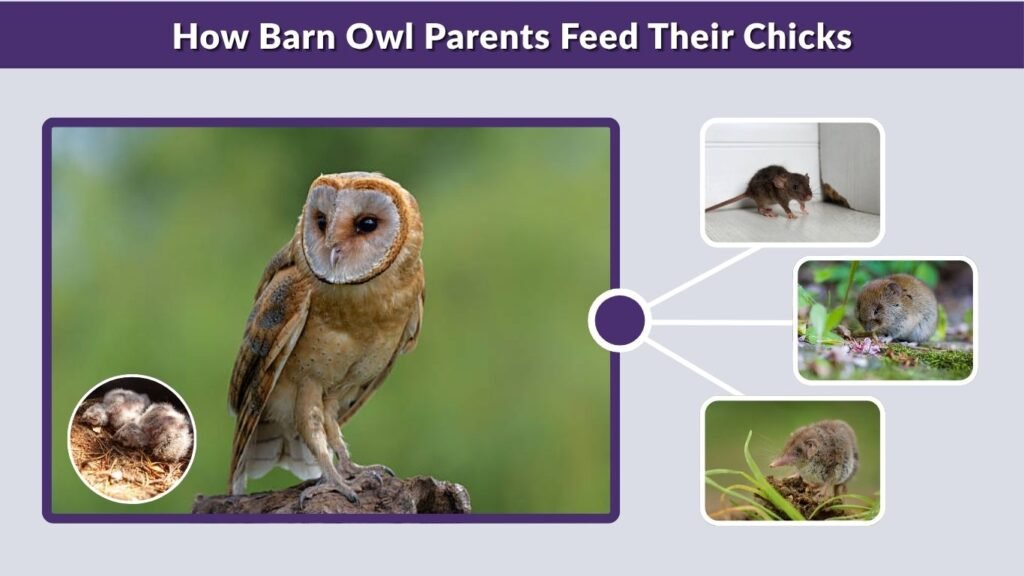
Barn owl chicks are fed mostly small mammals. The male usually hunts and brings prey to the nest, while the female tears it into small pieces for young chicks. Barn Owl Trust explains that the male brings small mammals and the female rips them into tiny pieces for the growing young.
As chicks grow larger, they begin swallowing bigger prey pieces and later whole prey. A busy barn owl nest can need many rodents, especially when several chicks are growing at once.
Common Food for Barn Owl Chicks
Barn owl chicks may be fed:
- Mice
- Voles
- Shrews
- Rats
- Small birds occasionally
- Other small animals depending on location
The exact diet depends on what prey is available near the nest.
Barn Owl Chicks Grow at Different Sizes
One unusual thing about barn owl babies is the big size gap between siblings. Since the female starts incubating after the first egg, the first chick hatches before the later eggs. Barn Owl Trust notes that barn owl eggs hatch every 2–3 days, usually in the order they were laid, and the oldest and youngest nestlings may differ by up to three weeks.
This size gap can look strange in nest photos. One chick may be tall, fluffy, and alert, while another is tiny and newly hatched. This is normal for barn owls.
When Do Baby Barn Owls Leave the Nest?
Baby barn owls stay in the nest for several weeks before fledging. Cornell lists the nestling period as 50–55 days. The young may begin moving around the nest area before they can fly well, especially in barns or nest boxes.
Fledging does not mean the young owl is fully independent. After leaving the nest, young barn owls still need time to improve their flying, landing, and hunting skills. Parents may continue feeding them for a period after they leave the nest area.
Barn Owl Nest Box
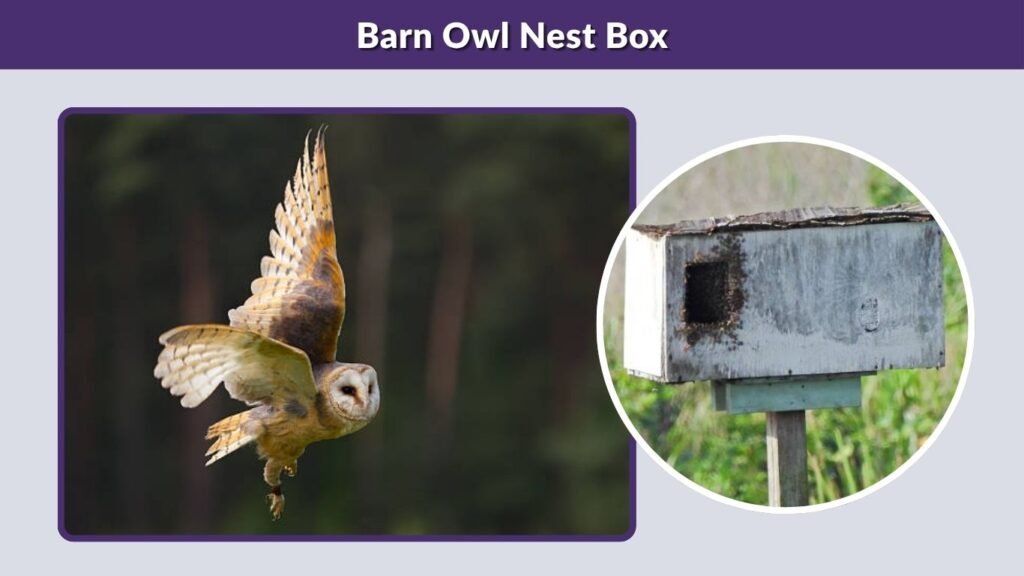
A barn owl nest box can help provide safe nesting space where natural cavities or old barns are limited. Nest boxes are often placed in barns, trees, poles, or quiet farm buildings near open hunting habitat. The most useful nest boxes are dry, protected, large enough for chicks, and placed where disturbance is low.
Good Nest Box Features
A good barn owl nest box should have:
- Dry interior
- Safe entrance hole
- Enough space for chicks
- Good drainage or ventilation
- Strong mounting
- Predator-safe placement
- Low human disturbance
- Nearby hunting habitat
A nest box is not useful if there is no suitable hunting area nearby. Barn owls need open land with enough prey to raise chicks successfully.
What to Do If You Find a Barn Owl Nest
If you find a barn owl nest with eggs or chicks, do not move it or disturb it. In the United States, the U.S. Fish & Wildlife Service says it is illegal under the Migratory Bird Treaty Act to destroy a nest that has eggs or chicks or young birds still dependent on the nest.
Keep people, pets, and loud activity away from the nest area as much as possible. If the nest is in a dangerous location, contact a licensed wildlife rehabilitator, local wildlife agency, or qualified bird expert before doing anything.
Safe Steps for Homeowners
Use these steps:
- Watch from a distance.
- Do not touch eggs or chicks.
- Keep cats and dogs away.
- Avoid bright lights near the nest.
- Do not block the adults’ entry path.
- Call a wildlife professional if a chick is injured.
- Wait until the nest is inactive before cleaning the area.
If the nest is in a building, plan repairs or exclusion only after the young have left and the nest is no longer active.
Barn Owl Nest Problems
Barn owl nests can create mess and noise, especially in barns, attics, towers, or old buildings. Droppings, pellets, feathers, and prey remains may collect below the nest. Young owls may hiss, screech, or make begging sounds at night.
However, barn owls are also helpful predators. They eat many rodents and can benefit farms and open rural areas. If possible, the best solution is usually to let the active nest finish and then clean or adjust the site later.
FAQs
Where do barn owls make their nests?
Barn owls nest in cavities and sheltered spaces such as barns, tree hollows, nest boxes, old buildings, cliffs, caves, silos, and towers. They usually choose places near open hunting habitats.
How many eggs does a barn owl lay?
A barn owl may lay a wide range of eggs. Cornell lists 2–18 eggs, while many nests commonly have about 4–7 eggs depending on food supply and conditions.
How long do barn owl eggs take to hatch?
Barn owl eggs usually hatch after about 29–34 days of incubation. Because incubation starts with the first egg, chicks hatch at different times instead of all at once.
What is a baby barn owl called?
A baby barn owl is called an owlet. Newly hatched owlets are helpless and covered in white down. They depend on the female for warmth and both parents for food.
When do baby barn owls leave the nest?
Baby barn owls usually fledge after about 50–55 days in the nest. After fledging, young owls still need time to become strong flyers and skilled hunters.
