
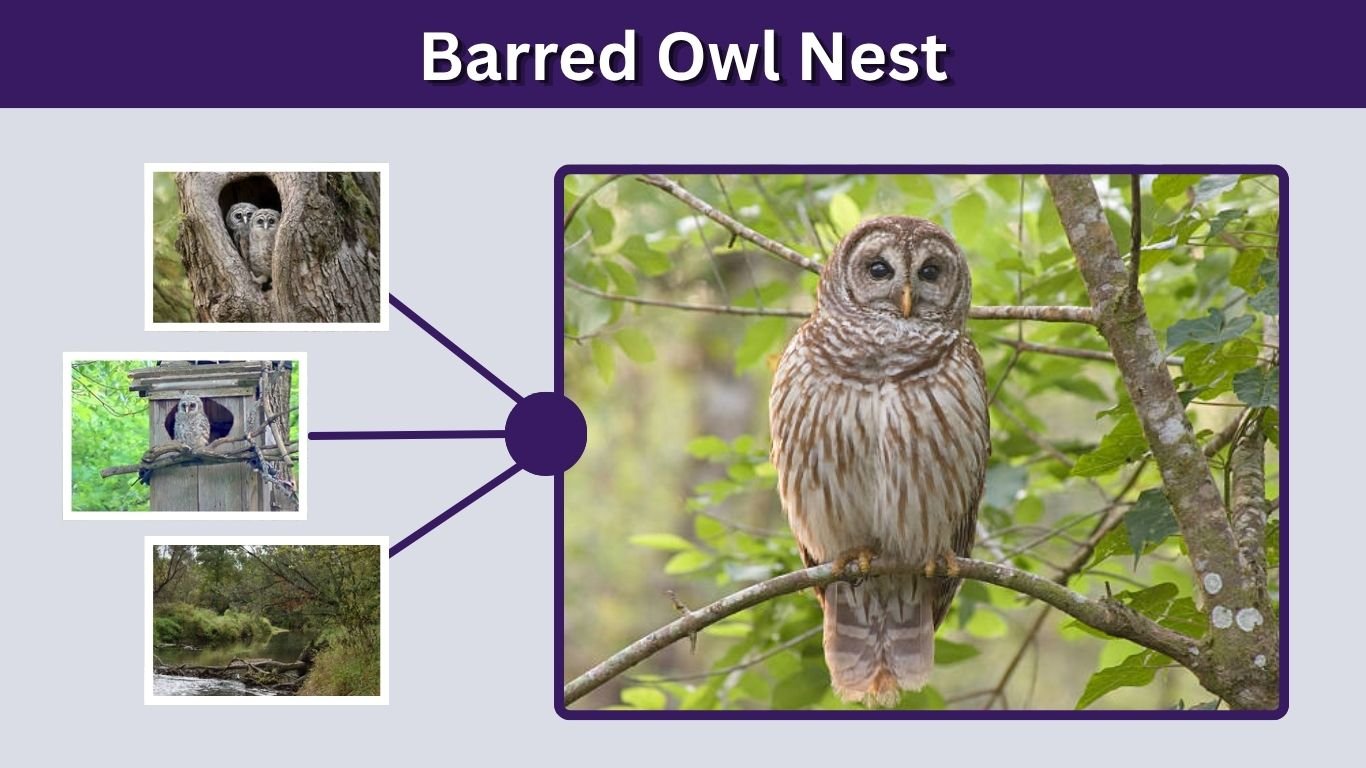
A Barred Owl nest is usually hidden inside a large tree cavity in mature woodland, often near a stream, swamp, pond, or river. These owls do not construct elaborate nests. Instead, they occupy natural hollows, abandoned stick nests, or properly designed nesting boxes. Understanding their nesting season, preferred locations, eggs, chicks, and nest-box requirements can help birdwatchers observe them responsibly. This guide explains what a Barred Owl nest looks like, where Barred Owls nest, when breeding begins, and how to build and place a suitable box without disturbing the birds.
What Does a Barred Owl Nest Look Like?
A natural Barred Owl nest rarely resembles the familiar cup-shaped nest built by a songbird. Most are concealed within hollow trunks or broken sections of large, mature trees, making them difficult to see from the ground.
Natural Tree-Cavity Nests
Barred Owls usually select a deep cavity in a large living tree or dead snag. The opening may be irregular, and the interior floor often contains decayed wood, bark fragments, old nesting material, or debris that accumulated naturally.
Typical natural cavities are approximately 10–13 inches wide and 14–21 inches deep, although some are considerably deeper. The nesting chamber provides shelter from rain, wind, and many ground-based predators.
Abandoned Stick Nests
When a suitable tree cavity is unavailable, a Barred Owl may use an old platform nest originally built by a hawk, crow, raven, or squirrel. The owl may flatten an old squirrel nest or occasionally add feathers, lichen, or fresh evergreen sprigs, but it performs little actual construction.
Do Barred Owls Build Their Own Nests?
Barred Owls generally do not build nests from the beginning. They are opportunistic nesters that depend on existing structures. A pair may inspect a potential site long before breeding and may return to a successful nesting location for multiple years.
Where Do Barred Owls Nest?
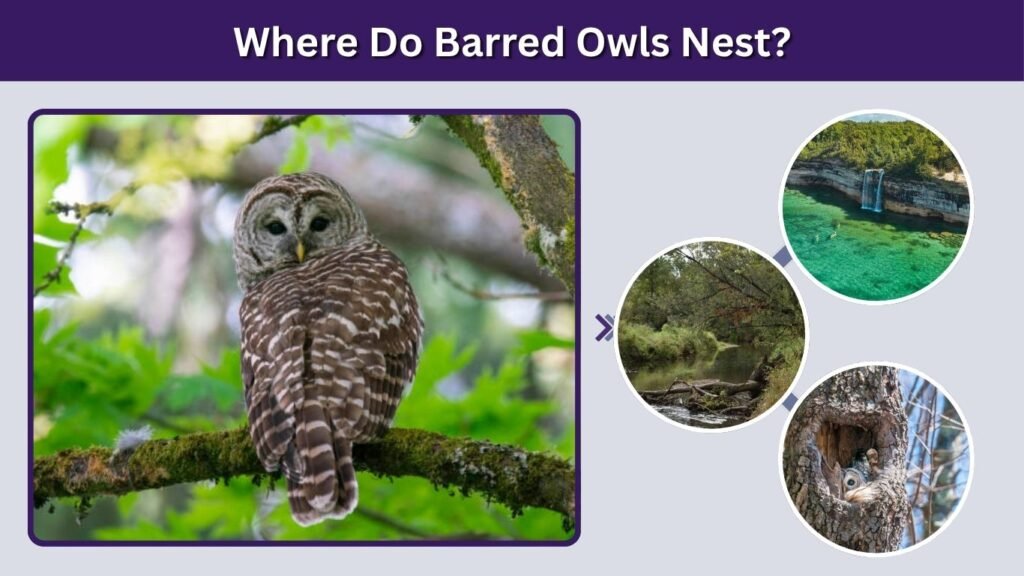
Barred Owls favor mature forests containing large trees, shaded roosts, abundant prey, and suitable cavities. They are particularly associated with wooded wetlands, river bottoms, swamps, lakeshores, and streamside forests.
Preferred Nesting Habitat
The best nesting habitat combines mature trees with nearby water and relatively continuous woodland. Older forests are valuable because they are more likely to contain broken trunks, dead trees, and large natural hollows.
Barred Owls may nest in deciduous, mixed, or coniferous forests. They can also use wooded suburban properties when sufficient tree cover, quiet nesting space, and hunting habitat remain available.
Barred Owl Nest Height
Natural nests are commonly located about 20–40 feet above the ground. However, actual height varies according to available cavities and forest structure. Nest boxes are often mounted lower, with NestWatch recommending a height of approximately 12–15 feet.
Barred Owl Nest Location Signs
Possible signs of an active nest include:
- An adult repeatedly entering the same tree cavity
- Territorial hooting near one location
- White droppings beneath a tree
- Owl pellets or prey remains on the ground
- A male carrying prey toward a cavity
- Downy owlets appearing near an opening
These signs should be observed from a distance. Barred Owls can become highly defensive around eggs and chicks, particularly when people approach the nest tree.
Barred Owl Nesting Season and Timeline
Barred Owl nesting time varies with latitude and local climate. Southern pairs may begin earlier, while northern birds typically lay their eggs later in the year.
| Nesting stage | Typical details |
| Courtship and site selection | Winter to early spring |
| Egg laying | December–April, depending on location |
| Clutch size | Usually 2–3 eggs; possible range of 1–5 |
| Incubation | Approximately 28–33 days |
| Nestling period | Approximately 28–35 days |
| First flight | Often around six weeks |
| Parental care after leaving | May continue for several months |
The schedule is approximate because weather, food availability, latitude, and the experience of the breeding pair can influence timing.
When Do Barred Owls Start Nesting?
Courtship activity may become noticeable during winter as pairs call, defend their territory, and inspect cavities. Eggs can be laid from December through April across the species’ range, with later dates generally occurring farther north. In Indiana, for example, eggs are commonly laid during March.
Barred Owl Eggs and Incubation
A typical nest contains two or three pure-white eggs, although clutches may range from one to five. The rough-surfaced eggs are about 1.7–2.2 inches long.
The female performs the incubation and broods the newly hatched chicks. Meanwhile, the male hunts and delivers food to her. Incubation generally lasts 28–33 days, and eggs laid several days apart may hatch at different times.
When Do Barred Owl Chicks Leave the Nest?
Owlets usually leave the nesting cavity approximately 28–35 days after hatching. They may climb onto nearby branches while their flight abilities are still developing. Parents continue protecting and feeding them after they leave, and parental feeding can continue until the young are four or five months old.
Barred Owl Nest Box Plans and Dimensions
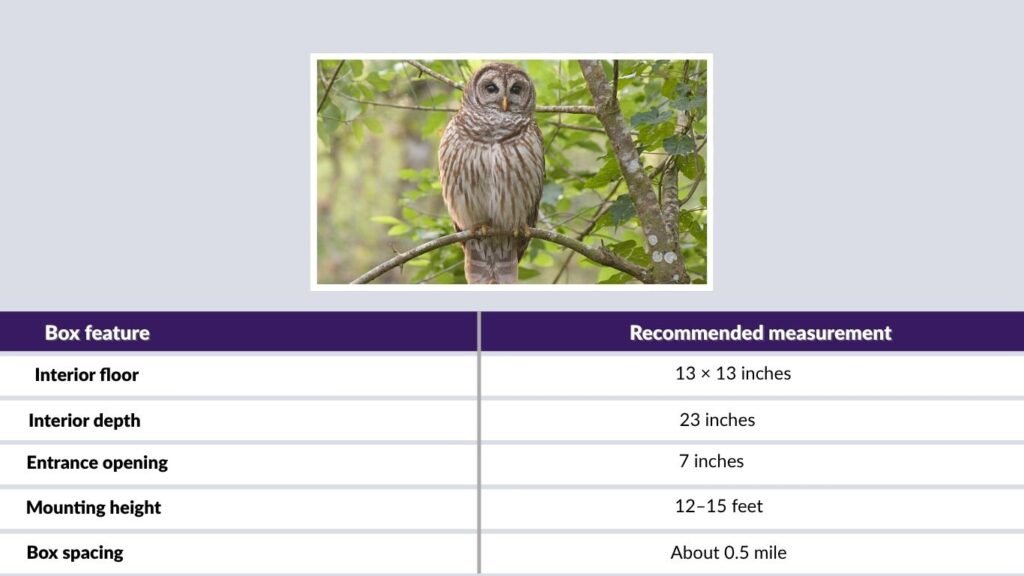
A Barred Owl nesting box can replace a missing natural cavity, but success is never guaranteed. The box should be large, deep, weather-resistant, and installed in appropriate mature forest habitat well before breeding begins.
Recommended Nest Box Dimensions
| Box feature | Recommended measurement |
| Interior floor | 13 × 13 inches |
| Interior depth | 23 inches |
| Entrance opening | 7 inches |
| Mounting height | 12–15 feet |
| Box spacing | About 0.5 mile |
| Floor material | 3–4 inches of wood chips |
These measurements are based on the Cornell Lab’s NestWatch plan for Barred Owls.
Building a Barred Owl Nesting Box
Use durable, untreated exterior-grade wood, with boards thick enough to insulate the interior. The roof should slope and extend beyond the walls to reduce rain entry. Include drainage openings in the floor and narrow ventilation gaps near the top.
Create a side or front panel that can be opened for off-season cleaning, but secure it firmly against raccoons and other predators. Do not use treated lumber, paint, varnish, or strong-smelling preservatives on the box’s interior.
A perch is unnecessary because Barred Owls can grip the entrance directly. An exterior perch may also give predators easier access.
Best Barred Owl Nest Box Placement
Mount the box on a live tree or sturdy post in mature woodland. If possible, position it within 200 feet of water. Keep the flight path open by ensuring that branches and foliage do not block the entrance.
The opening may face any direction, although local wind, rain, and afternoon sun should be considered. Select a sheltered orientation that prevents the box from overheating or receiving frequent driving rain.
When Should a Nest Box Be Installed?
Install the box during summer or fall so it is available well before the next nesting season. Barred Owls may investigate potential locations months in advance, and a newly installed box may remain unused for several years.
Place 3–4 inches of untreated wood chips inside because Barred Owls do not carry enough nesting material to create a soft floor. Do not use fine sawdust, which can retain moisture and become compacted.
How to Observe a Barred Owl Nest Safely
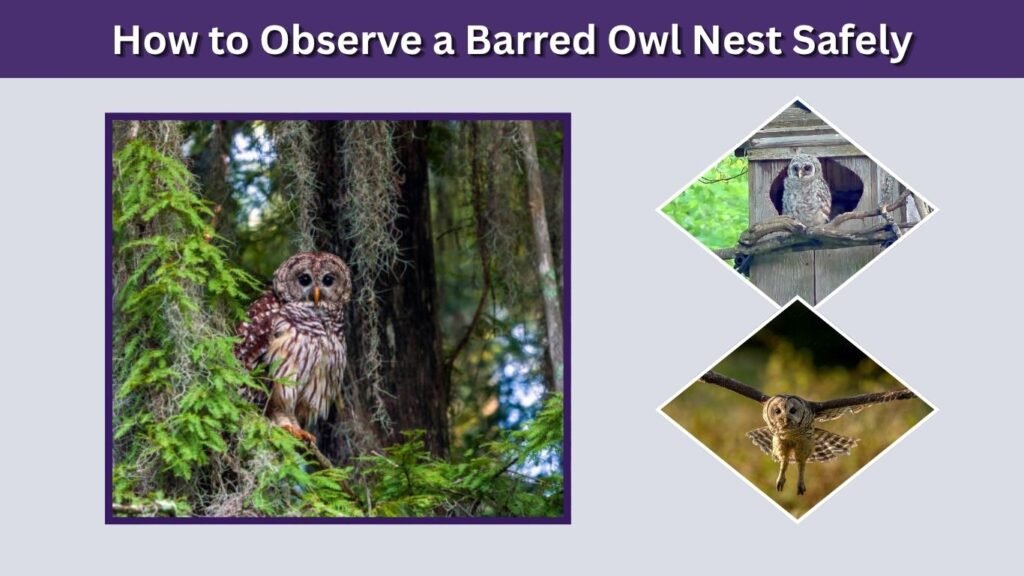
Watch from a location where the adult owls continue behaving normally. Binoculars or a camera with a long lens allow observation without approaching the nest tree.
Avoid repeatedly playing recorded calls, standing beneath the cavity, touching the tree, trimming nearby branches, or checking the box during active nesting. A disturbed female may flee, perform a distraction display, or strike an intruder with her feet.
What Should You Do if a Baby Barred Owl Falls?
A young Barred Owl found below a nest may not necessarily be abandoned. Recently fledged owlets often remain near the nest while their parents continue feeding them.
Keep people and pets away and observe from a considerable distance. Do not feed the owl or attempt to raise it. When the bird is visibly injured, in immediate danger, or unable to grip and move normally, contact a licensed wildlife rehabilitator or local wildlife authority for instructions.
FAQs
1. Do Barred Owls use nest boxes?
Yes. Barred Owls may readily use a properly sized nesting box placed in mature woodland. However, occupancy can take several years and depends on whether a breeding pair lives nearby, the quality of the surrounding habitat, and the availability of natural cavities.
2. How high should a Barred Owl nest box be?
NestWatch recommends mounting a Barred Owl box approximately 12–15 feet above the ground. Natural nests are frequently higher, commonly around 20–40 feet. Safe installation and future maintenance are more important than placing a box extremely high.
3. What month do Barred Owls lay eggs?
The exact month varies by region. Egg laying may occur from December through April, with southern pairs generally nesting earlier than northern pairs. March is a common laying period in many locations within the central part of their range.
4. How many eggs are in a Barred Owl nest?
Barred Owls most commonly lay two or three eggs, although a clutch can contain one to five. The eggs are white and are incubated primarily or entirely by the female for approximately 28–33 days.
5. Do Barred Owls return to the same nest?
They can reuse a successful cavity or nest box across multiple seasons. Barred Owls maintain established territories and may show strong loyalty to suitable nesting locations, but they can switch sites when a cavity becomes unsafe, damaged, occupied, or otherwise unsuitable.
