
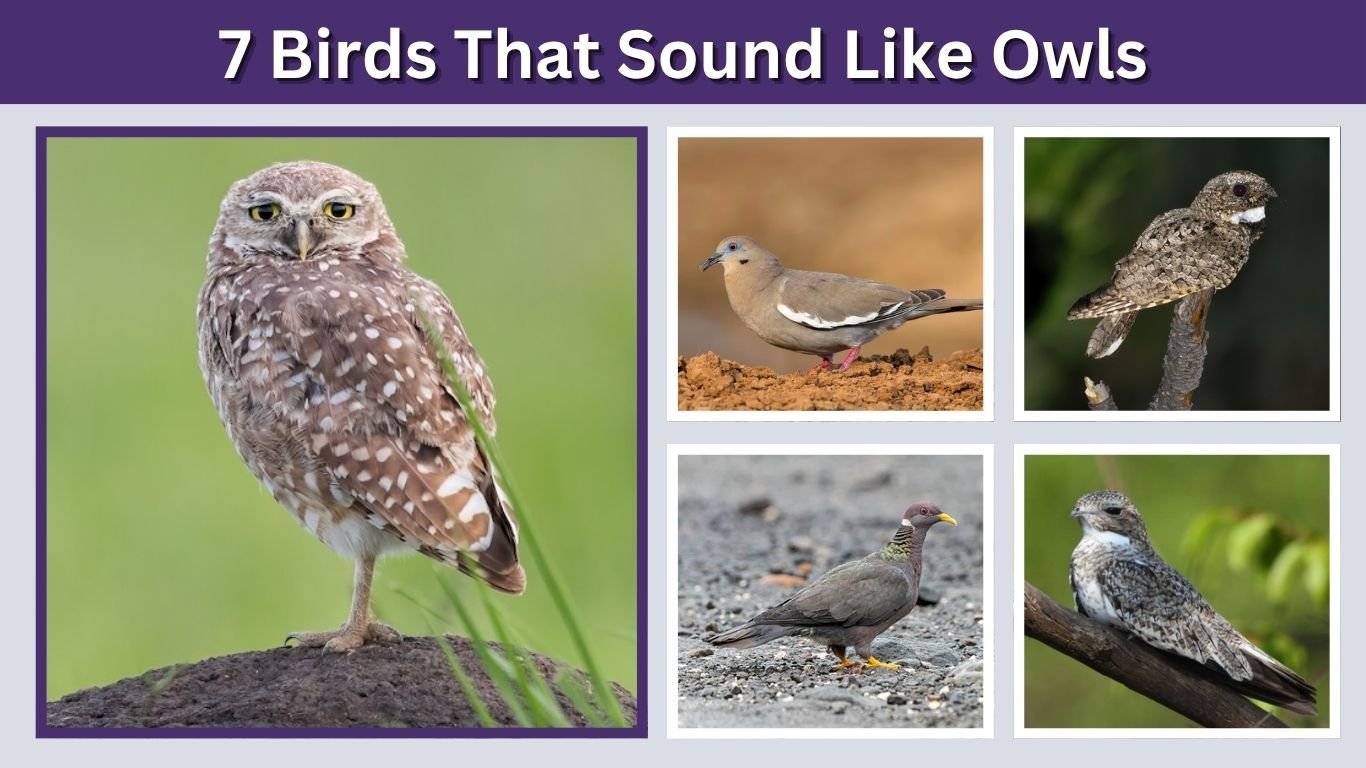
Some birds can sound surprisingly similar to owls, especially when they call at dawn, dusk, or after dark. Mourning doves, nighthawks, poorwills, bitterns, and a few other birds make low coos, booming sounds, or eerie nighttime calls that people often mistake for owl hoots. This guide covers seven birds that sound like owls, with identification tips, habitat details, and simple clues to tell their calls apart.
1. Mourning Dove
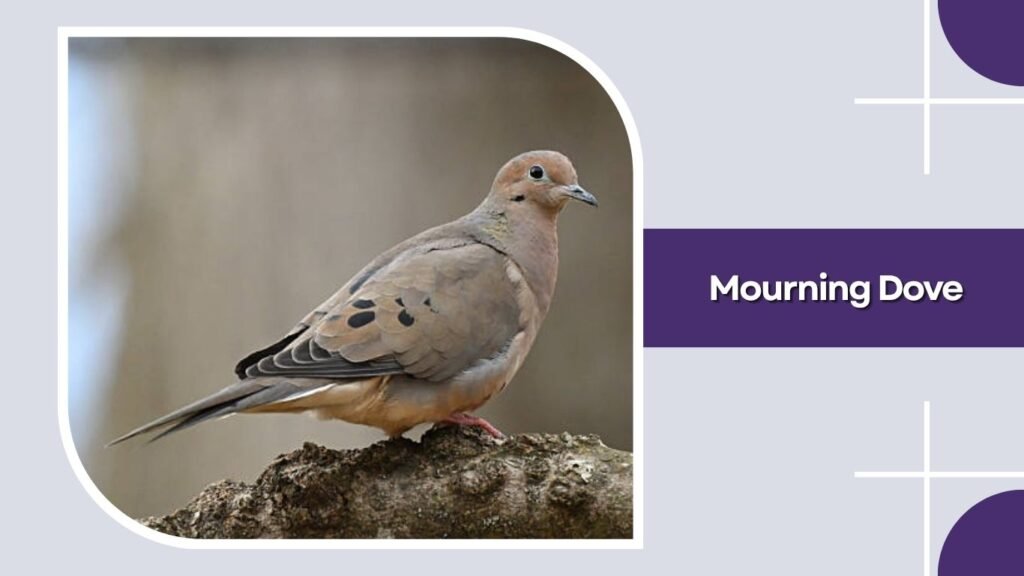
The mourning dove is one of the most common birds that can sound like an owl. Its soft, low, and drawn-out cooing is often mistaken for an owl hoot, especially early in the morning or near sunset. Many people hear the sound before seeing the bird and assume an owl is nearby. However, mourning doves are gentle seed-eating birds, not birds of prey.
Identification
- Slim, medium-sized bird with a small head
- Soft gray-brown body with pale underparts
- Long, pointed tail with white edges
- Small black spots on the wings
- Dark eyes with a delicate facial expression
- Fast, direct flight with whistling wing sounds
Why Mourning Doves Sound Like Owls
Mourning doves make a soft, mournful coo that can sound like a distant owl. Their call often has a low “coo-OO-oo-oo” pattern. Because the sound is deep and repetitive, people may confuse it with a small owl or a faraway great horned owl.
The confusion is more common in quiet neighborhoods, parks, farms, and wooded yards. Mourning doves often call from rooftops, trees, utility wires, and fence posts, but they can be hard to spot while calling.
Habitat and Distribution
Mourning doves live in many open and semi-open habitats. They are common in backyards, farms, grasslands, roadsides, parks, deserts, and woodland edges. They avoid dense forests but are very comfortable around people.
These birds are widespread across North America and can be seen throughout much of the United States, southern Canada, Mexico, and parts of Central America. In many areas, they are present year-round.
Behavior and Diet
Mourning doves mostly eat seeds. They feed on the ground, picking up grass seeds, weed seeds, grains, and sometimes small berries. They often visit bird feeders, especially when millet, cracked corn, or sunflower seeds are scattered on the ground.
They are peaceful birds and usually travel alone, in pairs, or in small flocks. Their gentle behavior, soft color, and owl-like coo make them familiar backyard birds.
2. Common Nighthawk
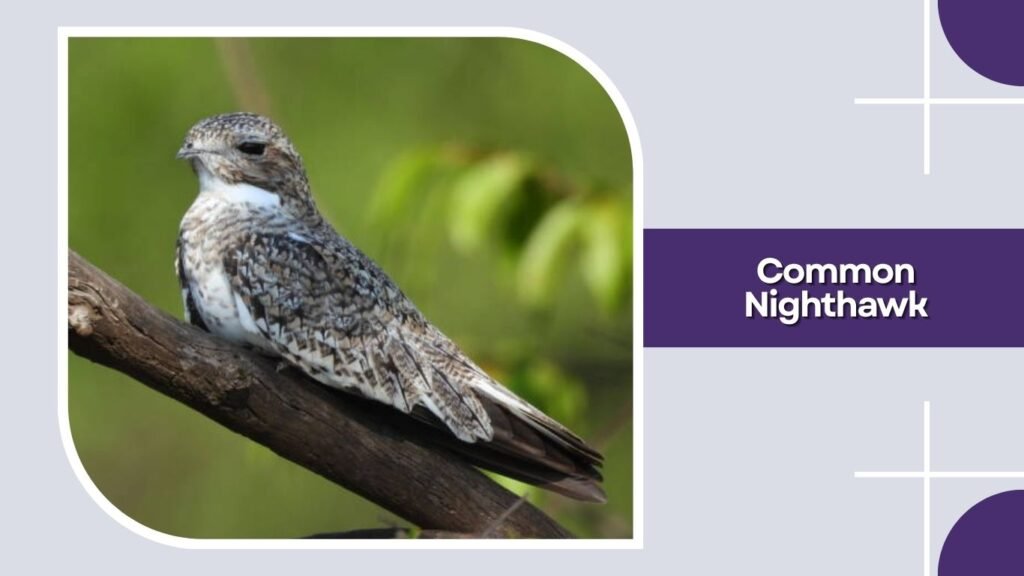
The common nighthawk is a strange-looking bird that can sometimes sound owl-like at dusk. Although it is not an owl, it is active in low light and makes sharp calls while flying over open areas. Its nighttime habits, silent-looking flight, and unusual sounds can make people think they are hearing an owl nearby.
Identification
- Medium-sized bird with long, pointed wings
- Brown, gray, and black mottled body
- White patches near the tips of the wings
- Short bill but very wide mouth
- Long, narrow wings shaped like a boomerang
- Often seen flying at dusk or dawn
Why Common Nighthawks Sound Like Owls
Common nighthawks do not make the classic deep owl hoot, but their nighttime calls can still confuse people. They give a sharp, nasal “peent” call while flying. During courtship, males also make a booming sound with their wings as they dive through the air.
Because these sounds happen in the evening or early morning, many people assume they are hearing an owl. The booming wing sound can seem especially mysterious if the bird is flying high overhead and hard to see.
Habitat and Distribution
Common nighthawks live in open habitats such as grasslands, fields, deserts, river areas, burned forests, rooftops, and city skies. They are often seen flying above parking lots, towns, and open country during summer evenings.
They breed across much of North America and migrate long distances to South America for winter. Their presence is seasonal in many areas, especially during warm months.
Behavior and Diet
Common nighthawks are aerial insect hunters. They catch flying insects while moving through the air with quick, twisting flight. Their wide mouths help them scoop up moths, beetles, flies, mosquitoes, and other insects.
They are most active at dusk and dawn. Unlike owls, they do not hunt mammals or birds. Their owl-like mystery comes from their night activity, odd calls, and shadowy flight.
3. Wilson’s Snipe
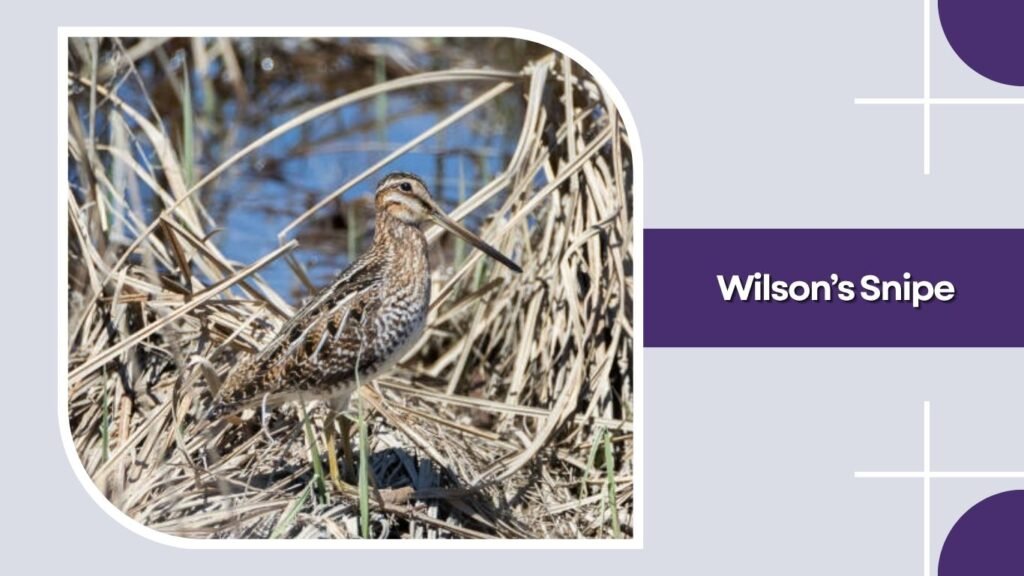
Wilson’s snipe is a secretive wetland bird that can make sounds people may mistake for an owl. Its most unusual sound is not made by its voice, but by air rushing through its tail feathers during display flights. This eerie, hollow sound can carry across marshes and fields.
Identification
- Medium-sized shorebird with a long straight bill
- Brown, tan, and buff streaked body
- Striped head and back
- Short legs compared with many shorebirds
- Often hidden in wet grass or marsh plants
- Fast zigzag flight when flushed
Why Wilson’s Snipe Sound Like Owls
Wilson’s snipe makes a strange “winnowing” sound during courtship flights. The male flies high, then dives in a special pattern. Air passing through the outer tail feathers creates a pulsing, hollow sound.
This sound can seem owl-like because it is low, haunting, and often heard in open wetlands during evening or early morning. People may hear it without seeing the bird and think an owl is calling from far away.
Habitat and Distribution
Wilson’s snipes live in wet meadows, marshes, bogs, muddy fields, pond edges, and grassy wetlands. They prefer places with soft mud where they can probe for food.
They breed across northern North America and winter in milder regions, including much of the United States, Mexico, and Central America. During migration, they may appear in wet fields and shallow marshes.
Behavior and Diet
Wilson’s snipes use their long bills to probe mud for insects, worms, larvae, crustaceans, and other small invertebrates. They usually stay hidden in thick wet vegetation, relying on camouflage.
When startled, they burst into fast, zigzag flight. Their secretive habits and strange winnowing sound make them one of the most surprising birds that can be mistaken for an owl.
4. American Bittern
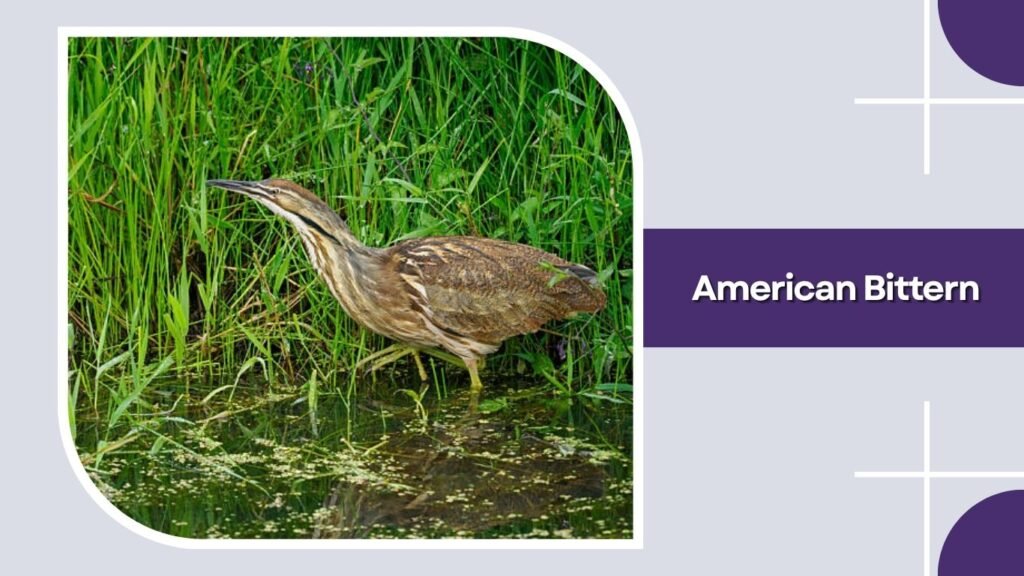
The American bittern is a marsh bird with one of the strangest calls in North America. Its deep, booming sound can easily confuse people who expect owls to be the only birds making low calls at night. This bird is more often heard than seen because it hides in reeds and cattails.
Identification
- Medium-sized heron-like bird
- Brown, buff, and streaked body
- Long neck and sharp bill
- Dark vertical stripe on the side of the neck
- Stands still with bill pointed upward
- Excellent camouflage in marsh vegetation
Why American Bitterns Sound Like Owls
American bitterns make a deep, pumping call that sounds like “oong-ka-chunk” or “pump-er-lunk.” The sound is low, hollow, and far-carrying. In quiet wetlands, it can seem like a strange owl or hidden animal calling from the reeds.
Because bitterns often call at dawn, dusk, or night, the confusion is understandable. Their voice is very different from a typical songbird and has a booming quality like some owl calls.
Habitat and Distribution
American bitterns live in freshwater marshes, cattail wetlands, wet meadows, reed beds, and grassy edges of ponds or lakes. They need dense vegetation for hiding and nesting.
They breed across much of northern North America and winter in southern coastal areas, wetlands, and warmer regions. They are most noticeable during breeding season when males call from marshes.
Behavior and Diet
American bitterns hunt by standing still and waiting for prey. They eat fish, frogs, insects, crayfish, small snakes, and other wetland animals. Their striped body helps them blend perfectly with reeds.
When threatened, they stretch their neck upward and sway with the grasses. This camouflage makes them difficult to see, even when they are close.
5. Band-tailed Pigeon
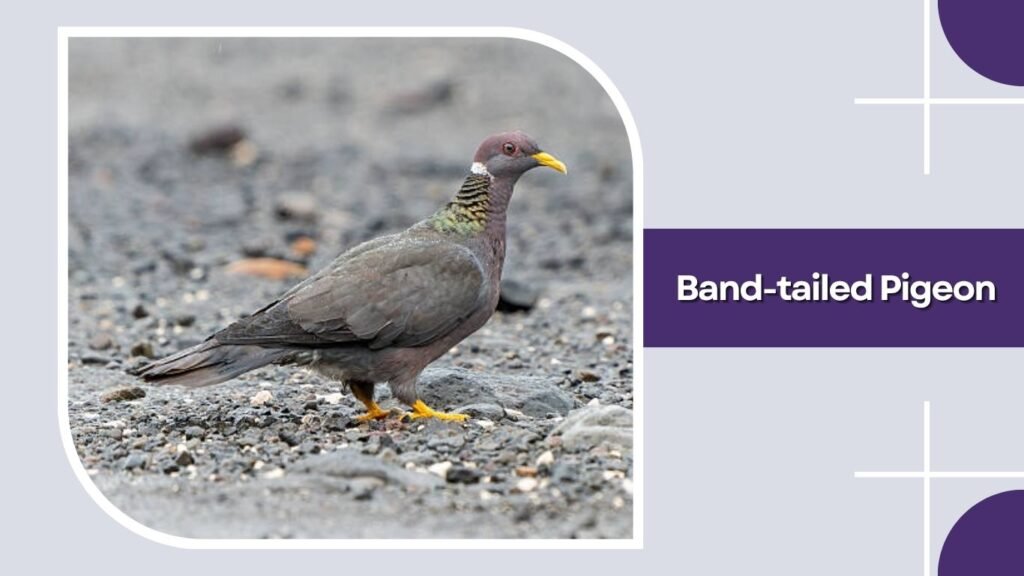
The band-tailed pigeon is a large wild pigeon that can sound somewhat like an owl because of its deep, soft cooing. Its voice is lower and more hollow than many backyard birds, so people may mistake it for an owl calling from trees.
Identification
- Large pigeon with a plump body
- Grayish body with purplish or pinkish tones
- Pale band across the tail
- Yellow bill with dark tip
- White crescent or collar on the back of the neck
- Strong, direct flight
Why Band-tailed Pigeons Sound Like Owls
Band-tailed pigeons give deep, owl-like coos from trees. Their calls are soft, low, and repeated, which can sound like a distant owl hooting. Since they often call from forested areas, the sound may seem mysterious when the bird is hidden in foliage.
The confusion is most common in western forests, mountain areas, and wooded neighborhoods where band-tailed pigeons are present. Their cooing is not as mournful as a mourning dove’s, but it can still seem owl-like.
Habitat and Distribution
Band-tailed pigeons live mostly in western North America, parts of the Southwest, Mexico, Central America, and western South America. In the United States, they are often found in forests, wooded canyons, mountain areas, and coastal woodlands.
They prefer habitats with large trees, fruiting plants, and mineral sources. They may also visit backyard feeders in some western regions.
Behavior and Diet
Band-tailed pigeons eat seeds, acorns, berries, fruits, and grains. They often feed in trees but may also come to the ground or feeders.
They can gather in flocks, especially where food is abundant. Unlike owls, they are not predators. Their owl-like quality comes mainly from their deep cooing voice and hidden forest perches.
6. Common Poorwill
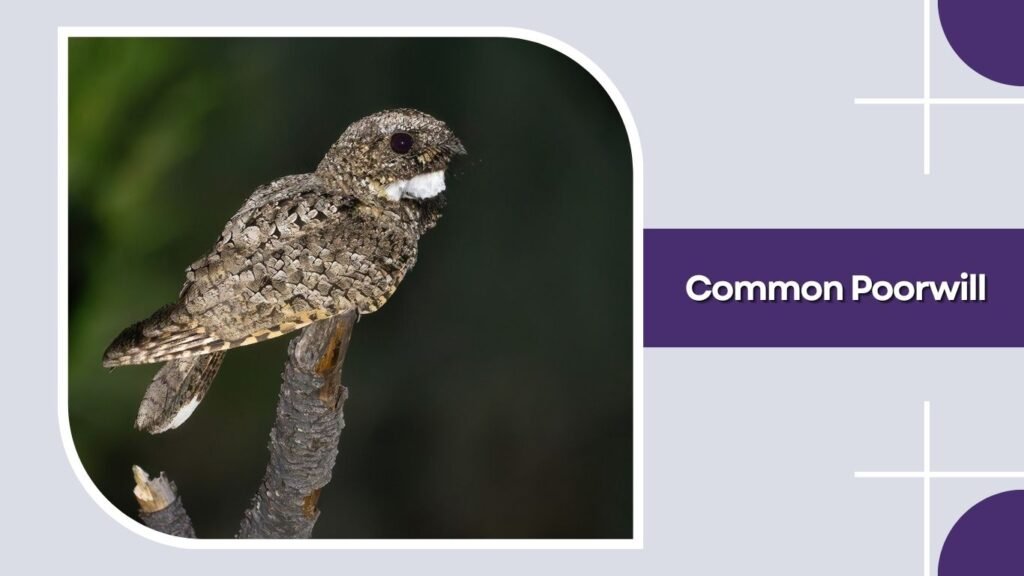
The common poorwill is a nocturnal bird that can sound like an owl because it calls at night from dry, open habitats. It is a member of the nightjar family, not the owl family, but its nighttime behavior often causes confusion.
Identification
- Small, mottled gray-brown nightjar
- Short bill with wide mouth
- Rounded wings and short tail
- Excellent camouflage on the ground
- Large dark eyes for night activity
- Usually seen at night on roads or open ground
Why Common Poorwills Sound Like Owls
Common poorwills repeat their name-like call: “poor-will” or “poor-willip.” The sound is soft, clear, and often heard after dark. Because the bird stays hidden on the ground, people may hear the call without seeing anything.
Its nighttime voice can seem owl-like to people who are not familiar with nightjars. Unlike a great horned owl’s deep hoot, the poorwill’s call is lighter and more rhythmic, but it still has a mysterious night sound.
Habitat and Distribution
Common poorwills live in dry, open habitats of western North America. They are found in deserts, sagebrush, rocky slopes, open woodlands, grasslands, and canyon areas.
They are most common in the western United States and parts of Mexico. Some migrate, while others may remain in suitable warm areas.
Behavior and Diet
Common poorwills eat flying insects such as moths, beetles, flies, and grasshoppers. They often hunt from the ground, flying up to catch insects and then returning to a resting spot.
They are famous for entering a low-energy state called torpor during cold weather or food shortages. This helps them survive when insects are scarce.
7. White-winged Dove
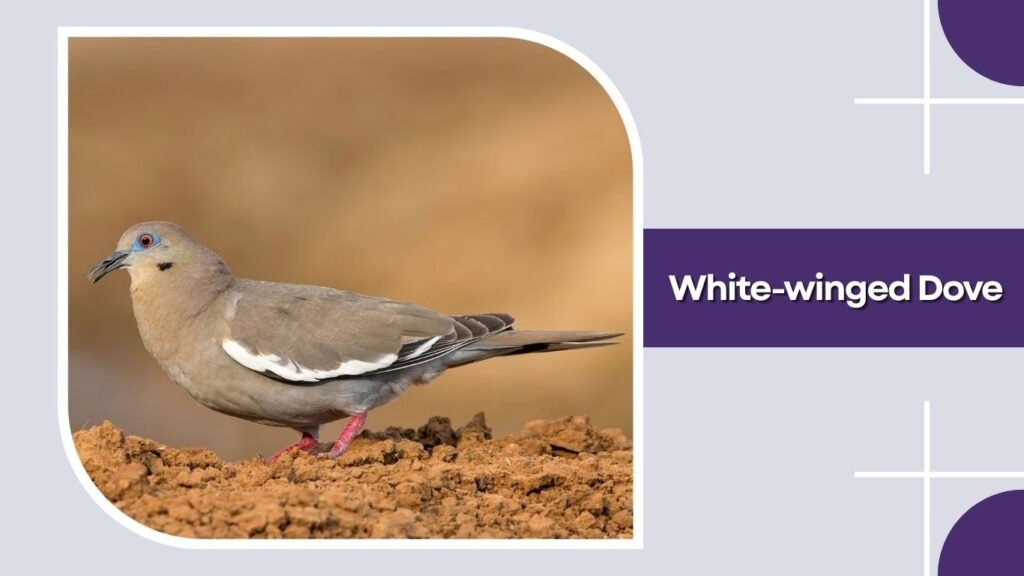
The white-winged dove is another dove species that can be mistaken for an owl because of its low, repeated cooing. In warm regions, its call is a familiar sound in deserts, towns, farms, and wooded neighborhoods.
Identification
- Medium-sized dove with a plump body
- Brownish-gray overall color
- Bold white stripe on each wing
- Blue skin around the eye
- Long tail with dark and pale markings
- Fast flight with strong wingbeats
Why White-winged Doves Sound Like Owls
White-winged doves make a deep, rhythmic coo that can sound owl-like from a distance. Their call is often described as a repeated “who-cooks-for-you” style phrase, though softer than many owl calls.
Because they call from trees, rooftops, or hidden perches, listeners may not see the bird right away. The low cooing can be confused with an owl, especially in the morning, evening, or quiet suburban areas.
Habitat and Distribution
White-winged doves are common in the southwestern United States, Mexico, Central America, and parts of the Caribbean. They live in deserts, towns, farms, orchards, scrublands, and wooded areas.
They have expanded into some urban and suburban areas where food and nesting sites are available. They often visit yards with seed feeders, fruiting trees, or water sources.
Behavior and Diet
White-winged doves mostly eat seeds, grains, fruits, and berries. In desert regions, they are important visitors to cactus flowers and fruits, especially saguaro cactus.
They often feed on the ground or in trees and may gather in groups where food is plentiful. Their gentle cooing, warm-weather habitat, and hidden perches make them easy to mistake for an owl.
