
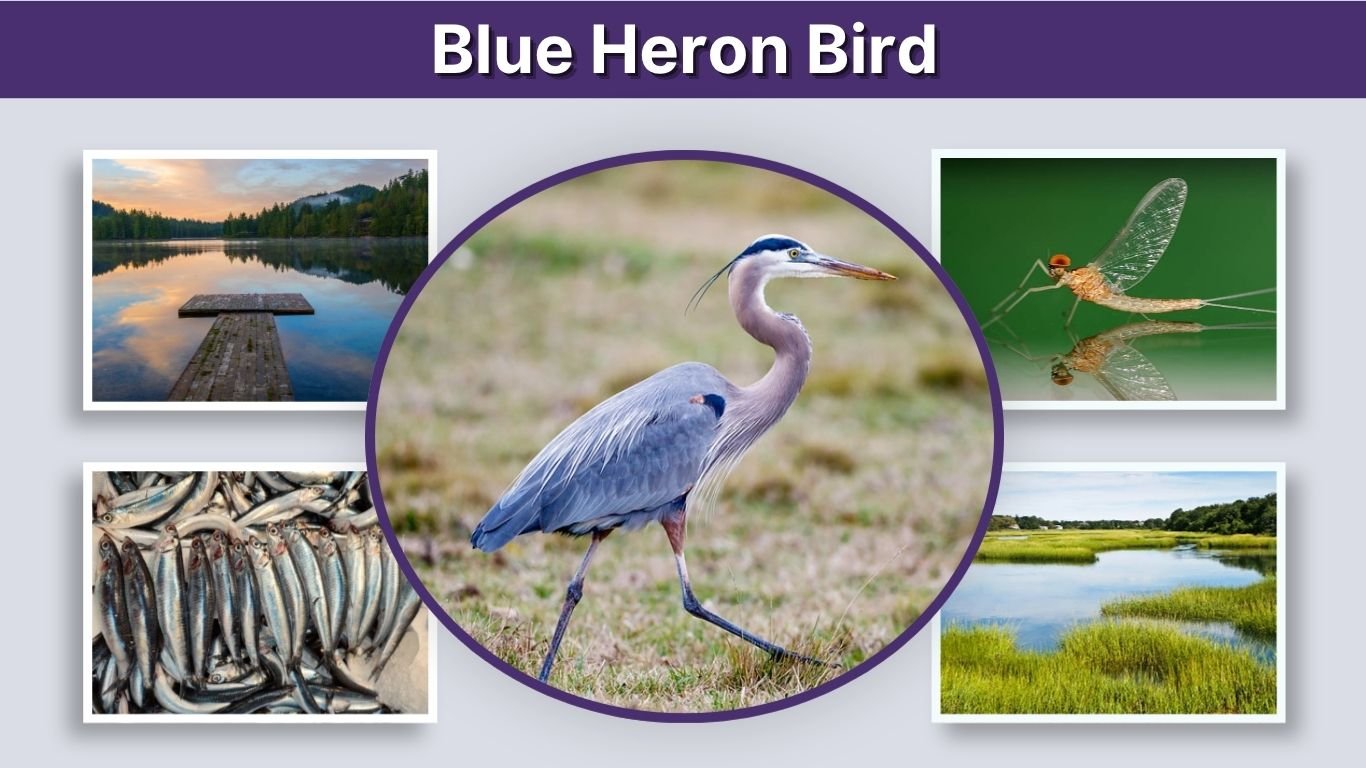
The blue heron is a tall, long-legged waterbird recognized for its graceful appearance, patient hunting behavior, and powerful flight. In North America, the term usually refers to the Great Blue Heron, although the smaller Little Blue Heron is another distinct species. These birds live near lakes, rivers, marshes, ponds, estuaries, and coastal wetlands where fish and other aquatic prey are abundant. This guide covers blue heron identification, size, habitat, diet, nesting, sounds, juvenile appearance, flight, and symbolism.
What Is a Blue Heron?
Blue herons belong to the heron family, Ardeidae, which includes egrets, bitterns, and other long-legged wading birds. The Great Blue Heron is the largest and most familiar North American heron, while the Little Blue Heron is smaller and darker.
Great Blue Heron
The Great Blue Heron, scientifically known as Ardea herodias, is a large wading bird found throughout much of North America. Despite its name, it is not completely blue. Its feathers are mainly blue-gray, with a white face, dark crown stripe, yellowish bill, and long gray legs.
Adults often show shaggy feathers around the neck and chest. During the breeding season, they develop longer ornamental plumes on the head, chest, and back.
Little Blue Heron
The Little Blue Heron, or Egretta caerulea, is much smaller than the Great Blue Heron. Adults have dark slate-blue bodies, purplish heads and necks, greenish legs, and slender bills with dark tips.
Young Little Blue Herons are almost entirely white. They gradually develop patches of blue-gray feathers as they mature, creating a mottled appearance during the transition.
Blue Heron or Great Blue Heron?
People often use “blue heron” as a shortened name for the Great Blue Heron. However, the term can sometimes refer more generally to blue-colored herons. Considering the bird’s size, plumage, location, and age helps determine the exact species.
Blue Heron Identification
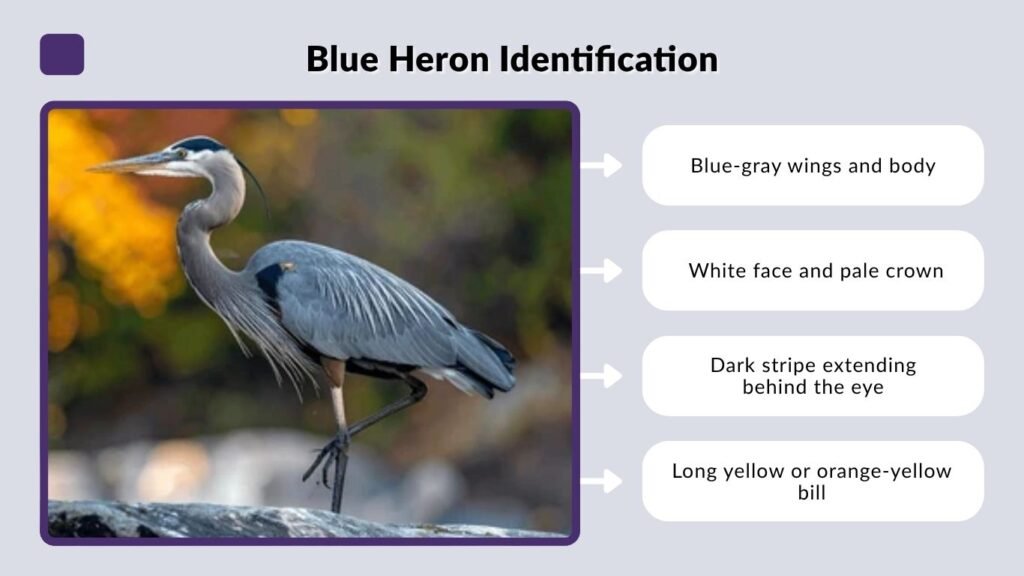
Blue herons can be identified by their tall bodies, long necks, pointed bills, broad wings, and slow movements. Their appearance may change depending on age, season, posture, and lighting.
Key Identification Features
A Great Blue Heron can usually be recognized by the following features:
- Blue-gray wings and body
- White face and pale crown
- Dark stripe extending behind the eye
- Long yellow or orange-yellow bill
- Long grayish or brownish legs
- Thick, S-shaped neck
- Shaggy chest and neck feathers
- Broad, rounded wings
When standing, the bird may stretch its neck vertically or fold it into a deep curve. During flight, it pulls the neck back toward its shoulders.
Male vs Female Blue Heron
Male and female Great Blue Herons look very similar. Both have blue-gray feathers, long bills, dark head markings, and long legs.
Males are generally slightly larger and may have longer ornamental plumes during the breeding season. However, size differences are difficult to judge unless a pair is standing together. Behavior, nesting roles, or genetic testing may be needed for accurate sex identification.
Great Blue Heron Size
The Great Blue Heron is one of the largest herons in North America. Adults usually measure approximately 38 to 54 inches from head to tail. Their wingspan may reach about 66 to 79 inches.
Although the bird appears heavy, much of its size comes from its long neck, legs, wings, and lightweight feathers. Adults commonly weigh between four and eight pounds.
| Feature | Great Blue Heron | Little Blue Heron |
| Length | About 38–54 inches | About 22–29 inches |
| Wingspan | About 66–79 inches | About 39–41 inches |
| Adult color | Blue-gray | Dark slate-blue |
| Juvenile color | Gray-brown | Mostly white |
| Bill | Long and heavy | Thin and dark-tipped |
| Overall build | Large and powerful | Small and slender |
Blue Heron Habitat and Range
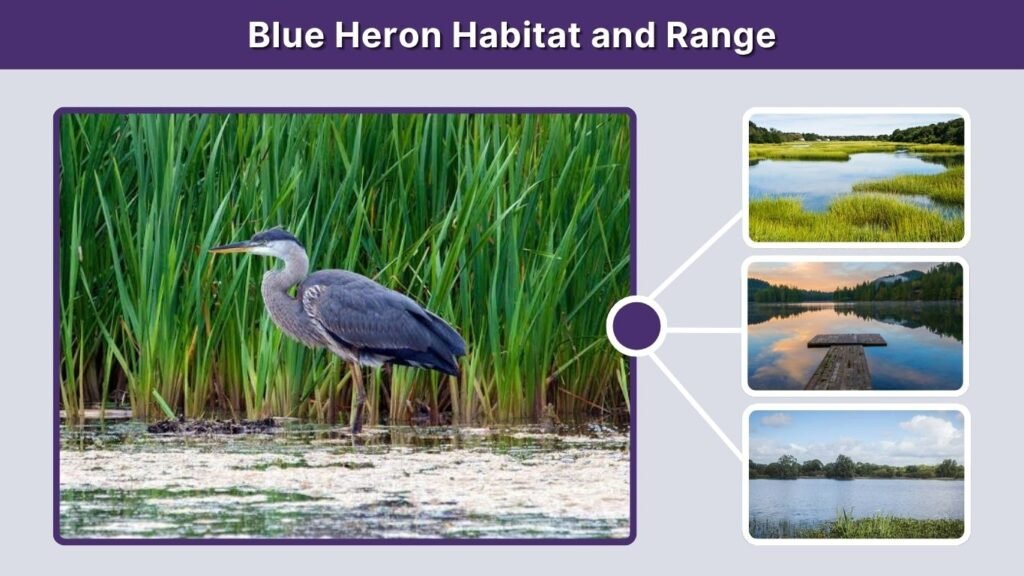
Blue herons are strongly associated with water, but they can occupy many different environments. Their main requirement is access to shallow feeding areas with abundant prey.
Where Blue Herons Live
Great Blue Herons commonly inhabit:
- Freshwater marshes
- Lakes and ponds
- Rivers and streams
- Coastal bays
- Estuaries
- Mangrove wetlands
- Flooded agricultural fields
- Saltwater shorelines
- Wet meadows
They may also visit backyard ponds, drainage canals, fish farms, and urban waterways. Although they feed near water, nesting colonies may be located several miles away.
Great Blue Heron Range
Great Blue Herons occur across most of North America, including Canada, the United States, Mexico, Central America, and parts of the Caribbean. Some populations remain in the same area throughout the year, while northern birds migrate south before winter.
Their migration depends largely on access to open water. Birds may remain in colder regions when rivers, lakes, or coastal areas do not freeze completely.
What Do Blue Herons Eat?
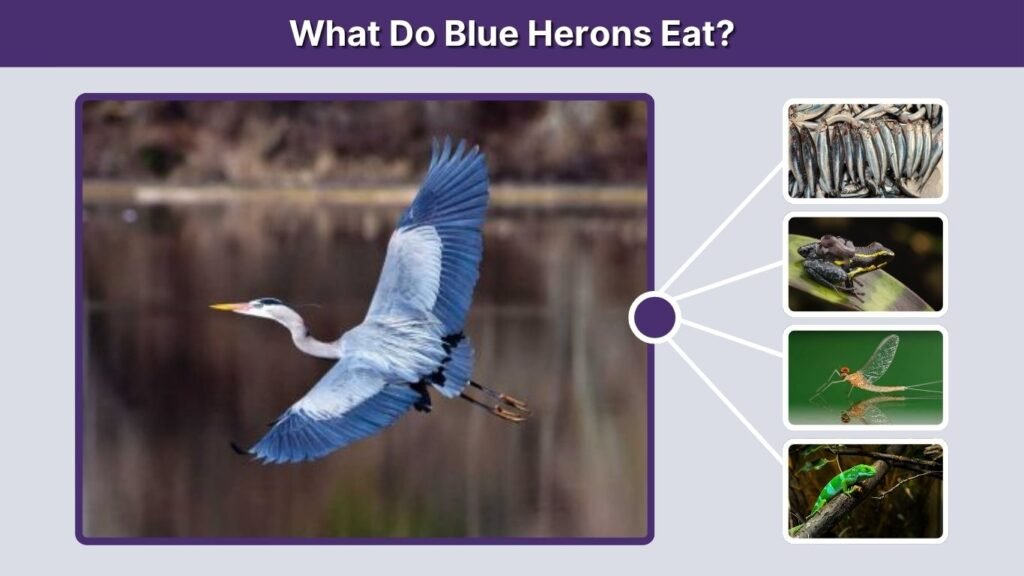
Blue herons are opportunistic carnivores. Fish form an important part of their diet, but they also capture amphibians, reptiles, insects, crustaceans, birds, and small mammals.
Common Foods
A blue heron’s diet may include:
- Fish
- Frogs and tadpoles
- Crayfish and crabs
- Aquatic insects
- Snakes
- Lizards
- Salamanders
- Mice and voles
- Small birds
- Large grasshoppers
Great Blue Herons can swallow surprisingly large prey. They usually position fish headfirst before swallowing, reducing the chance of fins becoming caught in the throat.
Hunting Behavior
A blue heron often stands completely still in shallow water while watching for movement. When prey comes close, it quickly extends its neck and strikes with its sharp bill.
The bird may also walk slowly, stir the water with its feet, or move between different feeding spots. Hunting is most productive in shallow water where prey is easy to see and capture.
Blue Heron Nesting and Reproduction
Great Blue Herons usually nest in colonies known as heronries or rookeries. These colonies may contain several nests or hundreds of breeding pairs.
Blue Heron Nest
A typical blue heron nest is a large platform made from sticks. It is usually placed high in a tree, although nests may occasionally be built in shrubs, mangroves, or on the ground where predators are limited.
The male often collects sticks while the female arranges them. Pairs may reuse and enlarge the same nest over multiple breeding seasons.
Eggs and Chicks
Females commonly lay two to six pale blue-green eggs. Both parents help incubate them for approximately four weeks.
The chicks hatch with limited feathers and depend entirely on their parents. Adults feed them by regurgitating partially digested food into the nest. Young birds gradually begin standing, stretching their wings, and moving along nearby branches before learning to fly.
Baby Blue Heron Appearance
Baby Great Blue Herons are covered with pale gray down. As they grow, they develop gray-brown feathers, streaked necks, dark crowns, and duller bills than adults.
Young birds may appear more heavily patterned than mature herons. Their neck feathers are less smooth, and they lack the long ornamental plumes seen on breeding adults.
Juvenile Great Blue Heron Identification
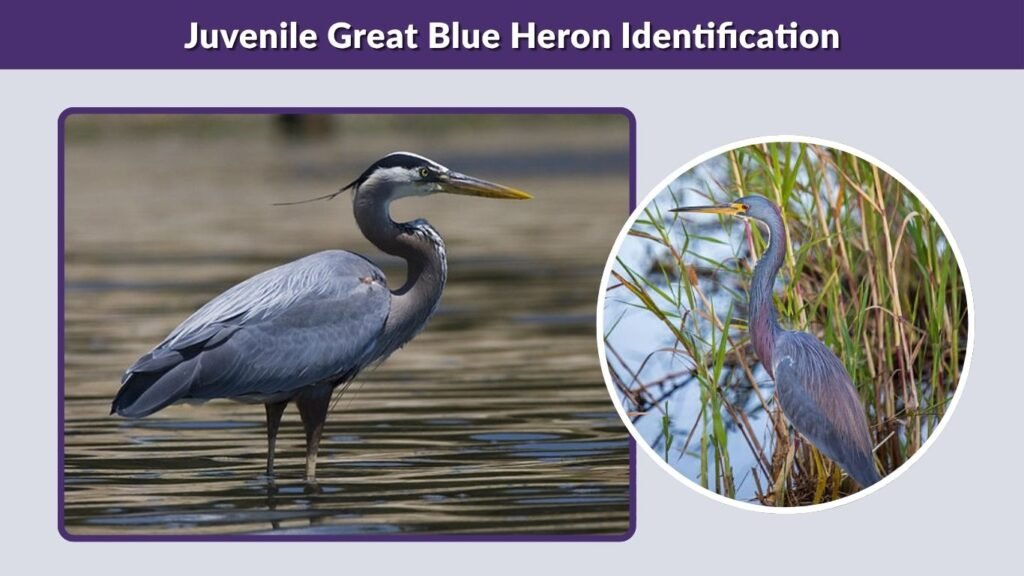
Juvenile Great Blue Herons have the same general size and shape as adults but display several noticeable differences.
Juvenile vs Adult
| Feature | Juvenile Great Blue Heron | Adult Great Blue Heron |
| Crown | Mostly dark | White with dark stripe |
| Neck | Strongly streaked | Paler and smoother |
| Bill | Dull yellowish | Brighter yellow-orange |
| Body color | Brownish gray | Blue-gray |
| Plumes | Absent | Present during breeding |
| Overall look | Heavily patterned | Cleaner and more defined |
Juveniles gradually develop adult plumage over time. Lighting can make young birds appear unusually brown, dark gray, or even bluish-black.
Blue Heron Flying and in Flight
A Great Blue Heron in flight has broad wings, slow wingbeats, a folded neck, and long legs extending beyond the tail.
Flight Identification
The folded neck is one of the easiest ways to distinguish a flying heron from a crane. Herons retract their necks into an S-shape, while cranes usually fly with their necks extended straight forward.
Great Blue Herons often look slow and heavy during takeoff. Once airborne, however, their wide wings allow them to fly smoothly and efficiently.
Why Do Their Legs Trail Behind?
A heron’s legs are too long to tuck beneath the body during flight. Instead, the bird extends them straight behind the tail. This position helps reduce air resistance and keeps the body balanced.
Blue Heron Sound and Call
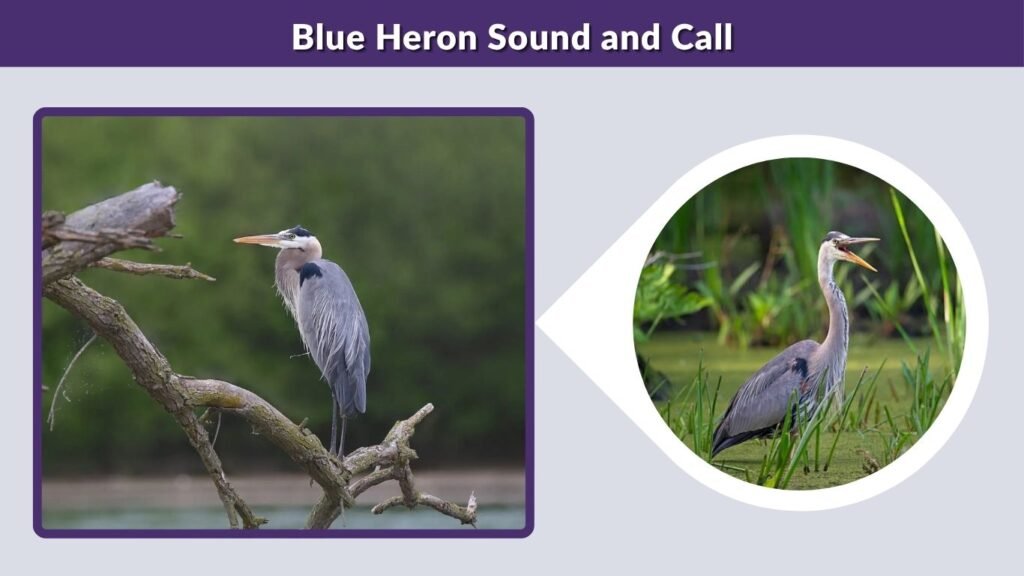
Blue herons are not known for musical songs. Their calls are generally deep, rough, and harsh.
A Great Blue Heron may produce a loud croaking or squawking sound when startled, threatened, or taking flight. Around nesting colonies, adults and chicks can be especially noisy. Chicks use repeated begging calls when demanding food from their parents.
Blue Heron Symbolism
The blue heron has symbolic meaning in different cultural and spiritual traditions. Its slow movements, still posture, and precise hunting behavior are often associated with patience and careful decision-making.
Common symbolic meanings include:
- Patience
- Independence
- Confidence
- Balance
- Self-reliance
- Calmness
- Adaptability
- Careful observation
These interpretations are cultural rather than scientific. For many people, seeing a blue heron serves as a reminder to remain calm, observe the situation, and act at the right moment.
FAQs
Are blue herons dangerous?
Blue herons generally avoid people and are not considered dangerous. However, they have long, sharp bills and may defend themselves if captured, cornered, or handled. People should observe them from a safe distance and avoid approaching nests or injured birds.
Do blue herons migrate?
Some blue herons migrate, while others remain in the same region throughout the year. Birds living in northern areas usually move south when lakes and rivers freeze. Populations in warmer coastal or southern regions may remain year-round.
How long do Great Blue Herons live?
Many young herons do not survive their first year, but birds that reach adulthood can live for many years. In favorable conditions, some Great Blue Herons may survive for more than 20 years in the wild.
Do blue herons eat pond fish?
Yes. Great Blue Herons may visit backyard ponds and eat small fish, frogs, and other aquatic animals. Pond owners can reduce visits by providing deeper water, protective netting, dense aquatic vegetation, or sheltered areas where fish can hide.
What is the difference between a blue heron and a Little Blue Heron?
The Great Blue Heron is much larger, with a blue-gray body, white face, yellow bill, and long gray legs. The Little Blue Heron is smaller, darker, and more slender. Adult Little Blue Herons have purplish necks, while juveniles are mostly white.
