
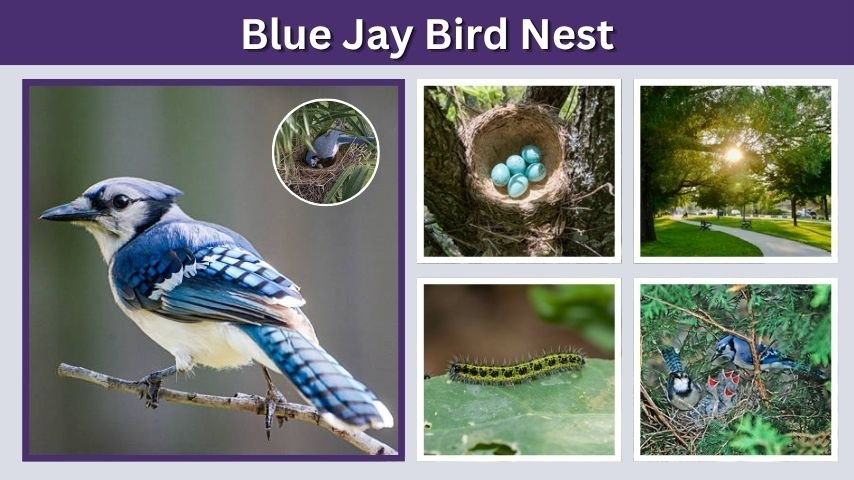
A Blue Jay bird nest can be hard to spot at first because these smart, noisy birds often build it in trees or dense cover. Blue Jays are known for their bright blue feathers, loud calls, and bold behavior, but their nesting life is just as interesting. From choosing a nest site to laying eggs and feeding helpless chicks, both parents play important roles. This guide explains Blue Jay nests, eggs, baby birds, fledglings, nesting season, and what to do if you find a young Blue Jay.
What Does a Blue Jay Bird Nest Look Like?
A Blue Jay nest is usually an open cup-shaped nest built with natural materials. It is not a cavity nest, so Blue Jays do not usually nest inside birdhouses like bluebirds or chickadees. Instead, they choose branches in trees or large shrubs where the nest can be supported and partly hidden.
Blue Jay Nest Materials
Blue Jays build strong nests using rough outer materials and softer inner lining. According to Cornell Lab’s All About Birds, a Blue Jay nest is an open cup made with twigs, grass, and sometimes mud, then lined with rootlets.
Common Blue Jay nest materials include:
- Small twigs and sticks
- Grass stems
- Rootlets
- Bark strips
- Leaves or plant fibers
- Mud in some nests
- Softer lining inside the cup
The result is a sturdy nest that can hold eggs and growing chicks for several weeks. Both male and female Blue Jays may help gather materials, although the exact role of each bird can vary.
Where Do Blue Jays Build Their Nests?
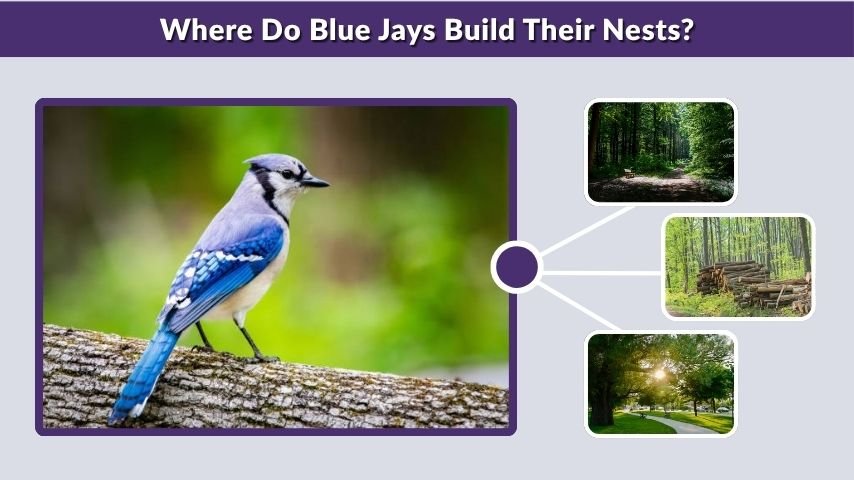
Blue Jays usually nest in trees or large shrubs. They prefer places with enough cover to hide the nest from predators but enough branch support to hold the nest safely. They are common in forests, woodlots, parks, towns, and suburban neighborhoods where mature trees are available.
Common Blue Jay Nest Locations
Blue Jay nests may be found in deciduous trees, conifers, or mixed wooded areas. In residential areas, they may nest in backyard trees, woodland edges, or park trees. They often choose a branch fork or a dense area where leaves and branches help conceal the nest.
| Nest Feature | Typical Blue Jay Nest |
| Nest type | Open cup |
| Common location | Tree or large shrub |
| Main materials | Twigs, grass, rootlets, sometimes mud |
| Egg number | 2 to 7 eggs |
| Incubation period | 17 to 18 days |
| Nestling period | 17 to 21 days |
These numbers can vary slightly by region and conditions, but they match the standard nesting facts reported by Cornell Lab for Blue Jays.
Blue Jay Nesting Season
Blue Jay nesting season usually happens in spring and early summer. The exact timing depends on region, weather, food supply, and local conditions. In warmer areas, nesting may begin earlier, while in cooler northern areas, it may start later.
During nesting season, Blue Jays may become more vocal and defensive. They often give loud alarm calls when people, cats, hawks, crows, snakes, or other threats get close to the nesting area. This behavior can seem aggressive, but it is normal protection for eggs and chicks.
Do Blue Jays Use the Same Nest Again?
Blue Jays usually build a new nest for each breeding attempt rather than relying on the same nest year after year. However, they may return to the same general territory if the area has good food, cover, and nesting trees. Old nests may break down over time or be used by other wildlife for shelter or materials.
Blue Jay Eggs
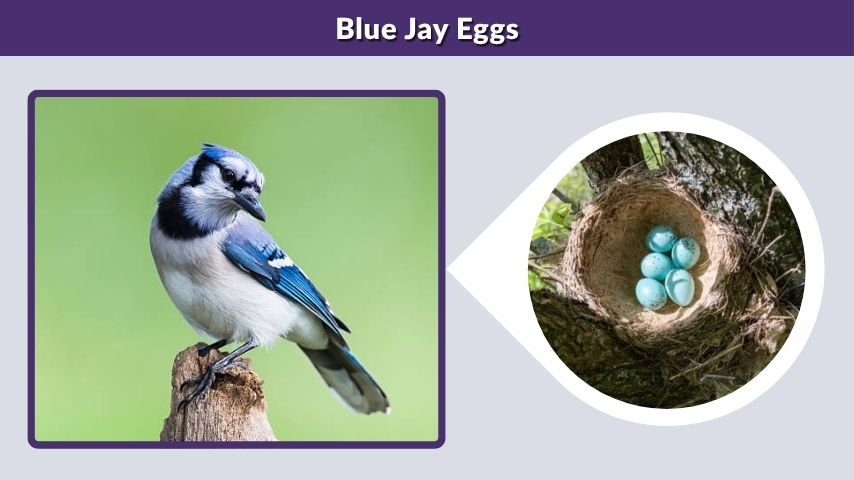
Blue Jay eggs are one of the most searched parts of this topic because people often want to know what they look like and how many are in a nest. Blue Jays usually lay 2 to 7 eggs in one brood. Their eggs are described as bluish or light brown with brownish spots.
What Do Blue Jay Eggs Look Like?
Blue Jay eggs are small, oval, and lightly colored. They may look pale blue, greenish-blue, grayish, or light brown depending on lighting and natural variation. Brown speckles or blotches are often visible.
A Blue Jay egg is about 1.0 to 1.3 inches long and 0.7 to 0.9 inches wide, based on Cornell Lab’s nesting measurements.
How Long Do Blue Jay Eggs Take to Hatch?
Blue Jay eggs usually hatch after an incubation period of about 17 to 18 days. During this time, the adults keep the eggs warm and protected. The female does much of the incubation, while the male may bring food and help guard the area.
It is important not to disturb a Blue Jay nest with eggs. Repeated disturbance can stress the adults, attract predators, or cause nesting failure.
Baby Blue Jay: What Do Chicks Look Like?
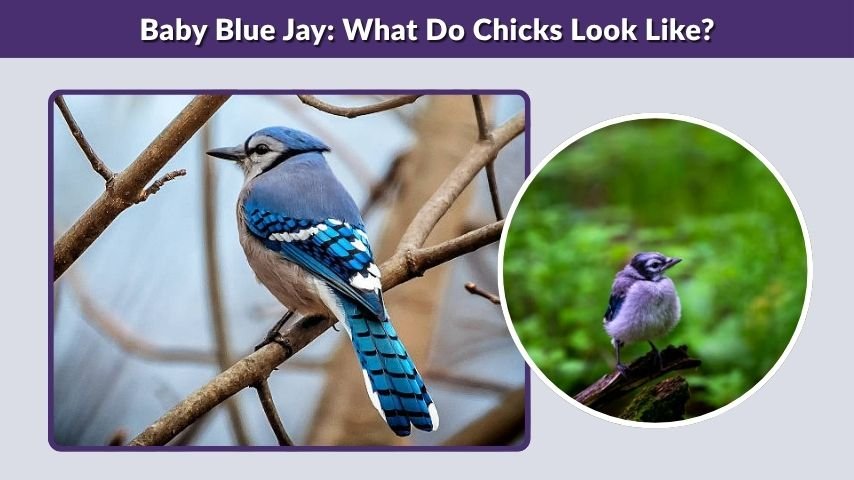
A baby Blue Jay is helpless when it first hatches. Cornell describes newly hatched Blue Jays as naked and helpless, with closed eyes and a red mouth lining. This means the chicks depend completely on their parents for warmth, food, and protection.
At first, baby Blue Jays do not look like the bright blue adults. Their feathers grow gradually. As they develop, they become stronger, louder, and more active in the nest.
Baby Blue Jay Growth Stages
Baby Blue Jays go through several early stages:
- Hatchling: Newly hatched, mostly naked, eyes closed, fully dependent on parents
- Nestling: Still in the nest, growing feathers, begging for food
- Fledgling: Out of the nest, feathered, hopping or fluttering, still cared for by parents
- Juvenile: More independent but not fully adult-looking yet
Audubon notes that both Blue Jay parents bring food to nestlings, and young Blue Jays leave the nest about 17 to 21 days after hatching.
What Do Baby Blue Jays Eat?
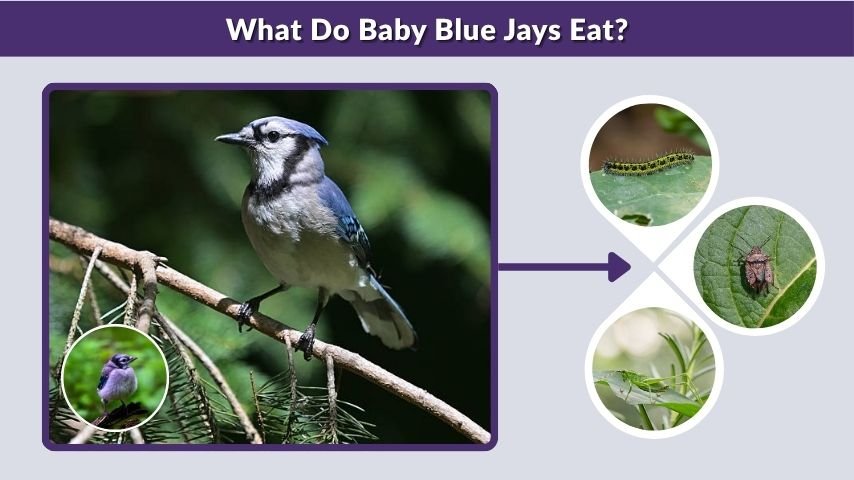
Baby Blue Jays eat food brought by their parents. Adult Blue Jays have a varied diet, so nestlings may receive insects and other protein-rich foods that help them grow. Blue Jays also eat nuts, seeds, fruit, and sometimes eggs or young birds, although Cornell notes that bird eggs and nestlings appear to make up only a small portion of their overall diet in studied feeding habits.
For baby birds, insects are especially important because they provide protein. Parents may bring caterpillars, beetles, grasshoppers, and other soft-bodied prey. As the young grow, they may also receive bits of fruit, seeds, or other foods.
Should You Feed a Baby Blue Jay?
No, you should not try to feed a baby Blue Jay unless a licensed wildlife rehabilitator tells you to do so. Baby birds need the right food, temperature, hydration, and feeding method. The wrong food or feeding technique can seriously harm them. Cornell Lab also warns that baby birds should not be fed things like milk or bread.
Blue Jay Fledgling: Why Is It on the Ground?
Many people find a baby Blue Jay on the ground and think it has been abandoned. In many cases, it is actually a fledgling. A fledgling is a young bird that has left the nest but cannot fly well yet.
Cornell Lab explains that most baby birds people find are fledglings, and these young birds are usually still under parental care even if they cannot fly strongly yet. NestWatch also notes that fledglings may look helpless, but they should usually be left alone because the parents are likely nearby.
Nestling vs Fledgling
| Feature | Nestling | Fledgling |
| Feathers | Few or partly feathered | Mostly feathered |
| Movement | Cannot hop well | Can hop, grip, or flutter |
| Location | Should be in nest | Often on ground or low branches |
| Help needed | May need to be returned to nest | Usually leave alone |
| Parent care | Parents feed in nest | Parents feed outside nest |
If the bird is feathered, alert, hopping, and able to grip a branch, it is probably a fledgling. Keep pets away and observe from a distance.
What to Do If You Find a Baby Blue Jay
The right action depends on whether the bird is a nestling or fledgling. A healthy fledgling usually does not need rescue. A nestling that has fallen from the nest may need help getting back to the nest.
Safe Steps to Follow
- Look for injuries such as blood, a broken wing, weakness, or a cat attack
- Decide whether the bird is a nestling or fledgling
- Leave healthy fledglings alone and keep pets away
- Return a healthy nestling to the nest if you can safely find it
- Move a fledgling only a short distance if it is in immediate danger
- Contact a licensed wildlife rehabilitator if the bird is injured, cold, weak, or orphaned
The U.S. Fish & Wildlife Service says most of the time the best thing to do with a wild baby bird is to leave it alone, but a bird may need help if it is bleeding, visibly injured, shivering, or has a dead parent nearby.
Can You Move a Blue Jay Nest?
In the United States, most native bird nests are protected under the Migratory Bird Treaty Act. The U.S. Fish & Wildlife Service states that it is illegal to destroy a nest with eggs or chicks in it, or when young birds are still dependent on the nest for survival, unless allowed by permit.
This means you should not move, remove, or disturb an active Blue Jay nest. If a nest is in a dangerous place, contact a local wildlife rehabilitator or wildlife agency for guidance. If the nest is empty and no longer active, rules may differ by location, so check local guidance before removing it.
Are Blue Jays Good Parents?
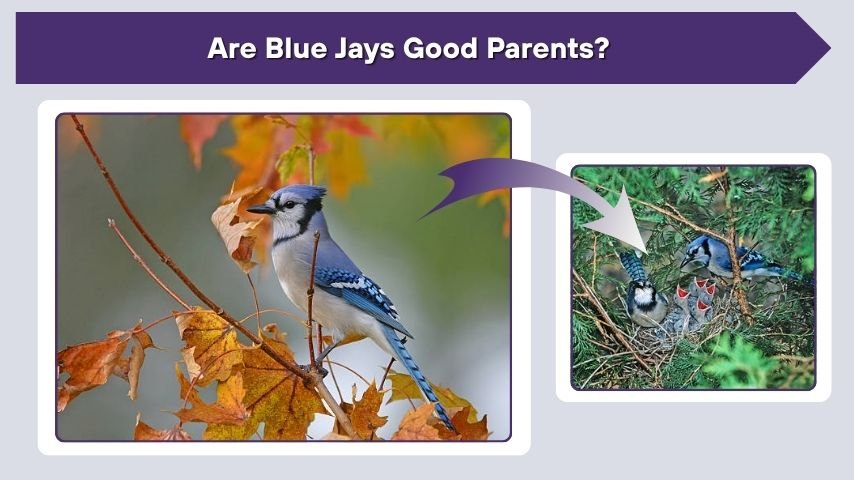
Blue Jays are attentive and protective parents. Both parents feed the nestlings, and adults may loudly defend the nest area from predators. Their warning calls can alert other birds to danger, too.
Blue Jays sometimes get a bad reputation because they may raid other nests or act aggressively around feeders. However, they also play important roles in ecosystems. They eat insects, spread seeds, and cache acorns, which can help new oak trees grow.
How to Protect a Blue Jay Nest in Your Yard
If Blue Jays nest near your home, the best approach is usually to give them space. Avoid trimming the nesting tree during the breeding season. Keep cats indoors, move dogs away from the nest area, and avoid standing under the nest for long periods.
You can also reduce disturbance by watching from a window or from a distance. If the adults are scolding you repeatedly, you are probably too close.
Helpful Yard Tips
- Keep outdoor cats indoors during nesting season
- Avoid pruning trees or shrubs with active nests
- Do not spray pesticides near nesting areas
- Keep bird feeders clean to reduce disease risk
- Provide native trees and shrubs for cover
- Watch quietly from a distance
These simple steps help Blue Jays complete the nesting cycle with less stress.
FAQs
What month do Blue Jays lay eggs?
Blue Jays usually lay eggs in spring or early summer, but the exact month depends on region and weather. In warmer areas, nesting may begin earlier. In cooler northern areas, it may happen later.
How many eggs are in a Blue Jay nest?
A Blue Jay nest usually has 2 to 7 eggs. The eggs are often bluish or light brown with brownish spots.
How long do baby Blue Jays stay in the nest?
Baby Blue Jays usually stay in the nest for about 17 to 21 days after hatching. After they leave, they may still be fed and protected by their parents for a while.
What should I do if I find a baby Blue Jay on the ground?
First, decide whether it is a nestling or fledgling. A feathered fledgling should usually be left alone because its parents are likely nearby. A nestling with few feathers should be returned to the nest if possible. Contact a wildlife rehabilitator if the bird is injured, weak, cold, or in danger.
Do Blue Jays reuse their nests?
Blue Jays usually build a new nest for a breeding attempt, although they may return to the same territory if the area is safe and has good food and cover. Old nests should not be removed while active with eggs or chicks.
