
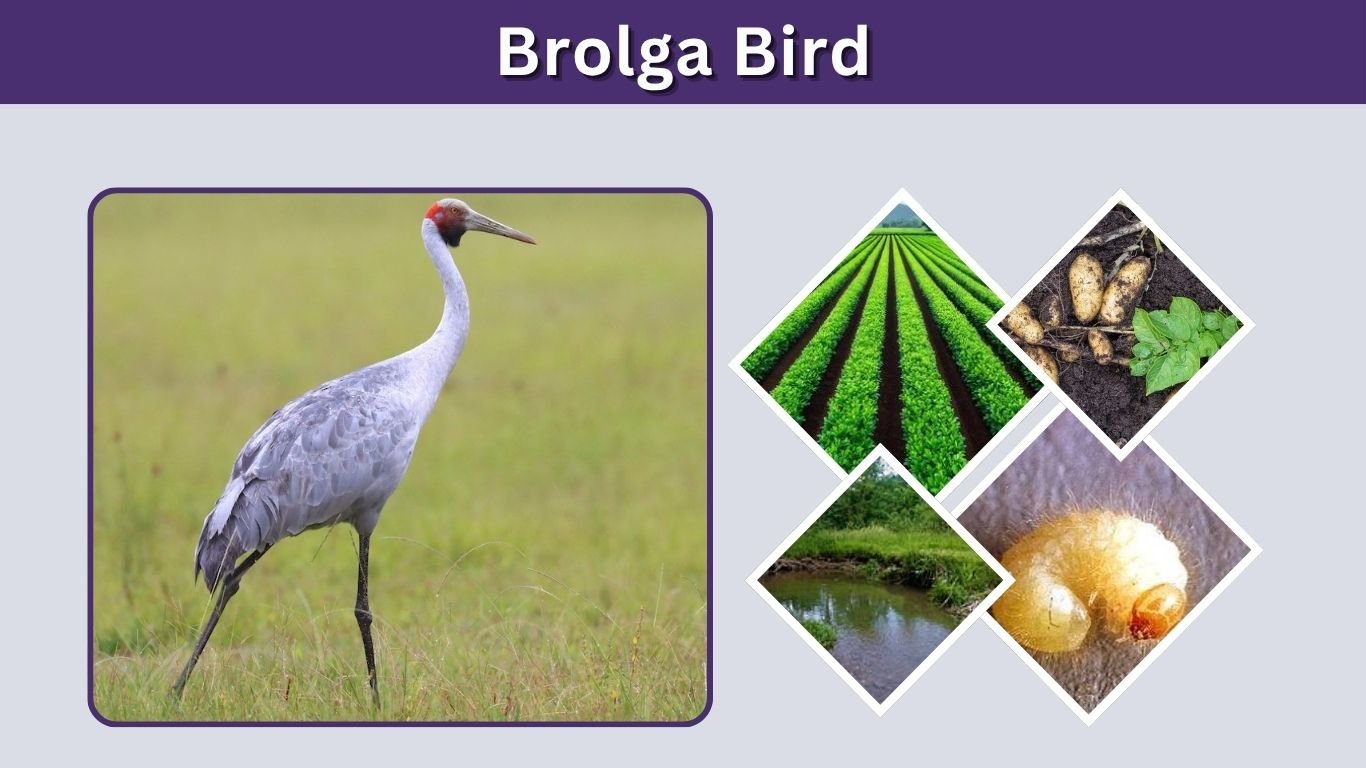
The brolga is a tall Australian crane recognized by its silver-gray plumage, long dark legs, red head markings, and loud trumpeting call. It is especially famous for its energetic dance, during which pairs leap, bow, spread their wings, and toss vegetation into the air. Brolgas inhabit wetlands, floodplains, grasslands, and agricultural areas across northern and eastern Australia. Their graceful appearance and strong pair bonds have also given them an important place in Australian culture and First Nations traditions.
What Is a Brolga?
The brolga is a large crane native mainly to Australia, with a smaller range extending into southern New Guinea. Its scientific name is Antigone rubicunda, although the older name Grus rubicunda remains common in books and wildlife resources.
It is one of the two crane species naturally found in Australia; the other is the Sarus crane. Brolgas are widespread in northern Australia but have experienced substantial declines in parts of the south because many suitable wetlands have been drained, modified, or converted to farmland.
What Does a Brolga Look Like?
An adult brolga is a tall, elegant bird with predominantly gray plumage. Its long neck, narrow body, and stilt-like legs allow it to walk through marshes and shallow water while searching for food.
Brolga Identification
Important identification features include:
- Pale silver-gray body plumage
- Bare red or orange-red skin on the head
- Gray crown
- Dark patch or dewlap beneath the chin
- Long, straight grayish bill
- Long, dark gray or blackish legs
- Wide wings with dark flight feathers
- Long neck held straight during flight
The feathers on the body may appear scalloped because of their darker edges. Young brolgas are generally duller and lack the bright red head markings of mature adults.
Male vs Female Brolga
Male and female brolgas look almost identical. Both have gray plumage, red head markings, dark legs, and long bills.
Males are generally slightly larger, but the difference can be difficult to notice unless the birds are standing together. Behavior during paired calls and breeding activities may provide additional clues, although visual identification of sex is rarely certain from a distance.
Brolga Size, Height, Weight, and Wingspan
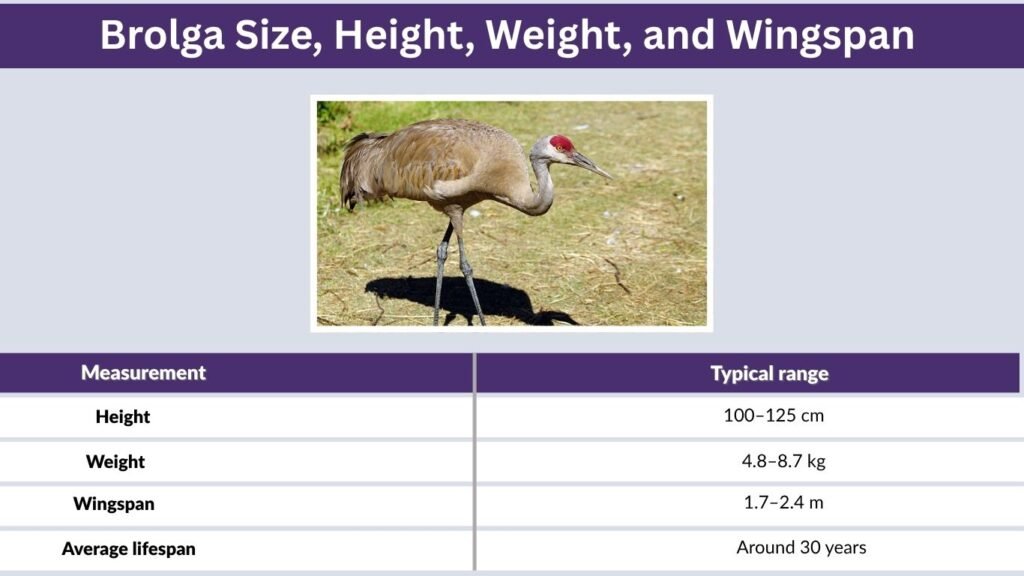
Adult brolgas commonly stand between 100 and 125 centimeters, or approximately 3.3 to 4.1 feet tall. They generally weigh from 4.8 to 8.7 kilograms, with males usually being heavier than females. Their broad wings may span approximately 1.7 to 2.4 meters.
| Measurement | Typical range |
| Height | 100–125 cm |
| Weight | 4.8–8.7 kg |
| Wingspan | 1.7–2.4 m |
| Average lifespan | Around 30 years |
A brolga is much shorter than a Sarus crane, which can approach the height of an adult human. However, the brolga remains one of Australia’s largest and most impressive flying birds.
Where Do Brolgas Live?
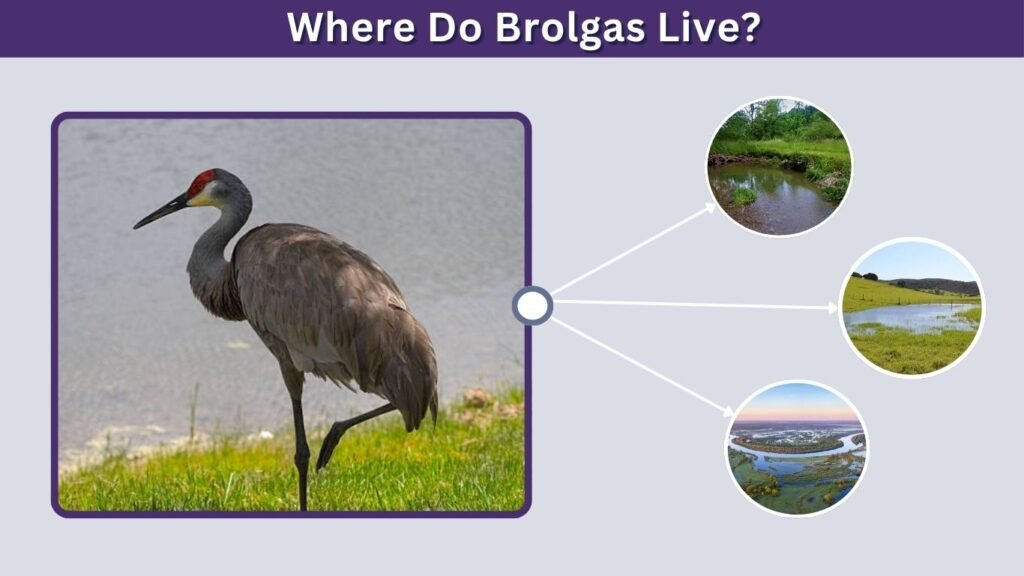
Brolgas are found throughout much of northern and eastern Australia. Their distribution extends from Western Australia across the Northern Territory and Queensland, with smaller populations reaching New South Wales and western Victoria.
They are especially common across tropical northern floodplains, including wetlands within Kakadu National Park, where large flocks may gather as seasonal floodwaters recede.
Brolga Habitat
Brolgas use several open wet and dry habitats, including:
- Freshwater marshes
- Shallow lakes and lagoons
- Flooded grasslands
- River floodplains
- Billabong margins
- Coastal mudflats
- Mangroves and estuaries
- Irrigated fields and pasture
- Dry grasslands near water
- Seasonal farm dams
Wetlands are especially important for nesting. Outside the breeding period, the birds may travel into drier grasslands, farmland, and open plains to forage.
Brolgas are not generally considered long-distance migrants. However, they make regional and seasonal movements in response to changing rainfall, water levels, and food availability.
What Do Brolgas Eat?
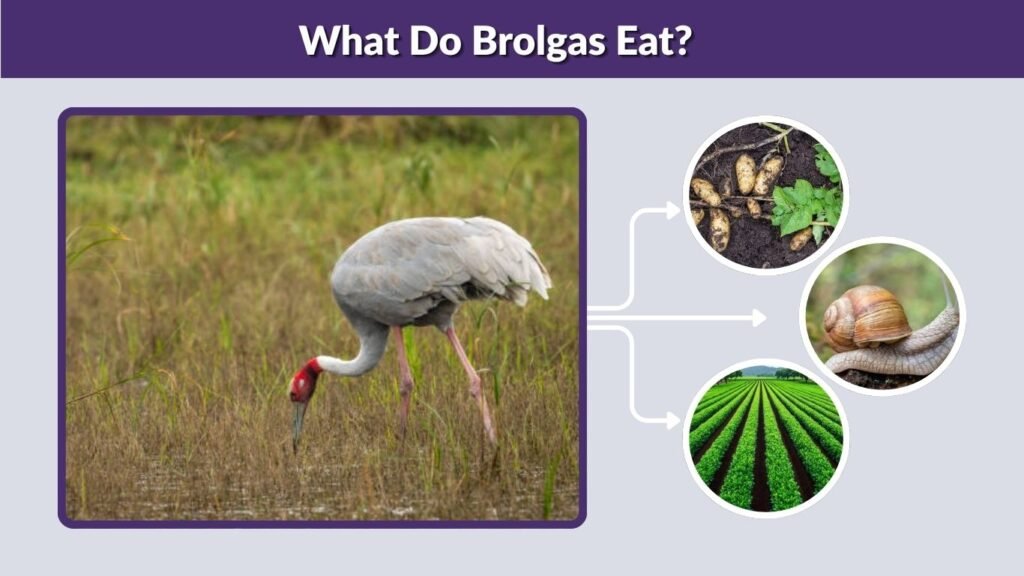
Brolgas are omnivores that eat both plant and animal foods. They forage while walking slowly through shallow water, soft mud, grasslands, and cultivated fields.
Their long bills help them dig into soil, pull up plant roots, and capture small animals.
Brolga Diet
Common foods include:
- Plant tubers and roots
- Seeds and cereal grains
- Wetland vegetation
- Sedges and grasses
- Agricultural crops
- Insects and insect larvae
- Frogs and other amphibians
- Small crustaceans
- Mollusks
- Small reptiles and rodents
Plant material, particularly underground tubers, makes up an important part of the diet. However, the exact food selection changes according to season, location, habitat, and availability.
Brolga Call and Sound
The brolga produces a powerful trumpeting call that can carry over long distances across open wetlands and plains. Its elongated windpipe helps create the loud, resonant sound.
Pairs frequently perform coordinated calls called unison calls. The birds stretch their necks upward and produce a carefully timed sequence of notes. These displays help maintain the pair bond, advertise territory, and communicate with nearby cranes.
Flocks can become extremely noisy, particularly when birds gather at feeding areas or prepare to move between wetlands.
Why Do Brolgas Dance?
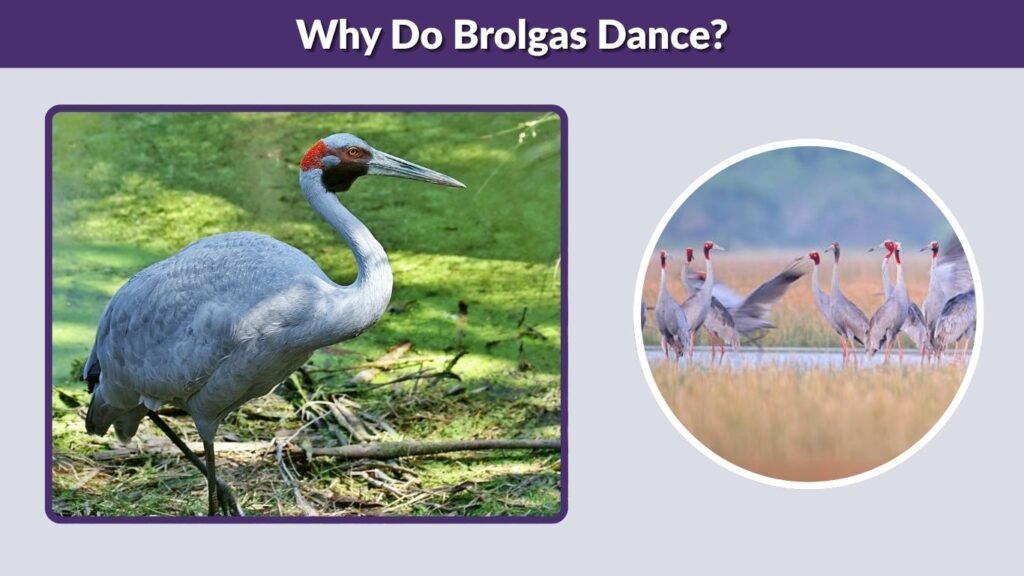
The brolga dance is one of Australia’s best-known wildlife displays. Although dancing is strongly associated with courtship, established pairs, juveniles, and even groups may perform it at other times.
The Brolga Dance Includes
- Bowing toward another bird
- Stretching the neck upward
- Leaping high into the air
- Running in circles
- Spreading and flapping the wings
- Tossing grass, sticks, or feathers
- Producing loud trumpeting calls
Dancing appears to help form and strengthen pair bonds. It may also serve as social communication, territorial display, play, or practice for young birds.
Brolgas may dance at any time of year, although the behavior is especially noticeable during courtship and breeding.
Do Brolgas Mate for Life?
Brolgas form strong, long-lasting monogamous partnerships and are widely believed to mate for life. A pair reinforces its relationship through coordinated calling, dancing, feeding, and territorial defense.
However, “mate for life” does not necessarily mean a bird can never form a new partnership. A surviving brolga may eventually select another mate when its original partner dies.
Outside the breeding season, brolgas may gather in family groups or larger flocks containing as many as 100 birds. When nesting begins, individual pairs separate from the flock and defend their territories.
Brolga Nesting and Reproduction
Brolgas normally build their nests in shallow freshwater wetlands. Both adults construct a large mound using grasses, reeds, sticks, mud, and other vegetation.
The nest rises above the surrounding water, helping protect the eggs from minor changes in water level. The pair may return to the same nesting area repeatedly when conditions remain suitable.
Eggs and Chicks
A typical brolga clutch contains two pale eggs marked with brown or purplish blotches. Both parents incubate the eggs, which normally hatch after approximately 32 days.
The chicks can walk and leave the nest soon after hatching. They remain close to their parents, which guide them to feeding areas and defend them against predators.
Young brolgas have brownish or cinnamon-colored plumage that provides camouflage among grasses and wetland plants. They gradually develop the gray feathers and colorful head markings of adults.
Brolga Lifespan
A brolga may live for around 30 years under favorable conditions. Its actual lifespan depends on food supply, wetland conditions, disease, predation, collisions, drought, and human disturbance.
Eggs and chicks face the greatest risks. Flooding, drying wetlands, introduced predators, livestock, and farming activity can destroy nests or reduce breeding success.
Brolga vs Sarus Crane
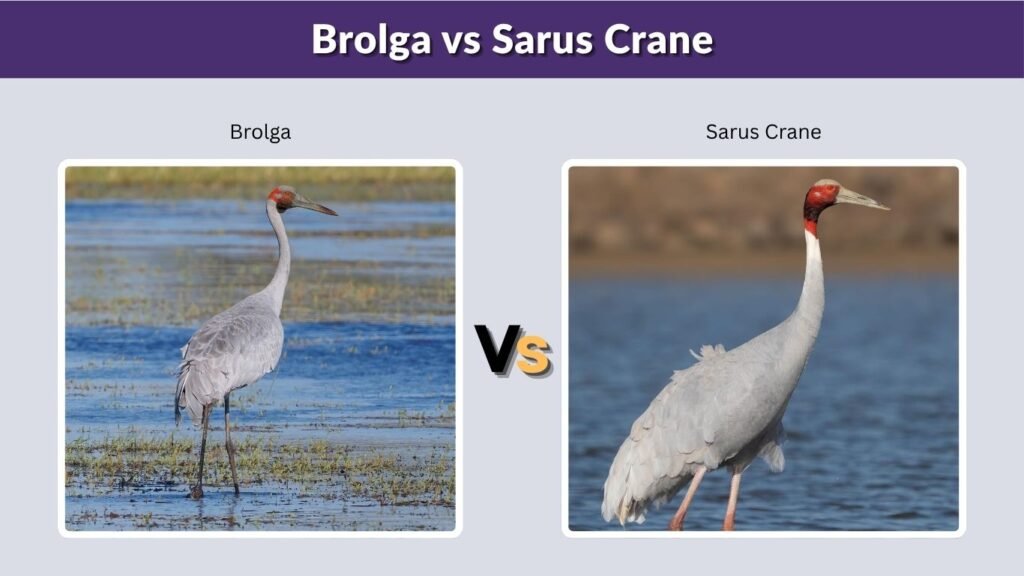
The brolga and Sarus crane can occur together in northern Australia and may look similar from a distance.
| Feature | Brolga | Sarus crane |
| Height | About 100–125 cm | Can approach 180 cm |
| Legs | Dark gray or blackish | Pink to reddish |
| Head markings | Red band on head and upper neck | More extensive bare red skin |
| Body color | Silver-gray | Generally paler gray |
| Dewlap | Dark throat patch present | Less noticeable |
| Main range | Australia and New Guinea | South Asia, Southeast Asia, Australia |
The legs are among the easiest features to compare: brolgas have dark legs, while Australian Sarus cranes have pinkish or reddish legs.
Brolga Meaning and Cultural Importance
The word “brolga” comes from burralga in the Gamilaraay language. The bird features in the stories, dances, paintings, and cultural traditions of numerous First Nations communities, although its exact meaning and significance vary between cultures.
Because of its dancing, pair bond, and graceful appearance, the brolga is often associated more broadly with partnership, movement, creativity, and connection to the land and wetlands. It became Queensland’s official bird emblem in 1986 and also appears on the state’s coat of arms.
Are Brolgas Endangered?
The brolga is classified as a species of Least Concern globally. It remains relatively widespread and numerous across northern Australia. However, this global category can hide significant regional problems.
Southern populations have declined because of wetland drainage, water regulation, historical hunting, habitat conversion, drought, and disturbance. The brolga is considered threatened in Victoria, where conservation efforts include protecting and restoring shallow seasonal wetlands.
FAQs
Can brolgas fly?
Yes. Brolgas are powerful flying birds with wingspans reaching approximately 2.4 meters. They fly with the neck stretched forward and the legs extended behind the body. They may also use rising warm air to gain height.
Are brolgas aggressive?
Brolgas generally avoid close contact with humans. However, nesting pairs can become highly territorial and may threaten intruders by calling, spreading their wings, charging, or striking with their bill and feet.
Is a brolga a crane?
Yes. The brolga is a member of the crane family, Gruidae. It is one of two crane species naturally found in Australia, alongside the taller Sarus crane.
Where is the best place to see brolgas?
Brolgas are most easily observed in the wetlands and floodplains of northern Australia. Kakadu National Park, Cape York, the Gulf Country, and parts of inland Queensland are well-known areas for sightings.
What does the brolga symbolize?
The brolga has different meanings among First Nations cultures and should not be assigned one universal Indigenous interpretation. More generally, its dance and lasting partnerships have made it a symbol of grace, connection, loyalty, and celebration.
