
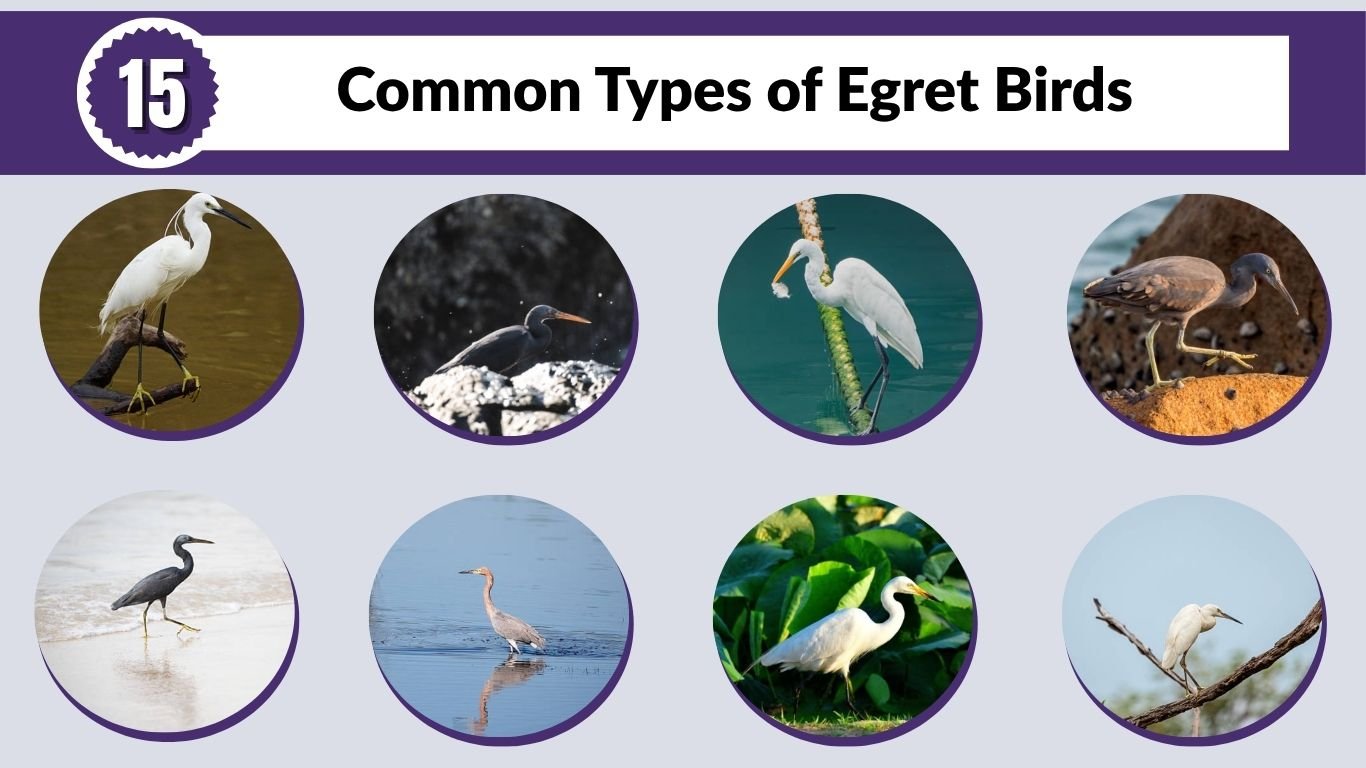
Egrets are elegant white or dark-plumaged wading birds known for their long legs, slender necks, and graceful hunting style. Found in wetlands, coastal areas, and even open fields, these birds are widely distributed across the world. While many species may look similar at first glance, each has unique features, behaviors, and habitats that help in identification.
This guide highlights 15 common types of egret birds, making it easier to recognize and differentiate each species based on key characteristics.
1. Great Egret

The Great Egret is one of the most widespread and recognizable egret species, known for its tall stature and elegant all-white plumage. It is commonly found near wetlands, lakes, rivers, and coastal areas across many parts of the world.
Identification
- Large, tall white bird with long neck and legs
- Bright yellow bill, especially noticeable in breeding season
- Black legs and feet
- S-shaped neck when at rest or flying
- Wingspan can reach up to about 1.7 meters
Habitat and Distribution
Great Egrets prefer shallow water environments where they can easily hunt for fish and other small aquatic animals. They are found across North and South America, Europe, Africa, Asia, and Australia, making them one of the most globally distributed egret species.
Behavior
This species is a patient hunter, often standing still or slowly stalking prey before striking quickly with its sharp bill. Great Egrets usually feed alone but may gather in loose groups in areas with abundant food. They are strong, graceful fliers and often nest in colonies with other wading birds.
Diet
Their diet mainly consists of fish, but they also consume frogs, insects, small reptiles, and crustaceans. They use their long, pointed bill like a spear to catch prey with precision.
2. Little Egret
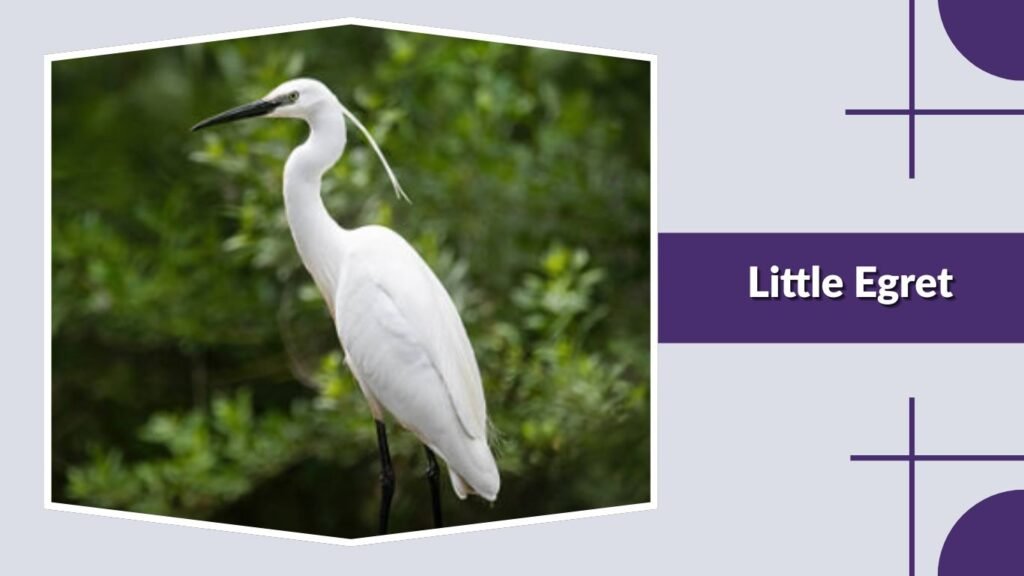
The Little Egret is a smaller, graceful white egret known for its active hunting style and striking contrast of dark legs with bright yellow feet. It is commonly seen in wetlands, coastal regions, and shallow waters across Europe, Africa, Asia, and Australia.
Identification
- Small to medium-sized white egret
- Slender black bill and black legs
- Distinctive bright yellow feet (“golden slippers”)
- Thin, elegant neck and compact body
- During breeding, develops delicate plume feathers on head and chest
Habitat and Distribution
Little Egrets thrive in a variety of wet environments, including marshes, lagoons, riverbanks, and estuaries. They have expanded their range in recent decades and are now commonly found across parts of Europe as well as their traditional habitats in Africa and Asia.
Behavior
Unlike some larger egrets, the Little Egret is quite active while feeding. It often stirs the water with its feet or runs quickly to flush out prey. They may feed alone or in small groups and are known for their agility and quick movements.
Diet
Their diet mainly includes small fish, amphibians, insects, and crustaceans. They use both visual precision and movement to capture prey, often chasing or disturbing it before striking with their sharp bill.
3. Snowy Egret
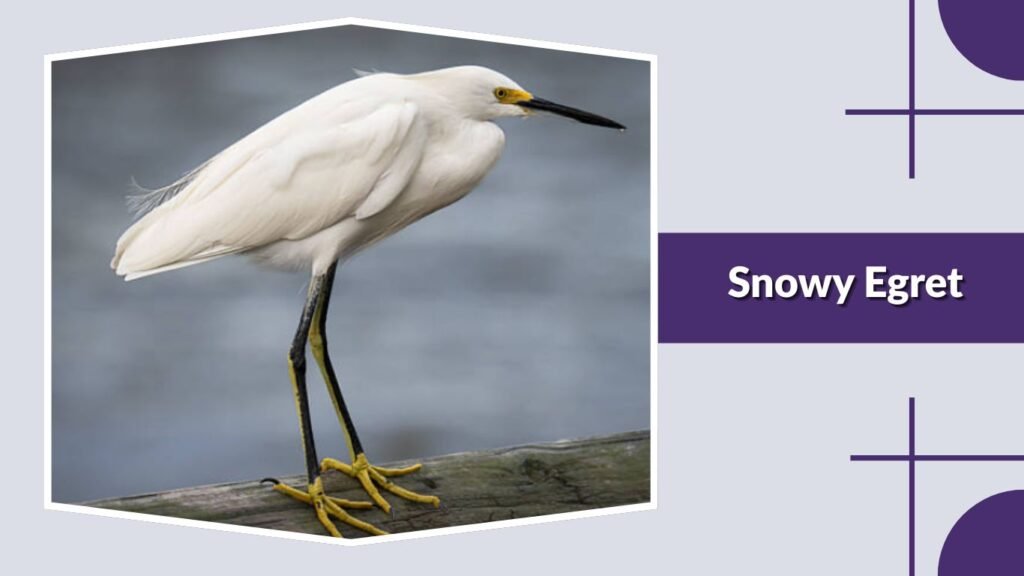
The Snowy Egret is a striking white egret species known for its delicate appearance and lively feeding behavior. It is commonly found in wetlands and coastal habitats across North and South America, often recognized by its contrasting dark legs and bright yellow feet.
Identification
- Medium-sized white egret with slim build
- Black bill and black legs
- Bright yellow feet, clearly visible while walking
- Graceful neck with smooth curves
- Breeding adults show fine, lacy plumes on head, neck, and back
Habitat and Distribution
Snowy Egrets prefer shallow waters such as marshes, lagoons, estuaries, and mangroves. They are widely distributed across the Americas, from the United States to Argentina, and are especially common in coastal regions and freshwater wetlands.
Behavior
This egret is an energetic feeder, often seen running, shuffling its feet, or fluttering its wings to disturb prey. It may forage alone or in small groups and is more active compared to many other egret species.
Diet
Snowy Egrets mainly eat small fish, crustaceans, and aquatic insects. They use quick movements and sharp visual focus to catch prey, often combining motion and speed to improve hunting success.
4. Cattle Egret
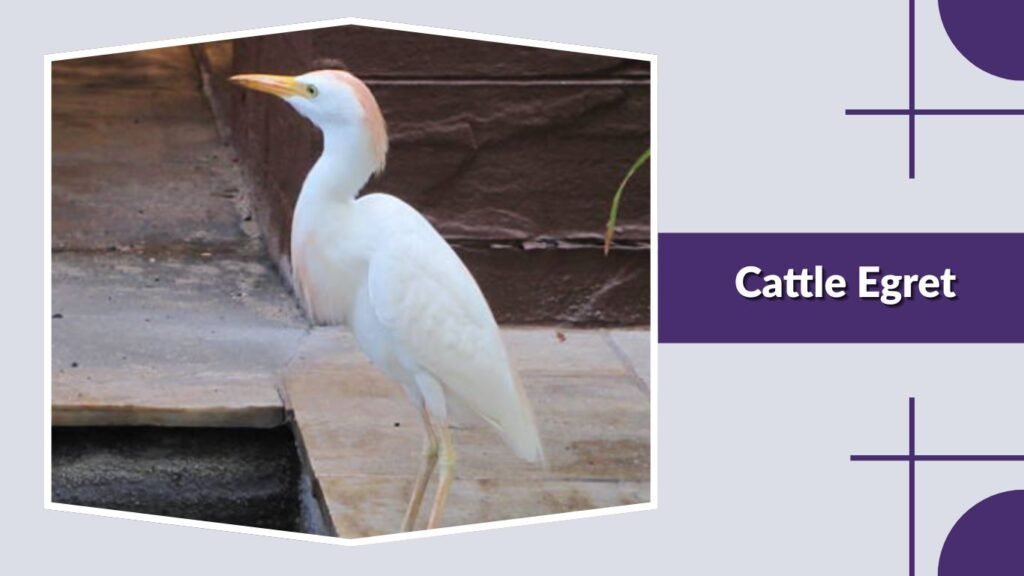
The Cattle Egret is a unique and highly adaptable egret species, well known for its close association with grazing animals. Unlike most egrets that depend heavily on water, this species is often seen in open fields, following livestock such as cattle and buffalo. Its ability to thrive in both wet and dry environments has helped it spread widely across the globe.
Identification
- Medium-sized white egret with a stockier body
- Shorter neck and bill compared to other egrets
- Yellow bill and relatively shorter legs
- In breeding season, develops buff-orange patches on head, chest, and back
- Often seen walking on land rather than wading in water
Habitat and Distribution
Cattle Egrets are found in grasslands, agricultural fields, wetlands, and even urban areas. Originally native to Africa and Asia, they have successfully expanded to Europe, the Americas, and Australia. Their adaptability to human-altered landscapes has made them one of the most widespread egret species in the world.
Behavior
This species is highly social and often seen in flocks. It commonly follows grazing animals or farm machinery, feeding on insects that are disturbed by movement. Unlike many other egrets, it spends much of its time on land rather than in water. Cattle Egrets are also known to roost and nest in colonies, often with other wading birds.
Diet
Their diet mainly consists of insects such as grasshoppers, crickets, flies, and beetles. They may also eat small frogs, reptiles, and occasionally fish. By feeding on pests around livestock, they play a beneficial role in agricultural environments and are often considered helpful to farmers.
5. Intermediate Egret
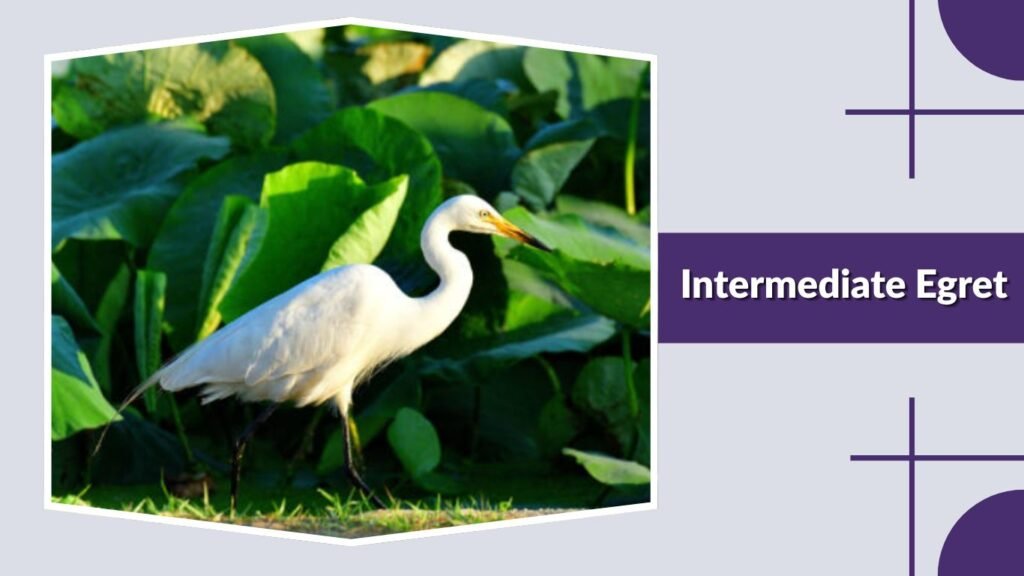
The Intermediate Egret is a medium-sized egret that falls between the Great Egret and Little Egret in both size and appearance. It is commonly found in wetlands and is known for its calm behavior and balanced proportions. Though similar to other white egrets, careful observation helps distinguish it.
Identification
- Medium-sized white egret, larger than Little Egret but smaller than Great Egret
- Thick yellow bill, shorter than that of Great Egret
- Black legs with relatively shorter neck
- Neck appears less slender and more compact
- In breeding season, may develop slight plumes
Habitat and Distribution
Intermediate Egrets are widely distributed across Africa, Asia, and Australia. They prefer freshwater wetlands such as marshes, rice fields, lakes, and riverbanks. They are especially common in tropical and subtropical regions where shallow water is available for feeding.
Behavior
This egret is generally more reserved and less active than smaller species like the Little Egret. It often feeds slowly, walking carefully through shallow water or standing still while waiting for prey. It may be seen alone or in small groups, sometimes alongside other wading birds.
Diet
Their diet mainly includes fish, frogs, aquatic insects, and small crustaceans. They rely on patience and precision while hunting, using their bill to quickly capture prey after spotting movement in the water.
6. Western Reef Egret
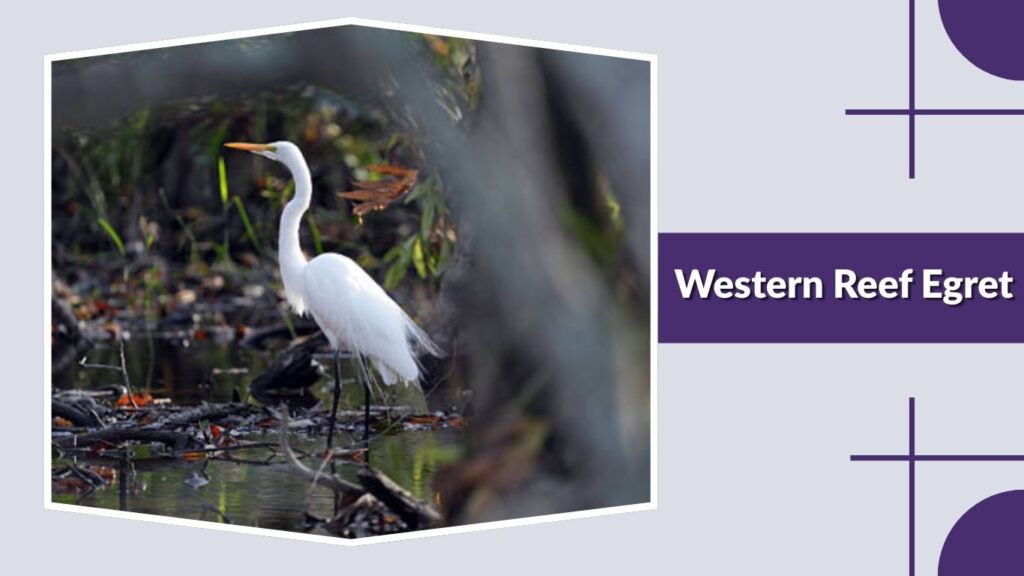
The Western Reef Egret is a coastal species well adapted to life along shorelines and marine environments. It is known for its variable coloration, appearing in both dark (slate-gray) and white forms. This adaptability and unique appearance make it easier to identify in its natural habitat compared to many other egret species.
Identification
- Medium-sized egret with two color forms: all-white or dark gray
- Slender body with a relatively long neck
- Black bill and dark legs
- Yellowish feet, though less bright than Little Egret
- Often appears more compact and active in posture
Habitat and Distribution
Western Reef Egrets are commonly found along coastal areas, including rocky shores, coral reefs, mudflats, and sandy beaches. Their range includes parts of West Africa, the Middle East, South Asia, and coastal regions of the Indian Ocean. They are especially associated with marine and tidal environments rather than inland wetlands.
Behavior
This species is an active and agile hunter. It frequently runs, jumps, or spreads its wings to create shade and lure fish. Unlike more patient egrets, it relies on movement and quick reactions while feeding. It is usually seen alone or in small groups and is well adapted to handling waves and tidal changes.
Diet
The Western Reef Egret primarily feeds on small fish, crustaceans, and marine invertebrates. It hunts in shallow coastal waters, often taking advantage of receding tides to catch trapped prey. Its flexible feeding techniques help it survive in dynamic shoreline conditions.
7. Eastern Reef Egret
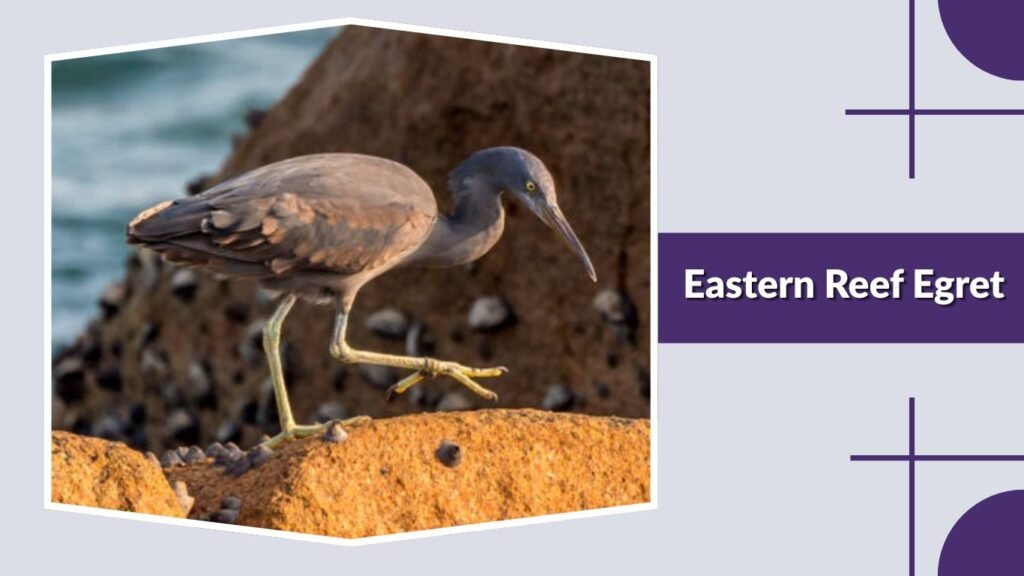
The Eastern Reef Egret is a coastal bird closely related to the Western Reef Egret, but primarily found in the Asia-Pacific region. It is well adapted to rocky shores and coral reefs, where it skillfully hunts in shallow tidal waters. Like its relative, it appears in both dark and white color forms.
Identification
- Medium-sized egret with dark gray or pure white morphs
- Slender neck and streamlined body
- Dark bill and legs
- Feet may appear dull yellow or greenish
- More compact and slightly heavier appearance than Little Egret
Habitat and Distribution
Eastern Reef Egrets are found along coastlines of East Asia, Southeast Asia, Australia, and Pacific islands. They prefer rocky coasts, reefs, tidal pools, and mangroves. Unlike many egrets, they are rarely seen far inland and are strongly tied to marine environments.
Behavior
This egret is an active feeder, often seen moving quickly over rocks or through shallow water. It uses a variety of techniques such as chasing prey, stirring water, and using its wings to create shade. It is typically solitary but may gather in small numbers where food is abundant.
Diet
Its diet mainly consists of small fish, crabs, mollusks, and other marine organisms. It takes advantage of low tide to hunt in exposed areas, using speed and agility to capture prey in challenging coastal conditions.
8. Chinese Egret
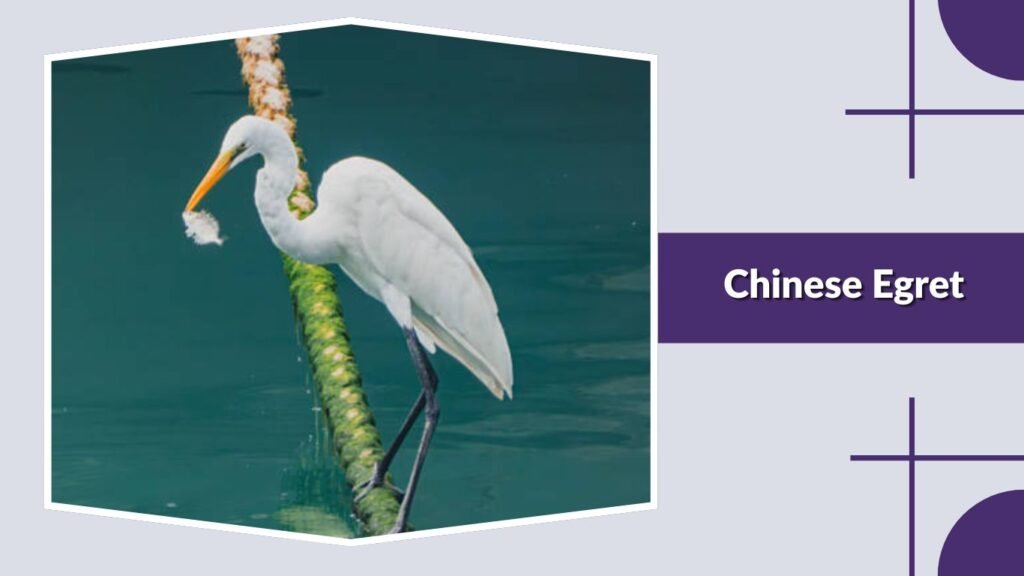
The Chinese Egret is a rare and elegant egret species, best known for its limited distribution and conservation concern. It is primarily found in East Asia and is often associated with coastal wetlands, where it depends on undisturbed habitats for survival.
Identification
- Medium-sized white egret with slender build
- Black bill during non-breeding season, turning yellowish at the base in breeding season
- Black legs with bright yellow feet
- Smooth white plumage with soft breeding plumes
- Slightly thicker neck compared to Little Egret
Habitat and Distribution
Chinese Egrets are mainly found in coastal regions of eastern China, Korea, Japan, and parts of Southeast Asia during migration. They prefer tidal flats, estuaries, saltpans, and coastal lagoons. Because of habitat loss, their population is limited and closely monitored.
Behavior
This species is generally quiet and cautious. It feeds slowly in shallow coastal waters, often alone or in small groups. During the breeding season, it nests in colonies on offshore islands, usually alongside other seabirds, where it is less disturbed by human activity.
Diet
The Chinese Egret feeds mainly on small fish, crustaceans, and marine invertebrates. It uses a slow, deliberate hunting style, carefully walking through shallow water before striking quickly with its bill when prey is detected.
9. Reddish Egret
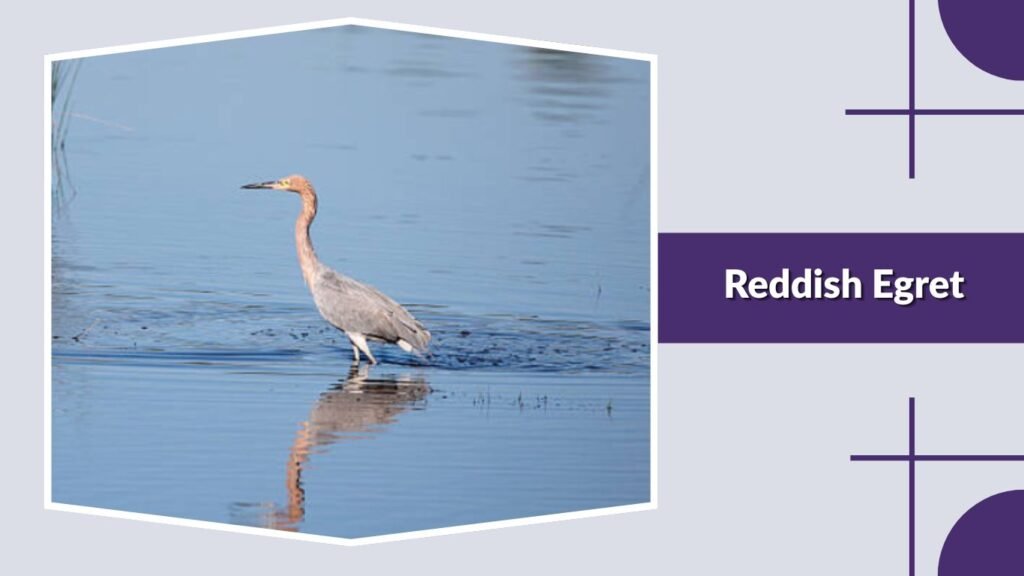
The Reddish Egret is one of the most distinctive and energetic egret species, known for its unusual coloration and highly active feeding behavior. It is mainly found in coastal regions of the Americas and stands out due to its constant movement while hunting.
Identification
- Medium-sized egret with two color morphs: dark (slate-gray with reddish head and neck) and all-white
- Pink-based bill with a darker tip
- Bluish legs
- Shaggy appearance on head and neck
- Often appears more animated than other egrets
Habitat and Distribution
Reddish Egrets are primarily found along the coasts of the Gulf of Mexico, the Caribbean, Central America, and parts of the southern United States. They prefer shallow coastal lagoons, mangroves, salt flats, and estuaries where food is abundant.
Behavior
This egret is famous for its energetic and almost playful hunting style. It runs, spins, jumps, and spreads its wings to create shade, confusing prey before striking. Unlike most egrets, it rarely stands still and is constantly in motion while feeding.
Diet
Their diet mainly includes small fish, shrimp, and other aquatic organisms. They rely on speed and unpredictable movements to catch prey, making them one of the most dynamic hunters among egret species.
10. Black Egret
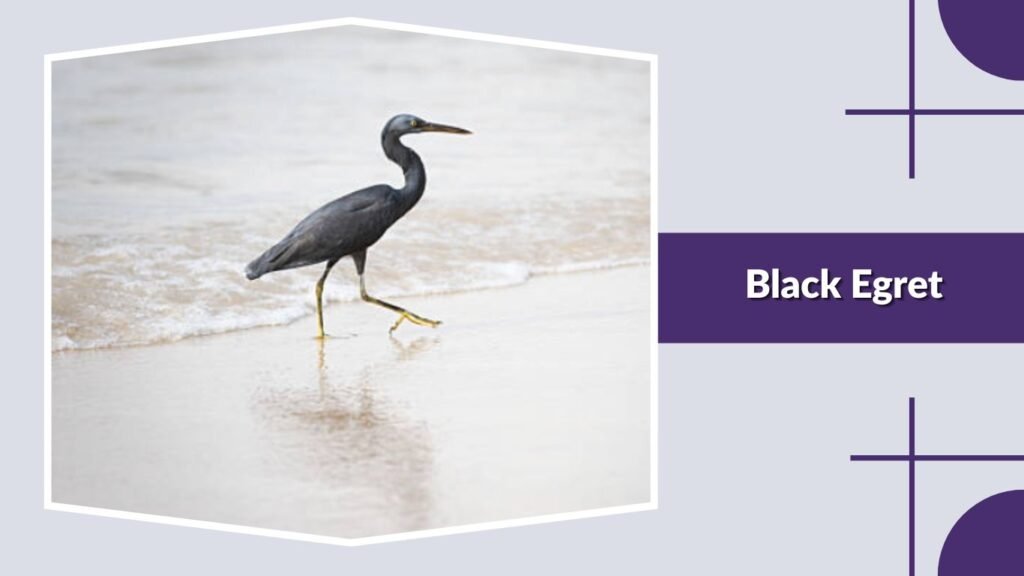
The Black Egret is a striking and unusual egret species, easily recognized by its completely dark plumage and unique feeding technique. It is mainly found in sub-Saharan Africa and is especially notable for the way it uses its wings while hunting.
Identification
- Medium-sized egret with entirely black plumage
- Slender body with long neck and legs
- Black bill and dark legs
- Yellow feet that may be visible while walking
- Distinctive umbrella-like wing posture during feeding
Habitat and Distribution
Black Egrets are commonly found in freshwater wetlands such as lakes, rivers, marshes, and floodplains across sub-Saharan Africa. They prefer shallow waters where they can easily hunt and are often seen in areas with abundant aquatic life.
Behavior
This species is famous for its “canopy feeding” technique. It spreads its wings over the water to create shade, which reduces glare and attracts fish. This umbrella-like posture also helps the bird see prey more clearly, making it highly effective while hunting.
Diet
The Black Egret mainly feeds on small fish, amphibians, and aquatic insects. It uses its specialized feeding behavior to improve hunting success, often standing still under its wing canopy before quickly striking at prey.
11. Pacific Reef Egret
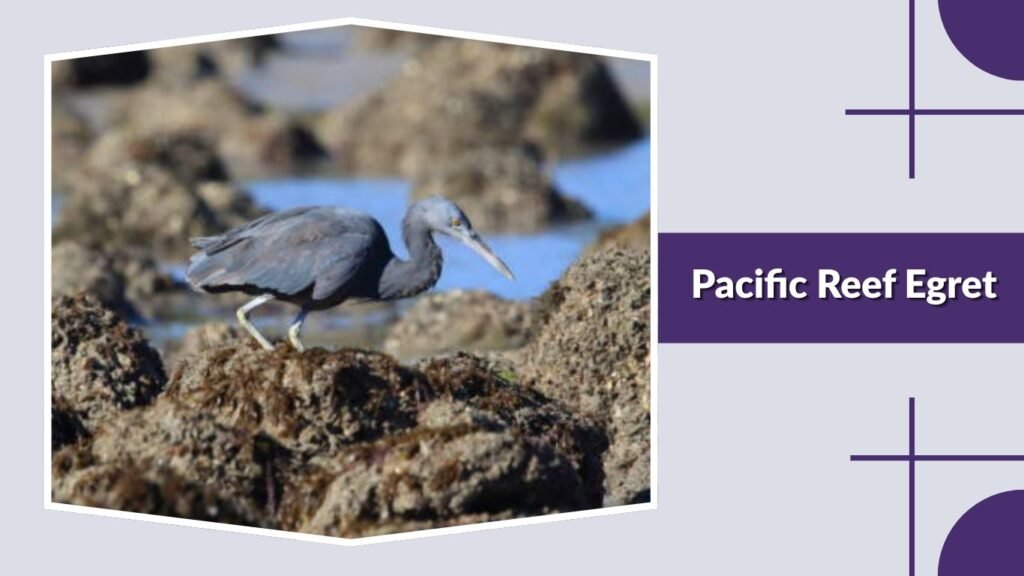
The Pacific Reef Egret is a coastal species closely related to other reef egrets, known for its adaptability to island and shoreline environments. It is commonly seen along rocky coasts and coral reefs across the Pacific region, where it skillfully hunts in shallow tidal waters.
Identification
- Medium-sized egret with two color morphs: dark gray and all-white
- Slender body with moderately long neck
- Dark bill and legs
- Feet may appear yellowish or greenish
- Slightly stockier build compared to Little Egret
Habitat and Distribution
Pacific Reef Egrets are found across Pacific islands, including parts of Southeast Asia, Australia, and Polynesia. They prefer coastal habitats such as reefs, rocky shores, lagoons, and tidal flats. They are rarely found inland and are strongly associated with marine ecosystems.
Behavior
This egret is an active hunter, often seen walking along rocks or wading in shallow water. It uses techniques like chasing, foot-stirring, and wing-shading to catch prey. It is usually solitary but may occasionally be seen in small groups in food-rich areas.
Diet
Their diet mainly consists of small fish, crabs, mollusks, and other marine organisms. They take advantage of tidal movements, especially low tide, to hunt efficiently in exposed coastal zones.
12. Slaty Egret
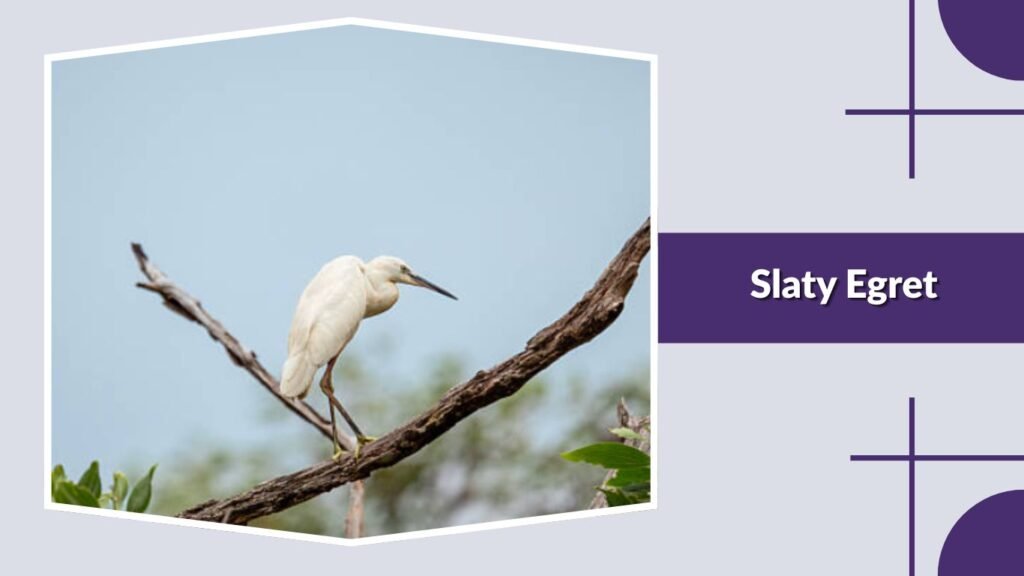
The Slaty Egret is a rare African egret species known for its dark plumage and energetic feeding style. It is less commonly seen than many other egrets and is often associated with specific wetland habitats, making it an interesting species for birdwatchers and researchers.
Identification
- Medium-sized egret with dark slate-gray plumage
- Slender neck and body shape
- Black bill with a slightly paler base
- Dark legs with yellowish feet
- Shaggy feathers on head, neck, and chest during breeding
Habitat and Distribution
Slaty Egrets are mainly found in parts of southern and central Africa. They prefer freshwater wetlands such as floodplains, marshes, and river edges, especially in areas with seasonal flooding that supports abundant food sources.
Behavior
This species is an active and restless feeder, often seen moving quickly through shallow water. It uses techniques like foot-stirring and quick dashes to flush out prey. Slaty Egrets are usually solitary but may gather in small numbers in productive feeding areas.
Diet
Their diet mainly includes small fish, frogs, and aquatic insects. They rely on movement and speed rather than patience, using sudden actions to capture prey efficiently in shallow wetland environments.
13. Dimorphic Egret
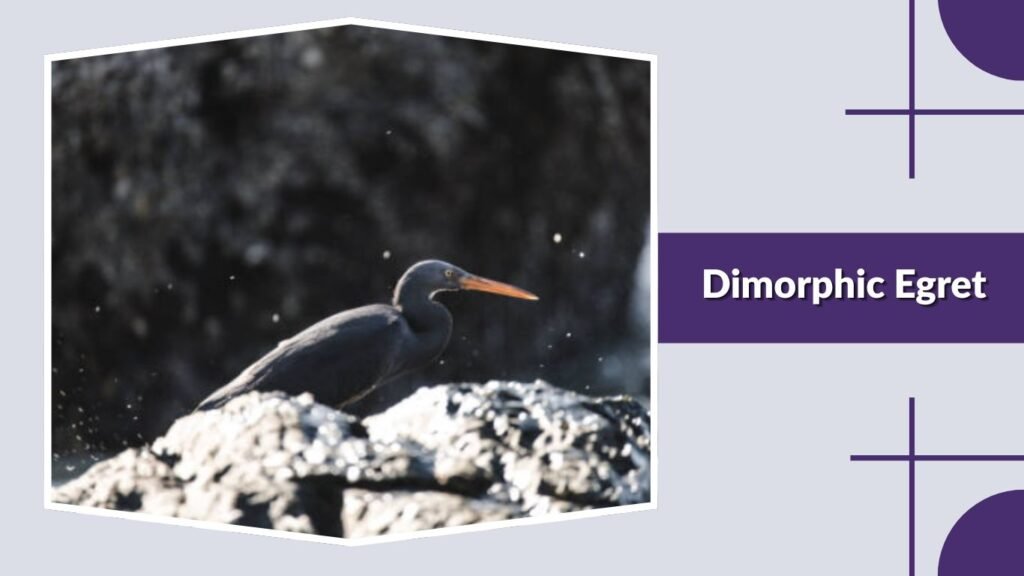
The Dimorphic Egret is a coastal bird closely related to reef egrets, known for its two distinct color forms. It is primarily found in island regions and is well adapted to marine environments, where it hunts along shorelines and shallow waters.
Identification
- Medium-sized egret with two morphs: dark gray and all-white
- Slender body with moderately long neck
- Dark bill and legs
- Feet may appear dull yellow or greenish
- Overall similar in shape to reef egrets but slightly more compact
Habitat and Distribution
Dimorphic Egrets are mainly found in island regions of the western Indian Ocean, especially around Madagascar, the Comoros, and nearby islands. They prefer coastal habitats such as rocky shores, coral reefs, tidal flats, and lagoons, and are rarely seen inland.
Behavior
This species is an active feeder, often seen walking along shorelines or wading through shallow water. It uses a variety of hunting techniques, including chasing prey, stirring water with its feet, and occasionally spreading its wings to create shade. It is usually solitary or found in small groups.
Diet
The Dimorphic Egret mainly feeds on small fish, crabs, and other marine invertebrates. It takes advantage of tidal changes, especially low tide, to hunt in exposed areas, using quick movements and sharp vision to capture prey efficiently.
14. Yellow-billed Egret
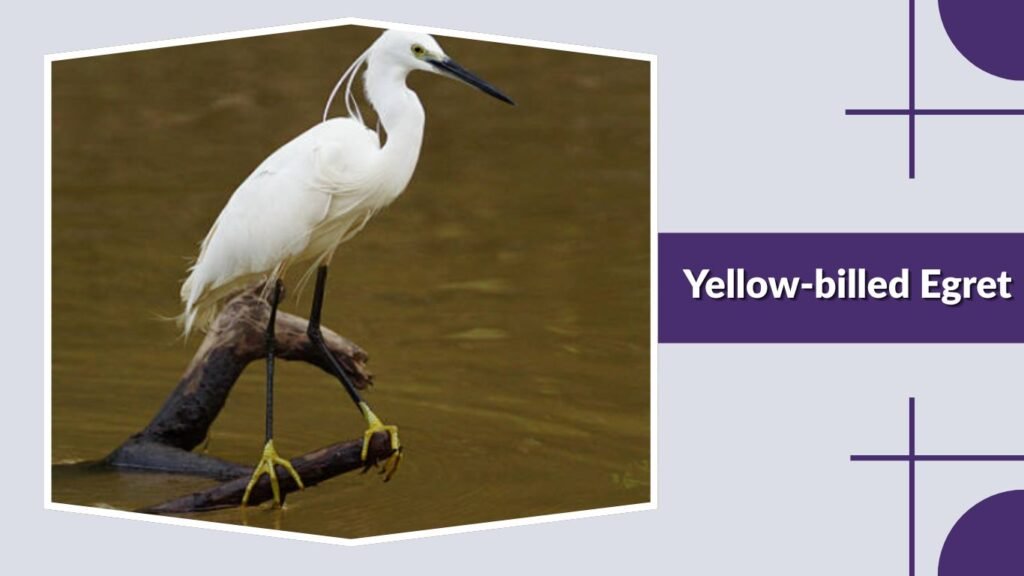
The Yellow-billed Egret is a lesser-known egret species, recognized mainly for its distinctive bill color and elegant white appearance. It inhabits wetland environments where it quietly hunts for small aquatic prey, often blending in with other white wading birds.
Identification
- Medium-sized white egret with slender body
- Distinct yellow bill, more prominent than in similar species
- Dark legs with lighter or yellowish feet
- Smooth white plumage
- Graceful neck and balanced proportions
Habitat and Distribution
Yellow-billed Egrets are found in parts of Africa and Asia, particularly in freshwater wetlands such as marshes, lakes, and riverbanks. They prefer calm, shallow waters where food is readily available and disturbance is minimal.
Behavior
This egret is generally calm and methodical in its movements. It often feeds slowly, walking carefully through shallow water or standing still while scanning for prey. It may be seen alone or in small groups, sometimes mixing with other egret species.
Diet
Its diet mainly includes small fish, amphibians, insects, and crustaceans. The Yellow-billed Egret relies on patience and precise strikes, using its bill to quickly capture prey once movement is detected in the water.
15. Madagascar Egret
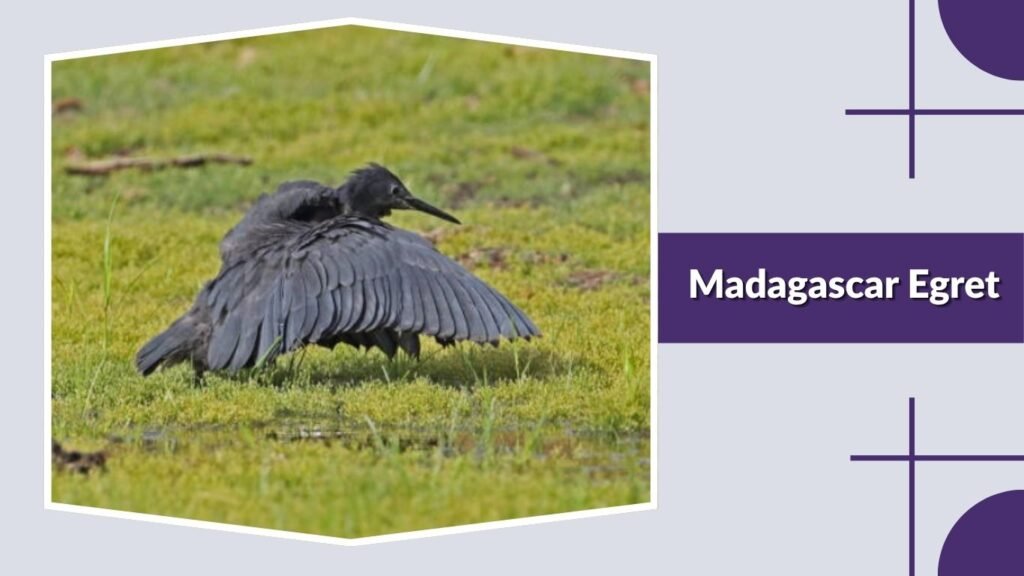
The Madagascar Egret is a rare and localized species found mainly around Madagascar and nearby islands. It is similar in appearance to other white egrets but is distinguished by subtle features and its restricted range. Due to habitat loss, it is considered a species of conservation concern.
Identification
- Medium-sized white egret with slender body
- Pale bluish-gray bill with darker tip
- Black legs with yellowish feet
- Smooth white plumage with slight breeding plumes
- Slightly shorter neck compared to Great Egret
Habitat and Distribution
Madagascar Egrets are primarily found in coastal and freshwater wetlands of Madagascar, with occasional presence on nearby islands. They inhabit mangroves, estuaries, lakes, and marshes, preferring quiet, undisturbed areas for feeding and nesting.
Behavior
This species is generally shy and less conspicuous than many other egrets. It feeds alone or in small groups, moving slowly through shallow water. During breeding season, it nests in colonies, often alongside other waterbirds, in relatively secluded locations.
Diet
The Madagascar Egret mainly feeds on small fish, crustaceans, and aquatic insects. It uses a patient hunting style, standing still or moving slowly before striking quickly at prey with its sharp bill.
FAQs
How can you identify different egret species easily?
You can identify egret species by observing key features such as size, bill color, leg color, and behavior. For example, yellow feet, black legs, or specific hunting styles can quickly help distinguish one species from another, even if their white plumage looks similar.
Are all egrets white in color?
No, not all egrets are white. While many species have white plumage, some—like the Black Egret or Slaty Egret—have dark feathers. Others, such as reef egrets, can appear in both white and dark forms, known as color morphs.
Where are egrets commonly found?
Egrets are typically found in wetlands, including marshes, lakes, rivers, and coastal areas. Some species, like the Cattle Egret, also live in grasslands and agricultural fields, showing their ability to adapt to different environments.
What do egrets usually eat?
Egrets mainly feed on small fish, amphibians, insects, and crustaceans. They use their long, sharp bills to catch prey, either by standing still and striking quickly or by actively chasing and disturbing prey in shallow water.
Why do some egrets spread their wings while feeding?
Some egrets, like the Black Egret, spread their wings to create shade over the water. This reduces glare and attracts fish, making it easier for them to see and catch prey more effectively.
