
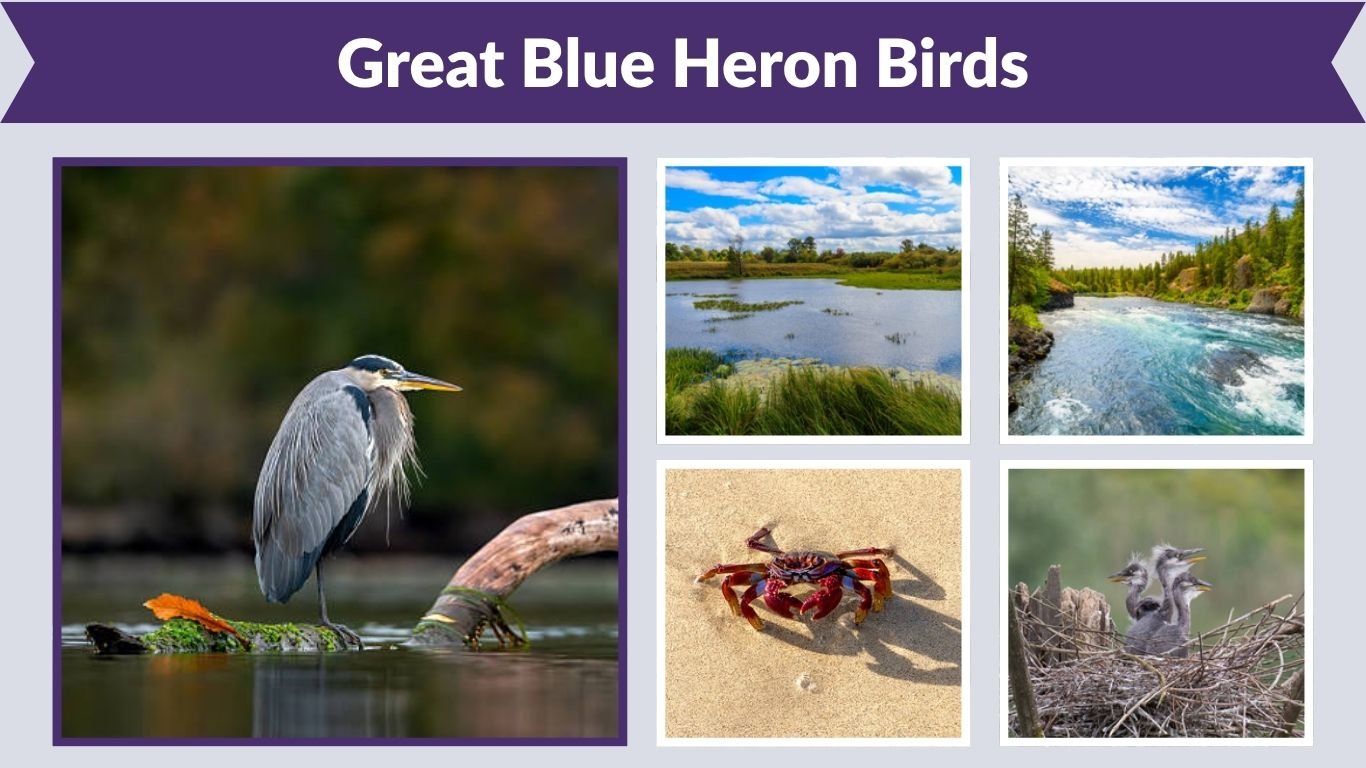
Great Blue Heron birds are among the most recognizable wading birds in North America. Their tall bodies, blue-gray feathers, long legs, and dagger-shaped bills make them easy to notice around lakes, rivers, marshes, ponds, and coastal wetlands. These skilled hunters often stand motionless in shallow water before striking quickly at fish. Although they are commonly seen alone while feeding, Great Blue Herons gather in colonies during the nesting season. This guide covers their identification, size, habitat, diet, call, flight, nesting behavior, migration, vision, and similar bird species.
What Kind of Bird Is a Great Blue Heron?
The Great Blue Heron, scientifically known as Ardea herodias, is a large wading bird in the heron family, Ardeidae. This family also includes egrets, bitterns, and several smaller heron species.
Great Blue Herons are not cranes, storks, or birds of prey. However, their long legs and necks sometimes cause people to confuse them with cranes. They are classified as wading birds because they commonly walk through shallow water while searching for food.
These birds live across much of North America, Central America, the Caribbean, and parts of northern South America. They are especially common wherever productive wetlands provide fish and other aquatic prey.
Great Blue Heron Bird Identification
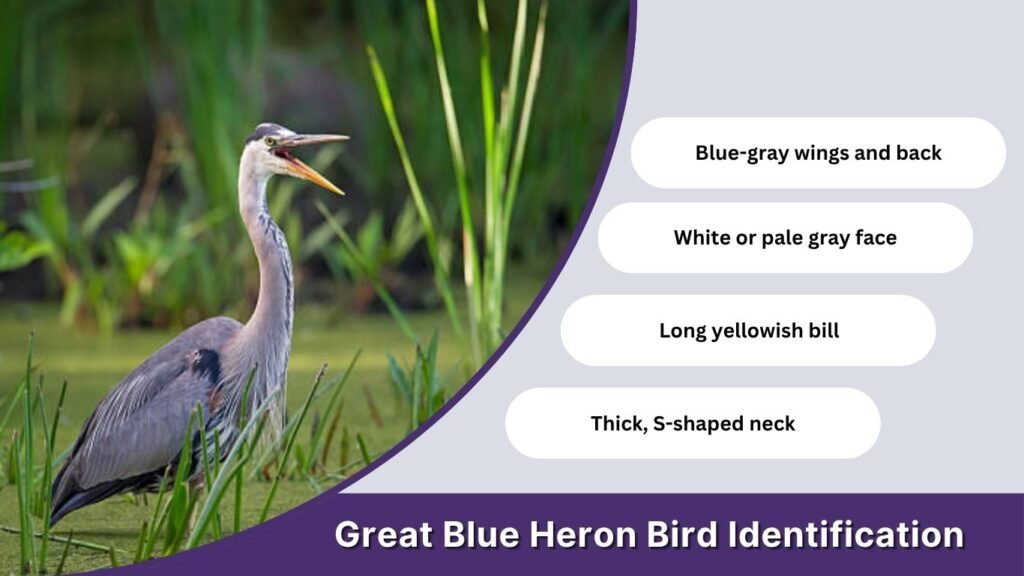
A Great Blue Heron has a distinctive combination of size, color, posture, and shape. Adults look mostly blue-gray from a distance, but closer observation reveals several contrasting markings.
Physical Features
Important identification characteristics include:
- Blue-gray wings and back
- White or pale gray face
- Dark stripe extending behind the eye
- Long yellowish bill
- Long gray, brown, or greenish legs
- Thick, S-shaped neck
- Black shoulder patches
- Shaggy feathers on the chest and lower neck
- Long head plumes during the breeding season
The neck may appear reddish-brown or grayish, depending on the bird, season, and lighting. Adults often have more defined head markings than juveniles.
Male vs Female Great Blue Heron
Male and female Great Blue Herons look almost identical. Both have the same blue-gray plumage, long bill, dark head stripe, and tall body.
Males are generally somewhat larger and may develop longer ornamental plumes during the breeding season. However, these differences are difficult to judge unless the birds are standing side by side. Plumage alone usually cannot confirm whether an individual is male or female.
Great Blue Heron Size
The Great Blue Heron is the largest heron commonly found in North America. Its height and wingspan make it look much heavier than it actually is.
Adults generally measure about 38 to 54 inches long. Their wingspan may reach approximately 66 to 79 inches. Most adults weigh between four and eight pounds.
| Feature | Typical Measurement |
| Body length | 38–54 inches |
| Wingspan | 66–79 inches |
| Weight | About 4–8 pounds |
| Bill length | Around 5–6 inches |
| Standing height | Up to about 4.5 feet |
The bird’s hollow bones, lightweight feathers, and slender body help keep its weight relatively low despite its impressive height.
Great Blue Heron Bird Habitat
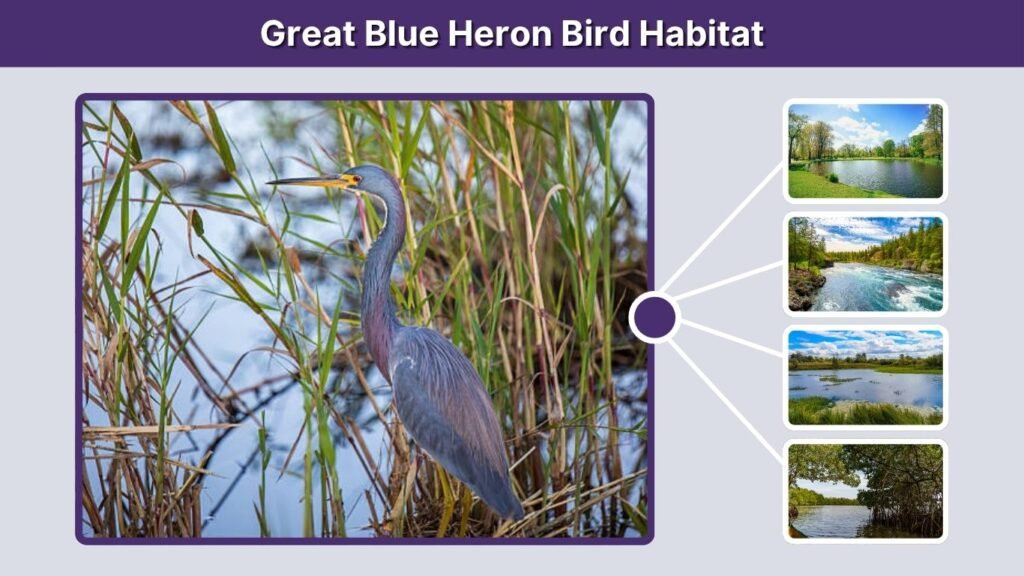
Great Blue Herons can live in many wetland environments. They require shallow feeding areas but may travel several miles between feeding grounds and nesting colonies.
Common Habitats
They are regularly found around:
- Lakes and ponds
- Rivers and streams
- Freshwater marshes
- Salt marshes
- Coastal bays
- Estuaries
- Mangrove wetlands
- Flooded fields
- Mudflats
- Backyard fish ponds
They usually feed where the water is shallow enough to walk through. They may also hunt in grasslands, farm fields, drainage channels, and wet meadows when mice, insects, frogs, or snakes are available.
Great Blue Herons in Florida
Great Blue Herons are common Florida wading birds. They can be seen throughout the year around freshwater marshes, canals, coastal lagoons, mangrove shorelines, lakes, and retention ponds.
Florida also supports the Great White Heron, which is generally considered a white form of the Great Blue Heron. Unlike the familiar blue-gray bird, the Great White Heron has completely white plumage and pale legs.
Great Blue Herons in Canada
Great Blue Herons breed across southern Canada and along parts of the Pacific coast. Many Canadian birds migrate south when lakes and rivers begin to freeze.
Some individuals remain year-round in coastal areas where open water and food remain available. Large nesting colonies can occur near productive lakes, rivers, and marine shorelines.
What Do Great Blue Heron Birds Eat?
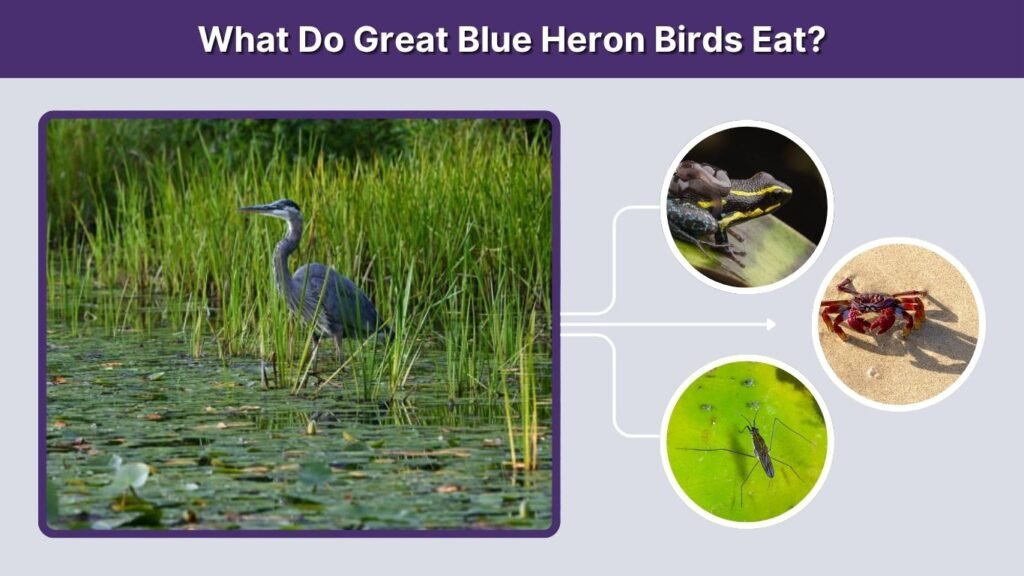
Great Blue Herons are carnivorous and opportunistic. Fish are their most familiar prey, but their diet includes many other animals.
Great Blue Heron Diet
Common foods include:
- Fish
- Frogs and tadpoles
- Crayfish and crabs
- Aquatic insects
- Salamanders
- Snakes
- Lizards
- Mice and voles
- Small turtles
- Young birds
Great Blue Herons may occasionally eat ducklings, nestlings, or other small birds. These events can seem surprising, but the herons naturally take any manageable prey they can catch and swallow.
How Great Blue Herons See Fish
Great Blue Herons have excellent vision that helps them detect movement beneath the water. Their eyes are positioned to provide strong depth perception when aiming at prey.
Because light bends when it enters water, a fish may appear to be in a slightly different position from where it actually is. Herons compensate for this visual distortion before striking. They may also tilt their heads or change viewing angles to judge the prey’s location accurately.
Hunting Method
A Great Blue Heron usually hunts by standing still or walking slowly through shallow water. Once prey moves within range, the bird rapidly straightens its neck and strikes with its bill.
It normally grasps smaller prey between the bill tips. Larger fish may be stabbed before being repositioned and swallowed headfirst.
Great Blue Heron Bird Call and Sound
Great Blue Herons do not have a musical song. Their calls are generally deep, rough, and harsh.
A startled bird may produce a loud croaking sound while taking flight. The call is sometimes described as “frahnk,” “kraak,” or a deep squawk.
These birds are often quiet while feeding alone. However, nesting colonies can be noisy because adults call during displays, territorial encounters, and nest exchanges. Chicks also produce repeated begging sounds when requesting food.
Great Blue Heron Nesting and Mating Behavior
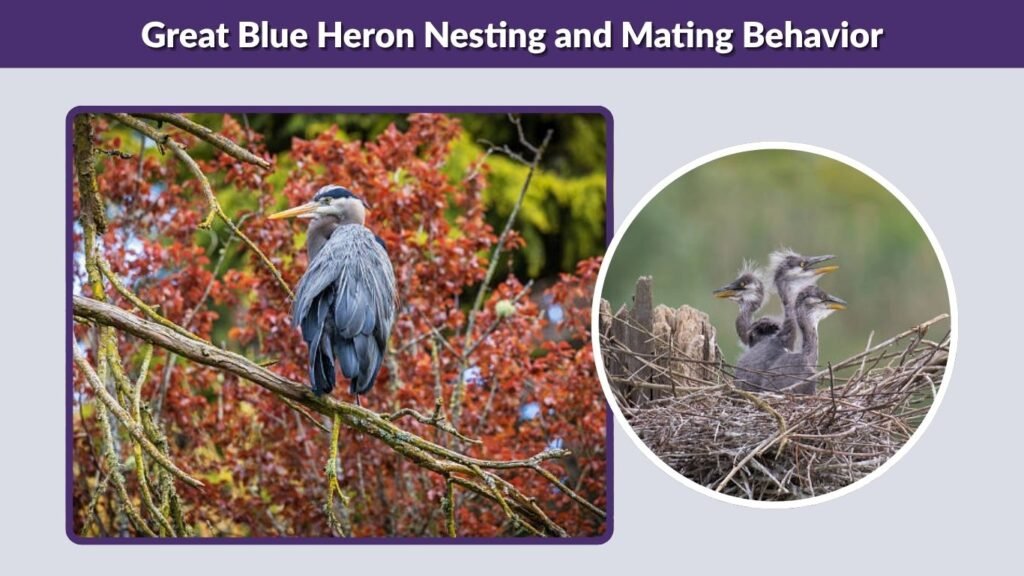
Great Blue Herons commonly nest in colonies called heronries or rookeries. A colony may contain a few nests or several hundred.
Courtship and Pair Formation
Males usually arrive first and claim a nesting site. They perform courtship displays that may include neck stretching, bill clapping, feather raising, and presenting sticks.
Once a pair forms, the male often collects nesting materials while the female arranges them. Both parents defend the immediate nest area from neighboring birds.
Great Blue Heron Nest
The nest is a broad platform made mainly from sticks. It is usually placed high in a tree near water, although colonies may be several miles from feeding locations.
Herons may also nest in mangroves, shrubs, artificial structures, or on the ground in places with few predators. Old nests are sometimes reused and enlarged in later years.
Eggs and Young Birds
A female commonly lays two to six pale blue-green eggs. Both parents incubate the clutch for approximately four weeks.
After hatching, the chicks depend on regurgitated food from both parents. Young herons gradually begin standing, walking around the nest, and exercising their wings. They generally become capable of flight at around seven to nine weeks old.
Juvenile Great Blue Heron
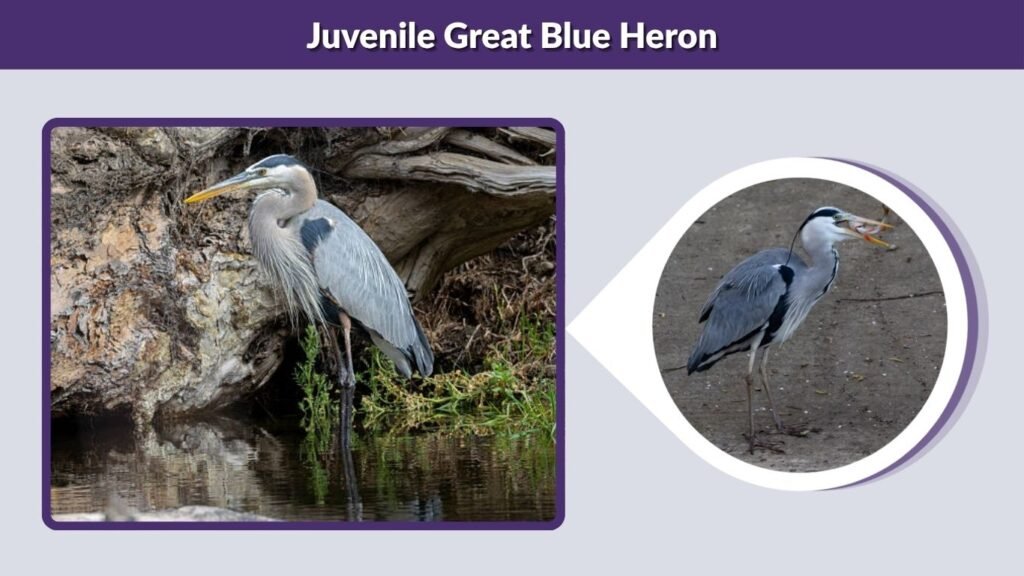
Juvenile Great Blue Herons resemble adults in size and body shape but have duller, more heavily patterned plumage.
Young birds usually have:
- Dark gray or blackish crowns
- Brownish-gray bodies
- Strongly streaked necks
- Duller bills
- Shorter head plumes
- Less contrasting facial markings
As they mature, their head becomes whiter, the dark eye stripe becomes more defined, and their body develops the cleaner blue-gray appearance of an adult.
Great Blue Heron Flying
A Great Blue Heron in flight is impressive because of its broad wings, slow wingbeats, and long trailing legs.
Flight Posture
The bird folds its neck into an S-shape while flying. This posture distinguishes it from cranes, which normally fly with their necks extended straight forward.
The legs extend beyond the tail because they are too long to tuck beneath the body. The wings are broad and rounded, allowing the heron to fly with deep, steady strokes.
Great Blue Herons may look awkward during takeoff, but they become graceful and efficient once airborne.
Are Great Blue Herons Solitary Birds?
Great Blue Herons are frequently solitary while feeding. An individual may defend a productive fishing location from other herons, especially when food is limited.
However, they are social during the nesting season and gather in colonies. Several birds may also feed near one another when prey is abundant, although each usually maintains some personal space.
Birds Similar to the Great Blue Heron
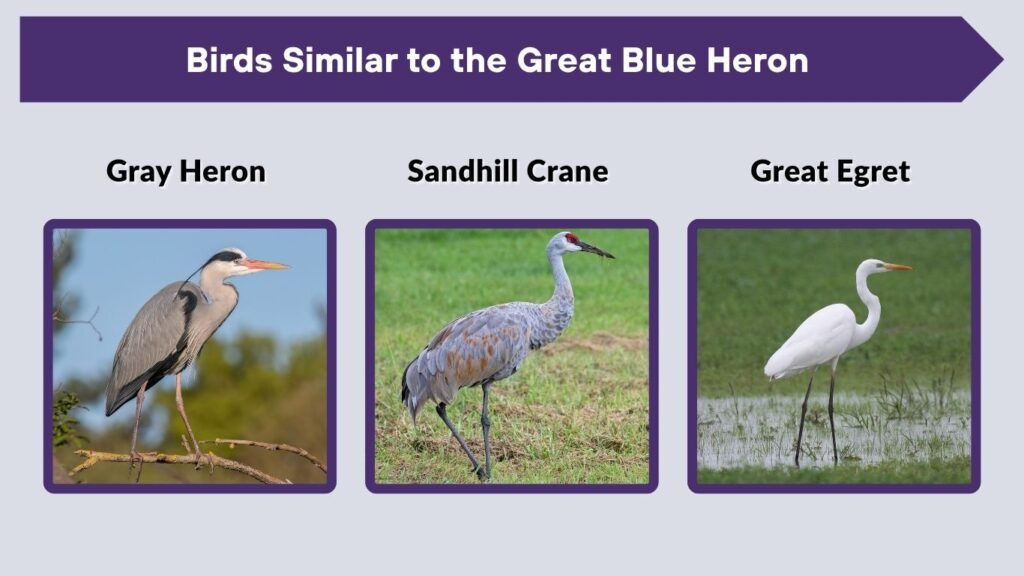
Several long-legged birds can be mistaken for Great Blue Herons.
| Similar bird | Main difference |
| Gray Heron | Similar appearance but mainly found in Europe, Asia, and Africa |
| Sandhill Crane | Flies with its neck extended and has a red crown |
| Great Egret | Entirely white with black legs |
| Little Blue Heron | Much smaller and darker |
| Tricolored Heron | Smaller, slimmer, and more active |
| Great White Heron | White form of the Great Blue Heron |
The Gray Heron is particularly similar. It has a gray body, white neck, and black head markings but does not naturally occur across most of North America.
Great Blue Heron Bird Meaning
Great Blue Herons are often associated with patience, independence, balance, confidence, and careful observation. Their ability to remain still before striking has made them a symbol of timing and self-control.
These meanings come from cultural and spiritual interpretations rather than scientific evidence. For many observers, the bird represents remaining calm and waiting for the right opportunity.
FAQs
Is the Great Blue Heron a bird of prey?
The Great Blue Heron is a predatory bird because it hunts live animals, but it is not classified as a bird of prey. True raptors include hawks, eagles, falcons, and owls, which have strongly hooked bills and powerful grasping talons.
Is a Great Blue Heron a shorebird?
Great Blue Herons may feed along shorelines, but they are classified as wading birds rather than shorebirds. Typical shorebirds include sandpipers and plovers. Herons are larger and have longer necks, heavier bills, and different feeding behaviors.
Do Great Blue Herons migrate?
Many northern Great Blue Herons migrate south during winter, especially when inland water freezes. Birds in warmer regions may remain throughout the year. Pacific coastal populations can also stay resident where food and open water remain available.
Do Great Blue Herons eat other birds?
Great Blue Herons occasionally eat small birds, ducklings, or nestlings. However, birds are not their primary food. Their usual diet consists mainly of fish, amphibians, crustaceans, reptiles, insects, and small mammals.
Are Great Blue Herons protected birds?
Great Blue Herons are protected in the United States and Canada under laws covering native migratory birds. People should not capture, harm, disturb nesting colonies, or possess their feathers, eggs, or nests without proper legal authorization.
