
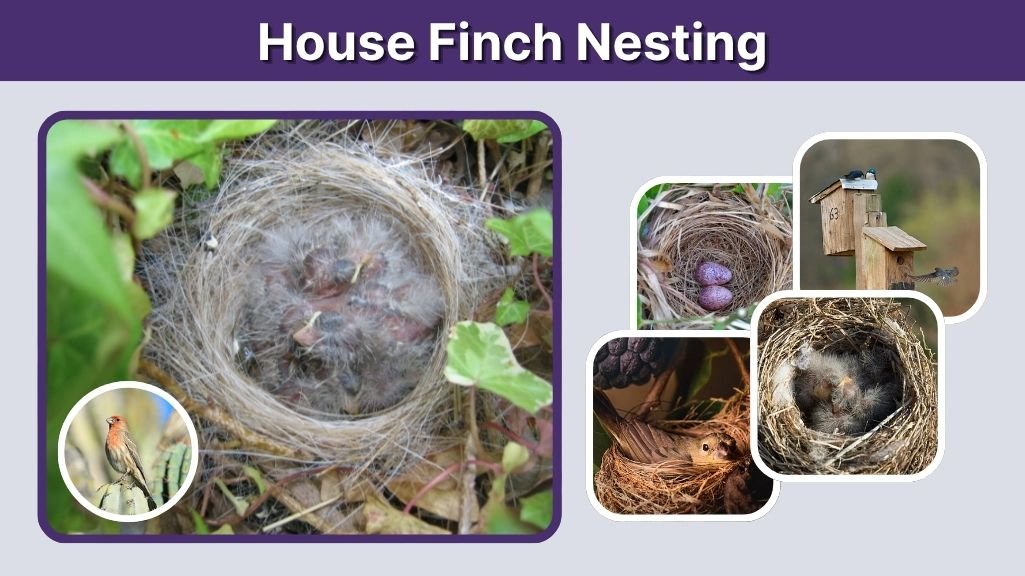
House finches are adaptable songbirds known for their resourceful nesting behavior. They build nests in trees, shrubs, porches, hanging plants, wreaths, and even nest boxes. Female house finches are primarily responsible for constructing the nest and laying eggs, while males assist by feeding mates and protecting territory. Understanding house finch nesting habits, timeline, and nest locations helps birdwatchers provide safe environments and observe these birds’ reproductive patterns, including how they raise chicks, reuse nests, or abandon nests when threatened.
Nest Construction and Materials
House finches create secure nests using locally available materials. The female carefully selects a concealed spot to protect eggs and chicks from predators. Nest construction reflects the bird’s resourcefulness and adaptability to urban or rural environments.
Nest Locations
- Trees and shrubs
- Porches, eaves, or hanging plants
- Wreaths or decorative planters
- Nest boxes designed for small songbirds
Nest Materials
- Twigs and grasses
- Feathers, leaves, and plant fibers
- Soft lining materials such as hair, moss, or fine fibers
- Occasionally string, yarn, or other human-made materials
Nest Size and Structure
- Diameter: typically 4–6 inches
- Depth: 2–4 inches
- Bowl-shaped structure holds 2–6 eggs securely
Nesting Timeline and Breeding Season
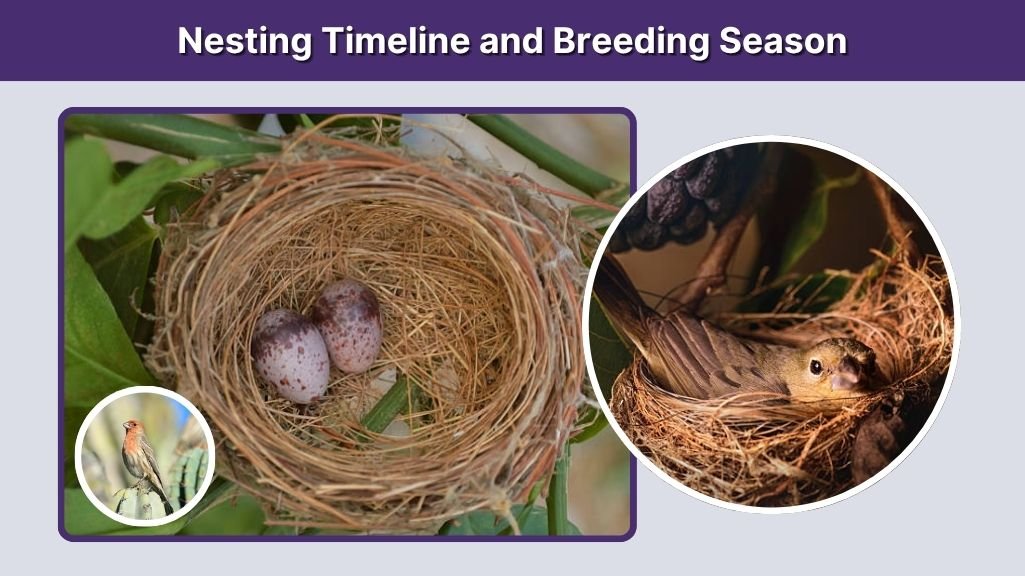
House finches follow a predictable nesting timeline from construction to fledging. Observing these stages provides insight into egg incubation and chick development.
Nest Building Period
- Construction usually takes 4–7 days
- Female gathers and arranges materials
- Male may help indirectly by defending territory
Egg Laying and Incubation
- Clutch size: 2–6 eggs
- Eggs laid once per day until the clutch is complete
- Incubation period: ~12–14 days, mainly by the female
Fledging and Nest Duration
- Chicks remain in the nest 12–19 days
- Both parents feed and protect chicks
- Fledglings may remain nearby for several days after leaving the nest
Male and Female Roles in Nesting
Male and female house finches have distinct responsibilities during nesting. Understanding these roles helps birdwatchers interpret behavior and parental care.
Females are the primary builders, constructing the nest, laying eggs, and incubating them. They also feed and protect chicks once hatched. Males defend the nesting territory, feed females during incubation, and assist in feeding chicks post-hatching. Their cooperative behavior ensures higher survival rates for the young, though males rarely incubate themselves.
Nest Reuse and Nesting Behavior
House finches may reuse nests or build new ones depending on environmental conditions and previous breeding success. Nests may also be abandoned or taken over under certain circumstances.
Nest Reuse
- Nests may be reused in subsequent seasons
- Some females build multiple nests per season
- Reuse depends on safety, cleanliness, and prior success
Nest Abandonment and Takeover
- Nests may be abandoned due to predation, disturbance, or parasitism
- House finches may take over or steal nests from other birds
- Cowbird eggs may sometimes appear in nests, prompting abandonment
Nest Hygiene
- Eggshells removed after hatching
- Poop pushed out of the nest to maintain cleanliness
- Helps reduce disease risk and keeps chicks healthy
Nest Boxes and Human Interaction
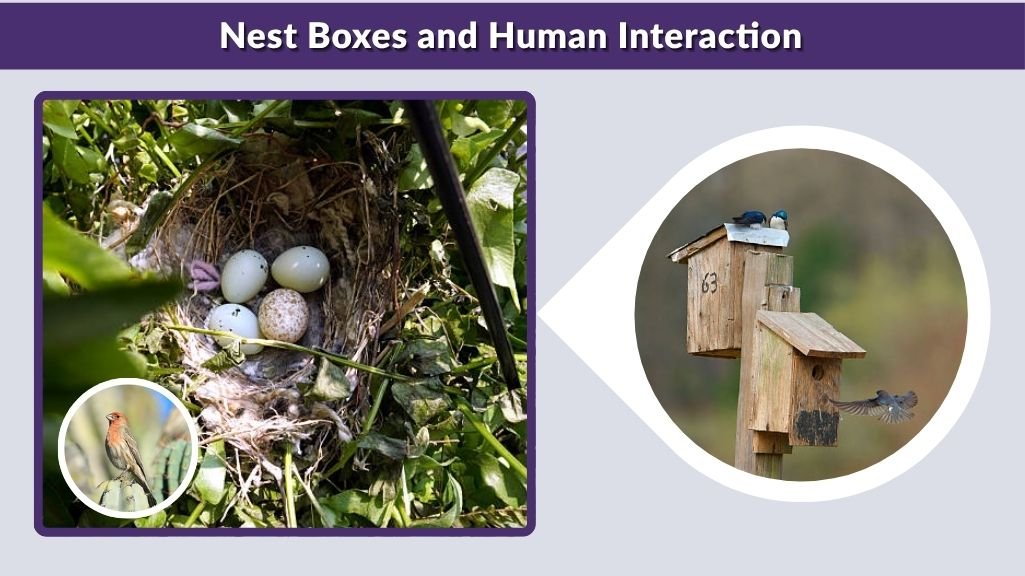
House finches readily adapt to human-made structures for nesting, such as nest boxes, hanging planters, and decorative wreaths. Providing safe locations helps birdwatchers observe nesting behavior without disturbing the birds. Awareness of proper placement and size is key to encourage use while preventing predation or abandonment.
Nest Box Placement
- Small openings: 1.5–2 inches in diameter
- Quiet, elevated locations, away from predators
- Platforms or hanging planters also suitable for nesting
Nest Management Tips
- Avoid moving nests unnecessarily, as this may cause abandonment
- Offer nesting materials nearby, such as twigs, grasses, or soft fibers
- Monitor nests from a distance to avoid stressing the birds
House Finch Nesting Timeline
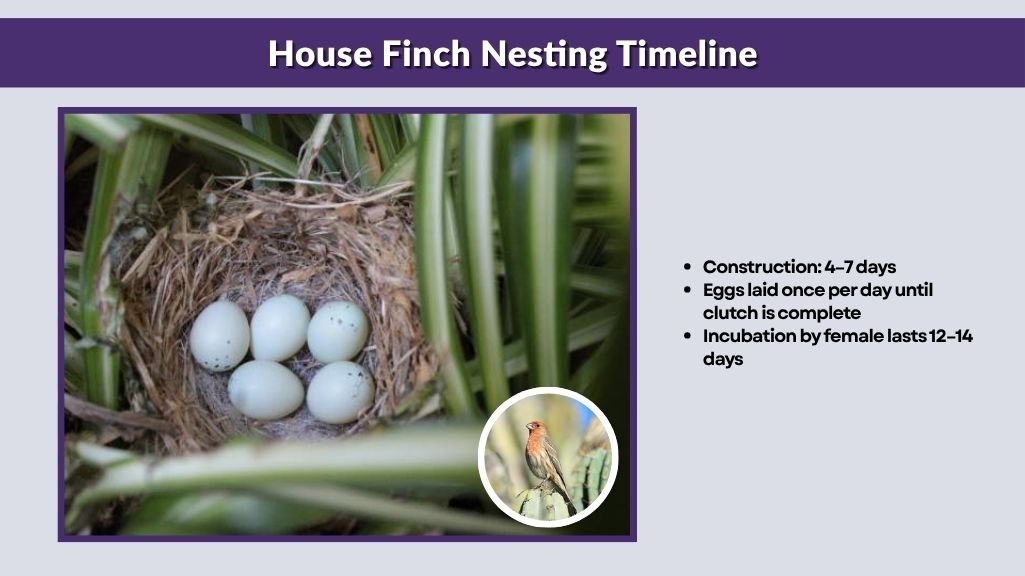
The nesting timeline provides important cues for observing breeding success and chick development. Understanding when chicks leave the nest helps determine the appropriate times to watch and protect nests.
Nest Building to Egg Laying
- Construction: 4–7 days
- Eggs laid once per day until clutch is complete
- Incubation by female lasts 12–14 days
Hatching and Fledging
- Chicks remain in the nest 12–19 days
- Both parents feed and protect young
- Fledglings may stay nearby for several days post-nest
Multiple Nests and Clutches
- Females may build more than one nest per season
- Nests can be reused if previous season was successful
- Abandoned nests may be taken over by other finches or species
Fledgling Behavior and Nest Departure
Observing fledglings offers insight into survival strategies and parental care. Young house finches leave the nest gradually, depending on growth, food availability, and environmental factors.
Leaving the Nest
- Chicks typically leave nest 12–19 days after hatching
- Gradual departure: initially short flights nearby
- Parental feeding continues until fledglings are independent
Return to the Nest
- Some fledglings return briefly after leaving
- Rarely return to the same nest long-term
- Safety and food availability influence whether nests are reused
Survival Factors
- Predation risk: fledglings remain close to cover
- Food availability: influences fledging success
- Environmental conditions: extreme weather can delay departure
FAQs
Where do house finches usually build nests?
They nest in trees, shrubs, porches, hanging plants, wreaths, and suitable nest boxes. Females select concealed and safe locations.
How long do house finch chicks stay in the nest?
Chicks remain in the nest for 12–19 days before fledging, depending on food availability and weather.
Do house finches reuse nests?
Yes, many will reuse nests if conditions are safe and previous seasons were successful, though some build multiple nests per season.
Can you move a house finch nest?
Moving nests is not recommended. Disturbing a nest can cause abandonment or stress to the birds. Only move nests in emergencies.
How do males and females share nesting duties?
Females build the nest, lay eggs, and incubate them. Males defend territory, feed females during incubation, and assist in feeding chicks once hatched.
