
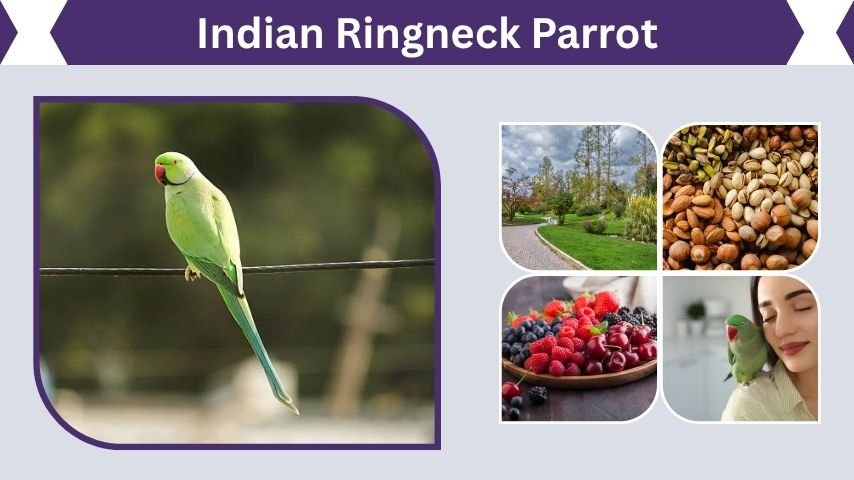
The Indian Ringneck Parrot is a colorful and intelligent bird famous for its talking ability, playful behavior, and long tail feathers. Native to South Asia, this parrot has become one of the most popular pet birds around the world because of its bright appearance and strong personality. Indian Ringnecks are social birds that can learn words, mimic sounds, and form bonds with their owners. They also adapt well to both wild and urban environments. In this guide, you will learn about Indian Ringneck identification, behavior, diet, lifespan, care needs, and interesting facts.
What Is an Indian Ringneck Parrot?
The Indian Ringneck Parrot is a medium-sized parrot species known for its slim body, curved beak, and impressive talking skills. It belongs to the parakeet group and is admired for its intelligence and adaptability. These birds are active, curious, and capable of forming strong bonds with owners when properly socialized.
Scientific Classification
- Scientific name: Psittacula krameri manillensis
- Family: Psittaculidae
- Type: Parakeet and parrot species
- Native to South Asia
- Closely related to African Ringnecks
Why It Is Called an Indian Ringneck
Male Indian Ringnecks develop a dark ring around the neck as they mature, which gives the species its name. The term “Indian” refers to the bird’s South Asian origin. Females usually have little or no visible neck ring.
Indian Ringneck Parrot Identification
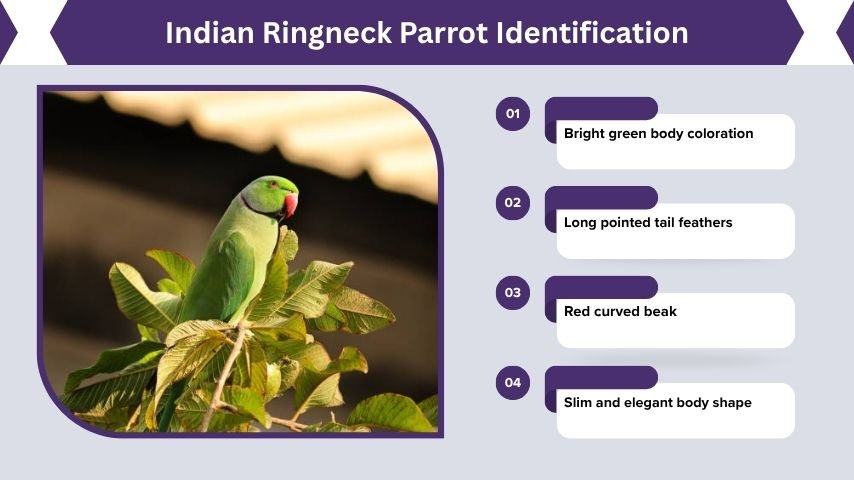
Indian Ringneck Parrots are easy to recognize because of their bright colors, long tails, and red curved beaks. Their appearance may vary depending on age, sex, and color mutation. These parrots are graceful fliers and are often very vocal.
Size and Appearance
- Bright green body coloration
- Long pointed tail feathers
- Red curved beak
- Slim and elegant body shape
- Wingspan around 16 inches
- Dark neck ring in adult males
Male vs Female Indian Ringneck
Male Indian Ringnecks usually develop a black and pink neck ring after maturity. Females remain mostly plain green without strong neck markings. Males may also become more vocal and territorial during breeding seasons.
Popular Color Mutations
Captive breeding has produced many colorful Indian Ringneck varieties. Blue, yellow, albino, cinnamon, and violet Ringnecks are now popular among bird keepers. Despite color differences, these birds share similar behavior and care needs.
Indian Ringneck Parrot Habitat and Distribution
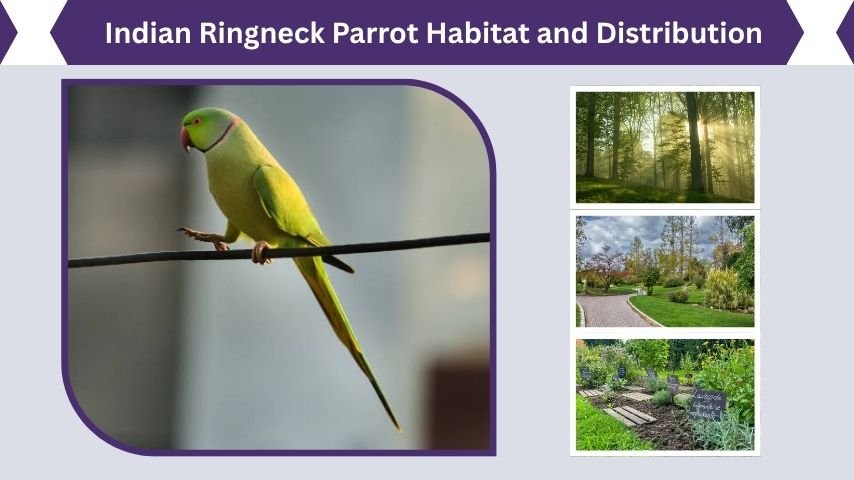
Indian Ringnecks naturally live in warm regions with trees, water sources, and open feeding areas. Their adaptability has allowed them to spread far beyond their native range. Wild populations can now be found in many cities and countries worldwide.
Native Range
- India
- Pakistan
- Sri Lanka
- Nepal
- Other South Asian regions
Introduced Populations
Indian Ringnecks have established wild populations in Europe, the Middle East, and parts of the United Kingdom. Escaped or released pet birds often adapt well to urban parks and gardens where food and nesting spaces are available.
Preferred Habitat
These parrots prefer forests, parks, farmland, gardens, and urban green spaces with tall trees. Tree cavities provide nesting areas, while open fields and gardens supply food and water sources.
Indian Ringneck Parrot Behavior
Indian Ringnecks are intelligent and active birds with strong social instincts. They spend much of their time climbing, flying, feeding, and communicating with flock members. Their curious nature makes them entertaining pets but also requires regular mental stimulation.
Social and Flocking Behavior
- Travel in noisy flocks
- Roost together in groups
- Communicate with loud calls
- Defend nesting territories
- Feed socially in trees and fields
Intelligence and Talking Ability
Indian Ringneck Parrots are famous for their ability to mimic human speech clearly. Many birds can learn words, whistles, and short phrases through regular training. Their intelligence also allows them to solve simple problems and recognize routines.
Common Sounds and Vocalizations
These parrots produce loud screeches, whistles, and contact calls throughout the day. Vocal activity often increases during morning and evening hours. Pet Ringnecks may also mimic household sounds and human voices.
Indian Ringneck Parrot Diet
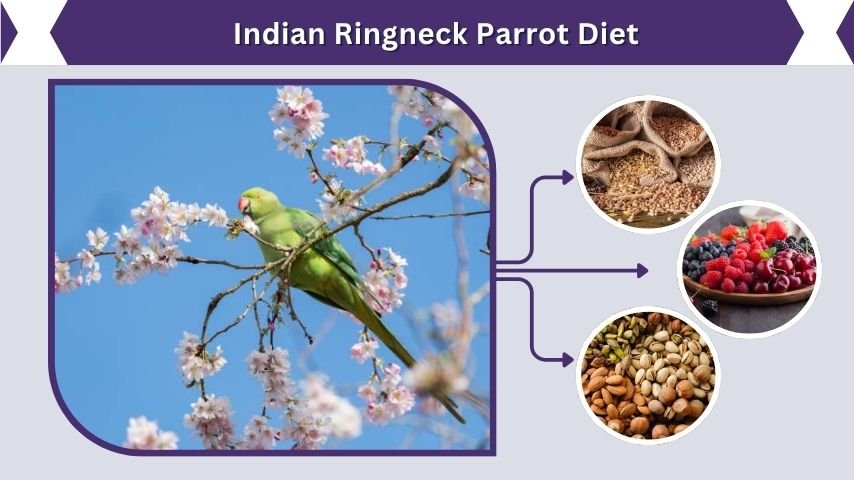
Indian Ringneck Parrots eat a wide variety of plant-based foods in the wild and captivity. A healthy diet is essential for strong feathers, energy, and long-term health. Feeding habits may change depending on season and food availability.
Foods Eaten in the Wild
- Seeds and grains
- Fruits and berries
- Nuts
- Flower buds
- Crops and cultivated plants
- Tender leaves and shoots
Diet in Captivity
Pet Indian Ringnecks are often fed high-quality pellets along with fresh vegetables, fruits, and moderate amounts of seeds. Leafy greens, carrots, apples, and berries are common healthy foods. Variety in the diet also helps prevent boredom and nutritional problems.
Foods to Avoid
- Chocolate
- Avocado
- Salty foods
- Alcohol
- Caffeine
- Sugary processed foods
Indian Ringneck Parrot Lifespan
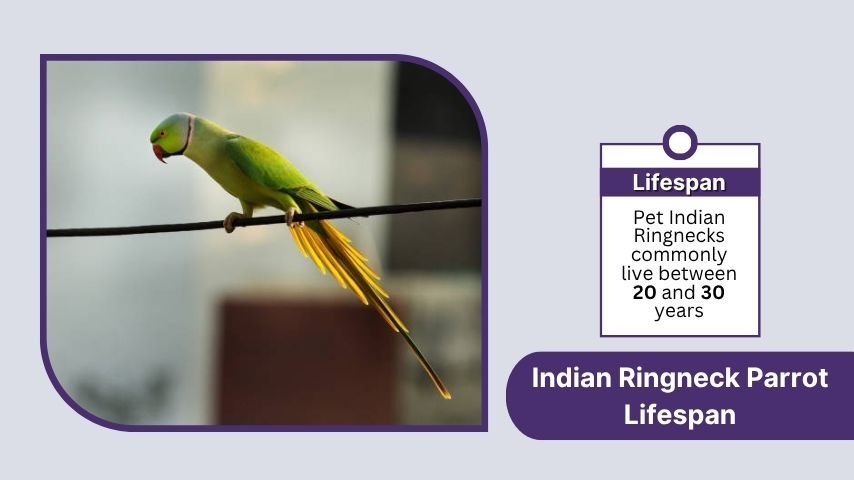
Indian Ringneck Parrots can live for many years when given proper care, nutrition, and mental stimulation. Their lifespan depends on environment, diet quality, exercise, and access to veterinary care. Birds kept in safe indoor environments usually live longer than wild populations.
Lifespan in the Wild
Wild Indian Ringnecks generally live around 10 to 15 years because of predators, disease, and environmental challenges. Food shortages and habitat destruction may also affect survival rates in some regions.
Lifespan in Captivity
Pet Indian Ringnecks commonly live between 20 and 30 years with proper care. Healthy diets, clean cages, regular exercise, and mental stimulation can greatly improve longevity.
Factors Affecting Lifespan
- Balanced nutrition
- Daily exercise and flight time
- Clean cage environment
- Mental stimulation and toys
- Regular veterinary care
Indian Ringneck Parrot as a Pet
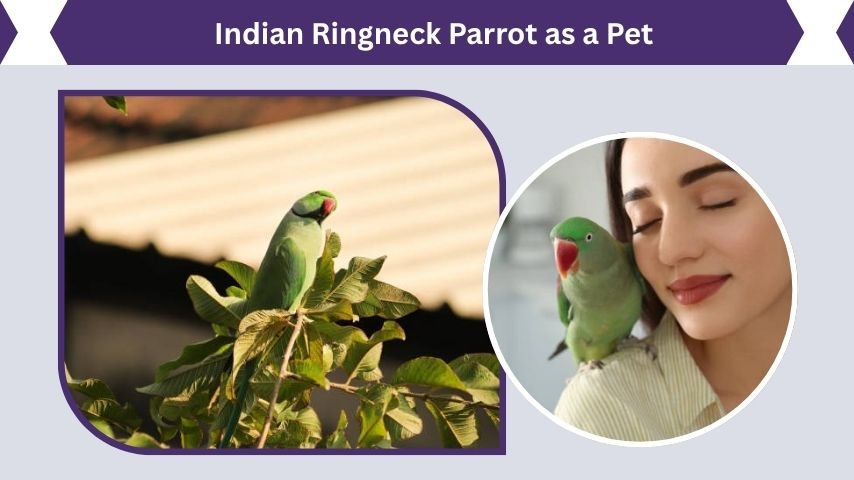
Indian Ringneck Parrots are popular pets because of their intelligence, speech ability, and colorful appearance. However, they require patience, training, and regular interaction to remain friendly and mentally healthy. These parrots are best suited for owners who can spend time with them daily.
Are Indian Ringnecks Good Pets?
Indian Ringnecks can become affectionate and entertaining pets when socialized from a young age. They are curious birds that enjoy exploring and learning new sounds. However, they may also show independence and occasional stubborn behavior.
Cage and Housing Requirements
These parrots need spacious cages with room for climbing, stretching wings, and playing with toys. Perches of different sizes, chewing toys, and safe exercise areas are important for physical and mental health. Daily out-of-cage time is strongly recommended.
Common Challenges
- Loud vocalizations
- Biting during stress or fear
- Hormonal aggression during maturity
- Need for daily attention
- Strong chewing behavior
Indian Ringneck Talking Ability
Indian Ringneck Parrots are among the best talking parakeets in the world. Their clear voices and ability to learn words make them popular companion birds. Many owners enjoy teaching them phrases, whistles, and household sounds.
How Well Can Indian Ringnecks Talk?
Some Indian Ringnecks can develop surprisingly large vocabularies and speak with clear pronunciation. Young birds trained consistently often learn speech faster than older birds. Personality and environment also affect learning ability.
How to Teach an Indian Ringneck to Talk
Training should involve repetition, patience, and positive reinforcement. Speaking clearly and repeating simple words daily can help the bird recognize sounds. Calm environments without distractions usually improve learning success.
Why Do Some Ringnecks Do Not Talk?
Not all Indian Ringnecks become talkers because personality and social interaction vary between birds. Lack of training, stress, or limited attention may reduce speech development in some individuals.
Indian Ringneck Parrot Price
Indian Ringneck prices can vary depending on age, color mutation, training, and local demand. Rare color varieties are usually more expensive than standard green birds. Hand-raised parrots often cost more because they are easier to tame.
Indian Ringneck Price by Color Mutation
- Green varieties are usually most affordable
- Blue Ringnecks often cost more
- Albino and violet mutations are more expensive
- Rare color combinations have higher prices
FAQs
Are Indian Ringneck parrots good pets?
Indian Ringneck parrots can make excellent pets for experienced bird owners. They are intelligent, playful, and capable of learning speech, but they also require regular interaction and mental stimulation.
Can Indian Ringnecks talk clearly?
Yes, Indian Ringneck parrots are famous for their clear talking ability. Many birds can learn words, phrases, whistles, and household sounds with proper training and patience.
What do Indian Ringneck parrots eat?
Indian Ringnecks eat seeds, fruits, vegetables, nuts, grains, and pellets. A balanced diet with fresh water is important for maintaining good health and strong feathers.
How long do Indian Ringnecks live?
Indian Ringneck parrots usually live around 20 to 30 years in captivity with proper care. Wild birds generally have shorter lifespans because of predators and environmental dangers.
How much does an Indian Ringneck cost?
The price depends on color mutation, age, tameness, and breeder reputation. Rare color varieties and hand-raised birds are usually more expensive than standard green Ringnecks.