
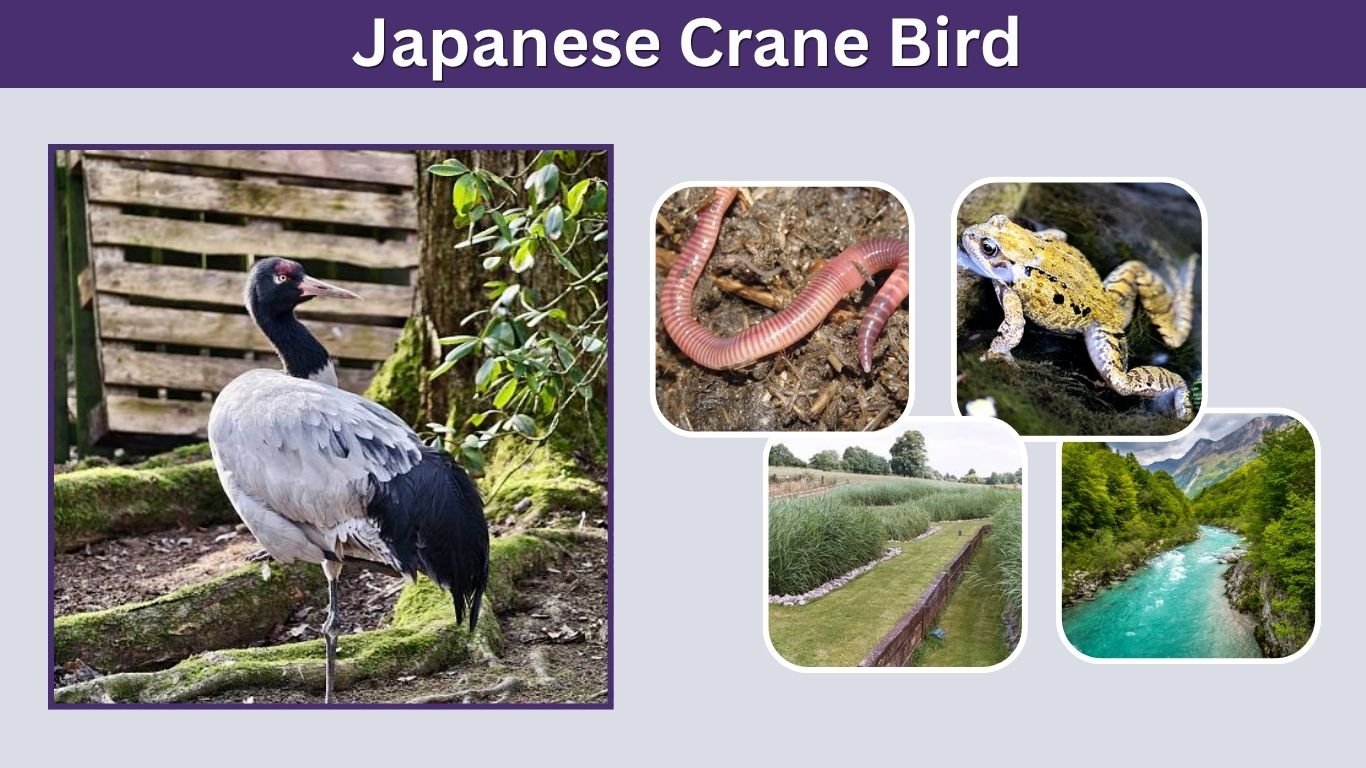
The Japanese crane bird, more properly known as the Red-crowned Crane, is a large East Asian bird admired for its snow-white plumage, black neck, and bright red crown. Its scientific name is Grus japonensis. In Japan, it is strongly associated with Hokkaido, where a resident population survives in protected wetlands. Beyond its natural beauty, the crane has become an important motif in Japanese paintings, textiles, origami, tattoos, and celebrations, commonly representing longevity, fidelity, happiness, and good fortune.
What Is the Japanese Crane Bird?
The name “Japanese crane” usually refers to the Red-crowned Crane. It is one of the largest crane species and one of Japan’s most recognizable wild birds.
The general Japanese word for a crane is tsuru. The Red-crowned Crane is commonly called tancho, meaning “red crown” or “red-topped head.”
Japanese Crane Identification
Adult Japanese cranes have an elegant black-and-white appearance. Important identification features include:
- Predominantly white body and wings
- Black cheeks, throat, and neck
- Bare red patch on top of the head
- Long, dark legs
- Long, pointed bill
- Black wing feathers visible during flight
- Long neck held straight while flying
Juveniles are less strongly patterned. Their feathers contain combinations of white, grey, cinnamon-brown, and tan, while the red crown is not yet fully developed.
Size and Basic Facts
| Feature | Information |
| Scientific name | Grus japonensis |
| Common names | Japanese Crane, Red-crowned Crane, Tancho |
| Height | Up to about 1.4–1.6 metres |
| Wingspan | Up to approximately 2.4 metres |
| Average weight | Around 7.5 kilograms |
| Diet | Omnivorous |
| Conservation status | Vulnerable |
The Japanese crane is among the largest wild birds found in Japan. Its broad wings and long legs create an especially impressive appearance when it takes off from a snowy field or wetland.
Where Do Japanese Cranes Live?
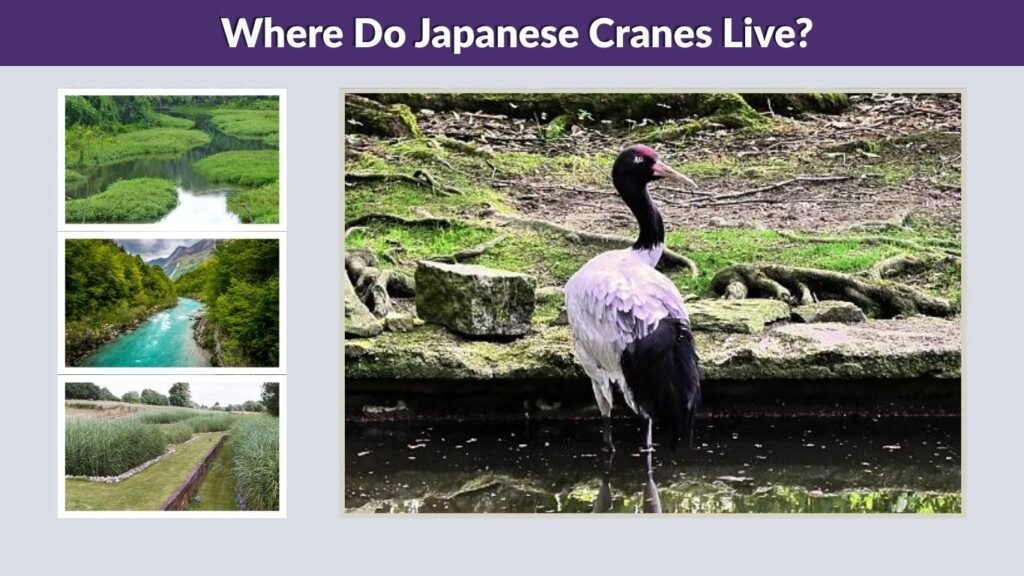
Red-crowned Cranes occur in northeastern Asia. Their population is divided into two main groups: a resident population in Hokkaido and a migratory mainland population associated with Russia, northeastern China, the Korean Peninsula, and nearby areas.
The Hokkaido cranes remain in northern Japan throughout the year. Mainland cranes breed in large wetlands and migrate to wintering grounds in China and the Korean Peninsula. The Red-crowned Crane is also the only crane species that regularly breeds in Japan.
Preferred Habitat
Japanese cranes depend heavily on open wetland environments, including:
- Freshwater marshes
- River valleys
- Reed beds
- Wet grasslands
- Shallow lakes
- Mudflats
- Agricultural fields near wetlands
Kushiro Shitsugen and surrounding parts of eastern Hokkaido provide some of Japan’s most important habitat for the species. Wetlands offer nesting cover, shallow feeding areas, and relatively open views that help cranes detect approaching danger.
What Do Japanese Crane Birds Eat?
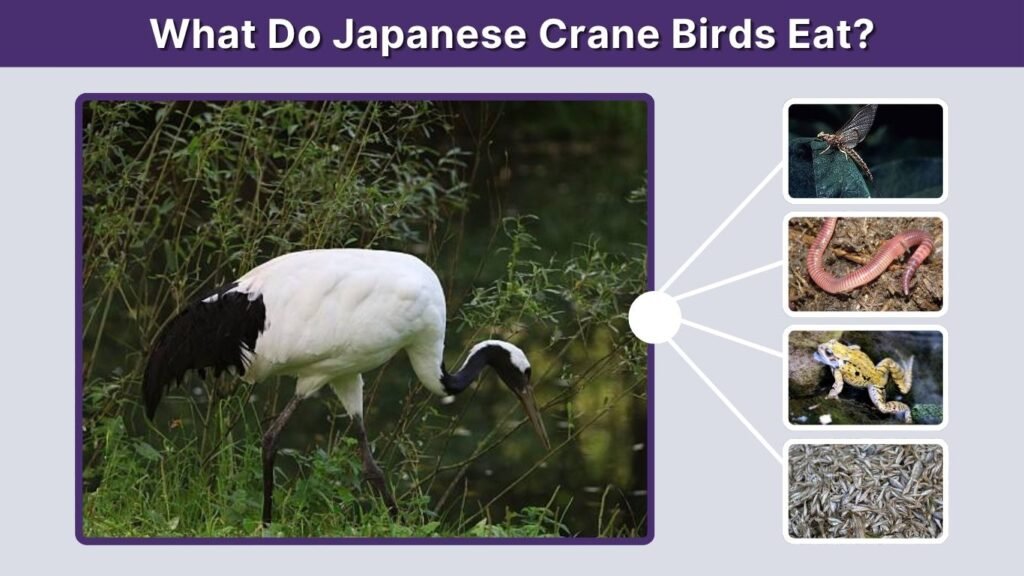
Japanese cranes are omnivores. Their diet changes according to season, habitat, and food availability.
They may eat:
- Aquatic insects
- Worms and other invertebrates
- Fish
- Frogs and other amphibians
- Small mammals
- Reeds and grasses
- Berries
- Corn
- Cereal grains
- Waste grain from farmland
Some cranes in Hokkaido also receive supplemental corn, grain, and fish at managed winter feeding locations. These feeding sites have supported survival during severe winters, although concentrating birds can create concerns about disease transmission and dependence on artificial food.
Japanese Crane Dance and Behavior
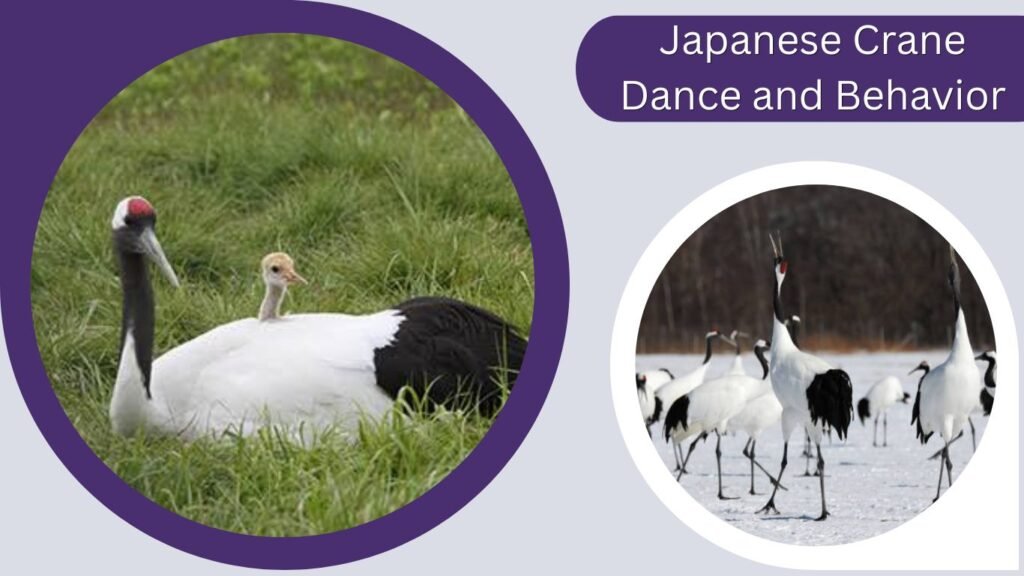
Red-crowned Cranes are famous for their elaborate dancing displays. A crane may bow, leap into the air, spread its wings, run, call, and toss grass or other objects.
Dancing is especially noticeable during courtship, when males and females face one another and perform coordinated movements. Paired birds also produce powerful unison calls that help reinforce their bond and advertise their territory. Late winter is an especially popular time to observe paired cranes calling and dancing in Hokkaido.
Their graceful displays have contributed to the crane’s popularity in Japanese dance, painting, clothing patterns, sculpture, and decorative art.
Japanese Crane Bird Meaning
In Japanese culture, cranes commonly represent long life, happiness, fidelity, peace, hope, and good fortune. Their cultural meaning is partly reflected in the traditional saying that a crane lives for a thousand years while a tortoise lives for ten thousand.
Crane designs frequently appear during weddings, New Year celebrations, birthdays, and other joyful occasions. In traditional artwork, cranes may be paired with pine, bamboo, plum blossoms, the sun, or tortoises to strengthen themes of endurance, prosperity, renewal, and longevity.
Fidelity and Partnership
Cranes are also closely associated with devotion between partners. Japanese paintings and decorative designs sometimes show a pair of cranes facing one another, flying together, or standing beside pine trees.
In this context, two cranes may represent:
- A faithful marriage
- Lasting companionship
- Mutual protection
- Harmony between partners
- A peaceful family life
The crane’s association with fidelity and longevity makes it particularly appropriate for wedding robes, gifts, paintings, and household decorations.
Japanese Origami Crane Meaning
The folded paper crane is called an origami crane. It represents the broader cultural crane rather than only the Red-crowned Crane species.
Paper cranes are associated with wishes, healing, peace, remembrance, and hope. A group of one thousand folded cranes is known as a senbazuru and may be created as a heartfelt wish for recovery, happiness, or the fulfilment of a goal.
Is the Crane Japan’s National Bird?
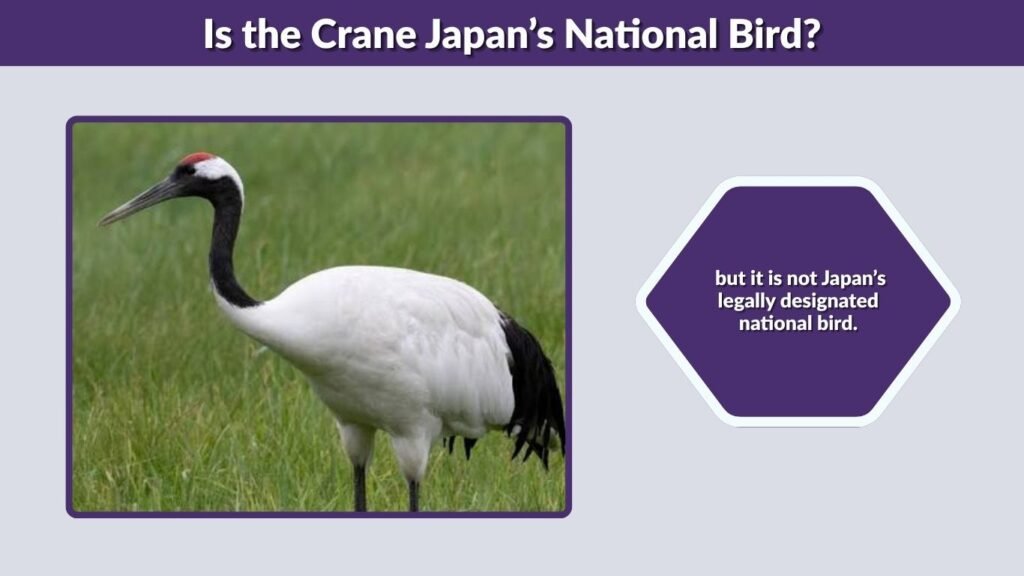
The Japanese crane is an important national and cultural symbol, but it is not Japan’s legally designated national bird.
The Green Pheasant was selected as Japan’s national bird by the Ornithological Society of Japan in 1947, although the designation was not established through national legislation. The Red-crowned Crane remains one of the country’s most iconic protected birds and is designated as a Special Natural Monument.
Conservation Status
The Red-crowned Crane is currently classified as Vulnerable. Major threats include wetland destruction, pollution, poisoning, power-line collisions, human disturbance, agricultural changes, fires, and climate-related habitat loss.
The Japanese population once declined so severely that the species was believed to have disappeared from the country. A small surviving group was rediscovered in Hokkaido during the 1920s. Habitat protection, winter feeding, research, and community conservation helped the population recover, although continued management remains necessary.
FAQs
What is the Japanese crane bird called?
The species is commonly called the Japanese Crane or Red-crowned Crane. Its scientific name is Grus japonensis. In Japan, cranes are generally called tsuru, while the Red-crowned Crane is commonly called tancho.
What does a Japanese crane symbolize?
It commonly symbolizes longevity, fidelity, good fortune, peace, happiness, and hope. The exact meaning depends on how the crane is represented and whether it appears with other symbols such as pine trees, tortoises, plum blossoms, or the rising sun.
Are Japanese crane birds rare?
Yes. Although conservation has helped parts of the population recover, the species remains vulnerable and has a limited global distribution. Wetland loss, pollution, collisions, disturbance, and other environmental threats continue to affect its survival.
Where can you see Japanese cranes?
Eastern Hokkaido is the best-known area in Japan. Kushiro Shitsugen National Park, Tsurui, and nearby crane observation sites are especially popular during winter, when the birds can be seen feeding, calling, and performing courtship dances.
Do Japanese cranes mate for life?
Red-crowned Cranes form strong, long-lasting pair bonds. Paired birds perform coordinated dances and unison calls that reinforce their partnership. This behavior has contributed to their cultural association with marital fidelity and lasting companionship.
