
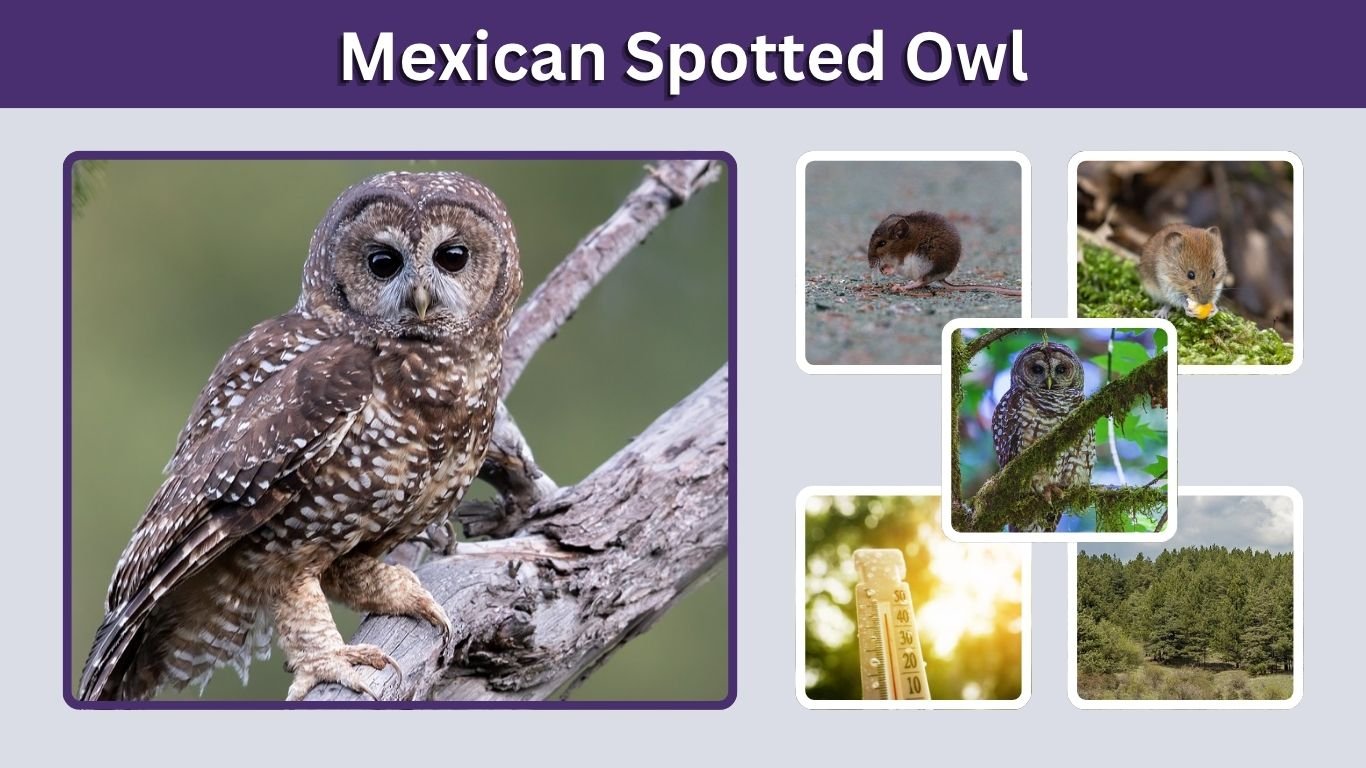
The Mexican spotted owl is a secretive forest and canyon bird found across the southwestern United States and parts of Mexico. Recognizable by its dark eyes, rounded head, and heavily spotted brown plumage, this nocturnal hunter depends on mature forests and sheltered rocky canyons. Although people frequently describe it as endangered, its official federal classification is threatened. Habitat loss, severe wildfire, drought, and climate change continue to place the owl’s future at risk.
Mexican Spotted Owl Quick Facts
The Mexican spotted owl is one of three recognized spotted owl subspecies. It is geographically separated from the northern and California spotted owls and has physical and behavioral traits suited to the forests and canyonlands of the Southwest.
| Feature | Information |
| Scientific name | Strix occidentalis lucida |
| Length | 16–19 inches |
| Wingspan | 42–45 inches |
| Weight | 19.5–23 ounces |
| Average lifespan | About 15 years in the wild |
| Diet | Woodrats, mice, voles, birds, bats and reptiles |
| Activity | Mainly nocturnal |
| Federal status | Threatened |
| Typical clutch | Two to four eggs |
These measurements and life-history details come from the U.S. Fish and Wildlife Service’s species profile. Females are generally larger than males and average approximately 3.5 ounces heavier.
What Does a Mexican Spotted Owl Look Like?
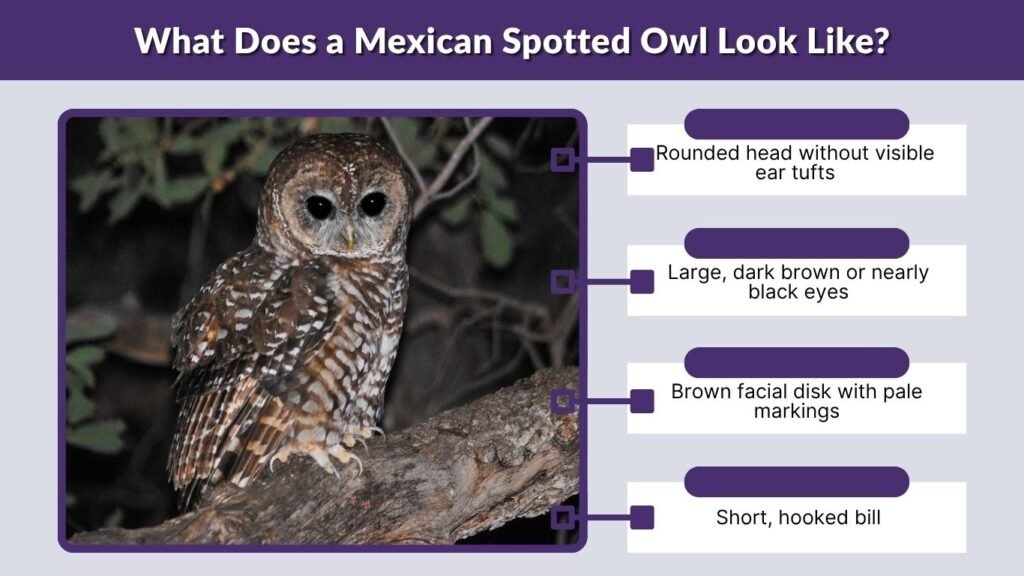
The owl’s spotted coloration provides excellent camouflage against tree bark, shaded cliffs, caves and forest vegetation. Males and females look similar, making their calls and body measurements more useful than plumage for distinguishing the sexes.
Identification Features
A Mexican spotted owl can be identified by the following characteristics:
- Rounded head without visible ear tufts
- Large, dark brown or nearly black eyes
- Brown facial disk with pale markings
- Brown body covered with irregular white spots
- Barred brown-and-white wings and tail
- Short, hooked bill
- Broad, rounded wings
Among the three spotted owl subspecies, the Mexican spotted owl is generally the palest and has relatively large white markings. Young birds under approximately five months old have a noticeably softer, downy appearance around the head.
Mexican Spotted Owl Size
Adults measure approximately 16 to 19 inches from head to tail, with a wingspan of 42 to 45 inches. Their broad wings help them fly quietly and maneuver between trees or through narrow canyons while hunting.
Mexican Spotted Owl Habitat
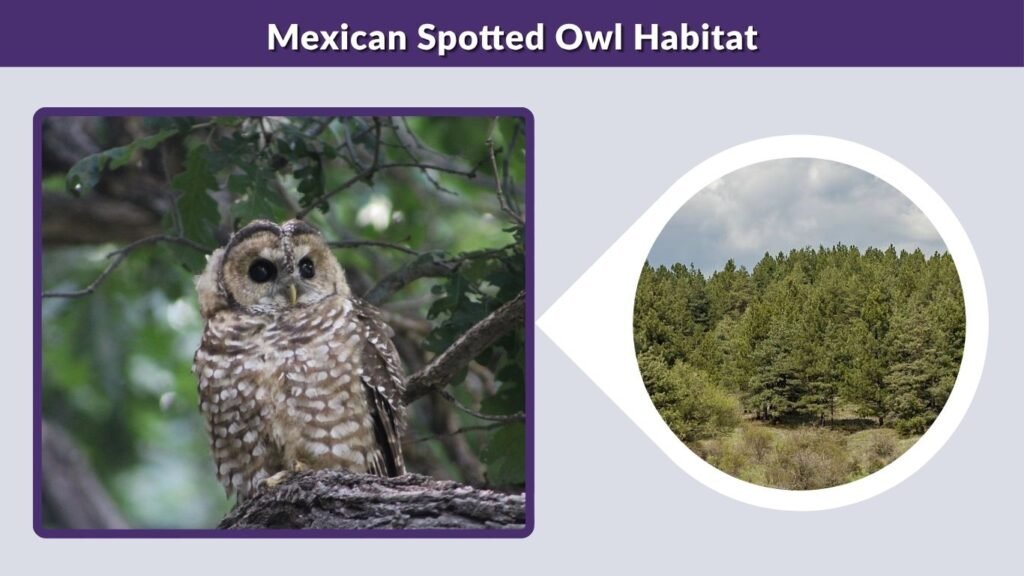
Mexican spotted owls require sheltered places for daytime roosting and nesting. Their preferred locations usually have cool conditions, mature trees, dense overhead cover or steep rock walls that provide protection from heat and disturbance.
Forest Habitat
In forested regions, these owls commonly occupy mixed-conifer and Madrean pine-oak forests. Important nesting areas frequently contain large trees, multiple vegetation layers, high canopy closure and an uneven mixture of tree ages. Douglas-fir trees are especially important in some parts of the range.
The owls may nest in tree cavities, abandoned stick nests or dense growths known as witches’ brooms. They do not construct their own nests. Instead, they use naturally formed or previously created structures.
Canyon Habitat
In Utah, Colorado and parts of northern Arizona and New Mexico, many Mexican spotted owls live in steep, narrow canyons. They roost or nest in caves, cliff crevices and sheltered ledges where temperatures remain cooler and human access may be limited.
Where Does the Mexican Spotted Owl Live?
Its range extends across Utah, Colorado, Arizona, New Mexico and western Texas, continuing south through several Mexican states. However, the owl is not evenly distributed. Populations occur in separated mountain ranges, forest patches and canyon systems.
In Mexico, areas of particularly suitable habitat have been identified in Chihuahua, Durango, Zacatecas, Jalisco and Aguascalientes.
Mexican Spotted Owl Diet
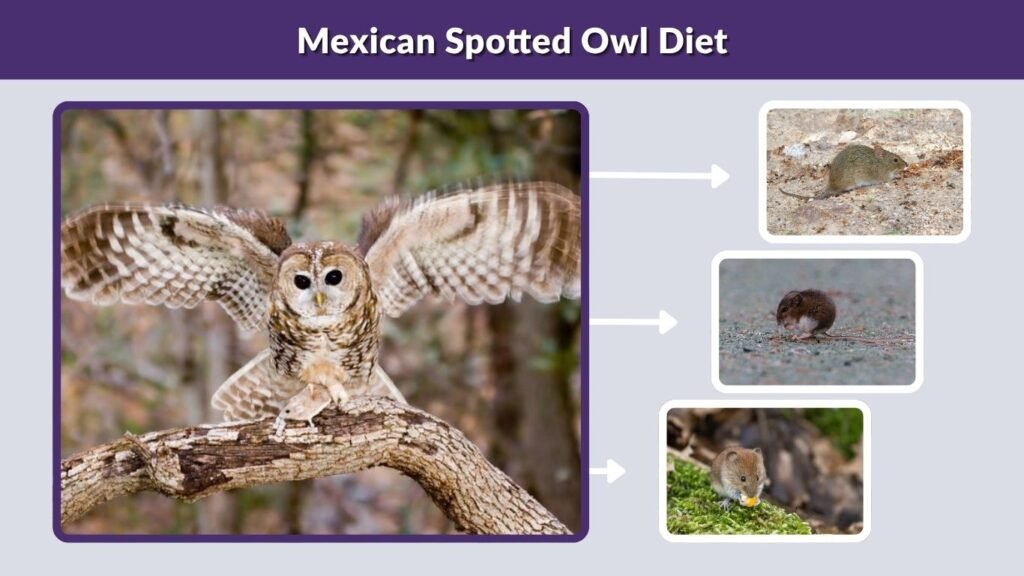
The Mexican spotted owl is a nighttime predator that begins hunting around sunset. It usually watches and listens from a perch before dropping silently onto prey with its powerful talons.
What Do Mexican Spotted Owls Eat?
Their diet consists mainly of small mammals, including:
- Woodrats
- Deer mice
- Voles
- Pocket gophers
- Other small rodents
They may also capture bats, small birds, reptiles and large arthropods. Woodrats are especially important in canyon habitats, although the exact diet changes according to location and prey availability.
The owl usually captures animals on the ground but can also take flying prey, particularly birds. Its sensitive hearing, forward-facing eyes and silent flight allow it to locate prey in dim forests and dark canyons.
Mexican Spotted Owl Call and Behavior
Mexican spotted owls produce several low-pitched calls that travel effectively through thick vegetation. Their best-known sound is a four-note hooting call, commonly heard during the breeding period.
Males generally have deeper voices and call more frequently than females. Calling activity is strongest from March through May and usually peaks during the first two hours after sunset or shortly before sunrise. The owls become comparatively quiet during winter.
They normally rest in shaded roosts during daylight and hunt after dusk. Although adults often maintain long-term home ranges, some individuals move 12.5 to 31 miles between seasonal areas or descend to lower elevations during winter.
Breeding and Life Cycle
Courtship usually begins between late February and March. Mexican spotted owls generally form long-term pair bonds, although they remain relatively solitary outside the breeding season.
Eggs and Nesting
The female normally lays two to four eggs between late March and early April. She incubates them for approximately 30 days, while the male supplies most or all of her food. The eggs usually hatch in early May.
Young owls leave the nest approximately four to five weeks after hatching but continue depending on their parents throughout the summer. By fall, juveniles disperse in search of their own territories. Survival during the first winter can be low.
Why Is the Mexican Spotted Owl Endangered?
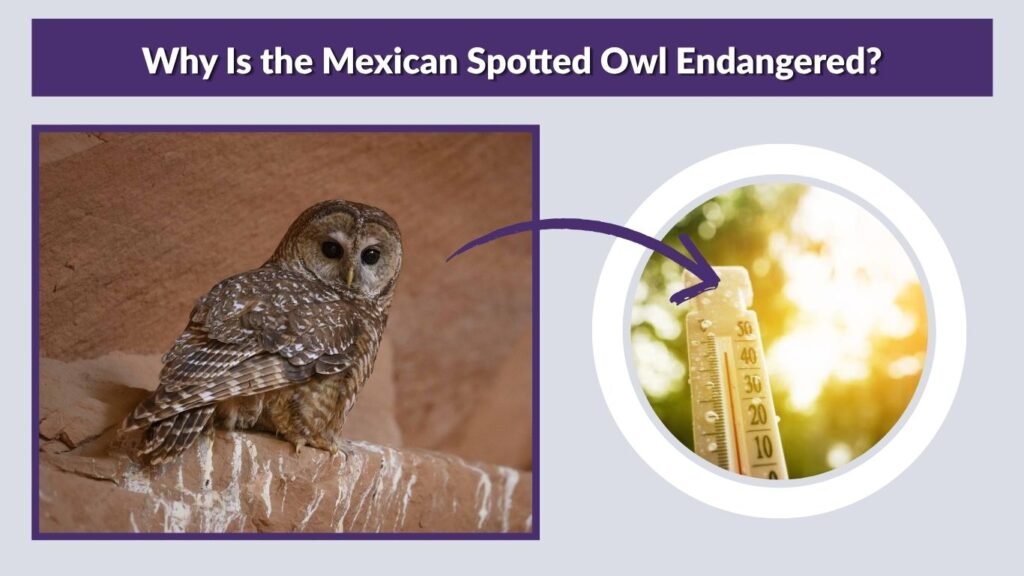
The Mexican spotted owl is commonly called endangered because it faces serious conservation threats. However, its official U.S. Endangered Species Act classification is threatened, not endangered. It was listed in 1993, and the latest available federal five-year review recommended keeping that classification unchanged.
Major Threats
The most significant dangers include:
- Severe wildfires: Large, high-intensity fires can remove mature nesting and roosting forests across extensive areas.
- Climate change: Rising temperatures and altered rainfall can reduce suitable habitat and prey availability.
- Long-term drought: Dry conditions increase tree stress and wildfire risk.
- Habitat fragmentation: Isolated forest patches make dispersal and genetic exchange more difficult.
- Human disturbance: Recreation, timber management and other activities may disrupt sensitive nesting or roosting areas.
Federal assessments indicate that more potential nesting and roosting habitat was lost than gained across studied national forests in Arizona and New Mexico between the late 1980s and 2020.
How Many Mexican Spotted Owls Are Left?
There is no reliable single count for the entire worldwide population. Many habitats are remote, difficult to reach or surveyed infrequently. Federal monitoring uses site occupancy—the presence of individual owls or pairs—rather than attempting to count every bird. Recent monitoring did not establish a conclusive overall occupancy trend, although pair-occupancy estimates showed an apparent decline.
Mexican Spotted Owl Conservation
Recovery efforts focus on protecting mature nesting forests, rocky canyon sites and connections between habitat patches. Important actions include preserving large trees, maintaining high-canopy refuges, monitoring known territories and reducing disturbance during breeding.
Carefully planned thinning and prescribed burning may help lower the risk of destructive, stand-replacing wildfire. However, these treatments must follow recovery-plan recommendations so that short-term forest disturbance does not damage important nesting and roosting habitat.
Mexican vs. Northern Spotted Owl
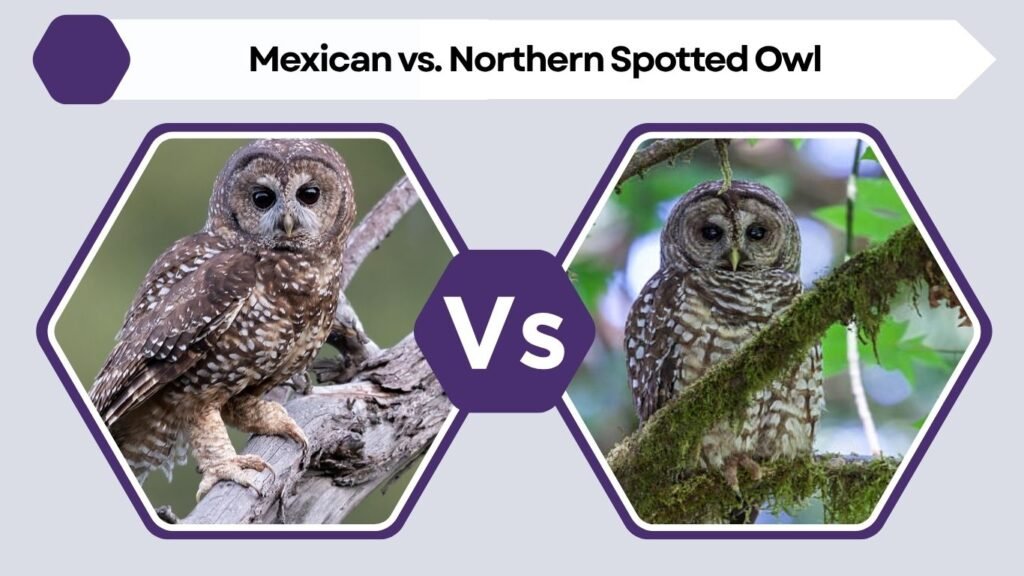
| Feature | Mexican Spotted Owl | Northern Spotted Owl |
| Primary range | Southwestern U.S. and Mexico | Pacific Northwest |
| Appearance | Paler with larger white spots | Darker with smaller spots |
| Common habitat | Mixed forests and rocky canyons | Mature coastal and inland forests |
| Scientific name | S. o. lucida | S. o. caurina |
| Federal status | Threatened | Threatened |
The Mexican subspecies is geographically and genetically separated from the northern and California subspecies.
FAQs
Is the Mexican spotted owl endangered?
It is officially classified as threatened under the U.S. Endangered Species Act. The classification means it is likely to become endangered if threats such as severe wildfire, habitat loss, drought and climate change are not adequately addressed.
Where do Mexican spotted owls live?
They live in forested mountains and rocky canyon systems across Arizona, New Mexico, Utah, Colorado, western Texas and several parts of Mexico. Their populations are scattered rather than continuously distributed throughout this range.
What do Mexican spotted owls eat?
They primarily eat small mammals such as woodrats, mice, voles and pocket gophers. They can also capture small birds, bats, reptiles and arthropods when these animals are available.
How big is a Mexican spotted owl?
An adult is approximately 16 to 19 inches long and has a wingspan of about 42 to 45 inches. Females are normally larger and heavier than males.
How long does a Mexican spotted owl live?
The average wild lifespan is approximately 15 years. However, many juveniles do not survive their first winter, especially while dispersing through unfamiliar or fragmented habitats.
