
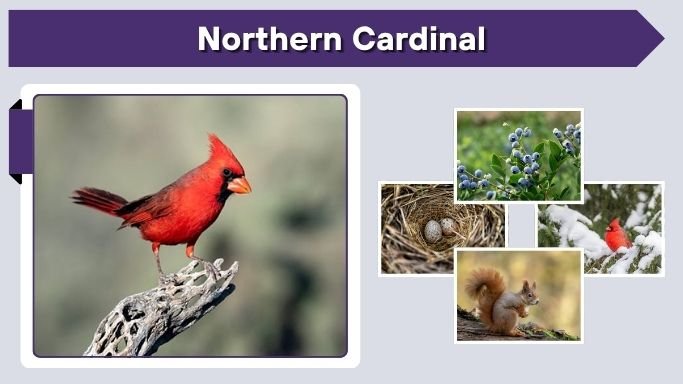
The northern cardinal is one of the most loved backyard birds in North America. Males are bright red, while females have warm brown feathers with red highlights. These birds are known for their loud songs, strong beaks, and year-round presence in gardens, forests, and neighborhoods. Cardinals are easy to recognize, fun to watch, and full of interesting behavior.
What Is a Northern Cardinal?
The northern cardinal is a medium-sized songbird from the cardinal family. It is famous for its bright color, pointed crest, thick orange-red beak, and beautiful song. Many people simply call it a “red cardinal,” especially when talking about the male.
This bird is common across eastern and central North America. It does not usually migrate, so many people see it in the same area throughout the year. In winter, the male’s red feathers stand out strongly against snow, bare branches, and dull garden colors.
Scientific Name and Basic Details
The scientific name of the northern cardinal is Cardinalis cardinalis. It belongs to the family Cardinalidae, which also includes grosbeaks and buntings.
Northern cardinals are seed-eating birds with strong cone-shaped beaks. Their beaks help them crack sunflower seeds, berries, and other tough foods. They are also songbirds, and both males and females can sing. This is interesting because in many bird species, only males sing regularly.
A northern cardinal usually has a long tail, rounded wings, and a bold crest on the head. When the bird is alert, the crest stands upright. When relaxed, the crest may lie flatter.
Northern Cardinal Identification
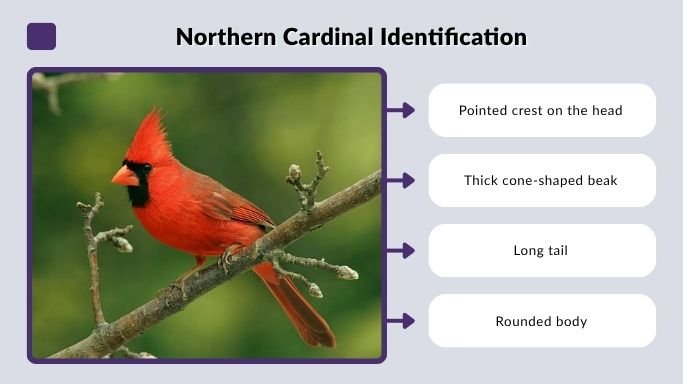
Northern cardinal identification is usually easy because this bird has a unique shape and color. The pointed crest, heavy beak, long tail, and reddish tones make it stand out from many other backyard birds.
Male and female cardinals look different, but both are attractive. Juveniles can look duller and may confuse beginners, especially before their adult beak color develops.
Key Identification Marks
- Pointed crest on the head
- Thick cone-shaped beak
- Long tail
- Rounded body
- Orange-red bill in adults
- Black face mask around the bill
- Bright red male plumage
- Warm brown female plumage
- Reddish wings, tail, or crest in females
- Clear whistled song
The male northern cardinal is bright red with a black mask on the face. The female northern cardinal is pale brown or tan with red on the wings, tail, and crest. Both sexes have a strong bill and a confident posture.
Juvenile northern cardinals are usually dull brownish birds. Young birds may have a dark bill instead of the bright orange-red bill seen in adults.
Male vs Female Northern Cardinal
Male and female northern cardinals are easy to tell apart once you know their colors. The male is mostly red, while the female is mostly brown with reddish highlights. Both have a crest and strong beak.
Females may look less colorful, but they are beautiful in a softer way. Their warm brown feathers help them blend into nesting areas, which can protect them while caring for eggs and young.
Male and Female Comparison
| Feature | Male Northern Cardinal | Female Northern Cardinal |
| Main color | Bright red | Warm brown or tan |
| Face mask | Black and bold | Grayish to dark mask |
| Crest | Red | Brownish-red |
| Wings | Red | Brown with red edges |
| Tail | Red | Reddish-brown |
| Song | Loud and clear | Also sings clearly |
Male northern cardinals often sing from high branches to defend territory. Females may also sing, sometimes from the nest area. Their songs can help pairs communicate during the breeding season.
In winter, males and females often travel together or appear near the same feeding area. A pair may stay close for much of the year.
Northern Cardinal Habitat
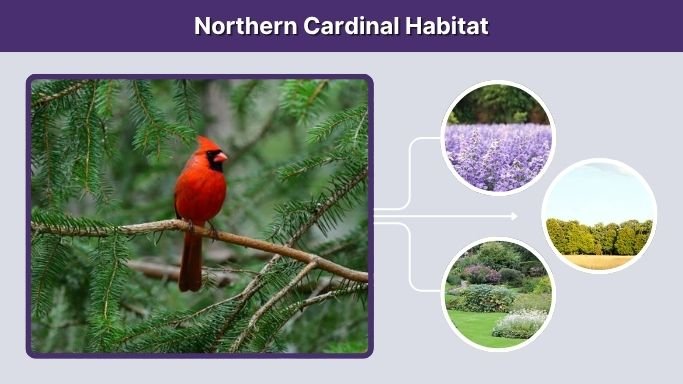
Northern cardinals live in many habitats, especially places with shrubs, trees, vines, and thick cover. They do not need deep forests only. They are very comfortable around humans and often live near houses, farms, parks, and gardens.
They prefer areas where they can hide, nest, feed, and sing from nearby branches. Dense vegetation is especially important for nesting and protection.
Common Habitat Areas
- Woodland edges
- Shrubby gardens
- Parks
- Backyards
- Hedgerows
- Swamps and thickets
- Overgrown fields
- Forest borders
- Suburban neighborhoods
- Brushy stream edges
Northern cardinals are often seen hopping through low branches or feeding on the ground. They may perch in shrubs before flying to a feeder. They like cover because it helps them escape hawks, cats, and other predators.
A backyard with native shrubs, berry plants, and seed sources can be very attractive to cardinals.
Northern Cardinal Range and Migration
The northern cardinal is found across much of the eastern United States, the central United States, parts of the Southwest, Mexico, and parts of southern Canada. It is also common in states such as Florida, Texas, Ohio, Virginia, North Carolina, and many others.
Its range has expanded northward over time. Backyard feeders, warmer urban areas, and suitable shrubs have helped cardinals survive in places where they were once less common.
Do Northern Cardinals Migrate?
Northern cardinals do not usually migrate. They are mostly permanent residents in their range. This means they often stay in the same general area during spring, summer, fall, and winter.
In winter, cardinals may join loose feeding groups, but they do not leave for long-distance migration like many warblers or swallows. This year-round presence makes them familiar to homeowners and birdwatchers.
Because they stay through winter, food and cover are very important. Evergreen shrubs, thick hedges, and seed feeders can help cardinals during cold months.
Northern Cardinal Diet
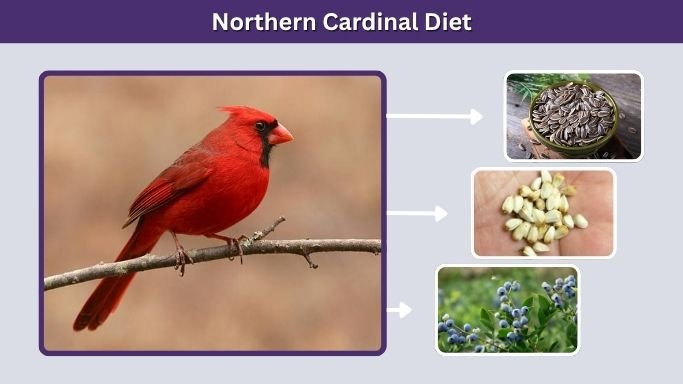
Northern cardinals eat a wide variety of foods. Their strong beaks are perfect for cracking seeds, but they also eat fruits and insects. Their diet changes with the season and food availability.
In winter, seeds and berries are very important. During the breeding season, insects become more useful, especially for feeding chicks.
What Do Northern Cardinals Eat?
- Sunflower seeds
- Safflower seeds
- Cracked corn
- Millet
- Weed seeds
- Wild berries
- Grapes and small fruits
- Beetles
- Grasshoppers
- Caterpillars
- Spiders
- Snails and small insects
At feeders, northern cardinals especially like black oil sunflower seeds and safflower seeds. They often prefer platform feeders, hopper feeders, or feeding areas with enough space for their bodies and tails.
They may also feed on the ground below feeders. In natural areas, they search shrubs and low plants for seeds, fruit, and insects.
Northern Cardinal Song and Call
The northern cardinal is famous for its clear, loud song. Its song often sounds like repeated whistles. Many people describe the sound as bright, sweet, and strong. Cardinals may sing from treetops, fences, shrubs, or power lines.
Both male and female northern cardinals can sing. This makes them special among backyard birds because female song is very noticeable in this species.
Common Sounds
The song may sound like repeated phrases such as “cheer-cheer-cheer” or “birdie-birdie-birdie.” The exact sound can vary by bird and region.
Cardinals also make sharp call notes. Their common call is a metallic “chip” sound. This call may be used when they are alarmed, staying in contact, or moving through cover.
A northern cardinal call can be heard in many seasons. Their song is especially common in spring and early summer, when males are defending territories and pairs are nesting.
Northern Cardinal Nest and Eggs
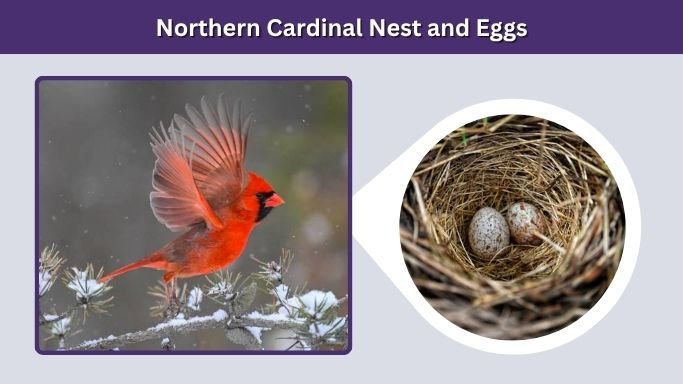
Northern cardinals usually build nests in shrubs, vines, small trees, or dense vegetation. They do not normally use birdhouses because they are not cavity-nesting birds. Instead, they prefer open cup-shaped nests hidden in thick cover.
The female usually builds the nest, while the male may bring some materials or stay nearby.
Nesting Habits
A northern cardinal nest is usually made from twigs, grass, bark strips, leaves, and plant fibers. The inside is softer and shaped to hold the eggs safely.
The female usually lays 2 to 5 eggs. Northern cardinal eggs are often whitish, grayish, bluish, or greenish with brown or purple markings. The female incubates the eggs, and both parents help feed the chicks after they hatch.
Young cardinals grow quickly. After leaving the nest, fledglings may stay near shrubs while the parents continue feeding them. During this time, they may look awkward, fluffy, and dull-colored.
Northern Cardinal Behavior
Northern cardinals are active, alert, and often bold around feeders. They may be shy at first, but many become regular backyard visitors. They are usually seen in pairs or small groups, especially outside the breeding season.
Cardinals often feed early in the morning and again near evening. Their bright color and strong voice make them easy to notice.
Common Behavior Traits
- Often seen in pairs
- Males defend territories
- Both sexes can sing
- Feeds on seeds, fruits, and insects
- Visits backyard feeders
- Stays in range year-round
- Uses shrubs for cover
- Gives sharp alarm calls
- Does not usually use birdhouses
- May attack window reflections
Male cardinals sometimes fight their own reflection in windows or car mirrors. They think the reflection is another male entering their territory. This behavior is most common during breeding season.
Covering the reflection or reducing window glare can help stop this problem.
Northern Cardinal Meaning and Symbolism
The northern cardinal has strong meaning in many cultures and personal beliefs. Many people see a cardinal as a symbol of hope, love, beauty, or remembrance. Its bright red color makes it emotionally powerful, especially when seen in winter.
Some people believe seeing a cardinal reminds them of a loved one. Others simply enjoy it as a sign of nature’s beauty.
Common Symbolic Meanings
- Love
- Hope
- Strength
- Warmth
- Good luck
- Spiritual comfort
- Remembrance
- Winter beauty
- Loyalty
- Positive energy
The spiritual meaning of a northern cardinal depends on personal belief. From a natural point of view, the bird is a beautiful wild species. From a symbolic point of view, many people connect it with comfort, encouragement, and emotional meaning.
Both views can make the cardinal special.
Northern Cardinal in Winter
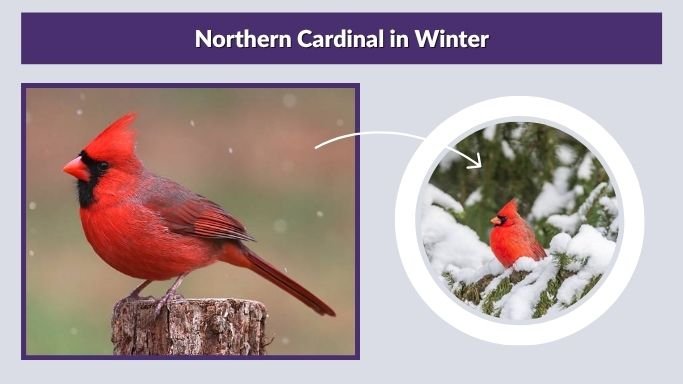
Northern cardinals are very noticeable in winter because they do not migrate far away. The male’s red feathers look especially bright against snow and gray branches. Females also bring warm color to winter yards.
During cold months, cardinals need reliable food and safe cover. They may visit feeders more often when snow covers natural seeds.
Winter Survival
In winter, northern cardinals eat seeds, berries, and fruits. They may gather near feeders with other birds such as juncos, sparrows, chickadees, and finches.
Evergreen trees and dense shrubs help them hide from wind and predators. A yard with winter berries, native plants, and clean feeders can support cardinals during cold weather.
Cardinals may also fluff their feathers to stay warm. This makes them look rounder than usual. Fluffing traps air close to the body and helps conserve heat.
Yellow and Leucistic Northern Cardinals
Most northern cardinals are red or brownish with red highlights, but rare color forms sometimes appear. A yellow northern cardinal is very unusual and often gets attention from birders. Leucistic cardinals may show white or pale patches.
These color changes are caused by genetic or pigment differences. They do not mean the bird is a different species.
Rare Color Forms
A yellow northern cardinal may look yellow or orange instead of red because of unusual pigment expression. These birds are rare and exciting to see.
A leucistic northern cardinal may have white feathers, pale patches, or a washed-out appearance. Unlike albino birds, leucistic birds may still have normal eye color.
A bald northern cardinal is another unusual sight. Cardinals sometimes lose head feathers during molt, mites, or feather wear. The bird may look strange for a while, but feathers often grow back.
How to Attract Northern Cardinals
Northern cardinals are among the best backyard birds to attract. They enjoy food, water, and thick cover. A simple feeder setup with the right seeds can bring them regularly.
They prefer stable feeding areas near shrubs or trees. Open spaces without cover may make them feel unsafe.
Backyard Tips
- Offer black oil sunflower seeds
- Provide safflower seeds
- Use platform or hopper feeders
- Add native berry-producing shrubs
- Keep fresh water available
- Leave dense shrubs for cover
- Avoid heavy pesticide use
- Keep cats indoors
- Clean feeders regularly
- Plant small trees and hedges
Cardinals do not usually nest in birdhouses, so adding a nest box is not the best method. Instead, plant dense shrubs, vines, and small trees where they can hide a natural nest.
A safe, natural yard is more helpful than a decorative birdhouse.
Northern Cardinal Lifespan and Predators
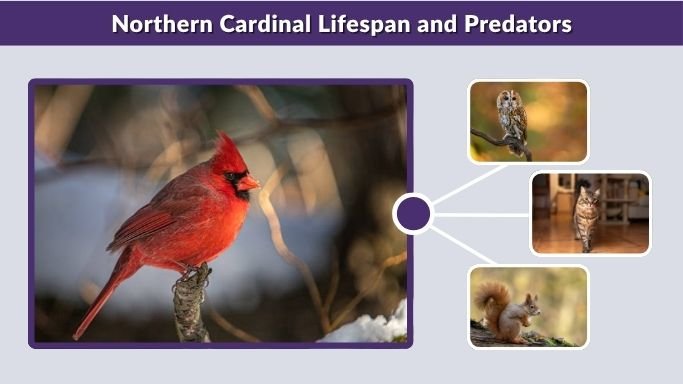
Northern cardinals can live for several years in the wild, although many young birds do not survive their first year. Adult cardinals face threats from predators, weather, disease, and accidents.
Their bright color can make males easy to see, but cardinals rely on alert behavior and thick cover to stay safe.
Main Predators
Common predators include hawks, owls, snakes, cats, raccoons, squirrels, and some larger birds. Eggs and chicks are especially vulnerable in the nest.
Outdoor cats are a major danger because cardinals spend time close to the ground and in low shrubs. Keeping cats indoors protects cardinals and many other birds.
Window collisions can also harm cardinals. Using window decals, screens, or reflection-reducing methods can make homes safer for birds.
FAQs
What do northern cardinals eat?
Northern cardinals eat seeds, fruits, berries, and insects. At feeders, they especially like black oil sunflower seeds and safflower seeds. During the breeding season, they eat more insects and feed soft insects to their chicks. In winter, seeds and berries become very important.
What does a female northern cardinal look like?
A female northern cardinal is mostly warm brown or tan with red highlights on the wings, tail, and crest. She has a thick orange-red bill and a face mask that may look grayish or dark. Her softer color helps her blend into nesting cover.
Do northern cardinals migrate?
Northern cardinals do not usually migrate. They are year-round residents in most of their range. Many cardinals stay in the same area through winter, especially where food, shrubs, and safe cover are available. This is why they are common backyard birds in every season.
What does the northern cardinal song sound like?
The northern cardinal song is a clear, loud whistle. It often sounds like repeated phrases such as “cheer-cheer-cheer” or “birdie-birdie-birdie.” Both males and females can sing. Their sharp “chip” call is also common when they are alarmed or moving through cover.
Do northern cardinals use birdhouses?
Northern cardinals usually do not use birdhouses because they are not cavity-nesting birds. They prefer open cup nests hidden in shrubs, vines, or small trees. To help them nest, plant dense native shrubs and provide quiet, safe cover instead of a nest box.
