
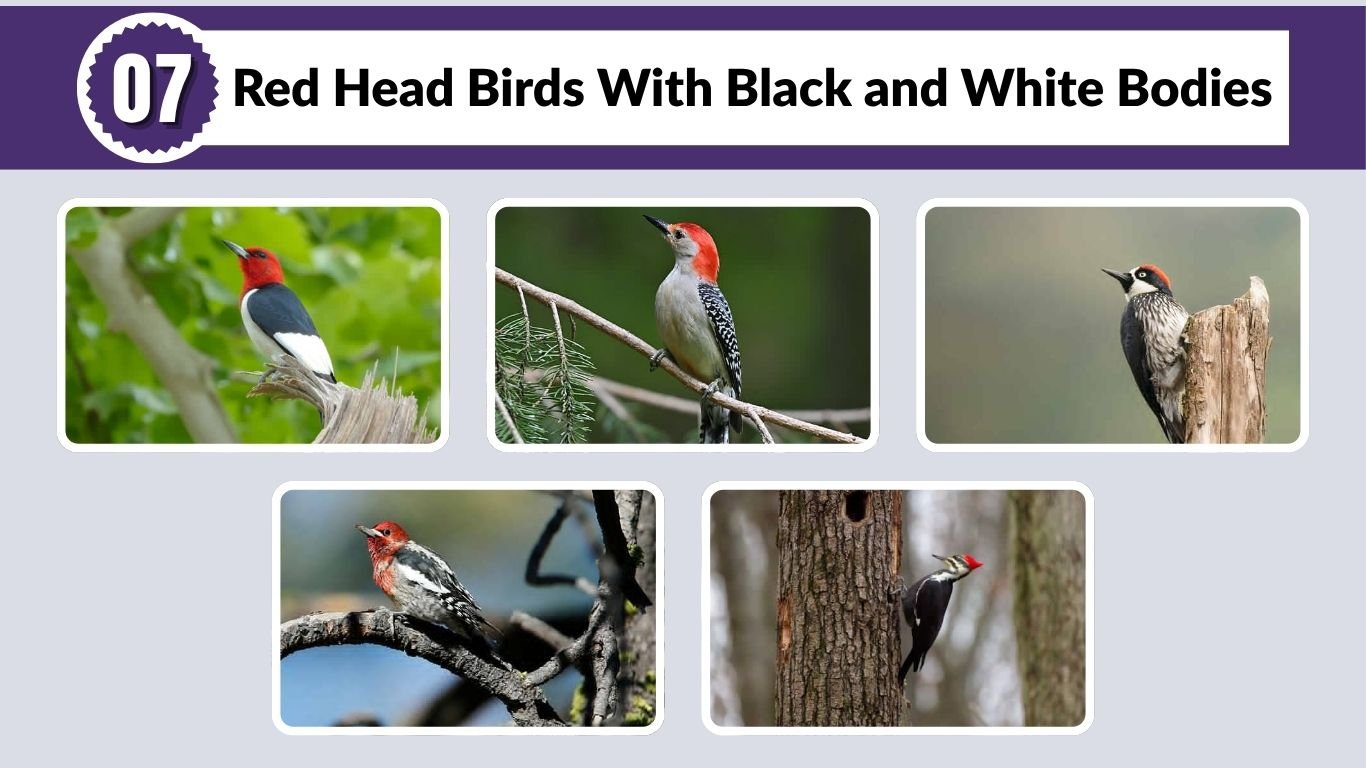
Birds with red heads and black-and-white bodies are some of the easiest birds to notice, but they can still be hard to identify. Many of them are woodpeckers or sapsuckers with red crowns, striped backs, white wing patches, or bold black facial markings. Some have a full red head, while others have only a red cap, red crest, or red throat. This guide covers seven red-headed birds with black and white bodies, including their size, color, habitat, diet, and identification tips.
1. Red-headed Woodpecker
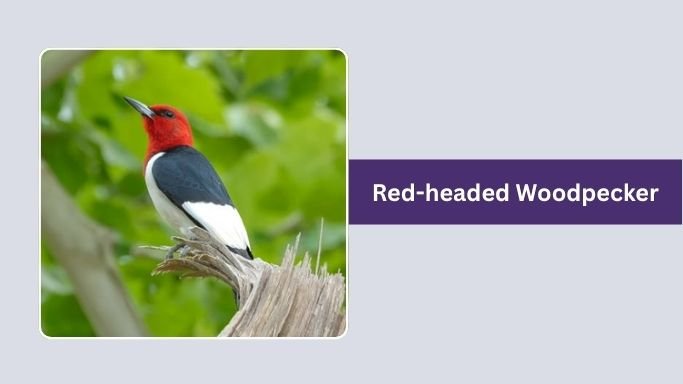
The Red-headed Woodpecker is one of the clearest matches for a red head bird with a black and white body. Adults have a fully crimson head, white underparts, and black wings with large white patches. Cornell describes it as a bold “flying checkerboard” with an entirely red head, snow-white body, and black-and-white wings.
Identification
- Full bright red head, neck, and throat
- White belly and lower body
- Black back and wings
- Large white wing patches
- Strong, straight bill
- Medium-sized woodpecker shape
- Bold black, white, and red contrast
Size and Color
The Red-headed Woodpecker is medium-sized, usually around 7.5 to 9 inches long. Its clean color pattern is its best clue. Unlike many woodpeckers with just a red patch, this species has an entire red hood. The back and wings are black, while the belly is white. In flight, the white wing patches are very noticeable.
Habitat and Diet
This bird prefers open woodlands, forest edges, orchards, savannas, parks, and areas with dead trees. It eats insects, acorns, beech nuts, berries, fruits, and seeds. It is also good at catching insects in the air. Red-headed Woodpeckers often store extra food in bark cracks, tree holes, and wooden posts.
2. Red-bellied Woodpecker
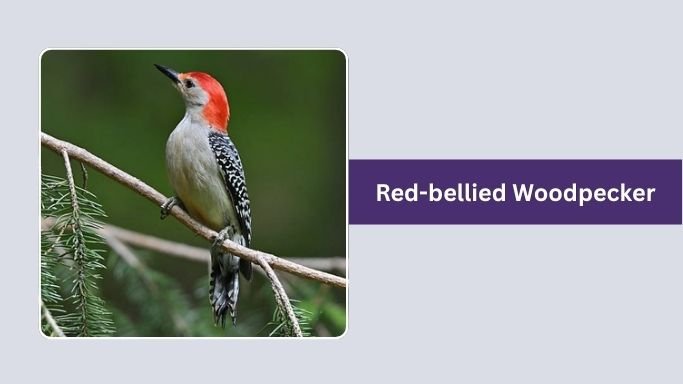
The Red-bellied Woodpecker is often confused with the Red-headed Woodpecker because it has red on the head. However, it does not have a full red head. Males have red from the bill across the crown to the nape, while females usually have red mostly on the nape. Its black-and-white barred back is a major field mark. Cornell notes that Red-bellied Woodpeckers are pale woodpeckers with barred backs and bright red caps.
Identification
- Red cap and nape
- Black-and-white barred back
- Pale gray face and belly
- Faint reddish wash on lower belly
- Strong woodpecker bill
- White wing patches in flight
- Often seen clinging to tree trunks
Size and Color
This is a medium-sized woodpecker, about 9 inches long. The red head marking is more like a cap than a full hood. The back looks zebra-striped with black and white bars. The underside is pale gray or whitish, and the “red belly” is often faint and hard to see.
Habitat and Diet
Red-bellied Woodpeckers live in forests, wooded suburbs, parks, orchards, swamps, and backyard areas. They eat beetles, ants, caterpillars, fruits, nuts, seeds, and berries. At feeders, they often visit suet, peanut, and sunflower seed feeders. They also store food in tree bark and crevices.
3. Acorn Woodpecker
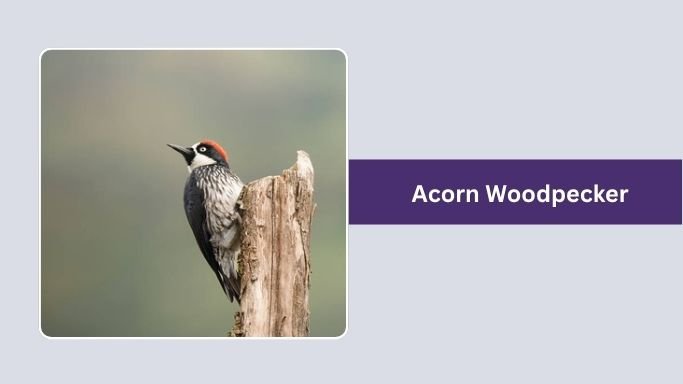
The Acorn Woodpecker is a striking bird with a red cap, black body, white face, and white patches. It has a clown-like face pattern that makes it easy to recognize. Cornell describes Acorn Woodpeckers as mostly black above, with a red cap, creamy white face, black patch around the bill, and white patches in flight.
Identification
- Red cap on top of the head
- Creamy white face patches
- Black area around the bill
- Mostly black upper body
- White belly with dark streaking
- White wing and rump patches
- Pale eye that stands out strongly
Size and Color
The Acorn Woodpecker is about 7.5 to 9 inches long. Its color pattern is very bold. The red cap sits above a black-and-white face. The back and chest are mostly black, while the lower belly is lighter with streaking. In flight, white patches on the wings and rump are helpful clues.
Habitat and Diet
Acorn Woodpeckers live in oak woodlands, pine-oak forests, wooded canyons, and areas with mature trees. Their diet includes acorns, insects, fruit, sap, and seeds. They are famous for storing acorns in “granary trees,” where they drill many small holes and push acorns into them.
4. Red-breasted Sapsucker
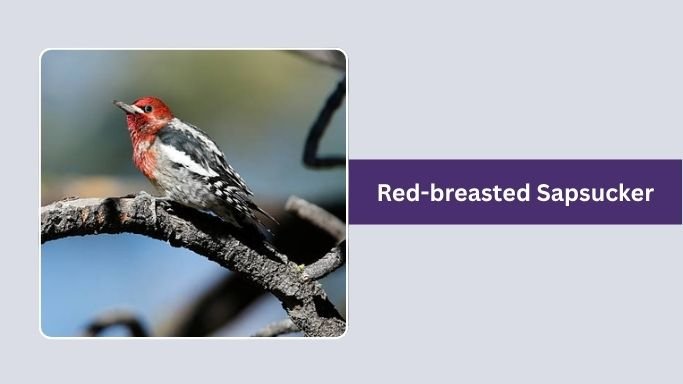
The Red-breasted Sapsucker has a red head and red breast, with black-and-white patterning on the back and wings. It is found mostly in western North America. Cornell notes that both males and females have a red head and breast, a mottled black-and-white back, and black wings with a large vertical white patch.
Identification
- Red head and red breast
- White spot between eye and bill
- Mottled black-and-white back
- Black wings with a vertical white patch
- Pale belly with some streaking
- Strong bill for drilling sap wells
- Often seen on tree trunks
Size and Color
This sapsucker is medium-sized, close to other small woodpeckers. Its red head and breast can look very bright. The back is not plain black; it has mottled black-and-white markings. The wing patch is a useful clue when the bird is perched sideways on a trunk.
Habitat and Diet
Red-breasted Sapsuckers live in coniferous forests, mixed woods, mountain forests, orchards, and wooded edges. They drill rows of small holes in tree bark to feed on sap. They also eat insects attracted to sap, plus some fruit and berries. Their feeding holes may attract hummingbirds and other birds.
5. Red-naped Sapsucker
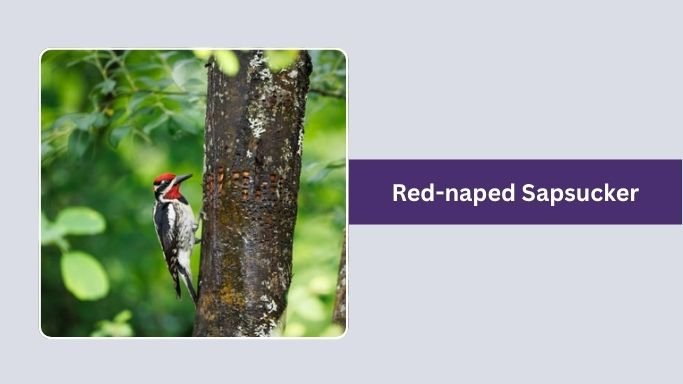
The Red-naped Sapsucker is another black, white, and red woodpecker-like bird. It has red on the crown, throat, and nape, with a black-and-white body pattern. Cornell says males have a red throat, red crown, and small red nape patch, along with a vertical white patch on the folded wing.
Identification
- Red crown
- Red throat on males
- Small red patch on nape
- Black-and-white striped face
- White wing patch
- Dark back with pale markings
- Often leaves rows of sap wells
Size and Color
The Red-naped Sapsucker is about robin-sized but slimmer. It looks sharply patterned, with red on the head and throat and strong black-and-white facial stripes. The body has a white wing stripe, pale underparts, and dark markings. Females may show less red on the throat than males.
Habitat and Diet
This bird is often found in western mountain forests, aspen stands, willow areas, mixed woods, and forest edges. It feeds on sap, insects, and fruit. Like other sapsuckers, it drills neat rows of shallow holes in trees and returns to drink sap from them.
6. Yellow-bellied Sapsucker
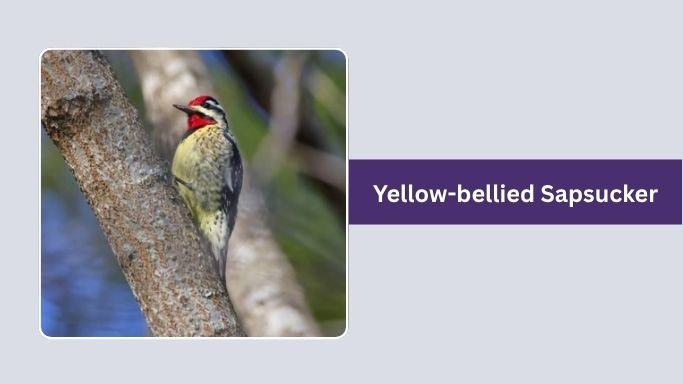
The Yellow-bellied Sapsucker is mostly black and white, with a red forehead. Males also have a red throat. Its yellow belly is often pale and may not stand out from a distance. Cornell describes this species as black and white with a red cap, and males with a red throat.
Identification
- Red forehead on both sexes
- Red throat on males
- Black-and-white face pattern
- Long white wing stripe
- Black chest patch
- Pale yellowish belly
- Often sits still on tree trunks
Size and Color
This sapsucker is about 7 to 9 inches long. Its black-and-white pattern is crisp, especially on the face and wings. The red forehead is smaller than the full red head of a Red-headed Woodpecker. The long white wing stripe is one of the best identification marks.
Habitat and Diet
Yellow-bellied Sapsuckers live in forests, young woodlands, orchards, and wooded edges. They feed heavily on sap by drilling rows of holes in trees. They also eat ants, beetles, other insects, fruit, and berries. Their sap wells provide food for other animals too.
7. Pileated Woodpecker
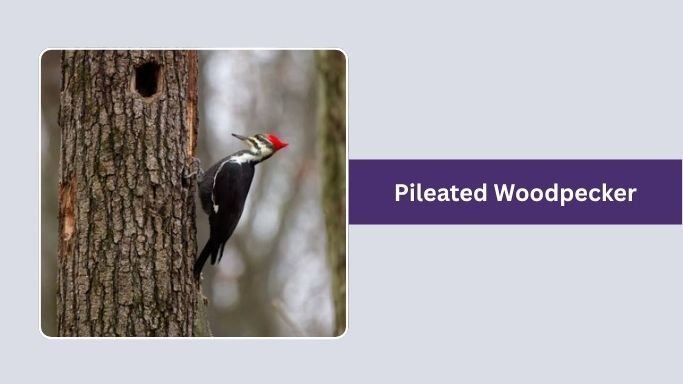
The Pileated Woodpecker is a large black bird with a flaming red crest and bold white stripes on the face and neck. It is not a small backyard bird; it is nearly crow-sized. Cornell describes it as mostly black with white stripes on the face and neck and a red crest. Males also have a red cheek stripe.
Identification
- Large woodpecker, nearly crow-sized
- Flaming red crest
- Mostly black body
- White stripes on face and neck
- White underwings visible in flight
- Long chisel-like bill
- Males have red cheek stripe
Size and Color
The Pileated Woodpecker is the largest bird on this list. Its body is mostly black, but the white stripes along the head and neck make it fit the black-and-white pattern. In flight, large white underwing patches flash clearly. The tall red crest gives the bird a dramatic look.
Habitat and Diet
Pileated Woodpeckers prefer mature forests, wooded swamps, large parks, and areas with big dead trees. Their favorite food is carpenter ants, but they also eat beetle larvae, termites, fruits, nuts, and berries. They make large rectangular holes in dead wood while searching for insects.
Quick Comparison Table
This table helps compare the seven red head birds with black and white bodies by head pattern, body color, and habitat.
| Bird | Red Head Pattern | Black and White Body Pattern | Common Habitat |
|---|---|---|---|
| Red-headed Woodpecker | Full red head | Black wings, white body | Open woods, savannas |
| Red-bellied Woodpecker | Red cap/nape | Barred black-and-white back | Forests, suburbs |
| Acorn Woodpecker | Red cap | Black body, white face patches | Oak woodlands |
| Red-breasted Sapsucker | Red head and breast | Mottled black-and-white back | Western forests |
| Red-naped Sapsucker | Red crown, throat, nape | Black-white face and wings | Aspen, western woods |
| Yellow-bellied Sapsucker | Red forehead, male red throat | Barred black-and-white body | Forests, orchards |
| Pileated Woodpecker | Red crest | Black body, white stripes | Mature forests |
How to Identify a Red Head Bird With a Black and White Body
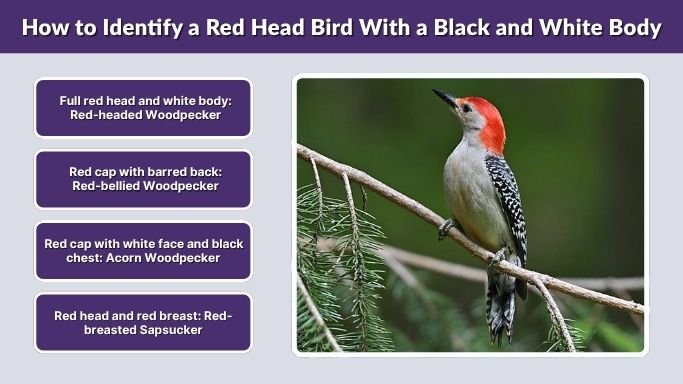
The first thing to check is how much red is on the head. A full red head usually points to the Red-headed Woodpecker. A red crest on a very large black bird points to the Pileated Woodpecker. A red cap with a black-and-white barred back may be a Red-bellied Woodpecker or a sapsucker.
Fast Identification Tips
- Full red head and white body: Red-headed Woodpecker
- Red cap with barred back: Red-bellied Woodpecker
- Red cap with white face and black chest: Acorn Woodpecker
- Red head and red breast: Red-breasted Sapsucker
- Red forehead and yellowish belly: Yellow-bellied Sapsucker
- Huge black bird with red crest: Pileated Woodpecker
- Rows of holes in tree bark: likely a sapsucker
Also pay attention to behavior. Woodpeckers often hammer on bark for insects, while sapsuckers drill neat rows of sap wells. Acorn Woodpeckers store acorns, and Pileated Woodpeckers make large rectangular holes.
Habitat Clues for Red Headed Black and White Birds
Habitat can quickly narrow the answer. If the bird is in an oak woodland and has a clown-like face, it may be an Acorn Woodpecker. If it is in a mature forest and looks almost crow-sized, it may be a Pileated Woodpecker. If it is in an eastern backyard with a barred back and red cap, it is probably a Red-bellied Woodpecker.
Red-headed Woodpeckers prefer more open areas than many woodpeckers. They may perch on dead trees, fence posts, or exposed branches. Sapsuckers are often found around trees with rows of small holes, especially during migration or in suitable woodland habitats.
Diet and Feeding Behavior
Most birds in this group eat insects, but their diets vary. Red-headed Woodpeckers eat insects, nuts, acorns, seeds, and fruit. Red-bellied Woodpeckers eat insects, fruits, nuts, and feeder foods. Acorn Woodpeckers are famous for storing acorns, but they also eat insects and fruit.
Sapsuckers are different because they drill sap wells and return to drink sap. They also eat insects caught in the sap. Pileated Woodpeckers dig deeply into dead wood for carpenter ants and beetle larvae.
FAQs
What bird has a red head and black and white body?
The Red-headed Woodpecker is one of the best matches. It has a full red head, white body, and black wings with large white patches. Other possible birds include Red-bellied Woodpecker, Acorn Woodpecker, Red-breasted Sapsucker, Yellow-bellied Sapsucker, and Pileated Woodpecker.
Is a Red-bellied Woodpecker the same as a Red-headed Woodpecker?
No, they are different birds. The Red-headed Woodpecker has a full red head and a bold black-and-white body. The Red-bellied Woodpecker has a red cap and nape, a pale belly, and a black-and-white barred back.
What large black and white bird has a red crest?
The Pileated Woodpecker is a large black-and-white bird with a red crest. It is nearly the size of a crow and has white stripes on the face and neck. In flight, it shows large white patches under the wings.
What black and white bird has a red cap?
Several birds fit this description. The Acorn Woodpecker has a red cap with a black body and white face. The Yellow-bellied Sapsucker has a red forehead. Male Downy and Hairy Woodpeckers also have small red patches on the back of the head.
Are red headed black and white birds usually woodpeckers?
Yes, many red headed birds with black and white bodies are woodpeckers or close woodpecker relatives called sapsuckers. They often have strong bills, stiff tails, and tree-climbing behavior. Most feed on insects, sap, seeds, nuts, or fruit.
