
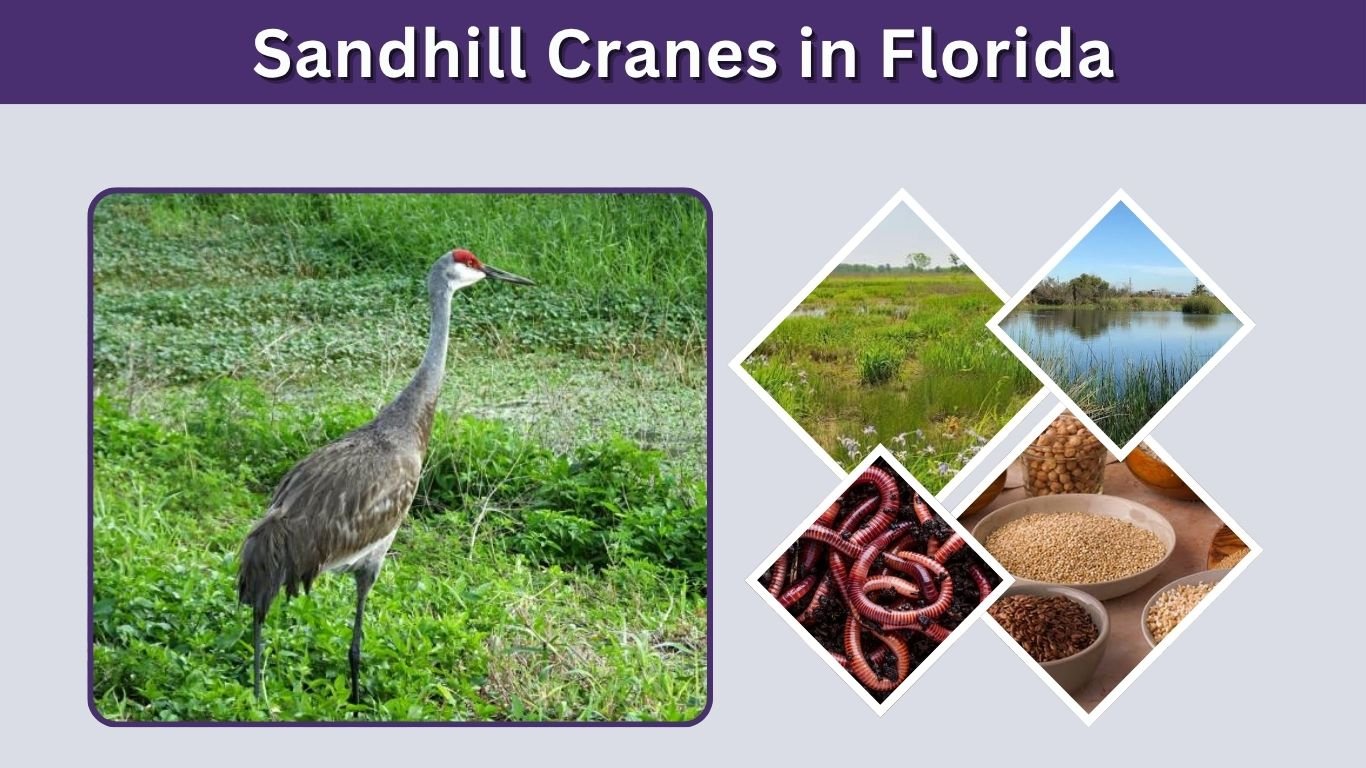
Sandhill cranes are among Florida’s most recognizable large birds. Their tall bodies, long legs, gray plumage, red crowns, and loud rattling calls make them difficult to overlook. Florida supports both a year-round resident population and thousands of migratory cranes that arrive for winter. They inhabit marshes, prairies, pastures, golf courses, and even suburban neighborhoods, where they may be seen walking in pairs or caring for rust-colored chicks.
Florida Sandhill Crane Quick Facts
Florida’s cranes are large, ground-dwelling birds that forage in wetlands and open grassy areas. They usually walk while searching for food but can fly strongly over long distances.
| Feature | Description |
| Scientific name | Antigone canadensis |
| Florida resident subspecies | A. c. pratensis |
| Height | Approximately 3–4 feet |
| Wingspan | Approximately 6–7 feet |
| Weight | Commonly 6–12 pounds |
| Coloring | Gray with a red crown |
| Diet | Omnivorous |
| Typical clutch | Two eggs |
| Main habitats | Marshes, prairies and pastures |
The species measures about 47 inches long and may have a wingspan close to 79 inches. Females and males look similar, although males are generally somewhat larger.
Two Types of Sandhill Cranes Occur in Florida
Florida does not have only one sandhill crane population. Resident cranes remain in the state throughout the year, while larger migratory cranes arrive during winter.
Florida Sandhill Crane
The Florida sandhill crane is a non-migratory subspecies that breeds and lives in Florida year-round. Its range extends through peninsular Florida and into southern Georgia.
Florida’s resident population is estimated at roughly 4,000–5,000 birds. The cranes are most numerous in prairie regions around Kissimmee and DeSoto, although they can also be encountered in many other parts of the peninsula.
Greater Sandhill Crane
Migratory greater sandhill cranes arrive in Florida during winter. The Florida Fish and Wildlife Conservation Commission estimates that approximately 25,000 greater sandhill cranes winter in the state.
These migrants are generally larger than resident Florida sandhill cranes. They breed around the Great Lakes and other northern areas before traveling south for winter.
How to Identify a Sandhill Crane
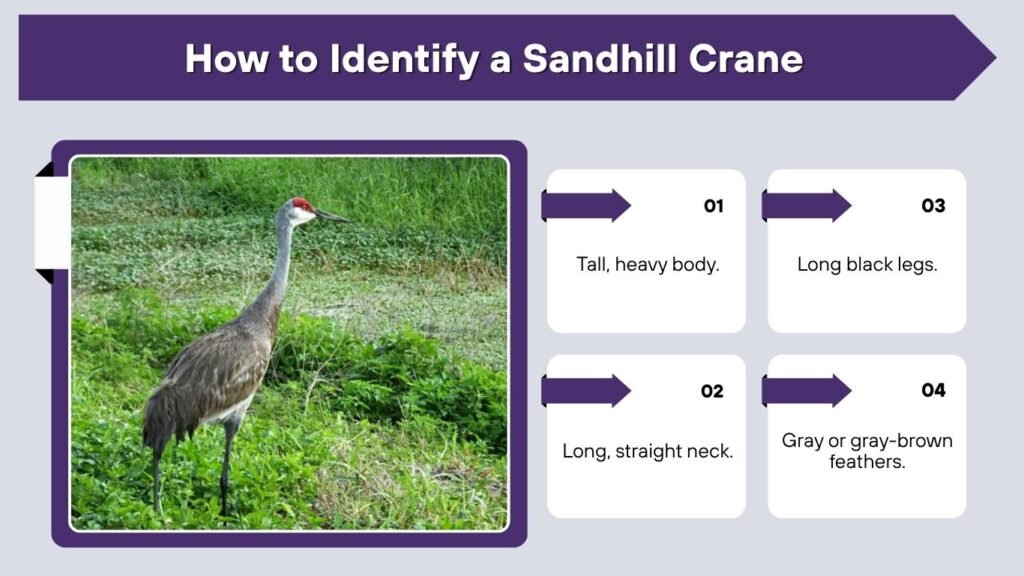
Sandhill cranes are sometimes confused with herons because both have long necks, long legs, and an association with wetlands. Several features make cranes easy to recognize.
Identification Features
- Tall, heavy body
- Long, straight neck
- Long black legs
- Gray or gray-brown feathers
- Bare red patch on the crown
- Pale cheek behind the bill
- Straight, pointed bill
- Drooping rear feathers that resemble a bustle
- Neck held straight during flight
- Loud, rolling or rattling call
Adults may appear rusty brown because they apply iron-rich mud to their feathers while preening. Juveniles are browner and lack the bright red crown seen on mature birds.
Sandhill Crane vs. Great Blue Heron
A sandhill crane flies with its neck fully extended, while a Great Blue Heron usually pulls its neck into an S-shaped curve. Cranes also have bulkier bodies and a noticeable group of drooping feathers over the tail.
Sandhill cranes typically forage while walking through grasslands, fields, and shallow wetlands. Herons spend more time standing still beside water and striking at fish.
Are Sandhill Cranes Wading Birds?
Sandhill cranes frequently wade through shallow water, but they are not members of the traditional heron, egret, or stork groups commonly described as wading birds. They belong to the crane family, Gruidae, within the order Gruiformes.
They use shallow wetlands for nesting and roosting but spend considerable time feeding on dry ground. Florida pastures, prairies, golf courses, lawns, and open fields can therefore be just as important as marshes.
Where Do Sandhill Cranes Live in Florida?
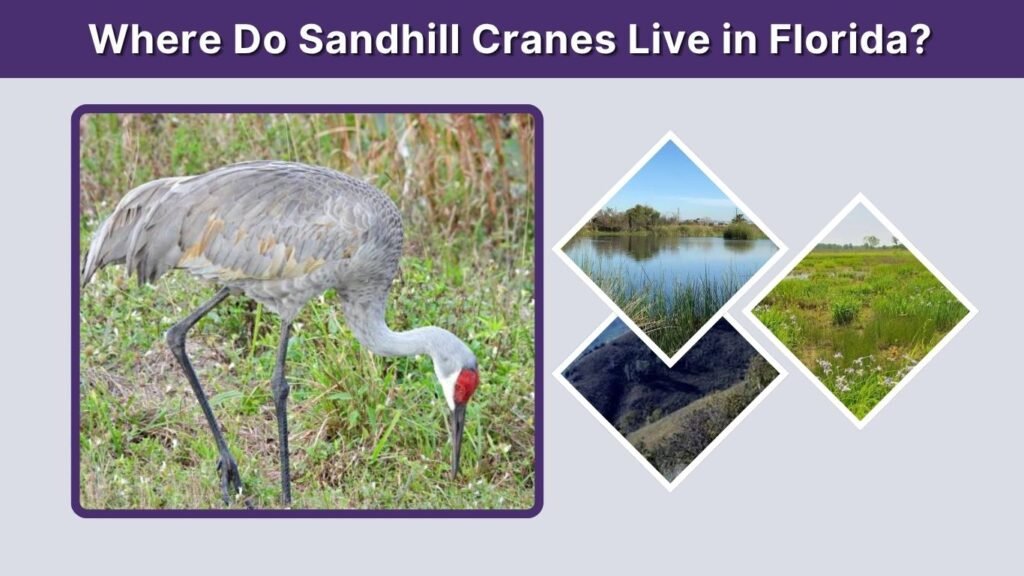
Florida sandhill cranes need a combination of freshwater wetlands and open upland habitat. Wetlands provide nesting and nighttime roosting areas, while open grasslands offer abundant food.
Natural Habitats
Common habitats include:
- Freshwater marshes
- Wet prairies
- Dry prairies
- Lake edges
- Pastures
- Open grasslands
- Shallow ponds
- Agricultural fields
Cranes often nest in standing water, which provides some protection from terrestrial predators. They forage in nearby uplands where low vegetation allows them to see food and approaching danger.
Sandhill Cranes in Orlando and Suburban Areas
The large gray birds seen walking through Orlando-area lawns and roads are often Florida sandhill cranes. Urban development has replaced or fragmented some of their natural habitat, causing cranes to use golf courses, airports, parks, subdivisions, and roadside grasslands.
Mowed lawns can attract cranes because they provide easy access to earthworms, mole crickets, beetle grubs, seeds, and other foods.
What Do Florida Sandhill Cranes Eat?

Sandhill cranes are omnivores that feed by picking food from the surface or probing the soil with their bills. Their diet changes with habitat, season, and food availability.
They commonly eat:
- Seeds and grains
- Berries
- Roots and tubers
- Earthworms
- Beetles and grubs
- Mole crickets
- Snails
- Frogs and other amphibians
- Small reptiles
- Small mammals
Resident cranes may also eat insects, nestling birds, and other small animals. Their varied natural diet provides the nutrients they need without supplemental feeding from people.
Nesting and Baby Sandhill Cranes
Florida sandhill cranes generally nest during late winter and spring. A pair builds a low platform from vegetation in shallow water, often creating a nest about two feet across.
Eggs and Incubation
The female usually lays two eggs, although clutch size may range from one to three. Both parents participate in incubation, which lasts approximately 29–32 days.
The eggs are usually pale brown, yellowish, or olive with darker markings that help them blend into the nest.
Sandhill Crane Chicks
Newly hatched chicks are covered in soft orange, rusty brown, or yellow-brown down. They are capable of walking away from the nest with their parents within approximately one day of hatching.
The chicks follow both adults while learning where to find food and how to recognize danger. Young cranes generally remain with their parents for nine or ten months.
Sandhill Crane Behavior and Calls
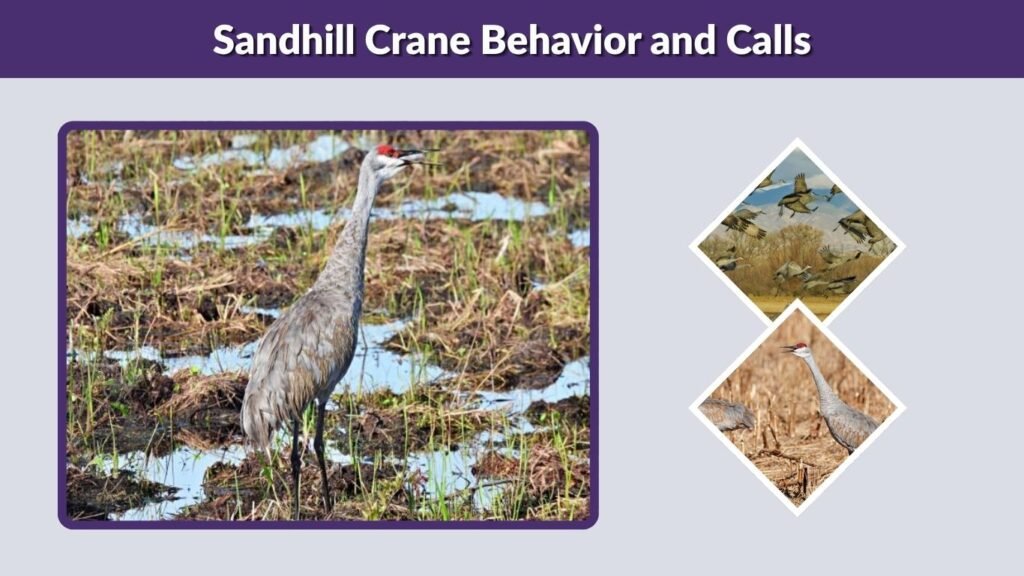
Sandhill cranes are well known for their elaborate dancing displays. They bow, spread their wings, toss grass, run, and leap into the air. These movements are used during courtship but may also occur at other times.
Pairs frequently call together in a coordinated duet. Their powerful, rattling voices can carry over long distances, which is why cranes may be heard before they are seen. Sandhill cranes usually form long-term pair bonds and remain with the same mate for many years.
Are Florida Sandhill Cranes Dangerous?
Sandhill cranes normally avoid conflict, but adults may become defensive around nests or flightless chicks. Their long bills and strong legs could cause injury if a person or pet approaches too closely.
Never chase, corner, touch, or attempt to pick up a crane. Keep dogs leashed and give family groups plenty of room to move away.
Do Not Feed Sandhill Cranes
Intentionally feeding sandhill cranes has been illegal in Florida since 2002. Fed cranes can lose their natural fear of people, approach homes and vehicles, cross roads more frequently, damage property, or behave aggressively while expecting food.
Avoid leaving pet food outdoors or spilling birdseed where cranes can reach it. Allow them to find their natural diet instead.
FAQs
Are sandhill cranes found in Florida all year?
Florida sandhill cranes remain in the state throughout the year. During winter, they are joined by thousands of migratory greater sandhill cranes from northern breeding areas.
Why are sandhill cranes common around Orlando?
Central Florida offers wetlands, lakes, prairies, pastures, golf courses, and open lawns. These environments provide nesting areas, safe roosts, and abundant insects, seeds, worms, and grubs.
How can you tell a male from a female sandhill crane?
Males and females have similar plumage and red crowns. Males are usually larger, but size differences may be difficult to judge unless both birds are standing together.
Do Florida sandhill cranes migrate?
The resident Florida subspecies does not normally migrate. Greater sandhill cranes migrate into Florida for winter and return north to breed.
How long do sandhill cranes live?
Sandhill cranes may live for several decades. The oldest recorded individual was at least 37 years and 3 months old when it was found.
