
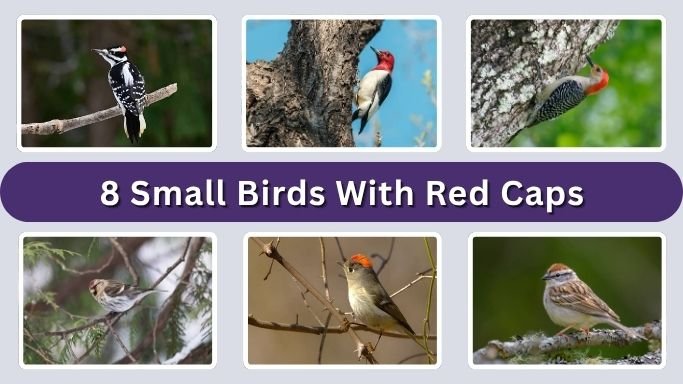
Small birds with red caps are eye-catching, but they can be tricky to identify because the red mark may appear as a full crown, forehead patch, or small spot on the back of the head. Some are sparrows, some are finches, and others are woodpeckers or tiny songbirds. From the Chipping Sparrow to the Red-headed Woodpecker, these birds differ in size, color, habitat, diet, and behavior. This guide covers eight common red-capped birds and how to recognize them.
1. Chipping Sparrow
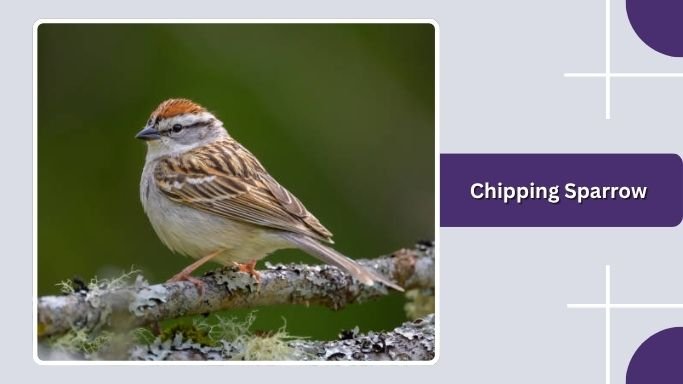
The Chipping Sparrow is one of the most common small birds with a red cap on its head. It is a neat, slim sparrow often seen in gardens, parks, open woods, farms, and backyard feeding areas. Its rusty-red crown makes it easy to notice, especially during the breeding season.
Identification
- Small, slim sparrow with a rounded body
- Rusty-red cap on top of the head
- White or pale gray eyebrow line
- Black line through the eye
- Grayish face and underparts
- Brown-streaked wings and back
- Thin, sharp bill for eating seeds and insects
Size and Color
The Chipping Sparrow is a small bird, usually about 5 to 6 inches long. Its most noticeable feature is the reddish-brown cap, which looks like a small red crown. During breeding season, the cap becomes brighter and more distinct. The face is gray with a clean black eye line, while the back is brown with darker streaks. Its underparts are pale gray or whitish, giving the bird a clean look compared with many heavily streaked sparrows.
Habitat and Range
Chipping Sparrows live in open areas with scattered trees. They are often found in backyards, parks, orchards, woodland edges, farms, and roadsides. They also visit lawns and gardens, especially where there are shrubs, trees, and seed sources. In North America, they are widespread during the breeding season and may move south in winter.
Diet and Behavior
Chipping Sparrows eat seeds, grasses, small insects, and other tiny invertebrates. During spring and summer, they feed more insects to their young. They often forage on the ground, hopping through grass or leaf litter while picking up seeds. Their song is a fast, dry trill that sounds like a repeated chipping note, which is how they got their name.
2. Common Redpoll
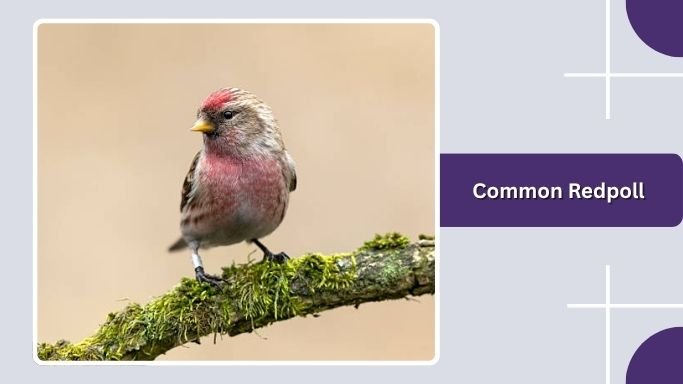
The Common Redpoll is a tiny finch with a bright red cap on its forehead. It is often seen in cold northern regions, especially during winter. This bird has a small body, streaky brown markings, and a cheerful feeding style. Its red forehead patch makes it one of the easiest “red cap” birds to recognize.
Identification
- Small finch with a bright red forehead cap
- Black patch under the bill
- Streaky brown and white body
- Short, pointed yellow bill
- Males may show pink or rosy color on the chest
- Forked tail and active movements
- Often found in winter flocks
Size and Color
The Common Redpoll is a small bird, usually around 5 inches long. Its most noticeable feature is the red cap on the front of the head. The body is mostly brown and white with heavy streaking, while the face has a small black chin patch. Males can have a rosy wash on the chest, but females are usually plainer and more streaked. The short yellow bill helps separate it from many sparrows.
Habitat and Range
Common Redpolls breed in far northern areas, especially tundra, birch scrub, and open woodland. In winter, they may move south in large flocks when food is limited. They often visit weedy fields, brushy edges, open woods, and backyard feeders. They are especially attracted to birch, alder, and thistle seeds.
Diet and Behavior
Common Redpolls eat mostly tiny seeds. They feed on birch, alder, grasses, weeds, and thistle. At feeders, they may eat nyjer and sunflower chips. These birds are very active and often hang upside down on seed heads while feeding. In winter, they travel in busy flocks and make quick, chattering calls.
3. Lesser Redpoll
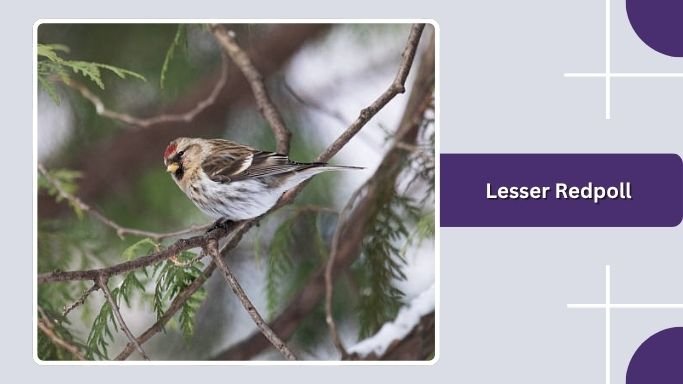
The Lesser Redpoll is a small finch with a neat red cap and streaky brown body. It looks similar to the Common Redpoll but is usually slightly smaller and darker. This bird is often found in open woodland, scrub, gardens, and areas with birch or alder trees. Its red forehead makes it a classic small bird with a red cap.
Identification
- Tiny finch with a red forehead patch
- Brown streaked back and sides
- Small black chin patch
- Short, pointed seed-eating bill
- Male may have pinkish-red on the breast
- Female is browner and less colorful
- Often seen in small, lively flocks
Size and Color
The Lesser Redpoll is about 4.5 to 5 inches long. Its red cap is usually small but bright, sitting on the front of the crown. The body is brown, buff, and white with dark streaks. Males may show a soft reddish wash on the chest, especially in breeding condition. Compared with the Common Redpoll, it often looks warmer brown and less frosty.
Habitat and Range
Lesser Redpolls are commonly linked with birch, alder, young woodland, scrub, heathland, gardens, and farmland edges. They are more familiar in parts of Europe than in North America. During colder months, they may gather in flocks and move around in search of seeds. They often visit gardens where suitable seed feeders are available.
Diet and Behavior
The Lesser Redpoll feeds mainly on small seeds from trees, weeds, and grasses. Birch and alder seeds are especially important. It also eats some insects during the breeding season. This bird is active and acrobatic, often clinging to thin branches or seed heads. Its calls are light, quick, and chattering.
4. Ruby-crowned Kinglet
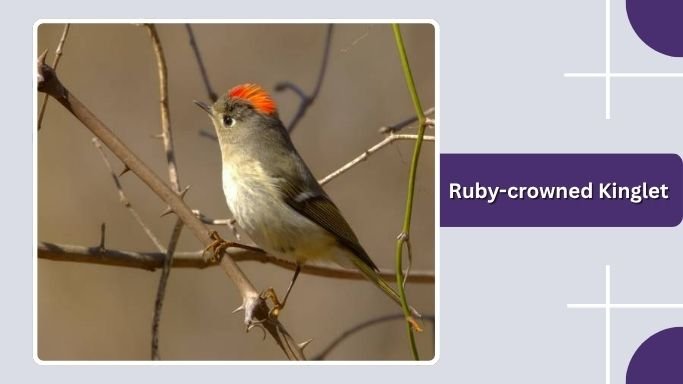
The Ruby-crowned Kinglet is a tiny, active bird with a hidden red crown patch. Unlike many red-capped birds, the red mark is not always visible. Males flash the ruby-red crown when excited, alarmed, or displaying. Because of its tiny size and quick movements, this bird can be difficult to observe closely.
Identification
- Very small, round-bodied songbird
- Olive-gray upperparts and pale underparts
- Thin, dark bill
- Bold white eye ring
- White wing bars
- Male has a hidden ruby-red crown patch
- Constantly flicks wings while moving
Size and Color
The Ruby-crowned Kinglet is one of the smallest birds in North America, usually about 3.5 to 4.5 inches long. Most of the time, it looks olive-gray rather than red. The male’s red crown patch is hidden under head feathers and only shows when raised. Its large eye ring, small body, and wing-flicking habit are more reliable clues than the red crown.
Habitat and Range
Ruby-crowned Kinglets breed in northern coniferous forests and mountain forests. During migration and winter, they appear in woodlands, parks, gardens, shrubs, and backyard trees. They are often seen moving quickly through branches while searching for food. In warmer months, they are usually higher in forested habitats.
Diet and Behavior
Ruby-crowned Kinglets eat mostly tiny insects, spiders, and insect eggs. They also eat some berries and sap in colder months. They are energetic birds that rarely stay still, often flicking their wings as they hop through foliage. Their song is surprisingly loud for such a small bird, with a lively series of notes.
5. Red-bellied Woodpecker
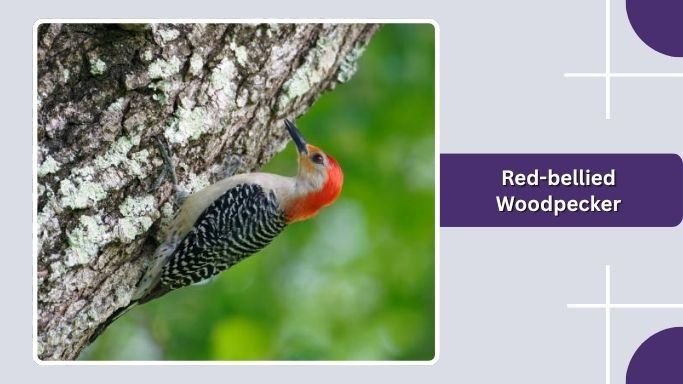
The Red-bellied Woodpecker is a medium-sized woodpecker with a bright red cap and nape. Despite its name, the red belly is often hard to see. The red on the head is much more noticeable, especially on males. This bird is common in woodlands, parks, suburbs, and backyard feeder areas.
Identification
- Medium-sized woodpecker with a strong bill
- Red cap and red nape on males
- Black-and-white barred back
- Pale gray face and underparts
- Slight reddish wash on the belly
- Long, pointed bill for drilling wood
- Often clings to trunks and branches
Size and Color
The Red-bellied Woodpecker is larger than sparrows and finches, usually about 9 to 10.5 inches long. Males have red from the bill across the crown to the nape, while females usually have red mainly on the nape and back of the head. Its black-and-white barred back is a key field mark. The belly may show a faint reddish patch, but it is not always visible.
Habitat and Range
This woodpecker lives in forests, open woodlands, wooded suburbs, parks, orchards, and riverbottom areas. It is especially common in the eastern and southeastern United States. It also visits backyard feeders, especially where suet, peanuts, or sunflower seeds are offered. Dead trees and large branches are important because they provide nesting and feeding sites.
Diet and Behavior
Red-bellied Woodpeckers eat insects, beetle larvae, ants, nuts, seeds, fruits, and berries. They also store food in bark cracks and tree holes. They climb tree trunks using their stiff tail feathers for support. Their loud rolling calls make them easy to hear, even when they are hidden among branches.
6. Downy Woodpecker
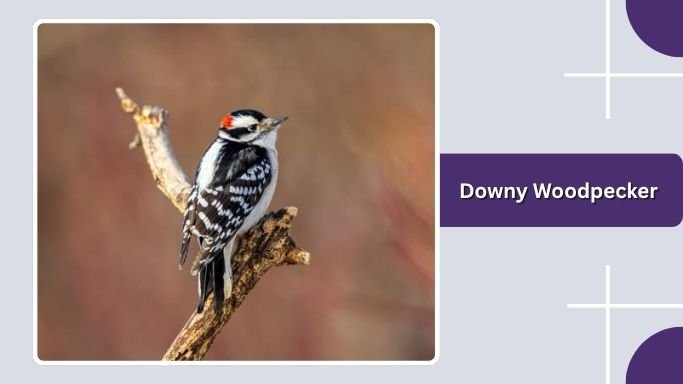
The Downy Woodpecker is a small black-and-white woodpecker. Males have a small red patch on the back of the head, making them one of the common small birds with a red cap-like mark. They are active, familiar feeder birds and often visit trees, shrubs, suet feeders, and backyard gardens.
Identification
- Small black-and-white woodpecker
- Male has a small red patch on back of head
- White belly and black wings with white spots
- Short, chisel-like bill
- White stripe down the back
- Stiff tail used for climbing
- Often seen on tree trunks and branches
Size and Color
Downy Woodpeckers are about 5.5 to 7 inches long, making them the smallest common woodpeckers in North America. Their body is mostly black and white. The wings have rows of white spots, and the back has a clear white stripe. The male’s red patch is small and located at the rear of the head, not across the whole crown.
Habitat and Range
Downy Woodpeckers live in many wooded places, including forests, parks, orchards, gardens, suburbs, and yards. They are highly adaptable and often come close to homes. They use small branches, tree trunks, weed stems, and wooden posts while searching for food. They are widespread across much of North America.
Diet and Behavior
Downy Woodpeckers eat insects, beetle larvae, ants, caterpillars, seeds, berries, and suet. They often tap lightly on bark to find insects. Compared with larger woodpeckers, they can forage on thin branches and plant stems. At feeders, they commonly eat suet, peanuts, and sunflower seeds.
7. Hairy Woodpecker
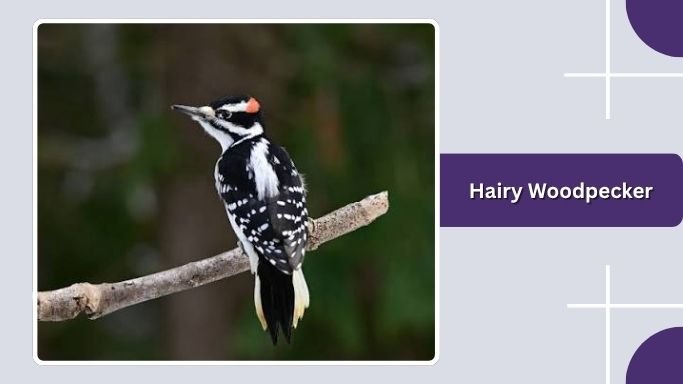
The Hairy Woodpecker looks very similar to the Downy Woodpecker but is larger and has a longer bill. Males have a red patch on the back of the head. This black-and-white woodpecker is often found in mature forests, wooded parks, and sometimes backyard areas with large trees.
Identification
- Medium-sized black-and-white woodpecker
- Male has red patch on back of head
- Long, strong, chisel-shaped bill
- White stripe down the back
- Black wings with white spots
- White underparts
- Often climbs large tree trunks
Size and Color
The Hairy Woodpecker is about 7 to 10 inches long. It has a black-and-white pattern much like the Downy Woodpecker, but it is noticeably bigger. Its bill is long and almost as long as the head. The male’s red mark is a small patch at the rear of the crown. The body looks sturdy, and the tail is stiff for climbing.
Habitat and Range
Hairy Woodpeckers prefer mature forests, woodlots, wooded mountains, parks, orchards, and areas with large trees. They can visit backyard feeders, but they are usually less common in small yards than Downy Woodpeckers. They are widely distributed across North America and may stay in the same general area year-round.
Diet and Behavior
Hairy Woodpeckers feed mostly on insects hiding in bark and wood. They eat beetle larvae, ants, caterpillars, spiders, seeds, nuts, and berries. They hammer harder than Downy Woodpeckers and often search larger trunks and branches. At feeders, they may eat suet, peanuts, and sunflower seeds.
8. Red-headed Woodpecker
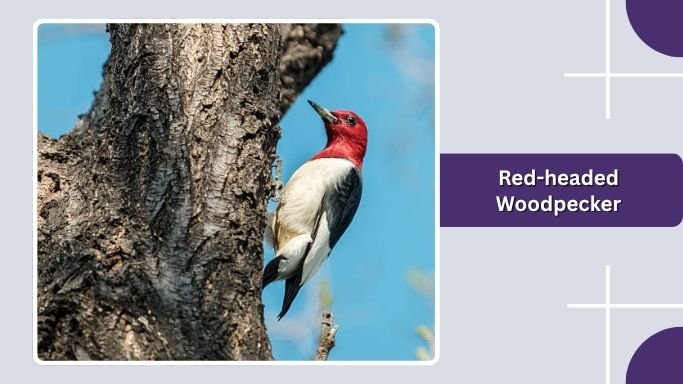
The Red-headed Woodpecker is one of the most striking birds with a red head. Adults have an entirely red head, neck, and throat, making them easy to recognize. Unlike birds with only a red patch or cap, this woodpecker has a bold full red hood. It is often seen in open woods, groves, farms, and dead-tree habitats.
Identification
- Full bright red head, neck, and throat
- Black back and wings
- Large white wing patches
- White underparts
- Strong, straight bill
- Medium-sized woodpecker body
- Bold black, white, and red pattern
Size and Color
The Red-headed Woodpecker is about 7.5 to 9 inches long. Adults have a clean, bright red head that contrasts sharply with the black back and white belly. The wings show large white patches, especially in flight. Young birds do not have the same bright red head at first; they look browner or mottled until they mature.
Habitat and Range
Red-headed Woodpeckers prefer open woodlands, savannas, orchards, forest edges, farms, parks, and areas with dead trees. Dead trees are especially important because they provide nesting cavities and insect food. This species is found in parts of eastern and central North America, though it can be local and less common in some areas.
Diet and Behavior
Red-headed Woodpeckers eat insects, beetles, grasshoppers, fruits, nuts, seeds, and berries. They are skilled at catching insects in the air and also store food in tree cracks, fence posts, and cavities. They often perch openly, making their bold red head easy to see from a distance.
