
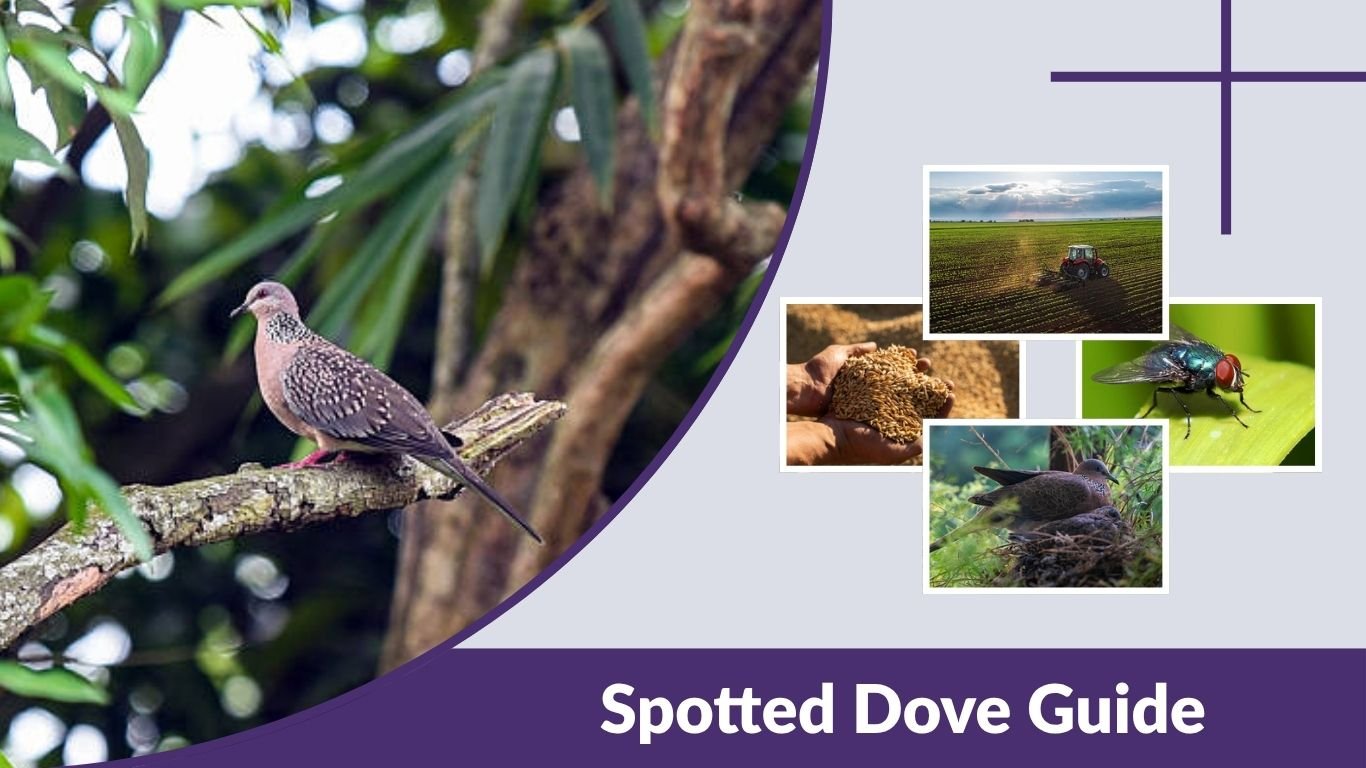
The spotted dove is a familiar bird across many parts of Asia and beyond, known for its gentle nature and distinctive neck pattern. Often seen in gardens, parks, and open woodlands, this species adapts easily to human environments. Its soft cooing call and calm behavior make it one of the most recognizable doves. In this guide, you will learn how to identify the spotted dove, understand its habitat, and explore its feeding habits.
What Is a Spotted Dove?
The spotted dove is a medium-sized bird belonging to the pigeon and dove family. It is widely distributed and thrives in both natural and urban environments. Its name comes from the unique spotted patch on the back of its neck, which makes it easy to recognize. This species is known for its adaptability and peaceful behavior.
Scientific Classification
- Belongs to the dove and pigeon family
- Native to Asia but introduced elsewhere
- Known for its widespread adaptability
Common Names
- Spotted dove
- Spotted turtle dove
- Spotted-necked dove
Spotted Dove Physical Appearance and Identification
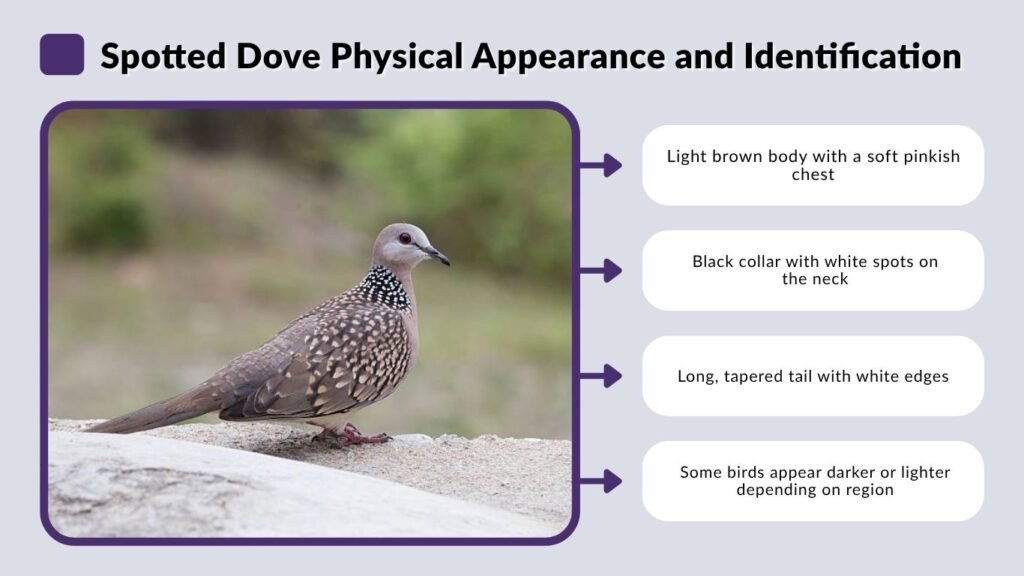
The spotted dove has a graceful and slim appearance, making it easy to distinguish from other birds. Its soft color tones and unique markings help bird watchers identify it quickly. The most noticeable feature is the spotted collar on its neck.
Key Identification Features
- Light brown body with a soft pinkish chest
- Black collar with white spots on the neck
- Long, tapered tail with white edges
Color Variations and Look-Alikes
- Some birds appear darker or lighter depending on region
- Can be confused with similar doves lacking spotted neck
- Juveniles may appear duller without clear markings
Male vs Female Spotted Dove
Although male and female spotted doves look very similar, subtle differences exist in their behavior. These differences are often more noticeable during the breeding season when males become more active.
Behavioral Differences
- Males are more vocal, especially during mating periods
- Females tend to be quieter and less active
- Males perform display flights to attract mates
Physical Differences
- Very slight size variation, often hard to notice
- No major difference in color or markings
- Both share the same distinctive neck pattern
Spotted Dove Habitat and Distribution
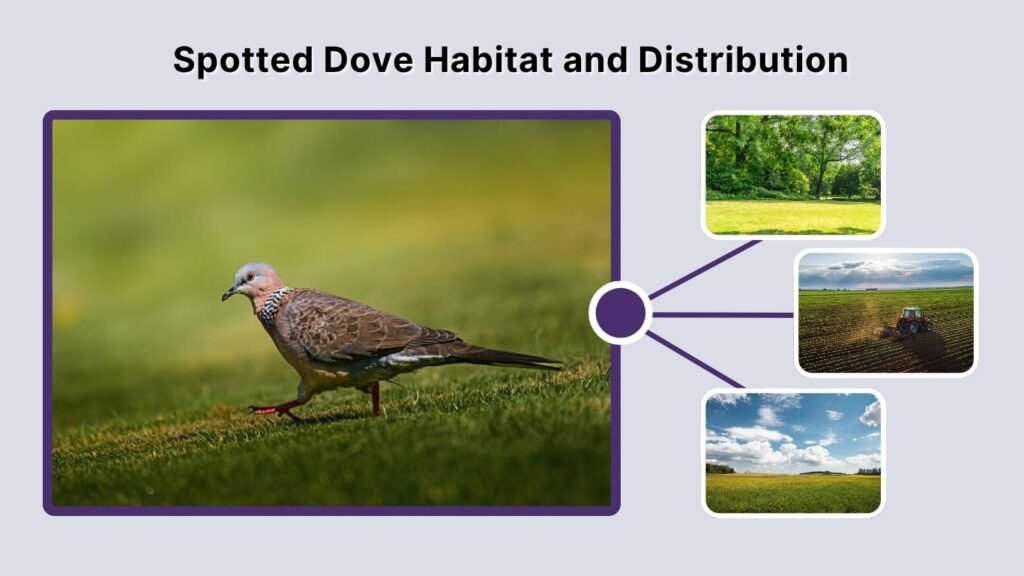
The spotted dove is highly adaptable and can survive in a wide range of environments. It prefers open spaces where food is easily available and trees are present for nesting. This adaptability has allowed the species to spread beyond its native range.
Natural Habitat
Spotted doves are commonly found in open woodlands, agricultural lands, and grassy fields. They prefer areas with scattered trees where they can perch and build nests. These birds avoid dense forests and thrive better in semi-open landscapes.
Geographic Distribution
- Native to South and Southeast Asia
- Found in Australia due to introduction
- Established populations in Hawaii and California
Spotted Dove Diet and Feeding Habits
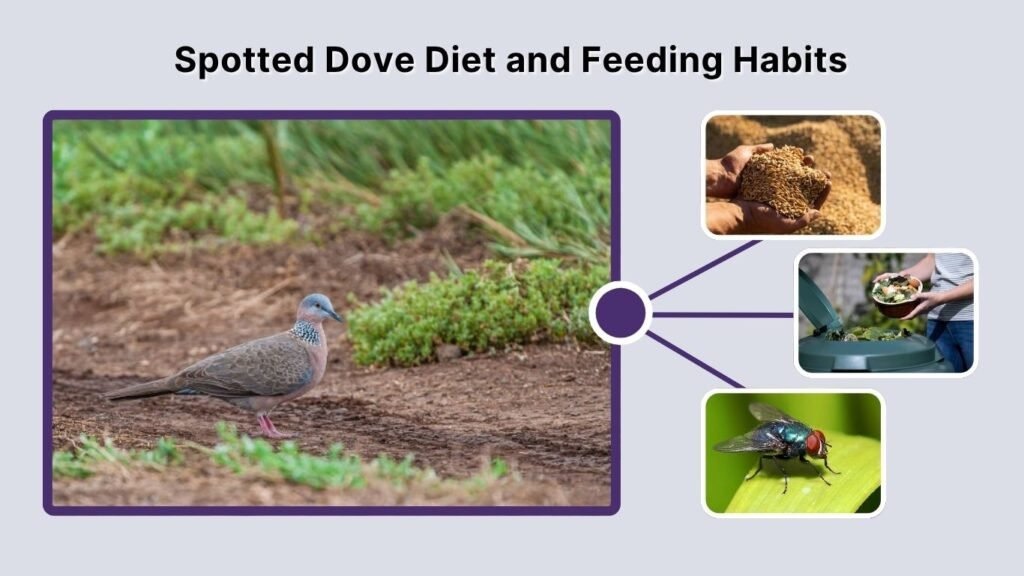
The diet of the spotted dove mainly consists of simple and easily available food sources. These birds are ground feeders and spend much of their time searching for food in open areas. Their feeding habits are calm and consistent.
What Do Spotted Doves Eat?
- Seeds and grains form the primary diet
- Small insects are occasionally consumed
- Garden leftovers and bird feed in urban areas
Feeding Behavior
- Prefer feeding on the ground rather than trees
- Often seen alone or in pairs while feeding
- Adapt easily to human-provided food sources
Spotted Dove Behavior and Lifestyle
The spotted dove is known for its calm and peaceful nature. It is not aggressive and usually avoids conflict with other birds. This species is often seen resting quietly or walking slowly on the ground while searching for food. Its ability to live close to humans makes it a common sight in residential areas, parks, and farms.
Spotted Dove Call and Sounds
The spotted dove is well known for its soft, rhythmic cooing, which is often heard during quiet mornings and evenings. This gentle sound plays an important role in communication, especially during the breeding season. The call is repetitive and soothing, making it easy to recognize even without seeing the bird.
When They Make Sounds
- During mating season to attract partners
- To mark and defend territory
- As a form of communication between pairs
What the Call Sounds Like
- Low, repetitive cooing pattern
- Calm and rhythmic tone
- Often described as a soft “coo-coo” sequence
Spotted Dove Breeding and Reproduction
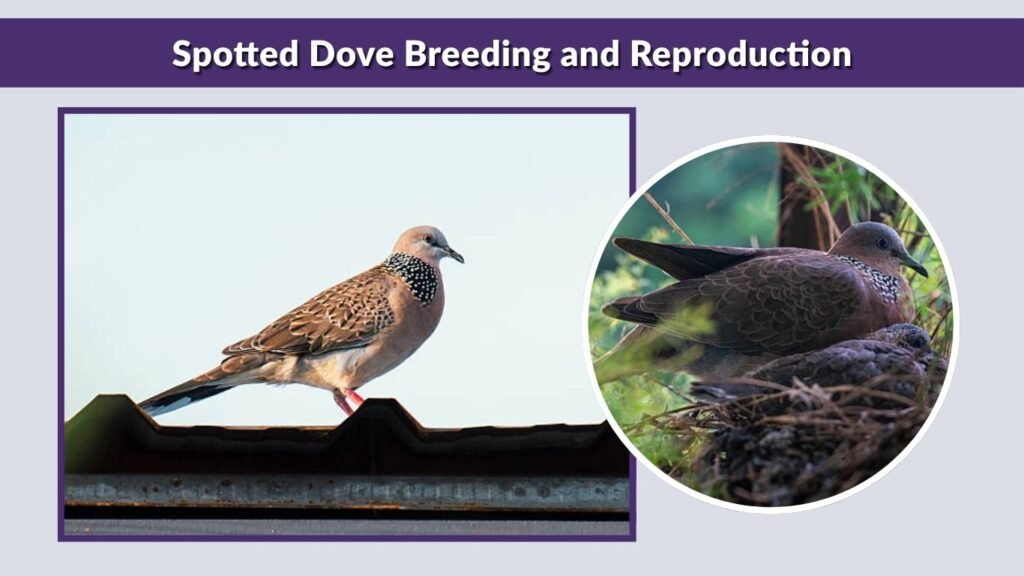
Spotted doves follow simple but effective breeding habits that help them thrive in different environments. They build light nests and raise their young with shared responsibility. Their ability to reproduce in both natural and urban settings contributes to their widespread presence.
Nesting Habits
- Build small, loose nests using twigs
- Prefer trees, shrubs, or even building ledges
- Nests are often placed in quiet, sheltered spots
Eggs and Development
- Usually lay two white eggs per cycle
- Incubation lasts around two weeks
- Both parents help feed and protect the chicks
Lifespan of Spotted Dove
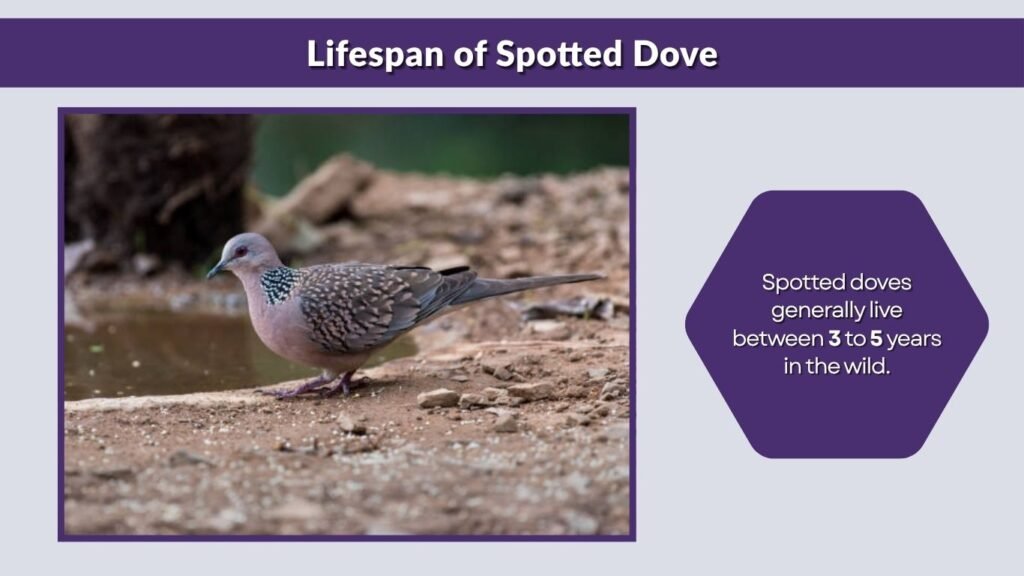
The lifespan of a spotted dove depends on environmental conditions and safety from predators. In the wild, these birds live relatively short but stable lives. Access to food and safe nesting areas plays a key role in their survival.
Spotted doves generally live between 3 to 5 years in the wild. However, in safer environments with fewer threats, some individuals may live longer. Factors such as climate, food supply, and human activity can influence their overall lifespan.
Do Spotted Doves Mate for Life?
Spotted doves are known for forming strong pair bonds, especially during breeding seasons. While they may not always stay together for life, many pairs remain bonded for long periods. They share responsibilities such as nest building, incubation, and feeding their young, showing a cooperative and stable partnership.
Spotted Dove vs Similar Species
Understanding the differences between similar species helps avoid confusion when identifying birds in the wild. While many doves share similar shapes and colors, small details can make a big difference.
Oriental Turtle Dove vs Spotted Dove
The Oriental turtle dove is generally larger and has more complex feather patterns. Unlike the spotted dove, it lacks the clear black-and-white spotted collar. It also prefers more forested habitats, while spotted doves are commonly found in open and urban areas.
Spotted Dove vs Ringed Turtle Dove
The ringed turtle dove has a simple black neck ring instead of a spotted collar. It often appears lighter in color and is commonly domesticated. In contrast, the spotted dove has a more distinct patterned neck and is more commonly seen in the wild.
Spotted Dove in Urban Areas
Spotted doves are highly adaptable birds that thrive in cities and towns. Their ability to live near humans makes them one of the most commonly seen doves in residential areas. They easily find food in gardens, parks, and open spaces, and often nest in trees or building structures.
Their calm nature allows them to coexist with people without much disturbance. This adaptability has helped them expand their range and maintain stable populations in many regions.
Interesting Facts About Spotted Doves
- They are one of the most adaptable dove species
- Their call is often used to identify them from a distance
- They can live comfortably in both rural and urban areas
FAQ
What is the difference between male and female spotted doves?
Male and female spotted doves look almost identical, making visual identification difficult. The main difference lies in behavior. Males are more vocal and active during the breeding season, often performing display flights, while females are generally quieter and less active.
What do spotted doves eat?
Spotted doves mainly feed on seeds and grains found on the ground. They may also eat small insects occasionally. In urban environments, they adapt easily and often consume food scraps or bird feed available in gardens and parks.
Where are spotted doves commonly found?
They are native to Asia but are also found in places like Australia, Hawaii, and parts of the United States. They prefer open areas such as farmland, gardens, and urban spaces where food is easily available.
How long do spotted doves live?
Spotted doves usually live around 3 to 5 years in the wild. Their lifespan depends on environmental conditions, availability of food, and exposure to predators or threats.
What sound does a spotted dove make?
The spotted dove produces a soft, repetitive cooing sound. This call is calm and rhythmic, often heard during early mornings or breeding seasons when males are attracting mates or marking their territory.
