
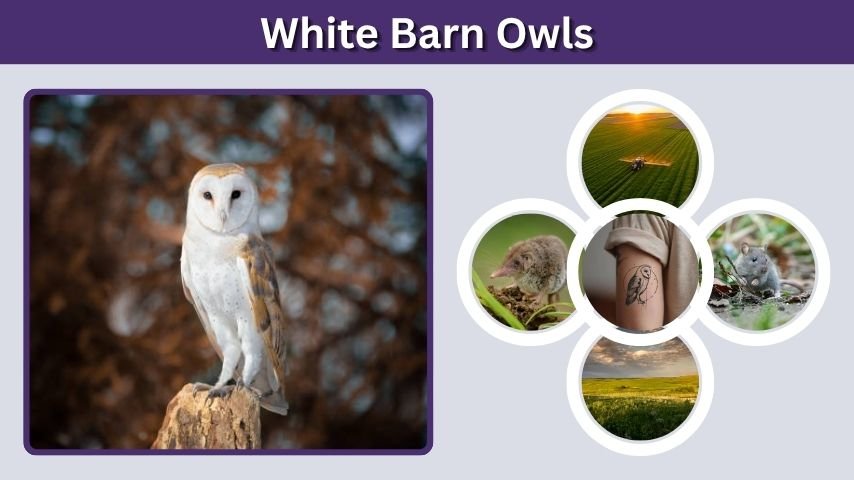
A white barn owl is usually a normal barn owl with a pale face, white underside, and light-colored feathers. Barn owls are famous for their ghostly look, heart-shaped face, silent flight, and strange nighttime calls. Some people search for “pure white barn owl” or “all white barn owl,” but most barn owls are not completely white. They usually have white, cream, gray, golden-brown, and black markings. Their pale color helps make them one of the most recognizable owls in the world.
What Is a White Barn Owl?
A white barn owl is not usually a separate species. It is commonly a barn owl with pale plumage, especially a white face, chest, belly, and underwings. Cornell Lab describes the American barn owl as having a white heart-shaped face, with gray and cinnamon coloring above; females are often darker than males, but there is overlap.
Is a White Barn Owl a Real Owl?
Yes, white barn owls are real. Many barn owls look mostly white from the front or when flying at night. Their underside is often pale, while the back and wings are usually golden-brown, gray, or cinnamon.
A barn owl may look bright white in photos because of lighting, camera exposure, or the angle of the bird. When seen in moonlight, its pale face and underside can make it appear almost ghostlike.
Are Barn Owls Always White?
No, barn owls are not always white. Most have a mix of colors. Their face and underside may be white or creamy, while the upperparts are usually buff, golden, gray, or brown.
Some males are very pale underneath, while females often have darker markings and more spotting. The Barn Owl Trust notes that males are generally lighter and more purely white underneath, while females are slightly heavier.
Why Are Barn Owls White?
Barn owls are pale because their feather pattern helps them blend into their environment and hunt effectively at night. Their white face and underside are part of their natural appearance, not a sign of albinism in most cases.
The Role of White Feathers
The white feathers on the face, chest, belly, and underwings make the barn owl easy to identify. The pale facial disk also helps with hearing. Cornell’s educational page notes that barn owls have a heart-shaped facial disk that funnels sound to their ears.
Their white underside may also help reduce the shadow effect during flight in moonlight. From below, a pale belly can make the bird’s outline less obvious to prey.
White Barn Owl in Flight
A white barn owl in flight can look beautiful and mysterious. Its pale underside, long wings, and smooth flight make it appear almost silent and floating. Cornell Lab describes barn owls as having long, rounded wings and a short tail that create a buoyant flight style.
At night, the white underside may catch moonlight, making the owl look like a pale shape moving over fields, barns, or grasslands.
White Barn Owl Identification
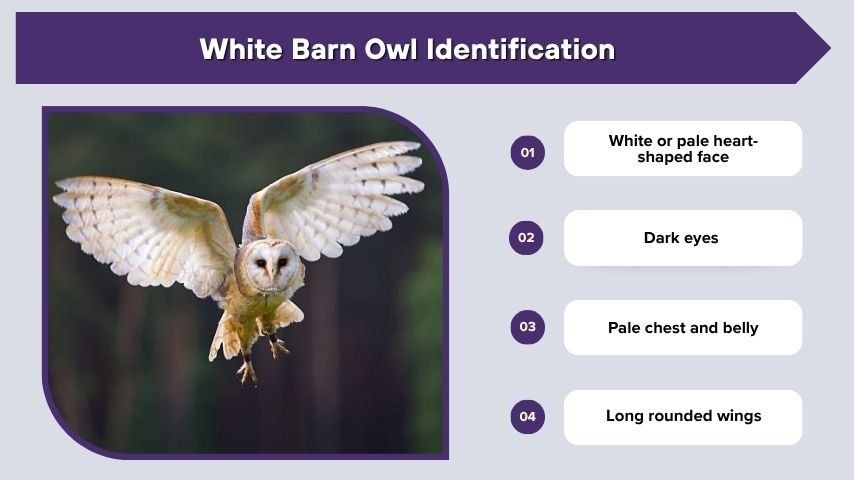
White barn owls are easy to recognize compared with many other owls. Their face shape, pale body, and quiet flight make them stand out.
Key Identification Features
- White or pale heart-shaped face
- Dark eyes
- Pale chest and belly
- Golden-brown, gray, or cinnamon upperparts
- Long rounded wings
- Short tail
- Long legs
- Soft, ghostlike flight
- Raspy screech instead of a typical hoot
The heart-shaped face is one of the strongest identification clues. Unlike many owls with round facial disks, barn owls have a long, pale, heart-like facial shape.
White Barn Owl vs Black and White Barn Owl
| Feature | White Barn Owl | Black and White Barn Owl |
| Meaning | Pale barn owl with white face and underside | Barn owl with strong dark markings or black-and-white photo style |
| Face | Usually white or cream | White face with dark eyes and markings |
| Body | Pale underneath, brown-gray above | Darker contrast may be more visible |
| Common use | Natural bird description | Photography, art, tattoo, or ID search |
| Separate species? | No | No |
A “black and white barn owl” may simply refer to a barn owl with dark spots and pale feathers. It may also refer to black-and-white photography, drawings, clipart, tattoos, or art designs.
Pure White Barn Owl: Is It Possible?
A pure white barn owl is possible but uncommon. Most barn owls are not fully white. Even very pale individuals usually have some golden, gray, or brown markings on the wings and back.
Pure White vs Normal Pale Barn Owl
A normal pale barn owl may look white from the front but still have colored upperparts. A truly all-white owl may have a rare genetic condition such as leucism or albinism, though these are not the same thing.
Leucistic birds may have reduced pigment in feathers but normal-colored eyes. Albino birds usually lack pigment more completely and often have reddish or pinkish eyes. Most “white barn owl” sightings are simply pale normal barn owls.
Are All White Barn Owls Albino?
No, all pale or white-looking barn owls are not albino. Many male barn owls are naturally pale underneath. Hawk and Owl Trust explains that male barn owls are usually smaller and often have almost pure white undersides, while females tend to have more spots on the chest.
So, a very white-looking barn owl is often just a normal pale bird, especially if it has dark eyes and some buff or gray coloring above.
White Faced Barn Owl
The phrase “white faced barn owl” usually refers to the barn owl’s pale facial disk. This white face is one of the bird’s most famous features.
Why the Face Looks Like a Heart
The barn owl’s facial disk forms a heart shape around the eyes and beak. This is not only attractive; it is useful. The shape helps direct sound toward the ears, improving the owl’s ability to locate prey in darkness.
This feature helps barn owls hunt mice, voles, rats, and shrews even when they are hidden in grass.
White Face and Dark Eyes
The contrast between the white face and dark eyes gives the barn owl its dramatic look. This is one reason people often describe barn owls as ghostly, mysterious, or even scary at night.
However, this appearance is natural and helps the bird survive as a nighttime predator.
Male and Female White Barn Owls
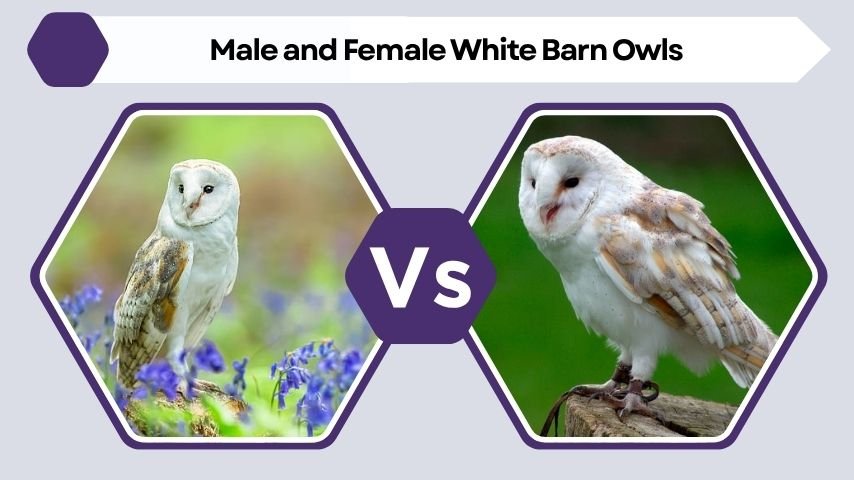
Male and female barn owls can look similar, but there are some general differences. These differences are not always perfect, so feather color alone may not identify every individual.
Common Differences
| Feature | Male Barn Owl | Female Barn Owl |
| Underside | Often whiter and less spotted | Often darker and more spotted |
| Size | Usually slightly smaller | Usually slightly heavier |
| Chest | May be cleaner white | May have more dark speckles |
| Upperparts | Often paler | Often richer golden-brown |
| ID certainty | Not always exact | Not always exact |
The Barn Owl Trust notes that darker markings and black spots often suggest a female, but some males also have spots, so color is not always a perfect guide.
Why Some Barn Owls Look Whiter Than Others
Some barn owls look whiter because of sex, age, genetics, region, lighting, and feather wear. A male barn owl may look cleaner white from below, while a female may show more buff color and spotting.
Young barn owls may also appear fluffy and pale before their adult plumage fully develops.
Baby White Barn Owl
A baby white barn owl is called an owlet. Baby barn owls usually look very pale, fluffy, and soft when they are young. Their white down can make them look cute, strange, or even alien-like.
What Baby White Barn Owls Look Like
Baby barn owls are usually covered in white or cream-colored down. They have dark eyes, a developing face shape, and a soft fluffy body. As they grow, they begin to show stronger facial features and adult feathers.
Young barn owls may hiss, click, beg for food, and move awkwardly around the nest before they learn to fly.
Baby White Barn Owl in the Nest
Baby barn owls are usually found in barns, tree cavities, nest boxes, roof spaces, or old buildings. They depend on their parents for food, especially mice, voles, rats, and shrews.
If you find a baby barn owl on the ground, do not keep it as a pet. Contact a licensed wildlife rehabilitator or local wildlife rescue service.
White Barn Owl Habitat
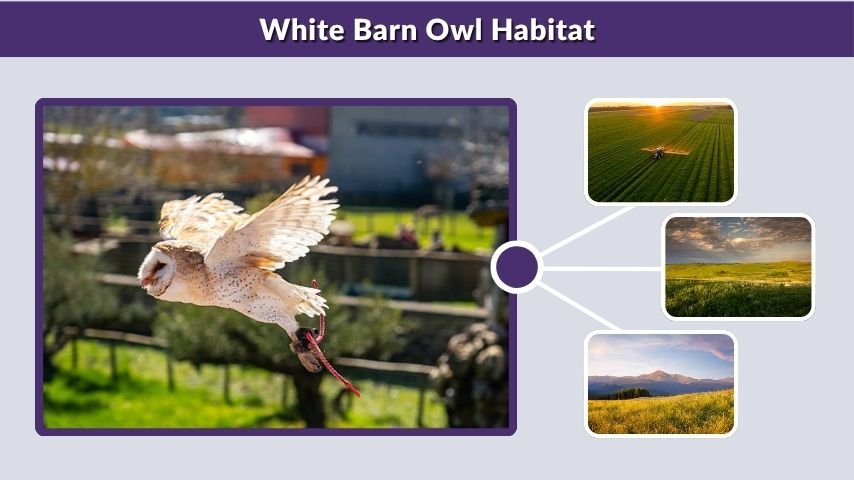
White barn owls live in the same habitats as other barn owls. They prefer open areas where they can hunt small mammals and find safe roosting or nesting places.
Where White Barn Owls Live
White barn owls may live in:
- Farms
- Barns
- Grasslands
- Marshes
- Meadows
- Open countryside
- Old buildings
- Hollow trees
- Nest boxes
- Field edges
- Rural villages
Barn owls often nest in old buildings or hollow trees and may revisit favorite perches.
Do White Barn Owls Live in Cities?
White barn owls are not usually city birds, but they may live near towns, villages, and suburban edges if there is open hunting land nearby. They need areas with enough small mammals and safe nesting sites.
Large city centers are usually less suitable because there may be fewer hunting areas, more disturbance, and fewer safe nesting cavities.
White Barn Owl Diet
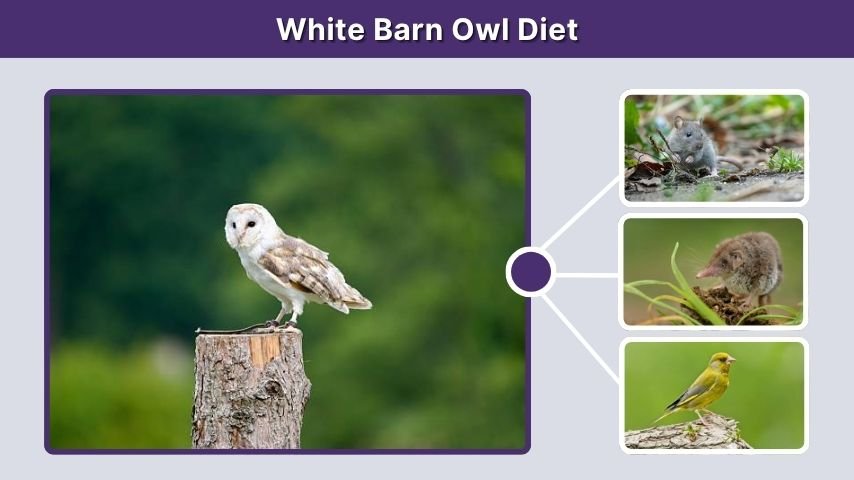
White barn owls are carnivores. They eat small animals, especially rodents. Their white color does not change their diet.
Common Foods
- Mice
- Voles
- Rats
- Shrews
- Small birds
- Bats
- Frogs
- Large insects
- Lizards in warm regions
- Young rabbits occasionally
Barn owls often swallow prey whole and later produce pellets containing fur and bones. Cornell’s educational barn owl page notes that barn owls swallow prey whole and produce pellets with indigestible materials such as fur and bones.
Why They Are Helpful
Because barn owls eat many rodents, they can help farms and rural areas naturally control mice and rats. However, rodent poison can harm barn owls if they eat poisoned prey.
White Barn Owl Meaning and Symbolism
White barn owl meaning depends on culture, belief, and personal interpretation. In some traditions, white owls represent wisdom, mystery, spiritual messages, protection, or transformation. In other places, owls have been seen as omens because of their night calls and ghostly appearance.
Spiritual Meaning of a White Barn Owl
Many people connect white barn owls with:
- Wisdom
- Intuition
- Hidden knowledge
- Change
- Mystery
- Silence
- Night vision
- Spiritual messages
These meanings are symbolic, not scientific. Seeing a white barn owl usually means the bird is hunting, roosting, or moving through its habitat.
Dream Meaning of a White Barn Owl
A white barn owl in a dream may symbolize awareness, secrets, intuition, or quiet observation. Some people see it as a sign to pay attention to hidden details. Others may connect it with mystery or change.
Dream meanings are personal and cultural. They should not be treated as facts about the bird itself.
White Barn Owl Tattoo Ideas
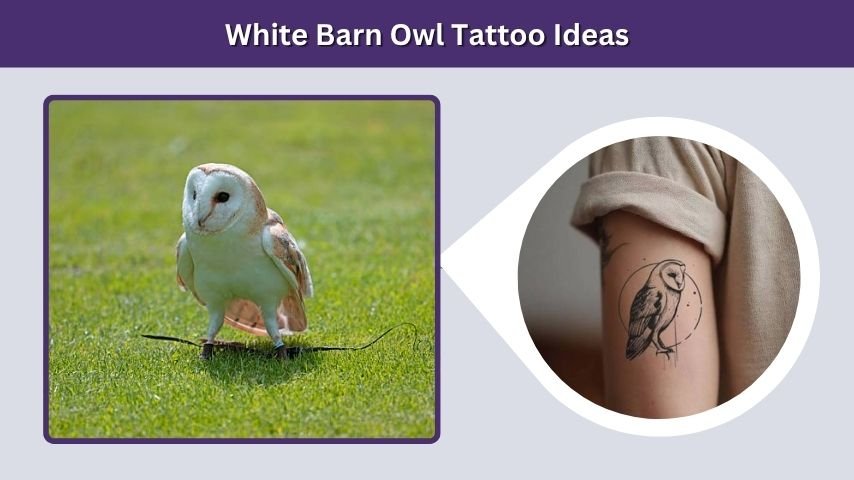
White barn owl tattoos are popular because the bird has a strong, elegant shape and symbolic meaning. The heart-shaped face, wings, dark eyes, and pale feathers make it a beautiful design for black-and-white or detailed realistic tattoos.
Common Tattoo Styles
- Black and white barn owl tattoo
- Flying white barn owl tattoo
- White barn owl with moon
- Barn owl face tattoo
- Barn owl sleeve design
- Minimal barn owl outline
- Realistic barn owl portrait
- Spiritual white owl design
A white barn owl tattoo can represent wisdom, silence, mystery, independence, night vision, or transformation.
White Barn Owl Pictures and Photography Tips
White barn owl pictures are popular because these birds look dramatic in flight and portraits. Their pale face and soft feathers photograph well, especially against dark or natural backgrounds.
What to Capture in Photos
Good white barn owl photos often show:
- Heart-shaped face
- White underside
- Dark eyes
- Wings spread in flight
- Golden-brown back feathers
- Silent hunting posture
- Perching in a barn or tree
- Flying over grassland
Wild barn owls should always be photographed from a safe distance. Avoid flash near active nests, and never disturb a roosting or nesting owl for a picture.
Can You Buy a White Barn Owl?
Some people search for “white barn owl for sale” or “white barn owl price,” but barn owls are wild birds and should not be treated like normal pets. Laws vary by country and region, but keeping owls often requires special permits, training, and proper facilities.
Why White Barn Owls Are Not Good Pets
Barn owls need whole-prey diets, large flight space, specialist care, and quiet surroundings. They are nocturnal, messy, and easily stressed. They also have sharp talons and strong beaks.
If you find an injured white barn owl or baby barn owl, contact a wildlife rescue center instead of trying to keep it.
Are White Barn Owls Endangered?
Barn owl conservation status depends on the region and species classification. In many places, barn owls are still present, but local populations can decline due to habitat loss, road deaths, rodent poison, and loss of nesting sites.
Threats to White Barn Owls
- Loss of rough grassland
- Fewer old barns and nesting cavities
- Road collisions
- Rodent poison
- Harsh winters
- Disturbance at nests
- Decline in small mammal prey
Protecting open hunting habitat and safe nest sites can help barn owls survive.
FAQs
Are white barn owls real?
Yes, white barn owls are real. Most are normal barn owls with pale faces, white undersides, and light-colored feathers rather than a separate species.
Are barn owls pure white?
Most barn owls are not pure white. They usually have white or cream undersides with golden-brown, gray, or cinnamon coloring on the back and wings.
What does a white barn owl mean?
A white barn owl can symbolize wisdom, mystery, intuition, silence, or change in different cultures. Scientifically, seeing one usually means the owl is hunting, roosting, or moving through its habitat.
Why are barn owls white?
Barn owls are white or pale on the face and underside because of their natural feather pattern. Their heart-shaped facial disk also helps direct sound toward their ears for hunting.
Can you keep a white barn owl as a pet?
A white barn owl should not be kept as a normal pet. Owls are wild birds of prey that need expert care, proper permits, whole-prey diets, and large safe spaces.
