
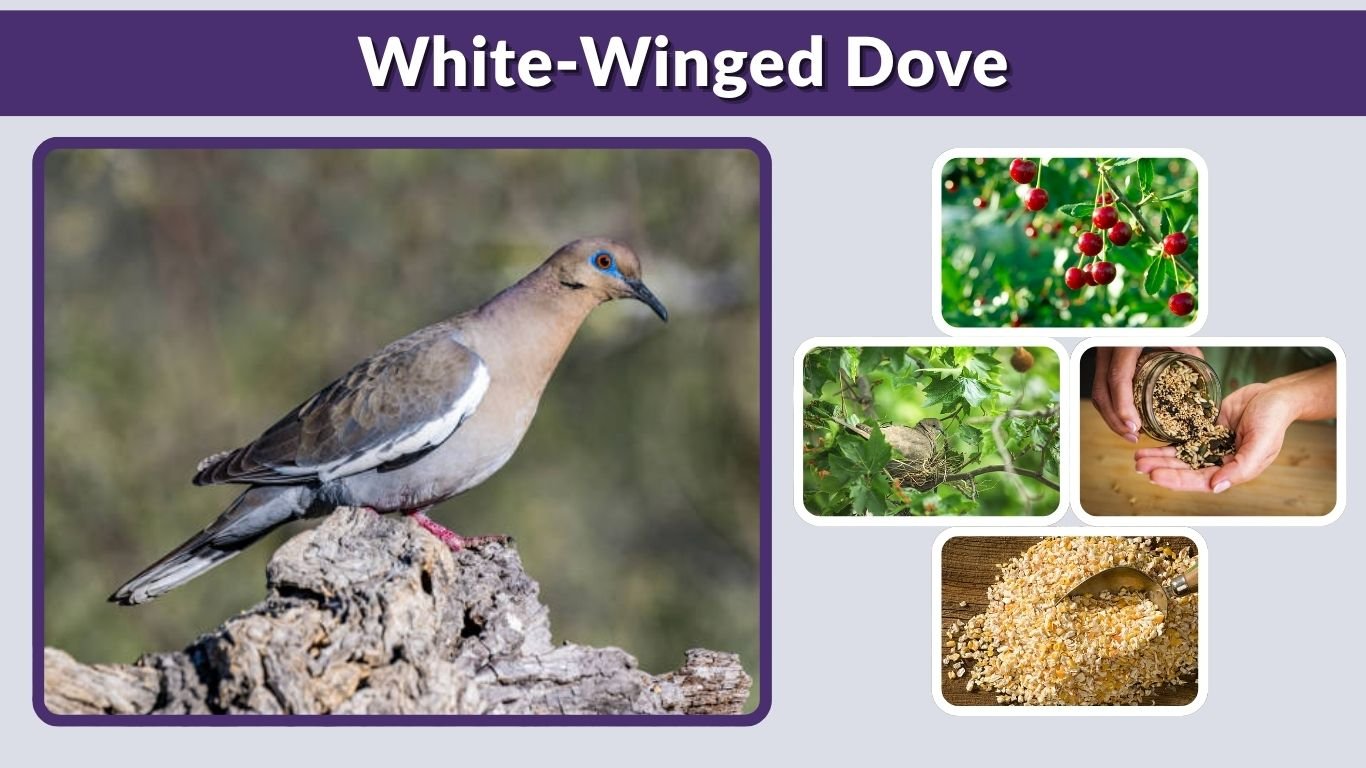
The white-winged dove is a striking bird recognized for the bold white stripe visible on its wings during flight. Common across Texas, Arizona, and the southwestern United States, this dove thrives in deserts, suburban neighborhoods, and agricultural regions. Its calm behavior and deep cooing calls make it easy to notice around feeders and parks. Many people also recognize the bird from famous song lyrics connected to Stevie Nicks and “On the Wings of a Snow White Dove.” Understanding its habitat, sounds, nesting habits, and identification features helps birdwatchers appreciate this unique species.
What Is a White-Winged Dove?
The white-winged dove is a medium-sized dove species native to North America and parts of Central America. Its scientific name is Zenaida asiatica. The species is especially common in warm climates where food and water remain available throughout the year.
Unlike smaller doves, the white-winged dove has a broader body, rounded wings, and a highly visible white stripe that flashes during flight. These birds often gather in groups near feeders, desert landscapes, and residential neighborhoods. Their adaptability has helped their populations expand into new urban areas over recent decades.
White-Winged Dove Characteristics
Several features help distinguish this bird from other dove species found in the United States.
- Bold white stripe along the wings
- Gray-brown feathers with darker wing edges
- Bright blue skin around the eyes
- Red or orange eye color
- Rounded tail with white tips
Adult white-winged doves are larger than mourning doves and usually measure between 10 and 12 inches in length.
Male vs Female White-Winged Dove
Male and female white-winged doves appear very similar in color and body shape. However, males are often slightly larger and may behave more aggressively during breeding season.
Males frequently perform courtship displays by puffing their feathers, bowing, and calling loudly from rooftops or tree branches. Females generally remain quieter while selecting nesting sites and caring for eggs.
White-Winged Dove Range and Habitat
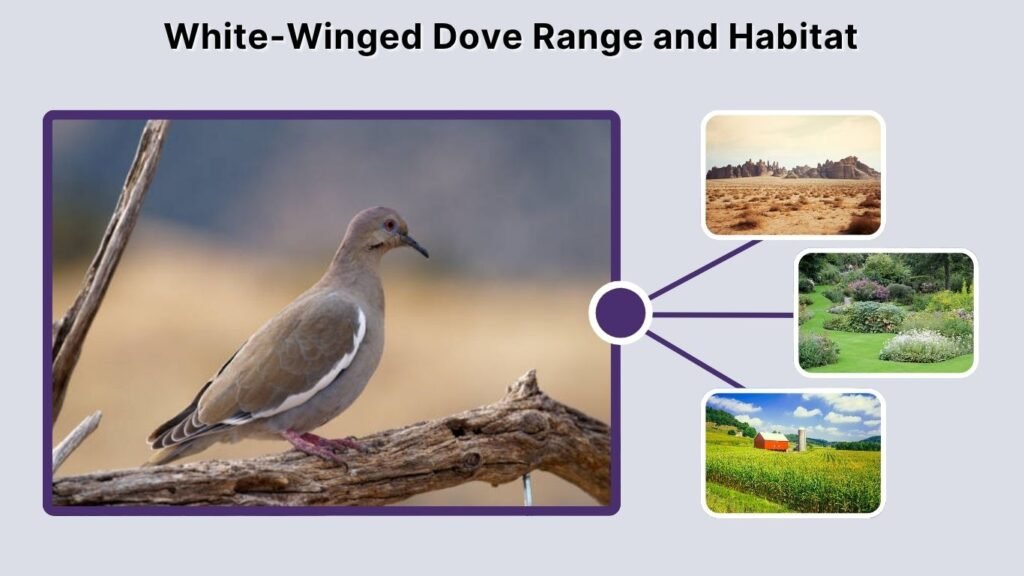
White-winged doves prefer warm environments with open spaces, trees, and reliable food sources. Historically, they were strongly associated with desert habitats in the southwestern United States and Mexico. Today, they are also common in suburban communities and city parks.
The species thrives in regions with mild winters and abundant vegetation. Urban growth has created additional nesting opportunities, allowing white-winged doves to spread farther north than in previous decades.
White-Winged Dove Range in North America
These birds are commonly found across Texas, Arizona, New Mexico, Nevada, and parts of California. Large populations also exist throughout Mexico and Central America.
Common habitats include:
- Desert scrublands
- Residential neighborhoods
- Agricultural fields
- Public parks and gardens
- Areas with cactus and shade trees
During migration periods, some white-winged doves travel northward for breeding before returning south during colder months.
White-Winged Dove and Saguaro Cactus
One of the most famous relationships in desert ecosystems involves white-winged doves and saguaro cacti. In the Sonoran Desert, these birds often nest directly inside saguaros because the cactus provides shelter from predators and extreme heat.
The birds also help spread cactus seeds after feeding on fruit and nectar. This ecological connection makes white-winged doves important contributors to desert plant survival.
White-Winged Dove Sounds and Calls
The white-winged dove is known for its deep and repetitive cooking calls. These sounds are louder and fuller than those produced by smaller dove species. Their calls are especially noticeable during spring and summer breeding seasons.
Birdwatchers often hear white-winged doves early in the morning while the birds perch on utility wires, rooftops, or tall trees. The sounds can travel long distances through quiet suburban neighborhoods.
What Does a White-Winged Dove Sound Like?
Most people describe the call as a rhythmic cooing pattern repeated several times in a row. The sound is calm but powerful enough to stand out in urban environments.
These calls serve multiple purposes, including attracting mates and maintaining territory. Males are typically more vocal than females and may continue calling for long periods during nesting season.
Why White-Winged Doves Call
White-winged doves rely heavily on vocal communication throughout the year. Their calls help nearby birds recognize territory boundaries and locate mates.
Common reasons for vocalizations include:
- Courtship during breeding season
- Warning nearby birds of danger
- Defending nesting territory
- Communication between mates
- Contact calls while feeding or flying
Because of their repetitive coos, many homeowners quickly learn to recognize these birds even before seeing them.
White-Winged Dove vs Mourning Dove
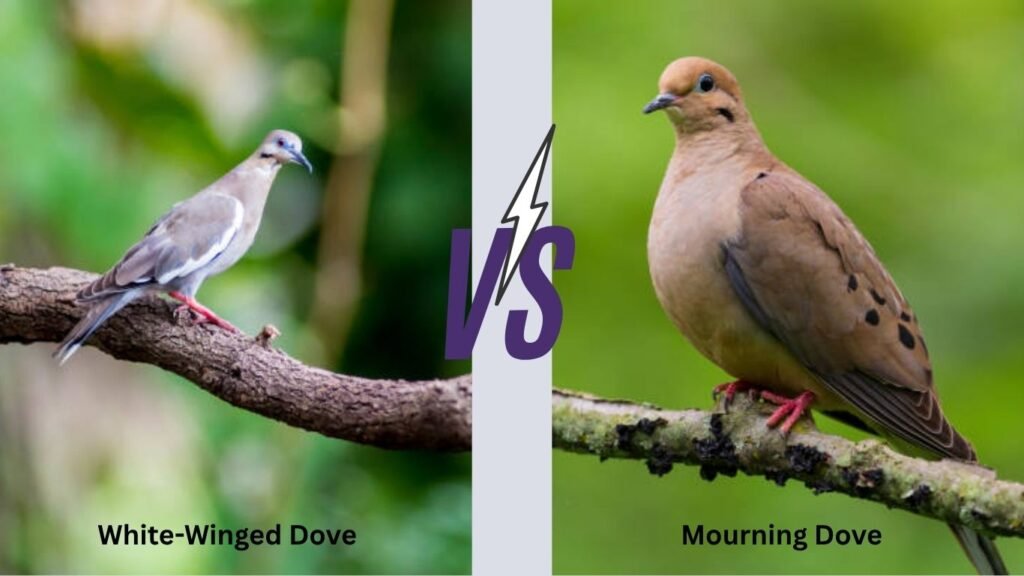
White-winged doves are frequently confused with mourning doves because both species share similar coloring and body shapes. However, several key differences make identification easier.
The white-winged dove is larger and heavier than the mourning dove. It also displays a bright white stripe on the wings that becomes highly visible during flight. Mourning doves lack this bold marking and appear slimmer overall.
Appearance Differences Between the Two Species
Careful observation reveals several noticeable differences between these popular backyard birds.
- White-winged doves are larger and stockier
- Mourning doves have longer pointed tails
- White wing markings are absent on mourning doves
- White-winged doves have brighter eye coloration
- Mourning doves appear smoother and more slender
Although both species often visit feeders together, the wing markings remain the fastest way to identify a white-winged dove accurately.
What Do White-Winged Doves Eat?

White-winged doves primarily feed on seeds, grains, and fruits. They spend much of their time foraging on the ground in open areas, parks, farms, and residential yards. Their strong beaks allow them to crack seeds and consume a wide variety of plant materials.
In desert regions, these birds also feed on cactus fruit, nectar, and agricultural crops. Their flexible diet has helped them adapt successfully to urban and suburban environments throughout the Southwest.
Common Foods in a White-Winged Dove Diet
White-winged doves regularly visit backyard feeders where seed is easily available. They also depend on natural vegetation in desert ecosystems.
Foods commonly eaten by white-winged doves include:
- Sunflower seeds and millet
- Corn and small grains
- Berries and soft fruits
- Cactus fruit and nectar
- Weed and grass seeds
Fresh water sources are especially important during hot summer months because these birds are highly active in warm climates.
White-Winged Dove Nesting and Eggs
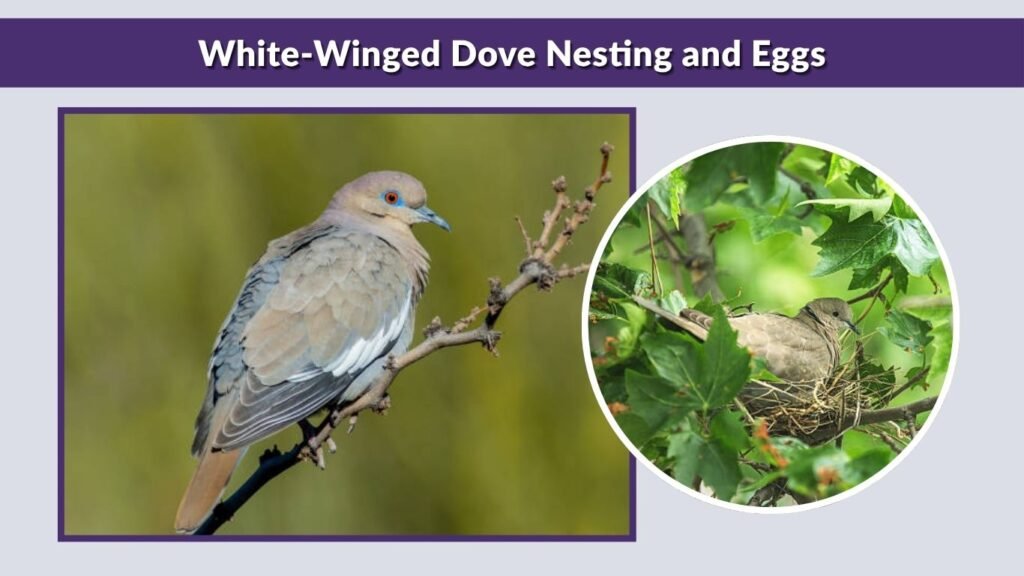
White-winged doves build lightweight nests in trees, shrubs, cacti, and urban structures. Their nests are often simple platforms made from twigs, roots, and dried grass. Both males and females help construct the nest and care for the young.
Breeding season varies by region, but nesting activity increases during spring and summer when food becomes abundant. In warm southern states, some pairs may raise multiple broods in a single year.
White-Winged Dove Nesting Habits
Most nests are placed several feet above the ground where predators are less likely to reach them. In desert habitats, white-winged doves commonly nest in saguaros and thorny vegetation for additional protection.
Urban populations often select palm trees, decorative shrubs, rooftops, and backyard trees. These adaptable nesting habits allow the species to thrive in both natural and developed environments.
Eggs, Juveniles, and Fledglings
Female white-winged doves usually lay one or two pale-colored eggs per nesting cycle. Both parents take turns incubating the eggs until hatching occurs after about two weeks.
Juvenile birds appear duller than adults and lack the bright eye coloring seen in mature birds. Fledglings stay close to their parents while learning to fly and locate food independently.
White-Winged Dove Flying and Wing Patterns
One of the easiest ways to recognize a white-winged dove is by observing it in flight. The bright white wing stripe flashes clearly against the darker body feathers, creating a dramatic visual effect.
These birds fly with fast wingbeats and strong directional movement. Their flight style appears more powerful and direct than the smoother gliding motion often associated with mourning doves.
White-Winged Dove in Flight
When viewed from behind or below, the white markings become especially noticeable. The broad wings and rounded tail also help distinguish this species from slimmer dove species.
Birdwatchers often identify white-winged doves before hearing them because the flashing wing pattern stands out even at a distance. Groups flying together can create an impressive display across desert skies and urban neighborhoods.
White-Winged Dove Season in Texas
Texas supports one of the largest white-winged dove populations in North America. Because of this, the species plays an important role in the state’s hunting traditions and wildlife management programs.
Each year, wildlife agencies establish specific hunting seasons and regulations designed to maintain healthy populations while supporting responsible outdoor recreation.
Texas White-Winged Dove Season 2025
White-winged dove season dates vary depending on region and yearly wildlife management decisions. Hunters must follow state regulations regarding licensing, bag limits, and approved hunting areas.
Early-season opportunities are especially popular in southern Texas where white-winged dove populations are highest. Many hunters prepare months in advance for these seasonal events.
Texas Special White-Winged Dove Days
Special white-winged dove days allow hunters additional opportunities during early portions of the season. These events are carefully regulated to balance conservation efforts with recreational hunting traditions.
Wildlife officials monitor bird populations closely to ensure sustainable management practices continue protecting the species long term.
White-Winged Dove Meaning and Symbolism
White-winged doves are often associated with peace, hope, and spiritual renewal. Their graceful flight and soft cooing sounds contribute to their symbolic connection with calmness and emotional healing.
In many cultures, doves represent messages of comfort and guidance. The white markings on the wings further strengthen associations with purity and protection.
White-Winged Dove Spiritual Meaning
People commonly interpret sightings of white-winged doves as positive spiritual signs. These birds are sometimes viewed as reminders to remain peaceful during difficult situations.
Common symbolic meanings include:
- Peace and emotional balance
- Renewal and fresh beginnings
- Spiritual guidance and protection
- Love and devotion
- Hope during challenging times
Because of these meanings, white-winged doves frequently appear in poetry, music, and spiritual discussions.
FAQs
Do white-winged doves migrate?
Yes, many white-winged doves migrate seasonally. Populations breeding in the southwestern United States often travel south to Mexico and Central America during colder months. However, some urban populations in warm regions such as Texas may remain year-round if food and water are consistently available.
Are white-winged doves aggressive?
White-winged doves are generally calm birds, but males can become territorial during breeding season. They may chase away other birds near nesting areas or feeding spots. Outside of nesting periods, they usually gather peacefully in groups around feeders, parks, and agricultural fields.
Can white-winged doves survive winter?
White-winged doves survive winter best in mild climates with reliable food sources. They are less tolerant of freezing temperatures than some other dove species. During colder weather, migrating populations move south while year-round residents seek sheltered urban and suburban habitats.
How long do white-winged doves live?
In the wild, white-winged doves commonly live between 5 and 10 years, although some individuals survive longer under favorable conditions. Survival depends on factors such as predators, habitat quality, weather, and food availability throughout the year.
Why are white-winged doves common in Texas?
Texas provides ideal conditions for white-winged doves because of its warm climate, abundant food, and expanding urban areas. Agricultural fields, backyard feeders, and desert habitats support large populations, making the species one of the most recognizable doves across the state.
