
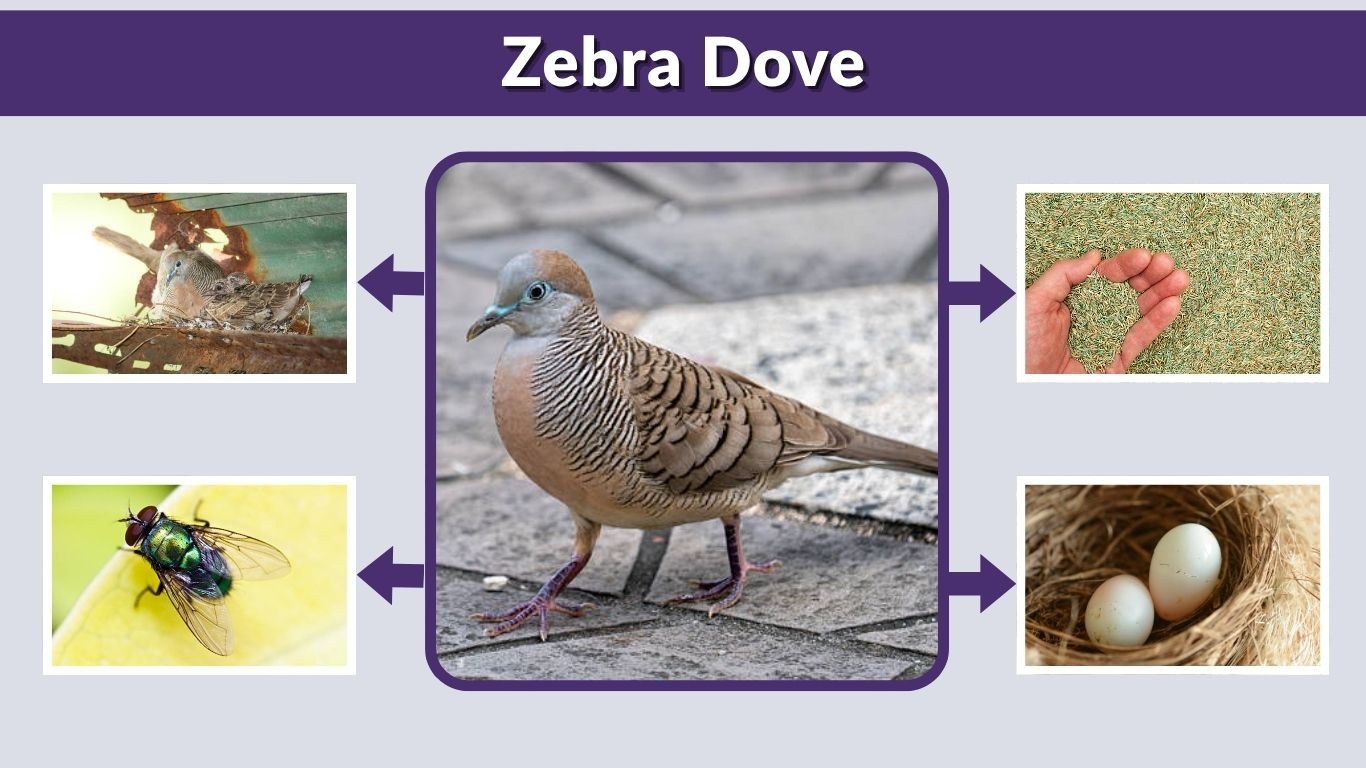
Zebra doves are small, gentle birds known for their soft cooing sounds and beautiful striped feathers. These doves are popular in many tropical regions and are often kept as pets because of their calm nature. Bird enthusiasts also admire them for their peaceful behavior and unique appearance. Understanding zebra dove identification, diet, nesting habits, and lifespan helps owners and bird lovers provide better care while appreciating the natural beauty of this fascinating bird species.
Zebra Dove Identification
Zebra doves are easy to recognize because of their delicate body shape and fine striped feather patterns. They are smaller than many other dove species and usually spend time walking on the ground searching for food.
Physical Appearance
The zebra dove has a slim body with grayish-brown feathers covered in narrow black-and-white bars. These stripes appear across the neck, chest, and wings, giving the bird its “zebra” appearance. Their face is often bluish-gray with pale blue skin around the eyes.
The tail is long and slightly pointed with white outer edges that become visible during flight. Adult zebra doves usually appear elegant and lightweight compared to larger doves.
Size and Weight
Most adult zebra doves measure between 20 and 23 centimeters in length. Their body weight is usually light, making them agile flyers and fast runners on the ground.
Despite their small size, zebra doves are active birds that can travel quickly between feeding and nesting areas.
Zebra Dove Juvenile Features
Young zebra doves look slightly different from adults. Their feathers are duller, and the striped patterns are less visible during the early stages of development.
Juveniles also have:
- Darker facial coloring
- Shorter tails
- Softer feather texture
- Less noticeable eye markings
As they mature, the stripes become clearer and their overall coloration grows brighter.
Zebra Dove Bird Sound
The zebra dove is widely admired for its calm and rhythmic cooing sound. In some regions, these birds are even raised for singing competitions because of their unique vocal abilities.
What Does a Zebra Dove Sound Like?
The call of a zebra dove is soft, repetitive, and soothing. Many people describe the sound as a rapid series of gentle coos with a smooth rhythm.
Their vocal style is different from larger doves because the notes are:
- Faster
- Higher pitched
- More rhythmic
- Less deep than spotted doves
These sounds are commonly heard during the early morning hours when the birds are most active.
Why Zebra Doves Make Sounds
Zebra doves use their calls for communication and social interaction. Male birds are usually more vocal, especially during breeding periods.
Their sounds help with:
- Attracting mates
- Protecting territory
- Communicating with partners
- Warning nearby birds
Bird owners often enjoy listening to these soft calls because they are peaceful rather than loud or aggressive.
Zebra Dove Diet
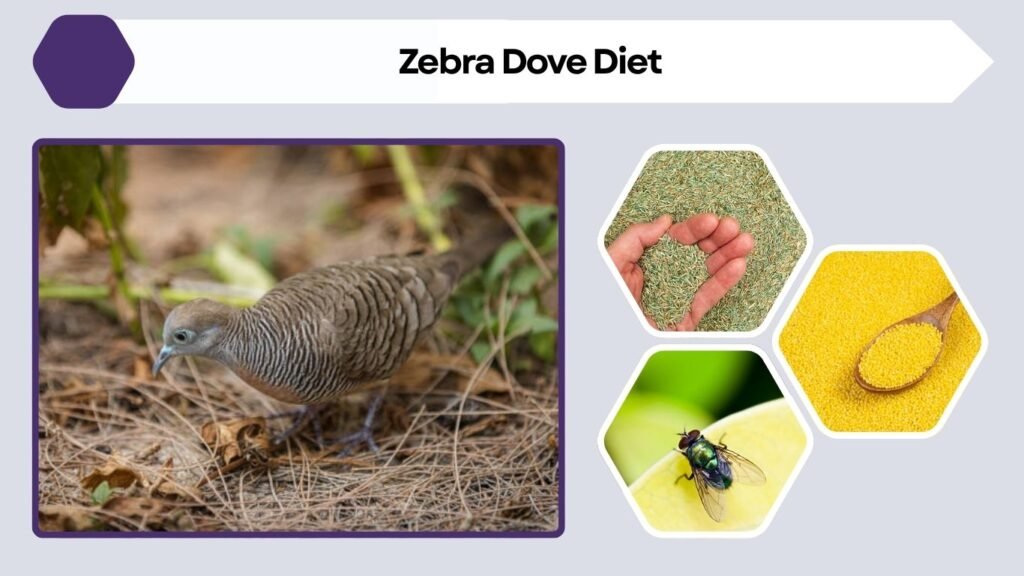
Zebra doves mainly eat seeds and small grains. Their diet in the wild is simple but balanced, helping them maintain energy and healthy feather growth.
What Do Zebra Doves Eat in the Wild?
Wild zebra doves spend much of their day searching for food on the ground. They commonly feed in grassy areas, roadsides, and open fields.
Their natural diet includes:
- Grass seeds
- Millet
- Tiny grains
- Small insects
- Fallen fruits
These birds prefer small food particles that are easy to swallow and digest.
Zebra Dove Diet in Captivity
Pet zebra doves require a healthy and varied diet to remain active and healthy. A high-quality seed mix is usually the foundation of their daily nutrition.
Owners often provide fresh vegetables and small fruit pieces in moderation. Clean drinking water must always be available because doves can become dehydrated quickly in warm weather.
Foods such as chocolate, salty snacks, and processed human meals should never be fed to zebra doves because these items may cause serious health problems.
Baby Zebra Dove Diet
Baby zebra doves require special care during the first weeks of life. Newly hatched chicks depend heavily on their parents for warmth and nutrition.
What Baby Zebra Doves Eat
Parent zebra doves feed their chicks with crop milk, a nutritious substance produced inside the parent bird’s crop. As the chicks grow, softened seeds are gradually introduced into their diet.
Hand-raised chicks may require special feeding formula designed for young birds. The food should always be warm and properly mixed to avoid digestive problems.
Important Feeding Tips for Young Birds
Young zebra doves need careful feeding schedules to support healthy growth and feather development.
Proper care includes:
- Feeding small portions regularly
- Keeping food warm
- Maintaining clean feeding tools
- Monitoring body weight
Overfeeding or feeding cold formula can weaken young birds and increase the risk of illness.
Zebra Dove Lifespan
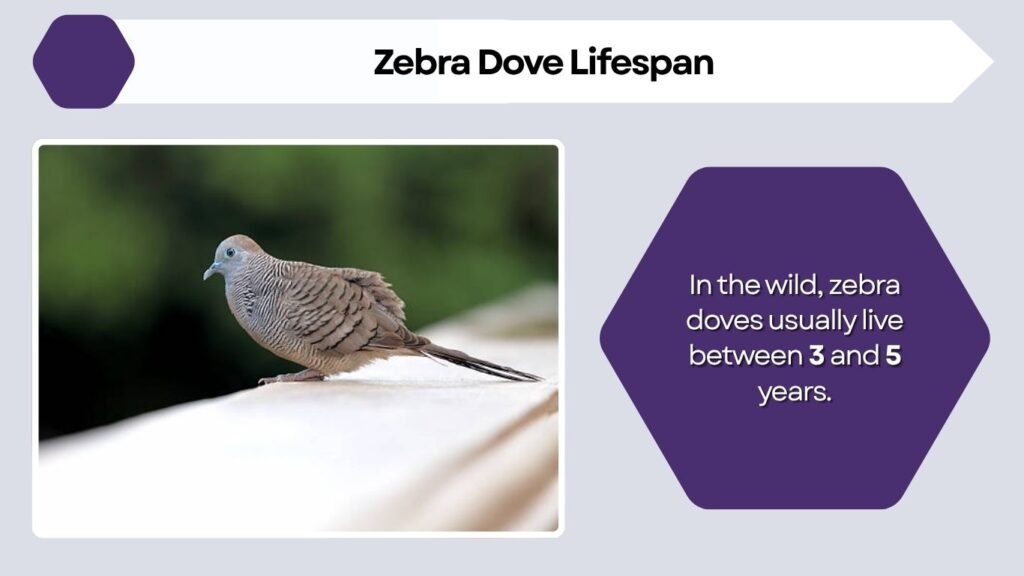
Zebra doves can live for several years when they receive proper care and nutrition. Their lifespan often depends on environmental conditions and protection from disease or predators.
Average Lifespan
In the wild, zebra doves usually live between 3 and 5 years because they face natural dangers such as predators and harsh weather.
Pet zebra doves often live longer in safe environments with reliable food and medical care. Some captive birds may survive for more than 10 years under excellent conditions.
Factors That Affect Lifespan
Several important factors influence the overall health and longevity of zebra doves. A clean habitat, nutritious diet, and low-stress environment are essential for maintaining their well-being.
Healthy zebra doves usually display smooth feathers, bright eyes, active movement, and regular feeding behavior.
Zebra Dove Eggs and Nesting
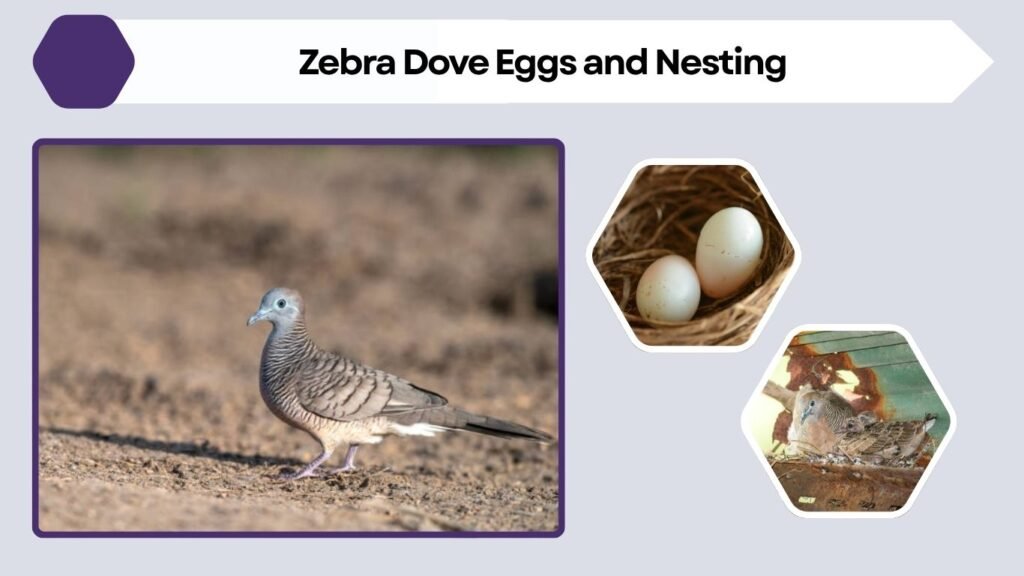
Zebra doves are devoted parents that work together to build nests and raise their chicks. Their breeding behavior is simple but fascinating, making them interesting birds to observe in both wild and captive environments.
Zebra Dove Eggs
Female zebra doves usually lay one or two small white eggs during each breeding cycle. The eggs have a smooth surface and are carefully protected by both parents throughout the incubation period.
The incubation process normally lasts around two weeks. During this time, the male and female take turns sitting on the eggs to keep them warm and safe. Once the chicks hatch, the parents continue sharing feeding and protection duties.
Zebra Dove Nest
Zebra doves build lightweight nests using dry grass, roots, and small twigs. Their nests are often placed in low trees, shrubs, rooftops, or sheltered garden areas.
Although the nests may appear fragile, they provide enough support for eggs and young chicks. Zebra doves prefer quiet and safe nesting locations away from constant disturbance.
Zebra Dove as a Pet
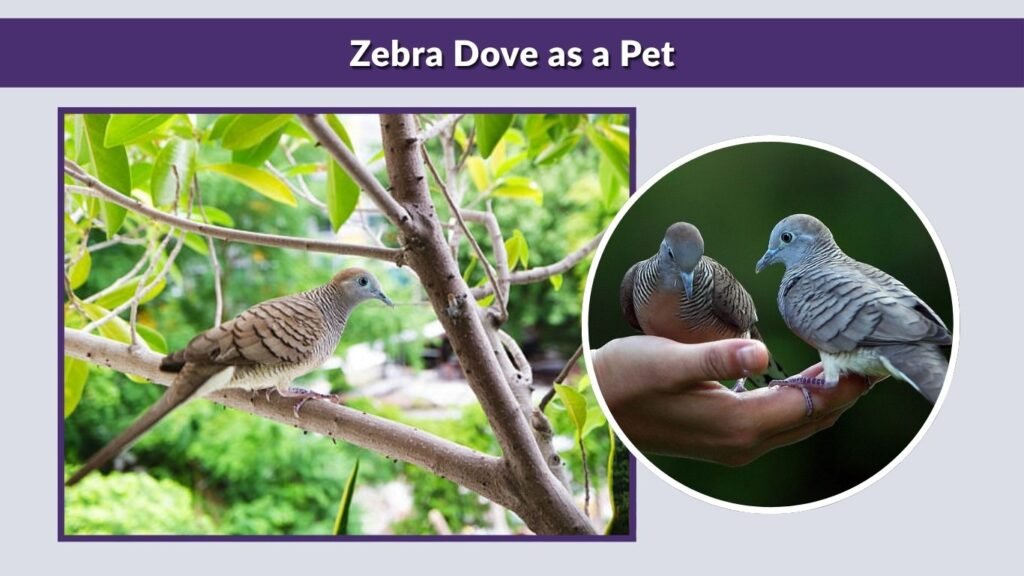
Many bird enthusiasts keep zebra doves as pets because of their gentle personality and soft vocal sounds. These birds are relatively easy to care for when they receive proper housing, nutrition, and attention.
Advantages of Keeping Zebra Doves
Pet zebra doves are popular for several reasons:
- Calm and peaceful behavior
- Pleasant and soothing cooing sounds
- Low aggression toward humans
- Simple feeding requirements
Their quiet nature makes them suitable for people who want a less noisy pet bird.
Basic Care Requirements
Owners should provide a spacious cage with enough room for movement and short flights. Clean water and fresh food should always be available to maintain good health.
Important care essentials include:
- Proper ventilation
- Daily cage cleaning
- Balanced seed diet
- Protection from extreme temperatures
A stress-free environment helps zebra doves remain active and healthy for many years.
Zebra Dove vs Spotted Dove
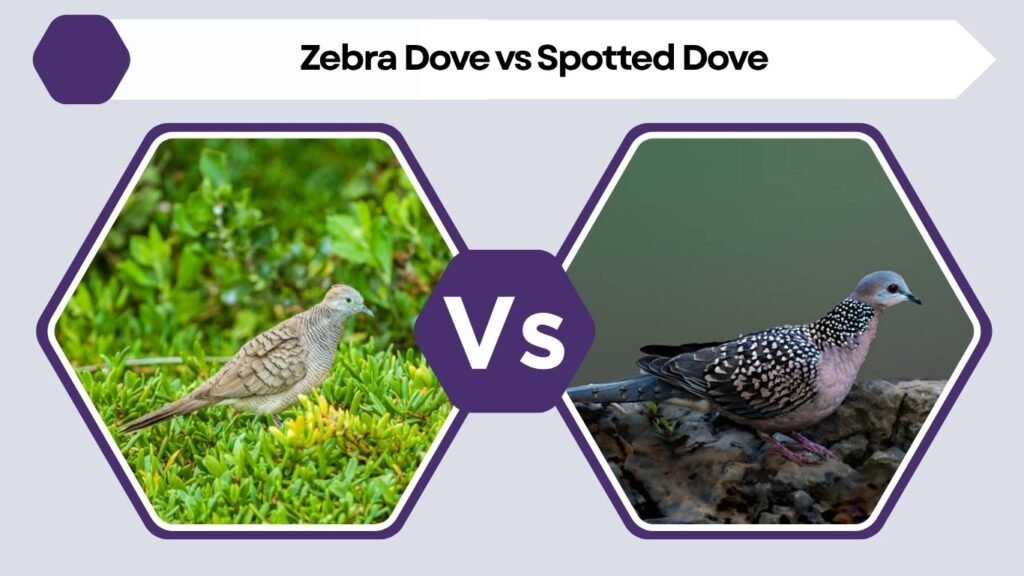
Zebra doves and spotted doves are often confused because both species belong to the dove family. However, they have several clear differences in appearance, sound, and behavior.
Size and Appearance Differences
Zebra doves are much smaller and slimmer than spotted doves. Their bodies feature narrow black-and-white barring across most of the feathers.
Spotted doves are larger and have a distinct spotted patch on the side of the neck instead of full-body stripes. Their calls are also slower and deeper compared to the rapid rhythm of zebra doves.
Behavioral Differences
Zebra doves spend more time walking on the ground searching for seeds, while spotted doves are often seen resting on trees, fences, and rooftops.
The smaller zebra dove usually appears more delicate and graceful during movement. Their fast cooing sound is another feature that clearly separates them from spotted doves.
Interesting Zebra Dove Facts
Zebra doves are admired in many countries because of their beauty and peaceful nature. They are highly adaptable birds that can survive in villages, gardens, parks, and open countryside areas.
In some regions, people train zebra doves for singing contests where judges evaluate the rhythm and consistency of their calls. Their soothing vocal style is one of the main reasons they remain popular among bird keepers.
These birds are also known for forming strong breeding pairs. Once paired, male and female zebra doves often stay together while building nests and raising chicks.
FAQs
What Do Zebra Doves Eat?
Zebra doves mainly eat seeds, millet, grains, and small insects. Pet zebra doves can also enjoy fresh greens and small fruit pieces as part of a balanced diet.
How Long Do Zebra Doves Live?
Wild zebra doves usually live around 3 to 5 years, while captive birds may live more than 10 years with proper care and nutrition.
Are Zebra Doves Good Pets?
Yes, zebra doves are considered good pets because they are calm, quiet, and relatively easy to care for compared to many larger bird species.
How Can You Identify a Zebra Dove?
Zebra doves have slim bodies with black-and-white striped feathers, long tails, and soft gray-brown coloring that makes them easy to recognize.
What Is the Difference Between a Zebra Dove and a Spotted Dove?
Zebra doves are smaller with striped feathers across the body, while spotted doves are larger and have a spotted patch on the neck instead of stripes.