
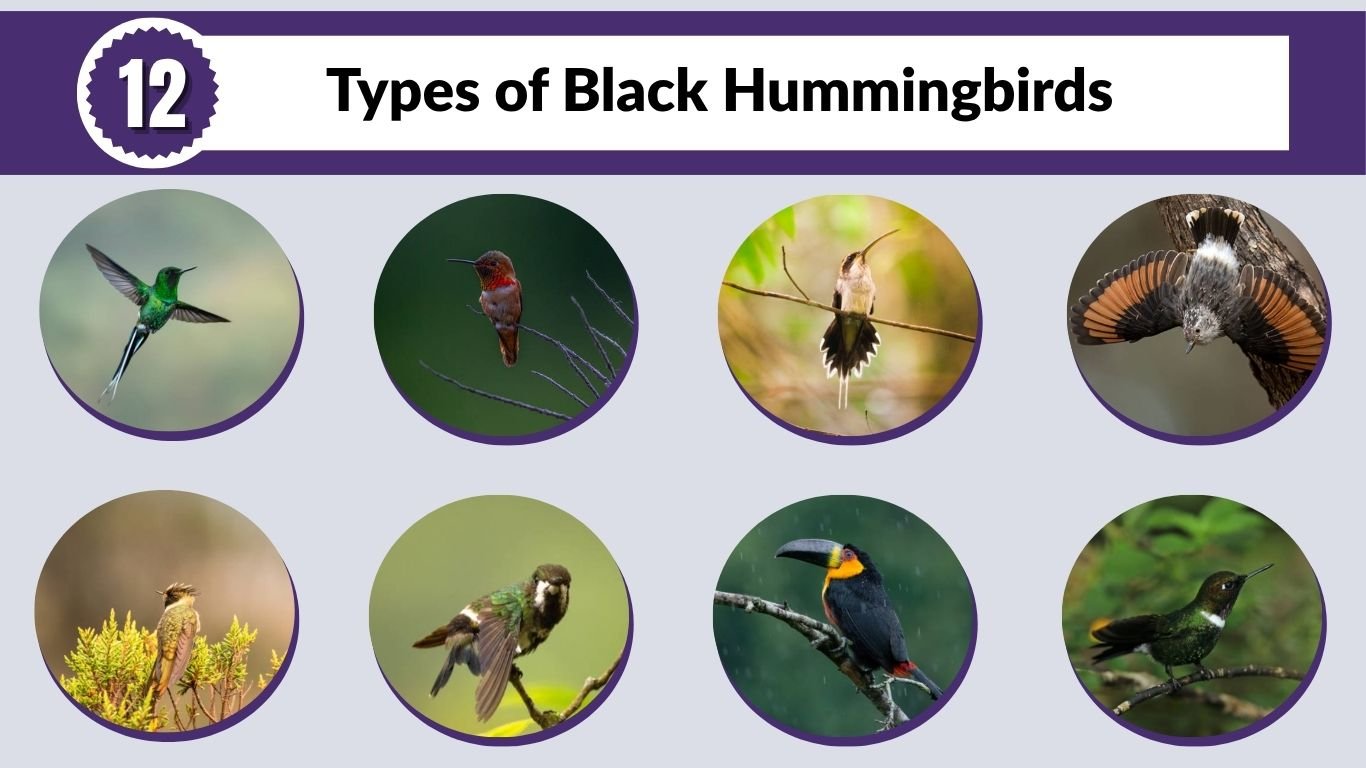
Black hummingbirds are fascinating birds known for their dark, glossy appearance and subtle iridescent colors. While few species are truly black, many appear dark due to lighting and feather structure. These hummingbirds are found mainly in Central and South America, thriving in forests, mountains, and gardens. Despite their color, they share the same energetic behavior, rapid flight, and nectar-based diet as other hummingbirds, making them just as captivating to observe in the wild.
1. Black-chinned Hummingbird
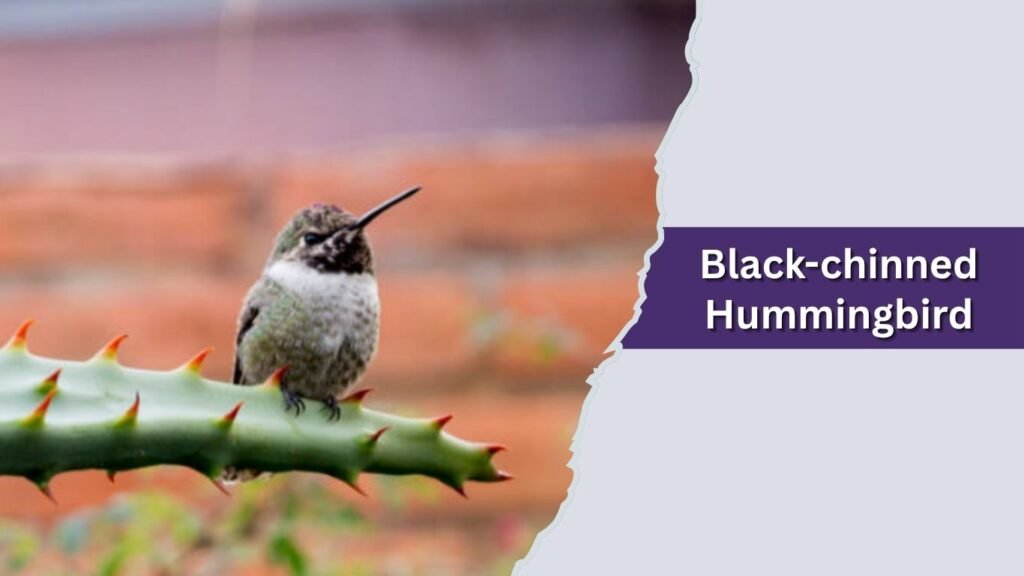
The Black-chinned Hummingbird is one of the most widespread hummingbird species in North America. Although not entirely black, the male’s dark throat gives it a distinctive appearance, especially in certain lighting where it appears almost black. This adaptable species is commonly found in a variety of environments and is known for its calm behavior compared to more aggressive hummingbirds.
Identification
- Small hummingbird with a slender body
- Males have a black throat with a subtle violet band
- Females have a pale throat and grayish underparts
- Green upperparts with a slightly forked tail
- Straight, narrow bill
Habitat
Black-chinned Hummingbirds are found in deserts, woodlands, river valleys, and suburban gardens. They prefer areas with access to water and flowering plants. This species is highly adaptable and can thrive in both natural and human-altered environments, including parks and residential areas with feeders.
Behaviors
These hummingbirds are generally less aggressive than many other species, though they will still defend feeding territories when necessary. Males perform aerial courtship displays, including high dives to attract females. They are agile fliers, capable of hovering and quick directional changes while feeding.
Diet and Lifespan
Their diet mainly consists of nectar from flowers, supplemented by small insects and spiders for protein. They play an important role in pollination. Black-chinned Hummingbirds typically live around 6 to 10 years in the wild, depending on environmental conditions and food availability.
2. Black Jacobin
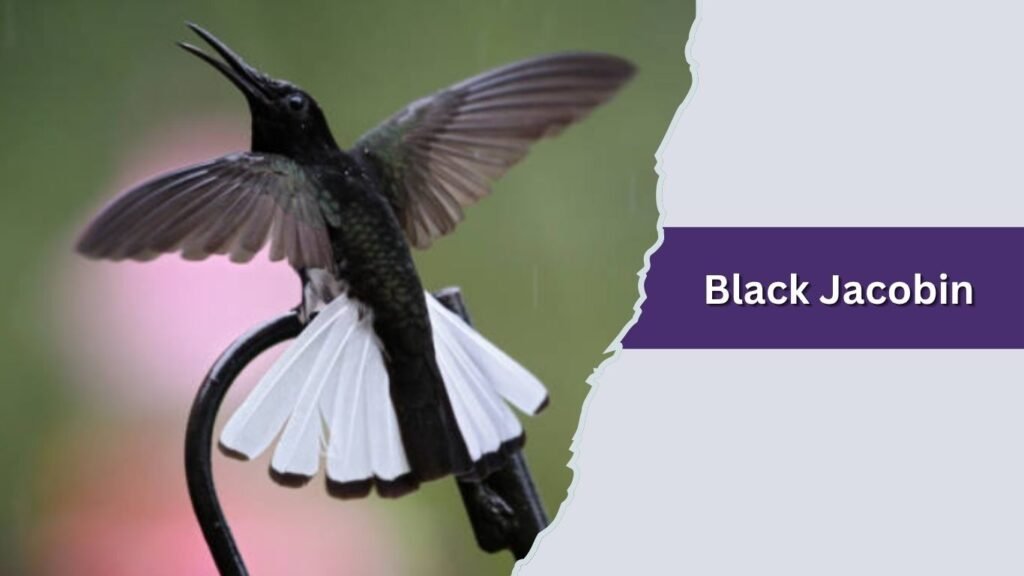
The Black Jacobin is a striking hummingbird species found mainly in South America. Known for its glossy dark plumage, it often appears almost entirely black in certain lighting, though it can show deep blue or purple tones. This species is admired for its beauty and adaptability in forested environments.
Identification
- Medium-sized hummingbird with a robust body
- Dark, glossy plumage that appears black
- Subtle blue or purple iridescence in good light
- White patch on the tail edges
- Straight, medium-length bill
Habitat
Black Jacobins are commonly found in tropical and subtropical forests, forest edges, and gardens. They prefer humid environments with abundant flowering plants. This species is often seen in mountainous regions as well as lowland forests, where nectar sources are plentiful throughout the year.
Behaviors
These hummingbirds are active and can be quite territorial, especially around feeding areas. They are known for their strong and steady flight, often hovering near flowers or feeders. Black Jacobins may also be seen visiting feeders in groups, unlike some more solitary hummingbird species.
Diet and Lifespan
Their diet mainly consists of nectar from a variety of flowers, along with small insects and spiders for protein. They are important pollinators in their ecosystem. Black Jacobins typically live around 5 to 8 years in the wild, depending on environmental conditions and food availability.
3. Black Inca
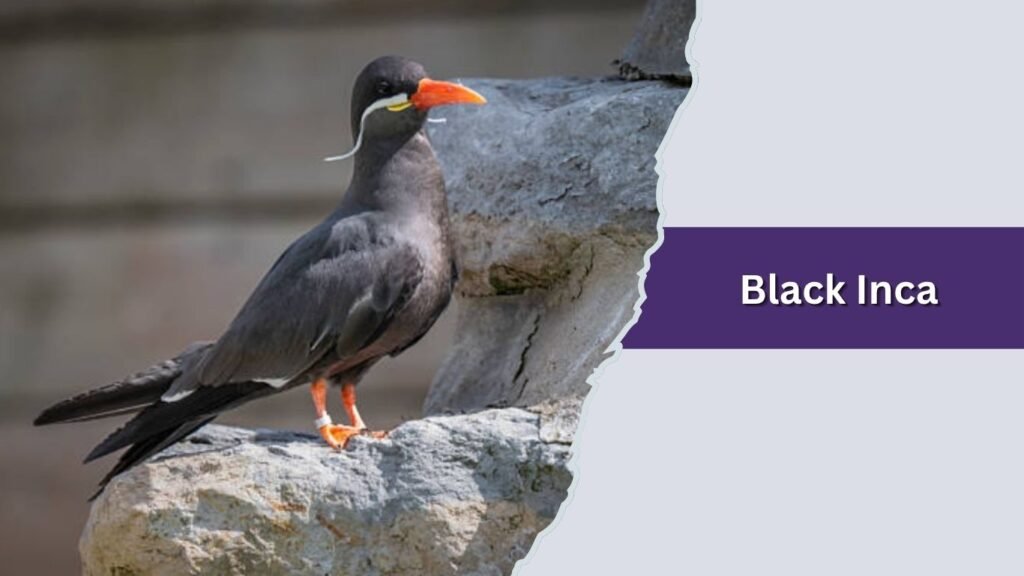
The Black Inca is a lesser-known hummingbird species found in the mountainous regions of South America, particularly in Colombia. It is notable for its dark plumage and association with cloud forests. Though not entirely black, its overall appearance often looks very dark, especially in shaded environments, making it stand out among other hummingbirds.
Identification
- Medium-sized hummingbird with a sturdy body
- Dark plumage that appears mostly black
- Slight metallic sheen in good lighting
- Short to medium-length straight bill
- Subtle markings that may be hard to see
Habitat
Black Incas are typically found in cloud forests, humid montane forests, and forest edges at higher elevations. They prefer areas rich in flowering plants and are often seen near forest clearings or along edges where nectar sources are abundant. Their habitat is usually cool, moist, and densely vegetated.
Behaviors
These hummingbirds are generally territorial, especially around feeding areas. They actively defend nectar sources from other hummingbirds and may chase intruders away. Despite their darker coloration, they are agile fliers and can hover with precision while feeding. They are usually solitary and not often seen in large groups.
Diet and Lifespan
Their diet mainly includes nectar from flowers, along with small insects and spiders for protein. They play an important role in pollination within their forest habitats. The lifespan of the Black Inca is not widely documented but is estimated to be around 5 to 8 years in the wild, depending on environmental conditions.
4. Black Metaltail
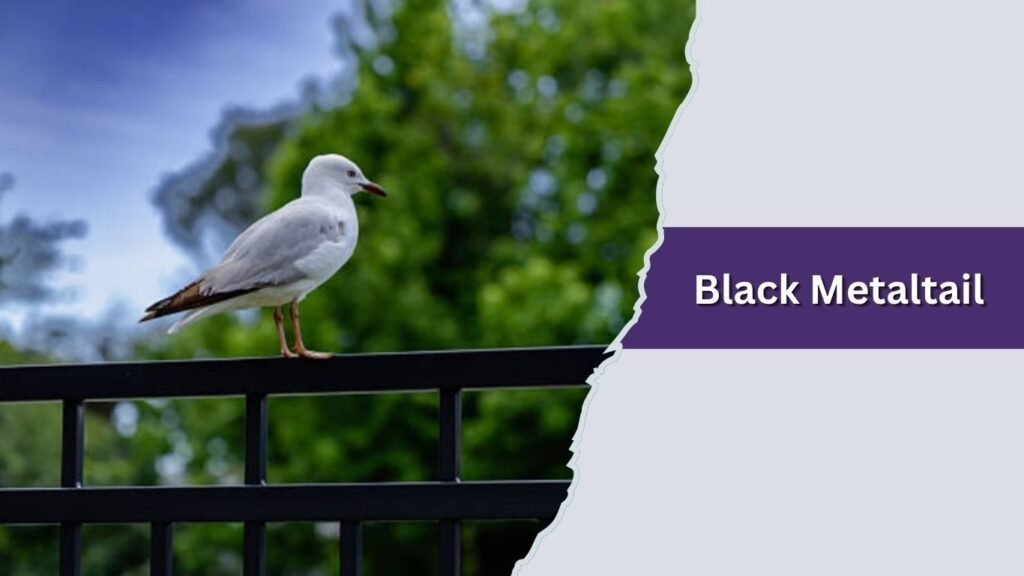
The Black Metaltail is a small hummingbird species found in the Andes of South America. It is known for its dark, almost black appearance combined with subtle metallic tones that shimmer in the right light. This species thrives in high-altitude environments and is well adapted to cooler mountainous regions.
Identification
- Small hummingbird with a compact body
- Dark plumage that appears mostly black
- Metallic green or bronze sheen on the back
- Short tail with slight iridescence
- Straight, slender bill
Habitat
Black Metaltails are typically found in high-altitude regions such as cloud forests, shrublands, and Andean slopes. They prefer areas with dense vegetation and abundant flowering plants. These birds are commonly seen at elevations where temperatures are cooler and conditions can be harsh, but nectar sources are still available.
Behaviors
These hummingbirds are active and territorial, often defending feeding areas from other birds. They are well adapted to high elevations and can hover efficiently even in thinner air. Black Metaltails are usually solitary and spend much of their time moving between flowers in search of nectar.
Diet and Lifespan
Their diet mainly consists of nectar from mountain flowers, along with small insects and spiders for protein. They are important pollinators in their ecosystems. The lifespan of Black Metaltails is not well documented but is generally estimated to be around 4 to 7 years in the wild, depending on environmental conditions.
5. Black-breasted Puffleg
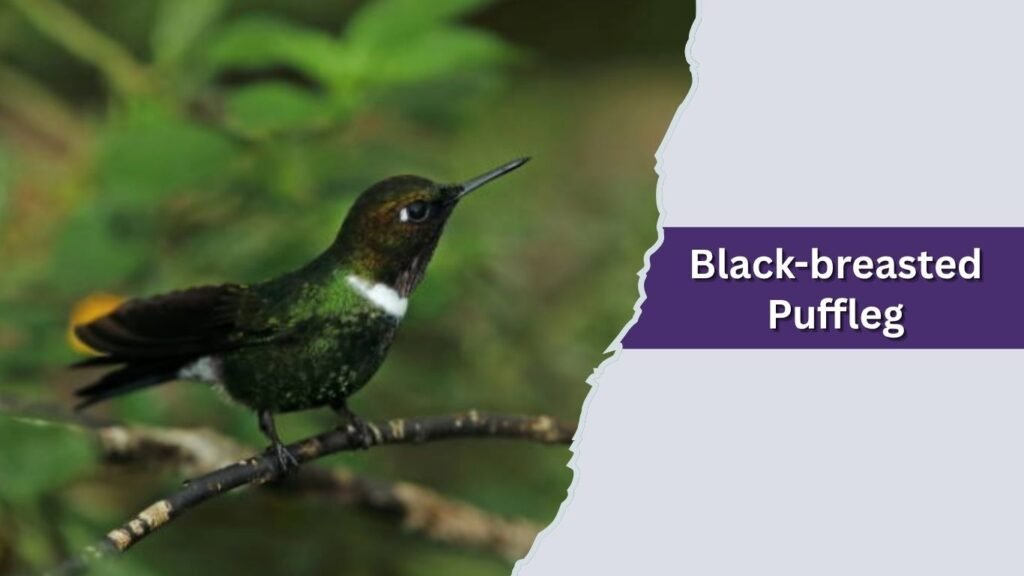
The Black-breasted Puffleg is a rare and striking hummingbird species found in the high-altitude regions of Ecuador. It is especially notable for its dark chest and distinctive fluffy white leg tufts, known as “pufflegs.” This bird is considered endangered, making it an important species for conservation efforts and a remarkable sight for bird watchers.
Identification
- Medium-sized hummingbird with a compact body
- Black or very dark breast contrasting with lighter areas
- Distinctive white, fluffy leg tufts (pufflegs)
- Green upperparts with slight iridescence
- Straight, medium-length bill
Habitat
Black-breasted Pufflegs are typically found in high-elevation cloud forests and montane shrublands. They prefer cool, humid environments with dense vegetation and abundant flowering plants. This species is often associated with specific mountainous regions, where it relies on native plants for nectar.
Behaviors
These hummingbirds are generally solitary and territorial, especially around feeding areas. They actively defend their preferred flowers from other hummingbirds. Due to their limited range, they are not commonly seen, and much of their behavior is still being studied. They are agile fliers, capable of hovering precisely while feeding.
Diet and Lifespan
Their diet mainly consists of nectar from high-altitude flowers, along with small insects for protein. They play a key role in pollination within their ecosystem. The lifespan of the Black-breasted Puffleg is not well documented but is estimated to be around 4 to 6 years in the wild, depending on environmental conditions.
6. Black-throated Mango
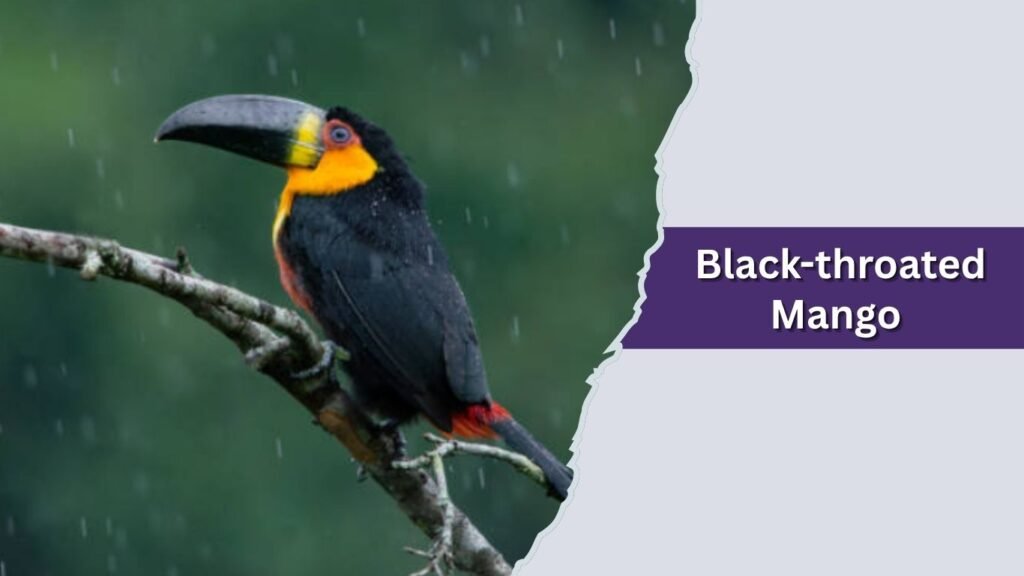
The Black-throated Mango is a vibrant hummingbird species found in Central and South America. Despite its name, it is not entirely black, but the male’s dark throat patch gives it a bold and contrasting appearance. This species is often seen in open habitats and is known for its active and energetic nature.
Identification
- Medium-sized hummingbird with a slender body
- Males have a black throat and chest area
- Bright green upperparts with a glossy shine
- Slightly curved, medium-length bill
- Females are paler with less distinct throat markings
Habitat
Black-throated Mangos are commonly found in open woodlands, savannas, gardens, and forest edges. They prefer areas with plenty of flowering plants and are often seen in both natural and human-modified environments. This species is well adapted to warm climates and is widely distributed across tropical regions.
Behaviors
These hummingbirds are active and can be territorial, especially around feeding areas. They are frequently seen hovering near flowers or making quick flights between feeding spots. Males may perform display flights during the breeding season to attract females. They are generally solitary but may tolerate others when food is abundant.
Diet and Lifespan
Their diet mainly consists of nectar from flowers, supplemented by small insects and spiders for protein. They are important pollinators in their habitats. The lifespan of the Black-throated Mango is estimated to be around 5 to 8 years in the wild, depending on environmental conditions and food availability.
7. Black-bellied Thorntail
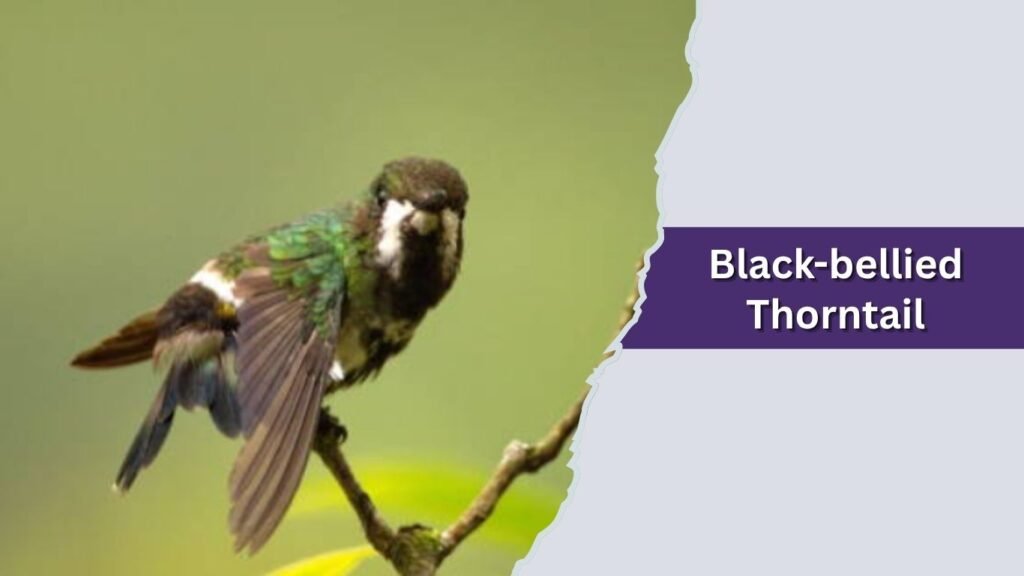
The Black-bellied Thorntail is a small and eye-catching hummingbird found in northern South America. It is known for its striking contrast between a dark belly and bright upperparts, along with its distinctive tail shape. Despite its delicate appearance, this species is highly active and well adapted to its environment.
Identification
- Small hummingbird with a slender body
- Dark or black belly contrasting with lighter chest
- Bright green upperparts with metallic sheen
- Long, pointed tail with white tips
- Straight, thin bill
Habitat
Black-bellied Thorntails are typically found in open woodlands, savannas, forest edges, and gardens. They prefer areas with abundant flowering plants and are often seen near water sources. This species thrives in warm, tropical environments where nectar is available year-round.
Behaviors
These hummingbirds are active and agile, often seen hovering while feeding or darting quickly between flowers. They can be territorial, especially around rich nectar sources, but are generally less aggressive than some other hummingbirds. Males may perform display flights during the breeding season.
Diet and Lifespan
Their diet mainly consists of nectar from flowers, along with small insects and spiders for protein. They play an important role in pollination. The lifespan of the Black-bellied Thorntail is not well documented but is generally estimated to be around 4 to 7 years in the wild, depending on environmental conditions.
8. Black-eared Fairy
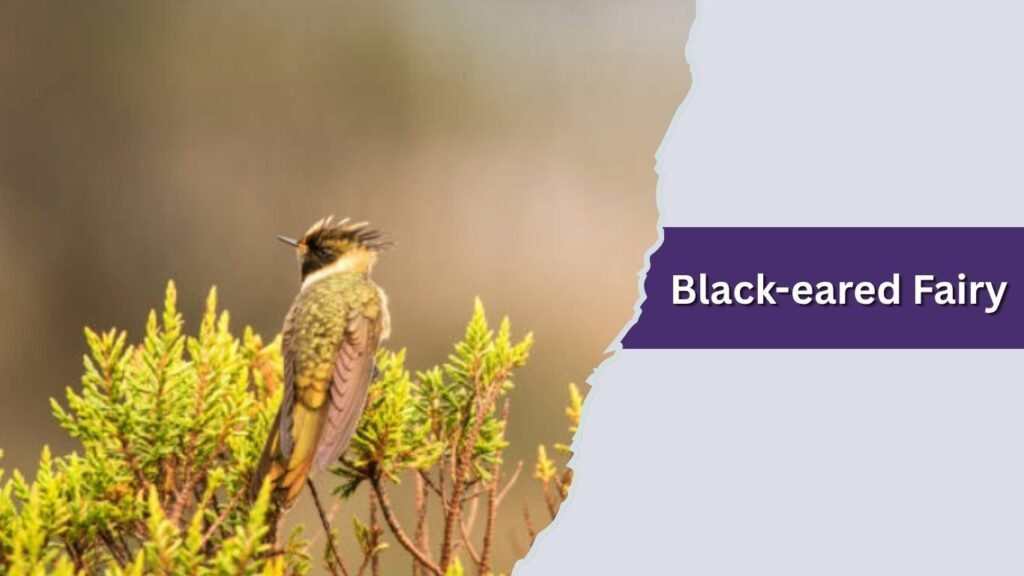
The Black-eared Fairy is a beautiful hummingbird species found in parts of Central and South America. It is named for the dark patch near its ear area, which contrasts with its otherwise vibrant plumage. This species is admired for its elegance and is often seen in forested regions where flowers are abundant.
Identification
- Medium-sized hummingbird with a slender body
- Distinct black patch near the ear area
- Bright green upperparts with iridescent shine
- Long, slightly curved bill
- Tail often shows contrasting colors or patterns
Habitat
Black-eared Fairies are typically found in tropical and subtropical forests, forest edges, and gardens. They prefer humid environments with dense vegetation and plenty of flowering plants. This species is commonly seen in lowland forests as well as foothill regions, where nectar sources are plentiful.
Behaviors
These hummingbirds are generally active and may be territorial around feeding areas. They are agile fliers, often hovering while feeding on nectar. Black-eared Fairies may also visit feeders in gardens. They are usually solitary but can tolerate others when food is abundant.
Diet and Lifespan
Their diet mainly consists of nectar from flowers, supplemented by small insects and spiders for protein. They contribute to pollination in their habitats. The lifespan of the Black-eared Fairy is not widely documented but is estimated to be around 5 to 8 years in the wild, depending on environmental conditions.
9. Black-backed Thornbill
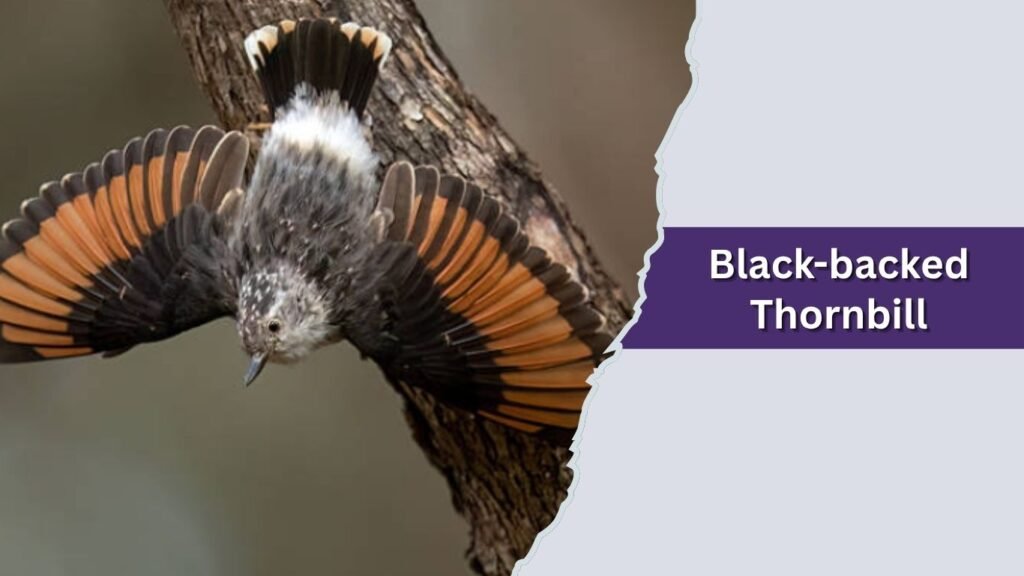
The Black-backed Thornbill is a tiny hummingbird species native to South America, especially in the Andes. It is recognized for its small size and the dark coloration on its back, which contrasts with lighter underparts. Despite being less known, it is a fascinating species adapted to high-altitude environments.
Identification
- Very small hummingbird with a compact body
- Dark or blackish back contrasting with pale underparts
- Short tail with subtle markings
- Straight, slender bill
- Duller coloration compared to more चमकदार species
Habitat
Black-backed Thornbills are typically found in high-altitude regions such as cloud forests, shrublands, and mountainous slopes. They prefer cool environments with dense vegetation and plenty of flowering plants. This species is often seen in areas where nectar sources are available despite harsh climatic conditions.
Behaviors
These hummingbirds are active and spend much of their time feeding. They are capable of hovering efficiently even in thin mountain air. While generally solitary, they may defend feeding territories when necessary. Their movements are quick and precise as they move between flowers.
Diet and Lifespan
Their diet mainly consists of nectar from mountain flowers, along with small insects and spiders for protein. They play an important role in pollination in their ecosystem. The lifespan of the Black-backed Thornbill is not well documented but is estimated to be around 3 to 6 years in the wild, depending on environmental conditions.
10. Black-throated Hermit
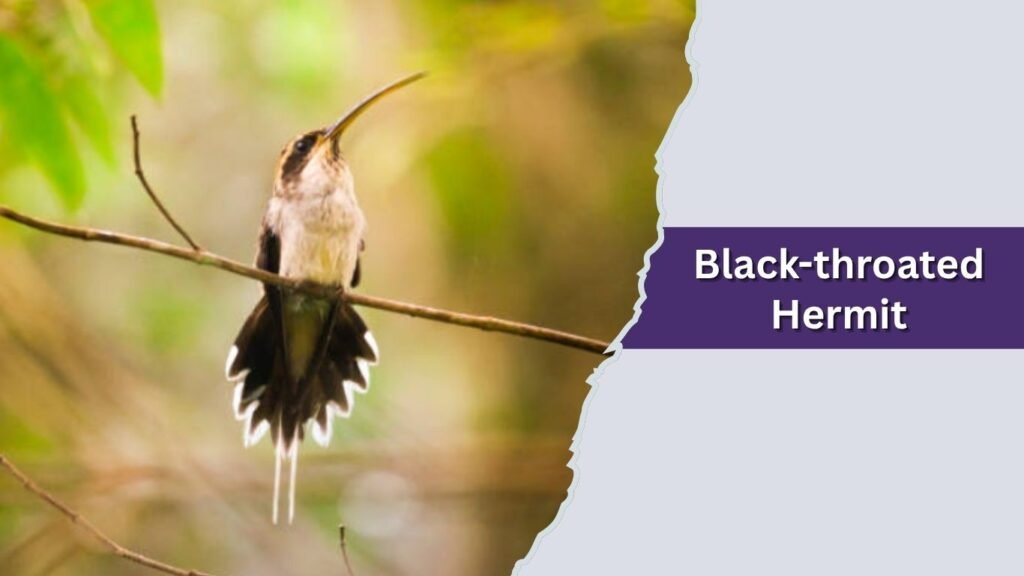
The Black-throated Hermit is a distinctive hummingbird species found in Central and South America. It belongs to the hermit group, which is known for longer bills and a preference for shaded forest environments. Its dark throat and subtle coloration give it a more understated appearance compared to brighter hummingbirds.
Identification
- Medium-sized hummingbird with a slender body
- Dark or black throat patch
- Brownish or greenish upperparts
- Long, slightly curved bill
- White-tipped tail feathers
Habitat
Black-throated Hermits are typically found in tropical rainforests, forest edges, and shaded understory areas. They prefer dense, humid environments with plenty of flowering plants. This species is often seen in lowland forests but may also occur in foothill regions where nectar sources are available year-round.
Behaviors
These hummingbirds are generally less territorial than many other species and often follow regular feeding routes, visiting the same flowers repeatedly—a behavior known as traplining. They are usually solitary and spend much of their time in shaded areas rather than open spaces.
Diet and Lifespan
Their diet mainly consists of nectar from flowers, along with small insects and spiders for protein. They are important pollinators in forest ecosystems. The lifespan of the Black-throated Hermit is estimated to be around 5 to 7 years in the wild, depending on environmental conditions and availability of food.
11. Black Hummingbird
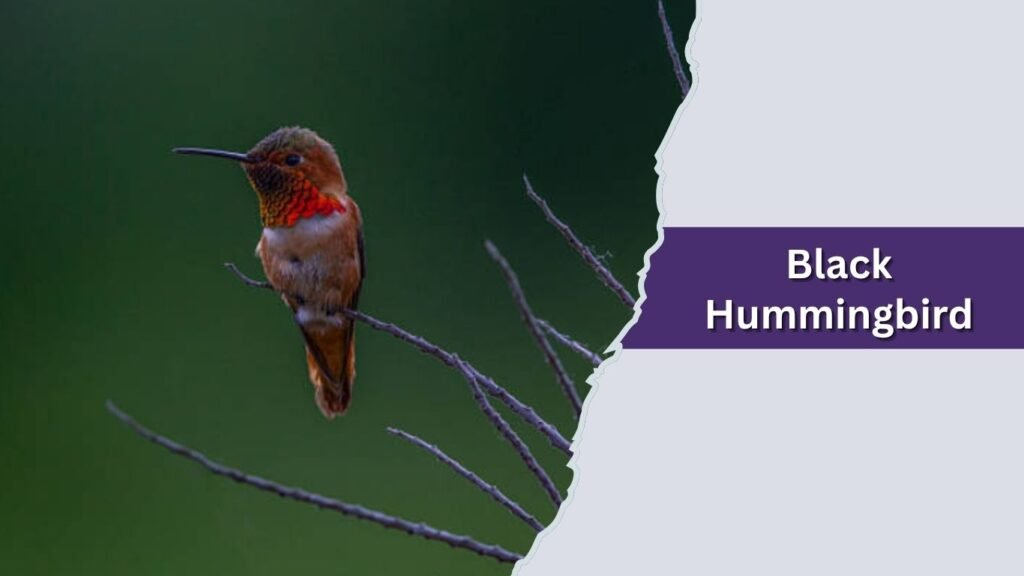
The term “Black Hummingbird” is sometimes used informally to describe hummingbirds that appear mostly dark or black in certain lighting. It is not a widely recognized scientific species name but may refer to individuals or species with very dark plumage. These birds can look entirely black due to light reflection and iridescence.
Identification
- Small hummingbird with dark overall appearance
- Plumage may appear black depending on lighting
- Subtle iridescent tones (blue, green, or purple)
- Slender body with a straight bill
- Compact tail
Habitat
Hummingbirds that appear black can be found in a wide range of habitats depending on the actual species. These include forests, woodlands, gardens, and mountainous regions. Their presence is usually linked to areas with abundant flowering plants and nectar sources.
Behaviors
Like other hummingbirds, these birds are active, agile fliers capable of hovering and rapid movement. They may be territorial around feeding areas and often defend flowers or feeders. Their behavior closely matches that of their true species, even if their appearance seems uniformly dark.
Diet and Lifespan
Their diet mainly consists of nectar from flowers, along with small insects and spiders for protein. They play a key role in pollination. Lifespan varies depending on the actual species but generally ranges from 3 to 8 years in the wild.
12. Black-billed Streamertail
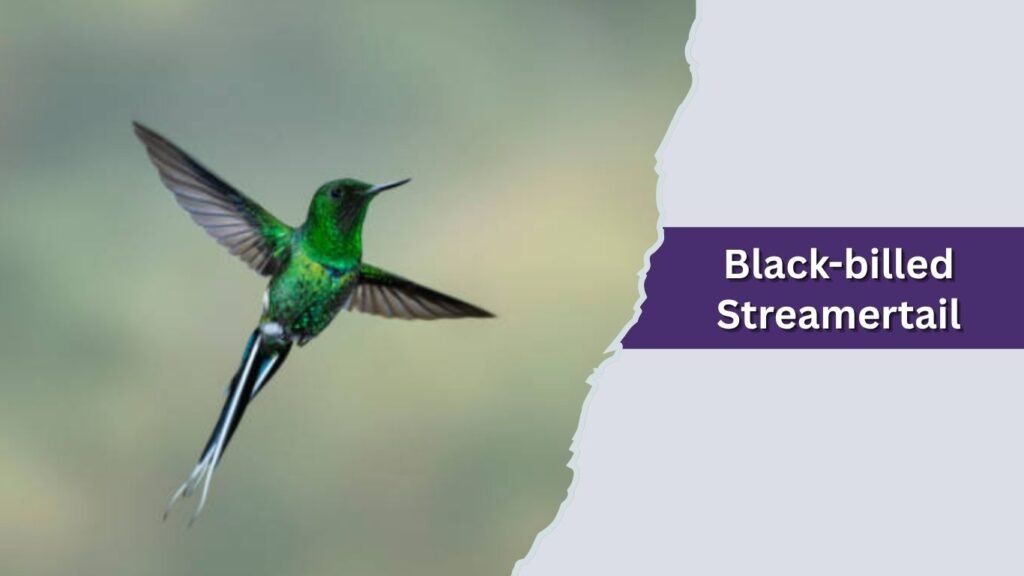
The Black-billed Streamertail is a striking hummingbird species native to Jamaica. It is well known for its long, flowing tail feathers in males, which give it a graceful and unique appearance in flight. Despite its name, it is not entirely black, but the dark bill and contrasting plumage make it stand out among hummingbirds.
Identification
- Medium-sized hummingbird with a slender body
- Long, stream-like tail feathers in males
- Dark (black) bill distinguishing it from related species
- Green upperparts with shimmering iridescence
- Females have shorter tails and less vivid coloration
Habitat
Black-billed Streamertails are typically found in forests, gardens, plantations, and mountainous regions in Jamaica. They adapt well to both natural and human-modified environments, often visiting flowering plants and feeders. This species thrives in areas with abundant nectar sources throughout the year.
Behaviors
These hummingbirds are active and territorial, especially around feeding areas. Males use their long tail feathers in display flights to attract females. They are agile fliers, capable of hovering and making quick directional changes while feeding. They may also chase away other birds from preferred nectar sources.
Diet and Lifespan
Their diet mainly consists of nectar from flowers, along with small insects and spiders for protein. They are important pollinators in their ecosystem. The Black-billed Streamertail typically lives around 6 to 10 years in the wild, depending on environmental conditions and food availability.
FAQs
What are black hummingbirds?
Black hummingbirds are not always a single species but often refer to hummingbirds with very dark plumage that appears black in certain lighting. Many species show iridescent colors that can look black when light does not reflect properly.
Where are black hummingbirds commonly found?
Most black-colored hummingbirds are found in Central and South America, especially in forests, mountains, and tropical regions. Some species may also appear in North America, depending on migration and habitat conditions.
Do black hummingbirds behave differently from other hummingbirds?
No, their behavior is generally similar to other hummingbirds. They are active, fast fliers, capable of hovering, and often territorial around food sources like flowers or feeders. Their dark coloration does not significantly change their behavior.
What do black hummingbirds eat?
Like all hummingbirds, they mainly feed on nectar from flowers. They also consume small insects and spiders for protein. This balanced diet helps them maintain the high energy levels needed for constant movement and flight.
Are black hummingbirds rare?
Some black-colored hummingbird species are rare and limited to specific regions, while others are more common but may appear black only in certain lighting. Their rarity depends on the species, habitat, and geographic distribution.
