
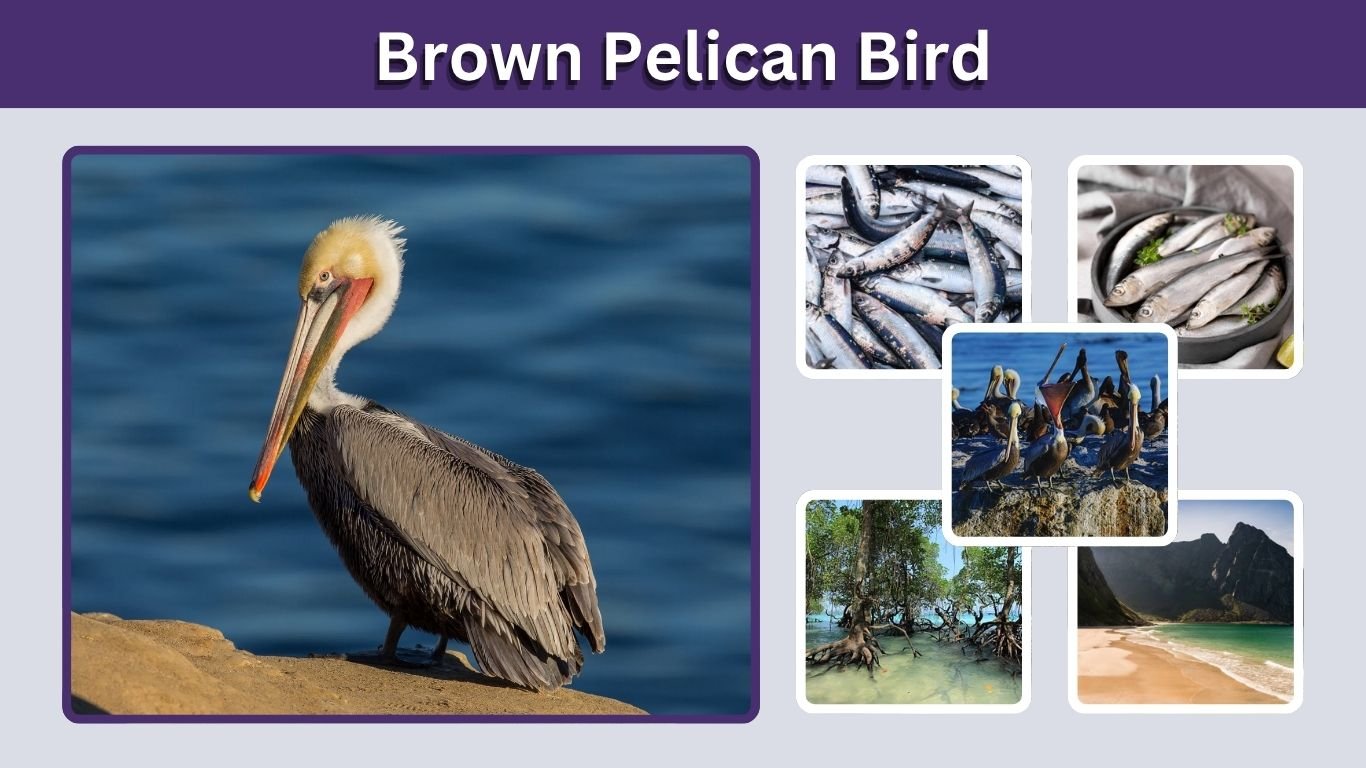
The brown pelican bird (Pelecanus occidentalis) is a large coastal waterbird best known for its long bill, expandable throat pouch, and spectacular plunge-diving behavior. Unlike many pelican species that scoop fish while swimming, brown pelicans often dive headfirst from the air to catch prey. They are commonly seen along beaches, bays, estuaries, and coastal waters throughout the Americas. With their brown-gray bodies, pale heads, and impressive wingspans, brown pelicans are among the most recognizable seabirds in North America.
Brown Pelican Bird Identification
The brown pelican is a heavy-bodied bird with a very long bill and broad wings. Adults vary somewhat in appearance depending on age and breeding season, but their brownish body separates them from predominantly white pelican species.
Identification
- Scientific name: Pelecanus occidentalis
- Family: Pelecanidae
- Order: Pelecaniformes
- Body length: About 100–137 cm
- Wingspan: Around 2–2.3 meters
- Weight: Commonly about 2–5 kg
- Body color: Brownish-gray
- Head: White to yellowish in adults
- Beak: Very long with an expandable throat pouch
- Feet: Fully webbed
- Habitat: Coastal waters, beaches, bays, lagoons, and estuaries
What Does a Brown Pelican Look Like?
Adult brown pelicans have dark brown-gray bodies, pale or white heads, and long bills. During the breeding season, the head, neck, facial skin, and pouch may develop brighter colors.
Juvenile birds tend to be browner overall and usually lack the clean white head of mature adults.
Their wings are long and broad, allowing them to glide just above the ocean surface or soar high on warm air currents.
Brown Pelican Bird Classification
The brown pelican bird classification places the species among large aquatic birds adapted for fishing and life near water.
Scientific Classification
- Kingdom: Animalia
- Phylum: Chordata
- Class: Aves
- Order: Pelecaniformes
- Family: Pelecanidae
- Genus: Pelecanus
- Species: Pelecanus occidentalis
Brown pelicans are closely related to other pelicans, including the American white pelican, Peruvian pelican, Australian pelican, and great white pelican.
Several subspecies of the brown pelican occur across different portions of its geographical range.
Brown Pelican Bird Habitat

Brown pelicans are strongly associated with marine and coastal environments. They are frequently seen around beaches, harbors, bays, estuaries, mangroves, lagoons, and offshore islands.
Unlike some white pelicans that regularly use inland freshwater lakes, brown pelicans spend much of their lives near saltwater.
Where Do Brown Pelicans Live?
Brown pelicans occur along coastal areas of North, Central, and South America.
They can be found along:
- Atlantic and Gulf coasts of the United States
- Pacific Coast
- Mexico
- Caribbean islands
- Central America
- Northern and western South America
Florida, Louisiana, Texas, and California are especially well-known locations for seeing brown pelicans in the United States.
What Do Brown Pelican Birds Eat?
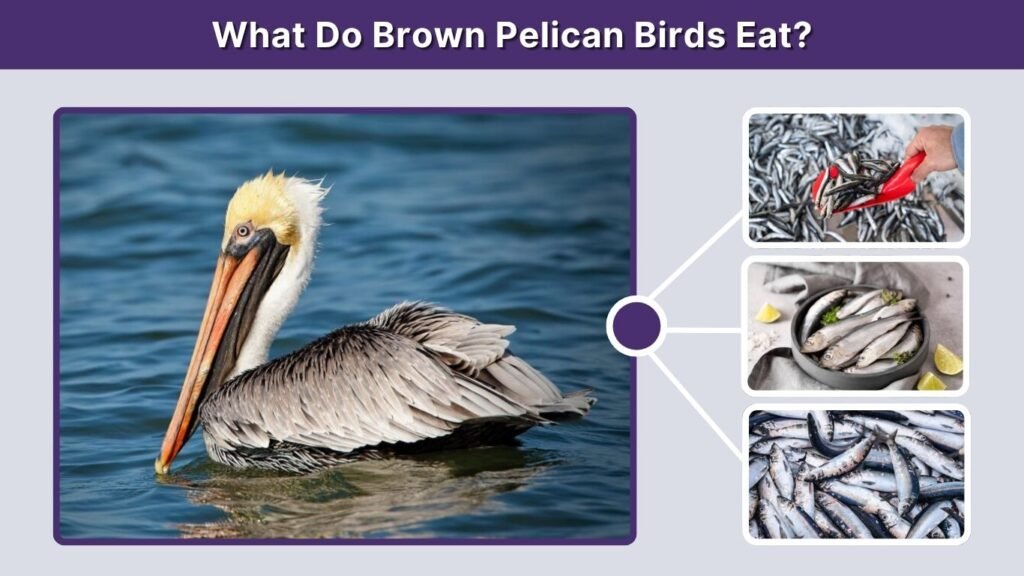
The brown pelican’s diet consists mainly of fish. Its feeding behavior is one of the most impressive aspects of the species.
Common foods include:
- Anchovies
- Sardines
- Herring
- Menhaden
- Mullet
- Other small schooling fish
- Occasionally crustaceans and other aquatic animals
The exact diet varies depending on location and which fish species are locally abundant.
How Does a Brown Pelican Catch Fish?
Brown pelicans are famous for plunge diving.
A bird may fly above the water while searching for fish below the surface. Once prey is located, it turns downward, folds its wings partly backward, and dives headfirst into the water.
Its large throat pouch expands underwater and helps capture fish along with water.
After surfacing, the pelican drains the water from its pouch before swallowing the fish.
Why Don’t Brown Pelicans Get Hurt While Diving?
Brown pelicans have several adaptations that help protect them during high-impact dives. Air sacs beneath the skin can help cushion the impact as the bird strikes the water.
Their body shape, neck movement, and controlled diving technique also help reduce the force of impact.
Young pelicans must develop their hunting skills, and their diving accuracy improves with experience.
Brown Pelican Bird Beak
The brown pelican has a very long bill with a flexible pouch attached beneath the lower jaw.
This pouch is sometimes mistaken for a permanent food-storage bag, but its main purpose is to help catch and handle fish.
After scooping up a fish, the bird must first drain excess water before swallowing its prey.
The bill can also be used during grooming, nest interactions, and defensive behavior.
Brown Pelican Bird Call
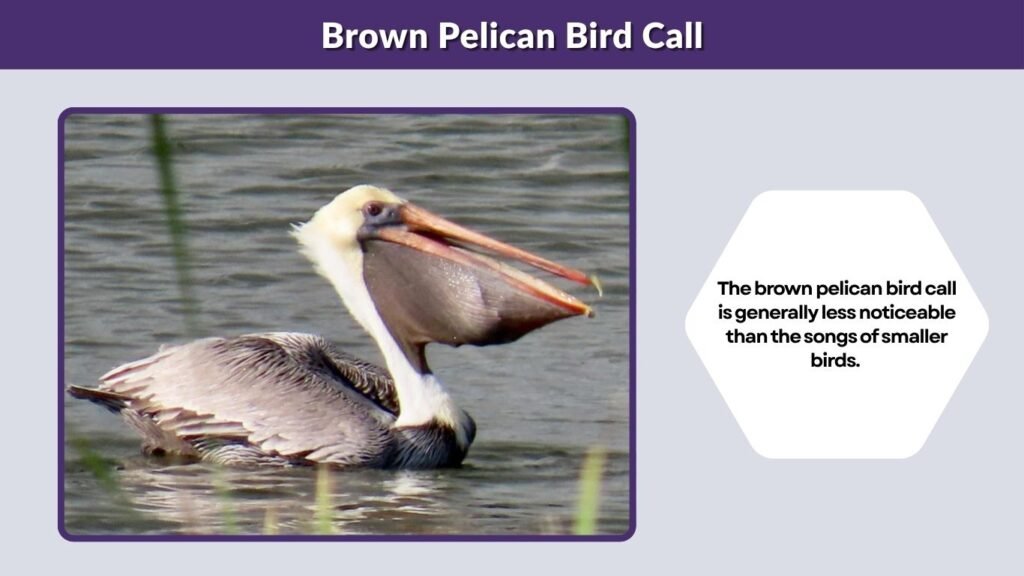
The brown pelican bird call is generally less noticeable than the songs of smaller birds. Adult pelicans are relatively quiet away from breeding colonies.
They may produce:
- Grunts
- Hisses
- Low croaking sounds
- Short vocalizations during social interactions
Young brown pelicans can be considerably noisier. Chicks may call repeatedly while begging their parents for food.
Brown pelicans also communicate using posture, head movements, bill displays, and other body language.
Brown Pelican Bird Size
Brown pelicans are large birds, although they are smaller and lighter than some of the world’s largest pelican species.
Adults commonly measure around 100–137 cm long, with wingspans that can exceed 2 meters.
Despite their bulky appearance, brown pelicans are highly skilled fliers.
They frequently fly in lines or V-shaped formations and may glide only a short distance above ocean waves.
Their broad wings also allow them to soar efficiently while searching for food.
Brown Pelican Nest and Reproduction
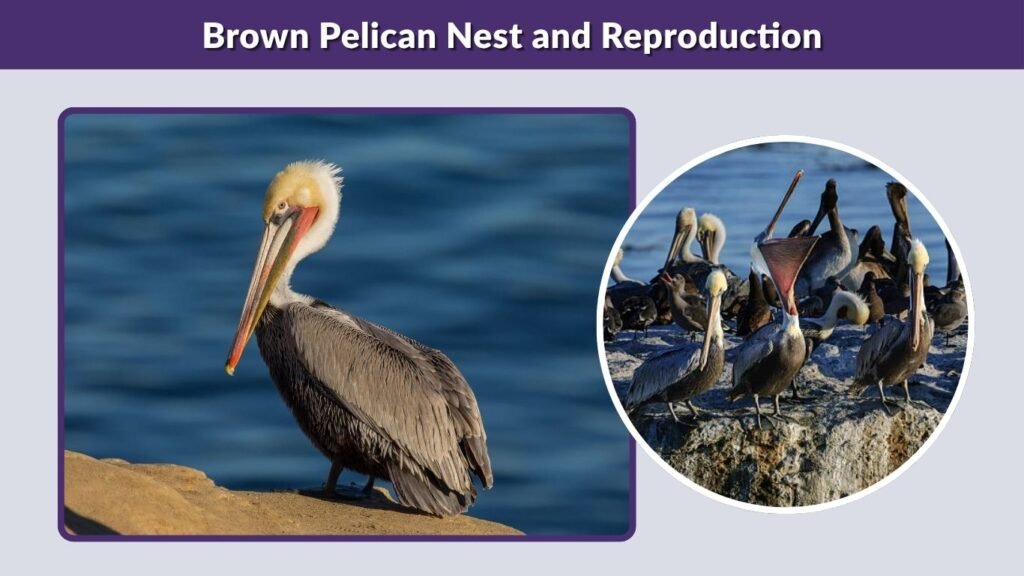
Brown pelicans often breed in colonies on islands and protected coastal areas.
Nest location varies geographically. Some populations nest on the ground, while others construct nests in shrubs, mangroves, or small trees.
Females typically lay several eggs, and both parents help incubate them.
After hatching, chicks are dependent on their parents for food. Adults regurgitate fish, which the growing young consume.
As chicks mature, they gradually develop flight feathers and begin learning the hunting skills required for independent survival.
Brown Pelican Bird Skull and Diving Adaptations
The brown pelican bird skull is lightweight yet adapted to support its long bill and demanding fishing behavior.
The skull and beak must remain light enough for efficient flight but strong enough to withstand repeated feeding activities.
Brown pelicans also possess air sacs beneath portions of their skin. These air-filled structures are particularly useful during plunge dives because they help absorb impact and provide buoyancy after the bird enters the water.
Their combination of skeletal structure, flexible pouch, vision, and diving technique makes them highly specialized marine hunters.
Brown Pelican Migration
Some brown pelican populations are relatively resident, while others move seasonally.
Birds may travel along coastlines according to breeding conditions, water temperature, weather, and food availability.
Young birds can wander considerable distances from their nesting colonies.
Brown pelicans are strong fliers and may cover long stretches of coastline while searching for productive feeding areas.
Brown Pelican Bird Facts
Here are some interesting brown pelican bird facts:
- The brown pelican is one of the few pelicans that regularly plunge-dives for fish.
- Its scientific name is Pelecanus occidentalis.
- It primarily inhabits coastal environments.
- Its throat pouch helps capture fish but is not mainly used to store them.
- Brown pelicans can dive headfirst from considerable heights.
- Their bodies contain air sacs that help cushion diving impacts.
- They often fly close to the surface of the ocean.
- Brown pelicans frequently gather in groups around productive fishing areas.
- Young pelicans must practice before becoming efficient plunge divers.
- The brown pelican is closely associated with Louisiana and is featured prominently in the state’s identity.
FAQs
Is a Brown Pelican a Seabird?
Yes. Brown pelicans are primarily coastal seabirds and spend much of their lives around oceans, bays, estuaries, and coastal islands.
What Does a Brown Pelican Bird Eat?
Brown pelicans mainly eat fish, particularly small schooling species such as sardines, anchovies, herring, and menhaden.
What Sound Does a Brown Pelican Make?
Adult brown pelicans are relatively quiet but can make grunts, hisses, and low croaking sounds. Chicks are usually more vocal.
How Does a Brown Pelican Catch Fish?
It commonly flies above the water, spots a fish, and plunge-dives headfirst. Its expandable throat pouch helps capture the prey before excess water is drained.
What Is Special About the Brown Pelican Bird?
Its most distinctive behavior is spectacular plunge diving. Unlike many other pelicans that mainly fish from the surface, brown pelicans regularly dive from the air to catch fish underwater.