
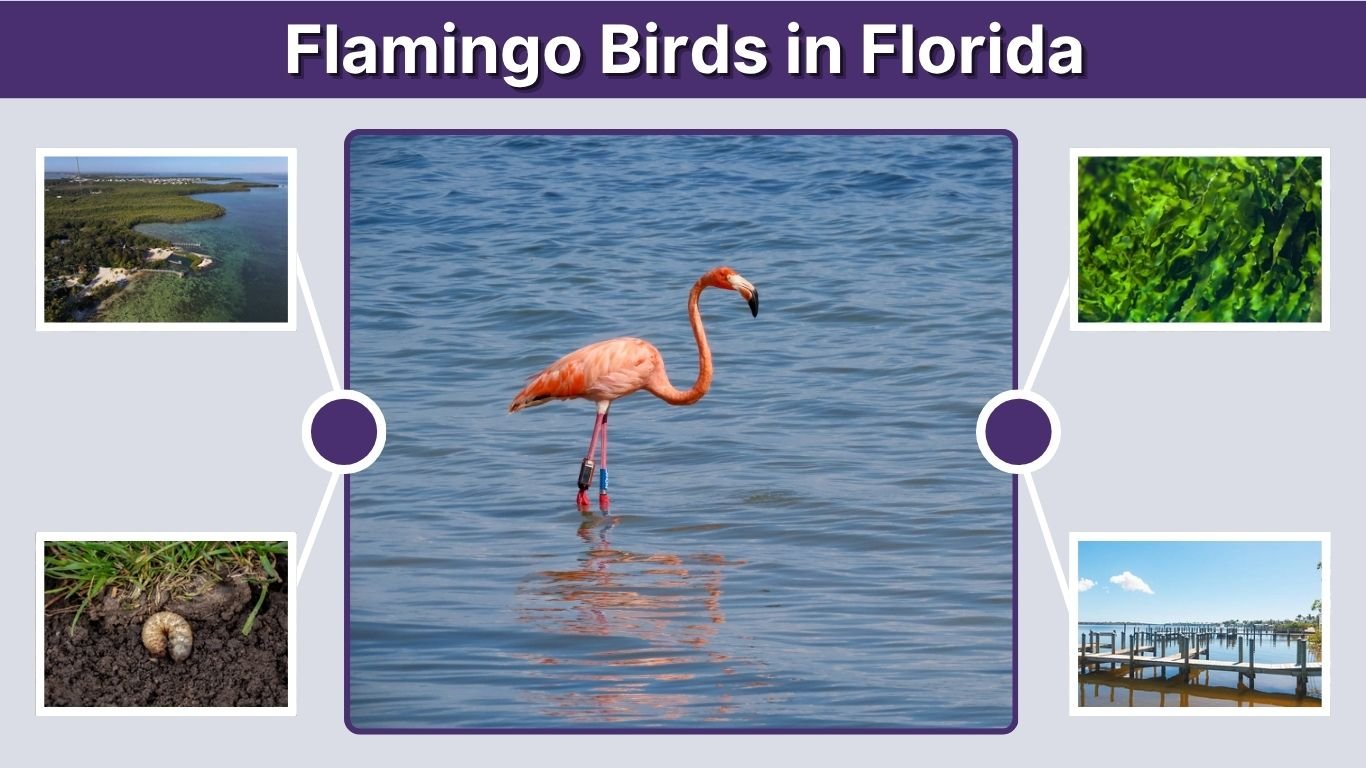
Flamingo birds in Florida are more than colorful symbols on signs, souvenirs, and lawns. Wild American Flamingos (Phoenicopterus ruber) occur naturally in the state, particularly around South Florida’s shallow coastal wetlands. These spectacular pink birds are recognized by their extremely long legs, curved necks, and distinctive bent bills. Although wild flamingos remain uncommon compared with herons, ibises, and spoonbills, sightings have attracted increasing attention in recent years. This guide covers their appearance, Florida range, habitat, diet, behavior, and similar-looking birds.
Are There Wild Flamingo Birds in Florida?
Yes, wild American Flamingos occur in Florida. The Florida Fish and Wildlife Conservation Commission considers the species native to the state. Flamingos historically occurred naturally in Florida but largely disappeared around the beginning of the 20th century. Today, some wild birds reach Florida naturally from elsewhere in the Caribbean, while a captive-origin breeding colony also exists at Hialeah.
Are Flamingos Native to Florida?
American Flamingos are considered native Florida birds, according to the Florida Fish and Wildlife Conservation Commission. Historical evidence indicates that wild flamingos once occurred in the state before their numbers declined dramatically.
The species is widely distributed through the Caribbean, with breeding populations in places including Cuba, Mexico, Venezuela, Bonaire, the Bahamas, and the British Virgin Islands. Flamingos are powerful fliers and can travel substantial distances while searching for suitable feeding or breeding habitat.
Florida’s wild population remains tiny compared with the species’ overall Caribbean population.
How to Identify a Florida Flamingo

The American Flamingo is difficult to confuse with most other adult birds once seen clearly. Its towering height, brilliant pink-to-red feathers, extremely long neck, and unusually shaped bill make it distinctive. However, a distant Roseate Spoonbill can sometimes be mistaken for a flamingo, especially when only its pink coloration is visible.
American Flamingo Identification
- Color: Pink to reddish-pink
- Height: Up to about 5 feet
- Weight: Approximately 4–8 pounds
- Legs: Extremely long and pink
- Neck: Very long and flexible
- Bill: Thick, strongly bent, with a black tip
- Wings: Pink with black flight feathers
- Feet: Webbed and adapted for shallow-water habitats
- Body shape: Tall and slender
Their pink coloration comes from pigments obtained through foods such as aquatic invertebrates.
Where Are Flamingos Found in Florida?
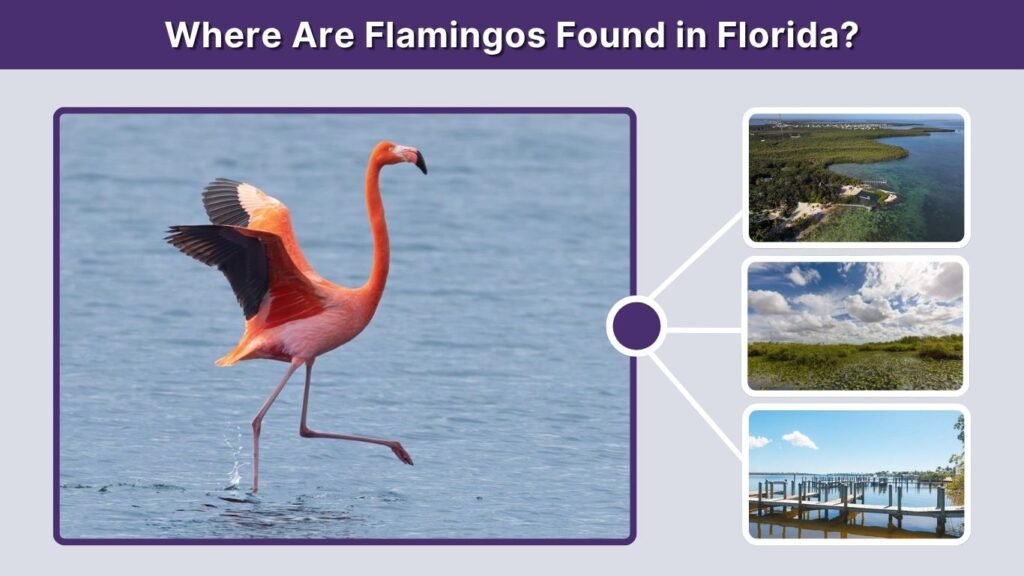
Florida flamingos favor shallow wetlands where food is plentiful and water conditions allow them to forage effectively. Although sightings have occurred along much of Florida’s coastline, their distribution is strongly concentrated in South Florida. They should never be considered guaranteed attractions at a particular wild location because individuals and flocks can move over considerable distances.
Florida Flamingo Locations
Important areas associated with wild flamingo observations include:
- Florida Bay
- Everglades region
- Florida Keys
- Biscayne Bay
- South Florida coastal wetlands
- Shallow treatment wetlands near the northern Everglades
- Merritt Island area
- Pine Island area
FWC reports that, excluding Hialeah, more than 95% of Florida observations have occurred within the Everglades, Biscayne Bay, and Florida Keys.
A February 2024 statewide survey recorded 101 wild American Flamingos, including more than 50 in Florida Bay, 18 around Pine Island, and 14 at Merritt Island National Wildlife Refuge.
What Do Florida Flamingos Eat?
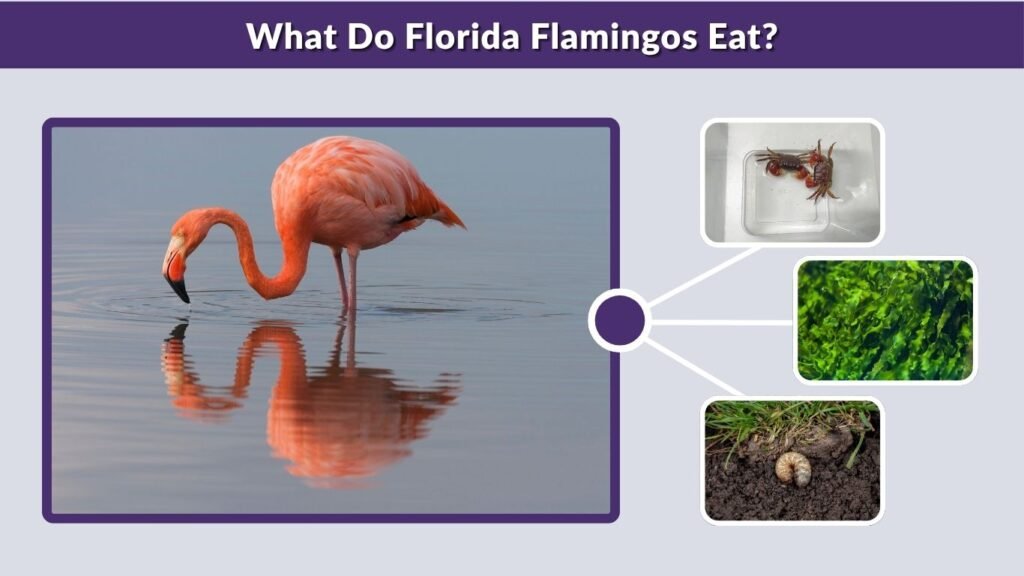
American Flamingos are specialized filter feeders. Instead of spearing fish like herons or grabbing prey with a pelican-like pouch, they use their strangely shaped bills to filter tiny food particles from shallow water. Their diet is also responsible for producing the famous pink coloration that makes flamingos so recognizable.
Common Flamingo Foods
Florida and Caribbean flamingos may feed on:
- Small aquatic crustaceans
- Shrimp and shrimp-like animals
- Aquatic invertebrates
- Insect larvae
- Small mollusks
- Algae
- Microscopic aquatic organisms
- Other small organisms filtered from water
Pigments known as carotenoids in their food contribute to their pink and reddish feathers. Without sufficient dietary pigments, flamingo plumage would be much paler.
How Florida Flamingos Feed and Behave
Flamingos are social birds and frequently gather with other members of their species. Their groups can range from only a few individuals to enormous colonies elsewhere in their global range. Even when resting, their unusual posture and synchronized behavior can make a flock an impressive sight.
Feeding and Social Behavior
A flamingo lowers its head into shallow water and uses its specialized bill to separate edible material from mud and water. Its webbed feet can also disturb sediment, helping expose tiny organisms.
American Flamingos are strong fliers despite their unusual proportions. They can travel considerable distances when searching for food and suitable habitat. Flocks may fly with their necks and legs stretched straight outward.
Flamingos also communicate through vocalizations and visual displays. These group behaviors are especially important around breeding colonies.
Pink and White Birds That Look Like Flamingos in Florida
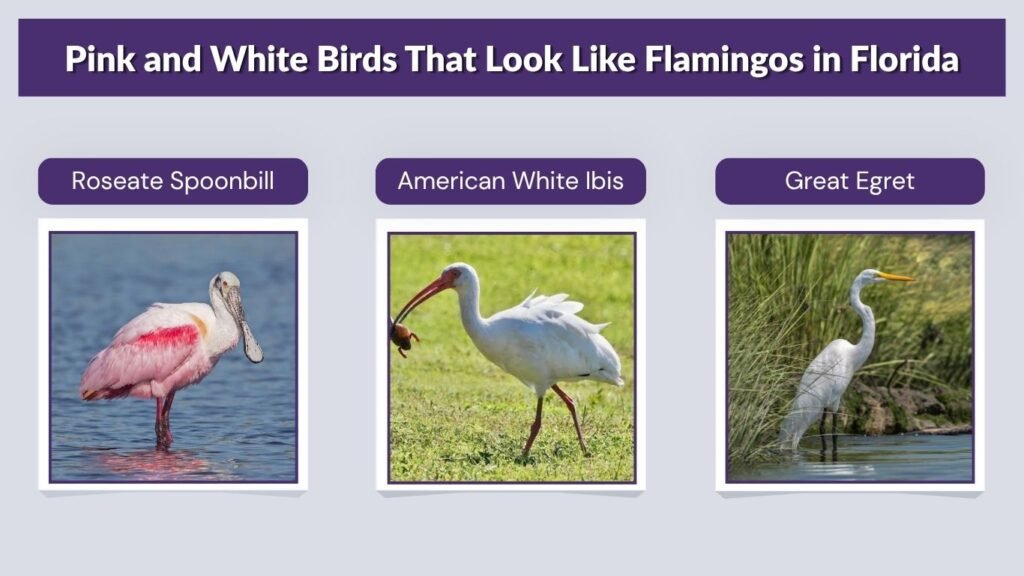
Not every tall pink, white, or gray bird standing in a Florida wetland is a flamingo. The state supports an exceptional diversity of wading birds, several of which have the long necks and legs that produce a flamingo-like appearance. Correctly checking bill shape, body color, and overall size usually resolves the identification.
Common Flamingo-Like Birds
- Roseate Spoonbill: A bright pink bird with a broad spoon-shaped bill
- American White Ibis: White body with a reddish curved bill and legs
- Great Egret: Large white bird with a yellow pointed bill
- Snowy Egret: Smaller white egret with black legs and yellow feet
- Wood Stork: Large white bird with a dark featherless head
- Sandhill Crane: Tall gray bird with a red crown
- Reddish Egret: Gray and reddish coastal wading bird
- American White Pelican: Huge white waterbird with an oversized orange bill
The Roseate Spoonbill is particularly easy to mistake for a flamingo because both are pink wading birds. Spoonbills, however, are shorter and have a distinctive flattened, spoon-shaped bill.
Why Flamingos Disappeared and Returned to Florida
Florida’s relationship with wild flamingos has changed considerably. Historical populations disappeared around the turn of the 20th century, while later sightings were sometimes assumed to involve escaped captive birds. More recent research and observations have strengthened the evidence that naturally occurring flamingos also reach Florida from Caribbean populations.
Recent Flamingos in Florida
Florida experienced especially notable flamingo activity after Hurricane Idalia in 2023 displaced birds across parts of the United States. Many eventually moved elsewhere, but some remained in Florida.
During the February 2024 census, observers recorded 101 wild flamingos across the state. Researchers have continued watching these birds and monitoring the possibility of future breeding.
Wildlife watchers should observe flamingos from a respectful distance. If approaching changes a bird’s behavior or causes it to move away, the observer is too close.
FAQs
Flamingos have become closely associated with Florida culture, but their actual natural history is more interesting than the familiar plastic lawn ornament suggests. Wild American Flamingos do occur in the state, particularly in South Florida, although they remain much less common than many other large wading birds.
1. Are There Flamingo Birds in Florida?
Yes. Wild American Flamingos occur in Florida, and the Florida Fish and Wildlife Conservation Commission classifies the species as native.
2. Where Can You See Wild Flamingos in Florida?
Most observations are concentrated around Florida Bay, the Everglades, Biscayne Bay, and the Florida Keys. Flamingos can move frequently, so sightings at a specific site are never guaranteed.
3. What Pink Bird in Florida Looks Like a Flamingo?
The Roseate Spoonbill is the most common pink Florida bird mistaken for a flamingo. It is smaller and has a distinctive flattened, spoon-shaped bill.
4. What White Florida Birds Look Like Flamingos?
Great Egrets, Snowy Egrets, American White Ibises, Wood Storks, and Whooping Cranes can create a flamingo-like silhouette because of their long legs and necks.
5. Do Flamingos Live in Florida Year-Round?
Some American Flamingos have remained in Florida for extended periods, although Florida supports only a very small portion of the species’ global population. American Flamingos can travel long distances throughout the Caribbean region in response to feeding and breeding opportunities.
