

To get rid of woodpeckers, begin deterrence as soon as pecking starts and combine visual scare devices with physical barriers. You should also determine whether the bird is searching for insects, making a nest cavity, storing food, or simply drumming to attract a mate. Reflective tape may stop occasional visits, while persistent activity usually requires bird netting or metal protection. Never poison, trap, shoot, or coat surfaces with sticky chemicals. Most native woodpeckers are legally protected in the United States.
Why Are Woodpeckers Pecking Your House?
A woodpecker may visit a house because the building produces a loud drumming sound, contains insects, offers soft nesting material, or resembles a natural tree. Identifying the reason helps you select an effective solution. The shape, depth, location, and pattern of the damage can reveal what the bird is attempting to do.
Common Reasons for Pecking
Woodpeckers may peck a building to:
- Communicate or attract a mate through drumming
- Defend their breeding territory
- Search for carpenter bees, ants, or beetle larvae
- Create a nest or nighttime roost
- Store acorns, nuts, or seeds
- Investigate soft, damaged, or hollow siding
- Respond to their reflection in a window
Rapid drumming on gutters, chimney caps, vents, or flashing is usually communication rather than feeding. Metal creates a loud sound that can carry across a large area.
What the Damage Pattern Means
Many small, irregular holes may indicate that the woodpecker is searching for insects. Long horizontal or vertical rows of holes are commonly associated with foraging beneath wooden siding.
A single deep, round opening may become a roost or nest cavity. Acorn woodpeckers produce numerous individual storage holes, while sapsuckers drill neat rows of shallow holes in living trees.
How to Get Rid of Woodpeckers Humanely
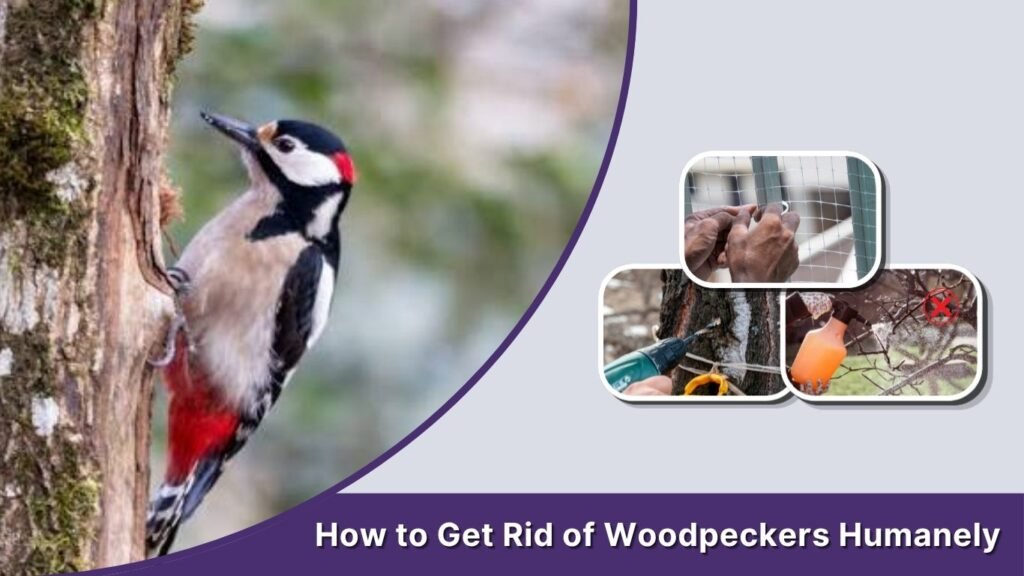
The most effective approach combines immediate harassment, removal of the attraction, and protection of the damaged surface. Start when the bird first appears because an established feeding or nesting location becomes increasingly difficult to change.
1. Hang Reflective Deterrents
Attach reflective bird tape, Mylar strips, metallic pinwheels, or shiny streamers near the pecking location. The objects should move freely in the breeze and produce changing flashes of light.
Place them directly in front of the damaged section rather than elsewhere in the yard. Change their positions every few days so the bird does not become accustomed to them. Remove loose materials that could entangle wildlife.
2. Install Bird Netting
Physical exclusion is generally the most reliable solution for persistent woodpecker activity. Install appropriately sized bird netting from the eaves to cover the affected wall while keeping it several inches away from the siding.
The netting should remain tight, visible to birds, and free from gaps. Check it regularly for tears or trapped animals. Never place netting over an active nest entrance. The U.S. Fish and Wildlife Service identifies properly installed netting as one of the most effective woodpecker exclusion methods.
3. Protect the Damaged Surface
Once you have confirmed that no active nest is present, cover vulnerable sections with:
- Metal flashing
- Smooth exterior panels
- Hardware cloth with safe, finished edges
- Durable fiber-cement siding
- Protective trim around corners and eaves
- Properly installed chimney caps and vent covers
A smooth, impenetrable surface prevents the bird from gripping and drilling the same location. This is particularly helpful on cedar, redwood, pine, and log homes.
4. Repair Holes Promptly
After the woodpecker stops visiting, fill shallow damage and repaint the repaired section to match the surrounding surface. Leaving visible holes may encourage the bird to return and continue excavating.
Before closing a deep hole, observe it from a distance for several days. Do not seal it if birds are entering regularly or if eggs or chicks may be inside. A wildlife professional can inspect uncertain cavities.
5. Remove the Food Source
Woodpeckers feeding on a building may indicate carpenter bees, wood-boring beetles, termites, ants, or moisture-damaged wood. Look for insect waste, bee entrances, hollow areas, staining, and decaying boards.
Ask a qualified pest-control or building professional to identify and treat the underlying problem. Do not spray pesticide into a hole while a bird is using it. Repair water leaks and replace decayed wood after any insects have been controlled.
Getting Woodpeckers Off Different Surfaces
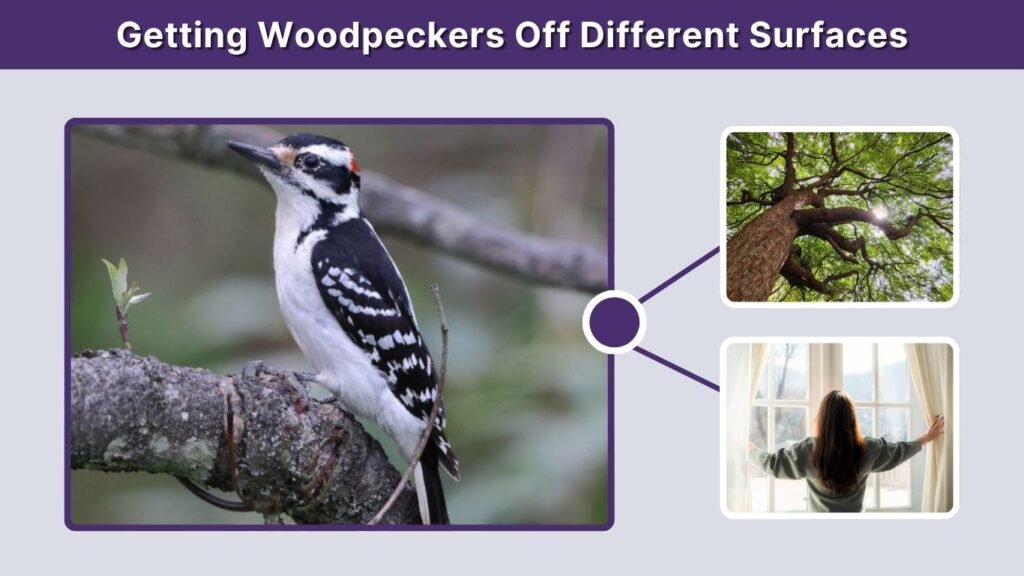
The best deterrent depends on where the bird is pecking. Visual devices can work on temporary drumming sites, while exclusion and structural repairs are usually required for repeated attacks on siding, roofs, or cavities.
Wood and Cedar Siding
Woodpeckers are particularly attracted to rough cedar, redwood, plywood, logs, and weathered boards. Cover the affected section with netting or temporary metal flashing, investigate insect activity, and repair existing holes.
If attacks continue every season, replacing the vulnerable area with smooth fiber-cement, vinyl, or another resistant exterior material may offer the most dependable long-term protection.
Stucco and Synthetic Stucco
Woodpeckers may break through synthetic stucco systems because the foam beneath the exterior layer resembles soft, decaying wood. The hollow sound can also encourage drumming.
Repair damaged stucco quickly and cover the location temporarily with netting or a smooth protective panel. Have a contractor check for moisture, insects, or exposed foam beneath the finish.
Roofs, Gutters and Chimneys
Drumming on gutters, roof vents, flashing, and chimney caps is often territorial communication. Hang moving reflective strips close to the drumming point or cover the chosen surface with a material that produces less resonance.
Secure loose flashing and confirm that chimney caps and vent screens are properly installed. Never block a chimney or vent in a manner that interferes with ventilation, heating equipment, or fire safety.
Trees
Sapsuckers and other woodpeckers can create rows of holes in trunks and branches. Wrap the affected area loosely with burlap or suitable tree-protection fabric, allowing space for growth and airflow. Remove or adjust the covering before it constricts the trunk.
Avoid completely wrapping the tree in plastic. If bark damage is extensive or the tree appears unhealthy, consult a certified arborist.
Windows
A woodpecker repeatedly striking a window may be reacting to its reflection. Apply an exterior window film, soap pattern, tempera paint, screen, or closely spaced decals to break up the reflection.
Exterior treatments are more effective than objects placed behind the glass because they reduce the reflective surface itself.
How to Remove a Woodpecker From an Attic
First determine whether the woodpecker is accidentally trapped or using a cavity as a nest. If it entered a room accidentally, close interior doors, turn off indoor lights, and open one exterior window or door. Leave the area quiet and allow the bird to fly toward daylight.
Do not chase or grab it. If it cannot leave, contact a licensed wildlife rehabilitator. For an attic or wall cavity, locate the entrance from outside but do not seal it until a professional confirms there are no eggs, chicks, or dependent birds inside.
After the cavity becomes inactive, repair the entrance and cover nearby vents with appropriate exclusion material. Also inspect the attic for water damage and insects.
Methods You Should Avoid
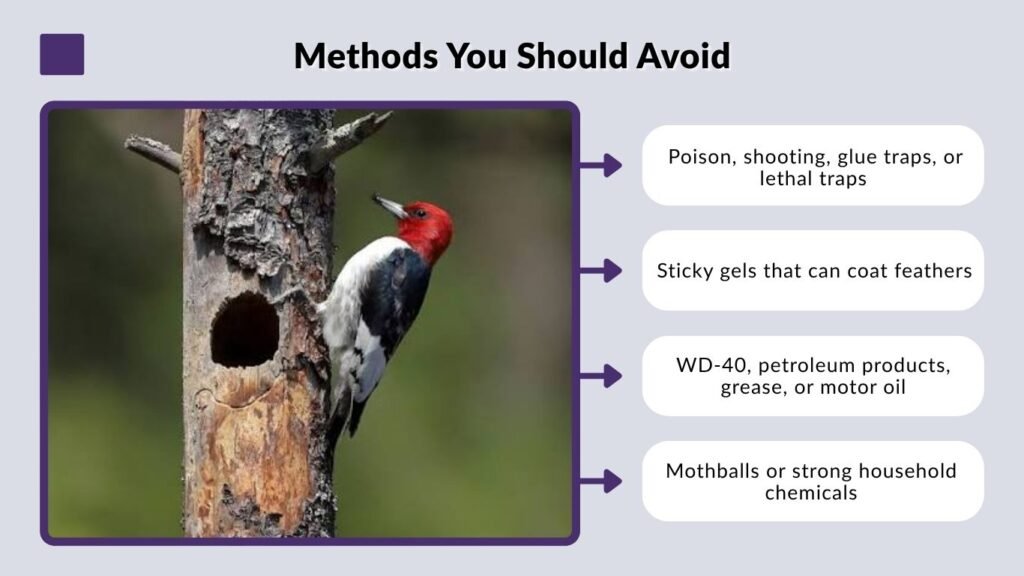
Some commonly suggested remedies can injure birds, damage buildings, or violate wildlife laws. They may also create greater safety problems than the original pecking.
Do not use:
- Poison, shooting, glue traps, or lethal traps
- Sticky gels that can coat feathers
- WD-40, petroleum products, grease, or motor oil
- Mothballs or strong household chemicals
- Unsecured netting that may entangle wildlife
- Expanding foam in an occupied cavity
- High-pressure water or objects thrown at birds
WD-40 is not an appropriate woodpecker repellent. It may stain siding, create a flammable or slippery surface, harm plants, and contaminate a bird’s feathers. Use purpose-designed exclusion materials instead.
Plastic owls and hawk models sometimes provide short-term results, but woodpeckers often recognize that motionless decoys are harmless. Move any decoy frequently and combine it with reflective movement or exclusion.
Are Woodpeckers Legally Protected?
Nearly all native woodpeckers in the United States are protected under the Migratory Bird Treaty Act. Killing, capturing, or possessing a protected bird without authorization is illegal. Eggs and occupied nests must not be destroyed.
If a nest is active, major exclusion or repair work normally must wait until the young have permanently left. State and local wildlife rules may provide additional protection. Severe damage may justify discussing a federal depredation permit, but applicants must document previous attempts to use nonlethal deterrents.
FAQs
What is the fastest way to stop a woodpecker?
Hang moving reflective strips directly over the pecking area and protect the surface with temporary netting or metal. Address the problem immediately before the bird develops a routine.
Will aluminum foil keep woodpeckers away?
Moving strips of foil may provide temporary deterrence, but outdoor reflective bird tape is generally more durable. Neither option is as reliable as properly installed exclusion netting.
Can wind chimes scare away woodpeckers?
Wind chimes may briefly disturb a woodpecker, but the bird usually becomes accustomed to predictable sounds. Visual movement and physical exclusion are more dependable.
Will woodpeckers eventually leave on their own?
Territorial drumming may decrease after breeding season, but a bird with access to insects, a nest cavity, or a food-storage location may continue returning. Early intervention is recommended.
How do I permanently keep woodpeckers off my house?
Remove insects and decayed wood, close inactive holes, protect vulnerable walls with netting or smooth materials, and replace repeatedly damaged siding with a resistant exterior product.