
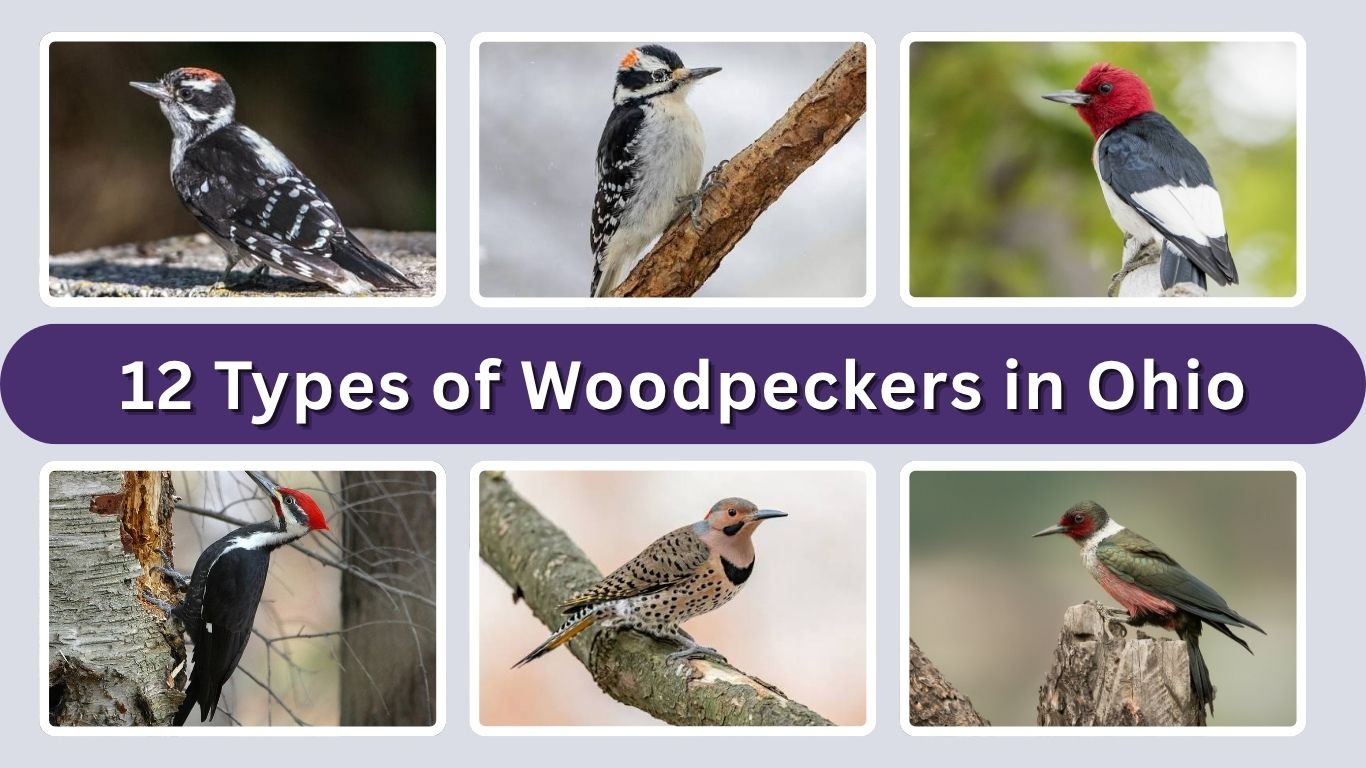
Ohio is home to several fascinating woodpecker species, ranging from the tiny Downy Woodpecker to the impressive Pileated Woodpecker, the largest regularly occurring woodpecker in the state. These birds can be found in forests, parks, farms, and suburban neighborhoods throughout northern, central, and southern Ohio. Some species remain year-round, while others appear seasonally or only as rare visitors. This guide covers 12 types of woodpeckers in Ohio, including their identification features, habitat, behavior, diet, and nesting habits.
1. Downy Woodpecker
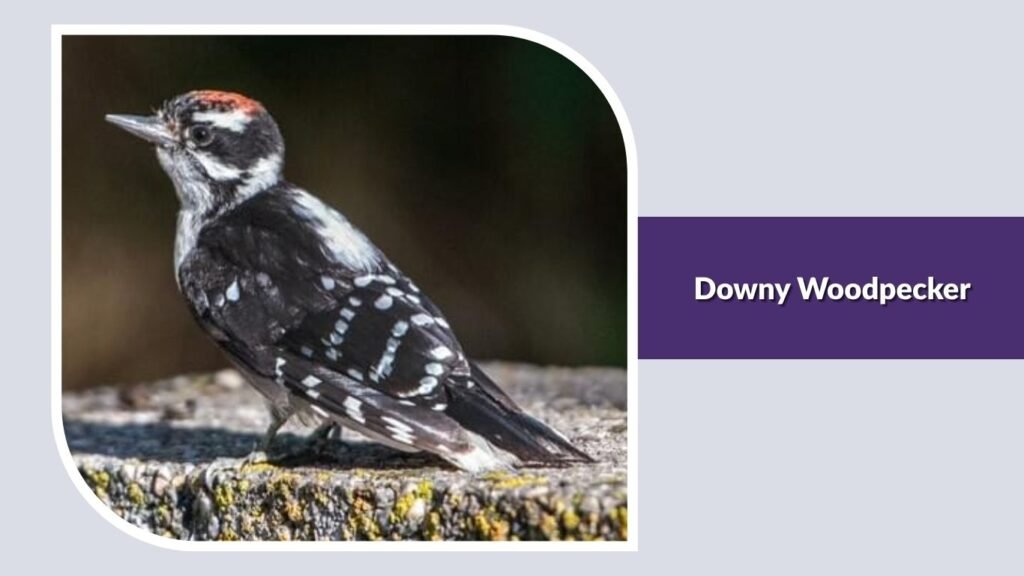
The Downy Woodpecker is one of the most common woodpeckers in Ohio and is often seen throughout the year. This tiny black-and-white bird adapts well to forests, parks, suburban neighborhoods, and backyard feeders. Because of its small size and friendly feeder habits, it is often the first Ohio woodpecker that beginning birdwatchers learn to recognize.
Identification
- Length: About 5.5–6.7 inches
- Color: Black and white
- Back: White stripe down the center
- Bill: Short and relatively small
- Male: Small red patch on the back of the head
- Female: Lacks the red head patch
- Size: Smallest common woodpecker in Ohio
Habitat and Distribution
Downy Woodpeckers occur throughout Ohio, including northern Ohio, central Ohio, and southern portions of the state. They favor deciduous woods, forest edges, orchards, city parks, and residential areas containing mature trees.
They are especially easy to find in winter when they frequently visit backyard bird feeders. Their ability to use small branches and weed stalks allows them to search places that larger woodpeckers cannot easily reach.
Behavior and Diet
These birds move actively along tree trunks and small branches while searching for beetles, ants, caterpillars, and other insects. They also eat seeds, berries, and plant material.
Downy Woodpeckers readily visit suet, sunflower seed, and peanut feeders. They sometimes join mixed flocks of chickadees and nuthatches during winter.
Nesting and Lifespan
Pairs excavate nesting cavities in dead or decaying trees. Both parents help with nest construction, incubation, and feeding the young.
The entrance hole is relatively small compared with those made by larger Ohio woodpecker species. Old cavities may later provide shelter for other small birds and wildlife.
2. Hairy Woodpecker
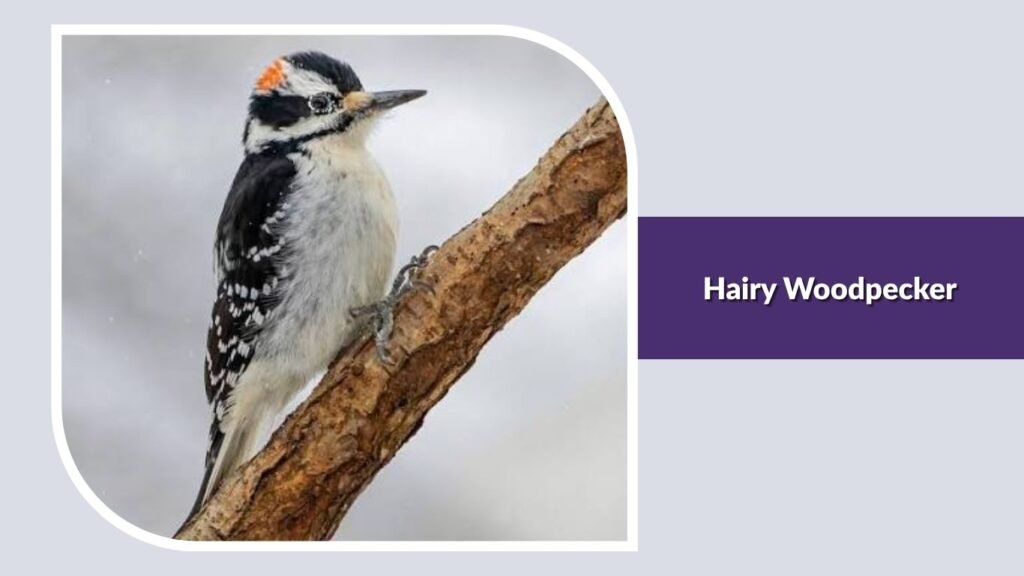
The Hairy Woodpecker is another black-and-white woodpecker found throughout Ohio. At first glance, it closely resembles the Downy Woodpecker, but it is considerably larger and has a longer, stronger bill. Hairy Woodpeckers prefer areas with mature trees and are regularly encountered in Ohio forests, wooded parks, and spacious suburban properties.
Identification
- Length: About 7–10 inches
- Color: Black and white
- Back: Broad white stripe
- Bill: Long and heavy
- Male: Red patch on the back of the head
- Female: No red head marking
- Appearance: Similar to a larger Downy Woodpecker
Habitat and Distribution
Hairy Woodpeckers live throughout much of Ohio. Mature deciduous and mixed forests provide particularly suitable habitat because they offer large trees, dead branches, and plenty of insects.
They may also appear in wooded neighborhoods and parks. Compared with Downy Woodpeckers, Hairy Woodpeckers are more commonly associated with larger tree trunks and less densely developed areas.
Behavior and Diet
Hairy Woodpeckers use their powerful bills to probe and hammer bark while searching for insects. Beetle larvae, ants, caterpillars, and other arthropods form an important part of their diet.
They may also consume seeds, fruits, and suet. Their drumming is typically louder and stronger than that of the smaller Downy Woodpecker.
Nesting and Lifespan
A breeding pair excavates a cavity in a dead tree, broken limb, or decaying section of a living tree. Both adults participate in raising the young.
Because they are non-migratory across much of their Ohio range, Hairy Woodpeckers can be observed during both summer and winter.
3. Red-bellied Woodpecker
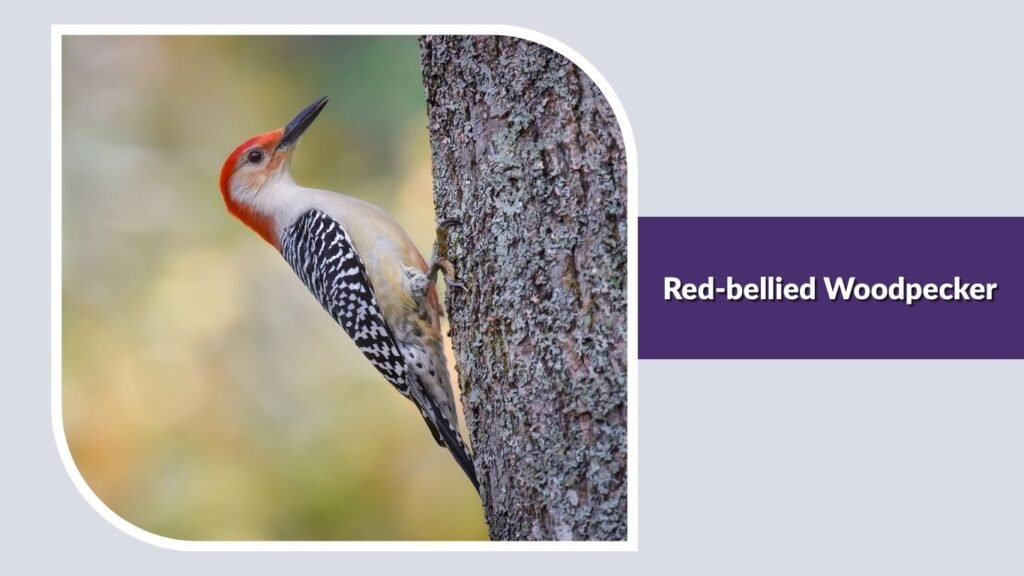
The Red-bellied Woodpecker is among the most recognizable and common woodpeckers in Ohio. Despite its name, the reddish belly can be difficult to see. Its red head markings and distinctive black-and-white barred back are usually much more noticeable. These adaptable birds frequently occur in forests, parks, farms, and residential neighborhoods across the state.
Identification
- Length: About 9–10.5 inches
- Back: Black-and-white barred pattern
- Underparts: Pale grayish
- Belly: Small reddish or pinkish patch
- Male: Red extends from forehead to back of head
- Female: Red mainly on the rear crown and nape
- Bill: Long and pointed
Habitat and Distribution
Red-bellied Woodpeckers are widespread throughout Ohio and can be found from northeast Ohio to the southern part of the state. They favor mature deciduous woodland but have adapted extremely well to suburban environments.
Large trees are important for nesting, roosting, and searching for food. Backyard feeders can also make them regular visitors near homes.
Behavior and Diet
Their varied diet contains beetles, ants, grasshoppers, spiders, fruits, nuts, seeds, and berries. They may occasionally eat small vertebrates or eggs when opportunities arise.
At feeders, they readily accept suet, peanuts, and sunflower seeds. Red-bellied Woodpeckers also store food in tree cracks for later use.
Nesting and Lifespan
Pairs excavate cavities in dead trees or decaying portions of living trees. Both parents incubate the eggs and feed the nestlings.
Their loud calls and repeated drumming can make them easier to locate even when dense foliage hides them.
4. Red-headed Woodpecker
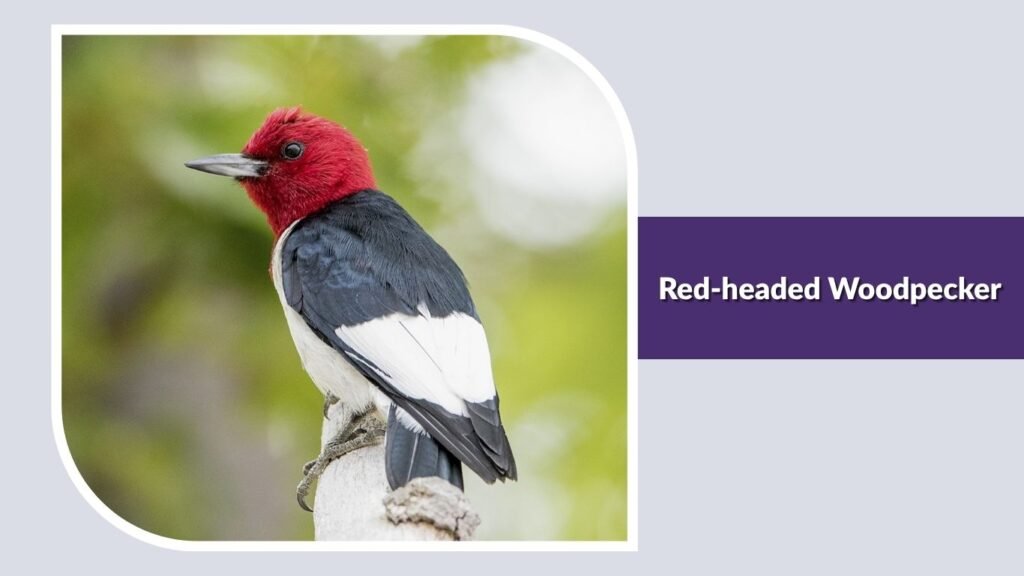
The Red-headed Woodpecker is one of the most striking woodpecker species in Ohio. Adults have an entirely red head, sharply contrasting black-and-white body plumage, and bold white wing patches. Although locally present in suitable habitat, this species is less consistently encountered than several other common Ohio woodpeckers and is often associated with open woodland.
Identification
- Length: About 7.5–9 inches
- Adult head: Entirely bright red
- Body: White underparts
- Back and wings: Black
- Wing patches: Large white areas
- Juvenile: Brownish-gray head rather than bright red
- Bill: Strong and pointed
Habitat and Distribution
Red-headed Woodpeckers favor open forests, woodland edges, groves, orchards, farmland with scattered trees, and areas containing dead standing trees.
They can occur in different parts of Ohio, although their distribution may be patchier than the Red-bellied or Downy Woodpecker. Suitable nesting trees and open feeding areas are particularly important.
Behavior and Diet
Unlike many woodpeckers that mainly search bark for insects, Red-headed Woodpeckers frequently catch flying insects in the air. They also consume beetles, grasshoppers, seeds, nuts, berries, and fruits.
These birds are known for storing food. Acorns, insects, and other items may be hidden in bark crevices for future use.
Nesting and Lifespan
Pairs usually excavate cavities in dead trees or dead sections of living trees. Both parents participate in nesting duties.
Preserving dead trees in safe locations can provide valuable habitat for this species as well as many other cavity-nesting birds.
5. Pileated Woodpecker
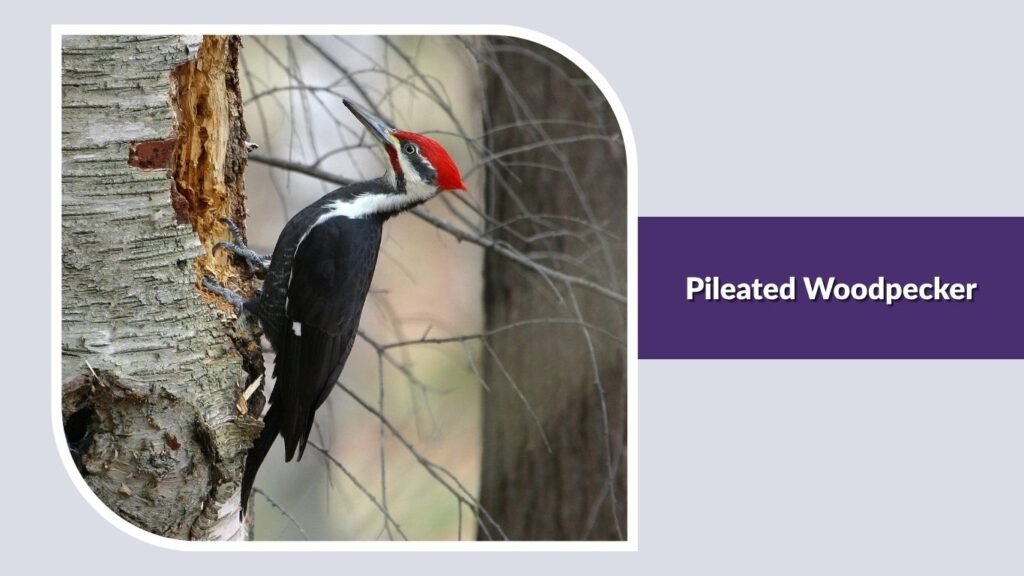
The Pileated Woodpecker is the largest regularly occurring woodpecker in Ohio and one of the most impressive woodland birds in the state. Its crow-like size, black body, brilliant red crest, and powerful calls make identification relatively easy. Pileated Woodpeckers live in mature forests throughout Ohio and can sometimes visit wooded suburban neighborhoods.
Identification
- Length: About 16–19 inches
- Wingspan: About 26–30 inches
- Body: Mostly black
- Crest: Large and bright red
- Face: Bold black-and-white markings
- Male: Red cheek stripe
- Female: Black cheek stripe
- Size: Largest common woodpecker in Ohio
Habitat and Distribution
Pileated Woodpeckers require wooded areas containing mature trees, fallen logs, and standing dead timber. They occur in northern, central, and southern Ohio wherever suitable forest habitat remains.
Large parks, wooded river corridors, and older forests provide excellent habitat. Homeowners near mature woodland may occasionally see them visiting large trees or suet feeders.
Behavior and Diet
Carpenter ants are one of their most important foods. They also eat beetle larvae, other insects, fruits, berries, and nuts.
When searching for insects, a Pileated Woodpecker can create large rectangular holes in dead or decaying trees. These distinctive excavations are often an obvious sign that the species is nearby.
Nesting and Lifespan
Pairs excavate large nesting cavities high in suitable trees. Both adults participate in incubation and caring for the young.
Their abandoned cavities become valuable nesting and roosting sites for owls, ducks, squirrels, bats, and other wildlife.
6. Northern Flicker
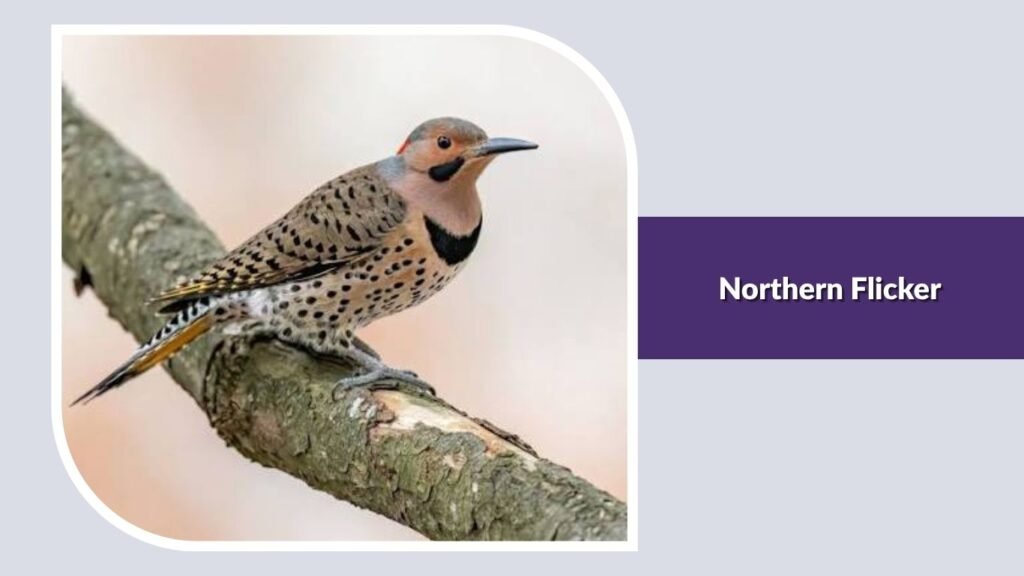
The Northern Flicker is a large and unusual Ohio woodpecker that spends far more time feeding on the ground than most members of its family. Its spotted breast, brownish body, black chest crescent, and bright coloration visible during flight make it distinctive. Northern Flickers occur throughout Ohio in woodlands, parks, farms, and suburban areas.
Identification
- Length: About 11–12 inches
- Body: Brownish-gray
- Chest: Large black crescent
- Underparts: Covered with dark spots
- Rump: Bright white patch
- Wing and tail feathers: Yellow underneath in eastern populations
- Male: Black mustache stripe
- Bill: Long and slightly curved
Habitat and Distribution
Northern Flickers inhabit open woodland, forest edges, farms, parks, and residential areas with mature trees. They can be found throughout Ohio, including northeast Ohio, Columbus and central Ohio, and southern parts of the state.
Some remain year-round, while seasonal movements can make their numbers vary during migration periods.
Behavior and Diet
Northern Flickers are especially fond of ants and frequently forage directly on lawns and open ground. Their long, sticky tongues help them extract ants and larvae from underground colonies.
They also eat beetles, other insects, seeds, berries, and fruits. During winter, plant foods become increasingly important when insects are less available.
Nesting and Lifespan
Northern Flickers usually excavate nesting cavities in dead or weakened trees. They may also reuse suitable existing cavities.
Both parents help incubate eggs and feed chicks. Their loud calls, ground-feeding habits, and flashing white rump make them relatively easy to recognize among the different types of woodpeckers found in Ohio.
7. Yellow-bellied Sapsucker
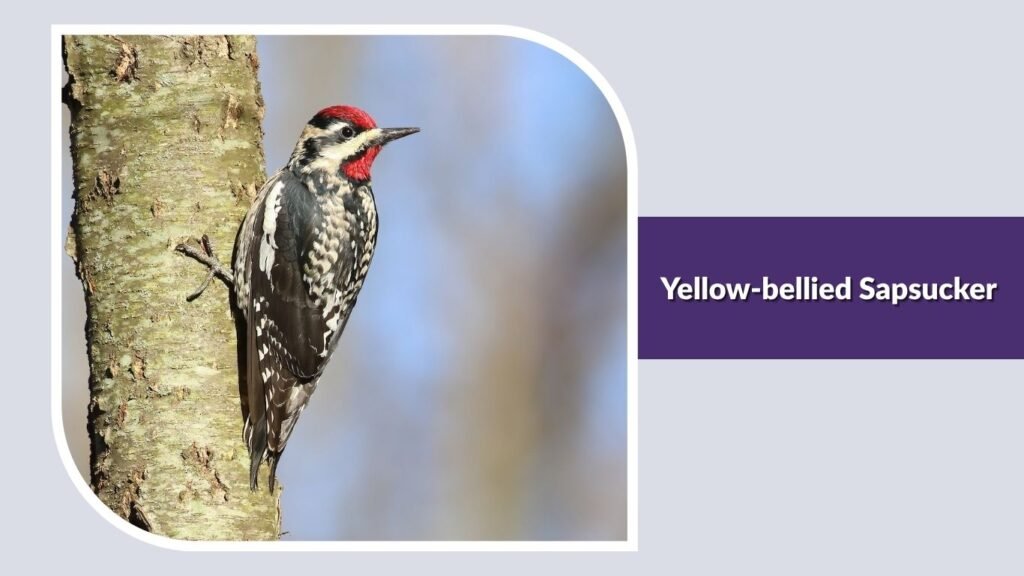
The Yellow-bellied Sapsucker is one of the woodpecker species found in Ohio, especially during migration and the colder months. Unlike woodpeckers that mainly excavate wood for insects, this species drills orderly rows of small holes into tree bark to reach sap. Its black-and-white plumage, red head markings, and pale yellowish underside make it distinctive.
Identification
- Length: About 7–9 inches
- Body: Black and white
- Forehead: Bright red in adults
- Male: Red throat
- Female: Usually white throat
- Underparts: Pale with a yellowish belly
- Wings: Large white patches
- Back: Black with pale markings
Habitat and Distribution
Yellow-bellied Sapsuckers can occur throughout Ohio but are especially noticeable during spring and fall migration. Some may remain during winter when conditions are suitable.
They favor deciduous and mixed forests, woodland edges, parks, orchards, and areas containing sap-producing trees. Birch, maple, and fruit trees can provide particularly attractive feeding locations.
Behavior and Diet
This bird drills horizontal or vertical rows of shallow wells into tree bark. It returns to these holes to drink sap and consume insects attracted to the sugary liquid.
Its diet also contains ants, beetles, spiders, fruits, berries, and other plant foods. Hummingbirds and other animals occasionally take advantage of active sapsucker wells.
Nesting and Lifecycle
Yellow-bellied Sapsuckers generally breed farther north, although their migration brings them through Ohio regularly. Breeding pairs excavate cavities in dead or weakened trees.
Both parents participate in incubation and feeding their young. Migrating individuals can sometimes appear suddenly in Ohio yards before continuing their seasonal journey.
8. Black-backed Woodpecker
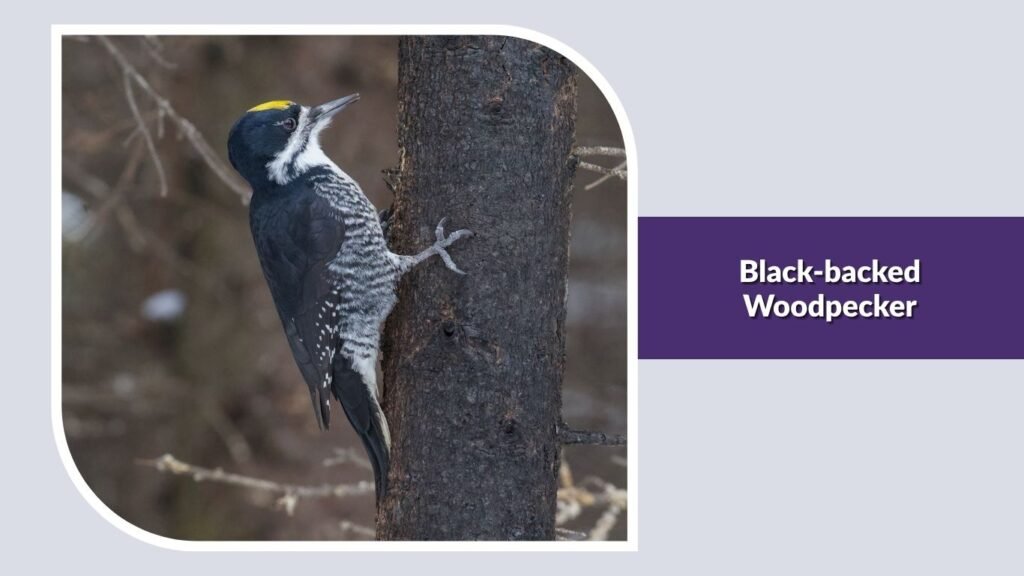
The Black-backed Woodpecker is not one of the common woodpeckers in Ohio. It is primarily a northern forest species and should be considered an unusual or rare visitor if recorded in the state. Birders searching for rare woodpeckers in Ohio may be interested in this distinctive species because its dark back and yellow-crowned males make identification relatively straightforward.
Identification
- Length: About 9 inches
- Back: Almost entirely black
- Underparts: White
- Sides: Black barring
- Male: Yellow patch on crown
- Female: Completely dark crown
- Feet: Three toes rather than four
- Bill: Strong and straight
Habitat and Distribution
Black-backed Woodpeckers are strongly associated with northern conifer forests, particularly areas affected by wildfire, storms, or insect outbreaks.
Ohio lies outside their normal core range. Any apparent Black-backed Woodpecker in northern Ohio or elsewhere in the state should therefore be identified carefully because Hairy Woodpeckers and other black-and-white species may cause confusion.
Behavior and Diet
Wood-boring beetle larvae are among their most important foods. The birds often remove pieces of bark rather than drilling extremely deep holes.
Recently burned forests can provide excellent feeding habitat because beetles often become abundant in dead and damaged trees.
Nesting and Lifecycle
Pairs excavate nesting cavities in dead or damaged trees. Both adults contribute to caring for their offspring.
Their close association with disturbed forests means local abundance can change dramatically when fires or insect outbreaks create suitable feeding conditions.
9. American Three-toed Woodpecker
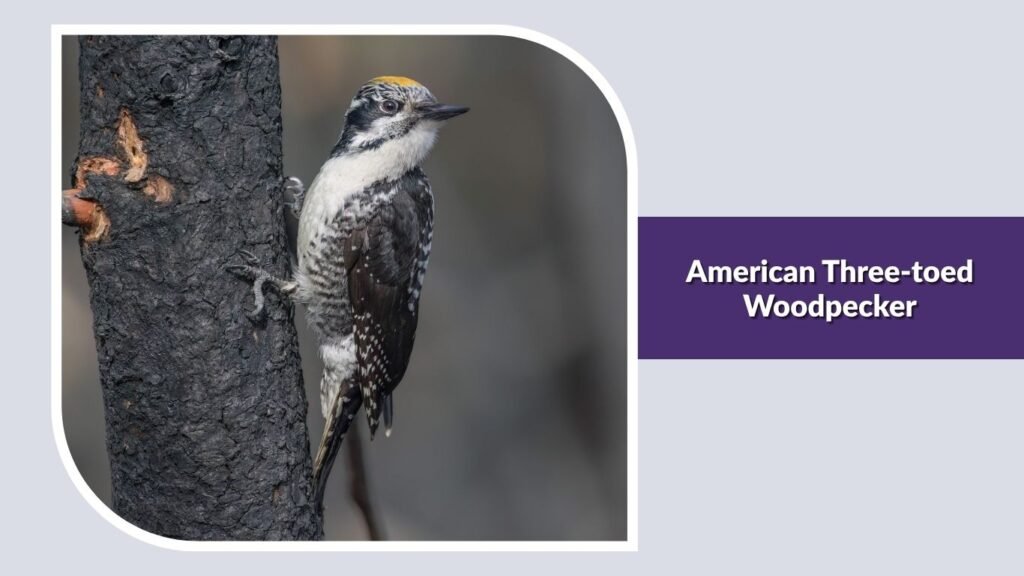
The American Three-toed Woodpecker is another northern species that is not considered a typical Ohio woodpecker. Sightings would be exceptional compared with familiar species such as Downy, Hairy, Red-bellied, and Pileated Woodpeckers. Its three-toed feet, dark plumage, barred markings, and yellow crown on adult males are useful identification characteristics.
Identification
- Length: About 8–9 inches
- Color: Mostly black and white
- Back: White or barred depending on population
- Sides: Dark barring
- Male: Yellow crown patch
- Female: No yellow crown
- Feet: Three toes
- Bill: Medium length and pointed
Habitat and Distribution
American Three-toed Woodpeckers inhabit northern coniferous forests where spruce and other evergreen trees dominate.
Ohio is south of most of their normal range, so birdwatchers should not expect to encounter them regularly. Reports of unusual black-and-white woodpeckers in Ohio should be compared carefully with the much more common Hairy Woodpecker.
Behavior and Diet
These woodpeckers spend much of their time scaling bark from dead and dying conifers. Beetles and beetle larvae are major food sources.
They are particularly attracted to forests where dead trees support large insect populations. Their feeding can leave areas of exposed wood where bark has been removed.
Nesting and Lifecycle
Nesting cavities are usually excavated in dead or decaying trees. Both members of a pair participate in caring for their chicks.
They typically remain associated with cool northern forests throughout much of their lives rather than appearing regularly in Ohio.
10. Red-naped Sapsucker
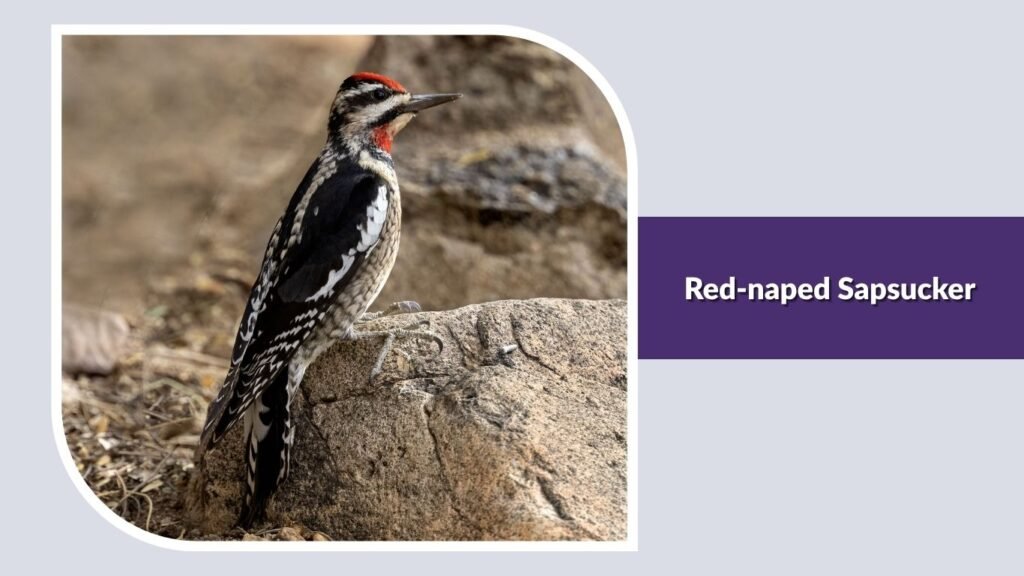
The Red-naped Sapsucker is primarily a western North American bird rather than a normal Ohio species. It resembles the Yellow-bellied Sapsucker closely, making careful identification necessary if an unusual sapsucker is reported in Ohio. Its red crown, red throat, and small red patch on the back of the head give the species its common name.
Identification
- Length: About 7–9 inches
- Crown: Red
- Throat: Usually red in adult males
- Nape: Small red patch
- Face: Strong black-and-white pattern
- Back: Black with pale markings
- Underparts: Whitish to yellowish
- Wings: Prominent white patches
Habitat and Distribution
Red-naped Sapsuckers mainly inhabit western mountain forests, especially areas with aspen, willow, and other deciduous trees.
They are not among the common woodpeckers found in Ohio. An apparent Red-naped Sapsucker in the state would deserve close observation because Yellow-bellied Sapsuckers are far more expected.
Behavior and Diet
Like other sapsuckers, this species creates rows of small holes in tree bark and repeatedly visits them for sap.
Insects attracted to the sap are also eaten. Additional foods include berries, fruits, ants, beetles, and other small invertebrates.
Nesting and Lifecycle
Breeding pairs excavate cavities in soft or decaying wood. Aspen trees are frequently suitable nesting sites within their normal western range.
Both parents help incubate eggs and provide food for growing nestlings until they are ready to leave the cavity.
11. Lewis’s Woodpecker
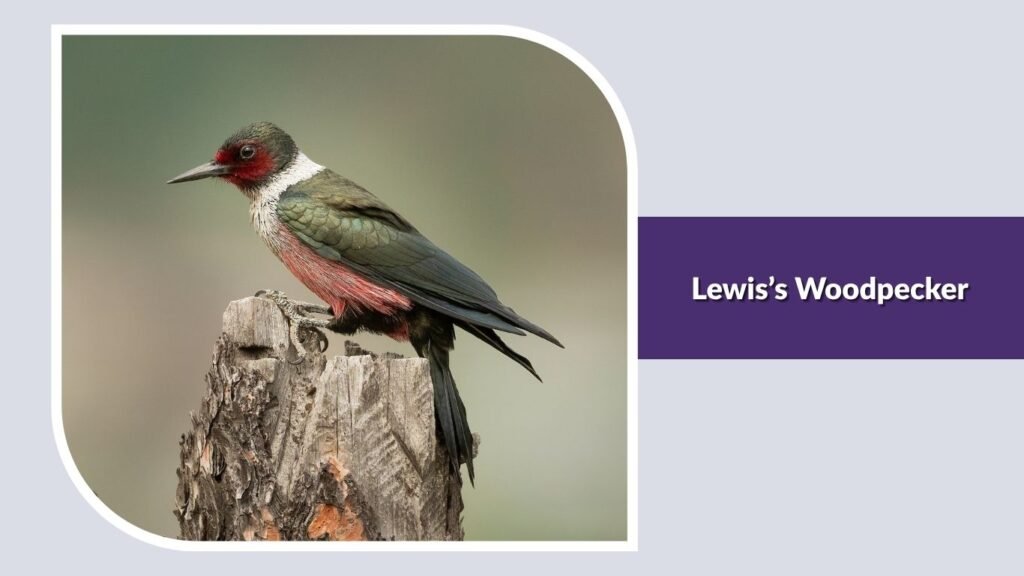
Lewis’s Woodpecker is a colorful western woodpecker and would be an exceptionally unusual bird to encounter in Ohio. Unlike most woodpeckers, it frequently captures insects while flying through open air. Its dark greenish back, gray collar, reddish face, and pinkish-red belly make it look very different from Ohio’s familiar black-and-white woodpecker species.
Identification
- Length: About 10–11 inches
- Back: Dark greenish-black
- Face: Dark red
- Collar: Gray
- Belly: Pinkish to reddish
- Wings: Broad and dark
- Bill: Dark and pointed
- Flight: Slow, crow-like wingbeats
Habitat and Distribution
Lewis’s Woodpeckers normally inhabit western North America. Open pine woodland, burned forests, scattered tree stands, and riparian habitats can provide suitable conditions.
It should be regarded as a rare or accidental possibility rather than one of the normal woodpeckers in Ohio.
Behavior and Diet
This species has unusually aerial feeding behavior for a woodpecker. It often perches on an exposed branch before flying out to catch insects.
Lewis’s Woodpeckers also consume acorns, nuts, berries, and fruits. They sometimes store food in cracks and cavities for later use.
Nesting and Lifecycle
Pairs usually nest in natural cavities or previously excavated holes in large dead trees.
Unlike many woodpeckers, they may rely more heavily on existing cavities instead of excavating an entirely new nest each breeding season.
12. Williamson’s Sapsucker
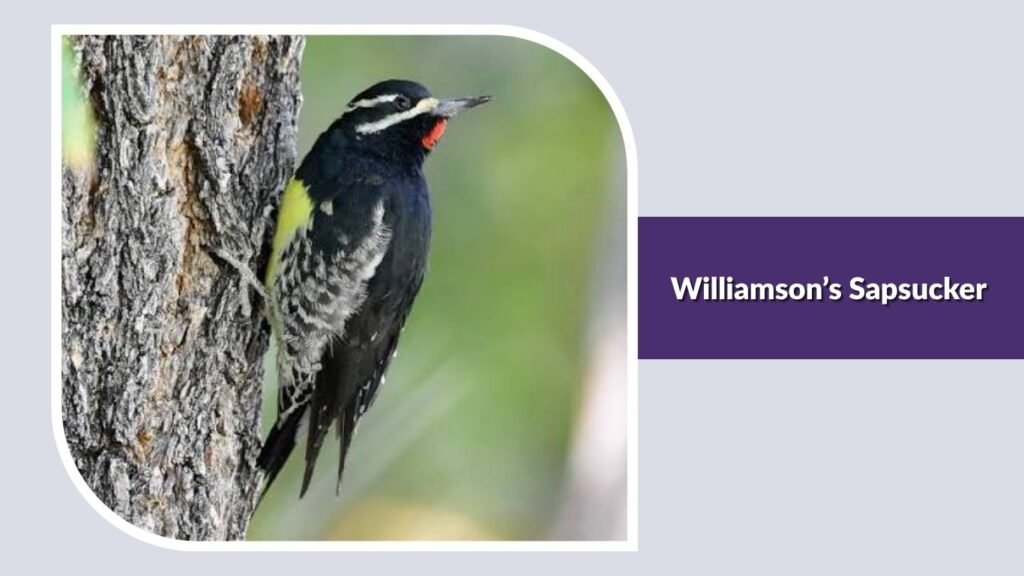
Williamson’s Sapsucker is primarily a western mountain species and is not a regular Ohio woodpecker. It is especially interesting because males and females look dramatically different. A confirmed sighting in Ohio would be highly unusual, so unfamiliar birds should first be compared with Yellow-bellied Sapsuckers and other expected Ohio species.
Identification
- Length: About 8–10 inches
- Male: Mostly glossy black
- Male throat: Bright red
- Male belly: Yellow
- Male wing: Large white patch
- Female: Brownish head
- Female back: Strong black-and-white barring
- Body: Medium-sized and compact
Habitat and Distribution
Williamson’s Sapsuckers inhabit mountainous coniferous forests of western North America. Pine, fir, larch, and mixed forests provide feeding and breeding habitat.
Because Ohio is well outside their usual range, they should not be described as a common or expected species in northern, central, or southern Ohio.
Behavior and Diet
Like other sapsuckers, Williamson’s Sapsuckers drill sap wells into living trees and return repeatedly to feed.
Their diet includes:
- Tree sap
- Ants
- Beetles
- Flying insects
- Insect larvae
- Fruits and berries
Insects become especially important during the breeding season when adults need protein-rich foods for their young.
Nesting and Lifecycle
Pairs excavate nest cavities in dead or decaying trees, often in mature forest habitat. Both parents help raise the nestlings.
Their dependence on suitable trees makes mature and naturally structured forests particularly valuable throughout their normal western range.
FAQs
Ohio supports several familiar resident and seasonal woodpeckers, while a few species associated with other parts of North America would be exceptionally rare visitors. Correctly identifying size, plumage, habitat, and seasonal occurrence helps distinguish common Ohio woodpeckers from unusual sightings.
1. What is the most common woodpecker in Ohio?
Downy and Red-bellied Woodpeckers are among the most commonly encountered woodpeckers in Ohio. Both readily inhabit parks, woodland edges, and residential areas and frequently visit backyard feeders.
2. What is the largest woodpecker in Ohio?
The Pileated Woodpecker is the largest regularly occurring woodpecker in Ohio. It can reach roughly 16–19 inches long and is easily recognized by its large black body and brilliant red crest.
3. Are there Pileated Woodpeckers in Ohio?
Yes. Pileated Woodpeckers occur throughout suitable wooded areas of Ohio. Mature forests, wooded parks, river corridors, and neighborhoods near extensive woodland can provide habitat for them.
4. Do woodpeckers stay in Ohio during winter?
Several species, including Downy, Hairy, Red-bellied, and Pileated Woodpeckers, can remain in Ohio throughout winter. Other species are more seasonal, and Yellow-bellied Sapsuckers may be especially noticeable during migration and cooler periods.
5. Are woodpeckers protected in Ohio?
Yes. Native woodpeckers are generally protected under federal migratory bird law, making it unlawful to kill, capture, possess, or destroy protected birds, eggs, or active nests without appropriate authorization. Nonlethal deterrents should be used when woodpeckers cause problems around homes.
