
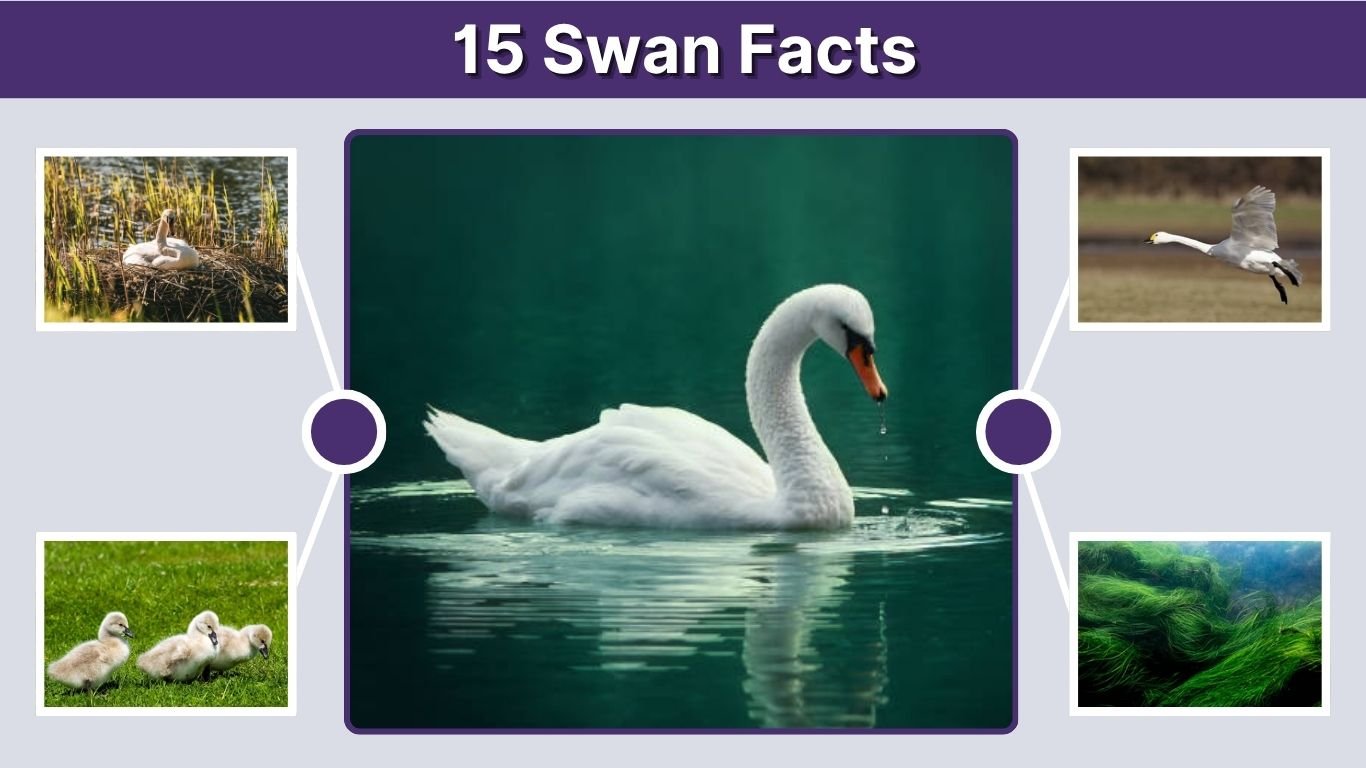
Swans are among the largest and most recognizable waterbirds, famous for their long necks, powerful wings, and graceful movements. They belong to the family Anatidae, alongside ducks and geese, and occur across many parts of the world. Species such as mute, trumpeter, tundra, whooper, black, and black-necked swans have developed different adaptations for their environments. From their impressive size and strong pair bonds to the remarkable journeys of migratory species, these 15 swan facts reveal just how fascinating these birds really are.
1. Swans Are Among the Largest Waterfowl
Swans are considerably larger than most ducks and many geese. Their large bodies, long necks, and broad wings make them easy to recognize when swimming or flying.
Some Swans Have Enormous Wingspans
Trumpeter swans are among the largest living waterfowl. Large adults can have wingspans exceeding 6 feet, allowing them to travel long distances once airborne.
Their size also means they need considerable space to take off. Swans often run across the water while flapping their wings until they gain enough speed for flight.
2. There Are Several Different Swan Species
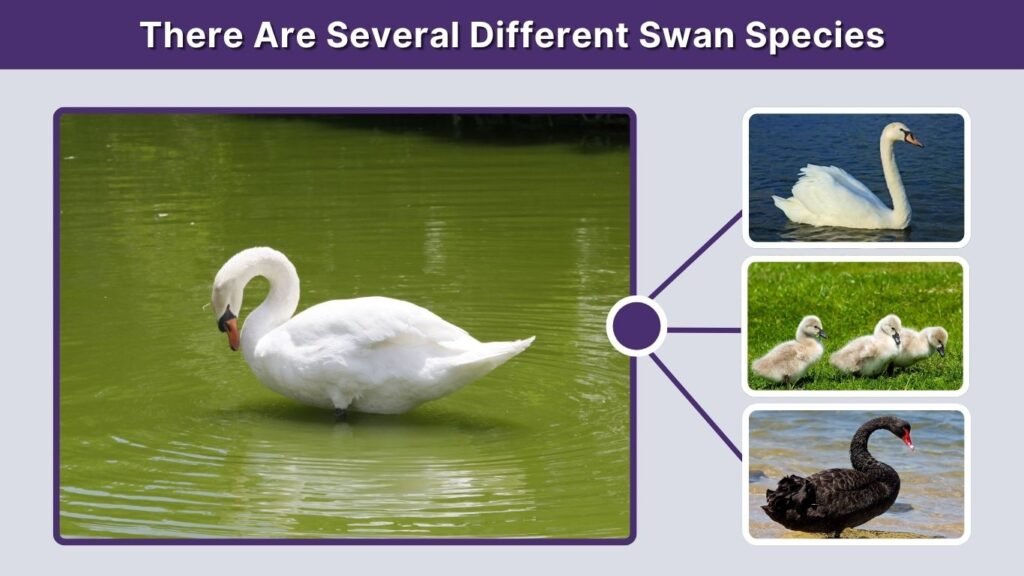
The word “swan” does not describe just one bird. Several distinct species occur around the world, each with its own appearance and geographic range.
Well-Known Swan Species
Common species include:
- Mute swan
- Trumpeter swan
- Tundra swan
- Whooper swan
- Black swan
- Black-necked swan
- Bewick’s swan
Most species belong to the genus Cygnus. They are closely related despite their differences in plumage, calls, and distribution.
3. Baby Swans Are Called Cygnets
One of the most popular baby swan facts is that young swans are known as cygnets.
Cygnets Are Not Always White
Many cygnets hatch covered in grayish or brownish down. Their feathers gradually change as they grow, with species such as mute and trumpeter swans eventually developing mostly white adult plumage.
Cygnets are able to swim soon after hatching but remain dependent on their parents for protection and guidance.
4. Swans Can Form Strong Pair Bonds
Swans are famous for their relationships, which explains why they frequently symbolize love and romance.
Do Swans Mate for Life?
Many swan pairs remain together for multiple breeding seasons, and some partnerships can last for many years.
However, the phrase “swans mate for life” is not an absolute rule. Birds may find new partners if a mate dies, and pair separation can sometimes occur.
Strong partnerships help adults cooperate in protecting nesting territories and raising young.
5. Mute Swans Are Not Actually Silent
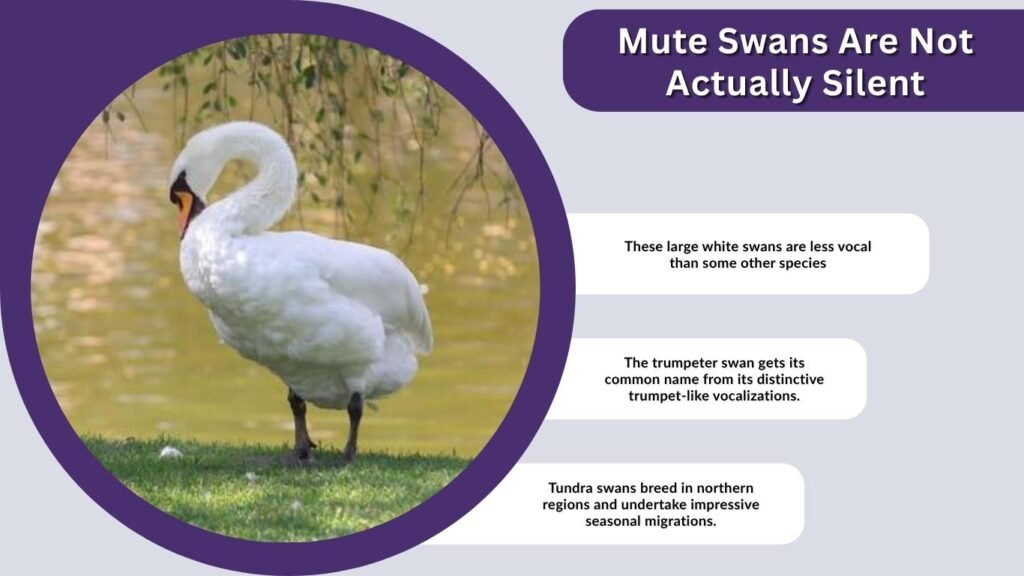
The name “mute swan” can be misleading. These large white swans are less vocal than some other species, but they are capable of producing several sounds.
Mute Swan Sounds
Mute swans can make:
- Hisses
- Grunts
- Snorts
- Soft calls
- Wing noises during flight
Their powerful wingbeats can create a distinctive rhythmic sound as they fly overhead.
6. Trumpeter Swans Have Loud Calls
The trumpeter swan gets its common name from its distinctive trumpet-like vocalizations.
Trumpeter Swan Facts
Trumpeter swans are native to North America and are among the world’s heaviest flying birds.
Adults have mostly white plumage and large black bills. Their powerful calls can travel considerable distances across lakes and wetlands, allowing family members and other swans to communicate.
7. Tundra Swans Are Long-Distance Migrants
Tundra swans breed in northern regions and undertake impressive seasonal migrations.
Tundra Swan Migration
Many populations breed across Arctic or subarctic areas and migrate south for winter.
They may travel thousands of miles between breeding and wintering grounds. During migration, large flocks can stop at wetlands, lakes, agricultural fields, and coastal areas to rest and replenish their energy.
8. Black Swans Are Native to Australia
Not every swan is white. The Australian black swan, Cygnus atratus, has predominantly black plumage with contrasting white flight feathers.
Black Swan Appearance
Black swans typically have:
- Mostly black feathers
- Bright reddish bills
- White wing feathers visible during flight
- Long curved necks
- Reddish or pinkish legs
They are widespread in suitable Australian wetlands and have also been introduced to some other countries.
9. Black-Necked Swans Have Unique Coloring
The black-necked swan of South America looks dramatically different from both black and white swans.
Black-Necked Swan Identification
Adults have white bodies combined with black heads and necks.
Their striking coloration makes them one of the easiest swan species to identify. They inhabit wetlands, shallow lakes, marshes, and lagoons in southern parts of South America.
10. Swans Mainly Eat Plants
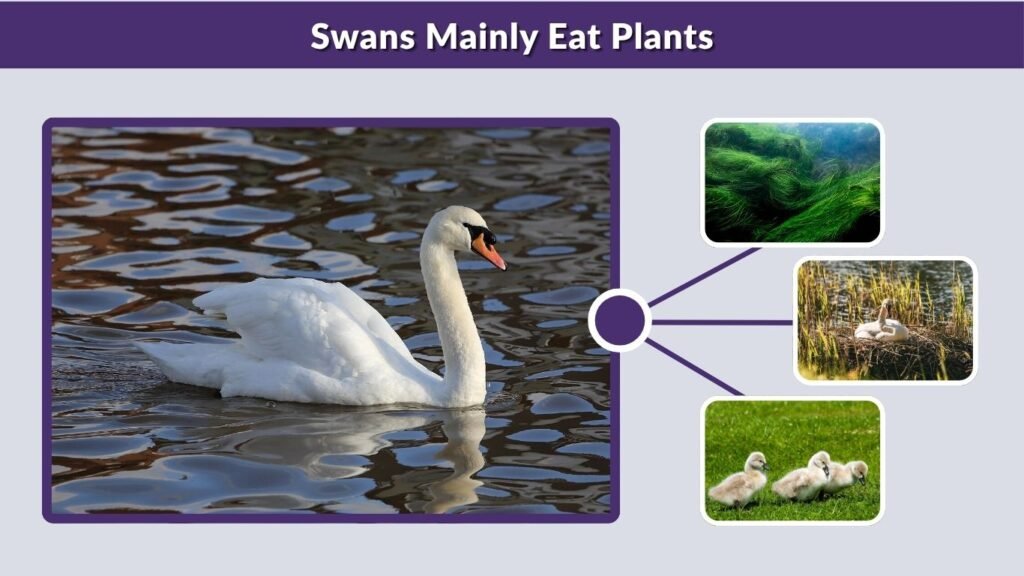
Despite their impressive size, swans are primarily plant eaters.
They feed heavily on aquatic vegetation and may also graze on land.
What Do Swans Eat?
Their diet may include:
- Aquatic grasses
- Pondweeds
- Algae
- Roots
- Stems
- Leaves
- Seeds
- Grasses
- Agricultural grains
- Small aquatic invertebrates
Young swans may consume proportionally more small aquatic animals while developing.
11. Swans Use Their Long Necks to Find Food
A swan’s long neck is not simply decorative. It provides an important feeding advantage.
Swans Can Reach Underwater Vegetation
Swans frequently lower their heads and necks below the surface to reach submerged plants.
Sometimes they “upend,” leaving their tail and rear body above water while stretching downward.
Their long necks allow them to reach food growing deeper than many smaller ducks can access.
12. Swans Build Large Nests
Swans usually construct their nests close to water, where adults and newly hatched cygnets can quickly reach a safer aquatic environment.
Swan Nesting Facts
Nests may be built from:
- Reeds
- Grasses
- Leaves
- Sticks
- Aquatic vegetation
- Other nearby plant material
Large nests can become substantial platforms. Depending on the species, they may be positioned on shorelines, small islands, marshy areas, or dense vegetation near water.
Both parents often participate in defending the nesting territory.
13. Swans Can Be Surprisingly Aggressive
Swans appear calm when gliding across water, but breeding adults can become highly territorial.
Why Do Swans Attack?
They may defend:
- Their mate
- Eggs
- Cygnets
- Nesting territory
- Important feeding areas
A threatened swan may hiss, raise its wings, stretch its neck, chase an intruder, or strike with its bill.
People should avoid approaching nests or attempting to touch wild swans and their young.
14. Swan Parents Protect Their Cygnets
Parental care is an important part of swan behavior.
After hatching, cygnets generally remain close to their parents while learning to swim, feed, and recognize dangers.
Swan Families Stay Together
Adults may position themselves between their young and perceived threats.
Some swan species are famously photographed carrying very young cygnets on their backs. This behavior can provide young birds with temporary rest and protection.
Families may remain together for months before juveniles become fully independent.
15. Swans Are Powerful Flying Birds
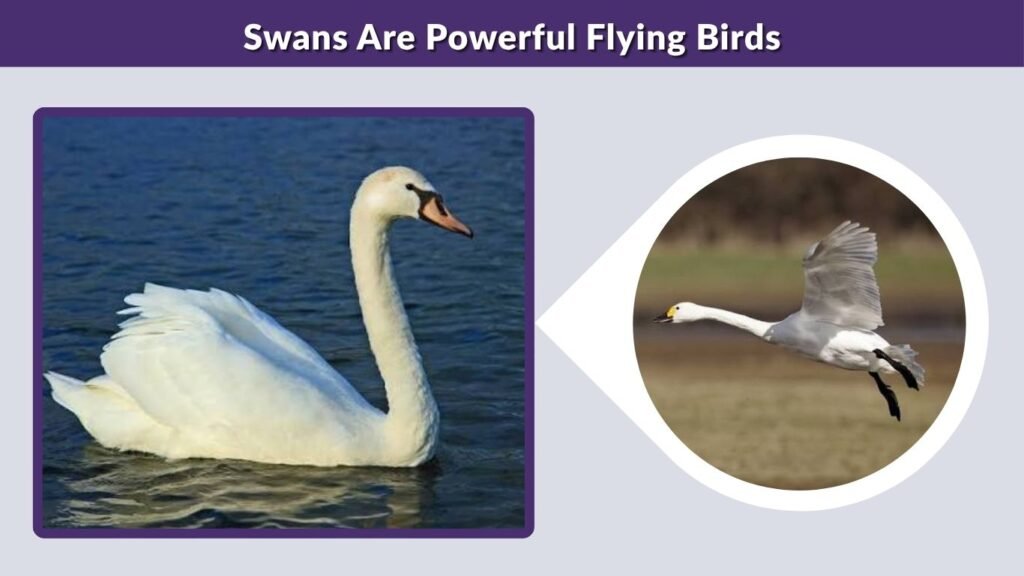
Their heavy bodies may make them look unlikely to fly, but swans are exceptionally capable once airborne.
How Do Swans Take Off?
Because of their size, swans usually need a running start.
They accelerate across the water while beating their large wings. After gaining enough speed, they lift into the air.
During migration, some swan species travel very long distances and can fly at substantial heights. Their combination of strong flight muscles and broad wings makes these seasonal journeys possible.
More Fun and Interesting Swan Facts
Swans have fascinated people for centuries because their appearance combines elegance with enormous physical strength. Their behavior and family lives also make them particularly interesting birds to observe.
Quick Swan Facts for Kids
- Male swans are often called cobs.
- Female swans are often called pens.
- Baby swans are called cygnets.
- Swans belong to the same family as ducks and geese.
- Most adult northern swan species are predominantly white.
- Black swans are naturally found in Australia.
- Swans have webbed feet for swimming.
- Some species migrate thousands of miles.
- Swans can sleep while floating on water.
- Their feathers are kept water-resistant through regular preening.
Swan Facts About Love
Swans have become international symbols of love because paired birds often maintain close relationships and participate together in raising offspring.
Why Do Swans Symbolize Love?
Courtship displays can involve synchronized swimming, head movements, and other coordinated behaviors. When two birds face each other with their curved necks, their bodies can sometimes appear to form a heart-like shape.
Their long-lasting pair bonds strengthened their association with devotion and romance in art, literature, and popular culture.
However, wild swan relationships are biological partnerships rather than the idealized lifelong romance sometimes portrayed in stories.
FAQs
What are 5 interesting facts about swans?
Swans are among the largest waterfowl, baby swans are called cygnets, many form long-lasting pair bonds, some migrate thousands of miles, and not all swans are white.
What is a male and female swan called?
A male swan is commonly called a cob, while a female is called a pen. Young swans are called cygnets.
Are swans friendly to humans?
Wild swans generally prefer space. They may tolerate people but can become defensive around nests, eggs, or young cygnets.
How long do swans live?
Lifespan varies by species and environmental conditions. Many wild swans can survive well over a decade, and some individuals live significantly longer.
Can swans really fly?
Yes. Swans are powerful flyers. Many species migrate long distances, although their large bodies mean they usually need a running takeoff from the water.