
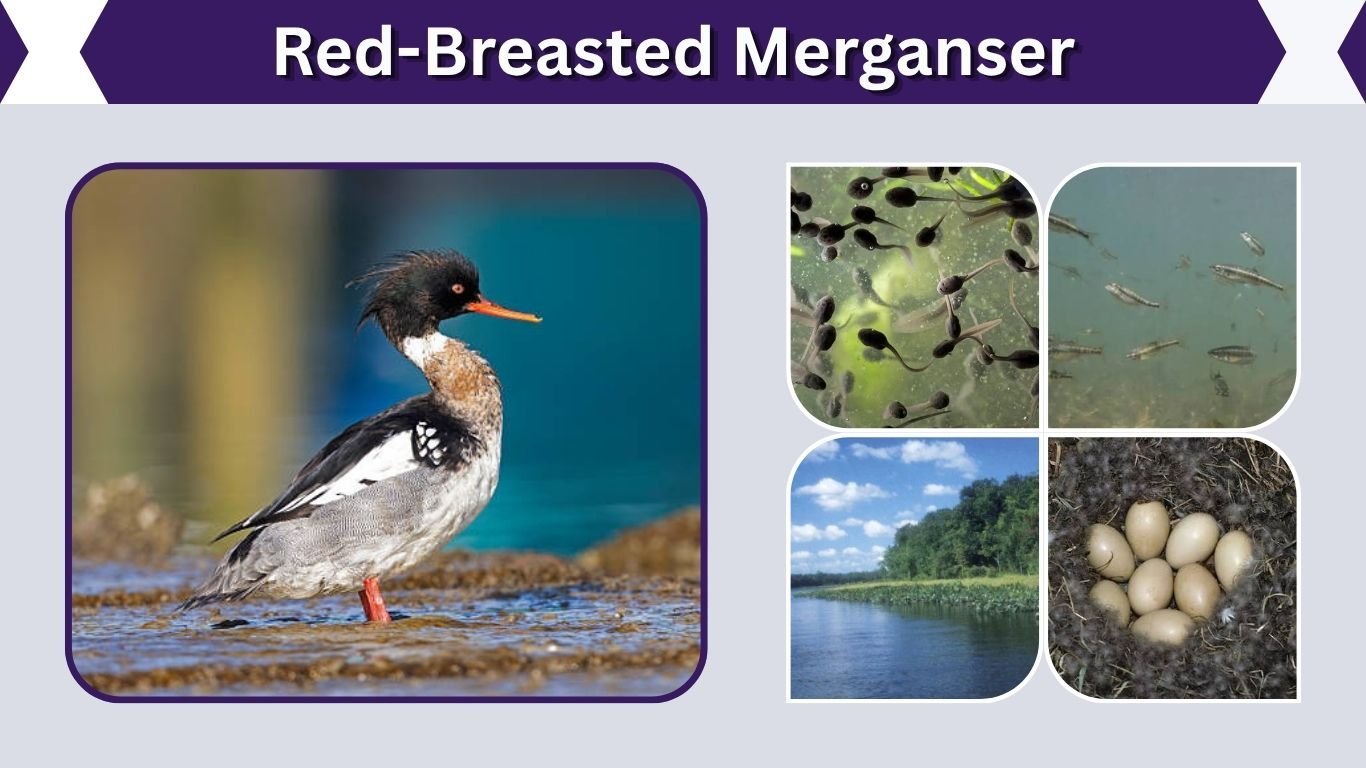
The red-breasted merganser (Mergus serrator) is a distinctive diving duck known for its shaggy crest, slender red bill, and remarkable fishing abilities. Found across North America, Europe, and northern Asia, this waterbird spends much of its life in coastal waters, lakes, and rivers. Male and female red-breasted mergansers have different plumage, making identification particularly interesting. Understanding their appearance, habitat, diet, breeding habits, and differences from common mergansers helps birdwatchers recognize this fascinating species in the wild.
What Is a Red-Breasted Merganser?
The red-breasted merganser is a fish-eating diving duck belonging to the family Anatidae. It is also called a sawbill because its long, narrow bill has tooth-like serrations that help it grip slippery fish.
Its scientific name is Mergus serrator. Unlike dabbling ducks, which commonly feed near the water’s surface, mergansers dive underwater to capture prey.
These birds are particularly adapted to aquatic environments, possessing streamlined bodies, webbed feet, and powerful swimming abilities.
Red-Breasted Merganser Identification
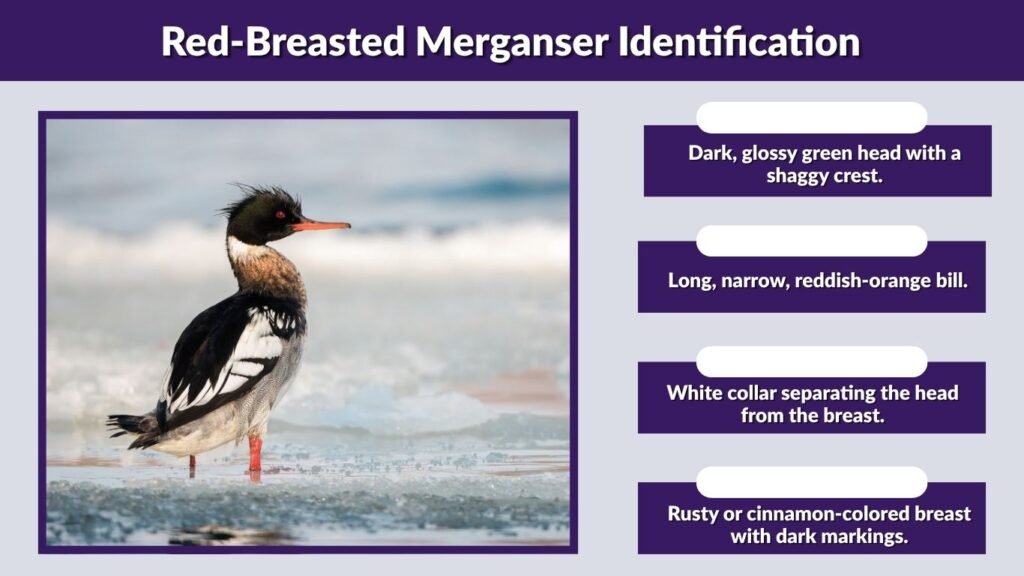
Red-breasted mergansers have elongated bodies, narrow bills, and distinctive shaggy crests. However, males, females, and juvenile birds display noticeable differences in plumage.
Male Red-Breasted Merganser
Adult males, also called drakes, are especially colorful during the breeding season. Their contrasting feathers and distinctive head shape make them relatively easy to identify.
Key characteristics include:
- Dark, glossy green head with a shaggy crest
- Long, narrow, reddish-orange bill
- White collar separating the head from the breast
- Rusty or cinnamon-colored breast with dark markings
- Gray flanks and darker upperparts
- Bright reddish eyes
The male’s breeding plumage is particularly striking when viewed in sunlight. Outside the breeding season, males develop duller plumage that resembles the females.
Female Red-Breasted Merganser
The female red-breasted merganser, also known as a hen, has a more subdued appearance. Her coloring provides camouflage while nesting and caring for ducklings.
Important identification features include:
- Reddish-brown head and messy crest
- Grayish-brown body and pale underparts
- Thin, orange-red bill
- Less distinct transition between the head and neck
- Slender body and relatively long neck
Female red-breasted mergansers can resemble female common mergansers. Their thinner bills, untidy crests, and less sharply defined throat markings are useful identification clues.
Juvenile Red-Breasted Merganser
Juvenile red-breasted mergansers resemble adult females, displaying brownish heads, gray bodies, and relatively dull plumage.
Young males gradually develop adult characteristics as they mature. Their distinctive breeding coloration does not fully develop until approximately two years of age.
Red-Breasted Merganser Size and Weight
Red-breasted mergansers are medium-to-large diving ducks. Their streamlined bodies and relatively long necks create a distinctive profile on the water.
| Measurement | Approximate range |
| Body length | 51–64 cm (20–25 inches) |
| Weight | 800–1,350 g (1.8–3 lb) |
| Wingspan | 66–74 cm (26–29 inches) |
| Scientific name | Mergus serrator |
| Family | Anatidae |
These measurements follow Cornell Lab of Ornithology’s species identification guide. Individual measurements vary depending on age, sex, and geographical population.
Red-Breasted Merganser Habitat and Range
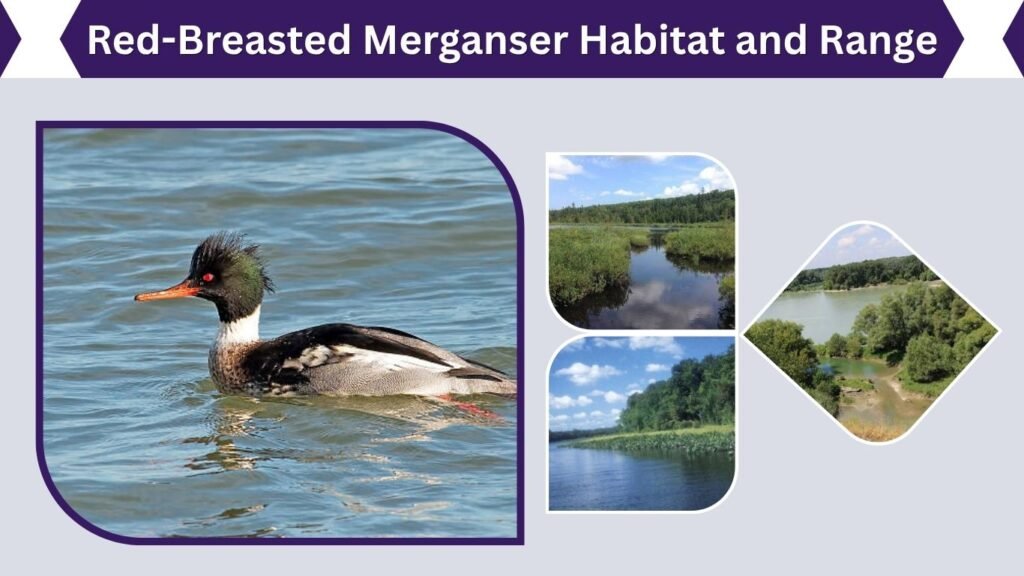
Red-breasted mergansers inhabit aquatic environments across the Northern Hemisphere. They breed mainly in northern regions and move toward more temperate waters during winter.
Where Do Red-Breasted Mergansers Live?
Their geographical range includes northern North America, Scandinavia, Scotland, northern Europe, Russia, and parts of northern Asia.
Preferred habitats include:
- Coastal bays and sheltered estuaries
- Freshwater lakes and large rivers
- Northern wetlands and marshes
- Rocky shorelines and coastal islands
- Shallow marine waters with abundant fish
During winter, these birds commonly gather in sheltered coastal areas. They generally use saltwater habitats more frequently than common mergansers.
Red-Breasted Merganser Migration
Many populations migrate seasonally between northern breeding grounds and southern wintering areas.
In North America, wintering red-breasted mergansers can be found along the Atlantic and Pacific coasts, the Great Lakes, and the Gulf Coast.
In the United Kingdom, the species breeds primarily in Scotland and parts of Ireland, while wintering birds become more widespread around coastal waters.
What Do Red-Breasted Mergansers Eat?

Red-breasted mergansers are primarily carnivorous waterbirds. Their diet consists mainly of small fish, although they occasionally consume other aquatic animals.
Common Foods
- Small fish and minnows
- Crustaceans, including small shrimp
- Aquatic insects and their larvae
- Tadpoles and small amphibians
- Occasionally worms and other invertebrates
Their serrated bills allow them to hold slippery prey securely while underwater.
These ducks search for fish by swimming with their eyes beneath the surface or diving completely underwater. Sometimes several merchants cooperate to drive schools of fish into shallow water.
Research summarized by Cornell indicates that adults may need approximately 15–20 small fish daily, depending on feeding conditions.
Red-Breasted Merganser vs Common Merganser
The red-breasted merganser and common merganser are closely related species. Both possess narrow bills, elongated bodies, and fish-catching adaptations, but several characteristics help distinguish them.
| Feature | Red-Breasted Merganser | Common Merganser |
| Male head | Shaggy green crest | Smooth green head |
| Male breast | Rusty brown | Mostly white |
| Female crest | Loose and messy | Neater and fuller |
| Female throat | Less distinct white area | Clear white throat patch |
| Bill | Generally thinner | Heavier at the base |
| Winter habitat | Frequently coastal saltwater | Often freshwater |
Female Common vs Red-Breasted Merganser
Female identification can be challenging because both species have reddish-brown heads and gray bodies.
The common merganser usually has a more clearly defined white throat and a sharper contrast between its brown head and pale chest.
By comparison, the female red-breasted merganser has a messier crest and a less distinct color transition along the neck.
These identification differences are especially useful when observing mixed groups during migration or winter.
Red-Breasted Merganser Behavior and Flight Speed
Red-breasted mergansers are active, social ducks that spend considerable time swimming, diving, and searching for food.
Their legs are positioned toward the rear of their bodies, making them powerful underwater swimmers but relatively awkward walkers.
They usually require a running start across the water before taking flight.
How Fast Can a Red-Breasted Merganser Fly?
Cornell reports that red-breasted mergansers have reached flight speeds of approximately 81 mph (130 km/h), placing them among the fastest-flying ducks. This is a reported high speed rather than their typical cruising speed.
During migration, they may fly in groups, sometimes forming lines or V-shaped formations.
Red-Breasted Merganser Nesting and Ducklings
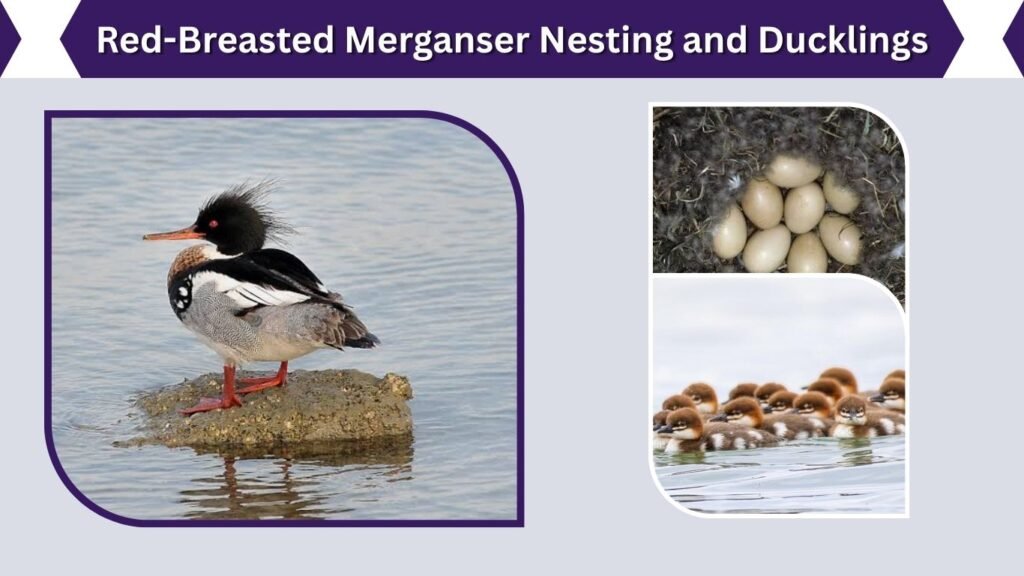
Red-breasted mergansers generally breed during spring and summer in northern wetland habitats.
Females select nesting sites on the ground, commonly hidden beneath vegetation, rocks, or fallen branches near water.
Eggs and Incubation
A typical clutch contains approximately 7–10 eggs, although larger clutches occasionally occur.
The female incubates the eggs for around 29–35 days. Males generally depart before the ducklings hatch.
Red-Breasted Merganser Ducklings
Newly hatched ducklings are covered in soft down and can leave the nest within approximately 24 hours.
Their mother leads them to nearby water, where they begin finding food.
Young ducklings initially eat many aquatic insects before gradually consuming more fish. They generally become capable of flight about two months after hatching.
Red-Breasted Merganser Calls and Sounds
Red-breasted mergansers are relatively quiet compared with many familiar duck species.
They occasionally produce low croaking sounds, grunts, and rattling vocalizations, particularly during courtship displays.
Males may combine vocalizations with exaggerated movements, including stretching their necks, lifting their bills, and dipping their bodies into the water.
These displays help attract females and establish seasonal mating relationships.
Red-Breasted Merganser Lifespan and Conservation
Red-breasted mergansers face natural threats from predators, environmental changes, and food shortages.
Their eggs and ducklings are vulnerable to gulls, mammals, and other predators. Adults may also face threats from habitat degradation, water pollution, and fishing-related disturbances.
The species is currently classified globally as Least Concern, although regional populations may experience declines.
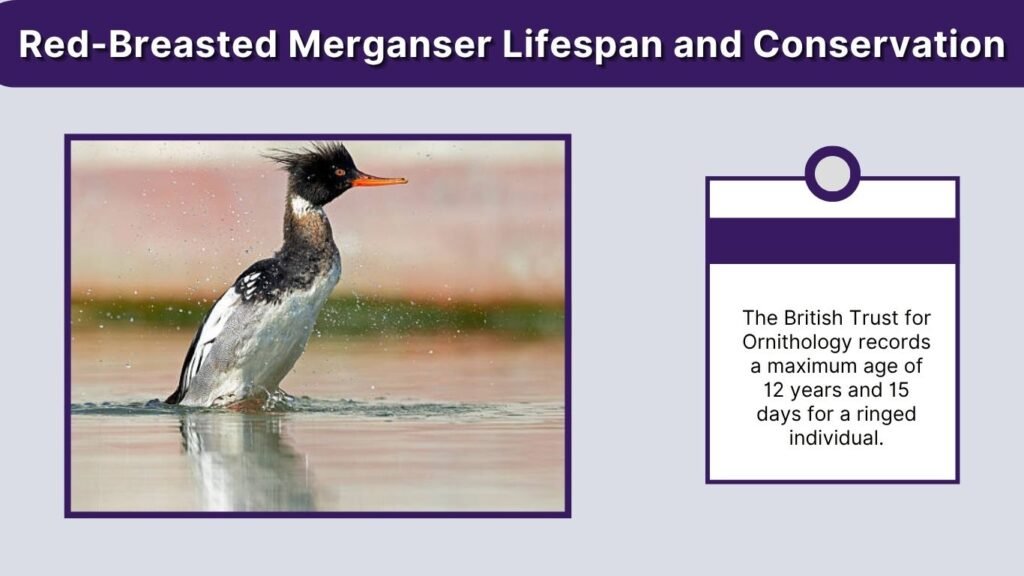
The British Trust for Ornithology records a maximum age of 12 years and 15 days for a ringed individual. This is a documented longevity record rather than the average lifespan of every wild bird.
FAQs
1. Is a red-breasted merganser a duck?
Yes. The red-breasted merganser is a diving duck belonging to the family Anatidae. Unlike many ducks that primarily eat plants, it specializes in catching small fish underwater using its narrow, serrated bill.
2. What is the difference between male and female red-breasted mergansers?
Males have glossy green heads, white neck collars, and rusty breasts during the breeding season. Females have reddish-brown heads, grayish bodies, and less colorful feathers. Both possess shaggy crests and narrow bills.
3. Where can you see red-breasted mergansers in winter?
During winter, red-breasted mergansers commonly inhabit coastal bays, estuaries, and sheltered marine waters. They can be observed around North American coastlines, the British Isles, and other temperate regions of the Northern Hemisphere.
4. How do red-breasted mergansers catch fish?
They dive underwater and pursue small fish using powerful swimming movements. Their long, narrow bills have serrated edges that improve their grip on slippery prey. Sometimes several birds cooperate while hunting.
5. Are red-breasted mergansers rare?
Globally, red-breasted mergansers are not considered threatened. However, their abundance varies by region and season. They may be common in suitable winter habitats but relatively uncommon around inland areas outside migration periods.