
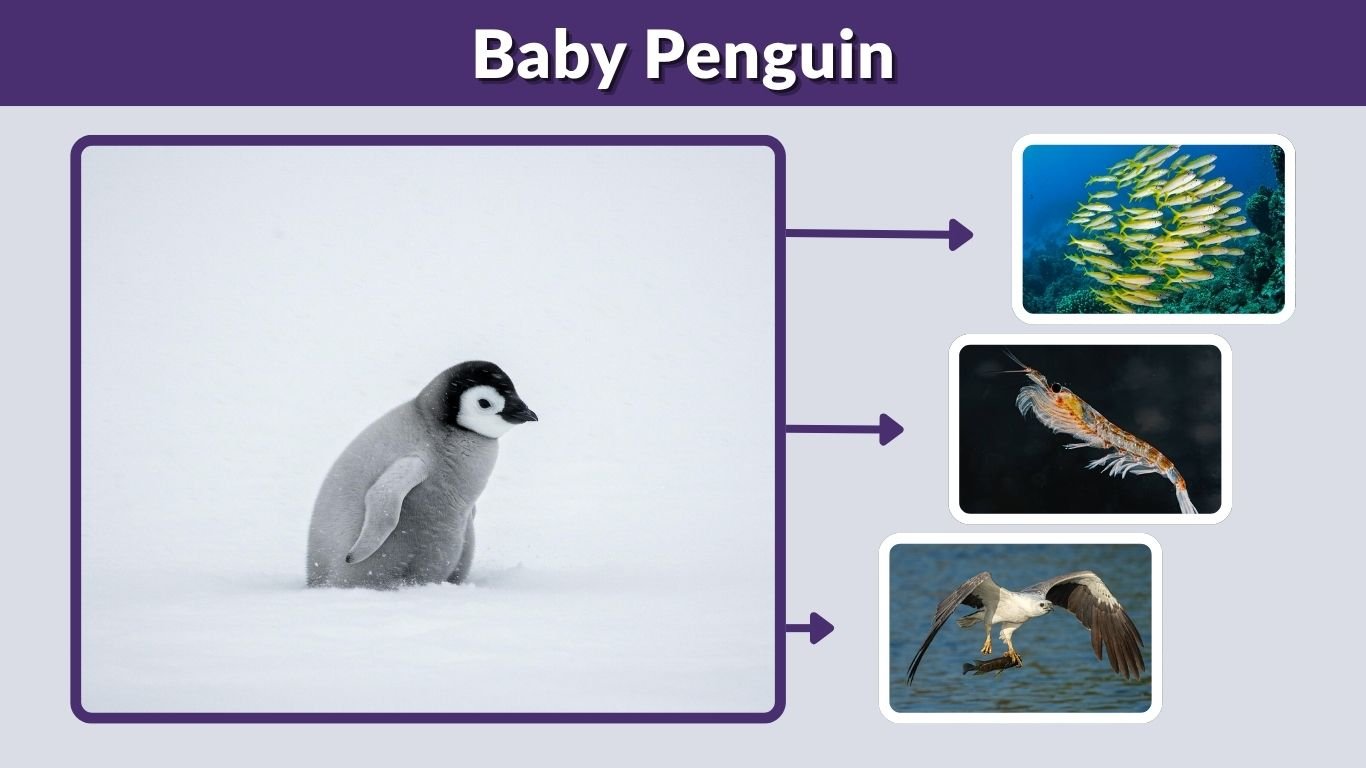
A baby penguin is one of the most recognizable young birds, often covered in thick, fluffy down before developing the sleek feathers seen on adults. Although penguin chicks may look helpless at first, they grow quickly with intensive parental care. Their appearance, diet, nesting behavior, and development vary among penguin species. From the famous baby emperor penguin surviving the Antarctic winter to chicks raised on rocky islands and beaches, young penguins have remarkable adaptations that prepare them for life at sea.
What Is a Baby Penguin Called?
A baby penguin is commonly called a chick, just like the young of many other bird species. The term applies from shortly after hatching through much of the bird’s early development. Penguin chicks depend heavily on their parents for warmth, protection, and food until they grow juvenile feathers and become capable of surviving more independently.
Common Names for Young Penguins
The most useful terms include:
- Chick: The standard name for a baby penguin.
- Hatchling: A chick that has recently emerged from its egg.
- Nestling: Sometimes used for a chick still dependent on its parents.
- Juvenile: A young penguin that has developed beyond the chick stage.
- Fledgling: A young bird approaching or reaching independence.
Because penguins cannot fly, “fledging” does not mean learning to fly. Instead, it generally refers to the stage when the young penguin develops suitable feathers and becomes independent enough to enter the ocean.
What Does a Baby Penguin Look Like?
Baby penguin appearance differs considerably by species. Many chicks have soft gray, brown, or pale down rather than the smooth black-and-white plumage associated with adults.
Emperor penguin chicks are especially recognizable. They typically have gray bodies, darker heads, and contrasting pale facial areas. Their dense down gives them a round, fluffy appearance. Other species can produce chicks that are darker brown, gray, or almost black during their earliest developmental stages.
How Baby Penguins Hatch and Grow
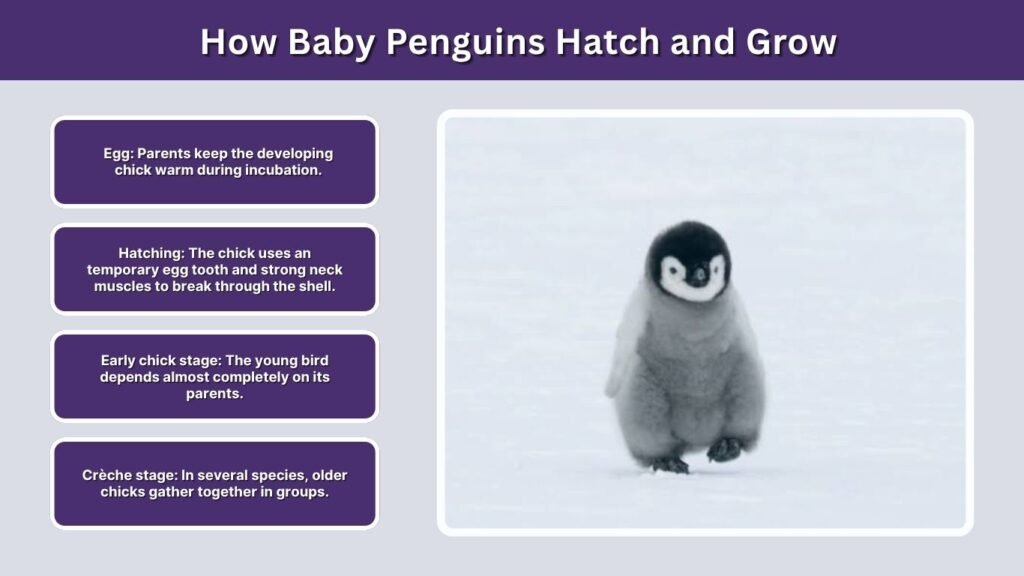
Penguin reproduction differs among species, but every chick begins inside an egg protected and incubated by its parent or parents. Most penguin species lay two eggs, while emperor and king penguins generally lay a single egg. Incubation can last several weeks, and newly hatched chicks remain dependent on adults for food and protection.
Baby Penguin Growth Stages
A young penguin typically passes through several important stages:
- Egg: Parents keep the developing chick warm during incubation.
- Hatching: The chick uses an temporary egg tooth and strong neck muscles to break through the shell.
- Early chick stage: The young bird depends almost completely on its parents.
- Crèche stage: In several species, older chicks gather together in groups.
- Molting: Soft chick down is replaced with juvenile plumage.
- Independence: The young penguin begins entering the ocean and feeding itself.
Penguin chicks generally become independent after roughly two to four months, although the timing varies considerably by species and environmental conditions.
Why Baby Penguins Have Fluffy Feathers
The fluffy covering seen on cute baby penguins is known as down. It provides insulation while chicks are growing on land or ice.
However, chick down is not designed for prolonged swimming. Before young penguins can begin spending their lives at sea, they must molt and develop juvenile feathers better suited to aquatic conditions.
What Do Baby Penguins Eat?
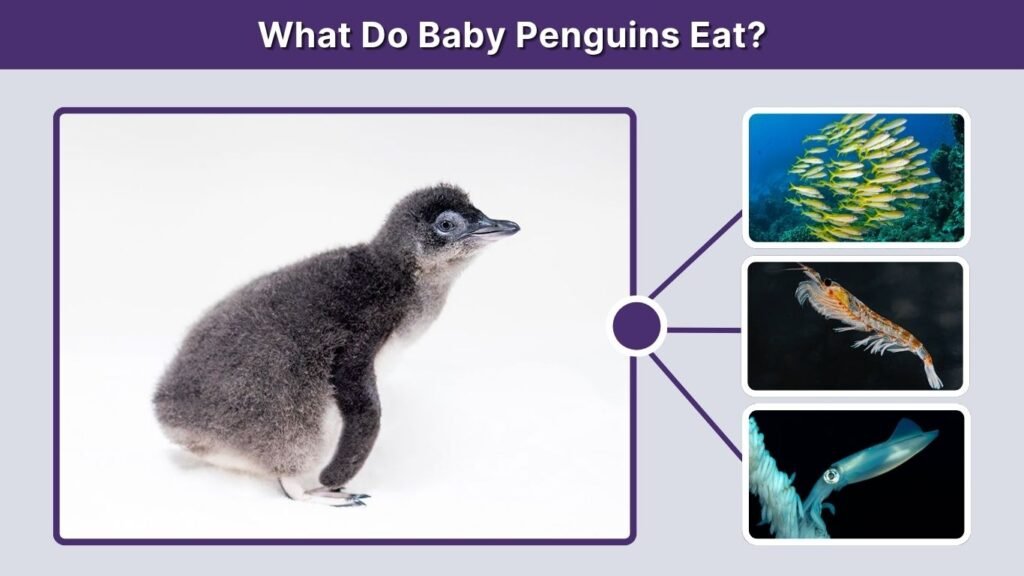
Baby penguins cannot initially hunt for themselves. Instead, their parents travel to sea, capture prey, and return to provide food. Diet varies by species and location because penguins live in environments ranging from Antarctica to temperate islands and even the Galápagos. Fish, krill, squid, and other small marine animals form important parts of penguin diets.
Common Foods Provided to Penguin Chicks
Depending on the species, a chick may receive:
- Small fish
- Krill
- Squid
- Other crustaceans
- Suitable marine prey available near the colony
Adults consume food while foraging at sea and later provide it to their chicks. This feeding strategy allows a baby penguin to remain relatively protected at the breeding colony while its parents obtain energy-rich marine food.
How Parents Feed Their Chicks
Penguin chicks usually receive food directly from a parent’s beak. The adult brings partially digested or stored food back from the ocean and transfers it to the chick.
Feeding frequency depends on the species, the chick’s age, food availability, and how far adults must travel to productive feeding areas. For some penguins, changing ocean conditions can make feeding chicks more difficult when prey moves farther away from breeding colonies.
Baby Emperor Penguin Life in Antarctica
The baby emperor penguin is particularly famous because it begins life under some of the harshest breeding conditions experienced by any bird. Emperor penguins reproduce on Antarctic sea ice during winter. Unlike most penguins, they do not construct conventional nests. Instead, the single egg is protected on a parent’s feet beneath a warm brood pouch.
How an Emperor Penguin Baby Hatches
After the female emperor penguin lays a single egg, she carefully transfers it to the male. The male balances the egg on his feet and covers it with his brood pouch.
The male incubates it for roughly 64 days through the Antarctic winter while females travel to sea to feed. Male emperors gather together during severe weather and can lose substantial body weight during their long fast.
Emperor Penguin Chick Characteristics
A newly growing emperor chick has several recognizable characteristics:
- Thick gray down
- Dark head
- Pale facial markings
- Small dark bill
- Short flipper-like wings
- Compact, rounded body
- Strong dependence on its parents
As it becomes older, the chick gradually outgrows its fluffy appearance. Eventually, the down is replaced by juvenile feathers suitable for its transition toward marine life.
How Baby Penguins Stay Warm and Safe
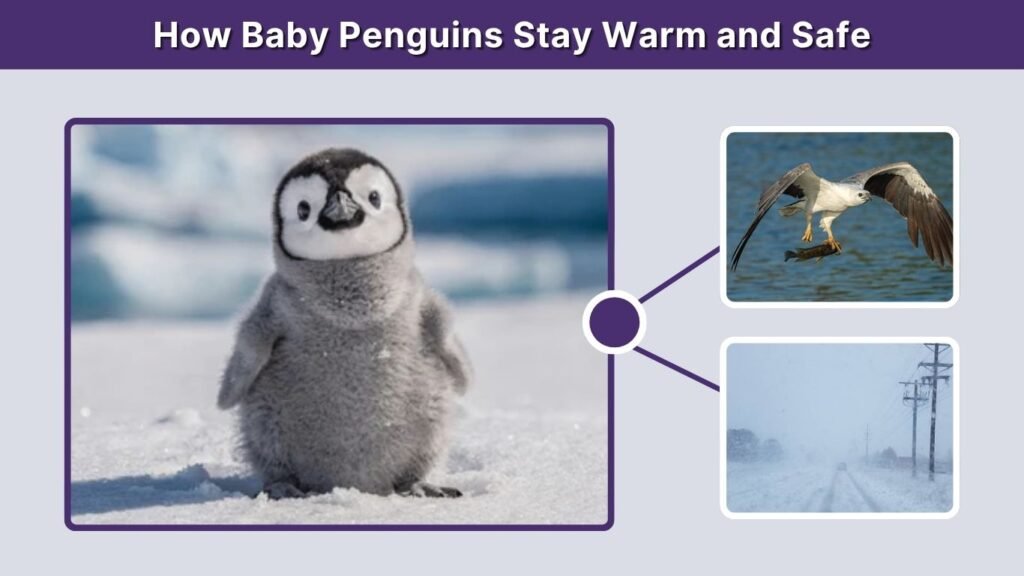
Survival can be challenging for a penguin baby. Chicks may face cold temperatures, storms, hunger, predators, and changing food availability. Their parents provide much of their early protection, while several penguin species also use social behaviors that help older chicks cope with difficult conditions once adults begin spending longer periods away at sea.
Penguin Chick Crèches
Older chicks of several penguin species gather in groups known as crèches. These groups form when chicks are beyond the earliest period of constant parental guarding.
Crèches can help chicks remain together while parents forage at sea. In crowded colonies, parents and chicks can recognize each other through distinctive vocal calls.
Threats Baby Penguins Face
Major challenges may include:
- Extreme cold or severe storms
- Limited availability of food
- Predation by seabirds or other animals
- Separation from parents
- Flooding or unsuitable nesting conditions
- Changing sea-ice or ocean conditions
The importance of each threat depends heavily on the penguin species and where it breeds. Antarctic chicks face very different conditions from young penguins raised along South American coasts or on warmer islands.
Baby Penguin Behavior and Development
As chicks grow, they become increasingly active and curious about their surroundings. They interact with parents and neighboring chicks, practice movements, vocalize, and gradually develop stronger bodies. These early behaviors help prepare them for independence.
From Fluffy Chick to Young Swimmer
One of the biggest transformations occurs during molting. The familiar fluffy baby penguin loses its insulating chick down as juvenile plumage develops.
Once properly feathered and sufficiently developed, young penguins can begin entering the water and searching for food independently. This transition marks a major change from a chick that relies entirely on adults to a juvenile beginning its life as a marine predator.
FAQs
What is a baby penguin called?
A baby penguin is called a chick. A newly hatched chick may also be described as a hatchling, while an older young penguin is generally called a juvenile.
Are baby penguins born with black and white feathers?
No. Many baby penguins initially have soft gray, brown, or dark down. Their coloration varies by species. They develop more adult-like plumage as they grow and molt.
What do baby emperor penguins eat?
Baby emperor penguins receive marine food collected by their parents. Emperor penguins feed primarily on fish, krill, and squid, which adults obtain during trips to the ocean.
Can a baby penguin swim?
Very young chicks are not ready for regular swimming. They must grow sufficiently and replace their fluffy down with feathers suited to aquatic life before becoming independent at sea.
How long do baby penguins stay with their parents?
The period varies among species. Many penguin chicks require parental care for several months, with the Smithsonian noting that chicks generally become independent around two to four months after hatching, although some species have longer developmental cycles.