
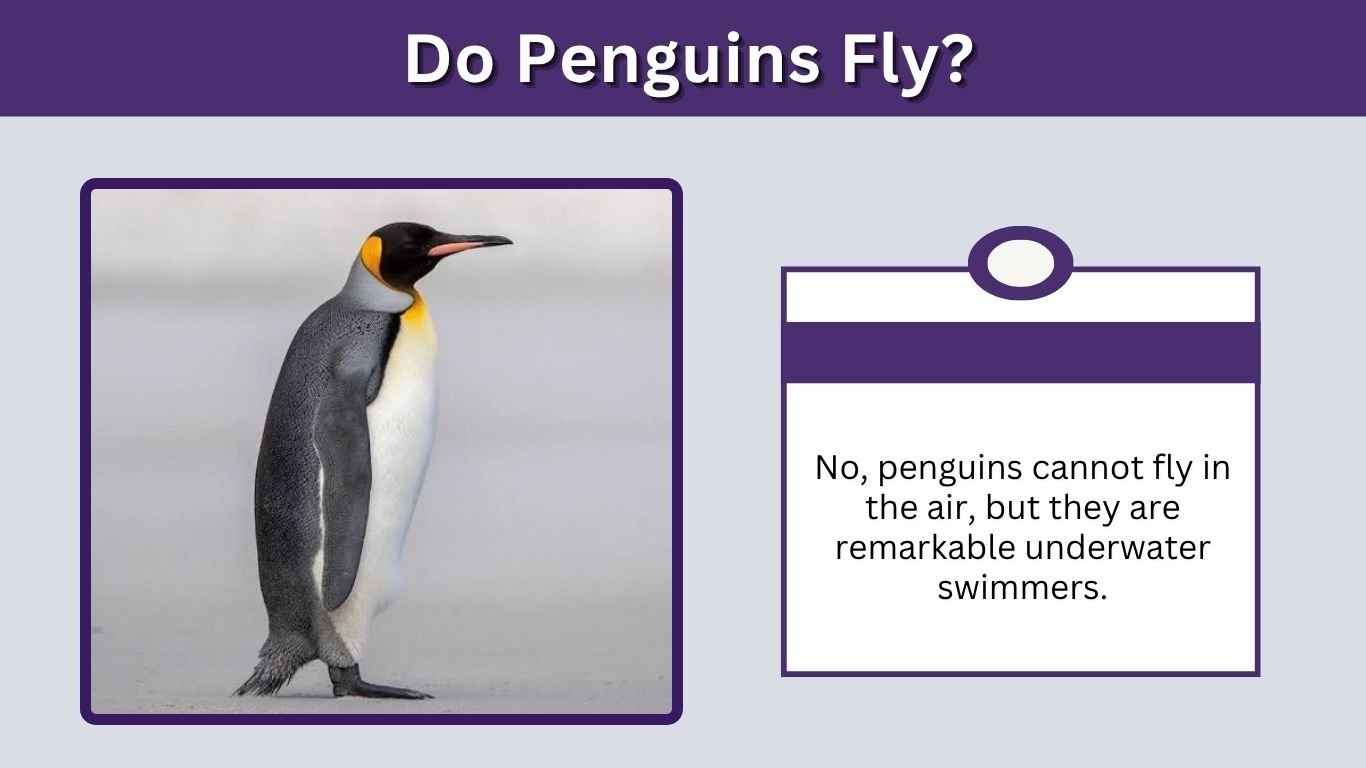
No, penguins cannot fly in the air, but they are remarkable underwater swimmers. Unlike most birds, penguins have evolved specialized wings called flippers that help them move efficiently through water rather than the sky. Their streamlined bodies, strong muscles, and dense bones make them excellent divers and hunters. Although penguins lost their ability to fly millions of years ago, they developed extraordinary swimming skills. Understanding why penguins cannot fly reveals how evolution transformed these unusual seabirds into some of the ocean’s most capable swimmers.
Can Penguins Fly in the Air?
Penguins are flightless seabirds belonging to the family Spheniscidae. Although they have wings and feathers like other birds, they cannot generate enough lift to leave the ground through powered flight. Their bodies are designed primarily for swimming and diving. Every living penguin species shares this characteristic, regardless of its size, geographical location, or natural habitat.
Do Any Species of Penguins Fly?
No living penguin species can fly through the air. This includes emperor, king, Adélie, gentoo, chinstrap, and little penguins.
Although these species differ in body size, appearance, and swimming ability, all possess short, rigid flippers instead of flexible wings suited for aerial flight.
Penguins can leap out of water and travel briefly through the air, but they cannot sustain flight like eagles, gulls, or puffins.
Do Emperor Penguins and Little Penguins Fly?
Emperor penguins are the largest living penguin species, reaching approximately 1.2 meters in height. Their relatively heavy bodies and specialized flippers make aerial flight impossible.
Little penguins, sometimes called fairy penguins, are considerably smaller. However, their wings are also adapted for underwater propulsion.
Neither species can fly, despite their considerable differences in body size.
Why Can’t Penguins Fly?
Penguins cannot fly because their bodies evolved for efficient movement underwater rather than through the air. Their short, stiff wings, dense bones, and powerful swimming muscles make them excellent aquatic hunters but unsuitable for aerial flight. These adaptations developed gradually as their ancestors became increasingly dependent on marine environments for food, survival, and successful reproduction.
Main Reasons Penguins Cannot Fly
Several biological characteristics explain why penguins are flightless:
- Short wings: Penguin flippers cannot create sufficient lift for sustained aerial flight.
- Dense bones: Their relatively solid bones help with underwater diving but increase body weight.
- Heavy bodies: Streamlined, muscular bodies are better suited to swimming than flying.
- Rigid flippers: Their wings lack the flexibility and broad flight-feather surfaces needed for aerial flight.
- Specialized muscles: Powerful chest and shoulder muscles support underwater propulsion.
- Evolutionary adaptation: Natural selection favored efficient swimming and diving over flying.
Why Did Penguins Lose Their Ability to Fly?
Scientists believe penguins descended from ancestors capable of flying.
Over millions of years, their wings gradually became more effective for underwater swimming. However, adaptations that improved diving performance made aerial flight increasingly difficult.
Eventually, their ancestors lost the ability to fly, producing the highly specialized marine birds recognized today.
Why Do Penguins Have Wings If They Cannot Fly?
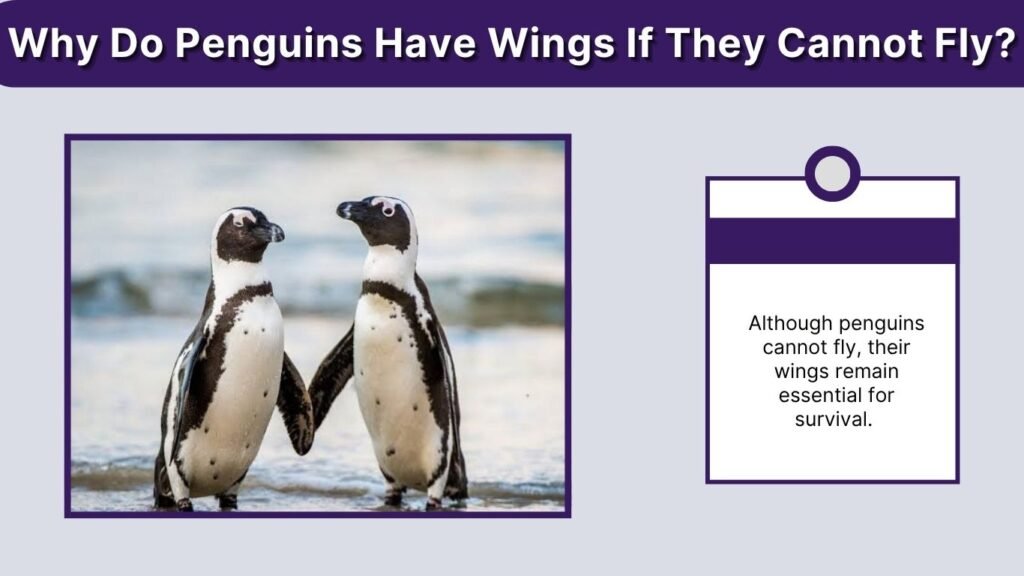
Although penguins cannot fly, their wings remain essential for survival. Rather than becoming useless, these structures evolved into powerful flippers that propel their bodies through water. Penguin wings generate thrust during underwater movements, allowing these birds to pursue prey, escape predators, and navigate marine environments. Their wings are therefore specialized tools for aquatic movement rather than aerial flight.
How Penguin Wings Work Underwater
Penguin flippers function somewhat like the wings of flying birds, but they operate in water.
Penguins move their flippers upward and downward, generating propulsion during both strokes.
Because water is much denser than air, their short, rigid flippers can efficiently move their streamlined bodies forward.
Their strong shoulder muscles support rapid movements and precise underwater turns.
Penguin Wings vs Flying Bird Wings
- Shape: Penguin wings are short and narrow, while flying birds generally possess larger flight surfaces.
- Bones: Penguin wing bones are flattened, rigid, and highly specialized for swimming.
- Feathers: Penguins have short, densely packed feathers rather than long flight feathers.
- Movement: Penguins generate underwater propulsion with both upward and downward flipper strokes.
- Function: Flying birds use wings to generate lift in air, while penguins use theirs primarily to generate thrust in water.
Do Penguins Fly Underwater?
Penguins cannot technically fly underwater because flight normally refers to movement through the air. However, their swimming technique closely resembles flying, earning them the description of birds that “fly underwater.” Their flippers produce powerful strokes, allowing them to glide gracefully through water. This swimming ability helps penguins hunt fish, squid, krill, and other marine organisms.
How Do Penguins Fly Underwater?
Penguins move underwater by repeatedly sweeping their flippers through the water.
Their streamlined bodies reduce resistance, while their webbed feet help with steering.
Unlike many aquatic animals that rely mainly on tail movements, penguins generate most of their swimming power through their flippers.
This creates graceful movements resembling a bird flying through the sky.
How Fast Can Penguins Swim?
Most penguins usually swim at speeds of approximately 4–7 miles per hour.
However, some species can travel considerably faster during short bursts.
Gentoo penguins are among the fastest swimming penguins, with reported maximum speeds reaching approximately 22 miles per hour.
Their speed helps them capture moving prey and escape marine predators.
Can Penguins Jump Out of Water?
Yes, penguins can launch themselves out of the water using powerful swimming movements.
This behavior, sometimes called porpoising, involves repeatedly jumping above the water’s surface before diving back in.
Penguins may also leap onto ice or rocky surfaces.
These airborne movements are jumps rather than true flight because the birds cannot remain airborne using sustained wing-powered lift.
How Do Penguins Move Without Flying?
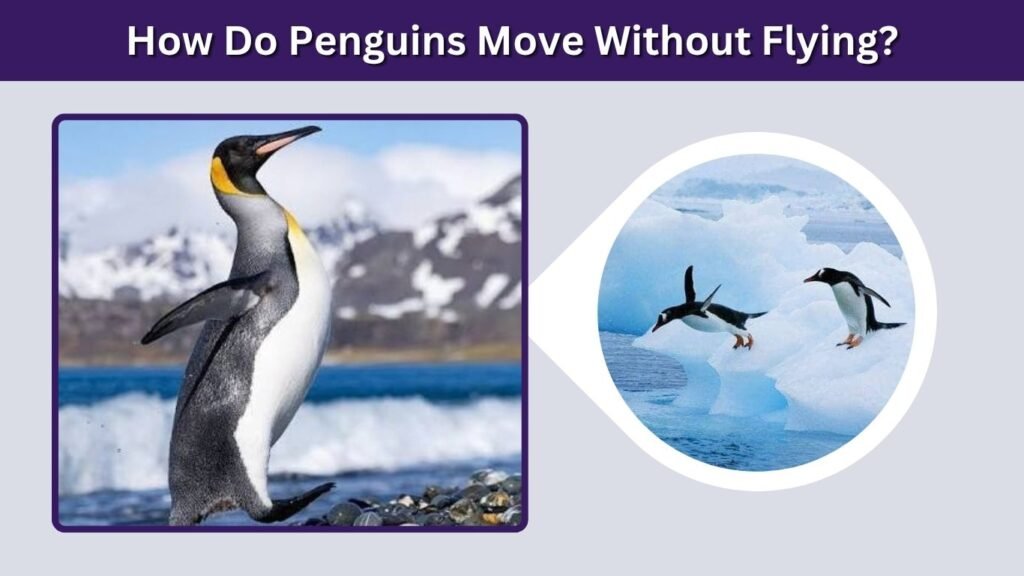
Penguins have developed several movement techniques that allow them to travel efficiently across different environments. Although they appear awkward when walking, their bodies are highly adapted to life in the ocean. They use swimming, diving, walking, hopping, and sliding depending on their surroundings. These specialized movements allow penguins to reach feeding grounds, nesting sites, and other important locations.
Common Penguin Movement Techniques
- Swimming: Their primary movement method, powered by strong flippers.
- Diving: Allows penguins to reach underwater feeding areas.
- Waddling: Their upright walking style helps them move across land.
- Tobogganing: Some species slide across snow or ice using their bellies and feet.
- Hopping: Penguins may jump across small obstacles or uneven rocks.
- Porpoising: Repeatedly jumping from water can assist rapid surface travel.
Where Do Penguins Travel During Winter?
Penguins do not fly to warmer places during winter.
Some species migrate or travel considerable distances through ocean waters, searching for food and suitable environmental conditions.
Others remain close to breeding regions throughout the colder months.
Their seasonal movements vary considerably between species, with some traveling long distances at sea rather than following traditional bird migration patterns through the air.
Penguins and Other Flightless Birds
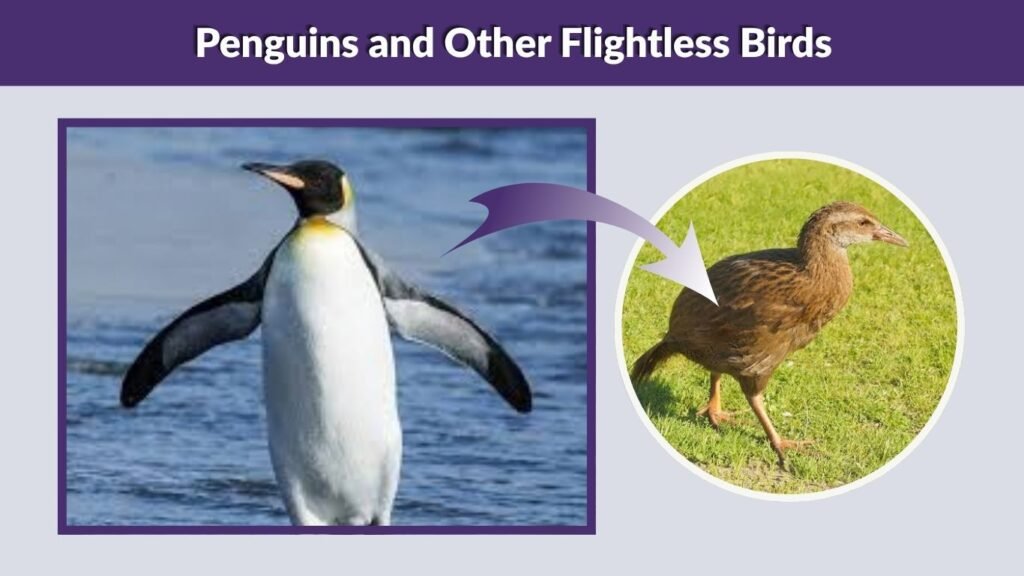
Penguins are not the only birds that cannot fly. Ostriches, emus, kiwis, and cassowaries also lack the ability to achieve sustained aerial flight. However, their adaptations differ significantly. While most of these birds rely heavily on walking or running, penguins developed specialized swimming abilities. Comparing these species demonstrates how different environments can influence bird evolution.
Penguins vs Ostriches: Why Can Neither Fly?
Both penguins and ostriches evolved from flying ancestors, but they adapted to different environments.
Ostriches possess powerful legs and specialized bodies for running across land.
Penguins developed streamlined bodies and rigid flippers for swimming underwater.
Their inability to fly results from different evolutionary adaptations rather than identical physical limitations.
Are Puffins Flying Penguins?
No, puffins are not penguins.
Although their black-and-white appearance resembles certain penguin species, puffins belong to a different bird family.
Unlike penguins, puffins can fly through the air using rapid wingbeats. They can also swim underwater using their wings.
FAQs
Penguins often raise interesting questions because they possess wings but cannot fly like most birds. Their unusual anatomy, powerful swimming abilities, and evolutionary history make them different from typical seabirds. Understanding these characteristics helps explain their remarkable adaptations and clears up common misconceptions about penguin flight, underwater movement, and behavior in the wild.
1. Do Penguins Ever Fly?
No, penguins cannot achieve sustained aerial flight. However, they can jump briefly through the air when leaving the water or crossing small obstacles.
2. Can Penguins Fly Underwater?
Penguins swim using wing movements that resemble flying. Although this is not technically aerial flight, their flippers allow efficient underwater propulsion.
3. Do Baby Penguins Know How to Fly?
No, baby penguins cannot fly. Once their waterproof juvenile feathers develop, they gradually learn to swim and dive.
4. Do Penguins Fall Over When Planes Fly Overhead?
There is no convincing scientific evidence that penguins regularly fall backward while watching airplanes. This claim is a popular wildlife myth.
5. Why Do Penguins Swim Instead of Fly?
Penguins evolved specialized flippers, dense bones, and streamlined bodies that allow them to hunt efficiently underwater. These adaptations favor swimming rather than aerial flight.
