
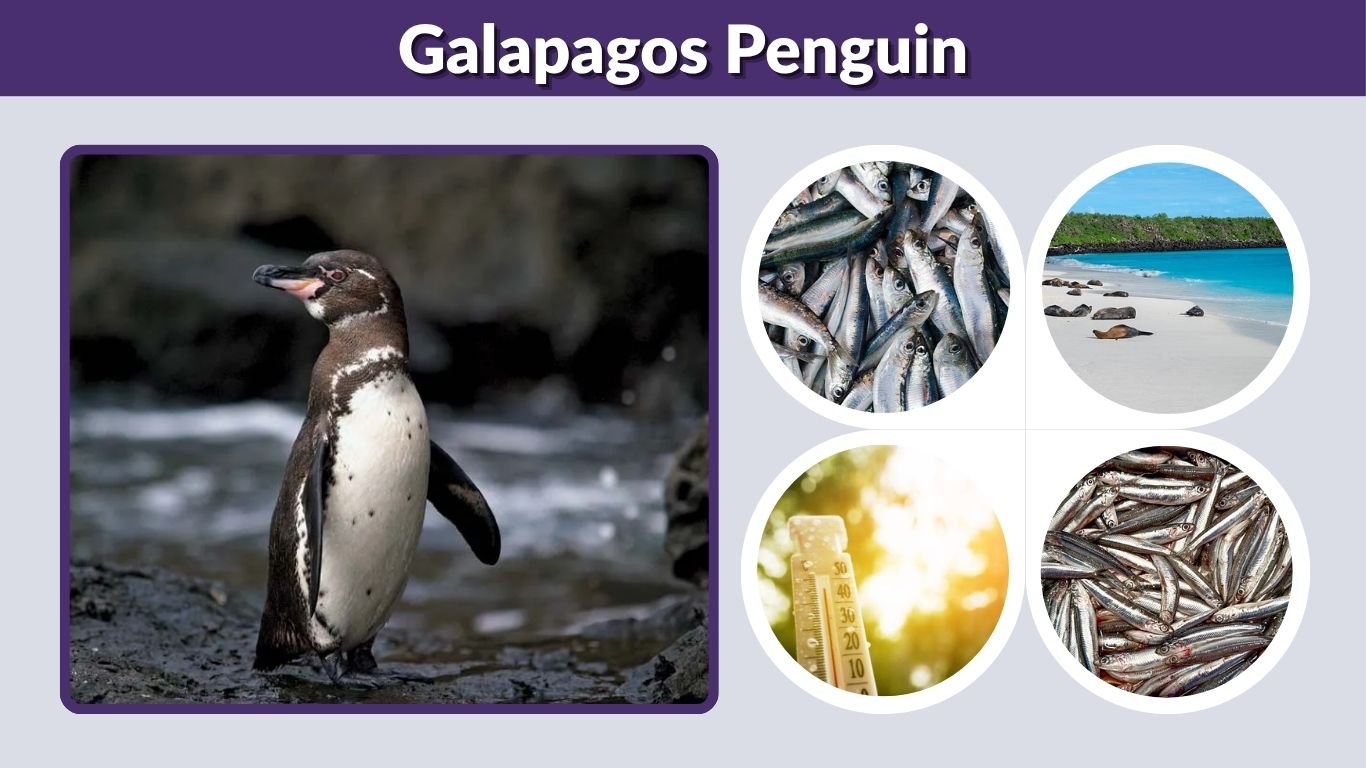
The Galapagos penguin is one of the world’s most unusual penguins, living in the warm tropical environment of Ecuador’s Galapagos Islands rather than icy Antarctica. Known scientifically as Spheniscus mendiculus, this small marine bird survives near the equator because cool, nutrient-rich ocean currents support abundant fish. Its compact size, distinctive black-and-white plumage, specialized cooling behaviors, and flexible breeding habits make it remarkably adapted to island life. However, environmental changes, invasive predators, pollution, and unpredictable El Niño events continue to threaten its small population.
Galapagos Penguin Characteristics and Appearance
The Galapagos penguin is among the smallest penguin species, with adults generally reaching around 50 centimeters in height and weighing roughly 2–2.5 kilograms. Its streamlined body is designed for efficient underwater movement rather than fast travel on land. The species has distinctive facial markings and countershaded plumage that helps it blend into its marine environment while hunting or avoiding predators.
Identification and Key Characteristics
- Scientific name: Spheniscus mendiculus
- Average height: Around 49–50 cm
- Average weight: About 2.2–2.5 kg
- Color: Mainly black above with a white underside
- Head: Dark head with a narrow white marking around the face
- Bill: Long, narrow, and adapted for catching fish
- Wings: Modified into powerful swimming flippers
- Conservation status: Endangered
Their dark back and pale underside also provide countershading. When viewed from above, their dark feathers blend with deeper water, while their white underside is less noticeable against the brighter surface when viewed from below.
Where Does the Galapagos Penguin Live?
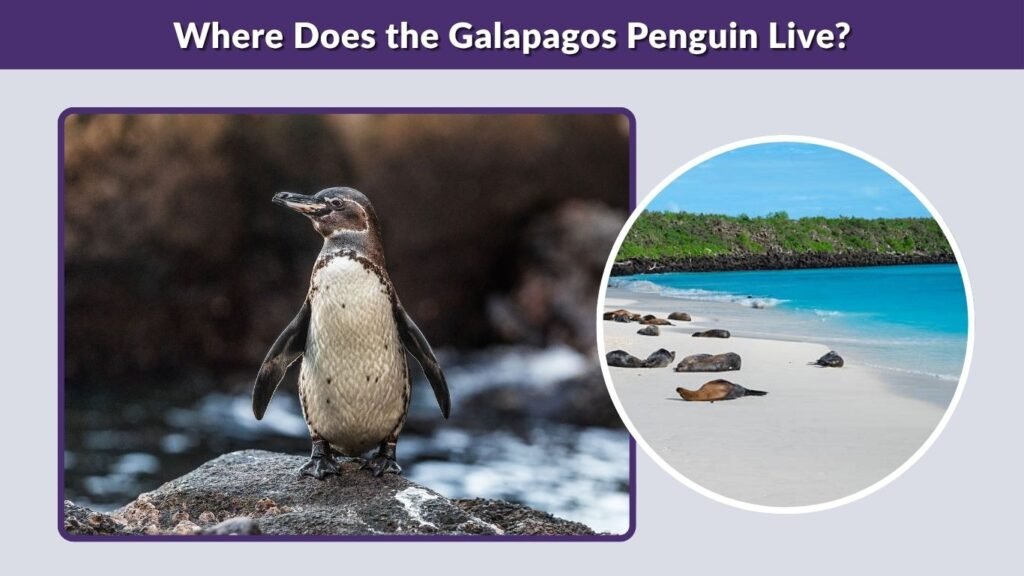
Galapagos penguins are endemic to the Galapagos Islands of Ecuador, meaning wild populations naturally occur nowhere else. Most live around Fernandina Island and the western coast of Isabela Island, although smaller numbers occur around several other islands. Their distribution is strongly connected to cooler ocean water, rocky coastlines, feeding opportunities, and suitable nesting crevices near the sea.
Galapagos Penguin Habitat
Unlike Antarctic penguins surrounded by ice and snow, Galapagos penguins inhabit rugged volcanic shores. They commonly rest and nest in caves, cracks, and crevices among coastal lava formations.
These shaded spaces are especially important because the intense equatorial sun can cause overheating. The surrounding ocean is equally important. Cool currents reaching the islands bring nutrients toward the surface, supporting the schooling fish on which these penguins depend.
How Can Penguins Live Near the Equator?
The presence of penguins in such a warm region may seem surprising. Their survival is made possible largely by cool ocean currents and upwelling around the archipelago.
The Humboldt Current and especially the Cromwell Current help deliver cooler, nutrient-rich water to the region. This promotes productive marine food webs and creates feeding conditions suitable for Galapagos penguins despite the tropical climate.
What Does a Galapagos Penguin Eat?
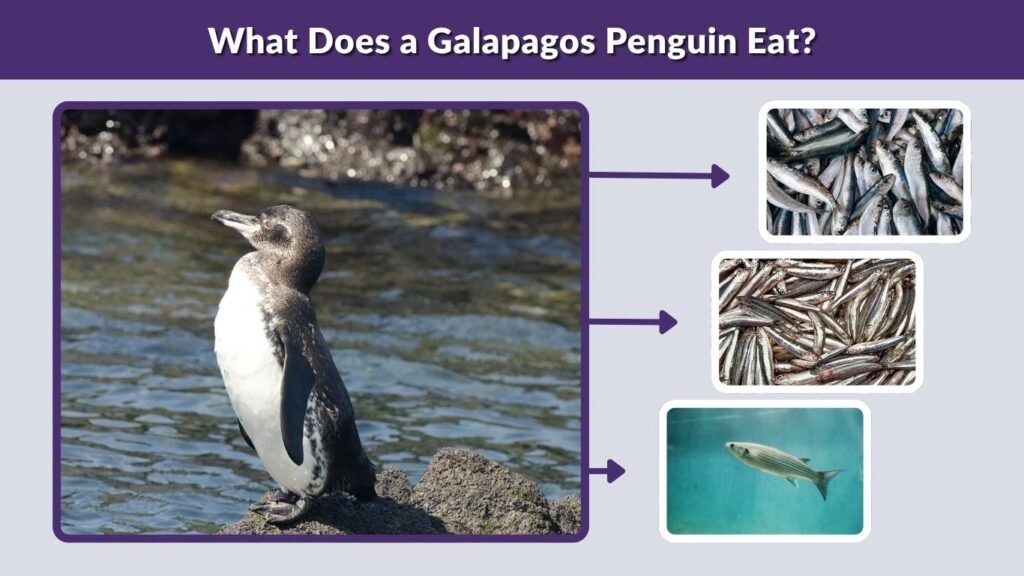
The Galapagos penguin is a carnivorous marine bird that obtains almost all of its food from the ocean. Its diet depends heavily on small schooling fish available around the islands. Food availability can fluctuate substantially as ocean temperatures and currents change, making successful feeding closely linked to conditions within the surrounding marine ecosystem.
Galapagos Penguin Diet
Common prey includes:
- Sardines
- Anchovies
- Mullet
- Other small schooling fish
- Occasionally other small marine prey
Galapagos penguins pursue prey underwater using their streamlined bodies and strong flippers. Their bills also contain backward-facing structures that help them hold slippery fish while swallowing their catch.
Hunting and Swimming Behavior
These penguins are much more graceful in water than they appear on land. Their flippers provide propulsion while their feet help with steering.
Galapagos Conservation Trust reports that they can reach around 35 km/h while hunting. Unlike some penguin species that regularly forage in large groups, Galapagos penguins may hunt alone or in pairs, allowing individuals to search widely when fish become scarce.
Galapagos Penguin Adaptations and Behavior
Living under the equatorial sun requires very different adaptations from those needed by Antarctic penguins. The Galapagos penguin has developed both physical and behavioral strategies for controlling body temperature. Many of its daily activities also revolve around avoiding extreme heat while taking advantage of comparatively cool surrounding seawater.
Adaptations for Staying Cool
Important Galapagos penguin adaptations include:
- Panting to release excess body heat
- Holding the flippers away from the body
- Seeking caves, crevices, and shaded locations
- Positioning the body to shade exposed feet
- Spending considerable time in cooler ocean water
- Having a relatively small body that releases heat efficiently
These behaviors are essential because their dark feathers absorb considerable solar radiation on exposed volcanic shorelines.
Daily Behavior
Galapagos penguins spend much of their active time swimming, hunting, resting near shore, and interacting with their mates. They may enter cooler water during hot periods and use shaded coastal areas while on land.
Their lifestyle can also change as marine conditions change. When food becomes limited, conserving energy and delaying reproduction can increase their chances of survival.
Breeding, Chicks, and Life Cycle
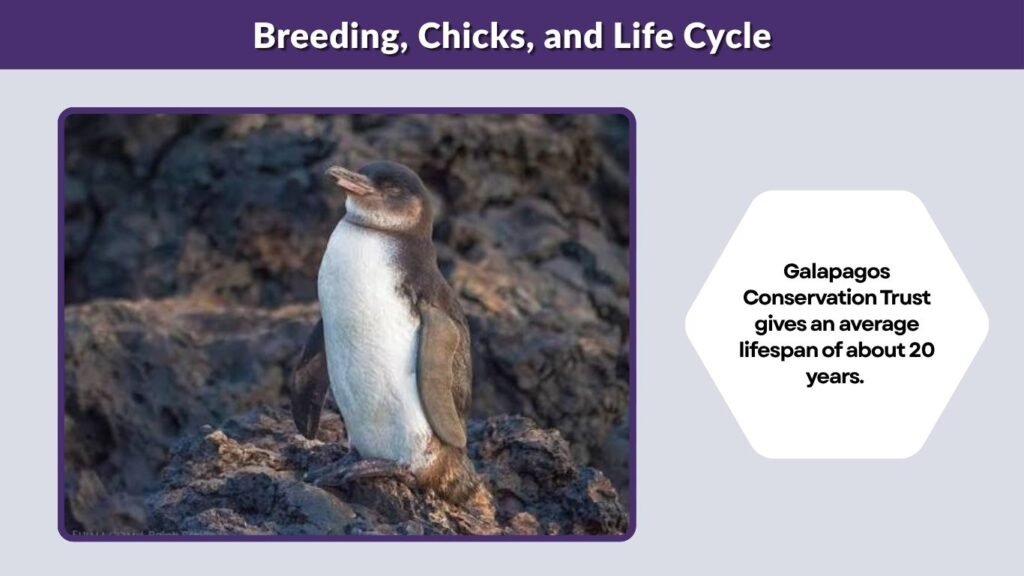
Galapagos penguins do not follow the strongly defined annual breeding season typical of many other penguins. Instead, breeding is closely connected to favorable ocean conditions and food availability. When colder water supports abundant prey, adults can take advantage of the opportunity to reproduce, making their breeding strategy unusually flexible.
Breeding and Nesting
Pairs use sheltered lava caves and crevices as nesting sites. Both parents participate in incubation and chick care.
Egg incubation lasts roughly 38–40 days. Breeding may occur at different times of the year when water temperatures and food supplies are suitable. If marine productivity declines, the penguins can postpone breeding rather than expend energy raising chicks under poor feeding conditions.
Galapagos Penguin Lifespan
Galapagos Conservation Trust gives an average lifespan of about 20 years. Actual survival varies considerably because individuals must cope with food shortages, predators, changing ocean temperatures, diseases, and extreme climatic events throughout their lives.
Why Is the Galapagos Penguin Endangered?
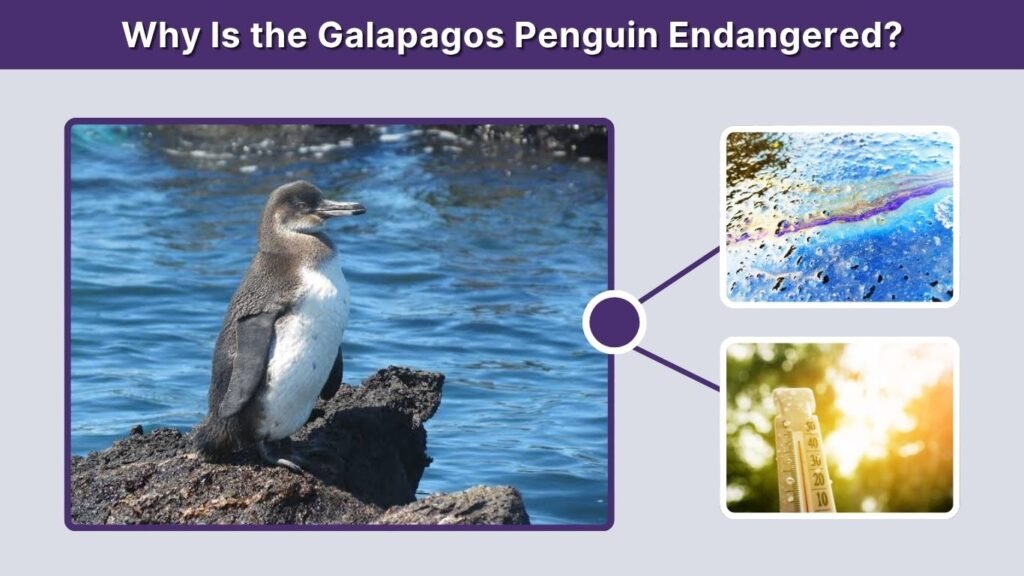
The Galapagos penguin is currently classified as Endangered. Its restricted geographic range means environmental disturbances can affect a large portion of the species at once. Changes in ocean conditions are particularly important because reduced upwelling means fewer nutrients, fewer fish, and consequently less food for both adult penguins and developing chicks.
Major Threats to Galapagos Penguins
Threats include:
- Strong El Niño events and reduced food availability
- Climate-related changes in marine conditions
- Introduced predators such as feral cats
- Introduced diseases
- Plastic and other marine pollution
- Oil contamination
- Limited suitable nesting habitat
- Naturally small and geographically restricted population
Severe El Niño events have historically produced major population declines by disrupting the productive ocean conditions on which the penguins depend.
Galapagos Penguin Conservation
Conservation efforts focus on protecting both terrestrial nesting habitat and surrounding marine ecosystems. Controlling invasive species, reducing plastic pollution, researching diseases, monitoring populations, and maintaining protected marine areas can all contribute to long-term survival.
Because the species occurs only in the Galapagos, conserving this unique ecosystem is inseparable from conserving the penguin itself.
Interesting Galapagos Penguin Facts
The Galapagos penguin stands apart from most members of the penguin family because of its geography and tropical adaptations. Its combination of opportunistic breeding, lava-rock nesting, rapid underwater movement, and heat-management behaviors illustrates how strongly evolution can shape animals to fit unusual environments.
Fun Facts About the Galapagos Penguin
- It is the most northerly occurring penguin species.
- Some individuals live slightly north of the equator.
- It is found naturally only in the Galapagos Islands.
- It nests in volcanic caves and lava crevices rather than snowy landscapes.
- It can pant to help cool its body.
- It may spread its flippers to release heat.
- Breeding can occur when environmental conditions become favorable.
- It is one of the smallest penguin species in the world.
- Galapagos penguins can reach impressive speeds underwater while hunting.
FAQs
1. Where does the Galapagos penguin live?
The Galapagos penguin lives exclusively in Ecuador’s Galapagos Islands. Most individuals are concentrated around Fernandina Island and western Isabela Island, with smaller populations occurring around several other islands.
2. What does a Galapagos penguin eat?
Its diet consists mainly of small schooling fish, including sardines, anchovies, and mullet. The availability of these fish depends heavily on cool, nutrient-rich ocean currents.
3. Why is the Galapagos penguin endangered?
Major threats include El Niño-driven food shortages, changing ocean conditions, introduced predators and diseases, pollution, and its naturally restricted geographic range.
4. How big is a Galapagos penguin?
Adults are generally about 50 centimeters tall and weigh approximately 2–2.5 kilograms, making them one of the world’s smaller penguin species.
5. Can Galapagos penguins survive in hot weather?
Yes. They use several cooling strategies, including panting, holding their flippers away from their bodies, shading their feet, sheltering in lava crevices, and spending time in cooler seawater.