
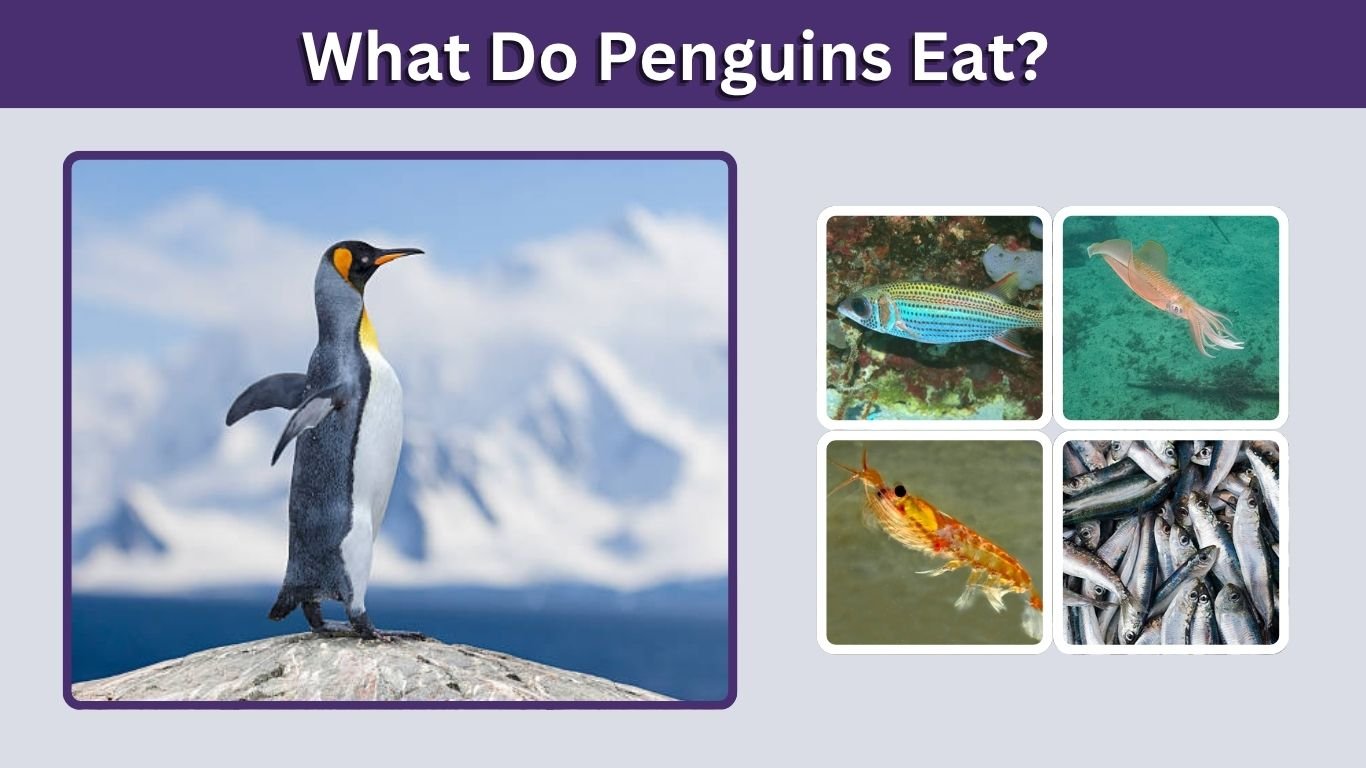
Penguins are carnivorous seabirds that eat fish, krill, squid, and other small marine animals. Their exact diet depends on species, habitat, season, and local prey availability. Emperor penguins rely heavily on fish, while Adélies and macaronis consume large quantities of krill. African and Galápagos penguins specialize more in small schooling fish such as sardines and anchovies. From Antarctic silverfish to squid, these 10 foods penguins eat reveal how different penguin species find enough energy to swim, breed, moult, and raise their chicks.
What Do Penguins Eat?
All penguins obtain their food from the ocean. Although diets differ between species, fish, krill, squid, and other crustaceans form the foundation of penguin nutrition. Their streamlined bodies and flipper-like wings make them highly efficient underwater hunters. Some species pursue schooling fish near shore, while others dive hundreds of meters or travel far offshore to locate prey.
Are Penguins Carnivores?
Penguins are primarily carnivorous marine predators. They do not normally depend on grasses, seaweed, fruit, or other plants for nutrition.
Instead, they capture live aquatic prey while swimming. Their particular food choices are determined largely by which prey species occur near their breeding colonies and feeding grounds.
10 Best Foods Penguins Eat
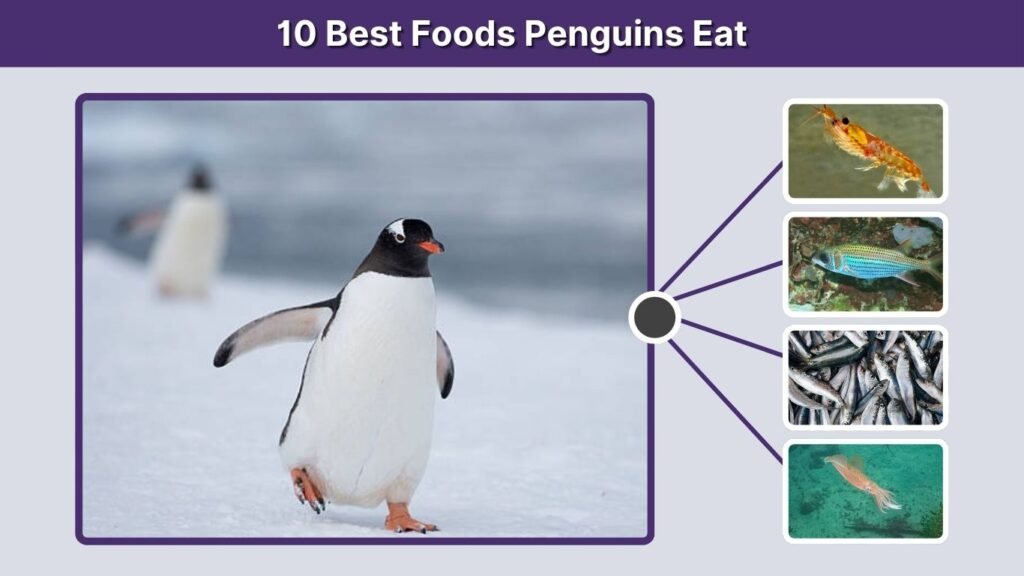
There is no single diet shared by every penguin species. An emperor penguin in Antarctica encounters very different prey from a Galápagos penguin near the equator. The following 10 foods represent important prey documented across different penguin species. Some are dietary staples for particular species, while others are seasonal or locally important foods.
1. Antarctic Silverfish
Antarctic silverfish are among the most important fish eaten by emperor penguins. These relatively small Antarctic fish provide a valuable source of energy in the cold Southern Ocean.
Emperor penguins dive beneath the sea ice and through open water to capture them. Fish can make up a major portion of an emperor’s diet, supplemented by krill and squid. Adult emperors normally consume about 2–3 kg of food per day, with greater intake before periods when they must build fat reserves.
2. Lanternfish
Lanternfish, also called myctophids, are particularly important to king penguins. Australian Antarctic Program information describes king penguins as relatively specialized feeders that rely heavily on lanternfish during the breeding season.
Royal penguins also consume juvenile lanternfish, making these small oceanic fish an important resource for more than one penguin species.
Lanternfish live in vast numbers in deeper oceanic waters and are an important link between smaller marine organisms and larger predators.
3. Sardines
Sardines are important prey for several warm- and temperate-water penguin species.
African penguins depend strongly on sardines and anchovies, and reduced availability of these fish has become a serious conservation concern. Galápagos penguins also consume sardines as part of their diet of small cold-water schooling fish.
Penguins chase sardine schools underwater using speed and agility rather than waiting for prey to approach them.
4. Anchovies
Anchovies are another small schooling fish eaten by African, Galápagos, and little penguins.
African penguins are specialist feeders, with anchovies and sardines representing particularly valuable prey. Galápagos penguins also hunt anchovies in productive waters influenced by cool ocean currents. New Zealand’s little blue penguins frequently eat small shoaling fish, including anchovies.
Their small size makes anchovies relatively easy for penguins to capture and swallow whole.
5. Mullet
Galápagos penguins include mullet among their important prey.
Unlike Antarctic penguins, Galápagos penguins live close to the equator. Cool, nutrient-rich currents around the Galápagos Islands support schooling fish including sardines, anchovies, and mullet, allowing these tropical penguins to find sufficient marine food.
This is a good example of why the answer to “what do penguins eat?” changes depending on the species and its geographic location.
6. Pilchards and Other Shoaling Fish
Little blue penguins, also called fairy penguins in Australia, feed heavily on small shoaling fish. New Zealand’s Department of Conservation specifically identifies pilchards and anchovies among their main foods.
Shoaling behavior concentrates many fish in one place, creating opportunities for penguins to pursue them efficiently.
Little penguins generally forage relatively close to shore and make repeated dives while searching for these small fish.
7. Antarctic Krill
Antarctic krill are one of the most important food resources in the Southern Ocean.
Adélie penguins can consume large quantities of Antarctic krill, particularly while foraging offshore. Macaroni penguins also eat substantial amounts of Antarctic krill alongside fish.
Although individual krill are small, enormous swarms provide concentrated feeding opportunities. Krill are so ecologically important that changes in their abundance can influence penguins, seals, whales, and other Antarctic predators.
8. Crystal Krill
Adélie penguins also eat crystal krill, scientifically known as Euphausia crystallorophias.
Their diet can change according to where they forage. The Australian Antarctic Program reports that feeding close to breeding colonies can involve fish, amphipods, and crystal krill, while offshore meals contain more Antarctic krill.
This illustrates how even one penguin species can switch between different prey depending on feeding location.
9. Amphipods and Other Crustaceans
Amphipods are small crustaceans that form part of the diets of some penguins, including Adélies.
Gentoo penguins can also consume fish and crustaceans, particularly when feeding near the sea floor. Little penguins have a varied diet that includes crustaceans in addition to schooling fish and squid.
Crustaceans provide another useful food source when fish or krill availability changes.
10. Squid
Squid are eaten by many penguin species. They are particularly important for some ocean-going species and may become more or less common in the diet depending on season.
King penguins eat more squid during winter than during their breeding season, when lanternfish dominate their diet. Emperor penguins also consume some squid, while little penguins can include squid in their varied coastal diet.
What Fish Do Penguins Eat?
Fish are among the most important penguin foods, but there is no universal “penguin fish.” Species living in different oceans encounter different prey. Water temperature, ocean currents, breeding location, season, and fish abundance all influence the menu. Large deep-diving penguins can reach prey unavailable to smaller species that hunt mostly in shallower coastal water.
Common Fish Eaten by Penguins
- Antarctic silverfish
- Lanternfish
- Sardines
- Anchovies
- Mullet
- Pilchards
- Other small schooling fish
African penguins are particularly dependent on sardines and anchovies, while king penguins specialize heavily in lanternfish. Galápagos penguins target anchovies, sardines, and mullet.
What Do Different Types of Penguins Eat?
The keyword cluster includes many searches about individual penguin species, and the differences are important. Penguins collectively eat similar categories of marine prey, but the proportions vary greatly. A penguin’s body size, diving ability, geographic range, and local marine ecosystem determine which foods dominate its diet.
Emperor, Adélie and Chinstrap Penguins
Emperor penguins mainly eat fish, including Antarctic silverfish, supplemented with krill and squid.
Adélie penguins consume both krill and fish. Near colonies, their meals can include crystal krill, amphipods, and fish, whereas Antarctic krill becomes especially important farther offshore.
Chinstrap penguins are strongly associated with krill-rich Antarctic marine ecosystems, although their diets can also include fish and other marine prey.
King, Macaroni and Rockhopper Penguins
King penguins specialize heavily in lanternfish, with squid becoming more important during winter.
Macaroni penguins consume large quantities of Antarctic krill plus various fish. Their long foraging journeys can take them far from breeding colonies.
Rockhoppers eat crustaceans such as krill as well as squid and fish, with exact proportions varying among regions and seasons.
African and Galápagos Penguins
African penguins—also historically called jackass penguins because of their braying calls—depend heavily on small pelagic fish, particularly sardines and anchovies.
Galápagos penguins eat cold-water schooling fish such as anchovies, sardines, and mullet. Productive cool currents make these prey available even though the penguins live in the tropics.
Little Blue Penguins
Little blue or fairy penguins eat small schooling fish such as pilchards and anchovies, as well as squid and crustaceans.
These tiny penguins forage mainly around coastal waters, although individuals may travel farther over the continental shelf.
How Do Penguins Catch Their Food?
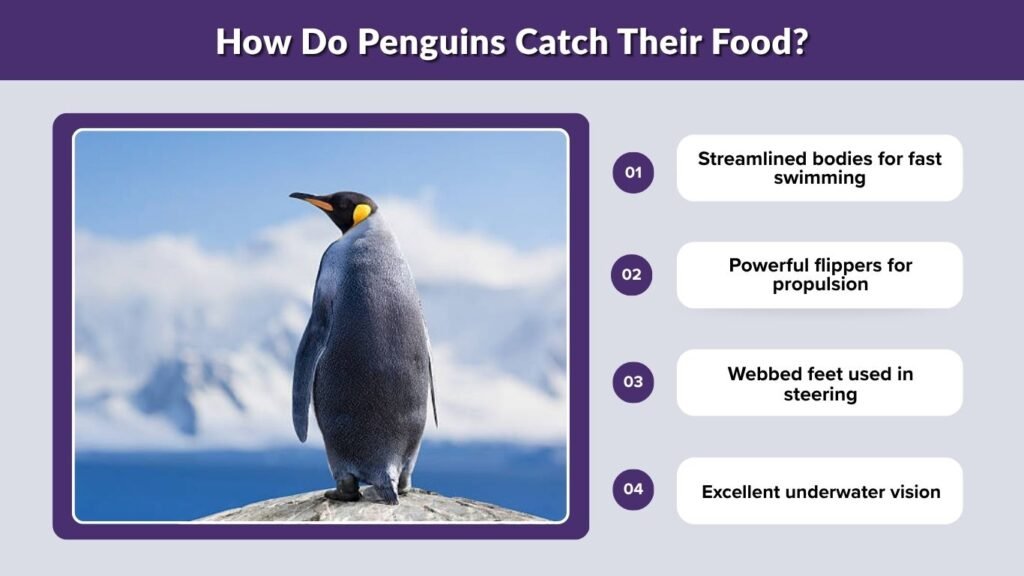
Penguins cannot fly through the air, but their bodies are superbly adapted for underwater pursuit. Their wings have evolved into stiff flippers that generate powerful thrust, while streamlined bodies reduce drag. They use vision to locate prey and chase fish, krill, squid, and crustaceans beneath the surface.
Penguin Hunting Adaptations
- Streamlined bodies for fast swimming
- Powerful flippers for propulsion
- Webbed feet used in steering
- Excellent underwater vision
- Strong bills for catching prey
- Rear-facing structures in the mouth that help control slippery food
- Ability to make repeated dives while foraging
Different species specialize at different depths. Emperor penguins can make exceptionally deep dives, while little penguins generally hunt much closer to the surface.
What Do Baby Penguins Eat?
Penguin chicks do not normally catch their own fish immediately after hatching. Instead, their parents forage at sea, return to the breeding colony, and deliver food to them. This allows young chicks to grow while remaining protected at the nest or colony.
How Parents Feed Penguin Chicks
Parents swallow prey while hunting and later regurgitate food for their chicks. The exact food therefore reflects what the adult species normally catches.
An Adélie chick may receive meals rich in krill and fish, while a king penguin chick receives prey dominated by lanternfish at certain times of year. As chicks mature and eventually leave the colony, they must learn to hunt independently.
Do Penguins Eat Plants or Drink Water?
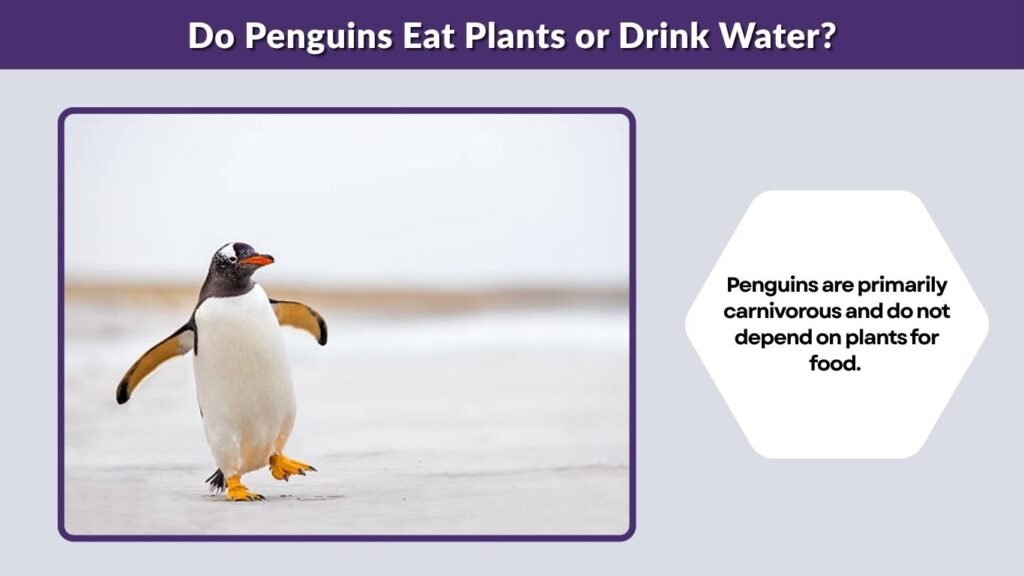
Penguins obtain their nutrition overwhelmingly from marine animals rather than plants. Seaweed and terrestrial vegetation are not normal staples of their diet. Because penguins spend extensive periods at sea, they also have adaptations that allow them to cope with salt while feeding and swimming in marine environments.
Do Penguins Eat Plants?
Penguins are primarily carnivorous and do not depend on plants for food. Fish, krill, squid, and other marine organisms provide the protein, fat, and energy required for swimming, breeding, moulting, and surviving cold environments.
Are There Penguins in the Arctic?
No wild penguin species naturally lives in the Arctic. Penguins are native to the Southern Hemisphere, from Antarctica and subantarctic islands to South America, southern Africa, Australia, New Zealand, and the Galápagos Islands.
Therefore, searches for “what do Arctic penguins eat” refer to animals that do not naturally exist.
FAQs
1. What do penguins mostly eat?
Most penguins eat fish, krill, squid, and other small marine animals. The proportion of each food depends on the penguin species and where it lives.
2. What do emperor penguins eat?
Emperor penguins mainly eat fish, including Antarctic silverfish, along with Antarctic krill and some squid. Adults typically consume approximately 2–3 kg of food per day.
3. What do penguins eat besides fish?
Krill, amphipods, squid, and other small crustaceans are important non-fish foods. Some species, particularly Antarctic penguins, rely heavily on krill.
4. What do African penguins eat?
African penguins feed primarily on small pelagic fish such as sardines and anchovies. Reduced availability of these prey has become a major conservation problem for the species.
5. What do baby penguins eat?
Baby penguins eat food brought back from the ocean by their parents. Adults capture fish, krill, squid, or other prey and later regurgitate meals for their chicks until the young birds are old enough to forage independently.
