
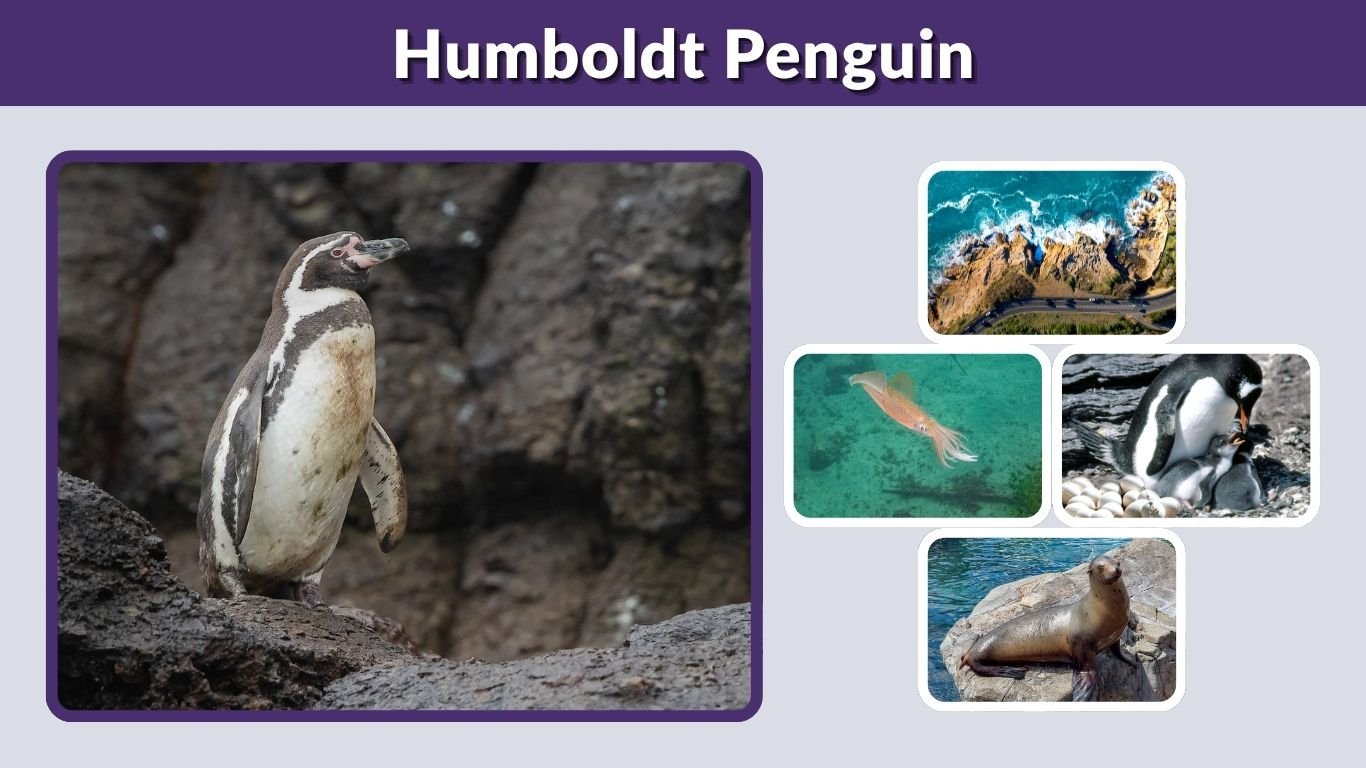
The Humboldt penguin is a medium-sized penguin native to the Pacific coasts of Peru and Chile. Scientifically known as Spheniscus humboldti, it is recognized by its black-and-white plumage, pink facial skin, strong flippers, and distinctive dark breast band. Unlike Antarctic penguins, this species lives beside deserts and relatively warm coastlines influenced by the cold, nutrient-rich Humboldt Current. From its fish-based diet and burrow nests to its swimming adaptations and conservation challenges, the Humboldt penguin has a remarkably specialized coastal lifestyle.
What Is a Humboldt Penguin?
The Humboldt penguin is a flightless seabird belonging to the family Spheniscidae. It is one of the banded penguins in the genus Spheniscus, which also includes African, Magellanic, and Galápagos penguins. Its common name comes from the Humboldt Current, the productive ocean system that strongly influences the coastal ecosystem where these birds live and feed.
Scientific Name and Classification
The scientific name of the Humboldt penguin is Spheniscus humboldti. It is closely related to other warm-temperate penguins rather than the large Antarctic species people often imagine when they hear the word penguin.
Humboldt penguins are completely flightless but highly specialized for swimming. Their wings have evolved into stiff flippers that propel them efficiently through the water.
Humboldt Penguin Identification
Typical characteristics include:
- Black back and mostly white underside
- Single dark band across the chest
- White stripe curving around the head
- Pink bare skin around the eyes and bill
- Black spots scattered across the white belly
- Strong, streamlined body
- Short legs and webbed feet
- Stiff flippers adapted for underwater swimming
Individual belly-spot patterns vary, which can help researchers distinguish one bird from another.
Humboldt Penguin Habitat
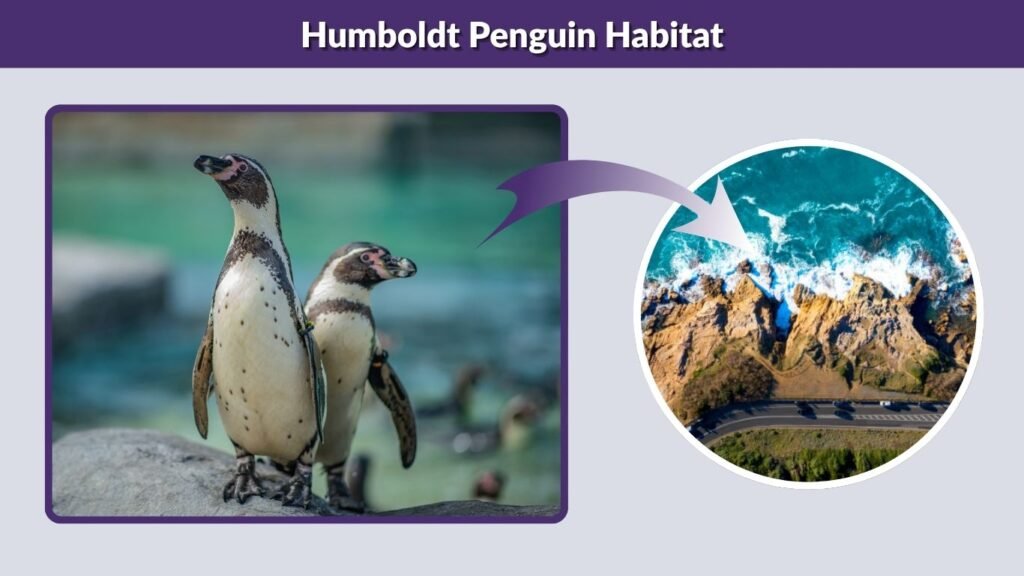
Humboldt penguins inhabit one of the most unusual penguin environments in the world. They live where extremely dry coastal landscapes meet cool, biologically productive Pacific waters. Colonies occur mainly on rocky coastlines and offshore islands in Peru and Chile, where suitable nesting sites and access to abundant marine prey are available.
Where Do Humboldt Penguins Live?
Their natural range extends along the western coast of South America, from northern Peru southward into Chile.
Unlike emperors or Adélie penguins, Humboldt penguins do not depend on Antarctic ice. Some colonies occur beside extremely arid landscapes, including areas where the Atacama Desert approaches the Pacific coastline.
Their distribution closely follows the productive waters associated with the Humboldt Current.
Why the Humboldt Current Matters
The Humboldt Current carries cold water northward along western South America. Upwelling brings nutrient-rich deep water toward the surface, supporting enormous numbers of plankton and schooling fish.
Those fish provide an essential food source for Humboldt penguins and other seabirds. At Punta San Juan in Peru, for example, anchoveta are described as a primary food resource supported by nutrient-rich upwelling.
Humboldt Penguin Nests
Humboldt penguins traditionally excavate nesting burrows in thick guano deposits created by generations of seabirds. These burrows provide shade and protection from extreme coastal heat.
Where suitable guano is unavailable, penguins may use caves, rocky crevices, vegetation, or other sheltered locations. Historical guano harvesting substantially altered some traditional nesting habitats.
What Does a Humboldt Penguin Eat?
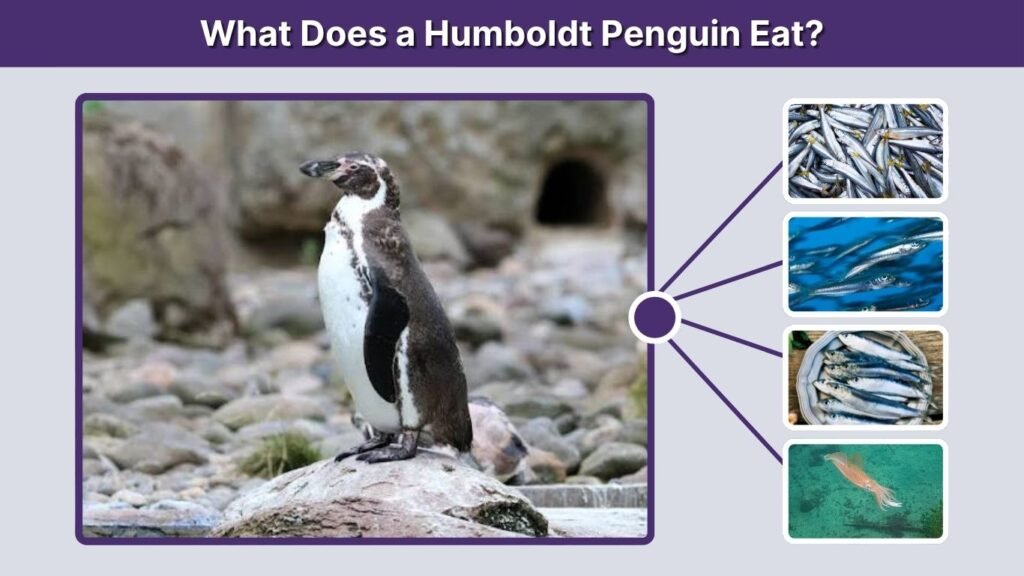
Humboldt penguins are marine predators that depend largely on small schooling fish. Their diet reflects the productivity of the Humboldt Current ecosystem. Availability changes according to location, season, ocean conditions, and events such as El Niño, which can shift prey distributions and force penguins to travel farther while searching for food.
Humboldt Penguin Diet
Their prey can include:
- Anchoveta and other anchovies
- Sardines
- Herring-like fish
- Silversides
- Garfish
- Other small schooling fish
- Squid in some circumstances
- Small marine invertebrates
Humboldt penguins usually swallow relatively small prey whole.
How Do Humboldt Penguins Hunt?
These penguins pursue fish underwater using their streamlined bodies and powerful flippers.
Their feet help with steering, while dense bones make diving easier than it would be for a typical flying bird. Penguins also possess adaptations that help them deal with saltwater and protect their eyes while swimming.
Hunting may occur individually or in groups depending on local conditions and prey availability.
Humboldt Penguin Size and Appearance
Humboldt penguins are medium-sized members of the penguin family. They are far smaller than emperor penguins but have the sturdy body and hydrodynamic shape typical of penguins. Males and females look very similar externally, making them difficult to distinguish simply by observing plumage.
Humboldt Penguin Height and Weight
Adults commonly stand roughly 56–70 cm (22–28 inches) tall, although individual size varies.
They generally weigh several kilograms, with body mass changing according to sex, season, breeding condition, and food availability.
Their compact build helps reduce drag while swimming and allows them to maneuver efficiently while pursuing fish.
Pink Skin Around the Face
One of the species’ most noticeable features is the exposed pink skin surrounding the eyes and extending toward the bill.
This bare skin also plays a role in releasing excess body heat. That is particularly useful for a penguin living along relatively warm, sunny coastlines rather than on Antarctic ice.
Humboldt Penguin Adaptations
Living between a cool ocean and hot, dry coastline requires specialized adaptations. Humboldt penguins must regulate body temperature on land while remaining efficient swimmers in cold ocean water. Their feathers, body shape, circulation, flippers, and nesting behavior all contribute to surviving these contrasting conditions.
Adaptations for Swimming
Their streamlined bodies minimize resistance underwater. Wings have evolved into powerful flippers, while webbed feet assist with maneuvering.
Black-and-white coloration also provides countershading. Seen from above, the dark back blends with deeper water; viewed from below, the light underside blends with the brighter surface.
This coloration can make the penguin less obvious to both prey and predators.
Staying Cool on Land
Humboldt penguins cannot rely on snow or ice to remain cool.
Bare pink facial areas help release body heat, while shaded burrows and crevices provide refuge from intense sunlight.
Penguins may also adjust posture and activity patterns when temperatures rise, spending significant periods near or in the ocean.
Humboldt Penguin Behavior and Sounds
Humboldt penguins are social birds that gather in breeding colonies but also display territorial behavior around nests. Communication is important because many birds may occupy the same colony, and partners need to recognize each other among numerous neighboring penguins.
Communication and Calls
Humboldt penguins produce several vocalizations used during courtship, territorial disputes, and interactions between partners or family members.
Like closely related African penguins, their calls can be loud and braying. Vocal communication helps individuals maintain relationships and defend nesting space within crowded colonies.
Daily Behavior
Much of a Humboldt penguin’s life alternates between activities on shore and feeding trips at sea.
On land, birds may rest, preen, breed, guard nests, or interact socially. At sea, their behavior becomes focused on swimming and locating prey.
Their waterproof plumage requires regular maintenance, making preening an important part of everyday behavior.
Humboldt Penguin Reproduction and Life Cycle
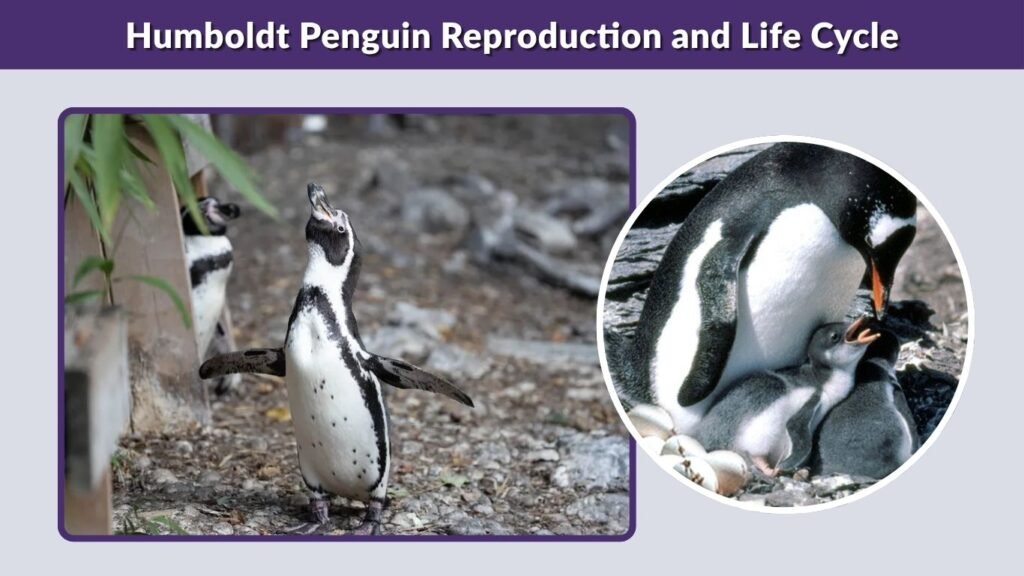
Humboldt penguins generally form breeding pairs and use sheltered nest sites. Their reproductive timing can vary with local environmental conditions and food availability. In favorable areas, breeding activity may occur more than once during the year, although successful reproduction depends strongly on adequate prey and suitable nesting habitat.
Eggs and Chicks
Females commonly lay one or two eggs in a nest. Both parents participate in incubation and later help feed and protect the chicks.
Young Humboldt penguins initially have different plumage from adults and develop their characteristic adult patterns as they mature.
Parents must regularly travel to sea to obtain food while raising growing chicks.
Growing Into an Adult
After hatching, chicks depend entirely on parental care. As they develop juvenile waterproof plumage, they become increasingly prepared to enter the ocean.
Young penguins eventually leave their nesting areas and learn to obtain food independently.
Survival during these early stages depends on food availability, weather conditions, predators, and the quality of the nesting site.
Humboldt Penguin Lifespan
Humboldt penguins can live for many years, although lifespan differs between wild birds and individuals receiving managed care. In nature, food shortages, predators, disease, fishing activity, extreme ocean conditions, and human disturbance can all influence survival.
How Long Do Humboldt Penguins Live?
Wild Humboldt penguins may live into their teens or beyond, while individuals in managed zoological populations can sometimes live considerably longer.
Exceptional captive longevity should not be treated as the normal life expectancy for every bird because zoo animals receive predictable food, veterinary care, and protection from many natural hazards.
Humboldt Penguin Predators
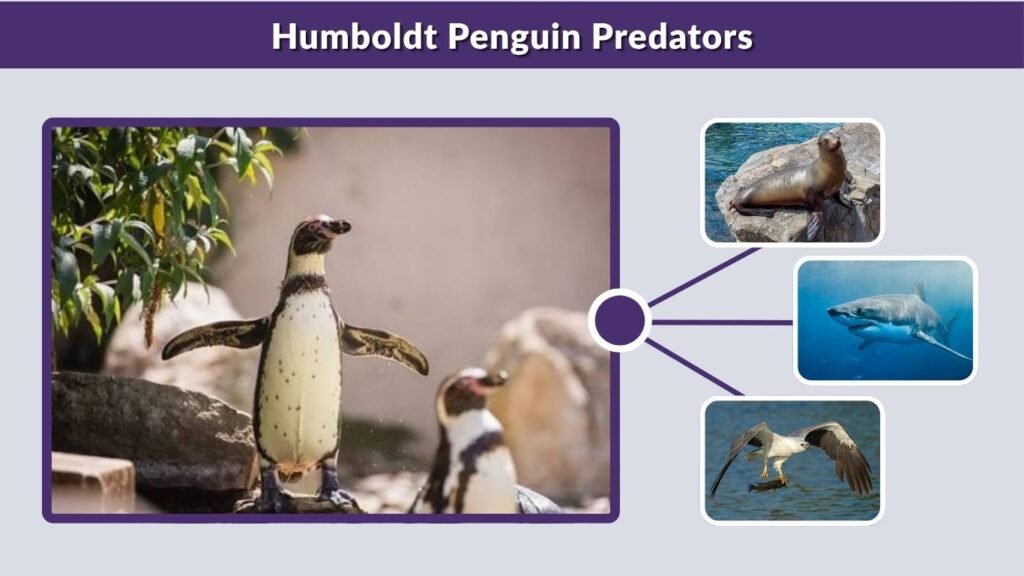
Humboldt penguins face different predators depending on whether they are swimming, nesting, or raising chicks. Adults are vulnerable to large marine predators, while eggs and young chicks can be threatened by animals that enter breeding colonies.
Common Predators and Threats
Potential natural threats include:
- Sea lions
- Sharks and other large marine predators
- Large seabirds
- Foxes in accessible nesting areas
- Introduced mammals that prey on eggs or chicks
Human-related pressures add further risks beyond natural predation.
Humboldt Penguin Conservation
Humboldt penguins face pressures from changes in food availability, fisheries interactions, human disturbance, loss or alteration of nesting habitat, pollution, and strong El Niño events. Fishing gear can also kill penguins through accidental bycatch. Conservation efforts therefore need to protect both breeding colonies on land and feeding areas at sea.
Why Conservation Matters
Important concerns include loss of suitable nesting habitat, disturbance at breeding colonies, competition or changes in fish availability, accidental capture in fishing gear, marine pollution, and changing ocean conditions.
The species is also protected under the U.S. Endangered Species Act as a threatened species.
Conservation sites such as Punta San Juan in Peru protect important breeding habitat and support research into the species and its marine ecosystem.
Interesting Humboldt Penguin Facts
Humboldt penguins have several characteristics that distinguish them from stereotypical cold-climate penguins. Their ability to live beside deserts while depending on cold ocean currents is one of the most remarkable examples of penguin adaptation.
Quick Facts
- Scientific name: Spheniscus humboldti
- Native to Peru and Chile
- Named after the Humboldt Current
- Lives beside some extremely dry coastal landscapes
- Primarily eats small schooling fish
- Has pink bare skin around the face
- Has one dark breast band
- Uses wings as underwater flippers
- Often nests in guano burrows and rocky shelters
- Females commonly lay one or two eggs
- Both parents help raise chicks
- Closely related to African and Magellanic penguins
FAQs
1. Where do Humboldt penguins live?
Humboldt penguins naturally occur along the Pacific coasts of Peru and Chile, especially around rocky shores, islands, and areas influenced by the cold Humboldt Current.
2. What does a Humboldt penguin eat?
Its diet consists mainly of small schooling fish, particularly anchovies and similar species. Other marine prey can also be eaten depending on availability.
3. What is the scientific name of the Humboldt penguin?
The scientific name is Spheniscus humboldti. It belongs to the same genus as African, Magellanic, and Galápagos penguins.
4. Why does a Humboldt penguin have pink skin?
The exposed pink skin around its eyes and bill helps release excess heat, an important adaptation for a penguin living along sunny and relatively warm coastlines.
5. Are Humboldt penguins endangered?
Humboldt penguins face significant conservation pressures and are protected in several ways, including being listed as threatened under the U.S. Endangered Species Act. Their major challenges include habitat changes, fisheries interactions, prey availability, pollution, and extreme ocean conditions.
