
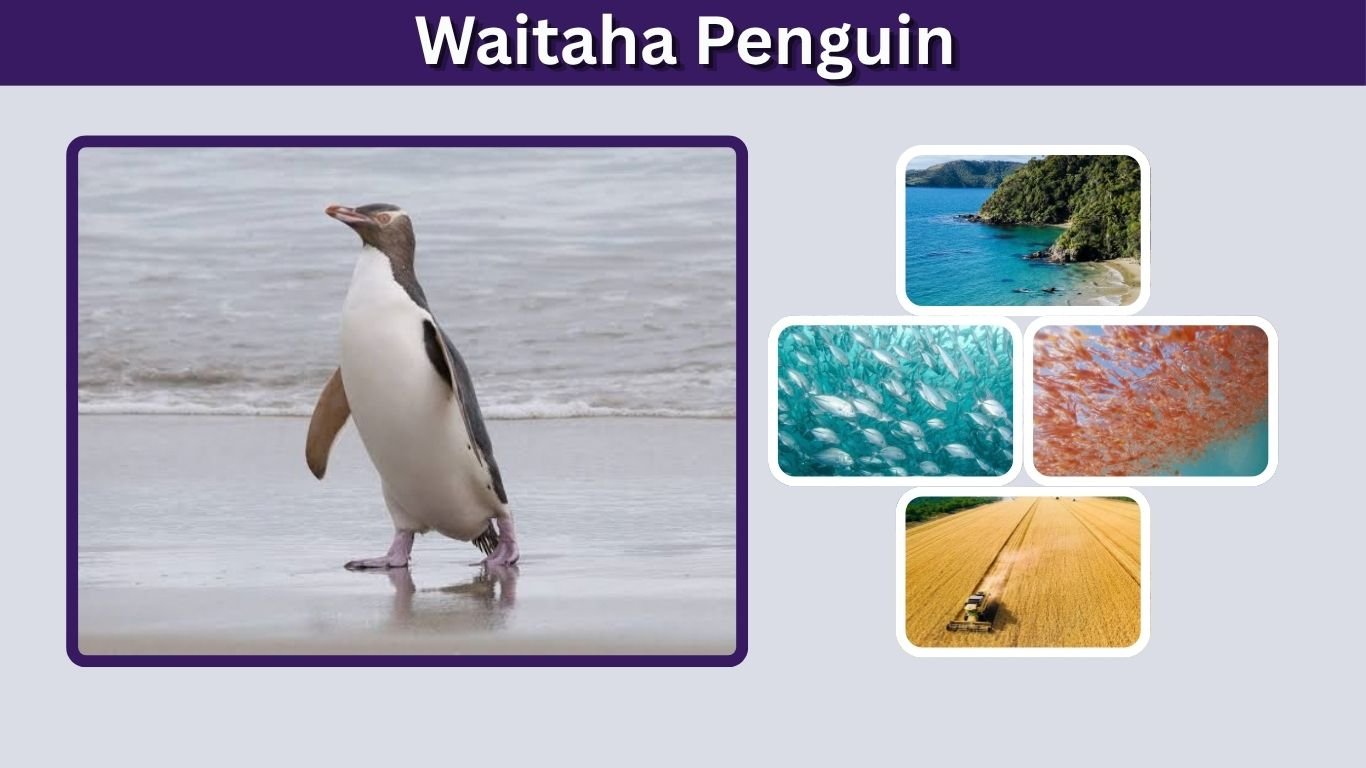
The Waitaha penguin was a fascinating flightless seabird that once inhabited the coastal regions of New Zealand. Known scientifically as Megadyptes waitaha when first described, this extinct penguin was closely related to the modern yellow-eyed penguin. Although it disappeared centuries ago, researchers only identified it in 2008 through ancient DNA analysis. Its discovery changed scientific understanding of New Zealand’s penguin history. Exploring the Waitaha penguin’s appearance, habitat, diet, extinction, and remarkable discovery reveals an important chapter in the evolution of these extraordinary seabirds.
What Was the Waitaha Penguin?
The Waitaha penguin was an extinct penguin native to New Zealand. It belonged to the same evolutionary lineage as the living yellow-eyed penguin, although scientists initially classified it as a separate species. Fossil bones and genetic evidence show that Waitaha penguins inhabited New Zealand before disappearing following human settlement. Their discovery revealed a previously unrecognized penguin lineage.
Scientific Name and Classification
The Waitaha penguin was originally described as Megadyptes waitaha in 2008.
However, subsequent research has supported classifying it as an extinct subspecies of the yellow-eyed penguin, Megadyptes antipodes waitaha.
It belongs to the family Spheniscidae, which includes all living penguins.
Key Facts About the Waitaha Penguin
- Common name: Waitaha penguin
- Original scientific name: Megadyptes waitaha
- Current subspecies classification: Megadyptes antipodes waitaha
- Family: Spheniscidae
- Native region: New Zealand
- Habitat: Coastal and marine environments
- Diet: Presumed fish and other marine prey
- Extinction: Approximately the 15th century
- Scientific discovery: Described in 2008
- Closest living relative: Yellow-eyed penguin
Waitaha Penguin Appearance, Size, and Height
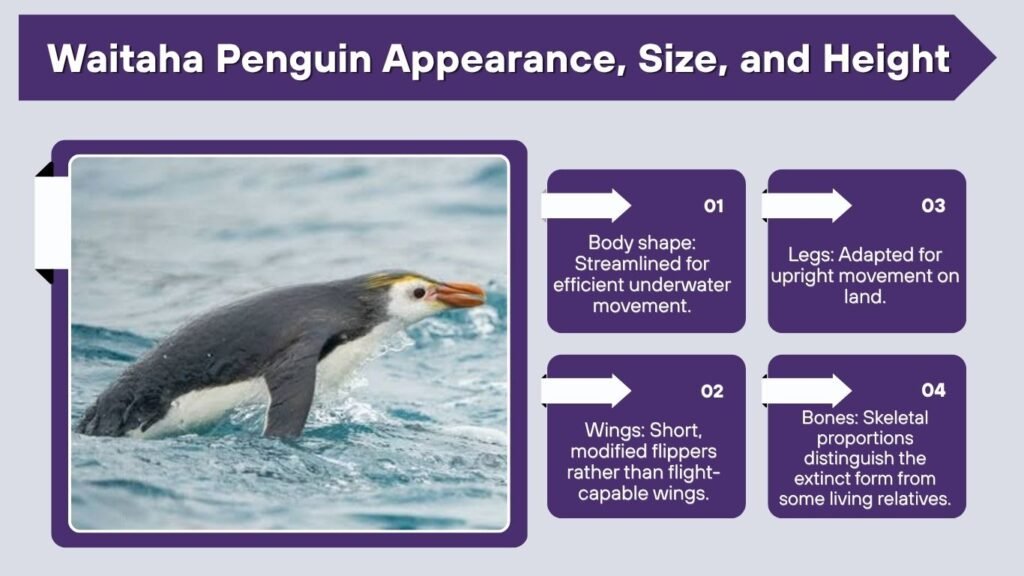
The Waitaha penguin had physical characteristics similar to those of its close relative, the yellow-eyed penguin. Scientists have studied preserved skeletal remains to understand its appearance and body proportions. However, because this bird became extinct centuries before modern scientific observations, its precise feather colors, adult height, and weight cannot be established with complete certainty from available evidence.
How Big Was the Waitaha Penguin?
Early skeletal comparisons indicated that Waitaha penguins were somewhat smaller and more slender than modern yellow-eyed penguins.
Living yellow-eyed penguins typically reach approximately 65 centimeters in length, providing a useful comparison.
However, a precise, universally accepted height or weight for the extinct Waitaha penguin has not been established.
What Did Waitaha Penguins Look Like?
The Waitaha penguin probably resembled its yellow-eyed relatives in overall body shape.
It would have possessed a streamlined body, short flippers, and webbed feet adapted for swimming.
Its exact plumage remains uncertain because researchers have primarily studied bones rather than preserved feathers or complete specimens.
Physical Identification Features
- Body shape: Streamlined for efficient underwater movement.
- Wings: Short, modified flippers rather than flight-capable wings.
- Legs: Adapted for upright movement on land.
- Bones: Skeletal proportions distinguish the extinct form from some living relatives.
- Beak: Likely adapted for catching marine prey.
- Body covering: Waterproof feathers, as expected in penguins.
Waitaha Penguin Habitat and Diet
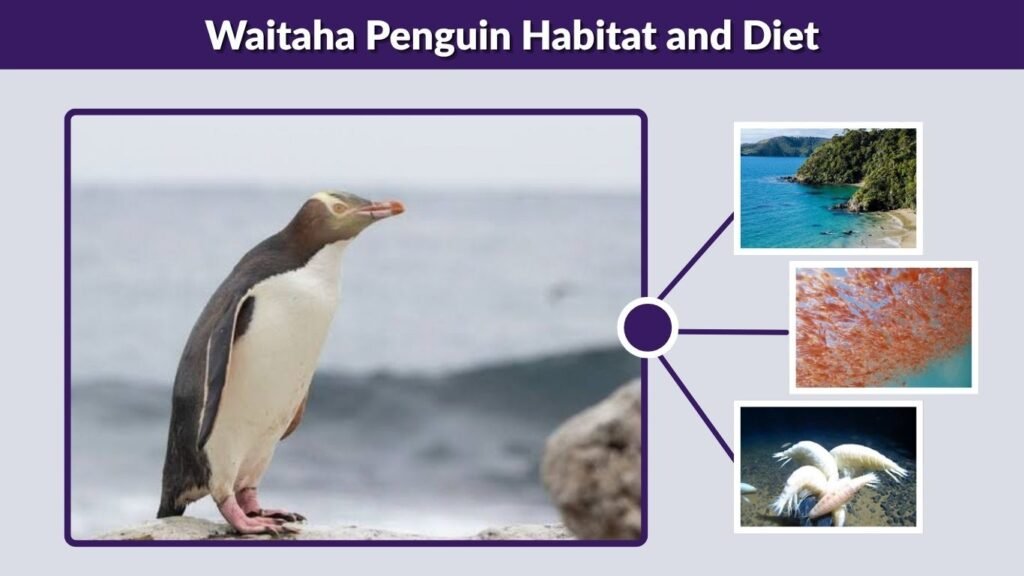
Waitaha penguins occupied coastal environments around New Zealand, relying on both land and ocean habitats for survival. Like other penguins, they would have needed accessible breeding sites and productive feeding waters. Although archaeological and fossil discoveries reveal where these birds lived, their precise feeding habits and nesting behavior remain less certain because scientists cannot observe them directly.
Where Did Waitaha Penguins Live?
Waitaha penguins were once widespread along parts of New Zealand’s coastline.
Their remains have been identified in the South Island, Rakiura/Stewart Island, and nearby islands.
Later research also provided evidence that they probably bred in parts of the lower North Island.
Coastal nesting areas would have offered access to marine feeding grounds.
What Did the Waitaha Penguin Eat?
The precise Waitaha penguin diet remains unknown because direct dietary evidence is limited.
However, their close relationship with yellow-eyed penguins suggests they probably consumed fish and potentially squid or other marine animals.
Modern yellow-eyed penguins feed extensively on fish captured during underwater dives.
Waitaha penguins likely occupied a similar ecological role, although their exact preferred prey species remain unconfirmed.
How Did Waitaha Penguins Hunt?
Like other penguins, Waitaha penguins were flightless underwater hunters.
Their flippers would have generated powerful swimming movements, while their streamlined bodies reduced water resistance.
Researchers infer that these birds pursued marine prey through diving, although their maximum swimming speeds, diving depths, and hunting strategies have not been directly established.
When and Why Did the Waitaha Penguin Go Extinct?
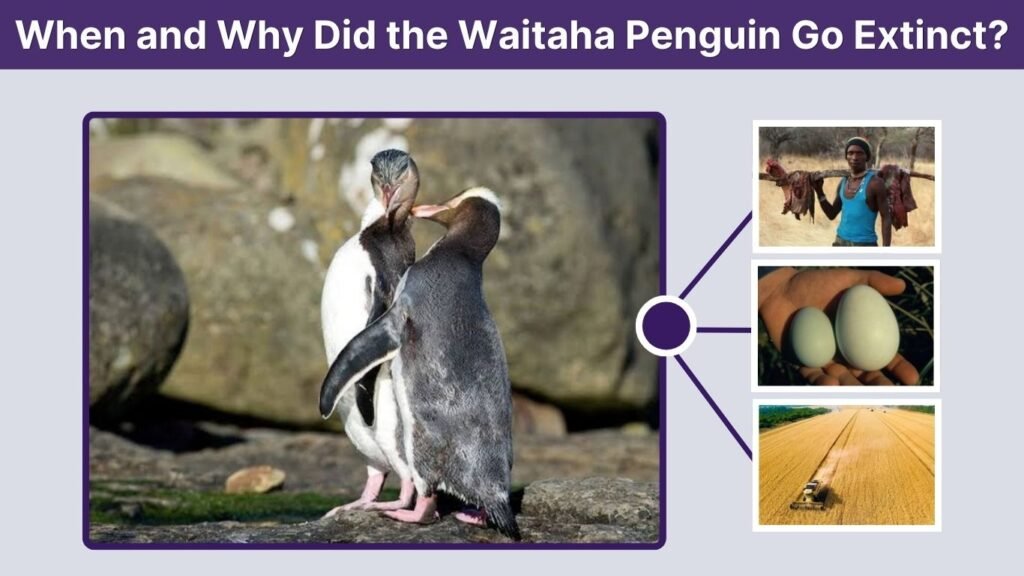
The Waitaha penguin disappeared relatively recently in geological history, making its extinction especially significant. Evidence suggests that its decline occurred shortly after Polynesian settlement in New Zealand during the late 13th century. Archaeological remains and radiocarbon dating connect its disappearance with human activity. Researchers believe hunting was an important factor in the loss of this coastal seabird.
When Did the Waitaha Penguin Become Extinct?
The Waitaha penguin probably became extinct during the 15th century, around the 1400s.
Research combining radiocarbon dating and ancient DNA suggests that its extinction occurred within approximately 200 years of human arrival.
Its disappearance was followed by the expansion of yellow-eyed penguins into mainland New Zealand habitats.
Main Causes of Waitaha Penguin Extinction
Several factors may have contributed to its disappearance:
- Human hunting: Early inhabitants harvested penguins for food.
- Egg collection: Harvesting eggs could have reduced breeding success.
- Breeding vulnerability: Penguins gathering on land were accessible to hunters.
- Population pressure: Sustained harvesting could have reduced already vulnerable populations.
- Environmental disturbance: Human settlement may have altered some coastal habitats.
Hunting is the leading explanation, while the relative contribution of other pressures remains uncertain.
What Happened After Their Extinction?
Following the disappearance of Waitaha penguins, yellow-eyed penguins expanded from their subantarctic range into mainland New Zealand.
This change transformed the region’s penguin populations within a comparatively short period.
Scientists consider it a striking example of ecological replacement following extinction.
Discovery and Comparison With Yellow-Eyed Penguins
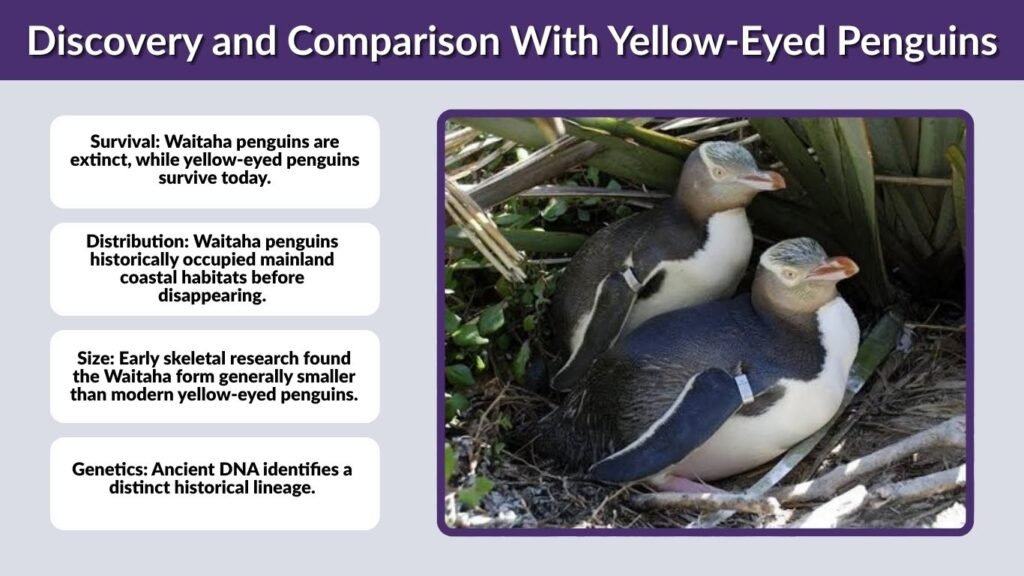
The discovery of the Waitaha penguin fundamentally changed scientific understanding of New Zealand’s natural history. Researchers had previously assumed that ancient penguin remains from mainland New Zealand belonged to yellow-eyed penguins. However, genetic analysis uncovered a distinct extinct lineage. Further research clarified its relationship with modern populations and revealed how penguin distributions changed following human settlement.
How Was the Waitaha Penguin Discovered?
In 2008, researchers studying ancient penguin bones discovered important genetic differences between prehistoric and modern specimens.
They identified a previously unrecognized lineage and described it as Megadyptes waitaha.
The findings demonstrated that mainland New Zealand had once supported a different form of penguin before modern yellow-eyed penguins became established there.
Waitaha Penguin vs Yellow-Eyed Penguin
Important similarities and differences include:
- Survival: Waitaha penguins are extinct, while yellow-eyed penguins survive today.
- Distribution: Waitaha penguins historically occupied mainland coastal habitats before disappearing.
- Size: Early skeletal research found the Waitaha form generally smaller than modern yellow-eyed penguins.
- Genetics: Ancient DNA identifies a distinct historical lineage.
- Classification: Recent taxonomy recognizes the Waitaha form as an extinct yellow-eyed penguin subspecies.
- Ecological history: Modern yellow-eyed penguins expanded into areas once inhabited by Waitaha penguins.
Why Is the Discovery Important?
The Waitaha penguin demonstrates how extinct animals can remain scientifically unidentified for centuries.
Its discovery also shows that modern wildlife distributions do not always represent ancient ecological conditions.
By combining fossil evidence with genetic research, scientists can reconstruct changes in biodiversity and better understand the consequences of human-caused extinction.
Frequently Asked Questions About Waitaha Penguins
The Waitaha penguin remains an intriguing subject because scientists identified it long after its extinction. Researchers continue examining its evolutionary relationships, historical distribution, and environmental significance. Although some characteristics remain uncertain, ancient DNA and fossil discoveries provide valuable information about its history. The following questions address common topics concerning this extinct New Zealand penguin.
1. Is the Waitaha Penguin Extinct?
Yes, the Waitaha penguin is extinct. Scientific evidence suggests it disappeared during the 15th century, probably because of hunting following human settlement in New Zealand.
2. How Tall Was the Waitaha Penguin?
Its exact height is uncertain. Skeletal evidence suggests it was broadly comparable to the yellow-eyed penguin, although the Waitaha form was generally smaller in early comparisons.
3. What Did the Waitaha Penguin Eat?
Its exact diet is unknown. Scientists believe it probably consumed fish and possibly other marine animals, based on its relationship with living penguins.
4. Where Did the Waitaha Penguin Live?
Waitaha penguins inhabited coastal New Zealand, including the South Island, Stewart Island, and likely parts of the lower North Island.
5. Is the Waitaha Penguin a Real Penguin Species?
Yes, the Waitaha penguin was a real extinct penguin lineage. Originally described as the separate species Megadyptes waitaha, it is now often classified as the extinct subspecies Megadyptes antipodes waitaha.