
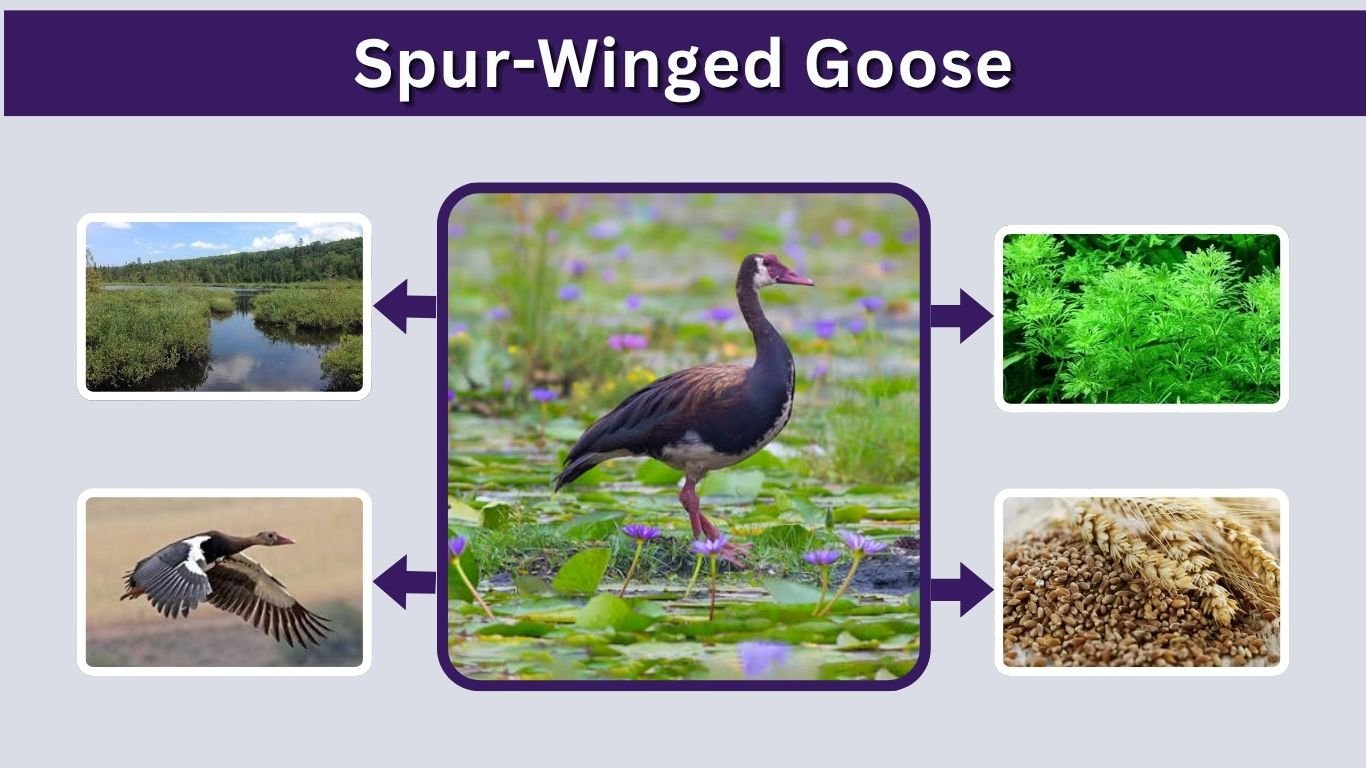
The spur-winged goose (Plectropterus gambensis) is one of Africa’s largest and most remarkable waterbirds. Known for its powerful flight, sharp wing spurs, and distinctive black-and-white plumage, this goose inhabits wetlands throughout sub-Saharan Africa. It is also unusual because some individuals can accumulate toxins from insects they consume. Understanding the spur-winged goose’s size, habitat, diet, speed, and behavior reveals why this impressive species stands apart from other geese.
What Is a Spur-Winged Goose?
The spur-winged goose is a large African waterbird belonging to the family Anatidae, which includes ducks, geese, and swans. Despite its familiar name, it differs considerably from typical northern geese in appearance, behavior, and evolutionary relationships.
Its scientific name is Plectropterus gambensis. The species occurs in two generally recognized subspecies: the northern P. g. gambensis and the more southerly P. g. niger.
Unlike many other geese, this species possesses sharp spurs at the bends of its wings. These structures can be used during aggressive encounters, particularly when defending territories.
Spur-Winged Goose Appearance and Identification
The spur-winged goose has a striking appearance that makes it relatively easy to recognize. Its combination of glossy dark feathers, white markings, and reddish facial features distinguishes it from most other African waterbirds.
Physical Characteristics
- Plumage: Predominantly black, often displaying metallic green or violet reflections.
- Face: Bare reddish skin around parts of the face, especially prominent in adult males.
- Bill: Pinkish-red to reddish, with a noticeable facial knob in mature males.
- Legs: Long, strong, and reddish-pink.
- Wings: Dark flight feathers with conspicuous white patches, especially visible during flight.
- Body: Large, heavy, and muscular, with a relatively long neck.
Females are generally smaller than males and usually have less prominent facial ornamentation. Young birds often display duller, browner plumage.
Spur-Winged Goose Size and Weight
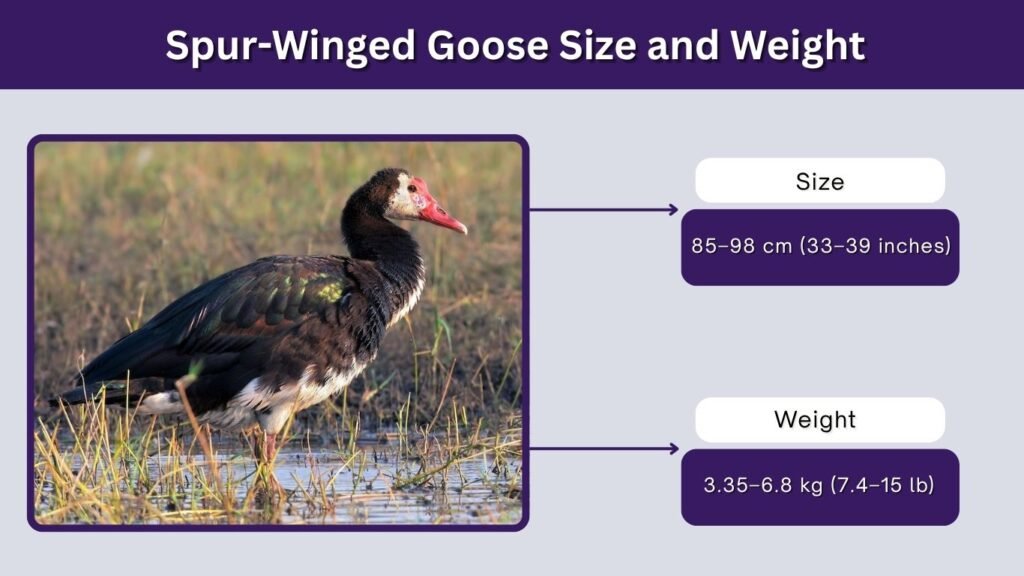
The spur-winged goose ranks among the largest goose-like waterbirds in the world. Its impressive body size helps distinguish it from smaller species sharing the same wetlands.
Typical physical measurements
| Measurement | Approximate size |
| Body length | 85–98 cm (33–39 inches) |
| Body weight | 3.35–6.8 kg (7.4–15 lb) |
| Wingspan | Broad, powerful wings approaching 2 m in large individuals |
| Sexual differences | Males considerably larger than females |
Measurements vary according to sex, subspecies, and individual condition. Some particularly large males exceed typical weight ranges.
Its size, powerful chest muscles, and long wings contribute to its ability to cover substantial distances in flight.
Where Do Spur-Winged Geese Live?
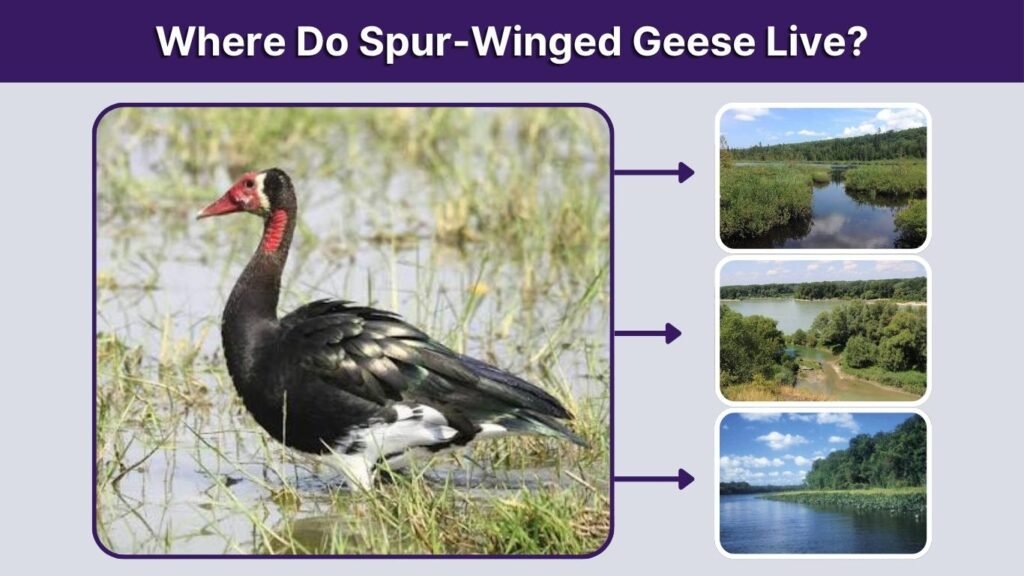
Spur-winged geese inhabit much of sub-Saharan Africa, particularly regions containing freshwater wetlands, open grasslands, and agricultural land.
Their distribution includes South Africa, Botswana, Zambia, Zimbabwe, Uganda, Tanzania, Kenya, Nigeria, and numerous other African countries.
Preferred Habitat
These birds occupy several different freshwater environments:
- Lakes, rivers, and freshwater marshes
- Floodplains and seasonal wetlands
- Reservoirs and artificial dams
- Wet grasslands and agricultural fields
They generally prefer open landscapes with accessible water and nearby feeding grounds. Their movements frequently depend on rainfall, available food, and seasonal flooding.
The species is not a typical long-distance migrant, although populations may move considerable distances between suitable wetlands.
What Do Spur-Winged Geese Eat?
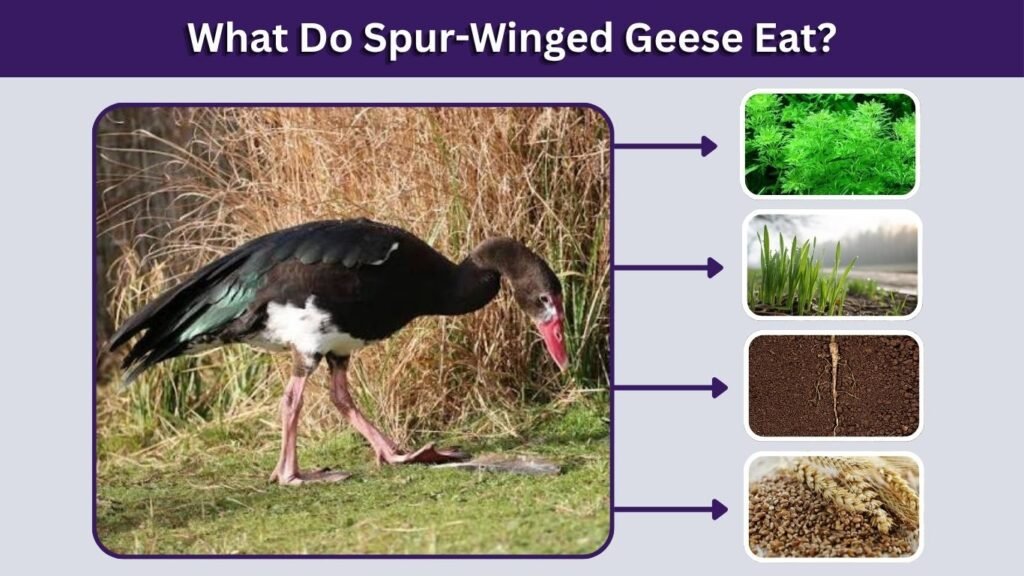
The spur-winged goose primarily consumes vegetation, although it occasionally eats insects and other small invertebrates. Its feeding habits depend heavily on local environmental conditions.
Natural Diet
Its common food sources include:
- Aquatic plant leaves and stems
- Grasses and young shoots
- Plant roots and underground stems
- Seeds and grains
- Agricultural crops
- Occasional insects, including beetles and termites
Spur-winged geese frequently feed in cultivated fields, where grains and other crops provide abundant food.
Their feeding activity can sometimes cause agricultural damage, creating conflicts with farmers.
Although most of their diet consists of plants, occasional insect consumption is particularly important in understanding why some individuals may accumulate toxins.
Why Do Spur-Winged Geese Have Spurs?
The most distinctive characteristic of the spur-winged goose is the sharp spur located near the bend of each wing.
These hardened, pointed structures function as defensive weapons and can be used during physical confrontations.
How the Spurs Are Used
Spur-winged geese may use their wing spurs when defending nesting areas, confronting rival birds, or responding to threats.
During an aggressive encounter, a goose can strike with its wings, potentially causing injuries with the pointed spurs.
Although these birds are generally not aggressive toward people without provocation, they should be observed from a respectful distance, especially during breeding.
How Fast Can a Spur-Winged Goose Fly?
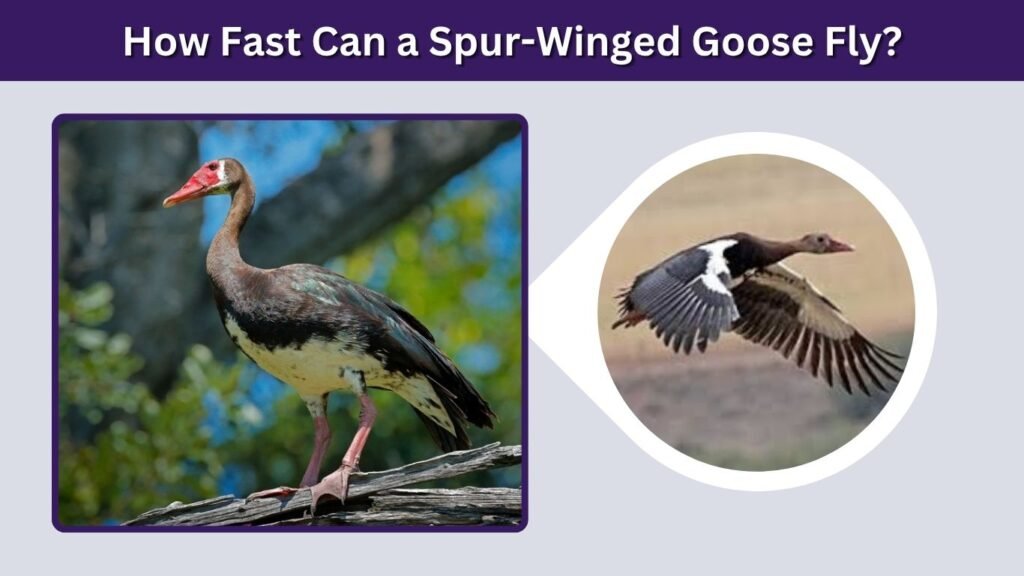
The spur-winged goose is considered one of the fastest-flying waterfowl species.
Reported maximum flight speed
Recognized by Guinness World Records as the fastest-flying goose species.
Its broad wings and powerful flight muscles contribute to its impressive flying ability.
However, this maximum speed should not be confused with its normal cruising speed. Everyday flight is generally slower, and reliable measurements of typical flight or running speeds are limited.
Is the Spur-Winged Goose Poisonous?
Yes, spur-winged geese are unusual among birds because they can acquire a toxic compound called cantharidin from blister beetles consumed as food.
Unlike venomous animals, these geese do not inject poison through their bites or wing spurs.
Instead, toxicity is associated with the accumulation of chemical compounds obtained from their diet.
How Does the Poison Work?
Cantharidin is a naturally occurring toxin produced by certain blister beetles. It can cause severe irritation, blistering, and damage to internal tissues.
Scientific literature identifies the spur-winged goose as a bird capable of acquiring these toxins through its food. However, toxicity can vary with exposure, and not every individual should be assumed equally toxic.
Research reviews also note that recent medical literature has not documented confirmed human poisoning cases specifically from eating this species, despite longstanding toxicity warnings.
Because of the potential risk, its meat should not be considered reliably safe for consumption.
Spur-Winged Goose Calls and Sounds
Compared with many familiar domestic and wild geese, spur-winged geese are relatively quiet.
Their vocalizations include soft whistles, squeaky notes, and repeated calls produced during flight or social interactions.
Males may produce a high-pitched call when taking off, while either sex can vocalize when disturbed.
These sounds help birds maintain contact and communicate during movement or territorial encounters.
Spur-Winged Goose Breeding and Lifespan
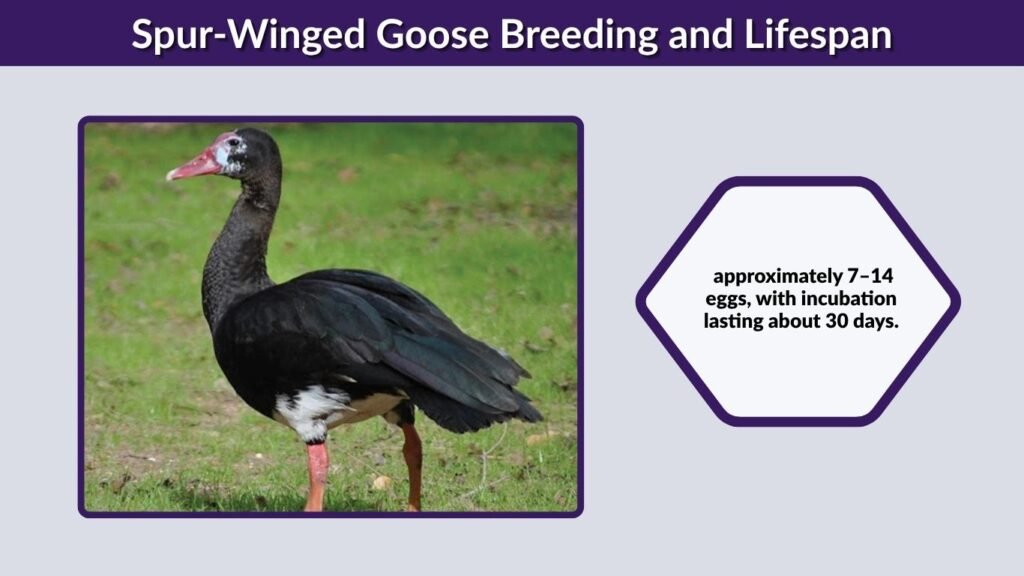
Breeding usually corresponds with local seasonal conditions, particularly periods when water and vegetation are available.
Females typically select sheltered nesting locations near wetlands. Nests may be constructed on the ground among vegetation, although elevated nesting locations are also recorded.
A clutch commonly contains approximately 7–14 eggs, with incubation lasting about 30 days.
Females perform incubation and much of the early care of young birds. Newly hatched goslings can move around and begin feeding soon after hatching.
How Long Do Spur-Winged Geese Live?
Their exact average lifespan in the wild remains uncertain.
BirdLife South Africa reports a banded individual recorded at least 7 years and 9 months after being marked as an immature bird. This is an observed longevity record, not necessarily the biological maximum lifespan of the species.
Survival depends on habitat conditions, disease, food availability, and exposure to predators.
Spur-Winged Goose Predators and Conservation
Adult spur-winged geese are large and capable of defending themselves, but they are not completely protected from predators.
Young birds and eggs are particularly vulnerable. Potential threats include large birds of prey, predatory mammals, and reptiles living near wetland habitats.
Human activities also affect the species. Hunting, power-line collisions, disturbance, and changes to wetlands can create localized conservation concerns.
Nevertheless, the spur-winged goose is currently classified as Least Concern. Protecting freshwater habitats and maintaining sustainable wildlife-management practices remain important for its long-term conservation.
FAQs
1. Is the spur-winged goose dangerous to humans?
Spur-winged geese can defend themselves using sharp wing spurs, particularly when threatened or nesting. However, they generally avoid unnecessary confrontations. Their potential dietary toxicity is a separate concern from physical aggression.
2. What is the top speed of a spur-winged goose?
The species has a reported maximum flight speed of approximately 142 km/h (88 mph), making it one of the fastest waterfowl. This represents a maximum rather than its normal travel speed.
3. Are spur-winged geese found in South Africa?
Yes. Spur-winged geese occur throughout suitable South African wetlands, reservoirs, grasslands, and agricultural areas. They are particularly associated with freshwater habitats and nearby feeding grounds.
4. What makes a spur-winged goose poisonous?
Some individuals consume blister beetles containing cantharidin. This toxic compound can accumulate in the bird’s tissues, creating a potential poisoning risk if contaminated meat is consumed.
5. Can spur-winged geese fly long distances?
Yes. These powerful flyers can travel between wetlands and feeding locations. Their movements are influenced by rainfall, food availability, and changing water levels rather than a single predictable annual migration route.