
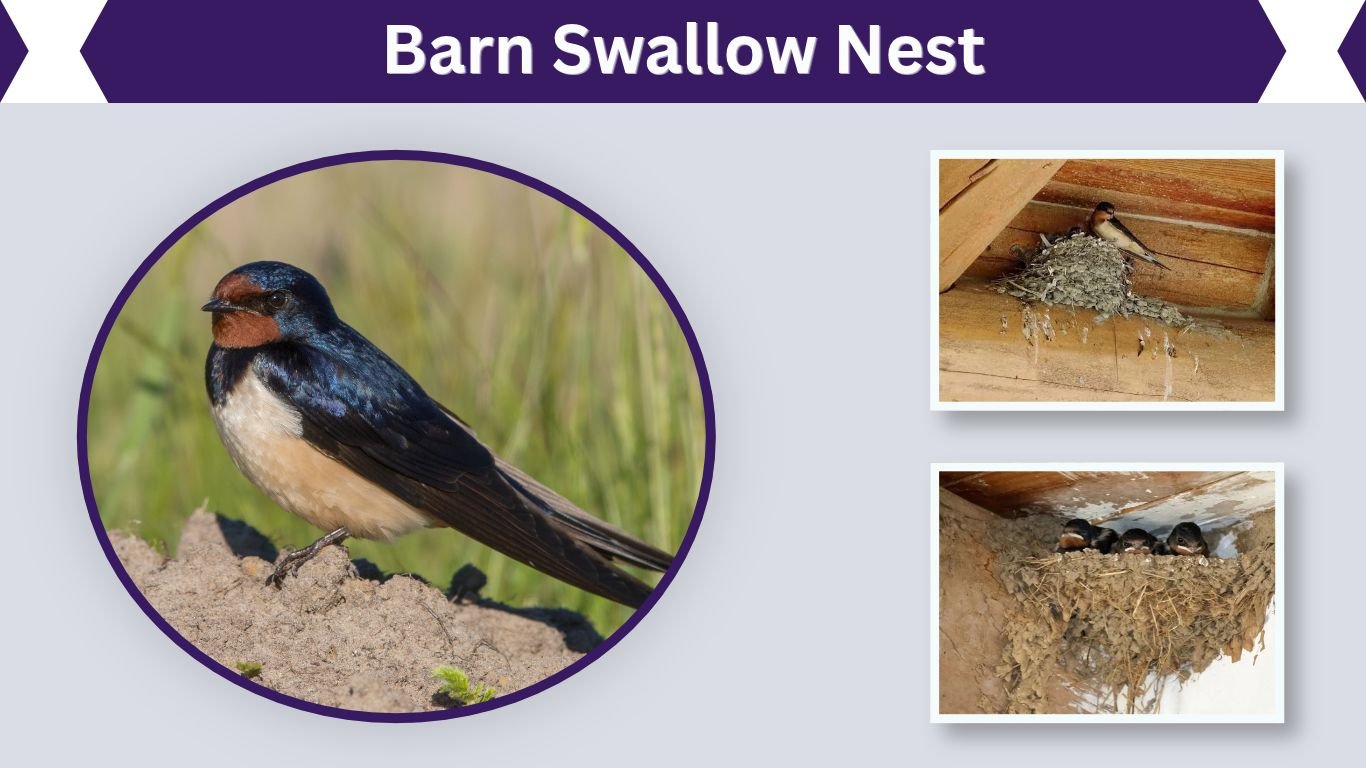
The barn swallow nest is a remarkable mud-built structure commonly found beneath roofs, bridges, barns, and house eaves. These small birds construct cup-shaped nests using mud, grass, and feathers to protect their eggs and growing chicks. Barn swallows often return to familiar nesting sites each year, making them regular visitors around homes and farms. Understanding barn swallow nesting habits, nest construction, breeding seasons, and safe removal methods can help homeowners manage nesting activity while protecting these beneficial insect-eating birds.
What Does a Barn Swallow Nest Look Like?
A barn swallow nest is a small, open, cup-shaped structure made from dried mud and plant fibers. Its rough, brownish-gray exterior often resembles layers of hardened clay. The nest is usually attached to a protected vertical or horizontal surface.
Barn Swallow Mud Nest Identification
A typical barn swallow mud nest measures approximately three inches across at the opening and two inches deep. Nests attached to walls often appear semicircular, while those resting on beams form complete cups.
The inside is lined with soft grass and feathers, creating a comfortable space for eggs and developing chicks.
Barn Swallow vs. Cliff Swallow Nest
Barn swallow nests have open tops, allowing adults to enter from above. Cliff swallows construct enclosed mud nests, often shaped like gourds, with small entrance openings.
This difference is especially useful when identifying swallow nests around buildings and bridges.
Where Do Barn Swallows Build Their Nests?
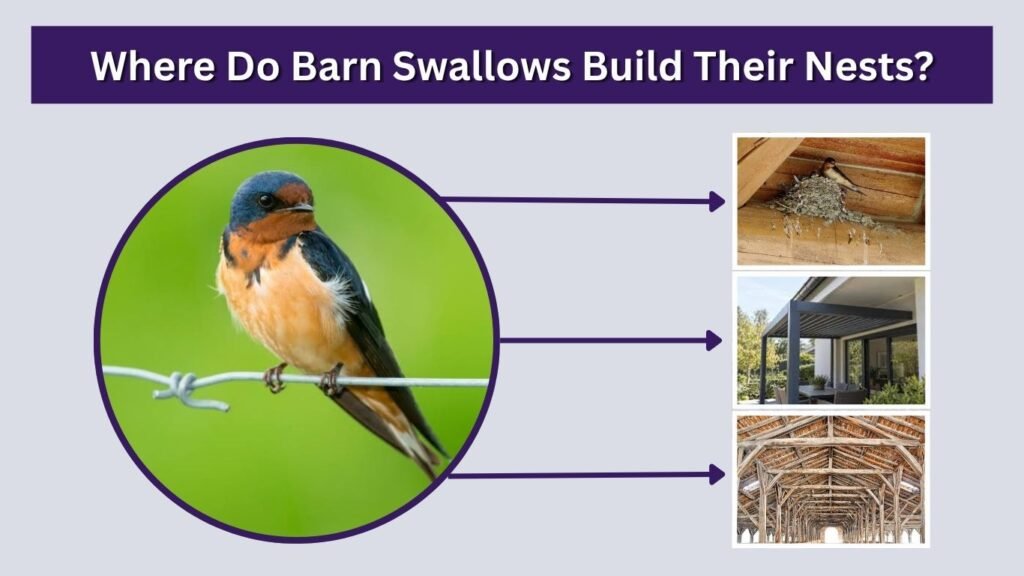
Barn swallows prefer sheltered locations near open fields, ponds, and grasslands where flying insects are abundant. Human-made structures provide stable surfaces and protection from direct rainfall.
Common Barn Swallow Nesting Locations
- Barns: Wooden rafters, ceiling beams, and sheltered walls.
- Houses: Beneath roof overhangs and exterior eaves.
- Porches: Protected corners and horizontal supports.
- Bridges: Underneath concrete or wooden structures.
- Garages: Open garages and covered storage areas.
- Sheds: Sheltered beams and supporting frames.
Barn Swallow Nest on a House
A barn swallow nest on a house is particularly common beneath porches and roof overhangs. These locations offer shelter from rain and support for the mud construction.
Although the birds are beneficial insect hunters, droppings beneath active nests can create cleaning problems for homeowners.
How Do Barn Swallows Build Their Nests?
Barn swallow nest building requires repeated trips to muddy locations. Both males and females participate in construction, carrying small mud pellets in their beaks and attaching them to a suitable surface.
Barn Swallow Nest Materials
- Wet mud or soft clay collected near puddles.
- Grass stems for strengthening the structure.
- Dry plant fibers mixed with mud.
- Soft feathers for interior lining.
- Fine grass for creating a comfortable nesting surface.
Barn Swallow Nest Building Process
The birds begin by attaching mud pellets to a wall or beam, gradually forming a small supporting shelf. They then build the sides upward until the structure resembles an open cup.
Construction may require hundreds of mud pellets and numerous trips between the nesting location and mud source.
The process often takes several days or longer, depending on weather conditions and material availability.
When Is Barn Swallow Nesting Season?
Barn swallow nesting season generally begins during spring and continues through summer in North America. The exact timing depends on geographic location, temperature, and food availability.
Southern populations may begin breeding earlier than birds living in northern regions.
Barn Swallow Nest and Eggs
A female barn swallow typically lays three to seven eggs, with four or five being common.
The eggs are creamy white or pinkish-white with brown, lavender, and gray speckles.
Incubation generally lasts 12–17 days. Both parents help care for the developing chicks, although females usually perform most of the incubation.
How Long Do Barn Swallows Stay in the Nest?
Baby barn swallows typically remain in their nests for approximately 15–27 days after hatching.
During this period, both parents repeatedly deliver flying insects to their young. As the nestlings grow, their feathers develop and their wings become stronger.
After leaving the nest, fledglings may continue receiving parental care while learning to hunt independently.
Do Barn Swallows Reuse Their Nests?
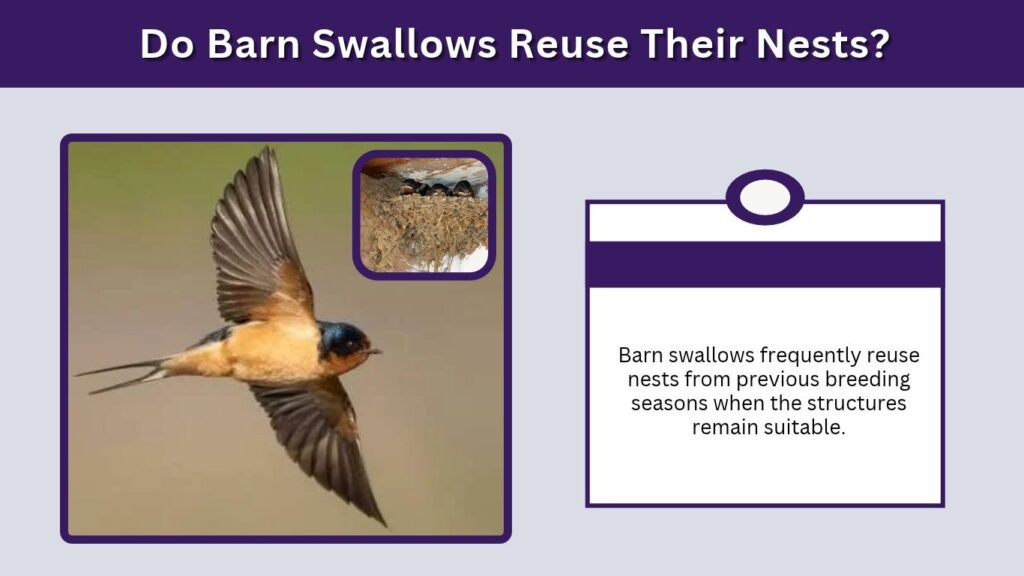
Barn swallows frequently reuse nests from previous breeding seasons when the structures remain suitable. Returning birds may remove old nesting materials, repair damaged sections, and strengthen the rims with fresh mud.
Do Barn Swallows Return to the Same Nest Every Year?
Many barn swallows show strong loyalty to successful nesting locations. Some return to the same structure after completing their long-distance migration.
However, they may abandon damaged nests or those heavily infested with mites and other parasites.
A single nesting site can therefore remain attractive to successive generations of swallows.
Barn Swallow Nest Boxes, Cups, and Shelves
Barn swallows do not normally nest inside traditional enclosed birdhouses. Instead, they prefer open nesting structures that resemble their natural mud cups.
Artificial barn swallow nest cups and shelves can provide useful alternatives where suitable nesting surfaces are limited.
Artificial Barn Swallow Nest Cups
Artificial nest cups can be attached beneath sheltered roof overhangs or inside open buildings.
An appropriately designed cup provides a secure base while allowing adult birds to enter freely from above.
Placing artificial nests near open feeding areas and available mud sources can improve their attractiveness.
Barn Swallow Nesting Shelf
A nesting shelf creates a small horizontal platform where barn swallows can construct their mud nests.
For example, a sheltered wooden platform approximately 3–5 inches wide and 6–8 inches long can provide suitable support.
Mounting shelves around 7–12 feet above ground, away from busy entrances and potential predators, is generally recommended.
How to Prevent Barn Swallows From Building Nests
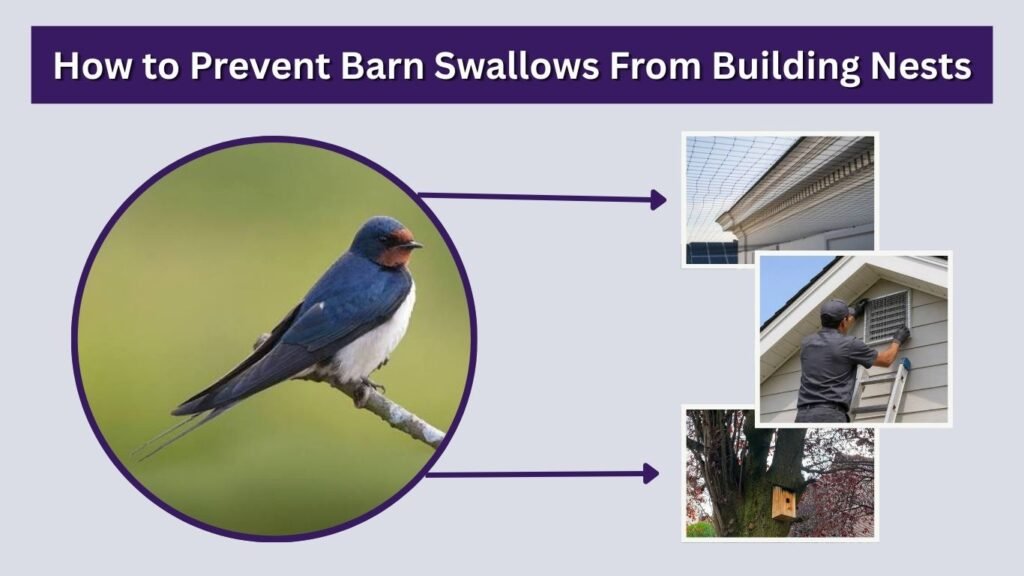
Although barn swallows are beneficial birds, homeowners sometimes need to discourage nesting around doorways, porches, or other inconvenient locations.
Prevention is most effective before nesting begins and must avoid harming birds or disturbing active nests.
Safe Barn Swallow Nest Prevention Methods
- Install physical barriers: Use properly secured screening or netting before birds begin nesting.
- Modify nesting surfaces: Cover attractive ledges or corners with suitable exclusion materials.
- Offer alternative locations: Install artificial nesting cups away from frequently used entrances.
- Address old nesting sites: After confirming nests are inactive, check applicable laws before removing them.
- Avoid harmful deterrents: Do not use sticky substances, toxic chemicals, or methods that could entangle birds.
How to Keep Barn Swallows From Nesting on Your Porch
Homeowners can discourage nesting by blocking access to favored surfaces before breeding activity begins.
Properly installed physical barriers are generally more reliable than visual scare devices or chemical repellents.
Never trap birds inside screened areas or install materials that could entangle adults or chicks.
Barn Swallow Nest Removal: Is It Legal?
In the United States, barn swallows are protected under the Migratory Bird Treaty Act. Removing or destroying an active nest containing eggs or dependent chicks without appropriate authorization is prohibited.
Can You Remove an Empty Barn Swallow Nest?
Under federal law, an inactive barn swallow nest can generally be destroyed without a federal permit, provided no birds or eggs are harmed and the nest is not collected or possessed.
However, state and local regulations may impose additional restrictions.
If a nest contains eggs or chicks, wait until breeding has finished or consult the U.S. Fish and Wildlife Service and your state wildlife agency about any genuine safety concerns.
FAQs
1. How Long Does It Take Barn Swallows to Build a Nest?
Barn swallows generally require several days or longer to complete a mud nest. Construction time depends on weather, mud availability, and the condition of the nesting surface. Repairing an existing nest is often faster than building a completely new structure.
2. When Do Barn Swallows Leave Their Nest?
Young barn swallows usually leave their nest approximately 15–27 days after hatching. Their first flights are often short, and parents may continue feeding them afterward. Nesting locations should remain undisturbed until the young are fully independent.
3. Are Barn Swallow Nests Protected?
Yes. Barn swallow nests receive protection under U.S. federal migratory bird regulations when eggs or dependent young are present. Additional state protections may apply. Homeowners should confirm that a nest is inactive and check local rules before considering removal.
4. Can Barn Swallows Use Artificial Nest Cups?
Yes. Barn swallows may accept artificial nesting cups attached to sheltered walls or beams. Successful placement requires suitable height, protection from predators, and nearby feeding habitat. Installing the cups before breeding season gives birds time to discover them.
5. Do Barn Swallows Nest in the Same Place Every Year?
Barn swallows often return to familiar nesting areas during successive breeding seasons. Some reuse old mud nests, while others construct new cups nearby. Their decision depends on nest condition, parasite levels, shelter, and the availability of suitable nesting surfaces.