
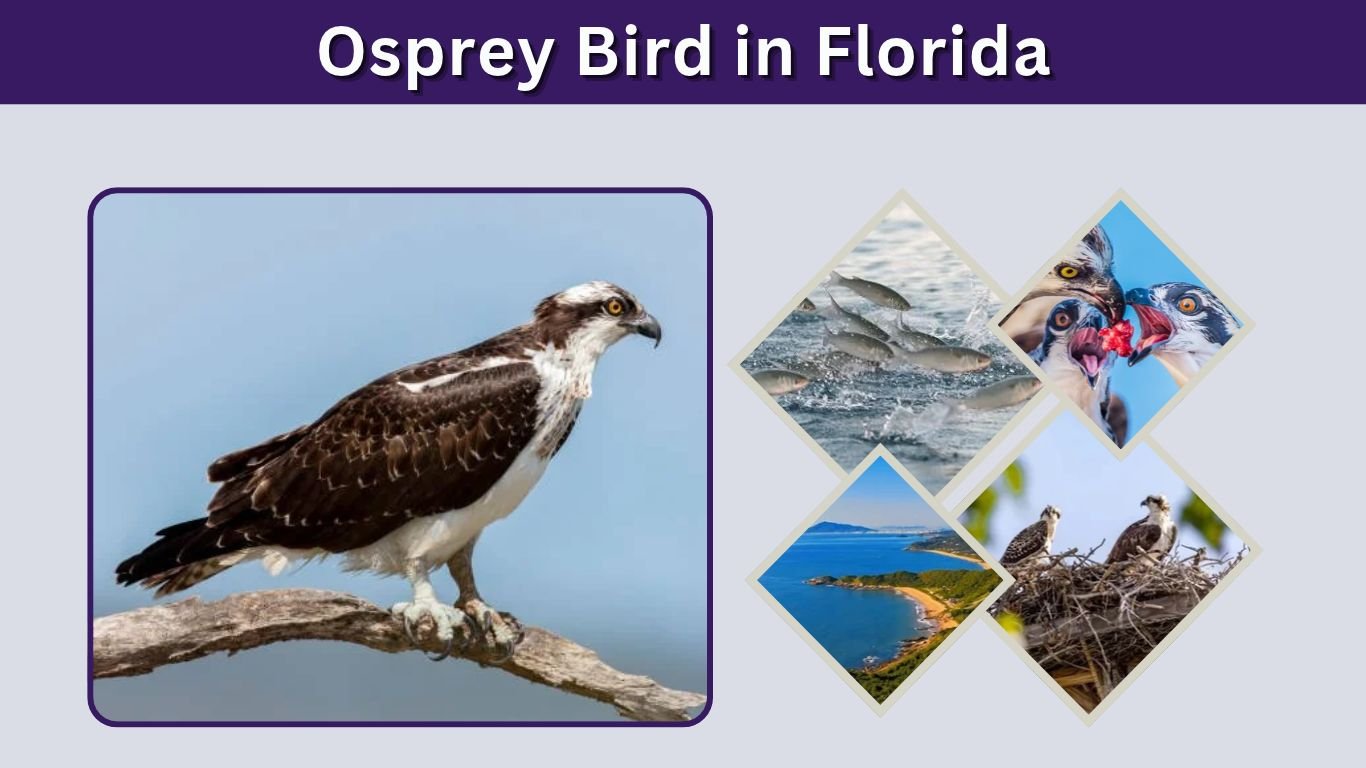
The osprey (Pandion haliaetus), often called the fish hawk, is one of Florida’s most recognizable birds of prey. It can be seen soaring above coastal waters, lakes, rivers, and marshes before diving feet-first to catch fish. Florida supports a large osprey population, including birds that remain year-round and migrants that pass through seasonally. Its distinctive brown-and-white plumage, long wings, and large stick nests make it easier to identify. Learning where ospreys live, what they eat, and when they nest helps explain their importance in Florida’s ecosystems.
What Does an Osprey Bird in Florida Look Like?
The Florida osprey is a large, fish-eating raptor with a distinctive appearance. Its white head, dark eye stripe, brown upperparts, and long, angled wings make it relatively easy to recognize. Although it can sometimes be confused with a bald eagle, several physical features help distinguish the two birds.
Physical Characteristics of Florida Ospreys
Adult ospreys have several recognizable physical characteristics:
- Body length: Approximately 21–23 inches.
- Wingspan: Approximately 5–6 feet.
- Weight: Around 3–4.5 pounds.
- Head: Mostly white with a distinctive dark brown stripe through each eye.
- Upper body: Dark brown feathers covering the back and upper wings.
- Underparts: Mostly white, sometimes with brown markings across the chest.
- Feet: Strong, curved talons with rough, spiny pads for gripping slippery fish.
- Wings: Long, narrow wings with a noticeable bend during flight.
Female ospreys are generally slightly larger than males and often have more noticeable brown streaking across their upper chest.
How to Identify an Osprey Among Florida Birds of Prey
Ospreys are sometimes mistaken for bald eagles because both species have white heads and brown bodies. However, ospreys are smaller and have a distinctive dark stripe extending through their eyes.
Their hunting behavior is another useful identification feature. Ospreys frequently hover above water before diving feet-first to capture fish. Bald eagles, in comparison, have broader wings and a heavier body.
Where Can You Find Osprey Birds in Florida?
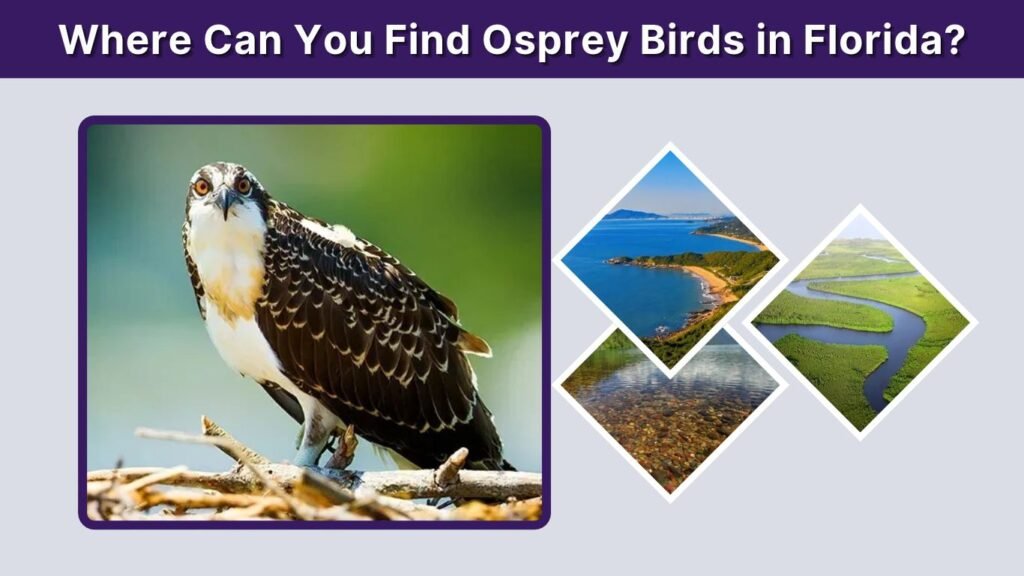
Florida provides excellent habitat for ospreys because of its extensive coastline, freshwater lakes, rivers, wetlands, and abundant fish populations. These birds are widely distributed throughout the state and can be found in both natural and developed environments. They are especially common near shallow waters where fish are accessible.
Common Osprey Habitats in Florida
You can find ospreys in several types of Florida habitats:
- Coastal areas: Bays, beaches, estuaries, and saltwater marshes provide access to fish.
- Freshwater lakes: Large lakes offer important feeding and nesting opportunities.
- Rivers: Ospreys hunt along riverbanks where fish frequently gather.
- Wetlands: Marshes and swamps provide suitable feeding environments.
- Reservoirs: Artificial lakes and water storage areas can support resident osprey populations.
- Urban waterways: Canals, fishing ponds, and waterfront neighborhoods attract ospreys when food and nesting sites are available.
Ospreys in South Florida
South Florida provides important habitat for both resident and migratory ospreys. Areas around the Florida Keys, Florida Bay, the Everglades, and coastal waterways support birds throughout much of the year.
Some southern Florida ospreys remain in the same general region rather than migrating long distances. Others travel to different parts of the Americas depending on their breeding location and seasonal conditions.
Are Ospreys Found Throughout Florida?
Yes. Ospreys occur in all Florida counties, although their abundance varies depending on local habitat and food availability.
You may see them around Lake Okeechobee, the Gulf Coast, the Atlantic coastline, the Florida Keys, and inland freshwater systems. They also frequently use artificial nesting platforms and utility structures near water.
What Do Ospreys Eat in Florida?
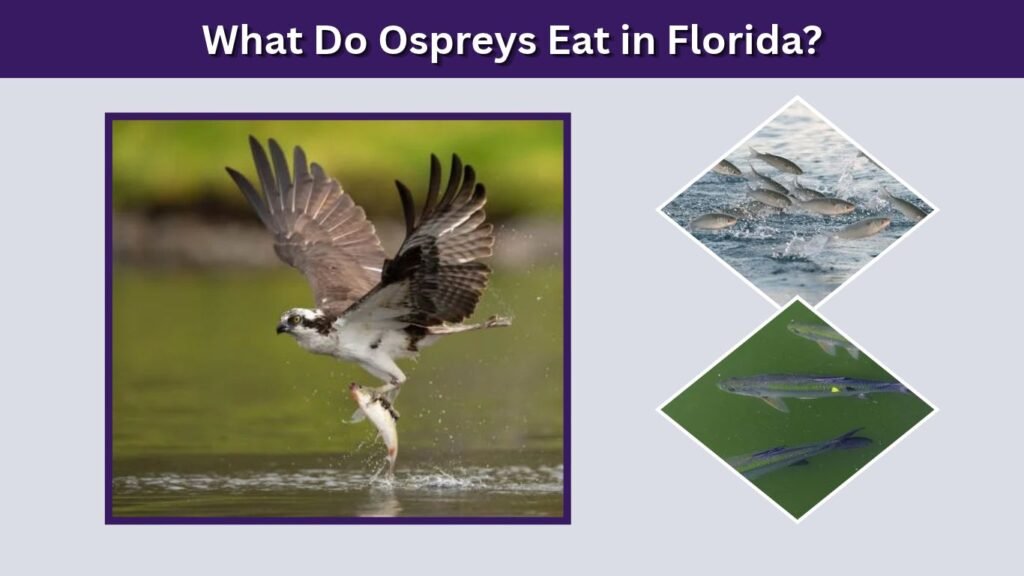
Ospreys are specialized fish-eating predators. Unlike many other Florida birds of prey, they depend almost entirely on fish for food. Their strong talons, rough foot pads, and excellent eyesight help them locate and capture fish in both freshwater and saltwater environments.
Common Fish in Their Diet
Florida ospreys consume different types of fish depending on their habitat and seasonal availability.
Some common prey include:
- Mullet: An important food source in Florida’s coastal waters and estuaries.
- Catfish: Found in freshwater and saltwater environments.
- Spotted seatrout: A common coastal fish that ospreys may capture.
- Shad: A fish frequently found in freshwater systems.
- Crappie: An available prey species in Florida lakes.
- Sunfish: Common freshwater fish that provide accessible meals.
Ospreys usually select fish that they can capture and carry away efficiently. Although fish make up nearly all their diet, they occasionally take other small animals.
How Do Florida Ospreys Catch Fish?
Ospreys have a specialized hunting technique. They fly above the water while searching for fish near the surface. Once they identify a suitable target, they dive feet-first into the water and extend their talons to grab it.
Their rough foot pads and curved claws help them maintain a secure grip on slippery prey. They can also rotate one of their outer toes backward, allowing them to hold fish with two toes facing forward and two facing backward.
After capturing a fish, an osprey usually rises from the water and carries its meal to a nearby tree, platform, or nest. It often positions the fish head-first to reduce wind resistance while flying.
When Do Ospreys Nest in Florida?
Florida’s mild climate allows ospreys to begin nesting earlier than populations in many northern regions. Their breeding season varies by location, with some southern Florida pairs beginning nesting in December and northern Florida birds generally starting later. They often return to familiar nesting areas and reuse large nests for multiple breeding seasons.
Osprey Nesting Season and Reproduction
Important details about osprey reproduction in Florida include:
- Breeding season: Generally December through May, depending on location.
- Nest location: Tall trees, utility poles, channel markers, and artificial platforms.
- Egg production: Typically 2–3 eggs per breeding attempt.
- Incubation period: Approximately 35–43 days.
- Fledging period: Young birds generally leave the nest around 7–8 weeks after hatching.
- Nest reuse: Breeding pairs frequently return to the same nesting site and add new material.
Female ospreys generally handle most incubation duties, while males provide much of the food during this period.
Where Do Ospreys Build Their Nests?
Ospreys build large nests made primarily from sticks and branches. They prefer elevated locations with an open view of nearby water and surrounding areas.
In Florida, their nests can be found on dead trees, tall living trees, utility poles, navigation markers, cell towers, and specially constructed nesting platforms.
Some nests become extremely large because the birds continue adding sticks and other materials year after year. These structures can become recognizable landmarks in coastal communities and waterfront neighborhoods.
Osprey Behavior and Conservation in Florida
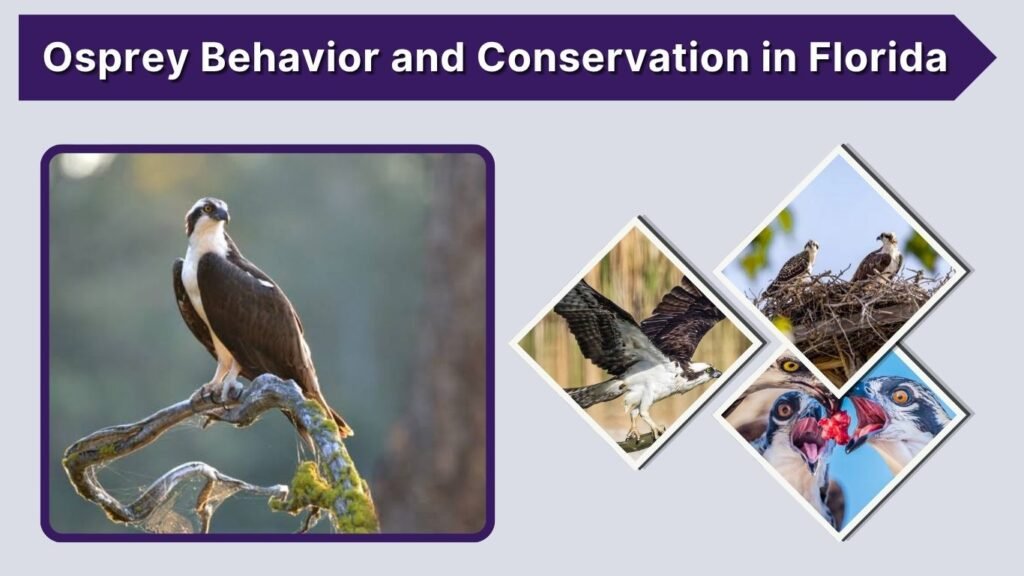
Ospreys are generally active during daylight hours, spending much of their time hunting, resting, and maintaining their nests. They often soar above water using warm air currents before beginning a fishing dive. Their loud, high-pitched calls are especially noticeable around nesting areas when adults are defending their territory or communicating with their mates.
Florida has an important osprey population, and the state is reported to support more ospreys than any other U.S. state. However, these birds still face environmental challenges. Shoreline development can reduce available nesting locations, while declining water quality and pollution can affect fish populations.
Ospreys experienced serious population declines in parts of North America during the mid-20th century because of pesticides such as DDT, which caused eggshell thinning. Their populations recovered significantly after DDT was banned in the United States in 1972.
According to the Florida Fish and Wildlife Conservation Commission, the osprey was removed from Florida’s state-listed species category in 2018 but remains included in the state’s Imperiled Species Management Plan. It is also protected under the federal Migratory Bird Treaty Act.
People can help protect Florida’s ospreys by maintaining healthy waterways, avoiding disturbance around active nests, and supporting responsible wildlife conservation.
Is the Osprey the Florida State Bird?
No. Despite searches for “Florida state bird osprey,” the osprey is not the official state bird of Florida. The northern mockingbird holds that designation. The mockingbird was selected in 1927 and remains Florida’s official state bird.
The osprey is nevertheless one of the state’s most recognizable birds of prey because of its widespread distribution, impressive fishing abilities, and large nesting structures.
FAQs
1. Are ospreys common in Florida?
Yes. Ospreys are common throughout Florida and can be found near coastal waters, freshwater lakes, rivers, marshes, and reservoirs. Florida supports a large population of resident and migratory ospreys.
2. Do ospreys stay in Florida all year?
Some ospreys remain in Florida throughout the year, particularly in southern regions. Others migrate to Central and South America or travel through Florida during seasonal migrations.
3. What do Florida ospreys eat?
Florida ospreys primarily eat fish, including mullet, catfish, spotted seatrout, shad, crappie, and sunfish. They catch their prey by diving feet-first into the water.
4. When do ospreys lay eggs in Florida?
Ospreys generally begin nesting in Florida between December and late February, depending on their location. Females typically lay two or three eggs, which hatch after approximately 35–43 days of incubation.
5. Are ospreys protected in Florida?
Yes. Ospreys are protected under the federal Migratory Bird Treaty Act. Although they are no longer listed as a state-listed species in Florida, they remain included in the Florida Imperiled Species Management Plan.