
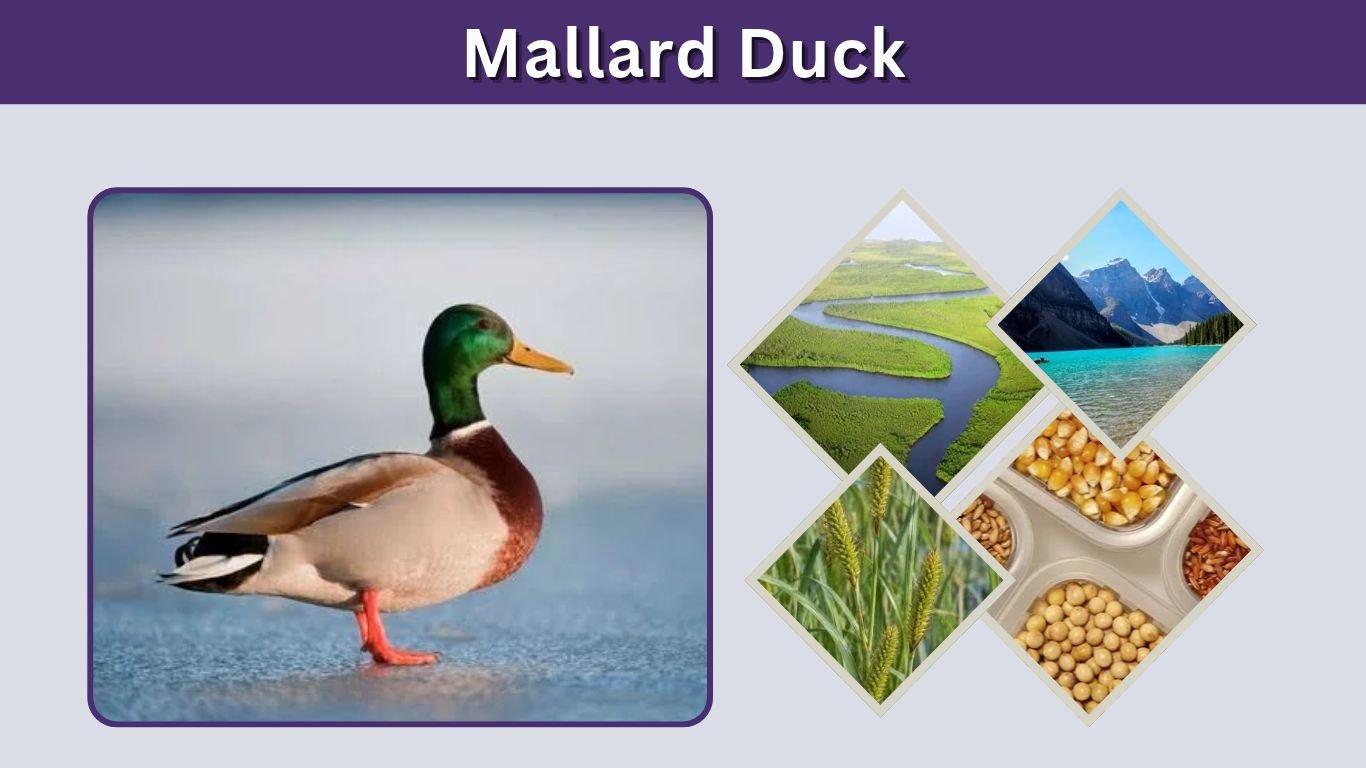
The mallard duck is one of the most recognizable waterbirds in North America, known for its colorful feathers, distinctive calls, and adaptable behavior. Male mallards have glossy green heads, while females display mottled brown plumage that provides excellent camouflage. These ducks inhabit ponds, lakes, rivers, wetlands, and urban parks, where they feed on aquatic plants, seeds, and small animals. Mallards are also strong flyers and attentive parents, with fascinating breeding and migration behaviors. Understanding their identification, diet, habitat, lifespan, and reproduction reveals why these ducks are so widespread.
What Is a Mallard Duck?
The mallard (Anas platyrhynchos) is a medium-to-large dabbling duck belonging to the family Anatidae. It is native to much of North America and Eurasia and has been introduced to several other regions.
Mallards are highly adaptable birds capable of living in both natural wetlands and human-developed environments. They are also ancestors of most domestic duck breeds.
Mallard Duck Identification
Mallards possess several distinctive physical characteristics that make them relatively easy to identify.
- Scientific name: Anas platyrhynchos.
- Family: Anatidae.
- Body length: Approximately 19.7–25.6 inches.
- Wingspan: Approximately 32.3–37.4 inches.
- Weight: Usually 2.2–2.9 pounds.
- Male coloration: Green head, white neck ring, brown chest, and gray body.
- Female coloration: Mottled brown feathers with an orange-and-dark bill.
- Wing markings: Blue-purple patches bordered by white.
- Feet: Orange legs and webbed feet adapted for swimming.
Their broad bills help collect aquatic plants, seeds, and small invertebrates from shallow water.
Male vs Female Mallard Ducks
Male and female mallards look noticeably different, particularly during the breeding season. These differences help birdwatchers distinguish the sexes.
Male Mallard Duck
Male mallards, commonly called drakes, have glossy green heads, bright yellow bills, white neck rings, and reddish-brown chests.
Their gray bodies contrast with dark tail feathers, including distinctive curled black feathers above the tail.
After breeding, males temporarily develop duller eclipse plumage that resembles female coloration.
Female Mallard Duck
Female mallards, called hens, have mottled brown feathers that provide camouflage while nesting.
Their bills are generally orange with dark markings, although coloration varies.
Females are responsible for incubating eggs and caring for ducklings after hatching.
Where Do Mallard Ducks Live?
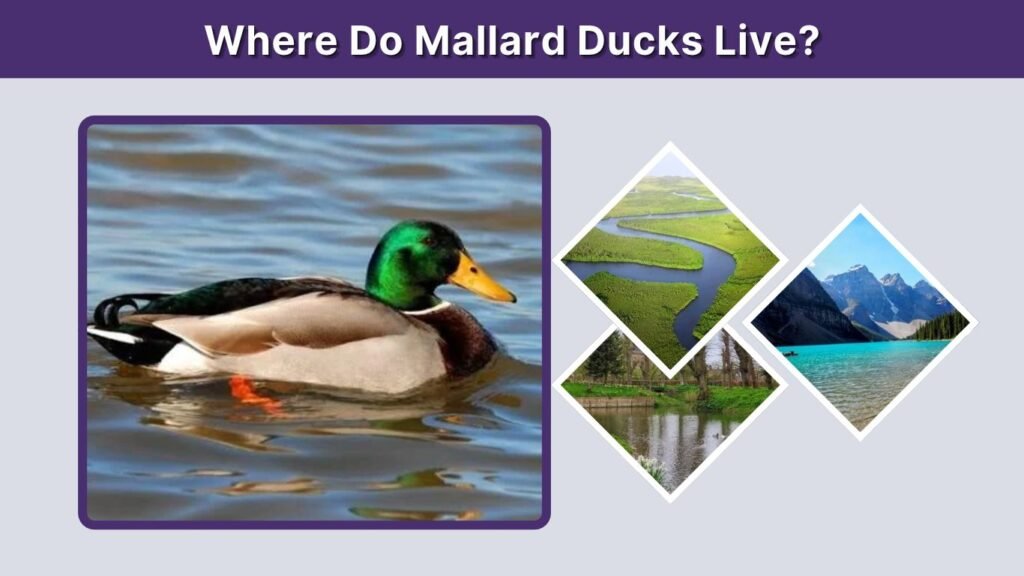
Mallard ducks inhabit a wide range of aquatic environments, including freshwater wetlands, rivers, ponds, lakes, marshes, and reservoirs.
They also adapt well to urban environments and frequently appear in city parks and residential ponds.
Mallard Duck Habitat
Mallards prefer shallow water with abundant aquatic vegetation and nearby feeding opportunities.
They commonly occupy marshes, flooded agricultural fields, grasslands, and woodland wetlands.
During winter, many mallards move toward regions with accessible open water.
Their ability to exploit different habitats contributes to their widespread distribution across North America and Eurasia.
What Do Mallard Ducks Eat?
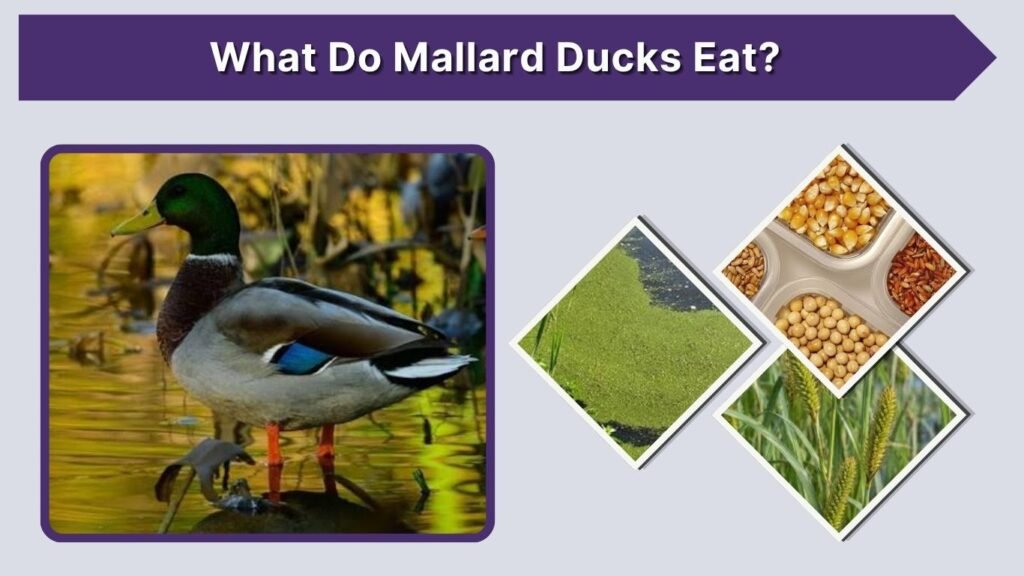
Mallards are omnivorous birds that consume both plant and animal materials. Their diet changes depending on seasonal food availability, habitat, and nutritional requirements.
They typically feed by dabbling, which involves tipping forward in shallow water rather than diving completely underwater.
Common Mallard Duck Foods
Their natural diet includes:
- Aquatic plants: Pondweed, duckweed, and other submerged vegetation.
- Seeds: Seeds from grasses, sedges, and wetland plants.
- Grains: Corn, wheat, rice, and other agricultural crops.
- Insects: Aquatic beetles, larvae, and other small insects.
- Snails: Small freshwater mollusks.
- Crustaceans: Freshwater shrimp and other aquatic invertebrates.
- Earthworms: Collected from moist soil and grassy areas.
- Small aquatic animals: Occasionally tadpoles and small fish.
During breeding, females consume more protein-rich animal foods to support egg production.
Feeding wild mallards bread is discouraged because it provides poor nutrition and leftover food can pollute waterways.
Mallard Duck Eggs and Nesting Habits
Mallards usually build nests on the ground among grasses, shrubs, or other vegetation that provides concealment.
The female creates a shallow depression and lines it with plant materials and soft down feathers.
Mallard Duck Eggs
A typical mallard clutch contains approximately 7–13 eggs. The eggs are usually pale greenish, cream, or olive-buff.
The female incubates them for approximately 23–30 days.
During incubation, she leaves the nest briefly to feed while keeping the eggs covered with down.
Newborn Mallard Ducks
Mallard ducklings hatch covered in soft down and are capable of walking, swimming, and feeding themselves shortly after hatching.
Their mother guides them toward suitable feeding areas and protects them from predators.
Young mallards generally begin flying at approximately 52–60 days old.
Do Mallard Ducks Mate for Life?
Mallards generally form seasonal pair bonds rather than remaining with the same partner throughout their lives.
Pairs often form during autumn or winter, well before the spring breeding season.
Mallard Duck Mating Behavior
Male mallards perform courtship displays involving head movements, body postures, whistles, and other sounds.
After mating and the beginning of incubation, males usually leave females to complete nesting responsibilities.
The female independently incubates the eggs and raises the ducklings.
Mallards generally establish new pair bonds during subsequent breeding seasons.
How Fast Can Mallard Ducks Fly?
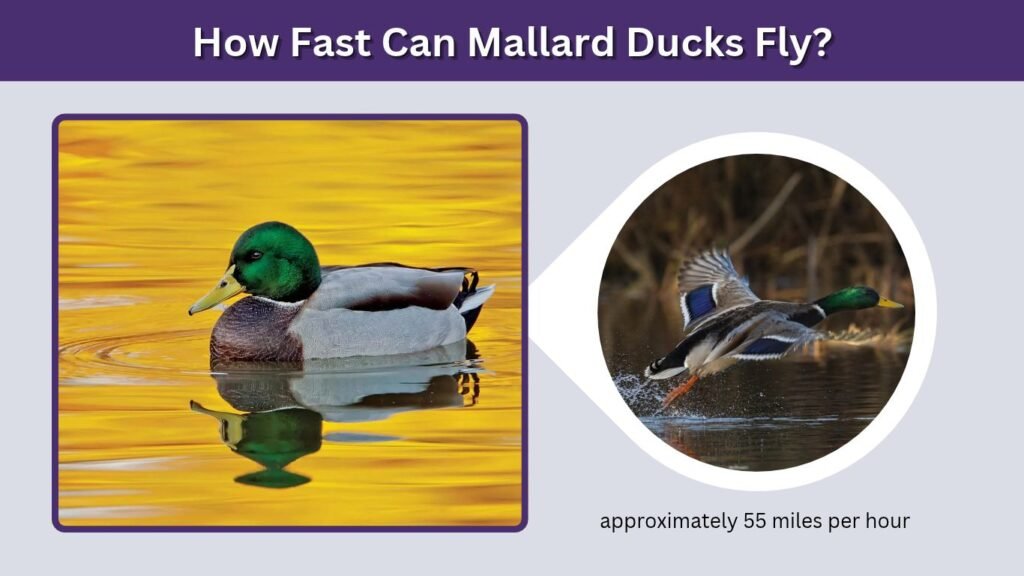
Mallards are powerful flyers capable of traveling long distances during migration.
Their broad wings and strong flight muscles allow them to take off rapidly from water and maintain sustained flight.
Mallard Duck Flying Speed
Mallards can reach flight speeds of approximately 55 miles per hour under favorable conditions.
During migration, they often travel in groups and may fly considerable distances between feeding and resting locations.
Their flight behavior varies according to wind conditions, weather, and migration requirements.
Mallards also undergo a temporary flightless period during their annual wing-feather molt.
What Sounds Do Mallard Ducks Make?
Mallards produce several vocalizations used for communication, courtship, and warning other ducks about danger.
Male and female mallards have noticeably different calls.
Male vs Female Mallard Duck Sounds
Female mallards produce the familiar loud quacking sounds commonly associated with ducks.
Their calls often consist of repeated quacks that gradually become quieter.
Male mallards make softer, raspy calls rather than the typical loud female quack.
Ducklings produce high-pitched peeping sounds to communicate with their mothers.
How Long Do Mallard Ducks Live?
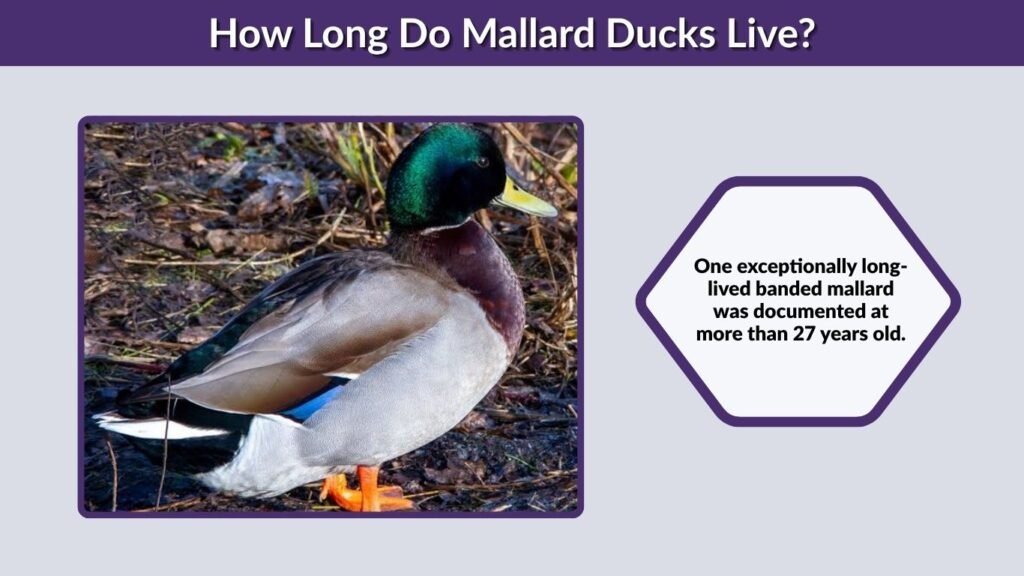
Mallard lifespan varies depending on habitat conditions, predation, hunting pressure, and disease.
Many wild mallards survive only a few years, although individuals that avoid major threats may live considerably longer.
One exceptionally long-lived banded mallard was documented at more than 27 years old.
What Threatens Mallard Ducks?
Mallards face threats from foxes, raccoons, birds of prey, and other predators.
Their eggs and ducklings are especially vulnerable to nest predators and unfavorable weather.
Habitat destruction, polluted waterways, and hunting can also affect survival.
Protecting wetlands and maintaining healthy aquatic environments support mallard populations.
Do Mallard Ducks Migrate?
Many mallards migrate seasonally between northern breeding territories and warmer wintering locations.
However, some populations remain in the same region throughout the year when food and open water are available.
Migration distances vary considerably, and some ducks travel hundreds or thousands of miles.
Mallard Duck Migration Patterns
Mallards frequently migrate along major North American flyways.
They use lakes, rivers, marshes, and agricultural wetlands as resting and feeding locations.
Seasonal changes in temperature, daylight, and food availability influence their movements.
Interesting Facts About Mallard Ducks
Mallards have several fascinating characteristics that distinguish them from other waterfowl.
Mallard Duck Facts
- Mallards are ancestors of most domestic duck breeds.
- Males develop bright green heads during breeding plumage.
- Females are primarily responsible for raising ducklings.
- Mallards can fly at approximately 55 mph.
- They usually feed by dabbling rather than diving.
- Mallards can hybridize with American black ducks and several other duck species.
- Their wing feathers contain distinctive blue-purple patches.
- They inhabit both natural wetlands and urban parks.
- Some mallards migrate, while others remain year-round.
Black or white mallard-like ducks may be domestic varieties, birds with unusual pigmentation, or hybrids rather than typical wild-plumaged mallards.
FAQs
1. What is a mallard duck?
A mallard duck is a dabbling waterfowl species scientifically known as Anas platyrhynchos. It is recognizable by the male’s green head and the female’s mottled brown plumage. Mallards commonly inhabit freshwater wetlands, lakes, ponds, and urban parks.
2. What do mallard ducks eat?
Mallards eat aquatic plants, seeds, grains, insects, snails, worms, and small aquatic animals. Their diet varies seasonally, with protein-rich invertebrates becoming especially important during breeding. They primarily feed by tipping forward in shallow water rather than diving underwater.
3. Do mallard ducks mate for life?
Mallards generally do not mate for life. They form seasonal pair bonds, often beginning during autumn or winter. Males usually leave after nesting begins, while females incubate eggs and raise ducklings. New partnerships commonly form during following breeding seasons.
4. How long do mallard ducks live?
Wild mallards often live only a few years because of predation, disease, hunting, and environmental hazards. However, some individuals survive much longer. A banded mallard was documented living more than 27 years, demonstrating the species’ potential longevity.
5. What is the difference between a male and female mallard?
Male mallards have glossy green heads, yellow bills, reddish-brown chests, and gray bodies during breeding plumage. Females have mottled brown feathers and orange-and-dark bills. Females also produce louder quacking calls and provide most parental care for ducklings.